Advertisements

Halloween Games (2022)

It’s October already, the spookiest month of the year! So, I thought I’d compile a list of all the ‘Horror’, ‘Thriller’, ‘Mystery’ and ‘Spooky’ games which we’ve created reviews for over the years. If you’re looking for something to play this month, why not check out the below titles and see if any tickle your fancy?!

Also stay tuned as I’ve put aside a bunch of terrifying games which I’ve not yet got around to reviewing, all of which I’m planning to complete and publish articles on throughout October.

A Chair in a Room: Greenwater (PSVR) Review

The makers of The Exorcist: Legion VR have brought their other hit VR horror title: A Chair in a Room: Greenwater, to PSVR, 3 years after its initial release on the HTC Vive. Even as a horror enthusiast, Wolf & Wood have created another strong outing that had me engaged and horrified from the moment I saw the creepy main menu.

A Chair in a Room: Greenwater 1

It’s a chair… in a room…

The game has an extremely strong opening where you are undergoing some mini memory exams in a mental institution known as Greenwater, with no clue as to who you are or why you’re here. It’s interesting but it’s also really uncomfortable in a way that a strong horror game should be. You can’t help but feel a deep sense of isolation, as there is always a wall between you and whoever is talking to and observing you, making you feel like you’re always alone and possibly dangerous. This sets up an intriguing horror title that only gets better as you play.

The plot progresses with a series of flashback-type situations that aren’t clearly connected. I’m not certain but I’m willing to give the benefit of the doubt that this is an extremely clever design choice by developers, Wolf & Wood, to mirror your character’s scattered and questionable memory. To move on you must solve some simple (in answer) but obscure (in execution) puzzles, by moving objects in the environment around and seeing what goes where. What makes the game the most interesting though is how the environment is used to tell the intricate details of the story in a masterful way.

The game even utilises the environment to explain to you how to play the game, with mental health propaganda posters including diagrams that blend in with the asylum, showing you how to move around the various rooms and interact with all the objects. The environment also houses lots of little nods to what is going on in your character’s life.
A Chair in a Room: Greenwater 2
There are many games where collectables add weight to the story but few do so as well as A Chair in a Room: Greenwater. You’ll find yourself opening: drawers, doors, wardrobes and even safes, scouring for clues and tools to progress. In the midst of this, you will find many clues as to not only how to progress, but also to all of the events that have led you to be institutionalised. I had a blast flicking through books, postcards and posters, finding any piece of information I could about what was going on; it was very fun to piece it together and fill in the blanks between what is overtly explained to you throughout the 3-4 hour campaign.

On the other hand, while it is fun seeking out clues to the story, it can be extremely frustrating having no idea which exact random item you need to interact with and how to interact with it. The only help you get from the game is that you can look at the back of your hand to ask yourself a question that informs you of an objective, which still doesn’t really help you figure out the puzzle.

The saving grace though is that when you do figure out a particular puzzle, there is an obvious and satisfying sound cue that triggers to let you know you’ve made progress.
A Chair in a Room: Greenwater 2
From a technical standpoint, I think A Chair in a Room: Greenwater is generally very strong. There were quite a few physics-based issues where object collisions would send important clues flying away and sometimes even getting stuck inside floors and walls. However, thankfully there is a mechanic where important items return to their original positions, should this happen. There were also some problems with reaching things on the floor, even with the crouch option coupled with the move controllers. Reaching around aimlessly for minutes at a time trying to scrape a random item off the floor definitely brought a halt to the suspension of disbelief. I don’t fully blame the developers here though because they are of course limited by the PSVR headset and its immovable style because of the use of the PlayStation camera.

Visually, I think the game looks amazing for a PSVR game. PlayStation VR is known to have considerably lower resolution than it’s competitors and ‘Flat’ games, plus there is an obvious distance between this and say Resident Evil 7, yet the game looks fantastic as its eerie setting is horrifying to live inside. The lighting especially is terrifically haunting. There are so many dark corners that you’re forced to look into with sometimes nothing but a lighter and it can be very difficult to build the courage to enter that area, as you wonder what is lurking in the secrets of the rooms.

The game utilises PSVR masterfully, allowing you to experience the game in whichever comfort settings you prefer, including with Move controller or the DualShock 4, teleport or fluid movement; whatever you’re comfortable with you can adapt the game to suit you, which is a brilliant way of stopping it from feeling overwhelming. The tiny studio of Wolf & Wood deserves massive credit for being determined to make beginner and veteran VR players all feel comfortable.
A Chair in a Room: Greenwater 4
The feeling of being inside those enclosed, inescapable rooms is extremely discomforting and I genuinely had to “nope” out of the headset a few times when things got intense. The audio plays a massive part in this and I would say this has some of the best audio in a horror game that I’ve ever played. With the 3D audio of the PSVR headset, the whispers, bangs and music gave me endless goosebumps. In particular, the middle sections of the game turn the horror up to 11 and I was questioning whether I could even continue – but I persevered because I had to know what was going on.

The sounds play into the unstable mental health your character seems to have and the voices you hear have you questioning your sanity – is it your mind or is there genuinely something behind you? There are some truly terrifying sounds in this game that made me freeze a few times to ask “no seriously, what the F%@ is that?” All of these factors contribute to some top-notch horror moments, which you are forced into experiencing. This is a great decision because there is nothing more frustrating when you want a game to be scary only for you to miss what was supposed to be spooking you. Even if you try your best to look away while you play, events do not trigger until the game detects you looking directly where you need to, which makes moving forward exceptionally terrifying.
A Chair in a Room: Greenwater 5
Overall, this is a genuinely horrifying but encapsulating game. I’ve never wanted to push through a game that I simultaneously wanted to wimp out of at the same time, but that’s what is so brilliant about A Chair in a Room: Greenwater. I had this overwhelmingly tense sensation where I was almost paralysed in certain parts because of the atmosphere the developers have created in these little rooms. But, just as you are within the asylum, I felt trapped into seeing how the story was going to progress. While the story isn’t the most amazing you’ll experience in a horror game, it’s a satisfying enough ending that makes it feel worth persevering with in order to get there.

The technical issues do plague the game somewhat of feeling fully immersive, and the puzzles can take a frustratingly long time because they aren’t very clear. Otherwise, the game feels fantastic to play and I enjoyed every second that I had exploring these mini-environments. Wolf & Wood have raised the bar for VR horror titles and from now on I will be comparing all future games in this genre to A Chair in a Room: Greenwater and The Exorcist: Legion VR.

Official Trailer:

Final Conclusion:
A Chair in a Room: Greenwater largely delivers on what you would hope for from a Virtual Reality horror title. The story is short and engaging enough to be played in one very tense sitting and delivers some fantastic moments of terror. The puzzles can be testing but if you have the intention to inspect every dark corner of each set-piece, then you should stumble upon the answer eventually. It’s worth all those moments of frustration just for the satisfying final few areas.

It’s not the best horror game you’re likely to play but it is definitely an experience I won’t ever forget.

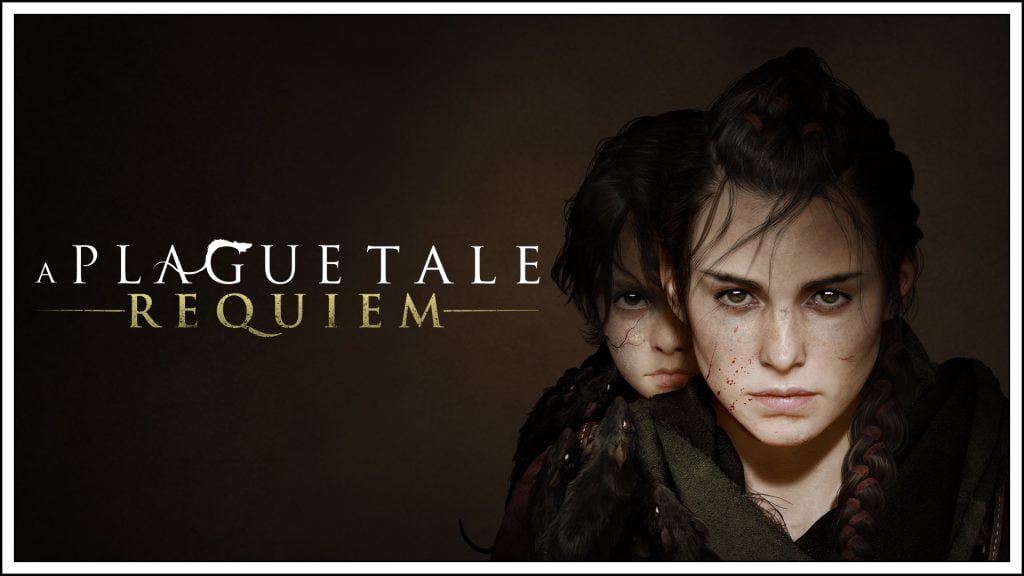
A Plague Tale: Requiem (PS5) Review

Three years ago, in May 2019, Asobo Studio and Focus Entertainment unleashed A Plague Tale: Innocence upon the world – a stealth-focused adventure game that combined a captivating narrative with solid gameplay and rats, a lot of rats… Today the sequel has finally arrived, A Plague Tale: Requiem – a game which continues the story shortly after the first, introducing new gameplay mechanics whilst delivering a similar experience to the previous title except there are more rats, literally thousands more than we saw last time thanks to the game being current-gen only.

I’ve had the game for a few days, completing all chapters early this morning, and I’m glad I waited until I’d finished the game before writing this review – my initial impressions weren’t the best yet by the end I had fallen in love with the game. Sure, there are some frustrations which stuck with me throughout – which I’ll get into within this review – but the narrative saved the day by delivering an exciting and emotional journey which I’ve not experienced for a while. 

So, come with me as we (once again) desperately try to stay alive venturing through streets and fields aggressively occupied by blood-thirsty rats that would love a little nibble on me and my younger brother…

A Plague Tale Requiem 1+1

Home sweet home… for now!

A Plague Tale: Requiem is set shortly after the events of the first game, Amicia, Hugo and Lucas are momentarily enjoying their quiet and peaceful life after being put through hell with non-stop bloodshed and close encounters of the rat-kind a few months prior. However, nothing lasts forever and Amicia can never catch a break, always finding herself in trouble whether she goes looking for it or it comes looking for her! The siblings come under attack leading to Hugo knocking himself out by summoning his ratty friends – kinda like Pikachu in the first episode of Pokemon…

Whilst unconscious, Hugo has a vision of an island that’s guarded by a mighty phoenix. He’s encouraged to drink the water which instantly heals him of this unhygienic curse – could this be a vision that’ll lead to the cure he’s been looking for throughout the previous game (his entire life)? He certainly thinks it is! But, his mother has other ideas as she wishes for the family to seek help from an alchemist rather than listen to the dreams of a sick little boy. 

And thus begins Amicia’s new adventure, from initially exploring dark, diseased, morbid areas of the city whilst looking for various people to help her brother, to seeking out this elusive island and uncovering the truth behind Hugo’s illness and his ancestors, her life is very eventful and never simple! Along your journey, you’ll meet new companions, make enemies with new foes, discover new abilities, and come up with new creative ways to use the rats to your advantage as they rip the flesh off those who oppose you. It’s an adventure you won’t forget for a very long time…

A Plague Tale Requiem 2+1

A skill tree based on how you play the game, how original!

GamePlay
A Plague Tale: Requiem is a stealth-based adventure game with a very strong emphasis on its narrative and storytelling. If you’re not watching a cutscene, exploring for collectables, or solving a puzzle, then you’ll be sneaking around in tall grass, avoiding the rats, or creatively killing guards that are looking for you. If you’ve played the first game then you’ll know what to expect, the gameplay in A Plague Tale: Requiem is very similar aside from a few additional abilities and mechanics that make the later stealth segments much easier and more fun to work through.

The developers have created a skill tree unlike one I’ve seen before, it’s automatic and based on how you play the game. For example, if you make your way through stealth segments without alerting any of the guards, then you’ll gain experience within the ‘Prudence’ skill, yet killing all the enemies improves your ‘Aggressive’ skill. As these increase, you’ll unlock passive skills such as increasing how far Hugo’s ‘rat-vision’ can see, unlocking the ability to push enemies when you’re attacked, and teaching Amicia to walk quietly so she doesn’t stomp around and make a lot of noise.

This is an interesting concept as it literally forces you to change your gameplay style if you’re aiming to obtain all of the trophies, you can’t just unlock universal experience and shove it into whichever skill you wish to improve.

If you’re not very stealthy, like me, then you’ll be happy to hear that there are a bunch of unlockable abilities for your trusty slight shot, as well as a powerful crossbow that can take down enemies with one hit! There are a few enhancements that we saw in the previous game and some that are new or refined. You can also insta-kill the guards with knives that you’ll often find, but Amicia can only carry one at a time and they break upon use – just like the annoying shivs in The Last of Us Part One – However, for some reason, Amicia can’t craft new ones, which is incredibly annoying as you need one to open the many secret closets in the game.

One of the mechanics I had an issue with is the lack of being able to run whenever you want. The game forces you to walk most of the time, thanks to either holding Hugo’s hand or because the game wants to play some dialogue as you go from A to B. But, when it does enable running, it’s random as to whether it’s a leisurely jog or if you can hold R2 and actually run. I know this won’t be an issue for most people, but I like moving fast when exploring for collectables, but I found myself often restricted to walking at a snail’s pace for no reason whatsoever (no dialogue was being played) –  this began to irritate me and almost put me off doing a second playthrough.

A Plague Tale Requiem 3+1

Take out the guards or sneak past them, without becoming rat food!

‘Combat’
A Plague Tale: Requiem felt like it had more stealth and combat sections than the first game, yet it also had more puzzles and areas to explore – it’s just much bigger in general. But, the combat sections were plentiful throughout the game, providing some very frustrating moments during the early parts of the game. Before you’ve unlocked various enhancements for your sling, your choices with how to make it through a stealth section alive are limited – you can use your sling to kill enemies with no helmets, but the noise will alert others, or you can toss a stone into a pile of metal objects to distract them whilst you crouch past unaware. 

The fun really begins when you’ve unlocked the ability to cause more excruciating pain to your victims! Why keep things quiet when you can fill a pot with tar, throw it at someone, then light it and watch as the unlucky person screams in agony and burn to death within seconds?! Maybe you’d rather lure someone into the darkness and then extinguish their torch to watch the rats rip the flesh off their bones? Or, once Hugo has finally remembered that he’s basically the Rat King, take control of a swarm of rats and seek out anyone without a torch and devour them until nothing remains but a crafting material and a pile of bones.

A new feature for A Plague Tale: Requiem, which makes some stealth segments a walk in the park, is the addition of companion abilities. There are two new companions that you can utilise with L1+Triangle to help you out – one of them will run straight into battle and beat them to death with his mighty sword, often asking for help when they become overwhelmed and knocked over, and the other can set alight tall grass to cause distractions when there are no convenient piles of metal objects around. The latter can also, magically, use their object to reflect light from any lit source to create a light bright enough to protect you from rats as you walk around – the game was semi-believable until this ability was unlocked!

On a side note, if you’re having trouble, or simply want to break the game and make it hilariously easy, you can enable invincibility mode in the options menu. This won’t save you from the rats, but no human can kill you now – so you can run rings around them without worrying about being taken out. Alternatively, literally run, if they can’t catch you, they can’t hurt you! I found that you can sometimes forget hiding and spending ages trying to sneak past the guards, if your destination is a door then run for it and she’ll lock it once you get in, thus skipping the entire stealth segment!

A Plague Tale Requiem 4+1

How are we going to get over there!?!

Puzzles
There are a few puzzles within A Plague Tale: Requiem, none of which are hard or challenging. The majority of them simply require you to look around for something you can use to climb higher, or a gap in the wall you can shoot through to break a chain on the other side, but some are more involved. There are moments when you must work in tandem with your companion, operating different levers at the same time or having them use something while you stand on or near the object that’s going to move. Just like the above companion skills, you can hold L1+Triangle and command them to use objects from afar – adding another layer to the puzzles.

When it’s dark, we see the return of ‘The Floor is Rats’, guaranteeing an instant death if Amicia or her companion strays into the darkness and lets the vermin get a whiff of their delightful 14th-century scent. Most of these situations can be dealt with by simply lighting fires and watching as Roland and his friends flee from the bright atmosphere, but sometimes you have to get more creative. You can throw tar into flames in order to create a short-lived brighter light, or toss a jar of tar and then set that alight to create your own fire pit of death (and light). You can also ‘cheat’ by using the above companion skill that somehow reflects a non-localised flame to create a circle of light all around you.

Although the puzzles aren’t hard, there is a setting in the options menu which you may wish to adjust. You can set how often and fast the NPCs will give you hints (or the solution) to the situation you’re currently in. I found that this had turned itself on when I dropped the difficulty due to early stealth segments frustrating me. With it on the highest setting, your companion will almost instantly tell you what to do, leaving no time to try and figure things out for yourself. Some people may find that helpful but I thought it was making the game far too easy as I didn’t have to think about anything, just look for the object or location they were talking about. So, if you want to actually have a little time to explore and discover things for yourself, make sure you adjust that setting (which I’m glad there’s a slider for).

A Plague Tale Requiem 5+1

Awww, how sweet.

The Narrative
I didn’t like A Plague Tale: Requiem at first – I didn’t hate it, but I thought it was starting off too slow and the stealth sections were too brutal and unforgiving. However, as I pushed past the 50% mark, the game really clicked with me, I was loving the narrative, the gameplay has become much more fun now I had companions and more alchemic abilities, and the locations we were travelling to were bright, colourful, and more diverse than we saw in the previous title. As I reached the final credits early this morning, the game had firmly placed itself on my GOTY list for 2022, I predicted a lot of the events which would unfold towards the end of the game, but I was still shocked and excited when I saw them play out on my TV.

I’ve seen people claim you can finish the main story within 15 hours, I think I took almost double that as I was wandering around every location looking at the world and trying to interact with everything I could – even if it didn’t impact the story or trophies. Each new location you end up in is unique, with its own townfolk, structure design, and personality. It’s just a shame that we visited as Hugo brings death wherever he goes, the little annoying child that doesn’t turn into the Hulk when he gets angry and upset, he simply unleashes a hoard of rats that leave destruction in their wake.

Also, just like the original game, the music, dialogue and voice acting are second to none here, I can honestly see Charlotte McBurney winning another award for her emotional and immersive role within this game. Everyone delivered an amazing performance, bringing these virtual models to life, but Charlotte really did pull me in and made me bond with Amicia throughout the entire game. I’m actually shocked to see that her only work, according to IMDB, is both Plague Tale games and a short film – why aren’t studios snapping her up for a role in their games?

A Plague Tale Requiem 6+1

Hugo, the rat bird king!

Birds of a feather
Hugo loved flowers in A Plague Tale: Innocence, they were the main collectable that the siblings looked out for on their grand adventure. However, in A Plague Tale: Requiem he appears to have gone off them and now favours feathers thanks to the majestic phoenix he sees whilst dreaming. As such, these have become the main collectables to look out for. However, don’t despair if you prefer flowers, there are still some scattered around for you to find and pluck from the ground. Once found, Hugo wears the feathers on his pin and Amicia pops a flower of your choice behind her ear. If you buy the game physically or buy the day-one DLC, you also unlock all the flowers from the first game which you can wear from the start.

Aside from these cute accessories, there are also a bunch of memories to be found – well, made. Interacting with certain landmarks, objects, or documents will result in Amicia and her companion (or Hugo) talking about something and creating a memory that you can listen to whenever you want. I think my favourite is when you, Hugo and a female companion are on top of a tower screaming like a bird – pausing the game and zooming in on their ‘dead’ faces as their mouths are the only source of emotion was quite funny (more on this later).

New Game+
A Plague Tale: Requiem has a few difficulties but you’re not penalised if you decide to play on Narrative difficulty (the easiest). However, should you complete the game and miss some of the secret chests (which require you to play the game again and not through chapter select), or wish to max out your skills, then you have to start again in New Game + mode. I like that this is here, as you keep all the skills you’ve unlocked and collectables you’ve found, but it has one major negative – you can ONLY play NG+ in the new ‘Ultimate Difficulty. That’s right, you’re forced to play on the hardest difficulty the second time around – sure, you now have upgrades skills, but this should be an option. I’m at this stage and I’ve turned on ‘invincibility mode’ and I have no shame about it!

A Plague Tale Requiem 7+1

You can manipulate the camera even in cutscenes – here we’re ‘hugging’ Hugo

Take a Picture
A Plague Tale: Requiem has one of the least restrictive photo modes I’ve ever seen – which is both great and bad at the same time. First of all, ‘no-clip’ is enabled, this means you can move the camera anywhere within a rather generous distance of your character – yes, you can move out of bounds and explore behind the scenes and see how the visually-stunning game is created with a rag-tag bunch of blocks and setpieces you were never meant to see. You could also use this ‘mode’ to strategically look around and see where the enemies are so you can plan ahead. However, peering into locked rooms or future locations usually gives you empty rooms as the PS5 loads them in once you open the door officially (within less than a second and with no loading screen).

I deem the above as ‘bad’ as it can result in getting some great shots but it also ruins the magic and immersion, kinda like watching a behind-the-scenes video of a film or TV show you like and finding out it was all on a green screen or a small set in a big hanger-like warehouse.

One thing I LOVED about the photo mode was the fact you can enable it at ANY TIME! That’s right, even if you’re mid-cutscene, you can turn it on and go wandering around to find the perfect shot – I’ve never seen a game let you do this as cutscenes are usually pre-rendered or running with a locked camera due to the enhanced visuals and effects. But, not A Plague Tale: Requiem – here you can stop at literally any time and enter a fully-moveable photo mode camera. Sadly, there’s not much to the photo mode aside from generic options (no filters or facial expressions), but it does the job.

A Plague Tale Requiem 8+1

This person wasn’t playing on the PS5, he was tracking his own collectables and died of old age (and a rat attack)

PS5 Features
Despite being marketed heavily by Xbox, due to the fact the game has launched in Game Pass Day-one, I’m happy to say that the developers haven’t overlooked the various unique features of the PlayStation 5. First up, A Plague Tale: Requiem supports both activity cards and trophy tracking, with a handy collectables card that lets you know what items you’ve missed. So many games don’t bother utilising these so it’s nice to see a game that has a lot of things to find making use of them both. The only thing missing is the PS Plus help videos, showing you where the items are – that would have been a great addition.

On a side note, when using the chapter select (if you’ve missed something), it clearly tells you what collectables you’ve missed so you’re not trying to guess where you need to go back to.

In terms of the controller, haptic feedback and resistive triggers are both implemented, although the trigger effect is quite weak and really needs a slider to make it more intense. As you’d expect, using your weapon offers a little resistance, but it could have been so much better in regards to simulating Amicia swinging her sling. However, when you’re able to run, if you hold R2 then you’ll run faster and you’ll feel each footstep as the trigger provides a little ‘kick’ each time your foot hits the ground. 

In terms of the haptics, they activate when you’d expect – replacing the generic rumble with a more defined experience. But, there’s a feature in A Plague Tale: Requiem which was also in The Last of Us Part One (which I’ve not seen before), haptic response when characters are talking. I don’t fully understand why this is a thing, but you can have the controller physically ‘hum’ along with the words being said (but without sound) – I imagine it’s an accessible effect for some people, but I just found it strange that I’d not seen it before and now I’ve seen it twice this week.

A Plague Tale Requiem 9+1

Challenge – count the rats! Fun fact, there’s even more behind the camera!

Shoddy Performance
It’s time to talk about the elephant in the room (if you’ve seen the ‘outrage’ on Twitter) – the performance. Since the PlayStation 5 was born, almost two years ago, we’ve become accustomed to glorious 60 frames-per-second gameplay – this is nothing new but last-gen hardly ever hit this elusive target. However, there has been a baby’s handful of games this generation which has targeted 30fps instead – The Medium, Gotham Knights, and Life is Strange: True Colours to name a few (although LiS got a 60fps patch after consumer outrage). A Plague Tale: Requiem is also a 30fps peasant on modern consoles!

Okay, let’s take a step back and not judge a book by its inability to push double the framerate. A Plague Tale: Requiem is visually stunning even though it’s only 1440p on the PS5 and Xbox Series X. However, I believe the reason why the game is set to 30fps is due to the creative decision to bump the number of rats on screen from around 5,000 to a whopping 300,000! Yes, three hundred thousand! Does the game need this many rats? Nope. But does it look awesome when they’re all there chasing you? Hell yeah! 

Also, on the PS5, when you’re outside at night, with only a few dynamic light sources (fires) and thousands of rats watching you with their beady little eyes – the framerate can drop to, what feels like, the low 20s! It’s playable but really becomes frustrating when you’re running from enemies and it feels like someone is pausing and unpausing over and over! Okay, it’s not ‘that’ bad, but you can really feel it!

There are two saving graces – 120hz and VRR. If you have a 120hz TV, A Plague Tale: Requiem will boot up in 120fps mode and set the framerate of the game to 40fps – delivering a slightly smoother experience that feels nice due to the 40fps fitting into the 120hz container nicely (go look at Digital Foundry’s videos about this). Plus, if you have a VRR TV/display, the game will auto-load with it enabled (if you have it turned on), providing full LFC support for sub-48fps gameplay. This, combined with either 60hz or 120hz mode, delivers the smoothest way to play the game as it feels a lot better (the framerate ‘may’ even be unlocked, I’m not sure) – but, you’ll still feel the big dips when it’s dark.

Left: Screen space reflection – Right: looking down

up
down

Sorry, my face is tired…
As I stated earlier in my review, there’s a ‘problem’ with the faces in A Plague Tale: Requiem. I’ve not read much about the development of this game but I don’t know if everything was fully motion-captured or not – If I was to guess, I’d say not. The motion of the characters walking, running, crouching, and during cutscenes are great, but there’s an issue with the facial animations in that there isn’t any. For example, you can often hear Hugo and Amicia laughing with one another, yet if you pause and/or move the camera around, their face is locked in a serious pose with their mouth open, as if they’re dead inside yet their mouth is still alive.

This isn’t a big issue as the team is only small, but it’s something that damped my immersion at points in the game.

Upon reflection…
My only other visual criticism would be the reflections. The game uses Screen Space Reflections when you have the reflected object on the screen at the same time as the water or reflective surface. However, as you look down it sometimes swaps to a static image which looked really silly in some places (see the image above). The PC version is getting Ray Tracing support in a few weeks, but consoles are left with what we have now.

Official Trailer:

Final Conclusion:
Despite the first few chapters moving quite slow with far too many unforgiving stealth segments, by the time I’d completed A Plague Tale: Requiem I was in love with its narrative, gameplay, visuals, and outstanding voice acting and music. Although the game feels very similar to the first one, the new mechanics, companion abilities, adaptive skill tree, and new larger environments help create a new experience that’s familiar but not identical. There are some performance issues and technical flaws which will (hopefully) be resolved, but nothing hampered the enjoyment and excitement I felt throughout my entire playthrough of this GOTY contender.

AKIBA’S TRIP: Hellbound & Debriefed (PS5) Review | via PS4 BC

To mark the 10th anniversary of the original AKIBA’S TRIP, XSEED Games, Marvelous Games, and ACQUIRE have ‘remastered’ the PSP Japan-only title and launched it on the PS4, Nintendo Switch and PC under the title “AKIBA’S TRIP: Hellbound & Debriefed“. The unique and addictive gameplay had me hooked, obtaining the platinum within five days, but my initial impressions weren’t the greatest as it took me a while to overlook the obvious lack of quality in regards to the presentation. If you’re looking for a full remaster or remake, you’re going to be disappointed, this release is closer to a re-release with a higher resolution – but is that a bad thing?

Originally released in 2011, AKIBA’S TRIP was a Japan-only PSP game that was quickly superseded by AKIBA’S TRIP Plus in 2012, an updated version of the game that improved various mechanics and added new features. This new 2021 re-release is the HD version of the Plus edition, from what I can tell, with a few bonuses such as the choice between being fully voiced in either Japanese or English.

With no guides to hand, no additional support, and some very vague trophy descriptions, obtaining the platinum took me just over 61 hours and seven full playthroughs of the game… It was a long ride, but was it worth it? Did I enjoy the game or was I simply obsessed with stripping random strangers as I sexually assaulted them in the street? And, did I finally manage to overcome my initial issues with the overall quality? Let’s find out…

AKIBA'S TRIP Hellbound Debriefed 1+1

Erm… yeah?!?

There’s an evil roaming the streets of Akihabara, not the fabled ‘scary lady targeting virgins’, but supernatural vampire-like beings who are stalking their prey in broad daylight. How do you know about them? Simple, you’re a newly converted member of their species, having been saved on the brink of death by feasting on the blood of one of these inhuman creatures. Thanks to your involuntary awakening, you now suffer the same weakness as those you’re about to be tasked with tracking down and attacking.

AKIBA’S TRIP: Hellbound & Debriefed‘s story branches off down various narrative pathways depending on the choices you make, the people you help, and the quests you complete, which is one of the main reasons the game took me seven playthroughs to fully complete. You can stick with the paranormal investigators who ask for your help in taking down those responsible for your ‘curse’, or you can defy them and side with your own kind and join forces against the humans.

Each narrative is fun, exciting, silly, and varied enough to make you want to see everything the game has on offer, with each completion route unlocking more bonuses and various difficulty levels. Just remember, this game technically came out before the 2014 sequel, so the gameplay and mechanics in this one are inferior to Undead & Undressed. However, that doesn’t instantly make this a ‘bad’ game, it’s just not as good as I’d hoped it would be.

AKIBA'S TRIP Hellbound Debriefed 2+1

Smurf Stripping!

Gameplay
The game revolves around one concept, removing your enemies’ clothes to expose their skin to the sunlight and watch as they turn to dust. Despite being very sensitive to the natural light, it only affects them once all of their clothes (bar their underwear) have been removed, so you need to target each region as you weaken the durability and then either shred, tear, or remove the clothing! Basically, enemies will wear clothing on their upper and lower body, such as a shirt and trousers, and maybe a hat or cute cat ears. As you beat these areas with whatever weapon you have on hand, they become easier to grab and yank off.

Just like the Dead Rising series, you can use pretty much any random object as a weapon in AKIBA’S TRIP: Hellbound & Debriefed, from a laptop and guitar to a stick or a fairy’s wand. You can also dress up your character in anything they purchase or can cleanly remove from their foes during combat (once you’ve unlocked dressing in women’s clothing). There is a sense of progression involved in this as you can’t remove clothing at first, all attempts will result in simply tearing the clothes like a rabid animal, but buying and reading skill books enables you to strip a certain type of person.

Although your main objective is to seek out and strip the vampiric enemies, you’ll occasionally find yourself stripping humans as well. The main difference is that the humans remain flesh-coloured (whereas the actual enemies turn blue as you strip them) and they’ll slap you before running off in their panties once you’ve finished undressing them. I thought the blue skin was some form of censorship at first, as I don’t recall the sequel doing that, but it was simply so the game could tell you the difference between humans and non-humans. Also, unfortunately, you can’t do a super-strip and remove the underwear in this game – panties and boxers are as far as you can go.

I can’t recall if the second game did this, but in AKIBA’S TRIP: Hellbound & Debriefed, you can only change your clothes on the map screen, meaning if you’ve been stripped bare then you have to retreat in order to suit up before the cops catch you and arrest you for indecent exposure. This was quite annoying, especially on harder difficulties where your clothes would be ripped or pulled off very easily, as once you’re naked then it’s game over due to the sunlight burning you… unless you have sunscreen on.

AKIBA'S TRIP Hellbound Debriefed 3+1

What a strange bunch!

Side Missions
Aside from the main story, there are tonnes of side missions, I can’t recall how many in total but I think it was about 70-80 per playthrough. Although all of these are optional, except a few, I highly recommend you complete as many as you can as some of the later ones are quite fun. Also, completing certain missions will help influence the ending as each mission is given to you by one of the three factions, so you can help push the game down a certain path if you strategically only complete the ones a certain group give you. 

Some of the side missions are quite bizarre, you get to fight the Wish-brand Power Rangers, a bear, lots of guys in frog suits, and even a group of people in white clothing with masks and golf clubs that reminded me of the group from A Clockwork Orange. There’s even a hidden quest in which you learn how to go prone and take upskirt photos of girls wearing skirts – no joke! I even played through a few missions based on beating up cross-dressing/transexual boys wearing their sister’s clothes… I was surprised these types of quests were present, things like this are usually removed in western releases these days.

AKIBA’S TRIP: Hellbound & Debriefed also contains a few minigames and side activities, such as a Tekken-like beat-em-up, a side-scrolling shmup, quizzes, and an ongoing combat tournament. If you’re going for the platinum, you’ll have to dabble with everything on offer, but they are all technically optional. The quizzes were probably the most annoying for me, you have to answer 15 questions in a row correct based on a certain subject – one of which is a fictional Anime show which is explained to you via about 10 minutes of scrolling text as your colleague explains it to the protagonist…

AKIBA'S TRIP Hellbound Debriefed 4+1

She may be angry but she’ll do anything if you pay her!

Your Sister
Once you’ve reached a certain point in the game, you can return home and talk to your sister at any point. What’s the purpose? You can dress up your young teenage schoolgirl-aged sister in whatever clothes you own, paying her to model them for you as you move the camera around and take pictures whilst performing various poses. Yeah, it’s about as pervy as it sounds, to be honest – it reminds me of the mode in Gal*Gun 2 where you can take pictures of the girls in their panties. It does have a purpose though, whatever she wears gains additional levels as she poses for you.

You can also ask your sister to scold you, hit you, and praise you… This is used during one of the side missions, as there’s a guy who’s very upset he doesn’t have a sister so pays you to tell him how it ‘tastes’ when your sister hits you and changes in front of you?!? However, it also increases the level of what she’s wearing, just like the above. So, although the actions are questionable and a little disturbing at times, it’s a great way to quickly boost your clothing level.

Amusingly, once you’ve completed the game you get the option to change the model of your sister, so I replaced her with an old man in one playthrough and an old woman in another. This made it very awkward when I unlocked her specific ending and the narrative was all about incest and underage love… Yeah, the game has a few questionable themes and moments, but it’s not like that all the time… Well…

AKIBA'S TRIP Hellbound Debriefed 5+1

Yes, he has one of those…

Questionable moments
As mentioned above, the game touches on incest and underage relationships (I presume she’s underaged) when you trigger your sister’s ending, but that’s not the only questionable thing I noticed within AKIBA’S TRIP: Hellbound & Debriefed. As mentioned above, you initially play as a male protagonist – this can be changed when you complete the game – and you soon unlock the ability to dress in female clothes. This leads to a few funny encounters…

There’s an event where you’re told to dress as a girl to get a discount on an item, as the seller likes girls. If you do so, he offers you 60% off if you let him touch your boobs and ‘do a couple of things’. Upon touching you, he discovers you’re a guy and quickly goes from being disgusted that you lied to wanting to ‘taste you’ and do ‘more than touch’ because he’s curious. 

There’s a mysterious woman who trains you throughout the game, showing only her sexy silhouette from behind a curtain. She’s constantly providing sexual innuendo in pretty much every conversation you have with her, but that’s not the questionable part. At one point, she asks for a ‘cherry’. You can go and buy her some cherries and get a rubbish reward, or you can bring her a school-aged boy or girl who she proceeds to have sex with (off-screen) and gives you their clothes. 

Seriously, those who were worried about the game having content removed and/or edited for the Western release, I don’t think you have anything to worry about. Other than the odd thing which may have been translated a little differently, the game seems to have retained the lewd, naughty, tongue-in-cheek humour the original game and its sequel had.

AKIBA'S TRIP Hellbound Debriefed 6+1

Sometimes it’s best to stand back and just let them fight each other!

The difficulty
You have to complete AKIBA’S TRIP: Hellbound & Debriefed multiple times in order to unlock the hardest difficulties, which is okay as you can carry over your gear and items each time you start a new game. So, completing ‘Gamer’ and ‘Otaku’ wasn’t too bad, the main difference was that you had to target the different regions of clothing and inflict more damage before you could tear them off. Your character level doesn’t move over but I found you could easily bump yourself up by taking part in the combat arena early on.

Then we got to the ‘Holic’ difficulty and, Oh My God, it’s hard! In this mode, weapons and gear can be scaled up to level 999, whereas in lower difficulties it’s limited to 99, and it’s pretty much mandatory to do this if you want to last longer than five minutes. Your clothes will rip within two or three hits, your weapons hardly scratch the enemies, and a simple 30-second fight can turn into 20 minutes of furiously dodging and spamming the attack button. I almost gave up due to how brutally difficult and unforgiving this difficulty was, but I took my time and abused a few items I discovered and was able to finally beat it after many hours. 

What I found interesting is that you can go to the train station at any point and ‘leave the city’, creating a ‘cleared save’ file which you can load up and start a new game with, utilising the new items and levels you’ve acquired. As such, the game played like a roguelike for me, allowing me to jump into an easier difficulty, grind for weapons and resources I could use to upgrade my gear, then leaving and starting again on Holic to upgrade and try again. Then, if it was too hard, so I didn’t lose any of my progress, I just left the city and loaded the new save back up in an easier difficulty to grind again.

Yes, the end-game was tedious and it did annoy me on more than one occasion, but the satisfaction of delivering the final blow on the hardest difficulty and seeing the platinum trophy pop was great! It was worth it.

AKIBA'S TRIP Hellbound Debriefed 7+1

I can’t think why his head hurts… Maybe it’s the blurry visuals!

Technical
We have to talk about the elephant in the room, AKIBA’S TRIP: Hellbound & Debriefed looks pretty bad. The game is essentially a HD PSP game, that’s it. The textures are the same as the original release, meaning you’ll see a lot of sub 320p assets like posters that are blurrier than Super Seducer 3! I hate saying this, but it’s a very lazy port in terms of the visuals, on a 55″ TV it was really offputting with not only distorted images but also quite a bit of shimmy and softness due to only being (I presume) 1080p.

Thankfully, the English voices are well done and plentiful throughout the game, with only a few things not voiced as they weren’t in the Japanese voice-over either. The only issue I found was the inconsistency with the NPCs ability to correctly guess my pronouns… Once you complete the game, you can change your character model to either a guy or a girl and this results in the characters now calling you a ‘she’ or ‘her’, but some of them still refer to you as a guy and your sister occasionally calls you her brother. It’s not a big issue but it adds to the ‘this may have been rushed’ theory.

However, despite the obvious lack of quality in regards to the visuals, the game ran great with no noticeable slowdown, running at (what appears to be) 60fps and 1080p on the PS4/5 consoles. I found the combat just as addictive as the sequel and soon didn’t even notice the outdated assets as I was more focused on the gameplay and narrative. I just wish the porting team put more love into the process, updating it to modern standards.

Also, on a side note – the game DOES support an inverted y-axis, you just can’t select it until you’ve actually started the game and have control of your character.

Official Trailer:

Final Conclusion:
Despite being a very simple HD re-release of the PSP original game, AKIBA’S TRIP: Hellbound & Debriefed has as much charm, lewd narrative, and addictive gameplay as its superior sequel. Once you get stuck into the game you’ll begin to overlook the fuzzy assets and simplified gameplay, becoming enthralled by the comedic writing, addictive stripping combat, many side missions, and questionable dialogue. There’s lots of replayability due to multiple paths, endings, and characters, with a massive list of tasks to complete, not to mention the insanely difficult ‘Holic’ mode.

AKIBA’S TRIP: Hellbound & Debriefed may not be a looker in terms of modern JRPGs, and I may prefer the sequel over this original game, but I’m glad that we finally got a chance to play it in English officially on modern consoles. If you enjoyed Undead & Undressed then you’ll enjoy this one too, as long as you can look past the very low-quality visuals.

Alan Wake Remastered (PS5) Review

A few generations ago, my choice of console was the Xbox 360 – mainly due to the exclusives – yet I was never really a fan of stealth, horror, or spooky games, so I never had any interest in trying out Alan Wake when it originally launched back in 2010. Since then, I’ve heard a lot of great things about the title, seen all the requests and demands for a sequel, and I’ve even played the AWE DLC for Control – yet I still never went back to see what all the fuss was about. Well, not until last week when I had the chance to play Alan Wake Remastered on the PlayStation 5 all the way through, including the two DLC expansions.

Alan Wake launched as an Xbox 360 exclusive back in 2010, Remedy wanted the game to launch on both Xbox and PC but Microsoft cancelled the latter due to presuming you’d only enjoy the game and it’s atmosphere if playing from a couch, rather than a PC monitor on a desk. After two years of pushing by the developers, the game finally came to PC thanks to Nitro Games, just in time for the spin-off, American Nightmare, which launched a few days later on Xbox and on PC in the following months.

The IP was owned by Microsoft and remained dormant up until 2019, when Remedy were finally able to acquire it. Thus, with the backing of Epic Games and support from d3t Ltd, Remedy have released the long-awaited Alan Wake Remaster, not only on Xbox and PC platforms, but on Sony’s PlayStation for the first time!

The question is, does it hold up today and is it as good as people make it out to be? Let’s find out…

Alan Wake Remastered 1

What a warm welcome…

Alan Wake is a supernatural horror game staring the titular protagonist, a bestselling crime novelist who has been suffering from writer’s block for the last two years. As such, he and his wife, Alice, plan a trip to Bright Falls at the recommendation of his friend and agent, Barry. Before even stepping foot upon this isolated island, Alan is haunted by a disturbing dream filled with ghostly apparitions which can only be defeated by using lights to make them solid then finishing the job with a trusty firearm.

Clearly a nightmare isn’t anything to worry about, it may be disturbing and quite frightening, but it’s not like it’s real… right?!

Not long into their trip, things tragically take a turn for the worst – an incident occurs at the cabin, Alice goes missing, and Alan blacks out for a whole week, awakening at the wheel of his car having driven off the road at some point. He makes an attempt to reach the nearby gas station when he realises, the evil, shadowy figures of his dreams are real and they’re not friendly…

Not only are you now on a mission to find your wife, but you must also fend off these mysterious ghost-like spirits, possessed townsfolk and vehicles, and collect the pages from a manuscript you don’t recall writing yet seem to describe future events. This is gonna be one hell of a holiday, one you’re bound to remember for the rest of your life…

Alan Wake Remastered 2

Burn!

Gameplay
Alan Wake Remastered is a third-person action game with mild horror jump scares and a gripping thriller narrative throughout. It’s presented as a TV show, with each chapter resembling an episode – complete with a song break between chapters and a “previously, on Alan Wake” catch-up at the start of each one. Supposedly, the developers wanted the game to be episodic but Microsoft demanded it launched as a complete package to avoid a drop in sales with each release.

For the majority of your short-term break, you’ll find yourself equipped with a torch and a selection of guns which you can swap between at will. As advised above, you can’t injure the ghostly enemies by simply shooting them, you must either shine your torch on them until they harden or lure them into the beam of a spotlight. Once they’re physical, unleash hell with a revolver, rifle, or shotgun, sending them back to where they came from.

Alternatively, you can quickly make them stiff by lighting a flare, cause them to explode with a flashbang, or insta-kill them with the flare gun. If you really want to get creative, find a car, crank up the headlights, and turn them into roadkill!

Alan Wake Remastered 3

Ah shit, here we go again! (DLC)

Please sir, may I have some more?
Just like the original PC release, Alan Wake Remastered includes the base game and the two additional expansions. Both of these are a continuation of the main story, delving deeper into the events which happened following the rather unsatisfying ending – I can see why people have been asking for a sequel since it’s release. 

Each chapter will take around 1-2 hours depending on if you’re rushing through them or looking for all the collectables, with a requirement to complete both of them fast and without dying in order to grab a few tricky trophies. Thankfully, for trophy hunters out there, the developers have kept the DLC trophies as ‘DLC’ and not made them a requirement for the platinum.

These two chapters were initially created as a bridge to tie the first game with the planned sequel. However, seeing as the sequel never made any progress (although Epic Games are clearly funding it now), these two short additional experiences create more questions and confusion rather than bringing the main narrative to a conclusive finale.

Alan Wake Remastered 4

I love the atmosphere!

Spooky?
The atmosphere within Alan Wake Remastered is incredible, it perfectly immerses you within the world and makes you fear the unknown dangers which could be hiding around every corner and within every bush. You hear random noises as you wander around in the dimly-lit woodlands, a short warning before the ghostly figures manifest all around you with weapons raised and no mercy in their life-less eyes. Do you stand and fight, fire a valuable flare, duck and dodge the melee attacks, or make a run for the nearest light source?

The game brilliantly builds tension and suspense, not only whilst walking around in darkness, but also when you find yourself in seemingly safe and well-lit locations – it likes to catch you when you let your guard down. The further into the game you get, the more you’ll uncover about the truth behind the cabin and lake within Bright Falls, why these spirits exist, and how you’re linked to the events that are taking place.

It’s not only the ghosts you have to worry about, vehicles can be possessed as they drive towards you or try to bulldoze you down, and even inanimate objects, such as gates and barrels, often get flung in your general direction as they aim to ‘boop’ your head into next week! Personally, I hated these IFOs (Identified Flying Objects), as my reflexes aren’t what they used to be, so Alan just stood there and took it like a man – i.e. died very quickly whenever the combat became a deadly game of Dodgeball…

Alan Wake Remastered 5+1

Each chapter has an Activity Card.

PS5 impressions
I had a flawless experience playing Alan Wake Remastered at 60fps in 4K (1440p with temporal upscaling to 2160p). I never felt any drop in the framerate other than the cutscenes, which felt like they were running at 30fps and a lower resolution. Sure, the assets and textures within the cinematics have all been upgraded over the original PC release (which is what this remaster is based upon), but it’s a shame they aren’t as smooth as the actual gameplay.

Pretty much every cutscene appears to be a pre-rendered or cinematic in-engine event, rather than real-time animations. That’s probably why it’s limited to 30fps and why the lighting and atmospheric effects look very different, making the switch between cutscene and gameplay quite obvious at times.

Alan Wake Remastered makes use of the Activity cards, giving you one for each chapter as you progress within the story – this lets you jump straight into the one you wish to play from the dashboard but you don’t save any time as you still have to sit through the game’s title cards! Sadly, despite having a lot of collectables, such as 100 thermoses, over 100 manuscript pages, alarm clocks, and radio broadcasts (to name a few), the trophies for these don’t use the tally ability, meaning you have to look in the statistics page to see how many you have left to find.

I believe the game also utilises the DualSense controller, but mine has been with Sony for over a month. I’m having to remote in with my PS4 Pro so I can use my DS4 to play PS5 games (come on Sony, give us native DS4 support). As such, I’ll update this review on Friday once I have my replacement controller and have had time to test it out fully with the game.

Alan Wake Remastered 6

Unlock the soundtrack as you play.

Additional Features?
Just like the original PC release, as you progress within the game you unlock the full soundtrack – including some licensed songs (which is why the game was pulled form digital storefronts a few years back, before returning). You can also watch all the cinematics you’ve seen, read all the manuscripts you’ve found, and listen to all the radio broadcasts you’ve interacted with, all from the main menu.

Another returning feature is one the PC version had but the Xbox 360 didn’t – QR codes. Originally, scanning these three codes took you to the Facebook page, a gif, and a hidden message. Now, scanning the new codes takes you to unlisted YouTube videos which deliver new context.

A new feature is the directors commentary. The Remaster has both the original commentary track as well as a newly recorded commentary by Sam Lake throughout the game. It does warn you, but you’re best only activating this once you’ve played the game as it does talk about spoilers that could ruin various surprises.

I have an issue with the commentary, one which I’ve raised with the PR – there’s no subtitles. Not only that, it often plays over the vocals within the game and there’s no separate volume slider, so it’s hard to hear what’s being said. Personally, I feel there should be subtitles and the option to increase the commentary volume, otherwise it’s not accessible for people with hearing disabilities and technically everyone in general (when the game’s vocals are playing).

Alan Wake Remastered 7

The camera prefers sitting on the left…

Issues
Whilst I’m touching on issues, there’s also one which impacts us y-axis invert gamers. The option works fine on foot, but as soon as you enter a vehicle, the invert is disabled. Once you leave the car, invert kicks in again. It’s clearly a bug, which I’ve reported.

Another strange design choice is the way the camera follows Alan as you move about. I don’t know if this is present within the original Xbox 360 or PC version (if it is, then fair enough), but it’s very annoying and frustrating. Basically, just like any good third-person game with shooting mechanics, you can push in the thumb stick and alternate which shoulder the camera hovers over. However, it has a mind of it’s own!

I like having the camera over the right shoulder, so Alan appears to the left, but after you’ve walked around a little, the camera seems to move itself over your left shoulder. I know you only have to push in the stick to change it back, but it does it constantly and I don’t know if it’s a bug or intentional – there’s no option in the menu to disable the game swapping what side the camera sits on.

Another annoying aspect is the auto-equip function. Whenever you pick up a weapon, Alan will automatically swap to that – even if you don’t tell him to. I lost count how many times I thought I was about to shoot my revolver but then ended up wasting a flare because I’d picked up a gun from a cache and not realised. I imagine this is a mechanic from the original game but it’s a shame it wasn’t updated or gave us a toggle to disable this ‘feature’.

Alan Wake Remastered 8

Even rooms full of effects didn’t make the game buckle!

Technical
Remedy did something which hardly any developers or publishers do, they published a long FAQ page which clearly advised what the technical aspects were for each platform. So, here they are:

Platform / Render Resolution / Output Resolution / target frame-rate
PlayStation 4 – 1080p / 1080p / 30fps
PlayStation 4 Pro (Performance Mode) – 1080p / 1080p / 60fps
PlayStation 4 Pro (Quality Mode) – 1296p / 2160p (4K) / 30fps / 4 x MSAA
Xbox One – 900p / 900p / 30fps
Xbox One X (Performance Mode) – 1080p / 1080p / 60fps
Xbox One X (Quality Mode) – 1440p / 2160p (4K) / 30fps / 4 x MSAA
PlayStation 5 – 1440p / 2160p (4K) / 60fps / 4X MSAA
Xbox Series X – 1440p / 2160p (4K) / 60fps / 4 X MSAA
Xbox Series S – 1080p / 1080p / 60fps
PC – 4K / unlimited

So, for example, on the PS5 Alan Wake Remastered runs at 1440p which has been upscaled to 2160p at 60fps. I’ve completed the game and both DLCs on the PS5 and didn’t experience any crashes, noticeable frame drops, or visual defects, and I’ve played a few hours on the base PS4 (which is 1080p/30fps). Personally, even thought the PS4 is only 30fps, gameplay still felt smooth and very playable with no obvious dips in performance, the cutscenes also seemed to feel more consistent as they ran at the same framerate, rather than dropping from 60 to 30fps (like on the PS5).

Also, Alan Wake Remastered has one of the biggest differences in install size which I’ve seen on the PlayStation 5 so far. The PS5 version is just over 29GB yet the PS4 version is almost 59GB! That’s a whopping 30GB difference for a game running with a lower resolution and quality. Not to mention, loading is fast on both platforms but is hardly noticeable on the PS5 thanks to the internal SSD.

PS5 (left) vs original PC version (right)

PS5
PC

More interesting technical details
The FAQs answered a few other questions which I think people will want answering; such as…

Cross-buy – Buying the game on the PSN store, the Xbox Store, or picking up the physical PS4/Xbox One edition will give you both the last and current-gen versions. On PlayStation, this means you have two platinum trophies, one for PS4 and one for PS5. 

Save transfer – You CAN import your PS4 game onto the PS5. There’s no export option, you simply have the PS4 save on your PS5 and the game ‘should’ ask if you wish to import it once you boot up the PS5 version – just like Ghost of Tsushima and Jedi Fallen Order

Languages – The game supports English, German, French, Italian, Spanish, Japanese and Latin-American Spanish voice acting, but there’s no selection in the menu – it’s pre-determined by what you set your console system settings to. However, if you have a foreign language, you have the option to enable English voices, so I don’t know why there’s no simple language selection option – it’s the same with the subtitles as well.

Visual enhancementsAlan Wake Remastered has had an overhaul in the cutscenes as well as the gameplay. Models have been updated, lipsync adjusted, lighting and effects improved, and the geometry and layout of items have also been adjusted in certain areas.

Nightmare Mode – just like the original version, you have to complete the game on Easy or Normal first, then you’ll unlock Nightmare Mode. If you’re going for the platinum then this means you’ll need to complete the whole game at least twice.

Alan Wake Remastered 10

Personal Opinion
Do I feel this Remaster is worth picking up… yes, without a doubt. First of all, it has a reasonable price tag, at only £24.99, which is great considering there have been remasters for £50 recently on other platforms. The game itself also looks great, it’s not a direct port of the PC version and it’s not a simple increase in resolution and framerate, a lot of care and attention has gone into recreating the textures, adding in new geometry and items, and giving every aspect a touch-up.

To those worried about any content being cut or altered, the developers have confirmed that the game is 100% the same as it was when it released 11 years ago, they’ve not changed anything other than bringing the visuals up to date with modern standards – well, there’s no Raytracing or HDR, but that’s because Remedy are clearly working on their new game and d3t Ltd didn’t have the time and resources to implement and optimise these whilst maintaining a solid 60fps.

As a n00b to the series, I loved the story, gameplay, and atmosphere. It also made the AWE DLC in Control make a little more sense! I can see why the game has a cult following and why people have been asking for a sequel for so long, it wasn’t as scary as I initially thought it would be, it was more exciting, thrilling, suspenseful, and intriguing.

Fans will love the visual and performance overhaul, new comers will love experiencing the story for the first time.

Official Trailer:

Final Conclusion:
Alan Wake Remastered looks and feels like a 2021 game, despite technically being 11 years old with a new coat of paint. The gameplay is solid and still holds up today, the story is interesting and keeps you hooked, and the modern visual upgrades enhance the already thick and creepy atmosphere. I’m annoyed I overlooked this game upon its initial launch, but I’m also glad that I got to experience it at its very best on the PlayStation 5 – highly recommend for both existing fans and those who have never played it before. 

Alfred Hitchcock – Vertigo (PC) Review

These days, if a game was being made that’s based upon a movie or TV show, it usually launches within a year of the source – in order to ride on the hype and active fanbase for the IP. However, Microïds surprised us not too long ago by announcing Alfred Hitchcock – Vertigo, a new interactive adventure game freely inspired by the 1958 classic Alfred Hitchcock movie of the same name. I’ve personally not watched the original film yet, something I’m planning on doing tonight, but I believe the game takes the concept of the film and uses that to create a truly unique narrative and experience, rather than a 1:1 retelling of the same story.

The developers behind this incredible immersive thriller are Pendulo Studios, the team behind titles such as Blacksad and the Yesterday series. However, Alfred Hitchcock – Vertigo is different to their previous games, feeling more like Life is Strange than a modernised 3D point-and-click game, focusing mainly on narrative storytelling than puzzles and exploration. Also, as stated above, Microïds are the publisher, a studio that needs no introduction to fans of immersive 3D adventure and old-school point and click games.

I’ve just finished playing through Alfred Hitchcock – Vertigo, watching as the credits roll at the end of the eleven-hour experience. I was hooked, only stopping in order to get some sleep, it was full of surprises, suspense, mystery, and intrigue, it’s been a while since I’ve been unable to figure out what’s actually going on until the game shows me…

Alfred Hitchcock Vertigo 1

Why’s he so angry?

You begin the game as Ed Miller, a published author who has awoken on the side of a road next to a set of skid marks. Despite being unable to recall the events which occurred shortly before waking up, you do remember being in a car with your wife and daughter, the car which is now overturned at the bottom of the ravine. As if that’s not bad enough, you spot a familiar figure on the nearby bridge, positioning themselves atop the barrier as they prepare to jump! Unable to save them (whether real or just your imagination), the event has left you traumatised and bedridden due to a severe case of vertigo.

Why is Ed confined to his bed and not being questioned about the death of his wife and child? Upon further inspection, there is no sign of any bodies or blood within the vehicle. There’s also no photographs or witnesses who can back up Ed’s story about the two victims. Is he going mad, maybe it’s a side-effect of his condition, or did something happen whilst he was unconscious prior to the incident? Either way, nothing is clear anymore, his memories are corrupted and misleading, he’s having trouble determining what’s reality or fiction – nobody believes him, yet he refuses to let go of what he determines to be the ‘truth’.

In an effort to heal and stabilise Ed’s condition, his old friend hires a psychiatrist who performs hypnotherapy as part of her recovery process. She speaks with Ed in order to hear how he perceived his memories of past events, followed by delving into his subconscious in order to untangle the truth from the rose-tinted lies. However, in order to discover what happened a few weeks ago, you must go back to when you were a child and try to find the source of the vertigo condition.

As the game progresses, you take control of various characters. You’ll run the therapy sessions as Julia, replay memories as Ed, investigate as Nick (the sheriff), and see things from a different perspective via a fourth character. At times it felt confusing, but everything eventually is answered and put into context as the various stories and memories come together.

Alfred Hitchcock Vertigo 2

Quantic Dream fans will have seen these prompts before!

Gameplay
Alfred Hitchcock – Vertigo is a third-person interactive adventure, focusing on storytelling and the narrative rather than puzzles and action. If I was to liken it to previous games, I’d say it’s akin to the Quantic Dreams titles but without the branching pathways. That’s right, this game is a linear experience with no deviation from the main storyline (from what I could see). There are moments where you can go for a wander and either interact with objects or enter a new location to have a nosey around, but it just leads to a change in dialogue and/or responses you can give when talking to someone in the same scene. 

However, this isn’t a negative point, the game isn’t trying to advertise itself as a puzzle game or 3D point-and-click adventure, such as Beyond a Steel Sky, it’s an interactive thriller based upon the concept from the legendary Alfred Hitchcock. The game is very cinematic and well-scripted, it’s like you’re watching a film that you’re in control of at certain times. Plus, there are gameplay elements within the experience, such as when you’re analysing the memories within hypnosis in order to push aside the lies and traumatically suppressed truths.

Returning to Quantic Dreams, there are a number of ‘controller interactions’ throughout the game, similar to those seen in titles from the aforementioned developer. For example, it may indicate to push one or two sticks in a certain direction to pick something up or open a door, maybe push up then rotate the stick to unscrew something. Most of these let you take your time, but there are some which have a time limit on them, resulting in a failure or stumble if you’re too slow or press the wrong button. Sadly, there are no accessibility options to disable the timed events for those who struggle to react fast enough.

Alfred Hitchcock Vertigo 3

Yarrrr, Ed has a very active imagination.

Memories
As stated previously, one of the key gameplay mechanics of Alfred Hitchcock – Vertigo has to be the hypnotherapy sessions. After talking to Ed, and playing out his memories as an interactive adventure, you’ll follow this up by placing him within a trance as he recalls the events in a different light. To analyse them further, you skip through the shortened version – like a videotape – and observe key moments by taking control of a semi-naked Ed as you wander around and interact with various people and objects. Doing this allows you, as the therapist, to determine the truth behind what was really said and done at the time.

For example, when jumping into the memories of your childhood, you recall being a pirate or a KGB agent, seeking out treasure and spying on the enemies under the command of your father and imaginary friends. However, are you hiding the actual events behind your creative imagination, suppressing the truth because it’s too hard to come to terms with, or are you really the murderous psychopath those around you are beginning to believe?

Each chapter has multiple memories to dive into, often leading you to questions without answers and sometimes leaving you in suspense as the game shifts over to another character whilst leaving you on a cliffhanger. But, as I said previously, everything is eventually answered and explained, it’s just not always right away – you’ll piece things together by seeing things from a different perspective, time, or character’s story. 

Despite not having multiple pathways to venture down or a dynamic story, there’s a lot going on in Alfred Hitchcock – Vertigo behind the scenes. Agendas, events, and personalities change as you uncover hidden truths and view things from a different perspective. The way everything comes together is paced really well, keeping you guessing right until the final scene (which I would have never guessed!). Also, some of the revelations you uncover are quite disturbing and unexpected, constantly keeping you on the edge of your seat with suspense.

Alfred Hitchcock Vertigo 4

Which would you choose…

Technical
First up, I initially had an issue with the game running correctly, displaying rather severe visual defects and glitches. However, my PC setup is old, an i7 2600k with a GeForce GTX780Ti. So, I opted to install and stream it from my mother’s laptop, which is an i7 with a GeForce 1650 GPU, and it worked perfectly. So, unlike me, ensure your setup meets the minimum specs suggested on the store page to avoid any technical issues!

Issues aside, the game looks and ran great on the laptop. If you’re familiar with the developers’ Yesterday series, the character models are very similar with their almost realistic appearance. They’re all nicely animated and every one is unique, with no cloned designs from what I could see. The lipsyncing wasn’t the greatest, but that may have just been due to the streaming setup I was using. There isn’t a lot of locations to visit, as most of the memories and present-time events take place at two houses, but they’re all well-designed and interesting – you also have full control of the camera when you’re walking around, allowing you to look everywhere.

In terms of the audio, I loved the voice acting and the music. There were a few instances of inconsistent volume levels, with some characters almost shouting their lines in a scene (one of which was quite funny where one person says they’re investigating a death and the other unintentionally belts out “it’s a murder”), and the main character gets his line wrong twice. This error is regarding the same subject, he’s talking about a book called ‘The Son of the Red Corsaire’, but he says Black instead of Red. The subtitles and another scene, later on, says Red, but this particular scene seems to have slipped under the developer’s radar!

On a side note, the game isn’t only in English, there’s also voice acting in French, German and Spanish, as well as subtitles in all of these and both Italian and Russian. 

Official Trailer:

Final Conclusion:
Alfred Hitchcock – Vertigo was much more immersive and suspenseful than I thought it would be. Rather than taking the classic movie and creating a 1:1 carbon copy with puzzles, the developers have created an interactive thriller based upon the concept yet unique in its narrative. Although there are no branching pathways or multiple endings, the story is brilliantly crafted and well-paced, requiring you to analyse all of Ed’s memories and experience everyone’s perspectives in order to piece together the truth and reality.

If you love interactive stories, such as the ‘Walking Dead’ era of games from Telltale or the Life is Strange series, then you’ll really enjoy Alfred Hitchcock – Vertigo. It’s not a puzzle game like the Yesterday series or Beyond a Steel Sky, but it’ll quickly have you hooked thanks to its immersive gameplay and story.

Back in 1995 (PS4, PS Vita) Review

I was a mere 1-year-old pup in 1995, the year in which this game is set – seeking to elicit vivid and happy memories from the gamers old enough to remember. I may not have been around to experience the innovation and immediate reaction to classics such as Clock Tower (1995), Alone in the Dark (1992) or Resident Evil (1996), but I have caught up with them and can fully appreciate how shocking and special they were and still are. ‘Back in 1995‘ is a game very much inspired by, and in homage to, games of that “golden generation” and while it has its own unique story and setting, largely plays exactly the same as Silent Hill, an obvious favourite of developer Takaaki Ichijo, even if that was released a bit later in 1999.

Here, you play as Kent Randall whom you really know nothing about except that he really wants to get to a radio tower that you see in the distance from where the game begins. There has been some kind of catastrophe where there are hideous and distinctly bizarre creatures roaming around forming misshapen obstacles stopping you from reaching that goal. On the surface, it’s a simple premise…

So, does this game do those classics justice and bring you right back to the good old days? Let’s see…
back in 1995 1
The story of this game is, in my opinion, its strongest aspect. For most of the game, I was confused about a lot of things while still being completely intrigued. It’s not a long game, taking around 2-3 hours at most depending on how often you’ve saved before you die, but I was gripped by its drip-feeding of information as you progress. You have very little understanding of who you are or why you want to get to the radio tower (except for guessing that perhaps you want to contact some sort of authority – minor spoiler: That’s not what you want to get there for).

The plot moves along in four chapters that basically play the exact same but in different (but not too dissimilar) settings. You meet a survivor at the start, whom you will then go on little fetch quests for before returning back to them and then moving on. It’s a little simplistic and therefore repetitive, but the characters you meet are interesting enough. They each have their own voice actors and personalities but they do however sound a bit like archetypes that are exaggerated, especially the cockney ‘GP’ Doctor that you meet early on. You’ll meet them, learn their intentions and then be sent off on your mini travels to complete a simple task. There’s not much in the way of the story here, just a quick interaction that highlights how you need to progress.
back in 1995 2
Most of the story will unfold through the discovery of notes and newspaper clippings scattered throughout the various rooms that you explore. The notes are a decent read, especially in the later sections. The first few notes are interesting but don’t really add much weight to the story – as you get further into the game though, they basically serve as the driving force of the plot where you learn more about who you are and what your intentions are. Without these notes, the story is pretty much non-existent, so depending on how much you explore you could be in for a very dull story. What I will say is that it had an ending that I didn’t expect and so was a pleasant surprise. The plot takes a very weird twist that explains a lot of things about the game, such as the reason why you can’t run or why the graphics are sometimes warped. It’s an interesting end and definitely made me want to replay the game with that new understanding.

The gameplay to me is most reminiscent of Silent Hill. To see your health you must go to your inventory where you will see a coloured indicator and percentage of how close you are to death. You can also swap between weapons here but really the pistol is going to be the most reliable option. It’s simplistic but it works just fine and definitely doesn’t feel out of place in a game designed to remind you of those early gaming days.
Back in 1995 also has that same awkward tank controls where you can only walk in the direction you’re facing when you push forward. Turning is cumbersome and can only be done effectively when you’re stood still. There’s no quick turn option and you can’t even run, it certainly captures the feel of the movement from those classic games but from this spells the game’s biggest problems, which we will now get to.
back in 1995 3
So, despite the classics having tank controls that made gameplay sometimes stiff and frustrating, they had an atmosphere that was imposing and uncomfortable. Back in 1995, unfortunately, lacks any real atmosphere at all. There are no scares, no thrill moments (I’m looking at you zombie dog window smash) and most importantly, no threat. The enemies are just as, perhaps even more so, slow and useless as you. They stumble around and are pretty much obstacles to manoeuvre around rather than monsters that cause terror. You have an abundance of ammunition and healing items if you even mildly explore and so there’s less ‘survival horror’ and more exploration horror.

The only exception is an enemy in the 3rd chapter that moves faster than you and swarms you in pairs or a group of three. The only reason they’re a threat though is that they can corner you and highlight some serious issues in the combat. Because you can’t turn quickly without standing still, you have to allow the enemies to close you down. To make things worse, if you get hit, your animation for your own attack or reload gets cancelled, meaning you can get stuck in a situation where all you can do is spam heals and the shoot button hoping you get enough shots off to get a kill. Therefore I’d recommend returning to the save room many times to make sure you aren’t left replaying entire chapters like I was. It feels extremely unfair and is a randomly huge difficulty spike, even the bigger enemies are slow enough to be dealt with fairly comfortably.

The enemies in the game do look horrifying though, not because their design is great but instead because they’re so unclear and misshapen that they’re actually uncomfortable to look at. I’m not sure if that was the intention, but it works. There are enemies that look like slugs, some that look like giant alien chickens and the first enemy that you meet looks like a floating walnut with arms. They’re very odd-looking which made me feel a little uncomfortable – so I guess they work in a roundabout way.

There are a few puzzles in the game, again like the classic games in the ’90s, but they are very minimal and basic. They usually involve finding a note, getting a code and then put the code in the lock. There’s one example using containers that is fun but it didn’t really have any substance; it didn’t seem to affect anything at all.
back in 1995 4
Graphically, the game obviously employs a heavily retro visual style, with very little detail and polygonal enemies and characters. Even for a game trying to look retro, it looks worse than it could. There are some areas where walls and floors will warp underneath the static CCTV-like camera style that are extremely uncomfortable to look at and therefore make it very hard to play through. I don’t know whether it was intentional but the music is horrific! It has some very harsh sounds which are probably the creepiest part about the game. If it wasn’t for the music you wouldn’t really know that this is supposed to be a horror game, it feels much more like a sci-fi experience.

This game is difficult to recommend because it just doesn’t have the same effect as the games it tries to replicate. It’s stuck between a game trying to excel on its own by using retro stylistic choices and a game that feels like it’s trying too hard to be the same as its predecessors. While I understand the idea to bring that ’90s nostalgia back to gamers of that time, it ultimately robs itself of being a good game itself. It does, however, do its job because when I was finished playing I immediately felt like going back and playing those old games because they were just far better versions of Back in 1995. Takaaki Ichijo leaves some comments at the end of the game that made me feel a lot better about the game when I was done, so I’m glad they’re there.

Official Trailer:

Final Conclusion:
There are some clever and innovatively retro-feeling features in Back in 1995 that I must give a lot of credit to Throw the Warped Code Out for. The game has a heart-warming incentive behind it that makes it very likeable but unfortunately, it just doesn’t stand out as a game in its own right. I think the story is eventually the strongest part of this game but it just doesn’t feel fun to play, and neither is it scary, so I can’t really recommend it.

Developers are releasing remakes now (the recent Resident Evil 2 Remake was fantastic) and removing the tank controls and static cameras for more modern mechanics, which shows that maybe some of these were limitations of the hardware rather than reasons that made the classics great. Personally, I think Back In 1995 didn’t need to replicate everything, it would have been good to see it improve on them.

All I can say is that this game does a great job of showing you how good the original Silent Hill and Resident Evil games are, so its seemingly determined choice to be ‘bad’ worked perfectly.

Bendy and the Ink Machine (PS4) Review

Certain genres I try and stay away from as they frustrate and annoy me to the point where I know for a fact that I won’t finish them and come to an honest conclusion for my reviews. However, every now and again I spot a game which I feel I have to play regardless of my preconceptions for the genre and gameplay mechanics. Bendy and the Ink Machine is the latest game which had me step out of my comfort zone and take on two of the things I really don’t like in video gaming, horror and hiding in closets! 

So, what tempted me to play this game from beginning to end in one sitting with no breaks? Could it have been the beautifully hand-drawn environments and characters? Maybe it was the creepy and uneasy soundtrack along with its rather disturbing voices and sound effects? It could even be the addictiveness of solving the puzzles whilst being chased by a deformed Mickey Mouse-style character with only a Goofy look-a-like as a mute companion who cheers you on from the sidelines? 

Whatever it was, Joey Drew Studios certainly had me interested from the moment I saw screenshots of the game, and then instantly hooked as soon as I first booted it up. So, Let’s take a closer look…

Bendy and the Ink Machine 1

It’s like walking into a cartoon…

Bendy and the Ink Machine opens with our protagonist, Henry, being summoned to the old Joey Drew Studios. Henry is an ex-employee of this rather run-down and humble animation studio, the studio which birthed Bendy and friends for the entertainment of children all over the world. You’ve not stepped foot into this studio for over 30 years, yet you couldn’t ignore a request from your old friend, Joey Drew, who announces that there is “something special” for him to see hidden away within the building. 

However, Joey didn’t want to show you mere pictures, items, or even a cake (as there is no cake, it was a lie), you soon discover that the ‘surprise’ was in fact that the titular Ink Machine can be used to give life to the animations they created! Unfortunately, we’re not talking about the introduction of characters such as Rodger Rabbit or Bugs Bunny here, the ‘things’ it gave life to are horrific abominations. As such, you must not only try and stay alive as you unwillingly venture deeper into the unknown floors below the studio, you must also fend off possessed ink-creatures and put an end to Bendy’s torment.

Bendy and the Ink Machine 2

I wonder if Heavenly Toys makes the actual toys you can buy in real life?

What is Bendy and the Ink Machine?
The first thing you’ll see when you look at Bendy and the Ink Machine is the gorgeous, yet twisted, visuals which are all presented with a sepia hue over the top of them to give the whole game a 1930’s vibe to it. It’s not only the hue which gives you this strong feeling of yesteryear, but the studio is also full of old fashion machinery, characters who look like they would fit in perfectly with Steamboat Willie, and an overall feeling like you’ve stepped back in time upon entering this accursed place.

As stated before, Bendy and the Ink Machine is a self-declared “first-person puzzle action horror game” which ticks off a few boxes of things I like, as well as a few I try and stay away from. As you move from floor to floor, you’ll uncover various simple puzzles which you must pass in order to either progress further or satisfy the requests of a demonic Angel. These vary but never really get too difficult or thought-provoking. You’ll find yourself pressing buttons to change the pressure on gauges, listening to recordings in order to get clues on what to do next, and scouting various objects to open up new passages.

It’s all rather simplistic in regards to the puzzles, the part that will get you slightly confused, especially at the beginning, is the…

Bendy and the Ink Machine 3

Oh dear, someone’s been doing graffiti again…

…Environments
Bendy and the Ink Machine is a very, very beautiful game. Sure, you may be looking at the images and thinking it could do with a splash of paint or that it looks rather basic over realistic – but that’s the point. It’s like you’ve walked into the inked line-drawings of a madman, which is kind of the truth!

One downside of the various floors for some people will be its lack of hand-holding and guidance as there is no map, no indicators of where to go or what to do, and no hint options within the game. Personally, I enjoy this as I love games that make you investigate and explore without being moved from point to point like a join-the-dots image. However, I do know some people prefer it when there is a little push here and there.

Although, I did actually get stuck in the second chapter for about half an hour and have to look up a walkthrough! I know, I’m contradicting myself, but at least I’m being honest! The issue I had was, the in-game prompt of what my goal was (one of the few ‘hints’ you get) was to find my way into a certain storage room. However, I didn’t realise I had to look for a set of keys by retracing the steps of the person who dropped them. Once I saw that, I went back and listened to the various voice messages and was able to find them with no issues. That’s when I started to pay more attention to what was being said rather than running around like I knew what I was doing!

Bendy and the Ink Machine 4

Peek-a-boo

Attack or hide?
As Bendy and the Ink Machine is touted as a ‘horror’ game, and you see various cupboards with eye-holes you can jump into, I expected that the whole game was going to involve a few puzzles and running into these seemingly invincible hidey-holes and nothing else. Boy, was I wrong! Before too long, you’ll pick up an axe – a tool which can be used to smash up various demonic cut-outs of Bendy as well as planks blocking certain paths. What I wasn’t expecting were the various onslaughts of ink-possed creatures which rose from the black goop in order to eat your soul! Clearly, the axe came in useful here as you slice them up and send them back to whatever inkwell they crawled out of!

There are a few various ‘weapons’ you can pick up throughout the game ranging from a sink plunger to a Tommy Gun! So, whenever you pick one up, it’s probably symbolising an upcoming fight which you’re certainly going to be a part of. On the other hand, the segments I dislike (hiding ones) make an appearance but they aren’t that bad. When you sense that Bendy is approaching you, quickly run and hide in a nearby cupboard until our inky intruder passes you by. I think one of the reasons I really enjoyed Bendy and the Ink Machine is because it’s a horror game for beginners – if the enemies see you jump into a cupboard, they still walk away – it’s very forgiving and not too spooky. A bit like Hello Neighbour, as I was fine with the hiding and jump scares in that game too. Speaking of which…

Bendy and the Ink Machine 5

Oh dear, I think he’s dead…

How horrifying is Bendy and the Ink Machine?
I feel that everyone should be able to enjoy Bendy and the Ink Machine with no issues, especially seeing as I got through it without too many problems. There is quite a lot of jump scares but due to the nature of what’s giving you the scare, it’s all rather comical and done with an effective yet humous response. Also, as above, when you are being chased by either the horrific Bendy or the disturbing Butcher Gang, if you jump into a cupboard then they’ll just go away. To be honest, there is a section of the game, in chapter four I think it was, where the Butcher Gang were pissing me off as it’s a full-on stealth segment. So, once I knew where I had to go, I was just running right past them, into a cupboard, and then running to the next one. It’s not the best way to play, but it worked!

With regards to the imagery. There’s no blood, only ink, and the horrifyingly disfigured creatures are all hand-drawn and kind of resemble what you would get if you let a five-year-old draw their favourite Disney characters, 3D print them, then put them in the oven for a minute so their faces melt. As such, as long as you have a decent amount of patience and you enjoy creepy atmospheres combined with a few jump scares and some action combat segments – you’ll love Bendy and the Ink Machine.

Bendy and the Ink Machine 6

Want. Now!

Technical
As I’ve declared a few times within the review, I love the aesthetic that Bendy and the Ink Machine has gone for. From the hand-drawn borderland-esque assets overlayed with a sepia hue, to the detailed yet simplistic nature of the floors as you descend into the unknown – it all looks great and works well to make you feel uneasy. The visuals aren’t the only stars of the show here either as the voice acting, the soundtrack, and the ambient noises all help to leave you with a sense of dread and suspense at what may be around the next corner. Personally, I went into the game thinking it would be a visually unique take on your standard horror-genre cat and mouse game, I came away from it thoroughly impressed at everything it had to offer. Well, everything bar a few combat segments.
One thing I really enjoyed, even though some people won’t, is the fact that us console gamers have received the final, full product. Bendy and the Ink Machine has technically been out for over a year on PC where it received regular updates as the game released in chapters over the course of around 18 months. Upon the final episode being posted in October, console gamers were given the chance to play this amazing game a month later on all the current gen systems. As I’ve never heard of the game until last week, I found being able to experience it all in one go was much better than waiting. However, if you’ve known about it for a while, you may have seen or read about what’s happened in each of the chapters, thus have spoilers imprinted in your mind about it!

Also, as a side note, the latest patch on the PS4 says the visuals have been ‘improved’, so I’m not sure what’s changed but I didn’t have any issues, bugs, glitches, or visual problems when I played it on my PS4 Pro. 

Official Trailer:

Final Conclusion:
As the saying goes, I came for the imagery, I stayed for the engaging story and interesting gameplay. Bendy and the Ink Machine is on my list of ‘hidden gems’ of 2018 for sure as it’s a game which may have flown under a few peoples radars, yet it deserves a much bigger push into the limelight. Sure, the puzzles are basic, the hiding from the creatures is overly forgiving, and the combat is rather simplistic as well as a bit too unforgiving in certain areas. However, the other core aspects balance these out and end up overshadowing them.

The Borderlands-like graphics help to make what would be a rather horrific state of affairs into a more casual and less disturbing set of events, all whilst retaining the uneasiness and suspenseful emotions it wishes to portray.

Also, I’ve just seen that you can actually buy Bendy and the Ink Machine plushies, action figures, and construction sets! I saw them on Argos HERE but you can probably get them elsewhere too. I know what I want for Christmas…

Black Mirror (PS4) Review

To anyone who is familiar with the original trilogy – forget what you know. To those who only know about the Black Mirror TV show – don’t associate the show with this game. To those who don’t know anything about the old series or the TV show – don’t worry as this is a completely new story with very loose ties to the original game. There are similar gameplay mechanics with a few new ones thrown in, updated graphics and a darker, more condensed story. Black Mirror takes the theme of the original game and creates a new experience for you to play and enjoy.

Back in the late ’90s/early 2000s, there were a few game genres I used to love playing on my PC when I would get home from school/college, games you could boot up and instantly become lost within their world and lore. I was obsessed with mindless carnage games such as Carmageddon II, beautiful open-world adventure games like Outcast and pretty much any Lucas Arts/Sierra Point-and-click adventure game. They say imitation is the most sincere form of flattery and I’m glad companies started to imitate and expand on these genres, especially the point-and-click games as Lucas Arts focused on the family-friendly style, but this genre could work for anything, including more mature themes.

In 2003, I was introduced to a new style of point-and-click game. I was introduced to The Black Mirror, a dark horror/thriller point-and-click game that was very different from the comedic cartoony games which were dominating the genre at the time. The game had an amazing story, deep character interaction and some very dark themes (I wasn’t going to learn about games such as Dark Seed and Harvester for many years) which really stuck with me over the years. The game developed a following and spawned two sequels in 2009 and 2011. Jump to 2017 and THQ Nordic and King Art Games (The Book of Unwritten Tales and The Dwarves) announced they have acquired the rights to the IP and are rebooting the series!

Fully dynamic lighting helps build the mood and suspense!

The story begins with a vague interactive opening cutscene which does an amazing job of introducing us to our first mystery. An unknown person is running away from something we can’t see, but can certainly hear, through dense fog with screams and voices echoing in their head. The climax of the cutscene is very sudden and unexpected. Who is this person? What were they holding? What drove them to this fatal conclusion? We will uncover the truth behind all these questions and our family history as we play through the dark, atmospheric story of Black Mirror.

We receive a brief introduction to our protagonist, David Gordon. You are on your way to Scotland, to your father’s family home, in the wake of his death as you are soon to be the beneficiary to his estate and must meet up with the family lawyer to go through all of the necessary paperwork. Your only possessions are a letter from your mother telling you to not trust anyone within the Gordon household, a note from your father which contains some random words and symbols, and what appears to be a part of a broken toy in the shape of a tower.

You arrive at Sgathan Dubh, the ‘Black Mirror House’ and are quickly introduced to the current owner; Lady Margaret Gordon, who was your grandfather’s wife; Andrew Harrison, the Lawyer and Angus McKinnon, the butler. You don’t receive the warmest of welcomes which creates a feeling that something is terribly wrong here. You are the only person who believes something drove your father to his death and you must investigate to find out what that was. You set out, in the middle of the night, to explore the mansion and uncover the dark secrets which lie within in order to discover the truth, although you may find yourself with more questions than answers!

Ghostly visions will help guide you in your investigation. Just who is this unknown lady?

If you have played any modern point-and-click games on consoles; such as The Book of Unwritten Tales, The Inner World, or Silence, then the gameplay style should be very familiar. You move around in 3rd person and if you are within proximity of something you can interact with, a prompt will appear for you to select. I didn’t have any issues with this; however, there is no ‘highlight all interaction points’ present within this game which did lead to me missing a few things until I explored them thoroughly. You also have an inventory but there isn’t any ‘inventory puzzles’, outside of the key puzzle which I’ll explain below, as the puzzles within the game are solved by reading what you pick up or see whilst exploring the house.

The Skeleton key puzzle is the only recurring puzzle and I thought it was done really well. You have a key, which you find parts of, and around the house are various locks. You must rotate the various parts of the key to line up with the lock you are trying to open. I thought this was very interesting as rather than finding various keys or having one key that fits all, you had to practically make the key for each lock you wish to use it on.

A new mechanic which has been added is the ability to manifest memories/ghosts in front of you so you can see what happened in the past. These visions are limited but are more welcomed than a generic cutscene as you have to find the important parts of the vision and examine them without the ghostly figures realising what you are doing and stop your meddling. These reminded me a little of ‘Murdered: Soul Suspect’, only these are moving and not static visions. However, are these visions real or are they being shown to you in order to distract you from the truth?

The detail on Rory’s old, tired skin is quite beautiful!

The character models and various items look great up close. I wouldn’t say the graphics are anything groundbreaking but they all look high quality for a point-and-click adventure game. I have placed a picture above of the groundsman, who you meet in chapter one, just to show you how detailed the models can get. All the light sources, such as the candles, generate real-time shadows and effects which really add to the immersion.

The sound design and voices are perfect. The music is subtle when it plays, but the main sounds you will hear are the ambient sounds of the wind whooshing by or the fire crackling in an otherwise silent room. This really helps to build suspense and makes you a little uneasy at times. The voice acting is great – everyone sounded how they looked and all the performances were delivered perfectly. The only issue I had was the majority of characters spoke in the Queen’s English. The house is based in Scotland yet only one person spoke with a thick Scottish accent, the groundsman. I can see why this would be the case as some people may not understand the Scottish accent, but it would have been nice to have more of them in the game.

One thing I didn’t like about this reboot is the location. The house is great and really detailed but in the original 2003 game, you could visit a sanatorium, a local town, a chapel and a second mansion as well as move around the Black Mirror House and its gardens. However, in the reboot, you only have access to the Black Mirror House, its grounds and one other location. I would have liked the game to allow us more freedom to explore other locations with more variety. Hopefully, this is something we will see if a sequel is created as Black Mirror 2 and 3 both moved from the mansion to a local town with much bigger environments.

What could Lady Margaret be dreaming of?

In terms of technical issues, Black Mirror has a few; however, the good news is that all of them have been reported and I have been assured they should be resolved soon, so my final score will not reflect them. First of all, the game suffers from long loading times. It takes about 20-40 seconds to load up each room, even if it’s just a hallway. This may not seem like much but when you have to go through four loading screens just to go from one side of the house to the other it can start to add up. This is worse in the latter part of the game when you are encouraged to explore in order to solve puzzles as it makes this process less enjoyable and more of a drag. Secondly the lip-syncing isn’t the greatest as the characters look like dogs eating toffees as they talk – don’t get me wrong, the voice acting is great but the actual speaking mechanic needs to be adjusted a little bit.

Finally, bugs and glitches. I had four occasions where my character got stuck when interacting with something, causing me to re-load my save file. The game auto-saves so it isn’t a big issue but it is something they are aware of and are looking into. Regarding glitches, if you re-load at certain times then items may be missing, light sources turned off, puzzles appear upside down and other strange occurrences – I was also advised these are being fixed in the next patch and they never seemed to block off progression or trophies when they occurred in my gameplay.

First 10 minutes of gameplay:

Official Game trailer:

Final Conclusion:
Black Mirror is a great reboot, it took what made the original series great and expanded on it without having to reuse the same story. It’s atmospheric and dark with a few twists and turns which you uncover as you go along, sometimes by giving you more questions than answers. Don’t expect gore and bloodshed but expect a psychological horror with thriller and supernatural themes both thrown into the mix. I can’t praise this game enough and anyone with an interest in narrative-based adventure games should definitely add this game to their library.

Blair Witch: Oculus Quest Edition (Oculus Quest 2) Review

Gamers everywhere were being terrified this time last year when we were dropped alone in the forest with no one but Bullet to keep us company as we searched for a missing boy. The already atmospheric and intense experience of Blair Witch, by Bloober Team (Layers of Fear 2, Observer, The Medium), has now had a Virtual Reality makeover, bringing along some improvements and changes to deepen the experience and make it that much more interactive and immersive.

Even though you may have already played the game (like me), this review will be a fresh look where I’ll talk about the game in general as well as the new features integrated with the VR version. I enjoyed my first playthrough of the game a lot (non-VR), this second time, it wasn’t quite so enjoyable – but for both good and bad reasons…

*Please excuse the low-quality images, the game looks better in VR but the Occulus Quest takes very low-quality screenshots*
Blair Witch Oculus Quest Edition 1
Story
Despite being called ‘Blair Witch‘, it’s not quite the same story as the famous found footage movie. Instead, we play through the eyes (literally) of Ellis Lynch, a former police officer and veteran. Determined to prove himself able, (both to himself and the police) he takes it upon himself to find a boy that’s gone missing in the woods. Ellis isn’t the most mentally stable person, so he relies on his trusty ‘good boy’ K9 companion, Bullet, to keep him calm.

Having a dog is both a story element and a clever gameplay mechanic, as you become more anxious the further away from Bullet you get. To go much further into the story would ruin the experience for you, as the way it progresses is through various interactive objects in a fun and unique way. For example, you can learn lots about Ellis just by opening up his mobile phone and reading through his text messages to discover random things about his relationships, his mental health and even his food preferences.

There are also collectables, of course, such as pictures, notes and video recordings, which really help immerse you in this creepy world and adds to the experience more naturally then it felt playing the game in ‘flat mode’.
Blair Witch Oculus Quest Edition 4
In the VR version, the main story sequences and flashbacks happen in a 2D screen that appears in front of you, rather than as a full-on VR experience. This feels a little bit rushed and takes away from the immersion a lot. If you’ve played Resident Evil 7 in VR, you’ll know what I mean, as the introduction plays out as a 2D screen in that as well.

However, it’s not just at the beginning, it happens throughout Blair Witch: Oculus Quest Edition, making you feel separate from the game somewhat.

Once you get through the nightmarish woods and discover the truth about the missing boy, the game still has some replayability as there are multiple endings based upon your actions. However, one playthrough was more than enough for me as I didn’t really feel tempted enough to jump back in to try and get a different conclusion.
Blair Witch Oculus Quest Edition 2
Gameplay
Blair Witch is a lot less about in-your-face jump-scares and more about being alone with your imagination and psychological fears, just like the movie. That being said, there are some genuinely creepy parts of the game that elevate far above the movie. For long stretches, the game is a slow burn through dense and narrow woods. With each step, you’ll hear various noises that you will slowly start to believe is something sinister, though it rarely is. The fact that your mind tells you it is though, is what makes the experience so much better (especially in VR with headphones). The game puts you in the world and with one simple question, ‘are you stable enough?’

The creepiest parts come through your interactions with various devices and objects that you find. There’s one part, in particular, involving a car which I found both creepy yet very impressively presented. The later stages of the game really starts to ramp the tension up massively, with the final stretch of the game in VR being beyond terrifying.

So what do you actually do? Essentially, you’re following a trail and discovering clues by using Bullet as your guide. It’s refreshing having such a helpful companion that doesn’t repeat voice lines or block your path, he’s just genuinely useful and (mostly, barring some weird AI glitches) works fine. Bullet can sniff out scents for you to follow, find collectables, and you can whistle him back on command. Of course, you can also pet him, feed him snacks and play fetch with him too –  you’re going to want to do these a lot because he definitely helps with the anxiety (just like a real doggie).
Blair Witch Oculus Quest Edition 3
As you progress deeper into the woods, your grip on sanity slowly wanes and more and more horrible things start to happen to you. Weird photos of spirits lay scattered around while strange noises and screams come through the radio. The tension builds steadily but inevitably and it doesn’t relent. Amongst the silence, you will sometimes come across various creatures that will attack you. These creatures need to be fended off with light, ‘Alan Wake’ style, before they get too close. It’s a simple mechanic that is performed within VR by having to look at the creatures head-on, which is far from pleasant but definitely ramps up the horror from the original version.

You will also be solving puzzles as you progress but, in most cases, they’re very simple fetch quests to open up the next area. The more interesting puzzles are the ones where you find cameras with footage on there that you have to watch and pause in a certain spot. Getting the right frame will reveal a hidden item in the real world that you can interact with. The VR version of the game has toned down the puzzles somewhat, with only the simpler puzzles remaining. While this makes the pacing a little better, it also drains the game of any variety, limiting the experience to mostly just walking through dark areas until the next clue or story beat happens.

One frustration I had with the game when I played it in Flat mode was that it’s very easy to get lost. However, in this version, I didn’t struggle with that anywhere near as much, it felt a bit more linear overall with the removal of certain puzzles. Also, I found that Bullet simply runs in the direction you need to go, instead of wandering around, so you just listen for his bark and follow him. Being so close to the action and immersed in the world also helps as you can see more landmarks which helps you navigate.

Blair Witch Oculus Edition 0

*Press image*

What’s the VR like?
The VR itself adds a lot to the experience of Blair Witch and definitely improves the game in terms of immersion for the most part. Even the little ways you interact with objects just feels so much more involved. To flick through the items that you are carrying you literally have to reach to the corresponding pockets and pick up whichever item you want to use. For example, if it’s your phone, you reach down to your left pocket and grab, where you can then hold the phone and flick through the messages, call history, contacts and games. Yes, you can stop for a game of Snake and forget all about what may be stalking you – something I spent more time doing than I should have.

You also carry a radio, a torch and a whistle. All of these have a specific place on your body that you reach to so you can grab them. This mechanic has been used in many VR games, such as Killing Floor: Incursion, but in Blair Witch I found it a little bit fiddly. Too many times the game would grab the wrong item despite me clearly hovering over the object I intended to pick up. Once you have hold of them though, they’re mostly fun to hold and interact. What I really liked was that the tracking of the headset shows you physically moving your fingers across the different buttons on the devices you’re holding – I thought that was a nice little touch.

Where the VR falls down is obviously in visual fidelity. Despite the Quest 2’s decent resolution, the game itself didn’t exactly look amazing. Bullet especially was disappointing with some derpy faces and there being some awful textures when you get even remotely close to objects. The draw distance of the environment for some reason is massively shorter too, probably due to the limited power of the Quest 2’s Snapdragon processor, with trees and objects seemingly appearing when you’re just a few metres away from them.
Blair Witch Oculus Quest Edition 5
I’m not sure if the AI has been altered in this new VR edition as Bullet seemed much more ‘broken’ in comparison to the ‘Flat’ 2019 version. For me, he frequently ran into objects and continued sprinting on the spot, sometimes he would jump through the floor, or he’ll have this weird glitch where his legs would raise above his head. It was definitely an immersion breaker that made me laugh moments after seeing images of dead people, so the experience was ruined somewhat.

Since it was in VR, the game should have been a lot scarier than the original but unfortunately, it wasn’t. The tension was higher for sure, especially when you play with headphones as the sounds and overbearing treelines are horrific to walk through when in your face and to scale. Speaking of, the sounds are fantastic in the game, with each snapped twig, whisper through the trees and each burst of radio raising the hairs on your body. It’s not pleasant at all. However, the actual ‘scares’ have been limited, with just a few jump scares added to make it feel more intense. Again though, they didn’t quite land with me and it was more the sound that made them scary than what was actually in front of me.

It’s strange to be saying that a horror game in VR is less scary than the Flat version, but it was. There were a few moments which felt more intense within VR but that was simply down to the format of the game (VR) and not the game itself.

Official Trailer

Final Conclusion:
Blair Witch: Oculus Quest Edition is a bit of an enigma. The use of VR adds so much in terms of tension, immersion and interactivity, that makes it feels both awesome and terrifying. Then, the removal of certain sections and the addition of very basic scares makes it feel a bit rushed as the scares don’t really pay off from the tension that’d been building. It’s only really the crazy ending that feels truly spooky while the simplistic wandering through the woods picking stuff up feels like a limited experience.

If you’ve never played the original Flat version, I still think that’s the best version to play, but it’s worth jumping into the VR edition if you’re a fan of immersive psychological horror games or the original release and want to experience some of the thrills up close and personal. Bonus: You can pet Bullet in VR –  so if all else fails, at least the game has that.

Bloodstained: Ritual of the Night (PS4) Review

As Bloodstained: Ritual of the Night is produced by Koji Igarashi and is considered a spiritual successor to the Castlevania series, I think it’s important to give a brief history to my experience of the Castlevania games. It’s a short and sweet experience which started with Super Castlevania 4 on the SNES when I was incredibly young and pretty useless at playing games. For me, it was ridiculously hard; Super Ghost and Ghouls hard. I sucked at it and soon gave up within hours of frustration and swapped it for another game with a close friend. I even tried it again recently on the SNES Mini and the frustration soon flooded back so I calmly exited the game to never play it again.

Now to my teenage years and it wasn’t until when the same friend that I swapped Castlevania 4 with, brought round Castlevania: Symphony of the Night to play on my shiny new PlayStation that I truly respected what the series had to offer. Buffy the Vampire Slayer TV series had also just aired for the first time and my thirst for vampires was at an all-time high. Castlevania: SOTN wasn’t just a 2D hack and slash platformer, it introduced a wide variety of weapons, spells and RPG elements through being able to level up and assign points to different attributes, that I hadn’t experienced in a game before. I wanted to be the game’s protagonist, Alucard. It’s a little sad to admit but I may have even written up a bit of fan-fic having Alucard team up with Buffy to fight vampires in Sunnydale (the town in which Buffy the Vampire Slayer is set). Castlevania: SOTN is up there with one of the finest PlayStation games that I have played. I haven’t ever gone back to playing it since my teenage years as I never wanted to tarnish my memories of it.

Back to the present day, well a few years back when Bloodstained: Ritual of the Night was first announced in 2015 as a Kickstarter project, my ears pricked upon hearing its announcement and that it was being produced by Castlevania series legend Koji Igarashi. Initial anticipation and excitement were soon followed with trepidation on remembering how Igarashi’s spiritual successor to Mega Man – Mighty No.9 – turned out. Could he really disappoint again and could a Castlevania, specifically Castlevania: SOTN inspired game, hold up to today’s standards influx of more modernised games within the genre, such as Hollow Knight and Guacamelee?

I was fortunate enough to play a build of Bloodstained: Ritual of the Night at EGX Rezzed in April of this year and I have to admit, I was fairly underwhelmed by what I experienced. The 2.5D visual presentation looked bland and uninspiring and the game’s protagonist, Miriam, felt way too sluggish in her movements. For the sheer volume of funds raised through the Kickstarter I was expecting more, but I had to remember it was only a demo build of the game. Now, having been able to play the final product, I can put aside practically all of my initial fears.
Bloodstained Ritual of the Night 1
The premise:
Let’s start with the premise of Bloodstained: Ritual of the Night, since the gothic setting and excellent cast of Castlevania: SOTN was such a draw for me, would this game excel in this department too? Simple answer, yes it certainly does. I don’t think many characters can top that of the sheer elegance and beautifully-styled look of Alucard from Castlevania: SOTN. Honestly, his character design is exceptional, and therefore Miriam from Bloodstained: Ritual of the Night had a lot to live up to and while she resembles past Castlevania characters, her design is nowhere near as memorable. Miriam’s body is adorned with crystal shards within her skin to be reminiscent of stained glass, which you would think would look pretty edgy, but unfortunately just looks like she has some colourful tattoos on her body. It’s only when you see the rose on her back while crafting does the shard look more like glass protruding from her skin.

Miriam’s outfit is a slick corset styled dress garment and what I like most is that as you find accessories to equip, these actually change Miriam’s character model with headwear and scarves. Also, after a few hours into the game, you come across an NPC demon barber (a clever nod to Sweeney Todd) that will allow you to completely change Miriam’s features. This includes her hairstyle and colour, eye and skin colour, and the colour of your outfit too, which is a really nice touch.

Bloodstained: Ritual of the Night is set in 18th Century England during the industrial revolution. Miriam is known as a Shardbinder, who are humans forcibly fused with demonically-charged crystals that attune them to their powers. Shardbinders were created by the Alchemy Guild to be used as a sacrifice to summon demons from Hell and was originally meant to be used as a scare tactic to show the wealthy leaders of England that the Guild still had power. Things didn’t quite go exactly to plan as it resulted in uncontrollable destruction that wiped out the Guild and much of England until the Church was able to banish them. Miriam, however, was never sacrificed like the other Shardbinders after falling into an unnatural slumber and only one other Shardbinder, known as Gebel, survived the onslaught.

Gebel is our main antagonist, out for revenge against the Guild. Over the 10 years that Miriam is asleep, Gebel sets about summoning demons to attack the Guild and cause destruction across England. It, of course, wouldn’t be a Castlevania game without a castle and Gebel resides in his own called Hellhold (with a name like that I would stay well clear of it!). When Miriam eventually awakens, she is accompanied by Johannes, a former member of the Guild, who watched over and protected her while she slept. Miriam then sets out to confront Gebel, as she promised him that if he ever succumbed to his demonic powers she would be there to stop him. 
Bloodstained Ritual of the Night 2
Characters:
The premise is really interesting and the rest of the story doesn’t disappoint with twists and turns throughout. You’ll come across a number of intriguing characters and my personal favourite is Zangetsu, a demon hunter from the Far East and is a pretty awesome samurai that initially holds a grudge against Miriam due to her demonic nature. He was the main protagonist in the tie-in title Bloodstained: Curse of the Moon that released in May of last year as part of the Kickstarter campaign. Zangestsu is also voiced none other than by the legendary Solid Snake voice actor – David Hayter, which instantly adds extra coolness to him!

Aside from the main cast, there are some NPCs that offer a number of side quests, which pretty much result in you having to kill a certain number of enemies and collect or craft materials and food. These characters, unlike the main cast, have incredibly bland character models and the quality of the voice acting is pretty rough. A young girl you meet very early on has the most irritating cockney accent and is better-suited being in an Oliver Twist theatrical production rather than in this game.

Bloodstained: Ritual of the Night’s art style and presentation is still a little underwhelming, however, on a positive note, there is a vast improvement over the earlier build that I played, putting much more detail into character models and the environments, and giving it all a bold and bright lick of paint rather than the drab filter it previously looked like it had on it. There is, however, something still amiss with how some of the characters and enemies move and look when traversing the levels. I think it’s the fact that the scenery is fully 3D rendered whereas character models are cel-shaded. Also, the animation of Miriam is perfectly fine but for some of the other characters, there is a level of jerkiness to it. You only have to look at the animation of Johannes running, which looks like he has shat himself, to make you groan out loud. (Rob – I guess the game should be called “Poopstained: Ritual of the toilet”?!)

If Bloodstained: Ritual of the Night could have gone down the fully cel-shaded route, then it would have made it a much more interesting game to look at. That’s not saying that the game is ugly, far from it. Some of the scenery is gorgeous, such as seeing the blood moon in the sky as you traverse through the Garden of Silence and the stain-glassed windows within the cathedral level.
Bloodstained Ritual of the Night 4
Gameplay:
The most important aspect of Bloodstained: Ritual of the Night is its gameplay. It’s ridiculously addictive and I could simply state if you’ve played Castlevania: SOTN you will know exactly what to expect. To say it plays identically to Castlevania: SOTN is doing the game an injustice. It does introduce some new ideas but essentially there is no getting away from the fact that it is like playing a game from a bygone era. A game that should feel stuck in the past, but actually, with the recent surge of games within the Metroidvania genre, it feels well and truly at home, cemented in the foundation of the formula itself and therefore even surpassing those that have tried to recreate it.

The variety in the gameplay is where the game excels. There is an abundance of weapons to find in chests or create, which directly change up your play style. Dagger and short swords are very quick and nimble while larger swords make your swings much slower but you do hit harder. You can even use guns and of course, it wouldn’t be Castlevania inspired without there being whips to use. Combat and platforming felt much more fluid than the demo version I played, and most importantly it’s a whole lot of fun. When you’re not attacking you can guard but I struggled to get this to work effectively, instead, you can avoid attacks by either jumping, doing a back step or even a slide.

Aside from weapon attacks you also have magic skills which come in the form of ‘Shards’. These demonic abilities come directly from killing enemies. This is an excellent system where you generally receive a power reflecting the essence of the monster it came from. Some of these Shard skills are attack-based, like having an elemental fireball or summoning a form of the monster to aid you in battle, whereas Manipulative Shards are used to directly interact with the environment to open new pathways for you to explore and progress. By using one of these skills it will drain your Magic Point (MP) bar which does slowly replenish over time or through items or drops from the enemies. There are Familiar Shard skills too that do not use MP, such as having a fairy that will support you at all times by doing the odd attack to a monster or healing you at times, and lastly Passive Shards which will give you a boost to weapons or your stats.

Bloodstained: Ritual of the Night has a vast quantity of different enemies (well over 100), some of which you would come to expect such as bats, gargoyles, skeleton knights and general large beastly demons, however, there are some pretty crazy ones too, most noticeably flying pigs and massive chained heads of dogs. I’m all for weird and wonderful and I guess anything could turn up as a demon. I did enjoy that there is a monster called Shovel Armour which looks identical to the gaming character Shovel Knight, which is a very clever little homage to include.
Bloodstained Ritual of the Night 5
Metroidvania-style:
Generally, I found enemies to not pose too much of a threat if you have levelled well and keep on top of crafting more powerful weapons and equipment, but there is definitely a steep and jarring rise in difficulty when it comes to the game’s bosses. Quickly learning their attack patterns is a must as they take an awful lot of hits to go down and I found Miriam doesn’t always have the quickness to avoid fast-paced boss attacks. I would definitely advise stocking up on potions and food and trying not to use too many of them as you progress through the levels. If you run out before a boss you will most definitely struggle and while a potion may drop from any enemy, you will likely have to travel back to Arvantville to visit Johannes or Dominique to replenish your stock.

Thankfully, in typical Metroidvania fashion, there are shortcuts between the different stages as well as stain-glass mirrored murals that act as portals in which you can travel to the other portals that you have come across in the game world, this drastically helps to save time. Alternatively, if you are struggling with a boss it might be worth grinding a few levels to make yourself more powerful, but for the most part, I didn’t have to do any grinding really except for the hidden bosses.

As you progress through the game, you unlock new abilities which allow you to open up new areas, find hidden items and discover secret bosses. These abilities include being able to double jump, sinking in water, inverting the game’s map and even stopping time (which is a very late game, almost hidden feature). There’s one area that you can unlock, which I won’t go into detail about, but is an excellent little ‘easter egg’ to the classic Castlevania games thrown in for good measure.
Bloodstained Ritual of the Night 3
Technical:
I had some minor performance issues with some stuttering when transitioning from a cutscene to gameplay and a late-game boss generated a fair bit of slow-down. Also, at times, item drops from enemies would get stuck on the scenery. These little things aren’t game-breaking and didn’t spoil my enjoyment of the game, but I would have expected to have had these resolved before release and even though the game was delayed numerous times, it really could have done with a few more months of polish. I’ve also heard that the Nintendo Switch version of the game suffers from some framerate issues but I’m not aware if these have been patched at the time of this review going live.

Something that I can’t fault whatsoever is Bloodstained: Ritual of the Night’s soundtrack. Upon loading the game for the first time I sat at the beautiful water-coloured scene of the Hellhold Castle, featured on the title screen, and listened to the eerily impressive piano score, which had me completely mesmerised. You could clearly tell from the offset that Michiru Yamane, a former Konami composer who worked on the music for several Castlevania games, was on-board for this project and so very grateful I was for this. I can’t tell you the number of times I stood still with Miriam and just soaked up the melodies playing in the background. It’s been a while since a game’s soundtrack has had me so entranced and I’ve been listening to it endlessly on repeat ever since first starting the game.

For trophy hunters, the Platinum trophy is fairly easy to achieve but it will take a fair bit of grinding and patience. The story took me just over 13 hours to complete and then there is plenty more on offer to ensure 100% completion. This includes unlocking every area of the map, completing side quests, finding and defeating all of the enemies to fill the bestiary, having to collect all the items through chests, purchasing and alchemy; and lastly collecting one of each of the shards available. If you have the drive to do all this, expect to plough another 10-15 hours into the game.

Official Trailer:

Final Conclusion:
Whilst Bloodstained: Ritual of the Night is a terrific game and will keep you entertained for a number of hours, I don’t think the game is worth the £34.99 price tag and I would recommend waiting for a price drop before you buy. When you think that you can purchase Hollow Knight for half that price, it’s more impressive visually and you can easily plough 60+ hours into the game, then I feel that Bloodstained: Ritual of the Night, with its lack of polish, should have therefore been priced much more reasonably at no more than £25. I’m minded to say that you are paying more for the fact that the game is produced by Igarashi than its true worth.

I’ll conclude by saying that, quite simply, for fans of the Castlevania series or classic Metroidvania games, Bloodstained: Ritual of the Night is an essential purchase. It may resemble Castlevania: SOTN a little too closely, but it manages to set itself apart with an interesting story and cast. It also couldn’t be called a spiritual successor to Castlevania: SOTN without at least a couple of vampires making an appearance. It’s a great game for newcomers to the genre, those who want to experience a Metroidvania game with a very retro feel, however, those more used to modern-day Metroidvania games might find it a little too stagnant and old fashioned for their liking.

I think it might be time that I pick up the Castlevania Requiem collection so I can once again play Castlevania: SOTN. It’s been a long time coming!

Call of Cthulhu (Nintendo Switch) Review

It’s finally here! Call of Cthulhu, the game based on the board game based on the stories by H.P. Lovecraft, arrives on the Nintendo Switch in all of its gothic splendour, allowing us to experience the full game wherever and whenever we like. Published by Focus Home Interactive and developed by Cyanide Studio, Call of Cthulhu sees you play as Edward Pierce in the same world as the board game, trying to solve a very mysterious case involving the death of a family in strange circumstances. From this small beginning, the game takes you on a dark and disturbing journey.

I haven’t played Call of Cthulhu before so the Switch version will be my first time. This will be my own view on the game but if you’re interested to see how it plays on PS4 or for a second opinion, go have a read of Rob’s review HERE.

Luckily, I made it through the other side and live to tell you about my experiences in this tale of cosmic horror…
Call of Cthulhu Switch 1
As previously mentioned, you (mostly) play as Edward Pierce, who has been through some dark times. After returning from the war, the horrors in his mind are shrouding his working life so much that he relies on heavy drinking to feel alive and sleeping pills to stop his night terrors. Moments after receiving a phone call announcing that he may soon be out of the job because he isn’t taking on enough investigating work, he gets a knock on the door for a case he couldn’t possibly have imagined. The client’s daughter was killed in a house fire with her husband and son, however, he’s received a painting of hers that he assumes to be a message that his daughter, Sarah Hawkins, is not actually dead.

What follows is an 8-10 hour journey where you must use your detective and survival skills in order to discover just what is going on in the eerie town of Darkwater. The story is definitely engaging if a little predictable. There are some very interesting characters – the main ones are acted brilliantly. However, some of the voices felt a bit over the top but nothing truly stopped the immersion. Also, there’s some twists and turns and some disturbing scenes, but I doubt there will be anything that actually frightens you. That being said, that doesn’t make it boring, far from it. It’s one of the more enjoyable stories that I’ve played in a while. It’s gripping; one-more-chapter-before-I-sleep stuff and I didn’t want it to end. I had to know what was going on and I wasn’t let down by any story beats, even if they weren’t particularly shocking.

One criticism I have of the story is that the pacing feels a bit off later on. There are two or three chapters towards the end where you learn 3 or 4 revelations and it’s a bit overwhelming, I think they could have been spaced out a bit more to make them more impactful. Otherwise, I really enjoyed this journey of truth-seeking and the occult. As you get closer to the truth you descend further into madness; will you make it out alive and discover the cause of the mysterious events in Darkwater?
Call of Cthulhu Switch 2
Call of Cthulhu has three main ways you’ll be playing. They are: investigating, puzzle-solving/reconstructions and stealth sections (aside from some Goldeneye-style shooting sequences very late on).

While investigating, you get chances to explore environments for clues and collectables and talk to various people for information. What might seem boring for most, I actually found the conversations to be the best part of the game. I really enjoyed exploring the various dialogue options that open up to you as you increase your eloquence and investigation skills when talking to the various characters. Each character has their own motivations and secrets and it was so fun being able to choose how I worked out what made them tick.

However, you can’t get all the information you need from people, so you must look around various environments to find secrets to help you piece together this strange and evil puzzle. You will discover hidden notes, pictures and books that you can read in detail that provides some very interesting world-building insight into the town and its people. There is a lot of history to uncover and it all feels important, nothing feels like filler or just another collectable, it all serves a purpose and that has to be commended.

Once you’ve finished searching, it’s time to put on your detective cap and go into reconstruction mode. Here, you will be scanning the environment for evidence on what events happened in the area and replay them through a series of still images based on what things you discover. There are scratch marks on the floor? Maybe there’s a hidden door or someone was dragged? It’s a very interesting mechanic that highlights the detective skills of our protagonist.

The aspect of the gameplay I personally dislike is the stealth sections. Thankfully there aren’t many; this isn’t Outlast or Alien Isolation but I still found them frustrating and long-winded. I fully understand their inclusion; they make sense in the context of the game. It’s not like you’re a super-soldier who can fight of groups of guys and demons so stealth is definitely the best option. Also, I reckon Cyanide Studios thought that a game that is only talking to people and searching environments seemed boring and honestly, to most people it probably does but I would have been more than happy with that. The reason I dislike them is that they’re just so unclear. If it was a case of “get to here by dodging enemies” then that would be okay. Instead, you’re forced to clamber slowly around the same environment over and over again to fetch items and return to interact with a previously useless item and it just made certain areas feel more frustrating than interesting. The mechanics are very simple where you basically have to stay behind them and stay crouched while still completing objectives.

Most of the autosaves in the game are actually very kind, but some of the stealth parts take you back to the beginning which makes it harder. It makes these particular chapters two or three times as long when I just want to go back to being a detective!
Call of Cthulhu Switch 3
All of these gameplay elements are enhanced by a skill tree that affects not only your strengths but also how your game will progress. When the game begins, you are gifted some skill points to assign to your own Edward Pierce. Your choices have an impact on how your game will progress as they each give more importance to a particular skill set. For example, if you choose to increase your eloquence, you can use your communication skills to talk your way out of bad situations. Or, you can instead choose to increase your strength and just stubborn your way out of something using brute force. There are also skills that you improve without using skill points. One of these is the occult skill, where you must find and read books that give you knowledge of the occult and its dark secrets.

This RPG-style skill system makes for some really interesting gameplay moments as it affects your path through the game and the ending that you will get. It allows you to personalise the progression to your own version of Edward Pierce whilst still experiencing an effectively linear story. Pierce feels like a rough stereotype ‘bad cop’ kind of character with not much personality at the beginning but it’s in your choices of skills that make him feel like your own character, adding that sense of empathy. There’s also the replayability that this adds, as there are so many different things that can play out differently throughout the game, not just the endings.

For example, with the puzzles, there are sometimes multiple ways they can be solved. You can either be a smarty pants by figuring them out based on clues or sometimes your strength skill will dissolve any need to be smart as you can smash through that secret entrance instead. Personally, I recommend trying to figure the puzzles out though as they’re just easy enough to not get stuck and just hard enough for you to feel smug when you solve them.
Call of Cthulhu Switch 4
One thing Call of Cthulhu absolutely nails is the atmosphere. The sense of impending horror is always there, whether it’s in the clues you read, the lies of the characters or the foreboding and overbearing settings. Every place you visit in the game, even the pub and the book store which are supposed to be happy, make you feel isolated and tense. If it’s not the people staring at you watching your every move, it’s the way things feel abandoned and unkempt, like something came and just took over. The sounds are creepy, with creaks, screams and demons all sounding increasingly threatening. The lighting is also fantastic, which you have to manage with a lighter or a lantern by filling the oil, and the greens and greys make everything feel mystical and eerie.

The game isn’t particularly scary, there are not really any jumpscares of such, apart from a scripted one in a maze-like sequence, but its more about how uncomfortable it makes you. Then there is the madness that your character endures when he experiences a phobia. If you’re hiding in a tight space or looking at a monstrosity your vision becomes blurred and you feel panicked and isolated. It doesn’t really affect the game, it’s more there to throw you off and make you feel uncomfortable and it definitely works. I just wish had an impact on the gameplay too, other than simply blurring the screen.

I didn’t notice any performance issues at all in either handheld or docked mode. There also wasn’t a difference in visual quality, however, I preferred to play it in handheld mode as I felt closer to the story and it made it more personal but this is purely a personal preference. I didn’t see any frame rate issues, any glitches or anything that made me feel like the game had been scaled down for the Switch. The only thing I noticed was that some character models looked extremely similar – I put this down to a design choice which helped the game’s aesthetic of madness. Whether this was intentional, I’m not sure, but it certainly made it feel creepier, even if it may have just been lazy design, who knows?

Official Trailer:

Final Conclusion:
I was quietly apprehensive about trying Call of Cthulhu for the first time. I had been interested in it since its announcement but I was worried it was going to be disappointing due to the lukewarm reception last year. However, it only took half an hour after installing the game before I found out how wrong I was. The game gripped me from beginning to end and it’s the most uncomfortable I’ve been playing a game on the Switch so far. It’s a superb detective game with elements of gothic and cosmic horror that you can’t help but keep playing. Personally, the stealth parts make some of the more interesting parts feel more frustrating than exciting and the shooting section feels incredibly forced and like a last-minute addition rather than an integral piece of game design.

The story is gripping, if not particularly shocking, with the notes and occult items you find being brilliant pieces of world-building. If you haven’t already, definitely give Call of Cthulhu a go and don’t be worried about performance compromises by playing the game on the Switch – it feels fantastic. The only things you’re really missing out on are the trophies/achievements and the higher resolution/visual quality, but if they don’t bother you, the Switch is equal in every other way.

Call of Cthulhu (PS4) Review

H.P. Lovecraft is a name we all know due to his stories and creations being the basis of most modern horror films and games. His most popular creation was his stories around the Cthulhu Mythos and how these unforeseen events and creatures could turn a man insane as they became closer to the mythical beast. Call of Cthulhu is based around these events as it was highly inspired by the classic tabletop RPG game of the same name from 1981 but with a different story and plotline.

Cyanide Studios and Focus Home Interactive have delivered a truly horrific and disturbing first-person RPG adventure game set within this dark and twisted universe for us to explore and investigate. The question is, we will survive the night or succumb to madness?

Call of Cthulhu 1

Finally, a case!

Call of Cthulhu opens with a rather insightful look at our main protagonist, Edward Pierce. We’re alone in our Private Investigations office with only an open bottle of whisky for company. As we look around the office we see that we used to enjoy reading and doing various activities but these days, we’re more complacent with sitting around drinking than actually working for our keep. However, a call comes in and we’re forced to take on a case if we don’t want to lose our licence. Just then, as if by coincidence, a case knocks upon our door.

We’ve been tasked with a strange case of murder-suicide involving a respected businessman, a young child, and a celebrated artist on the isolated land of Darkwater Island. The artist’s father is the one who employs us to look into the death of his daughter as he believes the disturbing painting she sent him, just before her demise, was more of a calling card than a gift due to its demonic imagery and subtle details. With little left to lose, Pierce heads off to investigate what should be an open and shut case on this small island, but is he well prepared?

Call of Cthulhu will see you explore various locations, talk to many people, discover clues and talking points with the locals, as well as discovery strange events which are happening behind closed doors. Conspiracies, the occult, cosmic horrors, and insanity all play a part in this mystery, a mystery which will push you to the limit and beyond as you search for the truth behind the Hawkins family suicide…

Call of Cthulhu 2

We seem to know a lot about death…

I know there are a lot of people out there who have been looking forward to this game, I’m one of them, and I can happily say that I feel this game was worth the wait. I feel it captures the atmosphere and mythology perfectly for what it’s trying to deliver within this adaptation, however, there are a few things I wasn’t too impressed by, which I’ll come to later on. Although, if you do pick up the physical version, be sure to update it before you play the game! There was a patch the other day which resolved a lot of issues and makes the overall experience much better to how we played it a few weeks back.

Call of Cthulhu is a first-person adventure game with horror elements and some comical FPS action later on. The majority of your time will be spent investigating and reconstructing crime scenes and discovering new clues via the multitude of books, notes, and diaries you find, and then talking to the locals about what you just found out. As this is also touted as an RPG, you have a skill sheet, as you would see in the old tabletop adventure. This part reminds me of Focus Home Interactive‘s other published game, The Council, as you start with an initial set of points that can be put anywhere and then you unlock more points as the game progresses for you to distribute accordingly. 

However, just like The Council, if you haven’t invested in the right pathway with enough points then certain events or items will be out of your reach. For example, if you haven’t reached a certain level of lock picking by the time you reach a certain chest or locked shed then you wont be able to open it, if you haven’t got a high enough eloquence then don’t expect to sweet talk your way into places, and if your occult isn’t high then don’t expect to find all references to the occult. It’s a game which is begging to be played multiple times by experimenting with the skill tree in order to experience everything that adapts to your abilities.

Call of Cthulhu 3

Damn, did he see me?

Stealth drives me insane!
As with most Lovecraftian games, Call of Cthulhu has a heavy focus on insanity and watching as your character slowly becomes overcome with madness throughout his stay in the vicinity of the cultists. this has been woven into the gameplay in a way which is good yet also kind of pointless. As you progress throughout the game, you’ll come face to face with not only monsters of the fantastical variety but also a bunch of human threats as well. How do you expect you overcome these pesky distractions? That’s right – stealth… 

You’ll be hiding in cupboards, crawling through tunnels, and just ducking out of sight as you try and avoid eye contact with the evil entities. The way insanity works in Call of Cthulhu is you become insane the more the stand around things which creates fear, such as dead bodies and horrific beasts, yet you also seem to be claustrophobic as you also begin to break out into a sweat if you get into a tunnel or cupboard. As such, if you spend too long hidden away, you begin to make noises which could actually alert the enemies and once you emerge from your hidey-hole, you’ll take a few moments to regain your composure and restore your normal vision.

However, I say the insanity is a bit pointless because it makes it seem like you’re going to die if you become mad, but I sat in a cupboard for 15 minutes and nothing happened to me. I would have thought you would die based on how the game reacts and the amount of noise it makes and the visual cues that appear on screen! Unfortunately – this doesn’t cause you to go insane and kill yourself.

Thankfully there are only a handful of stealth segments within the game – I think it was three or four throughout the game. The segments which involve hiding as well as dealing with a creature, now they’re the ones I had a little trouble with until I worked out the pattern and managed to pass them with ease. The game has a very forgiving autosave, so failure usually doesn’t result in that much of a loss.

Call of Cthulhu 4

I may or may not have pissed her off earlier!

Talk to me:
I would say about half your time in Call of Cthulhu, especially in the first half of the game, will be spent talking to the various characters and gaining intel, as well as solving puzzles and riddles. I really loved this part of the game. The puzzles are clever and well thought out with the use of riddles, images, and having to use the information you gather in documents and maps to solve them. I much prefer these over your generic puzzles which a lot of games use, not that there is anything wrong with those. Seeing some unique problems to overcome without any hints or guides online was actually rather fun and allowed me to think about things and gain a bit of satisfaction when I got them right.

Every character has their own personality as well, you never know who is going to be a friend or foe in this game as everyone has two faces, the one they show and the one they wish to hide. We have Bradley, the rather dumb police officer who seems rather helpful, Cat, the leader of the local crime gang yet also very knowledgeable on island affairs, and Doctor Fuller, the island’s psychiatrist. You’ll meet others throughout your adventure, but each and every one seems to have an alternative motive hidden deep inside of them. Also, based on your skills you invest in, things you’ve seen or heard, and notes you’ve read, the conversations you have with these people will alter as you unlock new conversations and key talking points.

Call of Cthulhu 5

I am, aren’t I?!

Different branches?
Call of Cthulhu is full of trophy specific choices which don’t really change the gameplay that much, but they alter it a little based on what you choose to do. This is a mild spoiler but it’s for the first 15 minutes of the game so you can skip this section if you don’t want to see it…

Warehouse choices

For example, near the beginning of the game, you have to get into the Hawkin’s warehouse which requires you to make your way past two thugs who are guarding the entrance to the yard. After talking to these and the local drunks nearby, you have a few options – either try and get into the grounds directly or give the drunks some whisky to create a distraction. So, you can:
• Go tell Cat you’ll pay her back later on if you get her to let you in
• Buy a bottle of whisky from the barkeeper if you didn’t piss him off a few minutes before asking for one
• Break into a shed and steal some whisky if you have a high enough lockpicking skill (includes a trophy)
• Use a mechanism in an adjoining building to lift a grate and crawl under to the other building if you have enough strength points

If you go down the whisky or underground route, when you reach the warehouse it has a lock on it. If your lockpicking skill isn’t high then you can’t open it and Cat will intervene. This will either let you knock her out and become respected and given the key or get yourself knocked out and have to agree to her terms for her to open the door for you.

[collapse]

If you didn’t peek, there are quite a few instances throughout the game where you can make subtle choices which allows you to do a different action to achieve the same goal. There are a lot of missable trophies and most of them relate to picking a certain option or bypassing a problem a certain way. One such example of that is a puzzle, later on, involving a globe. You can solve the puzzle and get a trophy or find a way to disable the mechanism, if you have enough strength, and proceed. However, that means you won’t get the trophy and will have to play the game again in order to obtain it. 

You’ll also play the game as various characters through memories and the power of the occult.

Call of Cthulhu 6

Reconstruction of memories and events – quite a popular mechanic recently.

Various unexpected mechanics:
There were two mechanics I wasn’t expecting within Call of Cthulhu. The first being the ability to reconstruct certain scenes and the second a rather comical FPS mode, as mentioned above. 

The reconstruction reminded me of >observer_ as you don’t reconstruct a timeline like in Batman and Detroit, but you do uncover images based on items you find. For example, holding the two shoulder buttons will put you into a super-sleuth mode where certain objects will become visible such as blood, photos, bottles and books. If you interact with these then you’ll be shown an image of the person in question and treated to a verbal re-enactment of what went on here. This also reminds me of Blind as you did the same thing in that with static images rather than moving ones. The information you gather from these segments can be used to further question people on or just used to expand your personal knowledge on what’s going on. 

The FPS mode, or first-person shooter segments, are rather funny but mechanically sound I guess. As this is an adventure game at its core, I wasn’t expecting anything special when it came to the gunplay if I’m being honest. However, what we were given was rather ‘funny’. When it comes time to use your gun, you can’t shoot freely, you basically walk close to your victim and as soon as you lift up your gun and aim, you press to pull the trigger. You can’t really miss and you’re guaranteed a kill as long as you’re locked on – it’s gun mechanics in its simplest form. However, it kind of works with the feeling of the game as it doesn’t want to be an FPS so the developers have tried to hit a sweet spot for adventure and action games to be combined, without alienating the fans of the adventure genre. 

It’s a bit comical at first, but I’ve played that segment three times now and I’ve grown to appreciate it over implementing a real FPS mode with limited rounds and the ability to die based on missing the enemy.

Call of Cthulhu 7

The game looks great in most places!

Technical:
I had a number of issues with Call of Cthulhu initially as the game wasn’t in a good state when we received it two weeks ago. There was a lot of miss-translated text, the lipsync was out, animations during conversations seemed robotic and stiff, the characters clothing was clipping through their bodies etc… However, the patch we received the other day as improved on all of these, they aren’t perfect but they are better than they were before **Update 30/10/18 – there has been another patch tonight that has dramatically improved the animations and lipsync**. You’ll still see dresses and clothes sometimes reset as you walk close to them, like a breeze suddenly whooshed up them for a second, and some of the voices will be a little bit out with the lip movements, but it’s not a deal breaker. It does affect immersion, but for a flat game (non-VR), there is only so much immersion it could create anyways. 

My biggest complaint with the technical side is the sound levels. this is something the developers need to fix as it wasn’t resolved in the recent update. With all the audio sliders on default or the same level, there is a massive inconsistency with the two ways you talk to the people around you. As you approach people and talk whilst you can still walk around, the levels are fine – not too over-powering and match the levels you have set the voices too. Once you enter ‘frozen’ mode, where you can’t move as you talk to people and pick things to say, it sounds like the characters are shouting to each other! The volume for their voices gets stupidly high compared to the other speech elements in the game. Even if you adjust the sliders, they still shout to each other.

Other than that though, the visual quality is great, the atmosphere is really dark and sadistic, and the overall game leaves you feeling uneasy and disturbed at times, especially as you progress in the story. The music is great, it really suits the atmosphere, and the voice acting was generally quite good. I never thought anyone had phoned it in, although a few of the extras with really strong accents did sound like they were trying to imitate the Boston accent a bit too much in my opinion. We just need the characters to stop shouting to one another when they are talking. 

Call of Cthulhu 8

WTF is that!

Personal Opinion:
Despite my issues with the big-mouthed conversations, the comical ‘FPS’ sections, and the rather annoying stealth parts (personal opinion), I thoroughly enjoyed Call of Cthulhu. It was everything I was hoping it would be and more. We had the different branching pathways, even if they didn’t change a whole lot, various skills to invest into, many documents about the occult and Cthulhu to find and read, interesting environments, and a constant sense of dread. I do wish the choices you make made a bigger impact in the grand scheme of things though as most of the pathways you go down via various dialogue options will lead you to the same point in the end.

I was really pleased with the puzzles which were represented in Call of Cthulhu though. I like it when a developer comes up with their own unique puzzles or riddles for you to solve rather than relying on your standard off-the-shelf puzzles. The only downside was that there wasn’t a lot of them. It was like the reconstruction mechanic, a nice feature which we’ve seen in other games, such as >observer_ which I reviewed the other day, but this was only used a few times throughout the whole game. However, I felt I was gaining more intel during these reconstructions than I did with the ones in >observer_, so there’s that!

As a spooky game, I would say Call of Cthulhu is about a 3 or 4 out of 10. It’s not scary other than the one jumpscare which it throws at you. It’s more creepy, disturbing and unsettling than scary. Don’t get me wrong though, it’s still a great game to play this Halloween if you’re into horrific and satanic themes, just don’t expect to be too scared to sleep or hiding behind your sofa.

I would strongly advise you to play Call of Cthulhu on your own with no guide though. It’s not a hard game and it took me just under nine hours to complete the first time as a blind playthrough. Sure, you may miss out on some collectables and trophies on your first play, but you’re most likely going to need two playthroughs anyway due to the autosave and lack of manual saves. So you may as well enjoy it instead of resorting to buying the game and just following someone’s guide for your first playthrough. 

Official Trailer:

Final Conclusion:
Call of Cthulhu is a brilliant game inspired by the classic H.P. Lovecraft stories and 1981 tabletop game. Watch as our protagonist becomes overwhelmed with madness in this tale of conspiracies, lies, trust, and the occult. The investigation mechanics which range from verbal questioning to reconstructing the crime scenes are all done really well and even the oddly placed FPS segment has its own charm. The game does let itself down with some of the lip syncing and animations, but it redeems itself with its story and dialogue which may be fairly predictable but it’s still a lot of fun.

If you’re looking for a game to play this Halloween, Call of Cthulhu has you covered. It won’t scare the pants off you but it will leave you feeling slightly disturbed and uneasy. 

the game has also been released on the Nintendo Switch. Please click HERE to read my colleagues thoughts on the game.

Castlevania Anniversary Collection (PS4) Review

Every 100 years Dracula comes back to life and is stronger than ever before, forcing mankind to call upon a saviour to save the day. The Belmont Clan are always up for a challenge as they are usually the first in line to help out. In the Castlevania Anniversary Collection, Konami has put together an assortment of eight classic Castlevania games that are as tough as nails, yet so satisfying to play – just like they were when I played them originally all those years ago.

These games are often used for inspiration, both visually and in terms of their difficulty, within the infamous ‘Metroidvania’ genre, so what’s so special about them?
Castlevania Anniversary Collection 1
The collection is made up of gems from both Nintendo (NES, Gameboy, SNES) and Sega (Genesis/Mega Drive). The only games omitted from this ‘pre-Symphony of the Night‘ collection are Dracula X for the SNES and Rondo of Blood. Rondo of Blood was likely not included as just a few months ago it was released alongside Symphony of the Night in the Castlevania Requiem Collection. It’s a little disappointing as I would’ve liked to see all of the early games in one spot, but hey, at least we get eight classic titles in one package!

So, what are the basis of each game of this marvellous collection? Here’s a brief description of each game:

Castlevania (NES, 1987/88) – You play as Simon Belmont who’s a descendant of the Belmont clan, a family of vampire hunters. He travels to Dracula’s castle in order to kill him via a very linear game that works perfectly as an introduction to the series.

Castlevania II: Simons Quest (NES, 1988/90) – This was my first Castlevania game and the first to explore a non-linear formula. It takes place not long after the events of the first game as you once again assume the role of Simon Belmont, who is on a journey to undo a curse placed on him by Dracula at the end of the first game (Spoilers!). The game consists of you looking for the 5 pieces of Dracula to hopefully undo the curse.

Castlevania III: Dracula’s Curse (NES, 1990/92) – This game is widely regarded as one of the best in the series due to its story and one of the best soundtracks in gaming history. For this game, you play as Trevor Belmont and it’s set long before the events of the first two games. The game is very interesting as it combines two previous mechanics, it plays like the first game but it’s non-linear like the second as you’ll have multiple paths you can follow to get to the end of the game. Fans of Symphony of the Night will want to take note that this is the first game where we meet Alucard.

Super Castlevania IV (SNES, 1991/92) – Super Castlevania is a remake of the first Castlevania, of course with better graphics as well as a stellar soundtrack. The game is also the first to let you lash your whip in any direction you want, as well as let it ‘roll’ around. Outside of Symphony of the Night, I would personally say this game is the best in the series.
Castlevania Anniversary Collection_20190519114108
Castlevania: The Adventure (GameBoy, 1989/91) – There’s not much you can say about this game, to be honest. It takes place long before the original game and our protagonist this time is Christopher Belmont. It’s much shorter than the other games as there are only 4 levels, but don’t let that fool you. This game is tough as nails as you only get 3 lives and the levels are long.

Castlevania II: Belmont’s Revenge (GameBoy, 1991/92) – Once again, you assume the role of Christopher Belmont. Dracula has returned (surprise, surprise) and kidnaps Christopher Belmont’s son, Soleiyu, at his coming of age feast, ultimately turning him into a demon. Using Soleiyus powers, Dracula manifests within his human form once more in order to rebuild his castle, forcing Christopher to confront Dracula once again to save his son and the world. Just like Castlevania: The Adventure, there are only 4 levels so the game is rather short.

Castlevania: Bloodlines (Genesis/Mega Drive, 1994) –  This Castlevania is one of the more interesting games of this collection for multiple reasons. This is the first, and only, Castlevania to arrive on Sega’s 16-bit platform, it also plays a bit differently to the previous games. The story takes place in the early 1900s with the antagonist not being Dracula this time around. This time it’s Elizabeth Bartley, Dracula’s niece. Through her nefarious means, she plans to bring her uncle back to life. In Bloodlines, you have the choice of playing as either Joh Morris or his best friend Eric Lecarde. Depending on who you play as you’ll have a different path ahead of you. I really like this game as it uses the ‘Item Crash’ ability that was introduced in Rondo of Blood and we would really utilise in Symphony of the Night.

Kid Dracula (NES, 1990) – This game is rather unique for those of us in the west as we never got to play the original NES version before this collection. However, it was ported to the Gameboy in 1993, but why play it in green when you can now play it in full colour! You play as Dracula’s son who has woken from a long sleep. Swiping his father’s cape, it is up to Kid Dracula to set out on an adventure to destroy the monster Galamoth. Kid Dracula carries the goth-like visuals but in a cute way. You’ll face enemies that fans of the series will recognise, but they are presented in a ‘chibi-like’ art style.
Castlevania Anniversary Collection_20190515195914
So, now that we know what all the games in the Castlevania Anniversary Collection are, I want to talk about an obvious oversight which I had an issue with. Now, before anybody jumps down my throat to remind me that Konami won’t remake these games just for a collection, I know. The games themselves are perfectly fine, but what I felt disappointed with was the menu screens for each game… I had to laugh when I saw that in each one, they left the original platform’s controls listed within the in-game menus. You’re also unable to remap any of the buttons, so each game takes a few minutes to readjust yourself with the controls.

For example, Bloodlines (as you can see above) has the controls listed as button A, B and C – on the PS4…

Lazy porting aside, there’s so much that can be said about the great things within the Castlevania Anniversary Collection. By far the best feature added is the Save State function. If you have spent any time with a Castlevania game, you know that these games are tough as nails and so having the ability to Save/Load a quick state is nothing short of a godsend.

The ‘special’ menu within each game can be accessed by hitting L2. From here you can access the save states as well the ability to change the games display settings which include original, pixel perfect, 16:9, 4:3 scanlines, pixel-perfect scanlines, and 16:9 scanlines. The Game Boy Castlevania games have dot matrix and colour filters as well!

After playing for a while, I found that you can also find the proper PlayStation controls for each game listed in the L2 menu – this basically nullifies my complaint (kind of).
Castlevania Anniversary Collection_20190519113943
Without a shadow of doubt in my mind, one of the coolest things to appear on the Castlevania Anniversary Collection is the Bonus Book. Whether you’re a longtime fan of the series or somebody that is new to it, the Bonus Book covers a ton of interesting ground that anyone can appreciate. Included in this 80-page digital book are all the box arts for all eight games along with a brief explanation of each title.

One of my personal favourite sections was the bit where it talked about the history of the series as a whole. If there is one thing that can be said about Castlevania is that they jump around quite a bit and it can hard to follow. This section clears that up smoothly. At the end of the book, there is original concept art along with the ideas that were written down before the construction of each game. I don’t know if this book can be purchased physically, but it would be a fine addition to any fans collection if Konami released it.

Official Trailer:

Final Conclusion:
The Castlevania Anniversary Collection is a fine assortment of games, presented in a way that I hope more developers mimic when compiling collections of classic games. The bonus book that is included with the game is probably one of the neatest digital books I have ever seen. The only issues I had with the game was the very little work put into porting the games themselves, as they came off as simple ROMs within an emulator.

Regardless of how they’ve been placed upon modern systems, the games are just as hard as they used to be and they’re sure to challenge old and new gamers, even with save states. Relive this classic franchise today and pick up both this and the Castlevania Requiem: Symphony of the Night & Rondo of Blood collections today.

Castlevania Requiem: Symphony of the Night & Rondo of Blood (PS4) Review

Castlevania Requiem was brought here by humans who wished to pay the series tribute. Tribute, by stealing men’s souls and making them fans. Perhaps the same could be said of all game series’? Mankind needs a Castlevania on The PlayStation 4 such as Symphony of the Night and Rondo of Blood. What is Castlevania Requiem!? A two-game release by Konami with a pile of secrets. But enough parody of the intro! Have at this review!
Castlevania Requiem 1
The first game I played, in this retro double pack,  was Castlevania Requiem: Rondo of Blood. The original was released in the early 90’s and was exclusive to Japan. Later, it was ported to other systems, with hardcore fans of the series having their pick of which version they thought was the best. For the fans of the PSP edition, they are in luck, as that’s the edition which has been remastered. In Castlevania Requiem: Rondo of Blood, you play as the vampire slayer, Richter Belmont, who is on a quest to save his loved one, Annette. The game is 9 levels long with 4 different routes that can be taken, each one affecting which monsters and bosses you encounter.

It plays similar to other Castlevania games in that you are moving across the screen, in a linear fashion, clearing out enemies and getting to the stage’s end boss. Richter uses a whip and sub-weapons to defeat classic monsters like zombies, wolves, and of course, vampires. The stages look brilliant in this collection and I found myself enjoying even more than I did on the PSP. Though the game may be quite short, don’t think it’ll be an easy ride! Every level is a test of your wit and skill and with progression, becomes harder to complete. I died a lot.

Though I enjoyed the game as much as I did before, I had wished that there was more to it than just a graphical update to the stages and soundtrack. One thing that is different, which I wasn’t fond of, is that they have sounds coming through the controller speaker. It sounds too high pitched and annoying, especially with obtaining hearts. Speaking of the controller, it felt like there was a bit of lag between pushing a button and what happens on the screen sometimes. Sure, it felt like the classic game, but it’s a bit dated and I feel the controls should have been tweaked a little for the remaster. Some other adjustments that would have been nice would have been difficulty adjustments, new levels, or new characters. Perhaps even a gallery with videos and images of the game’s history?
Castlevania Requiem 2
Then I moved on to the powerhouse of the Castlevania franchise, Castlevania Requiem: Symphony of the Night. Since it’s release in the late 90’s, Symphony has been on several lists in regards to favourite PlayStation games or top overall gaming lists. Rightfully so, as it took the series in a different direction and made a formula which would be imitated by other games for years to come. Symphony of the Night always remained as the best of them all though. It’s also made appearances on multiple platforms, similar to Rondo of Blood.

Symphony of the Night was the reason I was most excited to play Castlevania Requiem. I was excited to see Richter again, climbing the stairs to face Dracula for one of the most popular phrases in gaming since the late 90’s but was disappointed to see and hear that this too was the PSP port. Gone is the famous dialogue exchange between Richter and Dracula. I pressed on, though a bit heartbroken that the classic moment was gone.

Castlevania Requiem 3

The main game of Castlevania Requiem: Symphony of the Night has you playing as Alucard, Dracula’s son, who has come to destroy his father’s castle. Upon entering, Death appears and strips him of all his gear, leaving you to explore the castle, obtain equipment to battle monsters, and find Dracula.

The Castlevania series took a whole new approach by removing the linear gameplay and opting to have an open castle to explore instead. Jumping on platforms and running through each of the rooms reveals more of the map so that the player can track areas which are yet to be explored. While progressing, there are rooms with save points that heal the player fully and creates a save up to that point. Graphically, each area of the castle shows different interiors and settings, so it doesn’t feel like one giant room. This is where the term ‘Metroidvania’ came from as these are the mechanics, along with the elements below, which a game must imitate in some form to fall under this newly created genre.

This also introduced RPG elements to the series as Alucard can equip different weapons and armour in order to boost his stats and he can also level up to increase his hit points. To help you out, areas can be grinded by leaving and re-entering rooms to kill specific enemies in hopes of good loot drops or experience points. Further progression and exploration will lead to obtaining additional skills that will help out with exploring the castle. To keep players more intrigued, there are various endings based on how much of the castle you have explored and uncovered.

Castlevania Requiem 4

Richter and Dracula’s dialogue at the beginning was a surprise to me with it not being the famous PS1 version. When the story progressed a few moments later, I was once again disappointed when I saw the very ugly video of Dracula’s castle that looked like it was a stretched PSP video to fit a HDTV – a similar issue I had with Zone of the Enders: The second Runner which I reviewed a few weeks back. Then I saw the character portraits in the game and they are also bad, represented as a blurry mess. So, the level environments look fine, but everything else didn’t seem to get a touch up at all.

While I would brush these off as a few cosmetic issues, there are also a few awkward audio hiccups and, once again, lag with the controller. With it being a remaster of such a highly praised game, I had hoped there would be a strong attention to detail being put into effect as there were so many people eagerly awaiting this release. It reminded me of Rob’s review of Shenmue which failed to impress him as well.

All these tech issues aside, there isn’t really anything new for old fans to check out, it’s just another 1:1 port (but with the PSP voices).

Official Trailer:

Final Conclusion:
Castlevania Requiem: Symphony of the Night & Rondo of Blood will have some appeal with nostalgic fans wanting to replay the game on the PlayStation 4. The lack of new features may disappoint them though. Those who are new to Castlevania, or with little interest in the series, won’t gain the disappointment I felt in regards to the voices – yet they also may not thoroughly enjoy the old-school mechanics when there are much better modern games out there which look and play much better. It’s still a decent addition to the PS4 library but will leave old fans wishing that more love and attention was put into the remaster.

Clea (Nintendo Switch) Review

I admit that you’ll rarely find me playing spooky games, especially those with tense moments or comprised of many jump scares, but every now and again I’ll dabble in the horror genre if a game looks interesting and not too stressful. Recently I’ve played through the interactive narrative horror titles Man of Medan and Little Hope, which rely on jump scares and horrific imagery to scare the pants off you, but today I’m taking a look at Clea, a stealth-based horror game which has no jump scares, only survival. 

Clea is developed by InvertMouse, a developer who has released a number of Visuals Novels on Steam previously. It seems that Clea was the first time the developer branched away from the Visual Novel genre, with the sequel (Clea 2) planned for release next year – there’s even a demo for it on Steam right now. I’d not heard of the game before we were offered it for review, but the interesting visual design and promise of ‘no jump scares’ had me intrigued.

I’ve played a few games similar to this in the past so I thought it would be fun to see how this spooky indie title compares to them. Let’s see what I thought…

Clea 1

Happy birthday to me…

In terms of the story, Clea doesn’t really give you much to go on. The game begins with you, your brother, and one of your house maids celebrating your birthday in a cold, dark, empty room within a massive (I presume) mansion. After querying where your parents are, the maid goes off to search for them, leaving you alone with your younger sibling. Not contempt with staying putt and obeying the carer, you decide to head out and look for your parents yourself as you hear the noise of the Chaos Servants patrolling the hallways.

Just who are these Chaos Servants and why are they wandering the mansion in search of blood? That’s but one of the mysteries which you’ll uncover as you play the game. Another mystery is presented to you within the ‘birthday room’ via a note which was pinned on the wall from your ‘daddy’. The note is for your brother, telling him to ensure his sister (you) drinks her potion once a day – refusing to do this will supposedly lead to you becoming unstable and ‘losing control’. The letter ends with your parents telling you that ‘none of this is your fault’ and that they will ‘find a solution’…

So, you’re instantly thrown into a mysterious situation with very little exposition or explanation as to what’s happening, why you’re being stalked by demonic servants, and why you need to drink a potion – not to mention what actually happens if you fail to drink it every day. All you know at this stage is that you need to move cautiously and work your way through the mansion by solving the puzzles on each floor.

As you progress through the game you’ll be presented with mini cutscenes between each chapter. But, if you want to fully understand everything then you’ll have to backtrack and find the various secret rooms that trigger playable hidden segments which explain more of the backstory leading up to the events you’re playing in the main game as Clea. These are worth seeking out, even if you use a guide to find the keys required (as some of them are well-hidden). 

Clea 2

Do you have a Chaos Servant?

Gameplay
Clea is a survival horror game with various puzzles you must solve whilst also avoiding being caught by the satanic servants. As such, although the game promises no jump scares, I still found myself feeling quite on-edge and stressed whilst playing the game due to the fact that one wrong move could essentially mean you have to re-do the entire chapter all over again. If playing the game as it’s intended, you can only save once you reach a birthday cake (your parents seem to have placed them throughout the mansion for you) and if you have a spare candle – just like Resident Evil with its typewriter ribbons. But, if you find yourself in need of a helping hand, you can enable infinite saves which allows you to save without wasting a candle.

Why would you want to save your candles, other than to save more often? Clea is a defenceless young girl, physically she has no way to overpower the evil beings out to get her, yet she can use a candle to cleanse the floor she’s on and banish the Chaos Servants until she moves to another floor. This appears to be her one and only means of defending herself until you unlock other modes, so not having to decide whether to save or reserve the candle to clear a floor does help relieve the stress – a little.

As you descend the mansion’s many floors and gardens, you’ll come accross simple puzzles which are enhanced with the threat that you’re also being stalked. The simple task of initially finding a blank key and two attachments to form the correct key to unlock the first door sounds easy, but considering Clea is a little miss ‘Stompy’, you find that it’s a lot trickier than it sounds. 

Basically, Clea is a horror puzzle game with stealth as its primary mechanic (if you wish to stay alive). It can be a little unforgiving and strict with the saving and difficulty, but this can be adjusted via various modes and options you unlock as you play. 

Clea 3

Creeping helps you stay alive – sometimes…

Stealthily does it
As stated above, Clea is all about stealth considering you have to try and move throughout the mansion without getting caught by the speedy servants. However, I think Clea’s parents have either dressed her in tap dancing shoes or boots that are too big for her as she doesn’t half make a noise whilst walking around the non-carpeted wooden-floored hallways. Thankfully, in order to aid you in your quest of escaping this spooky prison, you can adjust Clea’s movement in order to adapt to the situation you’re in.

The default walk cycle generates quite a bit of noise, alerting any servants within your vicinity – causing them to give chase and murder you in cold blood.
If you hold down X then you’ll creep around at half the speed as normal, not making any sound at all. Clearly, this is the best way to move but it does make you very vulnerable if they happen to see you.
Finally, if you hold Y then you can run like your dear life depends on it (it often does). This is the best way to get away from the enemies but it also generates the most noise, alerting all servants on the floor and sometimes indirectly telling them where you’ve hidden.

That’s right – it’s not a game in which you just run away from the enemies, you can hide in one of the many cupboards which are within most of the rooms on each floor. This is a common mechanic for survival horror games which have an antagonist chasing you. You can also distract your potential murderer by flushing the toilet – the noise will summon them as you hide then run past the hallway or room they were patrolling. 

Aside from the cloaked Chaos Servants, you’ll begin to encounter other foes such as spiders you have to look at in order to scare them away (I didn’t think Clea looked that shocking) and creatures which look like eyeballs on stems which will cry out and tell the servants in the level where you are if you move when they pop up to take a peek. Seriously, as the game goes on it becomes more and more stressful due to the limited save points and faster enemies which appear.

Clea 4

Many doors, but where do they go?

Did you hear that?
One of the big positives for Clea has to be the sound design. The game itself has some creepy music at certain points within the game but it’s the ambient noises which fully immerse you. As such, wearing headphones is a must as the game fully utilises sound to enhance the spook-o-meter – you’ll hear the echoing footsteps of the servants as they walk around the floor your on, gradually getting louder as they approach you. Using this and the ability to look through doors (I imagine you’re looking through the keyhole), you can keep on top of where they are as you plan to avoid them whilst solving the puzzles and finding keys.

The sound itself enhanced the experience greatly, even more than some bigger budget titles with a similar premise as they tend to omit the detailed sound in favour of loud instantaneous jump scare events instead. Clea doesn’t have those moments but the suspense and anxiety it creates are far more impactful in my opinion.

The Puzzles
As stated previously, although the puzzles aren’t that difficult, they are enhanced due to the fact you’re constantly being stalked by otherworldly beings. The first ‘puzzle’ is simply finding a few parts of a key and piecing it together correctly in order to open a door (similar to what we saw in Black Mirror), but they become a little more in-depth as you get deeper, such as finding your way through a maze of doors and interacting with symbols in a certain order once you’ve found the solution. 

Nothing is too difficult or cryptic, which is great as you’ll find yourself more concerned with how to avoid the servants and find the next save point more than logically thinking how to progress.

Clea 5

I saw this screen a lot…

I mentioned at the start that I’ve played two games which are similar to this format, they are Detention and The Coma 2. Both of these games have a similar design and mechanics to Clea but all of them have their own reasons to play them.

Detention is a brilliant horror game about being stuck within a school at night, trying to escape the horrors which stalk the hallways as you uncover the truth behind strange events that have previously taken place. On a side note, there is a movie based on this game and I highly recommend it to anyone who likes the game.
The Coma 2 is similar but the game branches outside of the school and brings side-quests and more action into the survival horror aspects.
Clea is less ‘open’ than these two games, having you confined to a mansion which seems to only have a few rooms per floor (it’s more like a tower based on the layout), but it has puzzles and I personally found it tenser due to the way it utilises the sound and scarcer save points.

Clea 6

Let’s play dress-up.

Bonus features
Clea begins with two difficulty levels, Light and Dark. However, upon completing these you’ll gain access to Chaos and Chaos+ modes – I’m not sure what changes in these more difficult modes but I imagine the enemies will be faster (or more alert). You also have the option to start the game with infinite saves from the beginning, with an unlockable Invisible and Arcade mode. Again, I’ve not unlocked these so I’m not 100% sure what they’ll do but I’m guessing Invisible means the enemies can’t see you (only hear you) and Arcade is all about getting points.

Speaking of ‘points’, Clea records your top scores for each chapter on Arcade mode. On Steam this is a global leaderboard but on the Switch, it’s just a local one which allows you to try and beat your own score or play against your friends and family. 

Each chapter has a set of goals for you to beat, such as completing the level without running or completing it in under a certain time, but you’re only shown these upon completing the chapter – not before. This means you’ll have to play the game once without knowing the requirements, then jump back in if you wish to achieve them all. Completing these unlocks bonus artwork for you to peruse at your leisure. Additionally, you can unlock six costumes by completing the game on various modes or viewing certain endings – you get four costumes to choose from by default, making ten in total.

For an indie game priced at £13.49, you get a lot of content for your money – especially if you love the survival horror genre and like challenging yourself to unlock more bonus content. Not only do you have the main story but there are multiple endings, bonus/hidden chapters and harder difficulties to unlock and beat in order to grab all the costumes.

Clea 7

Who’s that?

Technical
Clea looks great, it’s very simplistic but stylised to make it look creepy and cute at the same time. I had no issues with it running in portable or docked mode and the game scaled up to look really good in both formats. Also, the voice acting was well done with the perfect cast of voice artists that matched their on-screen personas. The music (the little it has within the game) was creepy, complimenting the scene, but the ambient noises and use of spatial audio are what really elevated the immersion in my opinion.

Finally, within the game you’ll notice a few clocks in the background – these seem to pull the time through from the system you’re playing on. I know it’s only a small thing but I thought it was interesting how it matched the time IRL as I played. 

Official Trailer:

Final Conclusion:
Clea is a very tense and suspenseful skill-focused horror game that relies on spatial sound over cheap jump scares. Although the puzzles are rather simplistic and easy to solve, this never bothered me as I was concentrating on how to avoid being caught at the same time – so simple puzzles meant one less thing to worry about! Don’t be fooled by the cute and charming visuals, the game gets pretty dark and the overall experience can be quite horrifying at times. If you like games such as The Coma and Detention, you need to give Clea a try – you’ll really enjoy it.

Close to the Sun (PC) Review

Close to the Sun was one of my most anticipated games of the year, I’ve been following it for a while and jumped at the chance to review it on my recently upgraded PC. The first thing you’ll most likely associate with the game is Bioshock, a similarity the developers have denied many times – even the PR information we got specifically states what the game is and isn’t, with Bioshock standing proud in the ‘Isn’t’ column. You’ll be forgiven if you get a nostalgic vibe though, the font choice, the visuals, some elements of the plot, and even some of the scenes you’ll come across will instantly scream the ‘B’ word right into your ears.

However, after completing the game and spending around eight hours deeply immersed within the chilling and rather horrific hallways of the Helios, I can 100% confirm that this game isn’t anything like the game we shall not mention (again). If anything, the game appears to have taken inspiration from narrative interactive thriller/horrors such as SOMA and Layers of Fear, more than anything else. So, let’s jump aboard and take a look at why you need to disregard the fact the game is on the Epic Games Store and buy this game today…

close to the sun 1

I guess not everyone likes Tesla!

I found the story within Close to the Sun to be short, linear, and predictable at times. Don’t take that the wrong way though, it’s nice to have an eight to ten-hour narrative horror game to play through rather than a 50+ hour open world game with a million and one collectables. A word of warning though, if you’re a bit of a scaredy cat, like me, there are a number of cheap jump scares present within the game, so try not to jump and knock your drink all over the floor when one appears in front of you – I need to take my own advice!

The story itself revolves around our protagonist, Rose, who received a letter one day from her sister who is aboard the Helios working as a scientist. The letter asks you to visit her aboard the ship at your earliest convenience, a rather strange message but best not to leave your sister hanging. The Helios is a ginormous sea vessel which has been created by the incredible Nikola Tesla. I don’t even know if I can refer to it as a boat or a ship because of the sheer size of it, once you’re aboard, is beyond anything you’ve ever seen. Not only that, the craftsmanship which has gone into it is unlike anything you can imagine – from steampunk-like machinery to early electrical contraptions, it’s all very groundbreaking and futuristic for the time.

Speaking of the ‘time’, the game is set in an alternative 19th Century, the alternative is that Tesla and the scientists he has picked up, as he moves the Helios around, have combined to push the birth of new technological advances the world has never seen. However, shortly after you dock you begin to realise that something isn’t right. Dead bodies lie all around you, their blood staining the wooden floors and once pristine decks. Not only that, your sister is alive yet being rather secretive about what’s going on, as well as another mysterious character who has intercepted your radio begging for your help. 

You must explore the Helios, discover what’s going on, what’s happened to all the people aboard the ship, reunite yourself with your sister, help out this helpless stranger, and above all, try to stay alive.

close to the sun 2

The Helios is massive!

Gameplay
The first thing that you’ll notice whilst playing Close to the Sun is that the game encourages you to run whenever you see anything hostile. This is why I likened it to games such as SOMA, Rose has no combat skills, but she can run at a decent pace. It’s all about exploration, some education, and investigation, not beating people up and casting magical spells out of your hands. So, you’ll be wandering around each area, which is broken up by the chapters, as you solve simple puzzles, look for keycards, work out a way into certain locations. and run away from the dangers. 

Speaking of puzzles, this is one element I really wished the developers would have spent a bit longer trying to implement. For example, almost every door which had a numeric lock on it, which you have to find a code for, has the code either in the same room or literally around the corner in the next room. The game also likes to tell you what to do next, as we saw in Dance of Death: Du Lac & Fey. This isn’t a big issue, but it removes a lot of the exploration when the game practically tells you where to go or you’re locked in a small room with only a few things you can interact with – thus making the solution very easy to work out. 

The ‘combat’ segments, which basically consists of you running away, were a little tedious but none of them caused me any bother. Most of them are like a memory game, you run, die, then it reloads and you try again only this time you know which way you’re meant to go. I did have an issue in terms of the technical side with a few of these segments, as my framerate tanked to single digits, but that was a technical issue on my side which I resolved last night and the game has run at a smooth 60fps ever since. 

close to the sun 3

Just who, or what, are these ghostly apparitions?

Confusing narrative
Even though puzzles aren’t a strong point in the game, the narrative was a joy to listen to and follow through – even though there are no choices or input from yourself. My problem was that the narrative got a little muddy towards the end of the game. I understood what was going on at that particular moment, but there are things which happen that aren’t answered. I don’t want to ruin the game or talk about things you may not know, but if you’ve played The Invisible Hours then you’ll know that Tesla was a big fan of practical sciences which involves electricity, such as time travel. 

Whilst wandering the silent hallways, you’ll encounter visions of people as they live out their lives and perform various tasks. However, are these visions of the past, present or future? Nobody knows. There were a few of these ‘visions’ which left me with more questions than answers and I was almost expecting there to be an eleventh chapter to clear up some of the loose ends the game leaves open. Hopefully, we’ll get some sort of DLC or maybe even a sequel to the game at some point, as I feel there’s still a story to be told once the credits roll. 

Don’t take what I’ve said the wrong way though, Close to the Sun is very much a self-contained story with a full narrative that follows through to an ending. I was just expecting more based on things I’ve seen and answers I wanted to find. However, It could be that I missed something, as there are a decent amount of notes and documents to collect, which may explain things. I’ll certainly be going back to see if I can find them all in the near future.

close to the sun 4

This guy has a splitting headache…

How scary is it?
I’m a massive wuss when it comes to horror games, especially ones which have jump scares, horrific imagery, and chase scenes. Close to the Sun had all three! However, I didn’t find it that bad, after the first few jumps. The gore is cranked right up as you’ll see people ripped in two, a leg torn from a body which is matched with the rest of the person via a long trail of blood, a guy crucified with a pole through his mouth and out his butt, and even dissected rats (for some reason). However, these horrific events occurred before you boarded the Helios, so you won’t see the actions taking place, which is probably why I was okay with playing the game.

With regards to the intensity of the chase sequences, sure, they can be intense and you can get worked up if you aren’t sure which way you need to go. However, it’s not like Alien Isolation or Outlast, where you have to constantly be on the lookout for places to hide if you bump into an evil being, these segments are their own thing which doesn’t impact your general exploration of the Helios. 

close to the sun 5

When I saw this room, all I could think of was IT.

The limitations of the Epic Games Launcher
I’m not someone who is opposed to the Epic Store, I feel more competition for Steam is great as it means they’ll start to try and compete instead of sitting atop their throne of PC Gaming sales monopoly. However, there are a few things the service is lacking which actually impacted my initial playthrough of Close to the Sun.

First of all, there is no screenshot button. I know, the majority of people won’t care, but for making a review, I love including my own images, so realising there was no option was a bit of a shock. Secondly, Close to the Sun only supports Mouse and Keyboard or an Xbox Controller – there is no support for the DS4 natively. Again, this may not matter to a lot of people, but I know a bunch of people who only use their DS4 with the PC, so I wished the game had supported it natively. Finally, there are collectables within the game, with a counter on how many you found, but I can’t see any rewards in getting them all. There’s no achievements and nothing unlocks in-game (I think). When it hits consoles, they’ll be a reason to find everything, but at the moment, games on the Epic Store have no motivation to play beyond completing the game.

However, I resolved the first two issues by simply adding Close to the Sun to Steam as a ‘non-Steam game’. I know, it seems counter-intuitive – adding an Epic Store Exclusive to Steam so I have to have both running. Although, in doing this I was able to take advantage of Steam’s built-in DS4 support, which worked perfectly with Close to the Sun, and I could even map F12 to the Share button on the controller so I could take screenshots just like I can on a PS4. 

This part of the review is purely for your own information, in case you weren’t aware you could do this. It won’t be used against the game, other than the lack of DS4 support, as it’s the launcher at fault and not the game. Although, it would have been nice if the game had an in-game achievement tracker like how games on the Switch have started to do.

close to the sun 6

Oh dear, this can’t be good…

Technical [bad things]
Before I talk about the good, let’s talk about the bad. As I mentioned previously, I initially had a lot of trouble with the game as the framerate was dropping to silly numbers during a specific chase sequence. It turns out my PC was forcing the CPU to only run at a maximum of 50% (so around 1.7GHz instead of 3.4GHz). That was an issue on my side and the game ran at a flawless 60fps with all settings on High at 1080p on my 780Ti and i7 processor, once fixed.

However, I did still encounter two errors – both of which have been reported to the developer. First up is an issue which may still be something on my end, as I’ve not heard anyone else mention it, and that’s non-loading level segments. It only happened towards the end of the game, but some areas would appear as pitch black unless I sat there and waited a few minutes for them to load in. If I walked into them whilst they were black, I fell through the world. Again, this may be an issue with my HDD (as it was a mechanical and not SSD), or possibly my RAM (as it’s quite old and not the fastest).

The final issue is if you have multiple monitors. I have two, a 4:3 monitor to my left, which is secondary, and a 32 inch TV (I use as a monitor) in front of me which is set to primary. Whenever I loaded up Close to the Sun, it would load on the Left-Hand monitor, my 4:3 secondary. Even if I resized, dragged to the correct monitor, made it full screen, played, then quit; it would still load up on the Left monitor the next time I loaded it up. It’s an inconvenience and something the developers must have overlooked, but once it’s set, it won’t change during gameplay. 

close to the sun 7

I have to admit, the reflection with the reversed image is a nice touch!

Technical [good things]
Close to the Sun is a stunning game at times. I adore the Art Deco style the developers have opted for which instantly brings to mind locations such as Rapture from ‘that’ game, yet it’s intertwined with a lot of machinery and contraptions which are based around actual designs and creations from Tesla. It means the game has a very ‘futuristic’ look to it, based on the period the game is set within, as well as allowing some rather creepy imagery with the style of posters and paintings you would expect to see aboard a ship of the time. 

Even though the gore and brutal deaths were done before your time on the Helios, it was great seeing random body parts scattered around as you mentally pictured which one belonged to the deceased bodies lying upon the ground. Some of the models were a little ‘plasticky’ to me, as in they were a little too shiny and looked like a kid had gone crazy with his sister’s Barbie dolls as he ripped off their arms and legs and then threw them into a dollhouse depicting the Helios. But, the majority of the characters, whilst combined with the lighting and atmosphere, looked rather gruesome and disturbing. 

I thought the voice acting was really well done, with distinct voices for each of the characters you’ll interact with. The developers have cast the perfect team of Voice Actors who deliver their lines with pure emotion and realism. The whole game was oozing with atmosphere and dread as the music became more intense with action and calm with a hint of suspense and terror whilst you’re investigating. If you want to play something that will give you the willies for around eight hours, this game will not disappoint.

Official Trailer:

Final Conclusion:
If you like story-driven suspenseful horror games which aren’t too scary, Close to the Sun is perfect for you. With it’s beautiful Art Deco design, horrific scenes of gore and brutality, incredible inventions from Nikola Tesla, and an engaging storyline, you’ll be hooked from the moment you step aboard the Helios. I found some of the narrative predictable and muddy towards the final chapters, but the overall experience was very enjoyable and entertaining. If you go into the game thinking it’s going to be like Bioshock, you’ll be disappointed, be open-minded and you’ll enjoy it a lot more.

Out now on the Epic Games Store and coming later this year to Consoles, Close to the Sun is sure to leave you feeling uneasy and disturbed as you explore the haunting decks of the Helios in search of answers. 

**The game is out now on PS4, Xbox One and the Switch. You can read our PS4 review HERE**

Close to the Sun (PS4) Review

I’ve previously played and reviewed the Epic Games Store version of Close to the Sun upon launch, a review you can find HERE. However, due to my PC not being the greatest, resulting in a few technical issues on my side, I managed to get a PS4 review code so that I could finally experience the game as the developers intended. Although the game is identical, with no new additions or major differences, I had much more fun playing it on my PS4 Pro at a higher resolution with better visuals and a steadier framerate.

As mentioned previously, after taking one look at the visuals, most of you will instantly be whisked away to Columbia or Rapture, thinking you’ve stepped into a new Bioshock game. However, you’ll want to leave those thoughts and initial impressions at the door as Close to the Sun is more akin to narrative horror and thriller games, such as Layers of Fear 2 and Observer,rather than the action-based gameplay of Bioshock. Also, last time I played around eight hours, completing the game once; this time I’ve played the game in its entirety a total of four times – around twenty hours – thanks to some annoying trophies which I’ll come to later.

Alas, the game isn’t perfect as there are things which bother me and affected my enjoyment more than the trophy-less version on the Epic Games Store – however, not everything revolves around trophies so let’s give the game an unbiased and fair look over first, then talk about the things which have been a bit of a drag.

Close to the Sun 1

Oh, cry me a river…

Close to the Sun is the story of Rose, our brave and worried protagonist. She’s received a letter from her sister who is aboard the Helios, a magnificent ship created by the infamous Nikola Tesla which houses a number of brilliant scientists in the middle of the ocean, asking her to come and see her as soon as possible. Upon arriving at the mysterious ship, you’re instantly left in awe and amazement at the ingenious craftsmanship which has gone into creating such a vessel – the steampunk and futuristic design (for 1897) are far beyond anything you could have ever imagined.

However, things aren’t what they seem – you’re not welcomed on the dock, a place which should be busy yet it’s like a ghost town, there’s no living soul wandering around in the living quarters, there’s an ominous “Quarantine” message scribbled on the wall in a familiar red substance, and the once clinical and spotless hallways and rooms are now painted with a nice new coat of thick, red, shiny blood… It doesn’t take long to realise that something horrific has happened here, yet the only thought in your head is, “is my sister Ada okay?” Thankfully, she hasn’t succumbed to the horrors and is willing to explain everything, as long as you can find her research and bring it to her.

Soon enough you’ll realise that Rose and Ada aren’t the only living beings aboard the Helios. Aside from a mysterious character who begs for your help through the radio your sister sent you, there’s also the constant fear of being watched from the shadows and hunted down like a dog by persons unknown. So, find your sister’s research, reunite with her, help this poor soul, and try to stay alive in the process – sounds like a typical day to me…

Close to the Sun 2

I don’t think this guy can help…

Gameplay
As I previously mentioned, Close to the Sun isn’t an action game, it’s more akin to a narrative exploration game with a strong emphasis on running away from danger, rather than engaging it face-on. As such, the game actually has a varying playtime (which is also a trophy requirement). If you’re playing the game for the first time, I’d highly recommend you explore the Helios, read all the newspapers, go out of your way to explore and look in every room and pick up every item, and generally take your time and enjoy the creepy jump scares and disturbing atmosphere. This should take you around eight to twelve hours, depending on how thorough you are. 

There is a trophy for speedrunning the game in under three hours (I’ve done it in just under two), but in doing so you’ll miss out on all the well-timed scares and interesting dialogue. So this is recommended after your initial playthrough.

The game is broken down into chapters, some of which are criminally short – even when you’re fully exploring them – taking only ten to fifteen minutes to clear. Each one has its share of collectables to find and simple puzzles to solve. In terms of the puzzles, they aren’t hard, cryptic or really the definition of a puzzle, they’re more like ‘obstacles’ you need to find a workaround for. For example, if you see a panel with three buttons, look for a note with the sequence you have to punch in, the answer is always near the puzzle and not that hard to find. The most ‘puzzle’ puzzles are in the Alpha Quarters, requiring you to look for symbols and match them to shapes on the wall, as well as an optional secret puzzle of a similar nature. 

However, the lack of deep and cryptic puzzles means you can look around and take in the beauty of the Helios at your own pace, even if there are disembodied human remains scattered across the floor and creepy messages painted in blood upon the walls…

Close to the Sun 3

Yes, I do ‘like her’

Combat?
If you love games in which you fight giant unearthly creatures with futuristic weapons and well-placed traps which you activate with the power of your mind – Close to the Sun isn’t the game for you. Just like games such as Layers of Fear 2 and Outlast, our protagonist isn’t the type of person who likes to get into fights, she’d rather run away and live for another day. As such, the ‘combat’ and the more intense action scenes simply require you to push down on the L2 trigger as hard as you can and run for your life. 

In theory, this doesn’t sound too bad – I never had an issue with Layers of Fear 2 or Observer, so Close to the Sun should be the same, right?! Unfortunately not. Here lies my first major complaint, one which I also had with the PC version of the game upon its launch as well. These chase sequences, which become quite common the further into the game you get, almost always have a part where you must jump over a box or fallen object. As you run up to the obstacle, an icon will appear, indicating you’re close enough to initiate the jump. However, the game doesn’t always register that you’ve pushed the button – leading to unfair and cheap deaths.

This is a major problem if you’re going for all trophies as one requires you to not die once, so having this ‘issue’ makes the trophy almost impossible to obtain.

My biggest issue, despite it sometimes not registering the button, is the fact the game displays a small image instead of the standard button prompt. Why is this an issue? Basically, most of them require you to push Square to leap over, yet some of them require you to push Cross – yet the logo looks identical. There’s no way to tell them apart. I would love the developers to replace the symbols with generic DS4 button indicators – or at least let us pick that in the options – as well as tighten the responsiveness of initiating it whilst in the chase sequences.

Close to the Sun 4

Wtf

The Narrative
Although I was initially confused at the overall story, when I played it back on the PC, after multiple playthroughs and going back and collecting all the documents and newspapers, I fully understand the events and what happened in more detail now. As such, I really enjoyed the story which Storm in a Teacup have told here, even if the ending still has me begging for more as I really hope we can return to the Helios in the future to resolve some unfinished business. 

As the game is a narrative-heavy experience, there’s no going off track and diverting down alternate pathways to uncover new stories and branching outcomes – it’s all very linear. However, that’s not a bad thing. It’s a well-crafted and perfectly planned narrative which presents you with unexpected jump scares, the feeling of terror and dread, suspense which will have you on the edge of your seat, and you’ll be paranoid about people lurking in the shadows. 

Although a game like this usually wouldn’t warrant a second playthrough, as you now know where all the jumps are and the answer to all the puzzles along the way, I’d still recommend it. As I said, I’ve played the game about six times now, simply walking around the beautiful world the developers have created whilst taking in the interesting narrative. Also, the ‘no death’ and ‘complete in under three hours’ trophies artificially give you two more reasons to replay the game.

Close to the Sun 5

Bloody clowns!

Spooky or not?
I’ve started advising people how scary these games are in my reviews, as I’m not the biggest fan of horror titles if I’m being honest. So, the below is what I wrote on my PC review (as it’s still relevant here):

I’m a massive wuss when it comes to horror games, especially ones which have jump scares, horrific imagery, and chase scenes. Close to the Sun had all three! However, I didn’t find it that bad, after the first few jumps. The gore is cranked right up as you’ll see people ripped in two, a leg torn from a body which is matched with the rest of the person via a long trail of blood, a guy crucified with a pole through his mouth and out his butt, and even dissected rats (for some reason). However, these horrific events occurred before you boarded the Helios, so you won’t see the actions taking place, which is probably why I was okay with playing the game.

With regards to the intensity of the chase sequences, sure, they can be intense and you can get worked up if you aren’t sure which way you need to go. However, it’s not like Alien Isolation or Outlast, where you have to constantly be on the lookout for places to hide if you bump into an evil being, these segments are their own thing which doesn’t impact your general exploration of the Helios. 

Close to the Sun 6

It’s easier to do this than the no-death run!

Issues
Okay, I feel I have to tell you about the things I didn’t like in Close to the Sun, things which I deem as bugs or issues more than personal opinions. Some of which will be repeated from my above text.

1. The icons in the chase sequences don’t always register in the heat of the chase and it’s not clear which button you have to press. I feel these should be replaced with the DS4 button prompts and tweaked so that it’s more forgiving and responsive in order to help with the ‘no death’ trophy. Similarly, there’s a sequence later on in the game where you have to open a door and get through before being caught – I feel you need more distance to pull that off the first time.
2. There are a few frame drops here and there. It’s not major as I only spotted it in a real-time cutscene with a tram, but I’m on the Pro, so the base PS4 and Xbox One may be different.
3. Crouching icons. As of today (launch day), there are two ventilation shafts you can crawl through within the game – neither have the icon telling you to push Square in order to do so. As such, if you don’t know you can do that, you’ll be unable to proceed. This is an issue I reported which should be fixed in a patch.
4. Audio levels. Now, this is a rather big issue in my opinion – one which I have been meaning to send through proof of but time got the better of me. Basically, there are a lot of audio inconsistencies throughout the game with voices being much louder or quieter than others and the noise of electricity being almost deafening (especially if you’re wearing headphones). I did a speedrun last night so I’m going to compile a video of these for the developer tonight – I’m hoping they can be addressed in a future patch. I also recall the sound being an issue on the PC as well, but some of the worst ones have been ‘corrected’.
5. The speedrun trophy isn’t popping. I don’t know if this is me, or if it’s being really strict, but I completed the game last night (I put the console in rest mode for a few hours in the middle, whilst I got food) in under two hours ‘gameplay’ time. I never got the trophy.  I just achieved the Speedrun trophy. I completed the game in 1hr 40mins – I played it continuously from beginning to end without closing the game or putting it in rest mode. So, this isn’t an issue – it must have been because I stopped halfway last time and then continued later that evening.

As you can see, there are a number of ‘issues’ I spotted whilst playing on the PS4 Pro, none of these will be reflected within my final opinion and score of the game though as I feel they can be fixed post-launch and it’ll be unfair to set a score in stone based on minor inconveniences. As such, I’ll come in and cross out the issues as and when they’re fixed.

Close to the Sun 7

Memories of the past guide you on your journey.

Technical
Again, the below is from my PC review as I have the same opinions upon playing the game on the PS4 Pro, albeit at a higher resolution:

Close to the Sun is a stunning game at times. I adore the Art Deco style the developers have opted for which instantly brings to mind locations such as Rapture from ‘that’ game, yet it’s intertwined with a lot of machinery and contraptions which are based around actual designs and creations from Tesla. It means the game has a very ‘futuristic’ look to it, based on the period the game is set within, as well as allowing some rather creepy imagery with the style of posters and paintings you would expect to see aboard a ship of the time.

Even though the gore and brutal deaths were done before your time on the Helios, it was great seeing random body parts scattered around as you mentally pictured which one belonged to the deceased bodies lay upon the ground. Some of the models were a little ‘plastic-like’ to me, as in they were a little too shiny and looked like a kid had gone crazy with his sisters Barbie dolls as he ripped off their arms and legs then threw them into a dollhouse depicting the Helios. But, the majority of the characters, whilst combined with the lighting and atmosphere, looked rather gruesome and disturbing. 

I thought the voice acting was really well done, with distinct voices for each of the characters you’ll interact with. The developers have cast the perfect team of Voice Actors who deliver their lines with pure emotion and realism. The whole game was oozing with atmosphere and dread as the music became more intense with action and calm with a hint of suspense and terror whilst you’re investigating. If you want to play something that will give you the willies for around ten hours, this game will not disappoint.

Official Trailer:

Final Conclusion:
If you’re looking for a narrative-focused horror game which isn’t ‘too’ scary, Close to the Sun is for you. Visually the game looks beautiful, despite the piles of body parts and blood-soaked walls, with the Helios’ decorations being a brilliant replication of Art Deco interior design with a hint of Steampunk engineering. The story will have you hooked, as you go out of your way to fill in the blanks and find all of the hidden collectables, bringing you to a conclusion which I hope spawns a sequel at some point in the future. Despite the issues, which I mentioned in my review, the overall experience is one which shouldn’t be missed regardless of whatever platform you prefer to play on.

Whether you’re picking this up to play on Halloween, or you just want to pick it up for a creepy night in, Close to the Sun is sure to leave you feeling a bit paranoid and slightly disturbed by the haunting events which you’ll experience.

**As of this week (21st Jan 2020), Wired Productions has created a ‘Digital Deluxe’ version of the game on the PSN store. For the same RRP (£24.99) you now get the game, a theme and the six-track soundtrack. If you already bought the game, you can pick up the soundtrack separately for £1.69 on PSN HERE

If you’ve not bought a soundtrack before, you put a USB drive into your console and it copies over the six MP3 files into a MUSIC directory. Then you can either play them on your PS4 or transfer them to your PC.**

Conarium (PS4) Review

H.P. Lovecraft is a name which the majority of people will recognise instantly. His most popular works of fiction are based around Cthulhu, a beast with tentacles on its face who resides within the ocean awaiting the summoning from its dedicated worshipers. However, Lovecraft also wrote other fictional stories set within the same universe yet with a variety of otherworldly beings and disturbing entities. One such story was At the Mountains of Madness, a tale set within the Antartic and the inspiration for Zoetrope Interactive‘s Conarium.

Although the game takes a lot of inspiration from the novella above, it’s mainly set after the events had happened, yet you don’t need to know anything about Lovecraft’s story as you’ll uncover the information as you progress. We’ve seen a few Lovecraftian inspired games recently from Call of Cthulhu to Achtung! Cthulhu Tactics, but Conarium is the one which left me feeling the most uneasy, let’s find out why…

Conarium 1

I love the visuals!

I don’t want to dive into the story of Conarium too much, as half the fun of the game is uncovering what has happened and wtf is going on both to yourself and others around you. However, I’ll explain the first ten minutes or so. Frank Gilman is our protagonist, a member of an expedition who had gone to the Antartic in order to uncover and research strange markings and beings which were found deep within the ice. However, upon your awakening, you find yourself in a small room with a strange mechanical device activated upon the table. It appears to be spinning and shining lights, all of which are giving you the biggest headache!

Unable to recall what had happened, you search the rest of the base for your fellow crew members yet all you can find are empty cabins and no sign of life. Well, no sign of life apart from a few ghostly apparitions which you catch a glimpse of as you explore the confined rooms. Through the documents you find, the items you look at, and the headache-inducing memories you recall, you’ll begin to piece together what the crew were up to, what you found out, what happened to your colleagues, and why you don’t feel okay and keep having visions of the past.

Conarium 2

The puzzles vary – this requires you to match the frequency.

As previously stated, I’ve kept it vague as I believe you discovering the information for yourself will lead to a much better experience overall. However, if you’re really into your Lovecraft lore or love playing games with a supernatural and creepy vibe to them, you’re going to absolutely love what the developers have done – there is a great balance between horror and suspense along with some revelations and really interesting backstory.

But, let’s move on. As I’ve mentioned a few times, Conarium is an adventure game first and foremost with an emphasis on exploration and discovery. It reminded me a lot of the new Call of Cthulhu game only with no NPCs to interact with. As you make your way through the base and the horrors which lie beneath, you’ll be both looking for the aforementioned exposition clues as well as solving puzzles. The puzzles weren’t anything too difficult, they mainly consisted of obtaining an item to operate a device or looking for a clue elsewhere so you can figure out the combination for a lock or puzzle. 

The thing I liked about the puzzles, in general, is that they were all different and you couldn’t just guess your way through them. You need to find the solution or hints in order to figure out what you need to do. This pushed you to explore more and in turn, discover more information on the lore and backstory. You do have an inventory yet you hardly pick anything up, unlike in other adventure games. So you’ll usually only have the items which you’ll be using within that particular area. 

Conarium 3

Such a strange creature!

If I was to compare Conarium to other games which are out there at the moment, I would say it’s a cross between Call of Cthulhu, SOMA and Layers of Fear/>OBSERVER_. How? Well, Call of Cthulhu for its strong Lovecraftian themes and disturbing imagery, SOMA for its hiding from enemies (which I’ll get to next), and the Bloober games for their immersive horror elements that draw you in and makes you all agitated and scared throughout the whole experience (without jump scares).

As mentioned above, even though this is an adventure game, there is a rather annoying combat section in which our protagonist can’t fight. There’s a trophy for not dying on a single playthrough of the game, this is the reason why I failed at achieving this trophy. At one point, an entity appears and summons some undead creatures to chase after you, it’s up to you to evade their advances and get around them and to the exit. I absolutely suck at running away from things (IRL and in-game), so this lead to countless deaths. Eventually, I got past it by unintentionally discovering a glitch you can perform to make it a lot easier!

Just before doing this review I looked up the actual solution on YouTube, to see where I was going wrong. As I thought, you just have to take your time and go about it in a stealthy way – something I’m not very good at. So, this one part of the game did annoy and frustrate me to the point where I was going to give up, but if you’re into games where you run and hide from beings (such as SOMA, Outlast, Alien Isolation etc…) then you’ll probably be much better at it than me.

Conarium 4

Lovely painting to hang in your house…

Technical
Conarium presents us with a very surreal and atmospheric world, both in terms of the audio and visuals. Above ground, everything looks very realistic and calm as the only person wandering around the base. As soon as you go down into the depths though, things become much more fantastical, alien, unusual, and demonic. The music and ambient noises adjust accordingly to create an uneasy atmosphere and the visuals look very disturbing and creepy. In terms of the actual quality though, the game looks and feels fantastic on the PlayStation 4.

If we touch on that a bit more, the real-time lighting and reflections all look superb, the texture quality is very good, the overall aesthetic is perfect for the setting the devs were going for, and the documents you find are all very realistic. The only issue I had was in the beginning as your torch isn’t very bright so it took me ages to find the can of petrol for the generator – which I felt really stupid about when I worked out where it was!

Another feature Conarium has is full support for the PS4 Pro and the Xbox One X. In the settings menu, you can opt for a boost in resolution or framerate. However, just like a lot of games recently with this toggle, there is no information on what these toggles actually do. The one request I have for all developers is, if you have a toggle for favouring resolution or framerate, add a tooltip next to the option which tells you what you’re getting/sacrificing. For example, if the resolution mode is 2160p @30fps but the framerate mode is 1080p @60fps – let us know. I switched between the two modes and the resolution toggle looked a little better and clearer but the performance felt the same on both settings. 

Thanks to Wccftech, The PS4 Pro runs at 1404p in resolution mode and the Xbox One X is 1728p – both with support for HDR10. 

Official Trailer:

Final Conclusion:
Conarium is a truly atmospheric Lovecraftian adventure game which represents the genre perfectly. Set mainly after the novella “At the Mountains of Madness”, the events that happened prior unfold as our protagonist learns of them at the same time we do through many documents and visions which are both disturbing and informative. As an adventure game, expect a lot of walking around and puzzles to solve, with a small ‘run and hide’ segment, yet the gameplay never drags as it remains suspenseful and exciting throughout the whole experience.

Fans of H.P Lovecraft, and those who just like to dabble with strange and unusual games which venture into the unknown and surreal, should check out Conarium today on either the PS4, Xbox One, or Steam.

Conway: Disappearance at Dahlia View (PC) Review

How well do you know your neighbours? Do you think any of them are capable of doing terrible things behind closed doors, hiding behind a fake smile whilst concealing their emotions and secrets from everyone but themselves? Conway: Disappearance at Dahlia View explores this concept, having you question and investigate those around you in order to discover the truth behind a kidnapping and brutal attack upon a family within your small gated community.

Conway: Disappearance at Dahlia View was developed by White Paper Games, the incredibly talented team behind The Occupation and Ether One (and I’m not just saying that because they’re from my neck of the woods, Manchester). I personally loved their last game, which received many QoL improvements and updates since I initially reviewed it, and have been watching their progress on Conway since it was announced a while ago. I was looking forward to playing it on my PS5, with the option of 4K or Ray Tracing, but the console versions have been delayed – so instead I’ve been playing through the PC version on Steam for the last few weeks.

So, after completing the game in one sitting (I literally couldn’t stop playing it), and playing around 50% of it again post-patches this week, why is this game a contender for my GOTY? Let’s find out…

Conway 1

What does this young couple have to hide?

You are Robert Conway, an old disabled retired private investigator who lives on their own in a secluded gated community populated by interesting and secretive occupants. Life here is calm, peaceful, and slightly boring… until tonight. You’re awoken by the sound of sirens and commotion within the communal area in front of your apartment, the police are questioning your neighbour as others look on from their doorsteps – just what happened whilst you were sleeping?

You grab your camera and let your old P.I. instincts take over as you casually begin to spy on/observe everyone from the comfort of your own room, through the window. It doesn’t take long to discover what’s happened – one of your neighbours has been brutally assaulted and his 8-year-old child kidnapped, there are clues and evidence scattered around but there’s only one way to fully understand what’s happened – you need to go down and question your neighbours to see if anyone witnessed these terrible events.

Your daughter is the officer in charge, specifically asking you to not get involved as you’re too close to the suspects (literally) and could potentially disrupt the whole investigation should you poke your nose where it isn’t wanted and alert the one responsible. However, you can’t ignore the chance at uncovering who the attacker and kidnapper are, it has to be one of your neighbours as the gate was locked and nobody else had the means to enter this secluded location at that time of night without alerting those who lived there. 

So, with your notepad, camera, custom crime board, and a particular set of skills, you set out to question every suspect, investigate their houses, uncover their secrets, and find the lost girl…

Conway 2

Stairs, my mortal enemy!

Gameplay
Conway: Disappearance at Dahlia View is a third-person narrative-driven thriller, it’s a linear adventure with puzzles, timed-based moments, and some choices which adjust the subsequent conversations and actions. However, I found that the game doesn’t really change based on your choices or the conversation options you pick, sticking to the brilliantly devised narrative without straying from the path the developers intended. However, the game has a nice balance between storytelling, puzzles, and exploration, often alternating as you explore each of the suspect’s houses for clues that’ll explain how they’re related to either crime (or none at all).

The game is split into three parts, observing, investigating, and then linking the evidence together in order to either prove the guilt or innocence of the neighbours you’ve just been looking into. Each person on your suspect list has a questionable motive and opportunity for one or both crimes committed, it’s up to you to sort the facts from the speculation and work out if the dark secret they’re hiding is related to poor Charlotte May and/or her father, or if it’s something completely unrelated which just happens to be a crime they’re also trying to keep to themselves.

The twist here though, which I’ve not yet touched on, is that your disability has constricted you to a wheelchair, limiting your accessibility not by invisible walls or small blockades, but by the fact that you can only go where ramps and lifts are available. This adds an interesting and realistic spin on the various restrictions, such as stairs and boxes clearly being obstacles you can’t manoeuvre without assistance from devices such as a working stairlift.

Thankfully, the game has a bunch of accessibility options when it comes to the controls and general game settings, so controlling our wheelchair-bound protagonist is highly customisable (which I’ll come to later).

Conway 3

What’s in the rug?!

My name is Robert Conway, and I am a nosey neighbour…
You’ll begin each chapter looking through your window as you zoom in and out on your neighbours going about their business. Conway will offer commentary as you snap pictures of key moments, such as your neighbour bludging something out of your view, hiding a box under their bed, stashing things under the floorboards, or getting attacked by an unknown suspect. Once you’ve seen enough, you’ll leave your apartment and try to gain entry to one of the neighbour’s homes or places of work, beginning the investigation stage.

Whilst investigating you’ll often find yourself having to solve environmental puzzles and taking note of evidence and clues, snapping pictures of documents and items so you can refer back to them later. The puzzles aren’t too cryptic or difficult, often finding the solution nearby or a clue on how to overcome it within the same area, but they are all varied and unique from one another. As the game progresses, some of the puzzles become much more involved – such as the lift in the garage and the puzzles within the manor – and completing them all without any outside help was very satisfying.

The final gameplay mechanic is the crime board that Conway has created within his office. At the end of each investigation stage, you end the day by linking your findings together – these are the pictures you’ve taken and notes you’ve made whilst creeping around other people’s houses and businesses. Here you’ll have a few key images with a question assigned to them, you must then look through your evidence and see what relates to each one. For example, you may have taken a picture of a bottle of bleach, but that bottle has five or six uses (sentences to select) upon it, you have to pick the right one and link it to the correct theory/question. 

Conway 4

Piece together the clues and discover what’s going on.

Elementary, my dear Watson
Out of all the stages of the game, the question board was what I struggled with the most. I didn’t realise until I was about three chapters in that you can actually ask for a hint which removes all non-related items from the board, but that still doesn’t help if you’re as stupid as me and can’t figure out what you’re looking for. The more you struggle, the more hints you can request – resulting in not only the useless evidence being removed but also useless selectable options within the remaining pieces of evidence also being removed. So, the bottle of Bleach that had multiple linkable statements will be reduced to just one.

Working out what goes where without resorting to the hints is very satisfying, similar to what we saw in both Murder Mystery Machine and Hercule Poirot: The First Cases previously. However, I’m glad there is a multi-stage hint system for those who can’t work out the answer and find themselves unable to progress without giving up and looking for a guide online. I did find myself using the hints for a later board, as there were so many things I needed to link and I couldn’t seem to get the right answer, but I did manage to solve most of them the first time or with a little trial and error.

I’m not really bothered about Steam Achievements, but if you are, you need to get every deduction right on your first try if you wish to unlock a bunch of the achievements on offer. That means you need to pick the right clue within the right image and link it to the right question without getting any wrong. Plus, there’s no manual saves or chapter select, so if you get it wrong, you’ll have to play the game again to get another shot at being perfect! I know this will happen, but I really hope the PlayStation trophies aren’t the same – you could be rewarded for so many other things within the game yet these particular trophies are screaming “wait for a guide” to me.

Conway 5

A rather unique lockpicking game.

The Puzzles
Each location has its own set of puzzles, unique problems which you must try and overcome by using the various objects around you and clues you’ll find. For example, when you sneak into the garage you discover there’s something you need to look for within the basement, but you can’t simply go down there as it’s flooded and your wheelchair can’t transform into a makeshift submarine. So, you must find a way to power the pump which is hooked up to drain the water, but first you’ll need to figure out how to divert and increase the electricity from another device to the lift, so you can enter the basement – as you can’t use the stairs.

A common puzzle, which I found quite interesting, is the one you’ll have to do each time you try and lockpick a door. Instead of using a method we’ve seen before, it’s more like a maze or labyrinth which is shrouded in darkness. To solve this, you have to first find the point at which your cursor vibrates then hold the action button, that’ll illuminate a cone of vision so you can see the pick. Then, you must slowly work your way through the make until a button prompt appears – at which point you hold that particular button and do the whole thing again whilst still holding the button down.

If using a controller, it’ll usually have you hold the Left Trigger, then the Right Trigger, and finally it’ll ask you to hold either the Left or Right Bumper to finish off the job. As I only have two hands, and I hold my controller normally, when I’m holding down both L2 and R2, I have no fingers near the right position to push a bumper and releasing either will undo the previous picking session. So, I found myself using my nose to tap the final bumper – this isn’t required, as you can plan your fingers in advance and leave a few spare for the final prompt, but my method was to utilise the tip of my nose as a third finger…

Conway 6

Robert Conway is on the case: What’s that smell?!

The story and replayability
I was hooked to the story within Conway: Disappearance at Dahlia View, once I got the code to review I simply didn’t stop playing until I saw the credits roll – which took around 11 hours. The theories and predictions I was making as the game went on, all turned out to be wrong – I was left surprised, shocked, and intrigued every time I went to explore a new location and discovered something new. The whole experience was further enhanced by the brilliant voice acting and character animations, delivering a believable and immersive world that I found myself lost within.

My only complaint would be that you can’t skip anything. Even after playing through the game and starting a new one, you must sit through every cutscene and character dialogue without the option to simply click through it or skip what you’ve seen. Obviously, you don’t want to do this on your first playthrough as the story is brilliant and exciting, but when playing it a second time for the trophies, I kinda wished we had the option to skip certain scenes.

I guess another minor complaint/wish would be a chapter selection screen (which may happen as The Occupation had one added post-launch too). As it stands right now, there is no manual save as the game auto-saves at various points – this means if you get a deduction wrong on the question board, and you want the achievement, you can’t simply reload and try again to get the perfect answer achievements. Also, once you finish the game, your save file is effectively deleted as the game literally restarts – so when you next press ‘continue’, you’ll continue from the autosave that triggers upon the restart.

I believe every trophy within Conway: Disappearance at Dahlia View is missable (they weren’t active when I first played the game) – so there’s plenty of replayability if you wish to try and obtain them all on your own, without the use of a guide. I’m just hoping the developers may introduce a chapter select and skip options by the time the game comes to consoles.

Conway 7

I love that you can play with the controls before committing to them.

Accessibility
Before I start praising the developers for their incredible attention to detail, Conway: Disappearance at Dahlia View is one of the best games I’ve ever played with it comes to adjusting the controls to suit your own style and preference. Seriously, I don’t think I’ve ever smiled and given an audible appreciative “ha” whilst setting the control scheme of any game before! Also, instead of only having the various control options in the menu with a short description, the game lets you adjust the various styles on the fly at the beginning of the first chapter, so you can see how each feels and operates without having to continuously flick back to the menu to swap it around.

I shouldn’t care this much about control schemes, but those responsible for the amount of choice should be commended.

So, what are the choices? Well, you’re in a wheelchair, so this makes it a little more interesting when it comes to the movement controls – when using a controller you can:
1. Use the Left Stick to move forward and backwards, with the Right Stick controlling turning left and right.
2. Use the Left Stick to move based on where you’re pushing, like a standard 3D third-person game.
3. Swap the Sticks in point #1 above, so the Left Stick now controls left and right and the Right Stick controls forwards and backwards.
4. You can use the Right Trigger to go forwards and the Left Trigger to reverse (like a driving game), with either the Left or Right Stick to rotate (two separate options).
5. Alternatively, you can just control all four movements with either the Left or Right Stick – like old-school ‘tank controls’ (also, two separate options). 

On top of this, the invert options are very robust, allowing you to customise if you want to invert a particular Stick, only head movements, head movements and the cursor during investigations, puzzles, and the question board, and even the option to control various viewpoints with only the Left Stick or swap them to the Right one. I wish every game had such a wide selection of customisable controls

However, if using keyboard and mouse then you only have WASD in ‘tank controls’ or ‘Camera Centric’ (like option 2 above). But, you can fully customise the controls to also suit your needs, so it’s essentially the same amount of customisation but with fewer ‘options’.

Conway 8

That’s very curious…

Accessibility – continued
Aside from the robust control options, which are sure to allow everyone to play the game how they’re most comfortable (I played it using the triggers like I was ‘riding’ the wheelchair), there are also a bunch of options which’ll make the game more playable for certain people.

As you’d expect, you can resize all the subtitles, adjust the transparency of the background behind the text, and even have the lines coloured based on who’s talking. You can also activate an audio direction indicator, so you know where the noises are coming from if you have an issue with your hearing. Also, I found that enabling the subtitles will have the game describe the sounds (such as what type of music is playing or if you can hear footsteps), yet there’s no specific option to disable that – which was strange as there’s usually a descriptive toggle.

Other options include increasing the size of the on-screen cursor, which is great if you’re not sitting right near the monitor, disabling or increasing the length of the timers during time-specific segments, and customising the core gameplay mechanics. Things you can alter are changing tapping a button to holding it, helping/removing the lockpicking segments, adjusting quick-input segments, removing the requirement to hold multiple buttons at once, and tapping a button instead of holding it to open cupboards and operate devices. 

So, if you have issues with your vision, reflexes, holding various buttons whilst also using the Control Sticks, or hearing, then you can fully customise everything so that you can enjoy the game – again, something which I wish more developers would seriously consider implementing so everyone can have fun and not miss out.

Conway 9

If you have an ultrawide monitor, there are no cinematic borders.

Technical
Conway: Disappearance at Dahlia View ran great on my fairly old PC (i7-2600k and GeForce GTX780Ti GPU). At 1080p and all settings on Very High, I was getting almost 60fps most of the time, with regular drops to around 55+ and a few random dips to below 30fps (most likely an issue with my system). As such, the game felt great to play and it looks good with a very similar visual style to The Occupation, the developer’s previous game. However, the textures did sometimes look a little fuzzy and soft, as if the depth of field was being a little too aggressive – I even thought that it may have some form of dynamic resolution to keep the framerate up, but I don’t think it does.

One thing you’ll have noticed with the images in this review is that the game has cinematic borders at the top and bottom of the screen. Death Stranding used these on the PS5 in order to deliver a 4K resolution image with a solid 60fps (1:1 pixel count but fewer pixels on screen due to the bars). So, I thought that Conway: Disappearance at Dahlia View was doing the same thing, only rendering the pixels we see so that performance is boosted whilst still giving us a 1080p image. However, I don’t know if this is the case…

Basically, when you press Escape (or the controller equivalent), the menu appears. But, for a brief second, the borders vanish and you can see that the entire 1080p image is being rendered, it’s just placing the borders over gameplay! I queried the borders with the developer and they advised they were added intentionally to fit the cinematic nature of the game – which I have no issue with – I just don’t know why it seems to be rendering a full 1080p image when it could be adjusted to render less to boost performance a little.

To test this, I was informed that if you have an ultrawide monitor then the black borders don’t appear. So, I forced my GPU to render at 1920×822 (via the NVIDIA Control Panel) and I put the game into windowed mode – as expected, the game now played at the 21:9 aspect ratio without the black borders. I seemed to get around 2-3fps better performance than rendering at the full 1080p, so maybe the borders are just an overlay? I don’t know.

One thing which I found strange was that, despite having the borders there during 1080p gameplay, the game doesn’t keep the subtitles on top of them. Most of the subtitles are aligned on top of it, providing a nice dark background so you can easily read them, but every now and again they’ll be some which are higher up and overlap the gameplay – if the game won’t let you remove the borders, I feel the subtitles should always appear over the lower border.

Official Trailer:

Final Conclusion:
Conway: Disappearance at Dahlia View is a brilliant thriller that fully immerses you as you spy on your neighbours and take a look at what secrets they have hidden behind closed doors. Each of your suspects has something to hide, but is it related to the attack and kidnapping which you’re unofficially investigating? With very little hand-holding, you must observe, investigate, and piece together just what is going on in Dahila View – overcoming your physical disability and letting nothing stand in your way of discovering the truth. Simply one of the best narrative adventure games I’ve played all year, enhanced by fantastic voice acting, well-written dialogue, and an exciting and intriguing story.

Aside from my minor ‘issues’ with having no chapter select, manual saves, or option to skip dialogue on subsequent playthroughs, I can’t express how much I loved working my way through this game – I didn’t stop playing it until I’d finished it all in one sitting and I can’t wait to play and review it again once it eventually comes to the PlayStation 5 in the following months.

Danganronpa V3: Killing Harmony (PS4) Review

Danganronpa V3 is the fourth game in the series, developed by Spike Chunsoft and localised by NIS America. The series is well known for its dark humour and a rather bizarre take on various subjects (V3 contains things ranging from brutal deaths to Incest).

The main-game Premise revolves around a killer Teddy bear, called Monokuma, who gathers a group of ‘Ultimates’ (Students who are the best in their field) and forces them to play his ‘Killing game’, this involves the students having to kill each other without being caught/found out if they wish to ‘Graduate’ (escape). The game is similar to Ace Attorney mixed with a dating sim – in that you hang out with people, explore, investigate murders and then have a court case to deduct who the actual murder is.

The games are fully stand-alone, but I would recommend playing them in the following order: DR1, DR2, DR: Ultra Despair Girls, Danganronpa 3 Anime, Danganronpa V3 – This will ensure you don’t get subjected to spoilers from the later games/anime, and can fully understand the universe you’re in.

The story begins with you waking up within the ‘Ultimate Academy’ with no memory of how you got there. You meet up with the other fifteen Students within the Gym (who also have no recollection of why they are there) and you get introduced to the familiar antagonist of the series, Monokuma. However, this time he has his ‘Monokubs’, which are five new Monokumas with their own unique personalities who refer to Monokuma as their ‘Daddy’.

Danganronpa V3 plays very similar to 1 and 2 (ultra despair girls, not included), in that the chapters are basically comprised of free-roam (exploring the school and getting to know your classmates), Investigation (investigating whatever event occurs) and the Class Trial (The main crux of the gameplay). The game is presented as a flat comic book style with the majority of interactions taking place with still images which change based on the emotions being presented; however, the free-roaming sections are performed from a first-person viewpoint with the added ability to ‘slap’ objects which are within the various rooms you encounter. This is a new mechanic in the game which allows you to explore more thoroughly than you could in previous games.

The characters and their development was one of the biggest positives of the game, for me. Usually, in a game like this, I will become attached to the main character and don’t really care about the other ‘supporting’ characters as they don’t usually interest me. However, the Danganronpa series wants you to care about each and every character within the school – from Kaede (your character who is a plain Jane with only her Ultimate Skill that sets her apart) to Miu (a rather eccentric mechanic who loves to swear and comment on her ‘assets’ in pretty much every conversation) – so much that when the first death appears in the game, you feel like you have lost something.

However, the deaths that really affected me emotionally were the class trial deaths – I’m not going to go into them too much though, as I don’t want to spoil anything. I shed a tear when the victims and/or the culprits were ‘removed’ from the game, just because of how attached I was and how I didn’t want to lose one of my ‘friends’ with who I had spent a large chunk of my time with. Especially when you hear the subtle music and the reasoning behind the outcome of the trials.

The main ‘gameplay’ has to be within the Class Trials. Whilst you are investigating the murders you will obtain evidence and statements from classmates and the environment – these can be used in the trials in various ways. Players who have played previous games will instantly recognise the non-stop debates and Truth Blades, which require you to shoot/slice your evidence at the contradictory statements. However, they’ve brought a few new mechanics into play this time which will have you driving a taxi to answer specific questions, figuring out a specific word having only being given the letters, breaking blocks to reveal a clue, and more.

The game also brings back the ‘Closing Argument’ section from previous games where you are presented with a comic book with missing panels, it’s then up to you to place the correct panels back on the pages. This works perfectly with the style of the game and even plays back to give you a full overview of the final outcome once completed, as a kind of cutscene/confirmation of your deductions.

The Class trials appear to be a lot longer than in previous games, with these taking roughly 2-3 hours per trial (on standard speed and reading all the text), with an intermission set in the middle which allows you to save your game.

Other than the Class Trials, there are also other things to pass the time such as an item machine (which gives you new items to use as gifts), a casino with a few mini-games based loosely on the trials above to earn coins to get more gifts, ‘hidden’ mini-Monokumas to find, and a few other surprise events which you wouldn’t expect in a Danganronpa game.

Endgame:
Once you finish the game you unlock 2 new games, Ultimate Talent Development Plan and Salmon Team, there is also another game that unlocks after you have played Talent Plan called Despair Dungeon – Monokuma’s Test

Salmon Team, if you have played previous games in the series, is basically ‘school mode’ but without the time management aspect. What this means is, Monokuma has decided not to hold the killing game and would rather just see which students would end up ‘hooking up with each other’ within 10 days.

The gameplay is simple – you have 2 actions per day to talk to/go on a date with any of the students to build your ‘hearts’ (relationship level) followed by the casino, which is where you can play mini-games and purchase more gifts to give the students. Any skills unlocked carry over to the main game.

Ultimate Talent Development Plan is a new feature for Danganronpa. You pick a student and basically play a board game which results in you levelling up certain stats and gaining abilities. At first, I wasn’t sure what the purpose of this was; however, Monokuma’s Test was then unlocked! Monokuma’s Test is basically a dungeon crawler where you take along the students you have trained. I haven’t got very far in it, but it looks like you can unlock students from all 3 games using the in-game currency which you gain by completing floors in Monokuma’s Test.

This looks and works really well, although it does appear to be time-consuming and probably as frustrating as the ‘Magical Miracle Girl Monomi’ game from Danganronpa 2.

These three games aren’t available until you finish the main story though as they contain a lot of spoilers regarding what happens within the main-game storyline.

Official Trailer:


Final Conclusion:
I freaking love Danganronpa V3! If you enjoy visual novels, dark humour, and puzzle-solving, then you can easily sit down and get lost in it (it took me 56 hours to complete my playthrough of this) – I can’t recommend it enough. The graphical style won’t be for everyone, but for me, it fits in with the previous games and the whole comic book/graphic novel style it is trying to pull off. The music is great and really sets the mood along with the voice acting (which I had set to English, but you can play in Japanese if you wish), however not everything is voiced, so there is a lot of reading – you get the occasional one-liner from the person you are speaking too, but full-on VO is reserved mainly for cutscenes and the Trials.

If you have played the previous games or any of the Nonary games, this should already be a purchase you have made!


If you are still on the fence though, there is a demo on Steam (the PSN one was removed when Spike Chunsoft relisted it as a title published by them) which allows you to play out a fictional scenario (this isn’t in the main game, it’s been created to introduce you to the mechanics and the gameplay of the series):

Steam: http://store.steampowered.com/app/567640/Danganronpa_V3_Killing_Harmony

Dark Nights with Poe and Munro (PC) Review

Everyone has their most anticipated releases this year, some can’t wait for The Last of Us Part II, others want Cyberpunk 2077 to hurry up, and Halo fans eagerly await Halo Infinite – for me, I’ve been looking forward to Dark Nights with Poe and Munro for what seems like a lifetime! Set within the mysterious town of August, this FMV cinematic adventure presents you with six self-contained stories staring our two quirky radio presenters who we first met in The Shapeshifting Detective, the sequel to this game. Prior knowledge isn’t required, but if you’ve played both The Infectious Madness of Doctor Dekker and The Shapeshifting Detective, then you’ll know what to expect as you tune in to Radio August…

The developer and publisher, D’Avekki Studios, seem to get better with each adventure they produce. Not only have they now created three video games, but they also filmed a live ‘audience participation’ version of The Infectious Madness of Doctor Dekker over on Twitch last year (which you can watch HERE), an event that was fun to watch and well planned – the actress, Bibi Lucille, did an amazing job with her improvisation. Video games aren’t their only passion either, they’ve published a number of murder mystery party games, offering you all the tools to host your own ‘whodunnit’ experience. Who knows what they’ll venture into next?

But, today I’m here to talk about Poe and Munro, two very unique characters who are how I’d imagine the British Mulder and Scully would be portrayed, inquisitive yet slightly eccentric…

dark nights with poe and munro 1

Yes, I guess we would…

Dark Nights with Poe and Munro is a collection of six self-contained stories, each one exploring a new adventure or series of events within our protagonists’ lives. However, unlike most episodic titles these days, all six of these are available right now, just like how Netflix tends to release all or their own shows at once rather than making you wait for the next episode. Each episode will take you around 30-40 minutes to work your way through yet you’ll feel the need to replay each one numerous times as, just like any other great FMV game, there are numerous choices and pathways to explore, pathways that can dramatically change the episode you’re playing.

This title reminded me a lot of The Complex, another FMV title that came out a few months back, due to the focus on giving you the chance to become the director and tell our impressionable protagonists what to do. Some of the choices you make may only change the way a character reacts or what dialogue they give based upon what you’ve chosen to do, yet others are more drastic and will change the actual events which take place and the direction the episode is going in. 

This is a big step for the developer as their previous two games have been quite linear apart from the final conclusion. Doctor Dekker had you manually typing questions to the patients as you found out more about their conditions and ultimately worked out who killed the doctor – which was random each time you played it. Shapeshifting was a bit more dynamic, introducing hidden scenes and events based upon how you reacted to the people you met – again, with a random murderer as the conclusion. But, Dark Nights with Poe and Munro is more focused on the branching narrative, offering lots of micro and major choices which can lead to alternate endings as well as different content within the episode – thus making it less linear and much more open to replayability.

dark nights with poe and munro 2

Who should we talk to? Our time is limited!

Gameplay
For the most part, Dark Nights with Poe and Munro is an FMV cinematic adventure, you’ll be watching the events play out in front of you as you pick an action when presented with a choice. When the time comes to make a choice, you have wordless options appear on the screen either in the form of icons or a circle over things such as characters or objects. At first, I wasn’t the biggest fan of this process as there’s no text so you’re not 100% sure what the outcome of the action will be if you pick it, but I eventually started to love it for the exact same reason – every choice was a mystery. 

Certain episodes have more interaction than others, these are the ones that I enjoyed the most as I felt like I had more control over what was going on and how the story evolved. One such episode is about a child who has gone missing after school, the police won’t do anything about it and poor Munro can’t just sit around knowing there’s a kid out there in need of help – well, that and the mysterious phone call they receive on the radio! Taking control of Detective Poe and Munro, you can pick who to talk to as you travel around August gathering clues. As such, each protagonist talks to different people at the same time, meaning multiple playthroughs is a must.

What I enjoyed doing, as I told the developers I would, was annoying both protagonists as much as I could. However, I had no idea that both Poe and Munro could flip and turn from being ‘normal’ to rather psychotic without any warning, Poe gets rather dramatic and theatrical yet Munro is so much darker and intense than I ever realised. I think one of the funniest moments was in the final episode (which I won’t spoil) – you can either listen to Poe or Munro and I obviously ignored Poe every single time, he was getting quite pissed off with me by the end!

dark nights with poe and munro 3

Sure, why not!

The humour
I briefly touched on this above, Dark Nights with Poe and Munro is a humorous game. Sure, it has dark moments and a few parts which were quite serious, but the majority of the game was really, really funny. Each and every episode had me laughing out loud to myself as I played through them, usually at the rather comical banter between the two stars or their reactions to the events going on around them. I have to say, the conversation about whether Poe would run over a bunny or swerve and hit Munro was perfect in every way – I dare anyone to play that and not laugh!

I love the small references and nods towards other games and previous episodes as well. One thing which had me was the characters mugs – they have their names printed on them, Poe and Munro. However, after an event where Poe is mistaken for the famous author, his mug is changed to “(Not Edgar) Poe”. V. Funny.

The supporting cast all provided a great experience as well, each one perfect for the roles they were playing. The Librarian was really funny with her blunt and sarcastic attitude, Millicent (in the second episode) is just the right amount of ‘crazy’, the Hypnotist was perfectly over the top and dominant, and the lovely Aislinn De’Ath returns as the seductive guesthouse owner. My only criticism in regards to the supporting on-screen actors would be that I wished we had longer with them. Again though, this is where the beauty of the game comes in, we can see more by simply replaying the game and picking different options.

One chapter sees the return of the infamous green leather sofa from Doctor Dekker, along with music, cinematography, format, and even the same tone and atmosphere. This was great, I was smiling throughout (despite the rather morbid subject matter) as it brought back many memories of that awesome game and the brilliant live stream. Those who haven’t played The Infectious Madness of Doctor Dekker may get a little confused with the shift in tone and mechanics, but those who have will absolutely love what Tim and Lynda have done with this episode!

dark nights with poe and munro 4

Time to see the doctor…

You chose poorly/wisely?!?
At the end of each episode, you’re presented with a snapshot of your playthrough, a list of the choices you made and what everyone else who has played the game also decided to pick. This reminded me a lot of the classic Telltale games, letting you know if you’ve gone with the same options everyone else has or if you’ve been a rebel and gone down your own path. What I found interesting is that it only shows the results based on the narrative you saw, if you’d picked a different option, the story may have altered and you’d be seeing a different set of results – remember, this game isn’t linear.

I was playing the game both pre and post-launch and I thought it was quite funny that a lot of the decisions were 50/50 (or near enough). For me, this only further built up my anticipation to instantly jump back in and pick different options in order to see what changed and what new information we found out.

One thing you’ll notice as you play is that some episodes won’t make sense – or at least they didn’t to me. This is because multiple playthroughs and different choices are required in order to see, experience, and understand everything that’s going on. In one episode there was no conclusion, a crime was committed at the end involving our protagonists and that’s it – no explanation as to why someone stole what they did and what they were going to do with the information we gave them. However, I imagine that replaying the episode and picking different things will expose more exposition to us – it did in the episodes I replayed yesterday.

My one issue with this format was the lack of any sort of continuity between episodes. As they are all independent, what happens in one doesn’t appear to come up in a later one unless if it’s a mandatory plot point. I would have loved it if our choices bled into the subsequent episodes but I imagine that would have added many, many more branches and recorded footage. 

dark nights with poe and munro 5

Banana!

The overall quality and technical aspects
I have to once again mention how great the actors are, D’Avekki Studios always seem to hire the perfect cast for their productions as everyone plays a very realistic and memorable persona. Klemens Koehring and Leah Cunard (Poe and Munro) return as the perfect companions, the banter they have with one another and the way they interact creates a believable ‘relationship’ and two very likeable characters. Everyone else was above the quality I’d expect from an indie-developed FMV game, even the guest vocals were great to listen to (although it did annoy Poe!).

I liked that the developers branched out and filmed in various new locations, including outside in the forest, as the last few games were limited to just a few settings due to the nature of the narratives. 

In terms of performance, the game ran perfectly on the potato I have under my TV (i3, 4GB RAM, Intel HD GPU) and bloody marvellously on my gaming pc (i7, 16GB RAM, GTX 780Ti). Basically, on my main PC, it was hitting over 2,000 fps, which is mental. Thankfully, there are a few options to limit the framerate so you don’t get screen-tearing. You can limit the fps to 60, 30, 20, or the more cinematic 25fps – the options screen doesn’t actually tell you this, as it’s labelled as 1, 2 and 3, but those are the limits respectively (25 has its own option).

Finally, if you’re looking to play the game on stream then you can disable the choice timers. Usually, you’ll have a few seconds to make a choice but that’s pointless if streaming as the option will be gone by the time your viewers see them on the screen. So, turning this on will simply pause the game so you can discuss the next step with everyone before making a decision – which is great.

On a side note, the music further enhances the overall experience, right from the moment the title screen appears. Just seeing slowly moving noir-style images of Poe and Munro, or the gorgeous colourful liquid patterns, whilst listening to the slow, calm, mysterious theme is very relaxing and perfectly sets the mood of the game. I personally hope the soundtrack is available at some point.

Official Trailer

Final Conclusion
As the third game in the DDU (Doctor Dekker Universe), Dark Nights with Poe and Munro was an original and creative FMV cinematic adventure I won’t forget. The episodic nature, which is presented as a TV show complete with title and credits, fits the experience perfectly, providing six self-contained stories of mystery and suspense. The music, dramatic camera work, humorous yet well-written narrative, and brilliant acting all combine into such a fantastic and enjoyable series of stories which I’m sure to replay numerous times. 

If you’re a fan of FMV adventure games, either cinematic like The Complex or interactive like The Infectious Madness of Doctor Dekker, you need to go and buy Dark Nights with Poe and Munro. The game even has full controller support if you prefer that and can’t wait for the console release later this year (hopefully). 


Full Cast List

Starring
JOHN ‘POE’ POPE: Klemens Koehring (The Shapeshifting Detective, Sniper Elite 4, Control)
ELLIS MUNRO: Leah Cunard (The Shapeshifting Detective)

Additional on-screen cast
VIOLET GALLACHER… Aislinn De’Ath (Doctor Dekker, The Shapeshifting Detective)
QUENTIN WATTS… Andre Lecointe
HENRIETTA… April Moon
MISS CLAY… Ashleigh Cole
MILLICENT… Ayvianna Snow
WESMARIE BOLTON… Effy Willis
DALLAS UMBER… Ingrid Evans
MADAME BARATSKY… Lara Lemon
CURATOR TOOMS… Peter Revel-Walsh
ROSE… Rachel Cowles (Doctor Dekker, The Shapeshifting Detective)
CURATOR JONES… Rick Romero
KASPER LIGHT… Vincent Gould
JOE WATTS… Warrick Simon

Voice cast
FRANKIE… Justin McElroy (MBMBaM, The Adventure Zone)
BECK… Joseph Beacham (My Time in Portia)
ERIC PLANNER… David Homb (Phantasmagoria)
CALLER 2… Barry Aldridge
JAZ… Jessica Kinghorn
ISI… Joe Maw (CBBC’s The Dumping Ground, The Shapeshifting Detective)
EDDI… Bobby Sixkilla
QUEENIE… Alex Furness
HELENA… Kimmy Mauldin
ARVIN… Jesse Cox (Monster Prom, The Completionist, The Shapeshifting Detective)
Q… Eli Diaz

Written by
Tim Cowles
Lynda Cowles

Directed by
Tim Cowles

Dark Nights with Poe and Munro (PS5) Review | via PS4 BC

Have you ever felt torn between if you want to watch something on the TV or play a video game? If so, why not combine the two and experience an interactive FMV cinematic adventure, putting yourself in the seat of the director as you control the events and dialogue which plays out before you. We’ve covered a number of experiences in the genre before but this week we’ve taken a second look at Dark Nights with Poe and Munro, which has just launched on both the PlayStation 4 and the Xbox One (with a Nintendo Switch release coming later this year).

Dark Nights with Poe and Munro is a six-episode TV Series-like FMV game, developed and published by husband and wife developer, D’Avekki Studios. Fans of the genre should be familiar with this developer as they’re the studio behind two previous FMV mysteries; The Shapeshifting Detective and The Infectious Madness of Doctor Dekker. They even publish their own whodunnit murder mystery party games which you can host (once lockdown is over) with a group of friends. 

I played and reviewed this game on PC back in May 2020, yet I purposely only played it once and didn’t go back to see the alternative scenes – so that it would be fresh once I got my hands on the console version. So, here we are, almost a full 12 months later thanks to a certain global event which I’ll avoid talking about! But, did I enjoy the game as much as I did the first time or has it been overshadowed by other recent titles in the genre? Let’s find out…

Dark Nights With Poe And Munro Ps4 1+1

Yes…

As mentioned above, Dark Nights with Poe and Munro is made up of six 30-40 minute episodes which all have their own self-contained story. However, there are a few elements that follow through, referencing previous episodes and characters as you progress. In a way, based on the theme, protagonists, and subject matter, the entire mini-series feels like the UK version of The X-Files, only with less dramatic incidents and British humour. Both Poe and Munro are the local radio presenters in August (the town), finding themselves in the middle of mysterious and supernatural occurrences – are they drawn to the town or our protagonists?

Both Poe (Klemens Koehring) and Munro (Leah Cunard) are also featured within the brilliant The Shapeshifting Detective, yet no prior knowledge is required due to Dark Nights with Poe and Munro being a prequel. If you’ve played the former game and gone down a certain pathway then you’ll understand why it’ll be impossible for this to be a sequel, unless we presume certain events didn’t happen.

This game is different to the developer’s prior FMV adventures, as mentioned in my PC review. The Infectious Madness of Doctor Dekker had you manually type in your questions as you interrogated patients to discover who killed the doctor, and The Shapeshifting Detective was similar to this game but more linear (although it had a cool mechanic where you could shapeshift into anyone you’ve spoken to then go back and talk to the other people, as that person). Dark Nights with Poe and Munro has a lot of missable scenes, with your choices sending you down different paths that change the narrative and information you gather.

In order to see everything, you’ll find yourself playing through each episode multiple times – not just for the trophies, but also to see what happens and how our quirky duo react to one another with their entertaining banter.

Dark Nights With Poe And Munro Ps4 2+1

Violet is back

Gameplay
Most of the episodes are more akin to an interactive FMV adventure, having you pick what objects Poe and Munro interact with, how they’ll respond to a scene, or what they’ll do next. These choices are presented as non-descriptive icons or symbols over the choice – for example, sometimes you’ll be asked to pick one of the protagonists to either speak or react, yet you don’t actually know what they’ll do or say until you pick them. Although this sounds a little cryptic and mysterious, that just makes it more replayable as you literally don’t know what’s going to happen if you pick the other options.

There is an episode that is more interactive than the rest, you’re looking for a boy who has gone missing after school. In this episode, you’re literally in the driving seat as you get to pick who the pair go and talk to and who does the talking. In this chapter, we’re also introduced to a recurring star of D’Avekki Studios‘ games – Aislinn De’ath. All three of their games are linked in the same universe, but Aislinn plays two characters within the DDCU (the Doctor Dekker Cinematic Universe); she plays Violet, the owner of the Guest House in both Dark Nights with Poe and Munro and The Shapeshifting Detective, yet she’s also Marianna in The Infectious Madness of Doctor Dekker, a disturbed young lady who often finds herself naked in the sea when she wakes up in the morning…

Speaking of Doctor Dekker, Munro has a mysterious past which is brought to light in one of the episodes as the two titles merge perfectly, seeing the return of the fan-favourite leather sofa. I love how the tone of the game shifts from the sarcastic and timid personality of Munro to the dark and troublesome persona, it brings back lots of memories from when I first played Doctor Dekker many years ago.

Dark Nights With Poe And Munro Ps4 3

This could have literally gone very differently…

Do the choices matter?
Each episode gives you multiple choices which can change the narrative, the events you see, and even the ending of that particular chapter. I’m not sure how many (if any) of your choices filter through to the other episodes, but in one something happened which led to a person dying, yet this was brought up and referenced in a later episode. Had I not experienced that, would it have mentioned it? I’m not sure, but I’d like to think that the game remembered my choices and adjusted certain scenes and the dialogue around them.

At the end of each episode, you get a Telltale-like infographic of how your choices look in comparison to everyone else who has played the game (if you have the feature enabled). It’ll tell you the various options you could have chose and the percentage of people who picked each one, so you can see if you’re thinking the same as everyone else or being completely unique. I tend to pick the options which I feel will distress and annoy the protagonists the most, so I found myself in the minority on most occasions!

If you’re playing the game for viewers on a streaming platform, or you have an issue that stops you from reacting quickly, you can stop the timer which usually counts down when given a choice to make. This means you can take your time and discuss it with your viewers, if applicable.

One of the big reasons for picking different options, outside of simply wanting to see how the duo react within the game, is to obtain the various trophies which are based on picking certain things. The trophies in Dark Nights with Poe and Munro aren’t too hard to figure out, there are a few guides from the PC release which you could follow. But, I’d say simply play it naturally without a guide, to begin with, exploring the various things you want to see – then come back to it via the chapter select in order to clean up later on. 

Dark Nights With Poe And Munro Ps4 4+1

Banana!

Is it funny or serious?
The Infectious Madness of Doctor Dekker was quite serious, bar the responses you get for asking silly questions, and The Shapeshifting Detective was more light-hearted with a serious concept (investigating a murder) yet it contained characters with humorous personalities. Dark Nights with Poe and Munro doesn’t take itself seriously, with the duo often cracking jokes when on the urge of death or being sarcastic to one another despite the situation they’re in. I found myself laughing a lot throughout the game, despite knowing what was going to happen next due to playing it last year.

I love the small things, such as having mugs with their names on, only to have Poe’s replaced with “(Not Edgar) Poe” after an episode where he’s mistaken for Edgar Allan Poe. The cast all played their parts perfectly, slipping into the skin of their casted personas and providing comedy and high quality acting throughout. From the seductive and malicious nature of Violet in the guesthouse to the insane Millicent who invades Poe and Munro’s charity event, an event which sees the two of them share a bed on stream and raising a massive amount of money in the first 12 hours!

The game does switch over to dark humour as it enters the cross-over with Doctor Dekker, but it’s not anything that will trigger people, there’s a bit of gruesome imagery within the dialogue but no images. If you’ve not played The Infectious Madness of Doctor Dekker then the shift may confuse you at first, but I’d also highly recommend you pick up that game, and The Shapeshifting Detective – if you like this game then you’ll love them also. 

I found a scene which I’d not seen before, in which Poe and Munro sing to each other because they’d been told to stop talking. I found that so out of place and hilarious – the singing wasn’t bad, it was just so strange what they were singing about. However, this does mean that I now want more duets with the two of them, I know Tim and Lynda (the creators) will be reading this, so let’s make it happen! 

Dark Nights With Poe And Munro Ps4 6

Ohhh, what’s going on here!?!

The quality/technical
As this FMV adventure is all filmed video, there’s little to talk about in terms of visual quality. The video looks nice on my 55 inch TV, despite being in 1080p (I believe), and the UI is nice and crisp with no sign of any stray bananas (a glitch the developers posted on Twitter a few months ago). However, there was one scene that was far too dark for some reason, I can’t remember the episode but it’s dark and you have to pick Poe or Munro, but you can’t even see them to know which is which (Poe is on the Left). Other than that one moment though, the rest of the game is shot perfectly and feels like you’re watching a TV show with a high production budget.

The music is great, the acting is perfect, and the volume levels were all spot-on. It’s a shame the soundtrack isn’t on PSN or available to listen to via the main menu (so we can sneakily record it), but maybe that’s something which’ll be considered when the inevitable limited run physical edition is created?

Also, on your first playthrough, you can’t skip any videos or dialogue, but when you replay the chapter you can push Circle to do so. However, it skips all dialogue if the option is enabled, rather than just what you’ve seen previously. I’d prefer that option as it means you won’t accidentally skip something new – a feature Wales Interactive uses in their FMV games.

There are two things that I wish were a little different/updated. First of all, all the trophy images are the same icon (the image of the duo stood back-to-back). On Steam, which has the same trophies, all the trophies have their own image. So I’m not quite sure why they’re all the same on PSN – maybe they were a placeholder and not replaced? Second, Sony needs to let developers know how to add title music to their game so that it plays when highlighted on the PS5. It’s very hit or miss at the moment with this as even some AAA games don’t have any music playing.

Yes, I’m being very picky with the above paragraph, but it’s because it’s hard to find fault or improvements for this game!

Official Trailer:

Final Conclusion:
Dark Nights with Poe and Munro is a brilliant FMV cinematic adventure, putting you in the driving seat of August’s answer to Mulder and Scully (Post X-files when they’re forced to run a radio station talking about dreams, nightmares, and the supernatural). Each episode has its own self-contained story, offering choices that will not only alter the dialogue and scenes, but also the ending of each one. There’s replayability for those who wish to grab all the trophies and/or see what the other choices lead to, often resulting in more quirky banter between our protagonists or a random piece of dialogue you’d never have expected. If you like FMV games where you’re in control of the events, you need to pick up this game today – also, go and buy The Infectious Madness of Doctor Dekker and The Shapeshifting Detective whilst you’re at it!


Full Cast List

Starring
JOHN ‘POE’ POPE: Klemens Koehring (The Shapeshifting Detective, Sniper Elite 4, Control)
ELLIS MUNRO: Leah Cunard (The Shapeshifting Detective)

Additional on-screen cast
VIOLET GALLACHER… Aislinn De’Ath (Doctor Dekker, The Shapeshifting Detective)
QUENTIN WATTS… Andre Lecointe
HENRIETTA… April Moon
MISS CLAY… Ashleigh Cole
MILLICENT… Ayvianna Snow
WESMARIE BOLTON… Effy Willis
DALLAS UMBER… Ingrid Evans
MADAME BARATSKY… Lara Lemon
CURATOR TOOMS… Peter Revel-Walsh
ROSE… Rachel Cowles (Doctor Dekker, The Shapeshifting Detective)
CURATOR JONES… Rick Romero
KASPER LIGHT… Vincent Gould
JOE WATTS… Warrick Simon

Voice cast
FRANKIE… Justin McElroy (MBMBaM, The Adventure Zone)
BECK… Joseph Beacham (My Time in Portia)
ERIC PLANNER… David Homb (Phantasmagoria)
CALLER 2… Barry Aldridge
JAZ… Jessica Kinghorn
ISI… Joe Maw (CBBC’s The Dumping Ground, The Shapeshifting Detective)
EDDI… Bobby Sixkilla
QUEENIE… Alex Furness
HELENA… Kimmy Mauldin
ARVIN… Jesse Cox (Monster Prom, The Completionist, The Shapeshifting Detective)
Q… Eli Diaz

Written by
Tim Cowles
Lynda Cowles

Directed by
Tim Cowles

Dead Secret (PS4, PSVR) Review

If you’ve been with us a while then you will know a few things about me – I love VR, Thrillers, Mysteries, Adventures, and Puzzle Games yet I really don’t like horror games or jump scares. So, why am I playing a horror based game in VR? Because it’s been done really well, that’s why! Dead Secret, from Robot Invader, is yet another game which crosses so many genres, it’s a Point-and-click game in VR with a psychological horror theme based on a murder mystery with the inclusion of paranormal entities who help you solve puzzles as you go on an adventure of a small building. And breathe!

Oh, and you can also play the game in non-VR mode as well if you wish to do so. My fear got the best of me and I changed from VR to non-VR towards the end and I’m glad I did!

Something didn’t seem right about this death to our protagonist – so she goes and investigates… Great idea!

Dead Secret is all about you, you are a small town girl who writes gossip columns for the local newspaper yet you dream of being so much bigger. A local scientist, who was living alone with a much younger woman, has recently died and you have been assigned to dig into the guy’s life in order to uncover some sordid details on their love affair. However, you have a keen eye for detail and you aren’t as quick to rule out this death as ‘natural’, unlike the local PD, so you set out to investigate the house and uncover what really happened and who or what caused his untimely death.

Throughout the game, you will be moving from room to room as you find out more about the story, uncover truths and optional information in the form of many articles and notes left around the house, all whilst looking out for the beings who still reside within the property. This game also loves its jump scares and time-sensitive moments, so be ready to react and think fast, otherwise, you’ll be next!

Nothing really to say here, just wanted to show this image.

I was quite surprised when I first started playing Dead Secret as I was expecting a game with free movement where you can walk around and pick things up and what not – but you can’t. It’s basically a VR Point-and-click game where you have set places you can walk to in order to interact with things. By selecting these points your avatar will proceed to move on her own as you enjoy the ride – this can get really scary later on when you don’t have control as she moves. The game operates with the ‘look to select’ mechanism which I’m not too fond of (you have a reticule on the screen that moves with your head and what you look at is what you interact with) but in this game you aren’t required to bend and twist too much – so it isn’t an issue.

In order to actually interact or turn around though, you use the DS4 controller, as usual, you just can’t use it to move as you are limited to set points. This takes a little getting used to, but once you have then it’s all fine. There is a lot of things to read in this game, from newspapers to notes left behind, there is a couple in almost every room – thankfully, the quality of the writing in VR is among the best I’ve seen on PSVR so far. All the fonts are easy to read and I had no issues at all with picking up the story and understanding what was going on – which is great as a lot of the story is delivered by things you find and read for yourself.

Whodunnit?

I stated that the game has puzzles in my opening statement and it does, only they are a little simple at times. You will tend to find something in one room which you can use in another in order to help you out, like the combination to a lock or a statute which must be matched with its pair in order to open a secret compartment. One of the earlier puzzles I enjoyed was the globe – there is a map on the wall with an X on it and you must find that location on the nearby globe in order to open it up. There is no explanation of this and no hand-holding telling you what to do, you just look around and put 2 and 2 together for yourself.

Early on in the game you will also gain the ability to hot-swap a mask which allows you to see the unseen. You wear the mask in order to see various spiritual entities as they stand there, silent and still, pointing at your next goal or warning you of something you shouldn’t do. At first, these freaked me out as I would go into this mode and there would be one right in front of me, staring right at me, but after an hour or so I was used to them popping up when you don’t expect it. What I didn’t expect was the antagonist…

The penultimate room – choose who you believe the killer is but choose wisely!

Obviously, I’m not going to say who or what the antagonist is, but you are basically trying to explore and discover things whilst something is following you throughout the house. I mentioned before I had to stop playing in VR, this is because towards the end of the game the jump scares were getting to me a little too much, so I opted to play in non-VR as I felt I had reached my limit. A decision I believe was a good one as I still got a few jumps just playing it on the TV! The game thrives on the way it makes you feel – so unsettled and unnerved. Looking in the mirror to see someone stood behind you, the lights going out and hearing noises in the dark, a painting changing the second time you look at it, it all works in the favour of the game in order to creep you out.

I feel the worst thing about the experience is the fact you can’t move like I said previously. If you had full control and you could run away from that which is stalking you, then some of the fear and dread would be lost, but because you can only move in set locations and you’re simply a passenger in the head of the protagonist, it can get pretty intense at times. It also changes the aspect of the game from a ‘run away and hide’ game to a game where you are about to encounter a being yet you must quickly look around and see where you can hide or escape and then hope you have enough time to make it once you select it. It’s really clever and I’ve not seen another game in VR use this mechanic yet.

Dead Secret has also got five different endings for you to discover. There is no Platinum trophy, but there is a trophy for each of the endings. I managed to play through all of them without too much trouble although I had to look up one of them in order to get a hint on how to unlock it. The game isn’t too tricky and you should be able to do a run through in about two hours or so. However, if you want the full experience and seek out all of the documents and hidden cutscenes, then it could last you longer, only there is no trophy-based reward for doing so.

The VR works really well and the opening shot in the mirror is the best place to try this out.

The VR effect in this game is really, really well done – especially when you look back and see it was one of the first VR games on both mobile and Steam. It does have its issues which I’ll look into but as a whole it was great. Whats the one thing that a lot of first-person flat, and even VR, games don’t bother to render? A Full body. Usually, you will have hands and maybe some feet, or breasts if you’re a woman and look down in VR (they are always there). Dead Secret fully renders the body at all times but without a head, as you’re the head. This looks great in the opening of the game where you are in the hallway in front of a big mirror and every move you make, the character imitates. It all looks seamless and smooth with no obvious joints or glitching, which is awesome.

However, when in VR mode, if you look down, you can sometimes see through your body as you’re just a head and you’re basically looking down and through the body mesh. This isn’t anything which should put you off the game, but I did notice it quite a few times when I was looking around for things – it’s basically early VR issues. Other than that though, I was really impressed with how the VR looked in terms of quality and how the developers had chosen to implement the movement, looking, interacting, and puzzle solving mechanics.

That’s taken from a video feed of the social screen – in VR the font is even clearer. Something you don’t see very often in VR games.

Graphically, I really enjoyed Dead Secret, both in VR and out of it. The only issue I would have is that when you select if you are in VR or not (as the game loads up) nothing changes other then the use of the headset. Basically, the UI from the VR – with the look to select and an inventory you have to look at to select things – is exactly the same when you play it in non-VR as well. So I feel the came could have had some tweaks to give the non-VR version its own UI. However, as I said before, everything is easy to read, easy to select, you can make out things in the distance and the VR is really clear compared to some other games out there.

There isn’t much music unless you choose to put the record on when you find it in-game – which I do recommend as it makes things seem 10x more disturbing. Instead, Dead Secret relies on the horrifying silence with noises in the distance, most of the time, which are there to unsettle you and get your heart pumping. Sure, it’s only a game, but it’s a game that messes with you. If you are used to these types of games and like the horror genre then you probably won’t mind anything this game does to creep you out, but when you jump easy, like me, this game messes with you.

On a side note, the sequel to Dead Secret, Dead Secret Circle, is out soon on PC and consoles at a later date. The trailer for that can be seen HERE – it looks just as good as this game!

Official Trailer:

Final Conclusion:
Dead Secret is a really well thought out and executed VR game with many different genres all combined in order to deliver a memorable experience. Whether you enjoy exploring for backstory, running away from unknown beings, solving mysteries, or encountering jump scares, there is something for everyone. Not to mention the fact that you can play it in or out of VR all the way through from the start. Dead Secret delivers an intriguing and immersive story which had me gripped from the moment I started playing.

Due to the twists and turns and the truths you uncover as you investigate, you won’t know who the real culprit was until the very end when you must make a choice – a choice which you could still end up getting wrong if you don’t pay attention to whats going on around you. Dead Secret is a game which mystery, horror, exploration, and puzzle lovers should own.

Dead Secret Circle (PC – Steam) Review

Last week I reviewed Dead Secret, from Robot Invader, on the PS4 + PSVR – a murder mystery point-and-click adventure game set in the 1960’s within an isolated house in the country. Upon finishing the review, I was offered a code for Dead Secret Circle, the sequel to the aforementioned game, only this time I’ll be playing it on PC as the game isn’t set for a PS4 release yet. I instantly jumped at this opportunity as I thoroughly enjoyed the first game, although I don’t own a VR headset for the PC so I’ll just be playing it on my monitor with my PS4 controller.

Dead Secret Circle is a self-enclosed title which can be enjoyed with or without prior knowledge of the first game, although prior knowledge will benefit you in terms of the back story. The premise and mechanics are similar to the prequel with our main protagonist moving around in first person trying to find clues and solve puzzles in order to investigate a mysterious killer. However, this time around the developers have made some changes to the controls and the core mechanics in order to make it more accessible and enjoyable to play. So, come with me as I become Patricia Gable once more and head to a secluded building without police backup…

**The below review will include spoilers to the ending from Dead Secret due to the story almost directly following the final outcome.**

Meet Edmund, the lovable superintendent. The first thing he does is send us on a fetch quest!

Dead Secret Circle takes place in 1971, around six years since the horrifying events which occurred in Kansas during your first investigation into the death of a local scientist. Dead Secret Circle follows the presumption that you escaped the house by choosing the correct killer, Josie, and you helped her instead of leaving her to be burnt alive. What follows is that you went on to recover and gain employment within a major newspaper and Josie wound up in a mental institute. It’s been around a year since your mother died and you beginning to suffer from strange dreams which always seem to occur during the nights of the full moon. This is down to you being subjected to the Lunar Dream Apparatus previously, which has changed the way your subconscious works.

You are having strange dreams, which you presume is the future, about an old apartment building and a horrific masked being who is armed with an old-style razor blade. The police know that this killer, who is named The Laughing Man as he carves peoples mouths open into a large smile, has killed a couple of people so far. Patricia believes the killer has actually killed more people than the police know about and wants to investigate but she has nowhere to start.

Suddenly, whilst in her flat minding her own business, someone pushes a picture of an apartment building under her door and runs away. After looking over all of her case notes from recent killings in the area, Patricia deems this apartment building is the home of The Laughing Man, or at least has some connection to the killings as it’s right in the centre of all the related deaths. With her notepad in hand and her balls of steel upon her person – she heads out on her lonesome in order to investigate and find out the truth behind this mysterious killer as well as how this relates to herself and the dreams she has been having.

Yay! the mirrors are back – I can’t wait to try them out in VR.

Dead Secret Circle takes what was good about the first game and improves on almost every aspect. My review is based on the Non-VR version of the game on Steam (the game is also avaliable in VR for the Oculus Rift via the Oculus Rift store with a Vive version currently in development) so I can’t talk about the VR aspect or the controls, although I have seen the developer play it in VR and it looks great. You even have access to both hands in this game – no more sling for Patricia! The game comes pre-setup for an Xbox One controller or the Mouse and Keyboard. I chose to use my PS4 controller because I prefer it – however, it didn’t work out-of-the-box, but you can set it up within the launch menu and remap all of the buttons so it works fine. I have had a few issues with the controller, but I’ll put all my issues towards the end of the review.

The main difference with the controls this time around is that you have free movement. Previously, it was like a point-and-click game where you would automatically move to set locations – not anymore. You can now freely move wherever you want in order to fully investigate areas. Other than that, the setup is very similar to the previous game – you can look at almost everything, pick up items, work on puzzles, talk to people, read notes etc… All the things you would expect. You even have access to the Mask, which you obtained early on in the original game, which allows you to see cryptic messages and ghostly spirits as they guide you on your journey.

I think it’s trying to tell me something…

Dead Secret focused on Patricia finding notes and stories, then piecing them all together to work out what had happened, who everyone was, why the scientist died, and who the killer really was. In Dead Secret Circle, the developers have gone one step further. As well as having over 40 pages of notes to look for and the inner monologue of you recording messages for your psychiatrist at the end of each day, you also have access to talk to living beings this time around. As I said earlier, you have your notebook in hand – literally. As you investigate the worn-down apartment building, you will interview the various tenants who live there as well as the superintendent who sleeps in his office. You question them and build up your character profiles for each of the people who reside within the building, as well as uncover new objectives to work on.

In regards to collectables, as well as the above notes and recordings you do each day, you have a few things to collect. First of all, there are other cassette tapes hidden around the building which are varied but mainly creepy messages with a sole intent on freaking you out. You also have a collection of books you can find – these are all parodies of existing franchises, such as “A Residence of Evil”, “What’s in the Box”, and “Come play with us”. Once you complete the game you are also shown the various things you could do throughout the game such as “did you do X before Y happened” or “did you find the X in the Y”? I like how the game told me these things to look out for AFTER I’ve finished the game as you can’t reload your save and go get the ones you missed out on. So now I have something to look out for in my second playthrough.

Dead Secret Circle has more focus than the original game, with each chapter split by the day you are on. Fulfil your objectives for the day, as well as any impromptu ones you add along the way, and then return back to your flat to wind down and recap on what you have learnt. That’s right, at the end of each day you will have a mini trivia quiz, just like in the prequel, where you are asked a series of questions which you must answer. I don’t think there is a penalty for getting these wrong (I never got any wrong so I can’t be 100% sure), but they aren’t difficult and they are there to keep you updated on what’s happening. You can also participate in trying to answer some quite difficult puzzles which you have delivered to your house each day in the form of a daily puzzle magazine. I was never successful in solving any of these, but it didn’t appear to change the story.

The puzzles are a lot more varied this time around.

Speaking of puzzles, there are quite a lot of them within this game. From finding an item so you can unlock a rather elaborate lock mechanism which a lady has on her workshop door, to creating a new dose of medication for a tenant who falls into a seizure. Almost every room has something in it either as a key to another puzzle or insight into what’s going on. I really enjoyed the diversity of this game and a few of the puzzles had me stuck for a while – which is great. It also helped that I’m one of the first people to play the game, so there are no guides online or any means to get help other than trying to do it for myself. Plus, the fact I was able to complete the game basically means that anyone can!

One of the things I loved about Dead Secret was the fact that the scenes with the masked killer ultimately had you choosing where you run or hide as you couldn’t move, yet you had a choice of where to go. Now that the mechanic has changed we have the standard ‘run from the killer and find a hiding spot’ mechanic instead. Unfortunately, I didn’t like this aspect as much as I did in the first game. The things I didn’t like were the speed and the lack of options.

So, what do I mean? Well, Patricia may have both of her hands in this game but it sure does feel like she’s lost one of her legs! She walks around at a leisurely pace as if she is taking a long stroll in the park. This is even when the music is in overdrive and there is a killer right behind you – you just stroll along like you have no worries in the world. The second issue, choices, is the fact that it isn’t obvious where you can hide. Most events only have one or two hiding spots, so it’s up to you to pick the right one based on trial and improvement. However, without a visual clue that you can hide behind a certain object, you may not be aware of where you can actually go.

Peek-a-boo, I see you!

In terms of the atmosphere, the developers have nailed it once again. The game isn’t horrific or terrifying, but it’s creepy, unsettling and unnerving. Yeah, you’re just walking around a soon-to-be-destroyed apartment building, but it feels so surreal and everything gets under your skin. From seeing the same creepy guy with various different facial hair in numerous paintings in one hallway to talking to a wife and husband duo where the wife keeps smiling whilst the husband stands there and stares at you. It’s not a nice place to live! This rolls into the sound design as, just like the first game, there isn’t much music within the game during normal gameplay but there is a lot of ambient sounds and atmospheric cues. There is nothing worse than hearing your footsteps as you walk down a quiet hallway then hearing a door open nearby, or going around a corner to see nothing yet as you come back the way you came you bump into someone just stood there – along with the obligatory ‘Boom’ sound effect.

Which brings me to my next point – jump scares – yup, their back and they are plentiful. If I was playing this in VR then I believe I would have screamed on more than one occasion due to the jump scares. The game thrives on them for its horror moments and the developer knows how to do them well. I also don’t feel there were too many of them as most of the time I was just worried there would be a jump scare and unintentionally made myself more scared of something that never even ended up happening.

From seeing something in the corner of the screen to turning and having someone right there, every single one got me! I really hate jump scares – I can see the appeal and they worked well, I’m just not a massive fan. The only thing I didn’t like about the scares in Dead Secret Circle was the killer scares. In most situations, the screen begins to turn red and the music kicks in when the killer is nearby – this ruined the scares for me in most instances when the killer was involved as I’ve just been given a heads up that I’m about to see them.

Hmmm, something looks familiar. Btw, these paintings are amazing!

Graphically the game looks very similar to Dead Secret. Some of the texture work looks like it’s higher quality and the paintings within the game are amazing quality as they look so realistic. Also, when you enter the dream phases and you’re within a purple tinted realm, those parts look really cool with the environment bending and coming together as you walk around. Similarly, the character design is really well done and I can’t fault the game in that aspect – everyone looks creepy and worn-down like they’re supposed to be and the killer looks mysterious and creepy. The main issue I had here is that there are some graphical issues with the game which the developers are working on which I’ll mention below.

Finally, the sound. I think I’ve covered it all, but I just wanted to mention it again. There are a few music tracks in the game, mainly when you are in the dream sequences and being stalked by the killer, but most of the game you are subjected to the ambient sounds. Also, when you put on the mask to see what can’t be seen, the creepy drone noise makes what you’re looking at much worse than it probably seems without the sound. One thing I haven’t mentioned yet is the voice acting – Robot Invader has hired the perfect voice actors in Dead Secret Circle.

There was nothing wrong with the first game, but some sequences did seem a bit muffled whereas in Dead Secret Circle every single voice actor delivered their lines convincingly and with a high quality. The only issue I had was with Edmund, the superintendent, as his accent seemed to slip at times. Other than that though, the cast was great and I seriously can’t fault any of the sound design throughout the game.

You’ve gotta love parody – and there are quite a few of them to collect.

Now, as this is an indie PC game I didn’t expect the game to be 100% perfect before launch and I know it wouldn’t have the polish that a AAA game would have. As such, I’ve reported a decent amount of issues to the developers, the majority of which have been resolved in a few patches we have received over the last few days. However, there are still a few issues which plague the game and could affect your enjoyment of the title. All of these things I’m about to tell you about are with the developer and they are actively working on them, I will remove them once the game has been updated to fix them. Also, I made it all the way through the game and managed to finish the game even with these issues present – so none of these are game-breaking.

1. PS4 Controller. As above, I am using a PS4 controller but if you have one plugged in when starting the game then Patricia will continuously spin and look up. To fix, you must Hold SHIFT as you click play, so the launch menu appears, and boot it from there – Then the controller works fine.
2. Setting the resolution and remapping the controls. This one has been resolved now, as above, hold SHIFT and press ‘play’ – this will open the launch menu.
3. Shadows. There is a graphical issue at the moment with the engine and certain shadows as they appear very dark and in places they shouldn’t. It’s distracting visually but it doesn’t affect gameplay.
4. One of the puzzles, gaining entry to the workshop, wouldn’t unlock – even with the right combination. I closed and re-opened the game and it worked the first time. This was the most game-impacting issue I had, but it worked fine upon reload.
5. There are a few other non-impacting issues like losing access to the menu and being able to fly in certain locations, but these shouldn’t be around long.

As I said, none of the above stopped me from playing the game, enjoying the story and finishing the game within around 6-7 hours. As such, my final grade below is for the game itself and my personal rating of how much enjoyment the game gave me, not including the issues I’ve stated above. I believe it will be unfair to mark down the game for these as the developers are currently working on resolving them and I was able to complete the game without any issues stopping me.

Official Trailer:

Final Conclusion:
Dead Secret Circle is a great sequel to an immersive and unique game. It’s taken the formula of things which worked, the exploration, interaction, horror, and supernatural elements, and improved on almost every aspect in order to deliver yet another truly disturbing adventure game. As you investigate The Laughing Man, the tenants and the apartment building, you will discover more about the situation and the people involved than you could ever wish to know. The game doesn’t require you to find every last secret and piece of information, but upon playing the game, you’ll want to go out of your way to find everything as it’s such an interesting world.

With it’s improved controls, new mechanics and bigger environments, Dead Secret Circle is a great game for those who enjoyed the first title and people who like adventure games in general. I would say this game is more akin to an adventure game than a horror one due to the number of puzzles and investigations mechanics in place over the jump scares. If you can look past the fact the game looks a bit ‘basic’, due to it being a VR game which you can also play non-VR, then you’ll find another hidden gem here, just like the original game (which you should also get if you like the Adventure genre).

Death Road to Canada (PS4) Review

Death Road to Canada is basically The Oregon Trail but with Zombies. Oh wait, we have already got that, it’s called The Organ Trail… Okay, so the idea isn’t 100% original, but considering this game plays more like a top-down roguelite game with tonnes of action and deaths, rather than mostly consisting of random events, I would say it stands as it’s own. It’s addictive to play, great in co-op with another person, and every single playthrough will have you facing new troubling situations. This is yet another game I would add to my ‘just one more go’ and ‘have I really been playing it that long?’ lists.

The game was temporarily postponed from release due to some horrendous events which occurred in Toronto the week the game was due out, as such, I respect the publishers for doing that as not everyone would. However, the game has now officially released for PS4, Xbox One and the Switch – so let’s see what it’s like!

Oh dear… Someone should have gone to Specsavers!

The story is as basic as the beginning to any B-movie Zombie film. There has been a zombie outbreak and our protagonist has heard over the radio that everything is fine over in Canada. With a small glimmer of hope, a working car, and a survival instinct, you head out on the long trek from mainland USA to Canada thanks to your trusty car. Your trusty car which will last around 15 minutes until you’re forced to ditch it and look for another…

But don’t worry, you’re not in this alone. Along your journey, you will meet many random strangers who will offer their alliance in exchange for safe passage to this glorious haven, known as Canada! You will travel with up to three companions, who will all have their own unique stats, personalities and skills, as well as trade with various merchants for food, weapons, and money.

Not everything is as happy as it sounds though (if that sounds happy…), just like the Oregon Trail, you will also encounter random events which will damage your car or injure your companions. You also have the chance to stop off at various sites in order to loot, rescue or escape from the zombie onslaught. One thing is for certain though – It’s going to be a long journey to Canada, one which you may not all make it there alive. As such, try not to become too attached to your characters – it doesn’t end well…

Seems like cats don’t like Dan…

If you have ever played the Oregon Trail then you will instantly understand and be aware of how this game works. I know I keep bringing up the comparison, but it’s a clear one which everyone will make. The game can be broken down into three segments: Driving, Merchants, Combat.

Driving:
About a half of your time will be spent in this mode as a lot happens whilst you cruise the highway. If you are on your own then you will occasionally see hitchhikers who you can choose to give a gift too, or not. Alternatively, either if you are alone or not, you will stumble upon various locations and get asked what you wish to do. You can stop at merchant camps if you wish to barter for new gear or food, you can rest for a while even though there is a risk of attack, or you can head fists first into a zombie-infested area in order to look for some goodies! Also, whilst driving along, you will encounter the dreaded random events. These can be as simple as “your car has broken down, do you want someone to try and fix it” to “One of your party has injured himself, do you want to risk trying to tend to it? If so, who should do this?”. Both of those can end up either successfully or you could mess it up, make matters worse, and risk demotivating all of your party.

On a side note – there doesn’t appear to be any dysentery, so that’s a good thing!

Merchants:
These are exactly what you would expect in a zombie apocalypse. You will meet these at random camps and they seem to have a random selection of items at stupidly high prices. The majority of them will want your food in exchange for weapons, medikits or ammo yet some will do the reverse and offer a tiny amount of food in exchange for your gear. Personally, I didn’t use these as much as I should have when I played the game due to the fact I felt like I was being ripped off and refused to part with my hard-earned looted items and food.

The combat is solid in this game – you even sweat when your worn out!

Combat:
And now we arrive at the best mechanic of the game, the combat sections. In terms of the combat itself though, it’s solid and truly satisfying to participate in. It’s delivered in a top-down format where you take control of one of your team members as you run around finding items and smashing in zombie’s brains. You can swap party members in the pause screen and even choose whether the other CPU controlled characters will be defensive, offensive, or bat-shit crazy and run head first into anyone they see!

You also have the chance to equip various items on your team before you head into the combat sections – this is where you must be tactical though as you don’t want to fill up all their avaliable slots. When you’re in the field, if you find a new weapon and you have no room, you must drop one of your existing ones, thus losing it. So be sure to always have some spare slots. The weapons are quite diverse as well, with a whole toolshed of different ones to pick up. From Crowbars to an UZI, and everything in between. Be wary though, your character gets out of breath and tires easier the bigger the weapon is which you choose to use. The combat sections come in a few varieties which I’ll touch on below, including random stop-offs, survival segments, and escape events.

Random stop-offs: These are usually ‘random event’s which happen whilst you’re on the road. You will be asked where you wish to stop in order to go looting and look for new gear and items.
Survival segments: These are annoying! Again, thanks to the random events on the road, you will eventually be in a situation where you have been stranded and can’t escape. Your goal here is to stay alive as the zombie infestation gets bigger and bigger in a small area until eventually someone comes and rescues you.
Escape events: I hate these. These have taken more lives of my team than anything else. You are stuck in the sewers and you must escape by either running past or killing all the zombies. You are in a tight, enclosed area with very little room to move and very little visibility – It’s a nightmare. Reach the ladder at the end in order to escape.

Hmmm, I wonder which one?

I’ve touched on your team but not actually explained it yet! Death Road to Canada is fully customisable. Not only can you create your own character along with all of your own traits, skills and perks, but you can also create a bunch of other random people who will crop up within your game (depending on which game mode you play). You can create people with fitness perks who can run faster and tire less often, or give yourself an advantage at mechanics for fixing the car, or even make yourself a more efficient medic. It’s all up to you and it allows you to fully experiment with what works best for the team you want. One thing to be aware of though, you can only pick your starting character and a buddy, all the others appear randomly at different times.

With every positive comes a negative though – not in terms of the game, but in terms of the traits. You may be super fast and really fit, but you may also be annoying and cause a lot of demotivation among the team. As such, a strategic element comes into play and you will find yourself often turning down people on the road even though you could use a hand. Why take on the help of a guy who seems like a good fighter yet won’t stop going on about how we are all going to die and we’ll never make it to Canada?

The game also adds in a few ‘famous’ characters who have been altered slightly so that they aren’t classed as using a companies IP. From the cowboy hat guy who constantly yells “Carl!” to the green tunic wearing character with the description of “isn’t based off of anything and if he is, he is a parody.” This character also appears under one of the following names: L*nk, Lenk, Lonk, Lunk, Lank, or Leyenk – so I can’t imagine who it’s trying to take off! A full list of all the rare characters is here: http://deathroadtocanada.wikia.com/wiki/Rare_Characters – I imagine some have been legally obtained and some have had their likeness ‘borrowed’.

Various modes, three locked and three available from the start.

Once you die, you will usually have acquired some Zombo Points, which you can now spend. These allow you to purchase carry-over upgrades or skills which will be present or active during every playthrough. This makes the game more akin to rogue-lite games where upon death you can purchase things to help you in the next run. I totally missed these on my first few playthroughs as the option isn’t clear at the start, but once I found them, I was sure to use them as best as I could.

The game has a few modes, as I mentioned above. these are:
Death Road Normal Mode: Here you pick a character and a buddy and off you go.
Familiar Characters Mode: This is where you will encounter any user-created players you have made.
Rare Characters Mode: You aren’t guaranteed to meet all of the rare ones from the above list, but you have a much higher chance of doing so.
Short Trip to Heck Mode: You arrive in Canada much faster. Is unlocked upon completion.
Long Winding Road Mode: The game takes even longer to get to Canada. Is unlocked upon completion.
Deadlier Road Mode: The game is super hard and you are guaranteed to die a lot. Unlocked upon completion.

So there is plenty of modes to play, each one is randomly generated and, other than a few set events, guaranteed to be different every single playthrough. To top this off, the conversations your team have with each other is very funny, the comedy is very tongue in cheek and some of the people you meet along the way have great dialogue. This game just seems to get better and better the more I play it and uncover new things which I’ve never seen before.

At least Nicole’s fitness increased…

Graphically, we are looking at pixel-art style, which I’m not a massive fan of. Yet I found it easy enough to look at and everything looked comical and gory at the same time. The only issue is with the same thing that happens to the majority of pixel-art based games. The more things that appear on screen, be it moving zombies or the remaining guts of one, the harder it gets to make things out as you play. At times I would often think I was safe yet there was a zombie sitting on the entrails of another and I didn’t actually make them out until it jumped and hit me. Other than that though, the environments are well detailed and there is a number of diverse locations to visit.

Sound wise there isn’t much to say. the music is chiptune based and seems to make you feel all relaxed at times with cheery and happy music playing whilst you are being overrun by zombies. It does feel a little out of place, but it sounds great and there are a huge amount of songs within the game as each area sounds like it has a new tune. The sound effects are alright. They are your standard 8-bit sound effects which sometimes sound like Atari 2600 noises if I’m being honest. But who’s playing this game for the sound of smashing open the head of an undead supermarket worker?

I also had no issues with framerates, slowdowns or performance – which shouldn’t really shock anyone.

Official Trailer:

Final Conclusion:
Death Road to Canada is a very, very fun game. You can experience it either in single player or in co-op with various different game modes and a deep character creation mechanic. No two playthroughs will be the same and each time you die you will want to spend your Zombo Points and jump straight back in for more. I honestly can’t think of any reason why you shouldn’t pick this game up – you have hours of entertainment, loads of easter eggs to find, thousands of zombies to kill, and random conversations in the car (which get quite funny if using your own characters). If you want a game you can jump into and play for an hour or so with no context then pick this up today.

Death Stranding (PC) Review

Let me start by saying that Death Stranding is my first Hideo Kojima game – Although I have heard a lot of good things about the Metal Gear series, I’ve never actually got around to playing them yet. As such, I was really hyped for Death Stranding to finally get released on PC, by publisher 505 Games, as it meant I had a chance to experience his latest game (as I don’t own a PS4).

I’ve wanted to play Death Stranding since hearing about it when it launched on console last year, although I didn’t really have an idea of what to expect from it. Well, despite having to walk around a lot whilst delivering packages without falling over…
death stranding 1+1
The End of The World?
Death Stranding introduces us to Sam Bridges, a courier (Porter) who oddly prefers to stay alone. You see, the problematic thing here is that something dangerous befell the whole world and nothing is the same as it used to be. Humans are close to extinction and besides enemies, there is barely anyone around anymore. In the very beginning, Sam happens to meet a mysterious woman and it’s immediately obvious that some sort of creature is haunting them. Despite not being able to actually see them, besides their large footprints, Sam is able to sense them. Regardless, he decides to help to connect different parts of the world, so there will be some hope left.

A Slow Start of The Plot
This game threw me right into the events with very little explanation. Even when the creatures were introduced, I had no idea what they were supposed to be as they are invisible. It’s noticeable that the beginning of the game is meant to be confusing, without giving the player a proper explanation. However, when I went further into the game, I began to understand the world of Death Stranding a lot more. 

This leads me to the next point: The plot. It was hard for me to get into the story at the beginning, probably due to the lack of explanation and really slow pacing, but as soon as I got the gist of it, it became more enjoyable. The opening five hours or so revolve around simply delivering packages to various people in the wastelands, slowly making your way across the open-world as the story is slowly drip-fed to you.

Although I had a hard time in the beginning due to the slow start, I took this time as an opportunity to get used to the gameplay of Death Stranding. That sounds a little bit odd given it’s mostly just walking around and delivering items, however, it’s not as simple as it sounds…
death stranding 2+1
Is Death Stranding A Walking Simulator?
My answer would be yes and no. Whilst there are a lot of elements of typical walking simulators implemented within this game, it works differently as walking isn’t just simply pressing a button and moving around. In fact, it actually took me a while to get used to the gameplay as there are a lot of things I had to pay attention to. When travelling through the area it’s really easy to lose your balance, fall down, and damage the cargo as a result. The world is very uneven, containing lots of stones, mounds and lakes which makes Sam about as stable as a Fall Guy! Luckily, there are button prompts for when it gets tricky, so I could react to it easier, although not falling down gets harder the more cargo you carry as the physics and gravity are very realistic.

In addition to that, there are other obstacles such as rivers the player eventually has to cross – this is where I discovered that stamina is critical within Death Stranding. When crossing rivers without the use of tools, the player runs out of stamina very fast, although it’s recoverable when standing still. Additionally, when the player runs out of stamina, they can rest, as long as there are no dangers available, or go back to their private room to fill up their stats. However, I strongly advise you make use of the craftable tools at your disposal as it’s easy to get washed away within the rivers, dropping all your cargo as it floats past you right before your very eyes!

You’ll also gain access to vehicles once you’ve played a number of hours by foot, unlocking faster travel and the ability to carry more packages by piling them on your bike or shoving them in your jeep. Although this makes it quicker and easier in some instances, delivering packages to the top of steep mountains, over deep ravines, and in the middle of a rocky environment is still quite tricky and it’s easy to get your vehicle stuck or have it break down on you. This is why I always carried portable floating pallets with me, so I could empty my vehicle and carry on via foot when I inevitably lose access to (or break) my vehicle!
death stranding 3+1
Enemies
Talking about dangers, as aforementioned, there are enemies present throughout the game as well as the environmental hazards. One of them would be the BTs, the invisible creatures that appear during rain. I found these types of enemies very scary and couldn’t help but feel on the edge when the weather started to change. Luckily, the player will obtain a BB quite early in the game, the infamous baby encased within a container on your chest. With its help, I could see the creatures for a short time when I was close to them, although it was still nerve-wracking to walk past them.

At times, holding your breath is critical, although it’s obvious that Sam cannot perform that ability for a very long time. When getting spotted by the BTs, they drag the player away to a small area with a mini-boss. Luckily, it’s fairly easy most of the time to escape by just leaving the area.

Aside from these fantastical creatures, there is another type of enemy within Death Stranding: The Mules. These are wasteland bandits who own areas of land which they roam, looking for stranded and unfortunate Porters to attack. Sometimes I couldn’t avoid stepping into their territory, and whilst they’re not as scary as the BTs, as they have a normal human form, I still wasn’t eager of getting spotted by them. You see, when getting hit by them they can damage the cargo and even steal them when the player gets knocked out, which turned out to be rather annoying. Luckily, defeating Mules is much easier as Sam can simply attack them normally, unlike the BTs which require actual tools such as bombs.

Death Stranding also contains some boss fights, aside from the ones you get dragged into by the BTs. I found them to be quite impressive when it comes to their designs and they made me feel nervous at times. I liked these battles, regardless of how stressful some of them were for me, and I even spotted a statue of the boss I defeated in my private room, which felt quite rewarding.
death stranding 4+1
Multiplayer
After connecting with an area, the player can use constructions, ladders, ropes, etc. from other players. In that sense, Death Stranding does have multiplayer elements, but at the same time, it’s not the regular mode of playing online together. To appreciate the help of others, the player can like the objects. However, it’s possible to just disable this feature or play in offline mode if desired. This feature helped me a lot of times so it was definitely useful, although I can understand why others may prefer no additional help (to make it more challenging). Similarly, there are various difficulty modes available the player can change anytime in-game.

Graphics, Soundtracks and their Immersion
One of my favourite things about the game is its visuals. The environments look stunning and when the game zooms in the face or bodies of the characters, everything looks crisp, clear and highly detailed. I really admired the graphics during the cutscenes due to their excellent facial expressions which made the characters feel genuine to me. Death Stranding truly is a piece of art when it comes to the presentation. Additionally, the soundtrack was pleasant as well and I loved listening to the tracks when I was travelling through the areas as some of them are quite emotional.

Also, Death Stranding on PC introduced the Photo Mode (which is now on PS4). I didn’t really use it that much but it allows you to further appreciate the love and dedication which went into creating this beautiful game.

Technical Issues
Although I had no issues with the gameplay, the game didn’t properly work for me when I was trying to play it above 1080p. It was very annoying as the game kept crashing no matter what I did, so I ended up lowering the resolution. However, the game itself ran fine once I’d dropped it so the game may not be well-optimised for playing on higher resolutions? At least the crashing issues were not present at all in 1080p, but I hope I’m able to run it at 4K with no issues at some point.

**On a side note, the devs are continuing to update the game (an update dropped yesterday as well), so it’s best to check out the Steam Forums for updates on any technical issues which may or may not be present in the latest build** 

Official Trailer:

Final Conclusion:
I enjoyed discovering the world in Death Stranding and although the gameplay didn’t seem ‘special’ at first, it ended up being much more complex than I initially thought. Sadly, the story does take a while to pick up, however, as soon as my confusion got untangled it became more enjoyable for me. My favourite thing about this game is the stunning environmental and character graphics which made it a joy for me to traverse through the areas, even if I was mostly simply delivering cargo. That being said, Death Stranding is an entertaining game, with an interesting premise, which I recommend to anyone who is looking for something more unique to experience.

Deliver Us The Moon (PC) Review

Despite my dislike of Kickstarter and Crowdfunding in general, the system has brought us a number of great games in the last few years, projects which actually met their goal and produced a game which resembled what was promised within the campaign. Deliver Us The Moon from KeokeN Interactive was successfully funded (HERE) back in 2016, following up with a few demos for the backers and a change of publisher, from Starbreeze Studios to Wired Productions.

I’ve played a number of space-based exploration puzzle adventures over the last few years, so I was really keen to try this one out too.

Glancing over the original campaign targets, I can see a few goals which weren’t successfully reached, goals which would have added a lot to the final product. However, does the game itself hold up to the original promise and expectations, or did it fall short? Let’s find out…

(I’ve recently taken a new look a the game on the PlayStation 4, which you can also read HERE)

deliver us the moon 1

Scan objects, listen to audio logs, read notes – it’s all required for the full experience!

Deliver Us The Moon‘s story is fed to us through a number of exposition points, such as notes you find, audio logs, visual recordings, and narration/conversations with Earth. As such, most of the story we’re learning as the protagonist is, so it’s a mystery to both of us. Earth has exhausted all of its natural resources, leaving the planet in a crisis which affects every living person. As such, scientists and engineers discovered they could harvest an invaluable power source from the moon and beam it back to Earth in order to deliver unlimited energy.

Everything was going fine, from the point of the people on Earth. However, one night everything went dark – Earth lost communications with the moon bases, the power stopped being delivered and the people were back in the same situation they were in before this miraculous discovery. It’s been five years since the blackout, the government has been prepping an investigation team to go and check out the reason for the lack of communications and re-establish the link. You are the investigation team, one sole astronaut on an adventure of discovery and survival.

Although technically on your own, you’ll gain support from a floating robot (ASE) who you can directly control to help you overcome the hazards and obstructions you come across during your journey. Not only will you be faced with having to survive on an oxygen-free Moon, but you’ll also have to make sense of the fragments left behind – discover what’s happened to those who once resided there and if there are any survivors to shed a light onto the mysteries left unspoken.

deliver us the moon 2

First or third-person, the game looks great.

Gameplay
During my time with Deliver Us The Moon I was reminded of a number of games I’ve played over the last few years. As an adventure game which focuses on its narrative, puzzles, investigation and mystery, the action may be limited to a single section with hostile robots and survival with a lack of oxygen, but the main focus is clearly the narrative and immersing you within its world. There are similarities between this game and titles such as Tacoma and The Station, as you’ll be wandering around various sub-stations and ships in order to uncover the mysteries via reading notes left behind and watching ghostly video holograms act out in front of you.

Flipping over to VR games, I was instantly reminded of games such as Red Matter and Eden-Tomorrow on the PSVR whilst playing the game, taking control of ASE in order to fly around in Zero-G and move through spaces our beefy protagonist can’t fit through. It’s a mechanic which was also prominent within the brilliant narrative-driven game, Observation. Although ASE is pretty useless in terms of its abilities, with only the process of activating certain panels as its single ability, having this AI tag along with you made the game feel less lonely and isolated at times. 

What I enjoyed was the dynamic jump from various viewpoint throughout the game. The majority of the game is played in third-person, which controls ‘okay’ on both keyboard and controller. However, some segments will switch over to first-person, with the bezel of your helmet moving in parallax with your quick movements, just like it would in real life. You also have the chance to drive vehicles on the moon’s surface and operate some rather heavy machinery during a few ‘puzzle’ segments.

deliver us the moon 3

Strong Goldeneye on the N64 vibes here!

The controls…
I mentioned above that the controls are ‘okay’ – I think this may be a personal and subjective opinion, but it didn’t feel like I was on the moon. The first thing I noticed was the gravity. Whilst in your ship, and within various stations, I imagine artificial gravity has been enabled – allowing you to walk around. I’m not sure what that’s like in real life but the controls felt a little floaty at times. This may be my brain focusing on movies, where gravity is 1:1 with the Earth when in space if it’s turned on, but it almost felt like maybe the gravitational systems weren’t fully operational? If that’s the case, then I take back my issue with it.

Secondly, still in relation to good old Newton, there’s stronger than expected gravity on the moon. Again, if this is something the scientists and engineers have established then I missed that note and that’s fine. If not, why is the gravity on the moon similar to Earth? Sure, as you run, you take much longer strides and it feels like a moonwalk, but as you cut off parts of a ship, drive your buggy over ramped craters, or jump from a decent height, everything falls back to the ground rather quickly – almost like it has no momentum or weightlessness. This didn’t distract from the game, but without explanation, it did remove me from my immersion a little.

Other than those two observations, I have no issues with your abilities and the controls in general. As the game progresses, you get access to a few new toys to play with, such as the ability to scan important items and log them in your on-hand computer, the adorable ASE companion, and you even get a ‘Goldeneye’ wrist laser. Everyone remembers Goldeneye on the N64, right?! Remember one of the first missions, using your wrist laser to cut off metal tabs so you can escape the train before it blows up? Well, Deliver Us The Moon gives you a laser which is almost identical in its feeling, look and purpose as the Goldeneye one – it’s awesome and very helpful.

deliver us the moon 4

Each area provides you with a clear set of goals to work towards.

Puzzles?
As a narrative-driven game, Deliver Us The Moon relies heavily on getting the player to interact with the environment as you look for clues on how to open some doors, find items you can use to aid progression, and optionally watch and read snippets on whats happened previously. The puzzles themselves aren’t too difficult, it’s mainly environmental puzzle platforming as you work out how to reach certain areas before your oxygen runs out, or searching for ladders or heavy objects to create a new pathway to progress through. However, there were a few which took a bit of thinking and exploration.

One such puzzle, without giving away the answer, had you stuck in a monorail station as the tram stopped working and wouldn’t move. After looking around, you discover one of the crew members (who is no longer here) has the code. So, you must find a way into their room so that you can access their belongings and discover what the code is and how to reactivate the transportation. This single situation requires the use of an environmental object, your laser, ASE and a bit of exploration. 

Although not technically a puzzle, piecing together what happened, where everyone has gone, what the remaining people were up to, and what became of any survivors on the moonbase, is almost a puzzle in itself. Sure, you can storm through the game and ignore most emails, notices, video recordings and audio logs, but if you do, you’re only getting a portion of the story. This reminds me a little of, once again, games like The Station, Observation, Tacoma and even Control, playing the game is only a part of the overall narrative – the rest is found through exploration and taking an interest in things you find.

deliver us the moon 5

Float through the electric wires – try not to die…

Zero-G for me!
One thing I love when it comes to space-based games is when you get the chance to go weightless and float around. Deliver Us The Moon reminded me of Detached, a PSVR title, as there are some segments with you outside of the ship, floating around in space with no oxygen. You must float as fast as you can, picking up O2 tanks as you go, trying to get back into a sealed airlock asap. You can also move in a full 360 degrees, bumping into things and watching them float off with realistic weightless physics. It’s so cool!

Kickstarter goals not met
I don’t usually mention these, but there are a few stretch goals the original Kickstarter campaign didn’t reach which I would have loved to have. I’m hoping that, with the help of Wired Productions, KeokeN Interactive can look into implementing some of these features into the game in time for the console ports next year.

1. Local co-op missions. I’m not too bothered by the lack of co-op, but it would open up the game to new experiences. 
2. Extra moon bases, vehicle and episode. The game itself is quite linear in its design, despite exploration helping you discover past events in more detail. However, I’d love to replay the game on the PS4 and discover there is a new building I can walk around or maybe even a trophy for driving around and finding things on the surface of the moon.
3. VR implementation. Before I found the Kickstarter (as I only realised it was crowdfunded when the hundreds of names appeared in the credits), the first thing I thought of whilst playing the game was, “why isn’t this in VR?” The campaign achieved 103,000 Euros, it needed 150,000 for VR to be considered. Deliver Us The Moon would be enhanced greatly if it received both PSVR and PC VR support throughout.

We have a few space-based exploration games in VR on the PS4, such as Downward Spiral, Detached, Eden-Tomorrow, Red Matter, and even The Station is getting a PSVR patch soon.

I seriously felt like Deliver Us The Moon was made for VR – I hope that one day this becomes a reality.

deliver us the moon 6

This is on my old PC – Imagine it with RTX and 4k!

Technical
Despite my PC being rather ‘old’ in terms of modern gaming (i7 2600k with a GTX 780Ti), I was still able to play the vast majority of the game at 1080p with all settings set to ‘high’ with a framerate of 60fps most of the time. There is an ‘ultra’ setting, but my poor GPU couldn’t handle that, so all images on this review are 1080p at high settings. The game itself looks fantastic – the textures all look nice and clean (with only a few fuzzy ones which may be based upon my settings) and the lighting effects with dynamic shadows, showing your shadow as you float around, is done perfectly. 

Deliver Us The Moon also supports RTX which I believe isn’t there yet but will be within a few weeks after launch. I’ve seen footage of the game with this enabled and if you have a card and system capable of activating it, you’re in for a treat! However, even without this new feature which everyone is now talking about (even the new PS5 and Xbox will support it via their new APUs next year), the game is visually very stunning to look at and highly detailed – even the cans of soda has the full nutrition and ingredients on the back.

Thankfully, as it was a stretch goal the developers never met, the game has full voice acting throughout the game. Not only that, Deliver Us The Moon is fully voiced in English, French and German, all of which sound great (I played about an hour in both German and French to see what it sounded like). The music is perfectly matched to the content and further enhances the fact you’re on your own in a scientifically advanced space station in outer space with only a floating robot and ghostly images of the past to accompany you.

Official Trailer:

Final Conclusion:
If you enjoy space-based adventure games or titles which encourage you to look at and read everything in order to uncover the truth, Deliver Us The Moon is for you. Visually the game looks amazing, mechanically it delivers realistic physics and situations, and the gameplay will leave you wanting more as the narrative progresses.

Despite my query over the realism of the movements upon the surface of the moon, the game is very believable and delivers a subliminal message regarding climate change and the depletion of the world’s natural resources. My only wish, I hope we get some form of VR implementation for the launch of the game on the PS4 next year – that will enhance the overall experience tenfold!

Launching at a reasonable price of only £19.99 on Steam and GoG, Deliver Us The Moon doesn’t only deliver said Moon, it also delivers a 7-8 hour narrative journey which will entertain and intrigue you throughout. 


** If you decide to pick up Deliver Us The Moon after reading our review (which you should as it’s really good), please consider buying it via GreenMan Gaming through this affiliate link HERE. The small commission we’ll receive will help out the site and you’re bound to pick up the game at a great price! **

Deliver Us The Moon (PS4) Review

Wired Productions have published a few exciting and memorable narrative adventures lately, Close to the Sun was a steampunk horror game aboard a ghost ship, Those who Remain and Martha is Dead are two upcoming psychological thrillers, and Deliver Us The Moon is a sci-fi thriller set in the near future. Today I’m taking a second look at the latter, thanks to it just releasing on the PS4 and Xbox One, after reviewing the game last year when it launched on PC. Although I knew the story and what was going to happen, I was hyped and excited to replay the narrative and explore the lonely hallways in search of answers one more time.

The developers of this title are KeokeN Interactive, a studio which has released one game, Deliver Us The Moon, although you wouldn’t think that as the game easily compares to titles from much bigger studios. The game actually started as a Kickstarter campaign, a campaign which just about hit its goal back in 2016, releasing on PC without the final chapters until the game was completed last year. Now, with the final game receiving praise for its story, design, visuals, and use of RTX technology, we finally get to play it on the PS4 and Xbox One, both with enhancements for their beefier counter-parts.

So, let’s grab our helmets one more time as we embark on a mission to Deliver Us The Moon

Deliver Us The Moon 1

I am the Rocket Man!

Deliver Us The Moon is set in the near future, Earth has depleted all of its natural resources – which has led to an apocalyptic state. In order to try and solve this issue, a team were sent to the moon to mine and harvest a new form of energy from the minerals which were found there, providing a constant stream of new useable power for those who remained upon the Earth. However, although things seemed to be going well, Mission Control lost all communications with the team upon the moon, leading to concerns and questions around their livelihood, the state of the mission, and what caused the blackout in the first place.

So, in order to investigate, due to the broken communication link, the only possible solution would be to send someone into space so that they can report what they see and discover in relation to the events which occurred. This is where you come in, you’re Earth’s final astronaut who has been tasked with investigating the colony upon the moon in an effort to restore the communications and help the scientists complete their mission. It really is a matter of life or death as Earth needs the invaluable resources the moon can offer.

You’ll launch a rocket, investigate deserted hallways, relive past events via holographic recordings, buddy up with a floating eyeball, and ride a buggy around the surface of the moon, all in hopes of discovering the truth and bringing hope to the people on Earth. This 7-9 hour sci-fi thriller will keep you gripped until the end as you uncover more information surrounding the events which happened merely a few days before you got there, explaining what happened to those who were stationed within the colony and those who cannot be found. Can you complete the task set before you, can you Deliver Us The Moon?

Deliver Us The Moon 2

What happened in the moon colony?!

Gameplay
Deliver Us The Moon is an interactive narrative experience which fully immerses you within its world as you investigate various environments and build the story as you go. The game itself operates in a seamless first and third-person point-of-view, switching to first-person when you go into smaller rooms, and then zooming out behind your character into third-person when you enter bigger locations. I personally thought this was an interesting mechanic but I would have loved the option to play the entire game in first-person if possible – you never see the protagonist’s face, so seeing their masked body isn’t much different than seeing out of their eyes. 

Although, there are some timed segments which require you to monitor your oxygen levels, to ensure you don’t asphyxiate, which conveniently has the countdown timer displayed as a digital clock on the back of the protagonist’s suit. However, a simple timer in the HUD once looking out from a first-person view would have sufficed if we had the option.

Aside from moving forward with the story via watching holograms, reading letters and notes left behind, and observing the devastation around you, you’ll also be solving simple environmental puzzles. You may have to drag ladders around so you can gain more height, push various buttons as you try to light up all the bulbs, search for door codes, and manoeuvre across flimsy walkways as you try not to fall, so nothing too difficult or cryptic to work out. The fun comes when you have access to your two helpful tools/abilities…

Deliver Us The Moon 3

Friend?

Goldeneye anyone?
Do you remember Goldeneye on the N64? I always remember the level with the train, where you have to cut open the trapdoor at the end of the stage with your watch laser so that you can escape before it blows up. Well, Deliver Us The Moon has a similar gameplay mechanic, a laser which is attached to your arm. I know it’s not much, it’s just a laser, but I always find it fun when you have something like this in games which you have to use to cut open various doors, chests, and passages so that you can progress and escape. Not only will you be using this ability to create passages for yourself, but you’ll also be using it to open up pipes for your friendly…

ASE, the floating-eyeball robot
Although not with you from the start, you’ll soon come across a damaged ASE unit which you repair as best you can. This friendly floating robot becomes your new best friend as it follows you around and helps out with your investigation. With a push of a button, you can take control of the unit and move around the station’s vents and other small areas your beefy suit won’t let you squeeze into, looking for doorways the ASE can open for you or reading door codes off left-behind documents.

Although not technically a puzzle game, there are a number of obstacles and dangers which block your patch that could be described as ‘puzzles’. As I said previously, there’s nothing too taxing or difficult so all gamers of any age or skill level should be able to overcome them without any issues. There are also a few hidden Easter Eggs and secrets to keep an eye out for – I particularly liked the Stephen King reference and the rather strange ‘developer in the toilet’…

(If the slider image doesn’t appear below this text, click and drag the icon you see)
[twenty20 img1=”23910″ img2=”23911″ offset=”0.5″ before=”4k (1440p upscaled)” after=”1080p”]
.
Enhancements

Last year I was honoured to play the game on PC for the release on that platform. Due to my PC being fairly old, I played the majority of the game on medium settings and at 900-1080p. Seeing as I own a PS4 Pro, I was hoping I could finally get to play the game at a much higher resolution and/or quality – something which I’m happy to say is an option.

First, the bad news. At launch, Deliver Us The Moon doesn’t support HDR on the PS4 (but it does on the Xbox One X) – this feature is coming soon via a patch for the PS4 platforms. However, there are two performance options on both the PS4 Pro and the Xbox One X:
The PS4 Pro has a 1080/60 and 4k/30 mode (the 4k mode is 1440p upscaled to 2160p).
The Xbox One X has a 1080/60 and 4k/30 mode (this time with a native 4k).

However, after flicking back and forth between the ‘4k’ and 1080p mode on the PS4 Pro, I was a little confused and disappointed. first of all, both modes felt like they were running at the same framerate – they are smooth with no pacing issues or dips in framerate, but they both ‘felt’ like they were 30fps, even the 1080p mode which is supposedly 60. I could be wrong, but it didn’t feel like it was 60fps. Secondly, whereas the ‘4k’ mode is very sharp, detailed, vibrant, and looks fantastic (all my pictures on here are in this mode), the 1080p mode looked washed out, blurry, less detailed, and almost like it was around 900p. 

My personal recommendation, play the game in the ‘4k’ mode and leave it on there (even if you’re on a 1080p TV like me), the visual enhancements combined with the rock-solid performance is worth it over the un-noticeable possible boost in framerate. Throughout the entire game, I only experienced one performance issue in the ‘4k’ mode towards the end of the game and it only lasted about half a second.

Deliver Us The Moon 5

They float, Georgie, and when you’re down here with me, you’ll float, too!

Technical
Before I start talking about the gorgeous visuals and atmospheric music, I think I need to talk about the actual technical issue which you’ll notice as soon as you play the game – the stutters. Basically, every time the game performs one of its autosaves (which are quite frequent), the game stutters – well, it stops whilst it saves then continues. Thankfully, saving only takes about one second, so it doesn’t freeze for long, but it is irritating and distracting. Also, as Deliver Us The Moon isn’t an action-packed game which is full of chase sequences, combat, or precision jumping, the micro-freezes won’t cause you to die or give the game an unfair advantage over you.

Other than that, the rest of the game ran perfectly and offered no negative input to my overall experience. The visuals and art direction are really good, especially when playing in the ‘4k’ mode as you really get to see the detail upon all of the assets. The lighting is another aspect I have to praise, the dynamic shadows and reflective surfaces all help create a very realistic and beautiful world for you to explore.

However, just like a number of games this generation – the reflections of the character are ‘off’. For example, there’s a blurry mirror in the game and if you look into it, you see the back of your head – it’s basically replicating the character model rather than actually mirroring it! It’s funny but it pulls your out of the immersion. You can also see the issue with the duck in the above image – it’s replicated and not mirrored.

That said, this is one of the games which fully utilises RTX on PC, offering some of the best uses of the technology aside from Control and Minecraft. So, maybe we’ll see a PS5 and Xbox Series X update in the future, harnessing the RTX ability for next-gen consoles?

Music-wise, the soundtrack is incredible. It really captures the emotions and events which are happening around you with its orchestrated music. Also, the soundtrack is available to buy on PSN for £7.99 (it’s almost four hours long) right HERE.

Alternatively, if you’re more into physical media, there’s a collectors edition of the game due out on August 14th for £24.99 which includes the game, soundtrack and a 100-page artbook (link is in the sidebar via Amazon). 

Official trailer:

Final Conclusion:
Deliver Us The Moon is a thrilling sci-fi narrative adventure which touches on real-world issues with a hint of fantasy. Although I’ve played the game before, I felt the same rush of excitement and intrigue the second time around, discovering things I missed the first time as I now sought out the various trophies and Easter Eggs. The music, voice acting, sound effects, and gorgeous environments all combinate into an interactive adventure which fully immerses you and pulls you into this sad, apocalyptic world. If you’re a fan of story-driven experiences with simplistic puzzles and a great narrative you uncover as you play, Deliver Us The Moon is for you.

As of today (launch day), Deliver Us The Moon is available now on the PlayStation 4, Steam, GoG, Utomik, Xbox One, GeForce Now (If you own the game on Steam), and it’s also part of the Xbox GamePass on console. 


** If you decide to pick up Deliver Us The Moon after reading our review (on Steam), please consider buying it via GreenMan Gaming through this affiliate link HERE. The small commission we’ll receive will help out the site and you’re bound to pick up the game at a great price! **

Detention (PS4) Review

Detention is a dark and atmospheric point-and-click paranormal horror game from the Taiwan-based studio, Red Candle. I wouldn’t be surprised if you hadn’t heard of the developers before as this appears to be their first major release, hopefully, the first of many. The first thing that stood out to me, when I saw the game on Steam earlier this year, was the art style and the setting of the game.

The game is set in 1960’s Taiwan during a period which is dubbed the ‘White Terror’ in which the whole country was under martial law with authorities constantly on the lookout for communism. This terrible period lasted from 1949 to 1987 and must have been horrible to live through, however it makes a very interesting, yet eerie, setting for an adventure game. This game manages to tell its story while getting under your skin and making you feel all freaked out and engaged so much that you can’t stop playing. The game is delivered with a simple control style, quirky puzzles, graphic notes and paranormal aspects from various cultures – which, when all combined together, really interested me and made me want to experience this game even more.

Detention operates as a point and click game, but adapted for consoles, so you move around as normal and, if you get close to an item or an object, an icon will appear on screen symbolising if you can look at or pick something up. There are also some inventory puzzles, where you will obtain an item elsewhere and use it to overcome a problem. These aren’t too difficult and you should be able to complete them with no issues.

detention 1

Detention begins in a classroom, Ms. Yin, the teacher, is teaching the class when one student appears to fall asleep. Ms. Yin is called out of the class by an ‘instructor Bai’, the screen fades to black and when we return to the scene there’s only one student present, the one sleeping. Upon awakening, we find out this student is called Wei and is our protagonist, we also find out that everyone else has left the school due to an incoming typhoon warning – although why everyone would leave and let Wei continue to sleep if it was such an important event is only the start of the mysteries.

Wei decides he must leave the school and get to safety. Whilst looking for a way out you are made aware that the school is halfway up a mountain, in the middle of nowhere with only one way out. The quickest exit involves going through the auditorium, however, upon entering the building, you find a girl named Fang, who is a few years older than your character, asleep on the stage. You both decide to try and leave the school together but you find all the exits are barred and the bridge has collapsed into a dark red river. You decided to get shelter from the weather inside the main school building and work out what to do next from there.

detention 2

The story from here unfolds into a supernatural and paranormal tale. It has elements of a ghost story, dark family secrets and psychology. Although Detentions setting and time period drew me in, the story going forward has less to do with the setting and more in how particular events affect people and influences them to do certain things. You find notes in various locations and are shown flashbacks to make sense of whats going on and why.

Detention is presented in a way that you don’t know if it’s real life or if it’s all just a dream for your character. The various colour tints over almost greyscale visuals with a vignette effect around the edges make it feel like it’s old and eerie. Technically there is no jump scares, although I did jump about three times when I wasn’t fully concentrating and I ran straight into the Lingered (Spirits which haunt the school grounds which come in various forms) which result in an instant death.

When you ‘die’ in Detention, you are taken to a hillside which you climb and obtain a hint on how to overcome the spirit you encountered, you are then returned to the point just before you encountered your tragic end previously and are able to overcome it and proceed. There are static save points throughout the game, so if you die you can continue, but if you want the game to save where you are, you must use one of the save points.

detention 3

There is no combat within the game, each of the Lingered have a specific way to bypass them, this usually involves standing still and not breathing (holding down R2), however, you also have to look away from certain ones and even distract some so you can walk past them. There aren’t many Lingered in the game, but they do sometimes randomly pop up when you’re not expecting them – the game is more focused on the story than having you constantly avoiding them though.

The puzzles themselves are really clever, I won’t go into them in too much detail but you will need to use your sense of hearing for one of them and another requires you to think logically about it. I really enjoyed trying to figure them out – it’s a nice change from having puzzles that are so easy you can breeze through them without paying attention.

detention 4

There is no voice acting within Detention, it is all subtitled. The lack of voices just adds to the tension and atmosphere of each room as you carefully read the text at your own pace whilst listening to the sounds around you. Speaking of the sounds, the main atmospheric part of Detention is the one part I haven’t mentioned yet, the music and the sound effects.

You can clearly hear everything from your footsteps to your heartbeat as you walk through the empty hallways. Whilst outside you hear the howling of the wind hitting the trees and inside you hear the ringing of the phone in the distance and the ticking of clocks. This is built upon with a creepy ‘soundtrack’ – I wouldn’t really call it a soundtrack as such, but a collection of prolonged sounds that emphasise what is happening at that point. For example, at one point you are running around the halls looking for answers and the music is like a howling, scratching noise which fades away upon entering a building, where all you can hear is all of the ambient sounds around you. It really adds to the overall experience and helps build up a sense of uneasiness and terror.

detention 5

Graphically, the developers have opted for a very artistic 2d-style game. The characters look very flat, but the backgrounds are so beautiful and detailed, they both blend together perfectly. As I mentioned before, the colour is almost fully drained out of the gameplay apart from a few areas and some light sources within the game, which gives the area a glow of colour. This may not be to everyone’s taste, with modern releases pushing for 4k ultra texture and ultra-realistic quality, but Detention really captures the environments which range from the classrooms to a make-shift prison to the outside fields. Each area captured the dark side of a normal environment (except the prison, that’s clearly not normal in a school).

The final aspect to touch upon is the length, I performed a playthrough of this on my YouTube channel and it took me just over three hours on my first playthrough. I only managed to get one of the endings (there are two) and I didn’t collect all of the items, so a full 100% time may be about three to four hours with the chapter select. To me, the price point for this length seems about right, it is £8.99 – so it’s about the price of a Blu-ray movie.

Official Trailer:

Final Conclusion
Detention is one of those rare games that you come across that not a lot of people may have heard of. It’s creepy, eerie and unsettling but thoroughly enjoyable and really interesting to pick up and read all the in-game notes and experience what it was like. I’ve played and seen people play games much longer than this which don’t ever give off the same impact – if you are a horror fan, or if you like atmospheric games, this should be one on your radar, I just hope they bring it to more regions so more of us can enjoy it.


If you wish to experience more of the story, there’s a series available on Netflix right now. Also, there’s a film based upon the game which seems to have only came out in Asia – I imported a collectors edition of the film with English subtitles and signed portraits of the main cast. I’ve not seen the show but I highly recommend the movie.

Dollhouse (PS4) Review

There are not many settings more mysterious than that of Noir. In the world of Dollhouse, not only will you be tasked with deciphering fact from fiction, but you also must do it in the utmost secrecy as you see yourself as a Detective tasked with solving a mystery. At at the same time, you are also playing Cat and Mouse with something that wants to see you as dead as the air that hangs over a dark Hollywood morning before a storm.

Creazn Studio has crafted a game that will keep you on your toes, but do they keep you there, or will Dollhouse be lost in Hollywood, only to be remembered within old stills?
dollhouse 1
Within the main campaign of Dollhouse, you play as Marie, who could easily be mistaken for a Dollar Store rendition of the world greatest thief, Carmen Sandiego. The game takes place entirely inside of her head due to living through a tragedy at one point in her life, involving her daughter. In this psychological state, she is tasked with uncovering her memories that have been lost to amnesia. Each map is randomly generated so that each time you play you’re presented with a unique experience with each chapter set within a visually different location. However, the maps feel very much the same, there’s just a different skin placed upon the environment. By the time I’d reached the third chapter, Dollhouse was beginning to feel very repetitive due to this, I would have loved it if there were more gameplay changes with each chapter.

In each Chapter, as you are trying to uncover your memories, you are also being hunted by different enemies. First and foremost, there are the mannequins which can be scary as hell the first time you meet them, similar to what we saw in Layers of Fear 2. Fans of Doctor Who will know EXACTLY what I mean when I say that the mannequins operate exactly as the Weeping Angels do. If you’re looking at the mannequins, they cannot move or attack you as you, however, if you turn your back, they’ll attack you swiftly and without warning.

There is a way to attack them via ‘Flashing’ them – with a torch, not by opening your long, red trench coat… Thankfully, once you do that, they are gone permanently. The same cannot be said about the creature that hunts you in each level though. For context sake, we will call the creature ‘IT’.
dollhouse 2
‘IT’ cannot die, and if ‘IT’ gets to you, your life will end immediately as it has a 1-hit kill attack. You can flash this creature in order to stun it, which gives you a chance to run away, but if you don’t get away quick enough then you’ll certainly meet your demise. Marie does not have infinite stamina and so you only have about 8 seconds that you can run away quickly as her walking pace is insanely slow. You have the ability to purchase abilities that will help you with fighting the creatures as well as carry more items, but at no point will you have infinite stamina.

You also have a unique ability called ‘Focus’ in which you can see through the eyes of ‘IT’ in order to search for more memories laying around whilst also seeing if ‘IT’ is anywhere close to Marie. This can be useful, however, the more you use the Focus, the more likely it is that ‘IT’ can detect where you are, so you always need to be careful and use the ability as lightly as possible – Just like Frodo and his legendary ring.

In each chapter, the whole focus is to reclaim Marie’s memories, these are spread throughout the level as old film canisters. After collecting enough of the canisters, you are allowed to go to a secret lost room in which you are given a special task to do in each level, such as changing each TV station to the same channel or stopping a carousel on a specific spot. After that, you’re given a master key to open your dressing room and advance the story.
dollhouse 3
Each level is randomly generated, so no two playthroughs will be the same. At the end of each level, all of the memories you have gathered, as well as other collectables, are brought to an editing room where you will edit a script as well as piece together a film trailer. It’s in this editorial section of the game where you can shape a different story each time, resulting in multiple endings to the main game, as well as opt for specific small ‘boosts’ in your next chapter such as a 1% chance some doors will be open.

If the idea of getting to play the game in a calm manner is more your thing, there is a special game mode called ‘Voyeur” in which ‘IT’ cannot harm you, nor the mannequins. However, certain trophies will be impossible to earn via using this easy mode.

There is a multiplayer option in the game in which you play as a sizeable cast of different characters with unique abilities. I will fully admit that I was unable to play the multiplayer in the game as each time I have tried to play in this mode, there were no other players online. This does include multiple attempts post game release. Maybe a cross-platform option so that the PS4 players can play with the Steam owners would be a possible solution to this?

Official Trailer:

Final Conclusion:
Dollhouse had me from the get-go with its fascinating ‘Noir’ design and interesting story of mystery. Creazn Studio went into this game with amazing ideas, and where some of them paid off well, others seemed to have fallen on their face. I felt that by the time I was up to the third chapter, everything felt very repetitive, the visuals may be different but the core gameplay mechanics of what to do in each level was very much the same. I do feel the game could be salvaged with updates but it would take quite a bit to turn this into a game which is solid from start to finish.

Outside of it being repetitive though, it was fun to play! The voice acting was very well done and the atmosphere always felt very tense and surprising. It took very little time for me to start making comparisons to Bioshock and Close to the Sun, with its visual art direction. All in all, it’s not a bad game, it just needs a bit more love in terms of making the content a bit more varied.

DOOM Eternal (PS4) Review

When DOOM was set to be rebooted back in 2016, nobody knew what to expect. Would it be a simple remake of the original game with some cinematics thrown in, would it be a 30fps narrative FPS, or would it tone down the violence in order to be more appealing for younger gamers? Hell no! What we got was a badass, violent, bloodthirsty, slaughter-fest of a game which focused on delivering a solid 60fps with integrated slowed down ‘Glory Kills’ and adrenaline-inducing combat. I’m so happy to say that DOOM Eternal did not disappoint as a direct sequel to this action-packed demonic massacre!

id Software and Bethesda have clearly set out to create an experience you’ll find hard to forget, building upon the foundations of DOOM (2016) whilst enhancing and expanding the gameplay through various new mechanics and returning fan favourites. I’ve played through the campaign to its conclusion, explored every nook and cranny of each of the massive maps, and tore apart every single demon in a number of ways – now, it’s time to tell you how bloody brilliant this game is and why you need to buy it when it launches later this week!

DOOM Eternal 1

Thank god that giant mech killed the giant demon before I got here!

DOOM Eternal directly follows the events of Doom (2016), although previous knowledge of the story within that title isn’t really required as you’ll pick up numerous codex’s throughout the game which fills you in on any relevant backstory. The big difference here is that rather than spending the entirety of the game within the demonic underbelly of Hell itself, the fight has moved to Earth – or at least what remains of it. Basically, over 60% of the Earth has been consumed by demons, wiping out the vast majority of the human race within the first month of the dimensional invasion.

To try and counter this, military forces housed the remaining civilians within fortified structures which were cut off from all outside communications, believing this was their best approach to protect them from the onslaught of hellish creatures. As you’d expect, these safehouses didn’t last long, falling to the demonic forces which were out for blood. Doomguy, the iconic protagonist, was aboard the ARC when he picked up a signal from Earth, it was a survivor asking for help. Without hesitation, he teleports down in order to check out the destruction and madness which now plagues the surface, whilst on the lookout for the elusive Hell Priests.

These satanic demons are stations upon the Earth as a means for the invasion of Hell to continue successfully. As long as at least one of these religious monsters exists, demons can continue to invade and participate in the destruction of mankind. So, with your trusty shotgun fully loaded, your mission is to find these cultists and wipe them out, as well as anything else which gets in your way. You can use the ARC to travel to various locations around the world as you seek them out, following leads and signals as you jump in headfirst with no fear of death or your own wellbeing – you seriously are the biggest badass in the entire universe.

It’s time to kick some ass!

DOOM Eternal 2

Just carving up my Sunday roast!

Gameplay
Oh boy, what can I say about the gameplay in DOOM Eternal? It’s fast, intense, smooth, brutal, satisfying, glorious, orgasmic, and so full of gore. If you’ve played DOOM (2016), it’s more of the same, only better. I’ve never played an FPS which felt as satisfying as this, not even any of the Wolfenstein games. The objective is simple, follow the guidance given to you within each of the areas you travel to, making your way from point A to B whilst slaughtering anything which moves along the way. Only, it’s not that simple as the levels feel like the original DOOM from way-back-when, crammed full with secret areas, collectables, combat arenas, bosses, and even some environmental puzzles.

One thing I wasn’t expecting was the amount of parkour which was present within DOOM Eternal. Pretty much every location has you jumping and grabbing onto walls, dashing through the air, climbing onto objects to gain height so you can reach secret areas, and even grabbing items mid-jump so you can jump some more and not plummet to your death. I personally really enjoyed the more flexible and athletic Doomguy, but some of the jumps and ‘flying’ segments require a lot of precision, leading to your untimely death (or at least loss of 20 hit points) should you forget to grab a wall or miss-time your boost. 

There are also swimming segments, either through water or hazardous and toxic liquids which slowly reduce your health. There isn’t many, and they aren’t difficult, but they can lead to quick deaths if you’re unsure on where to go once you get your feet wet and can’t find a hazmat suit.

One of the things I loved about DOOM Eternal has to be the abundance of ammo and health top-ups, it made life so much easier when I was in adrenaline mode trying to take out horde after horde of enemies. However, rather than simply finding the ammo scattered around (which you still can), you can gloriously cut through whatever poor soul is in front of you, causing all the ammo and health packs they seemingly have stuffed within their body to pop out. And when I say “cut through”, I mean you push Square and literally slice them in half in a number of ways with your trusty chainsaw! 

DOOM Eternal 3

Now that’s what you call a deepthroat!

Combat
But, the star of the show here is the brutally awesome combat which feels more advanced and impactful than DOOM (2016). First of all, Glory Kills are back and they’re even more g(l)orier than ever! Deal enough damage to your prey and watch them flash, then jump in with a push of the R3 button and watch as Doomguy performs a fatality and strips the hellish demon of their ‘life’ whilst dropping much-needed health packs for yourself. I’m not sure quite how many different executions there are but it varies based on what you’re attacking and what angle you perform the attack at. That’s right, from above, coming in from the left, from the right, behind, in front, whilst dashing… – there are numerous ones for each creature.

Sticking with your hand, once you’ve slaughtered enough lost souls, you can also unleash a mighty Blood Punch, delivering immense damage which can literally cause the fleshy fiends to, sort of, explode…

In terms of accessorising, you have access to three deadly toys, a Flame Belch, Frag Grenade and Ice Bomb. The grenade and bomb speak for themselves, one blows up and the other causes anything within its range to freeze, but what’s the Flame Belch? This nifty little parrot (shoulder-mounted device) ‘belches’ out a short-range fire blast, burning your foes and delivering a few seconds of pain. But, what’s the point if it’s only a few seconds? Well, whilst slightly hotter than their home in Hell, the enemies will spit out armour packs for you to equip. 

My only problem with this brilliant tool is the button you push to use it – it’s Triangle. Could the devs have picked a button further away from the Right Thumb Stick – requiring you to move your thumb and potentially get attacked in the process whilst being unable to aim whilst belching? For me, there was one solution – I used my NACON Revolution Unlimited Pro controller, with its four back-paddles, but I imagine the official DS4 back paddles would also come in handy for this purpose as well. 

DOOM Eternal 4

How beautiful is this gun!

Weapons
I can’t really talk about DOOM Eternal without discussing the arsenal at your disposal, can I?! Every weapon you could ask for has made its glorious return, the Shotgun, Heavy Cannon, Plasma Rifle, Rocket Launcher, Chaingun and maybe a few others such as a gun which was written by Roald Dahl 9,000 times. But, this isn’t where the buck stops in regards to the weapons you use, each one has a number of enhancements and modes you can unlock and swap between on the fly during gameplay, modes which drastically changes the secondary attack of each of them.

So, each weapon, bar three of them, have a secondary attack mode (L2) – well, they have two secondary attack modes which you can swap by pushing up on the D-Pad at any point. Such modes are explosive rounds for your Heavy Cannon, a continuous stream for the Pulse Rifle, and sticky grenades for the Shotgun. Plus, once you’ve activated these mods, you can invest Weapon Points (which you get by completing combat-related events in each stage) into each one to further enhance the impact they have and unlock new abilities such as not having to reload or wait to use the secondary attack.

Although you can boost the effects with points, the final enhancement requires you to complete a set goal in-game, such as kill X amount of Y with a particular attack. Completing these forced me to experiment and do things I wouldn’t usually try. 

Also, with the Deluxe Edition, you can either use the new weapon sounds or replace them with the original DOOM (1993) sound effects!

DOOM Eternal 5

I’m so hot, my nipple is on fire!

Suit up!
Just like your weapons, your suit can also be kitted out to enhance your experience and prolong the time before you inevitably die. Sentinal Crystals can be found and invested to boost two things, they increase either your health, armour, or ammo, whilst also unlocking additional enhancements if you use two on the same upgrade – such as reducing the time between belches. You also find Praetor Suit Tokens all over the place, tokens which you can use to unlock a number of perks from different categories. I always opted to unlock the abilities relating to showing all the collectables on the map first, but there are ones relating to your accessories and support against environmental hazards. 

There are also Runes which you can unlock. You can equip up to three of these, granting you a specific boost or ability.

As we were kindly provided with the Deluxe Edition of DOOM Eternal for review, we were able to play the game with a new suit from the beginning – the Demonic Slayer. Suits can be found throughout the game or obtained by gaining experience and unlocking them in the weekly challenges (rotates weekly and offers a bunch of challenges to unlock various cosmetics). They don’t do anything other than changing the visual look of the Doomguy, but every single cutscene (there’s a lot of third-person ones) and the arms you see in first-person reflects the one you pick. This particular one, as you can see in the images, has flames coming off you as if you’re constantly on fire!

Just to quickly touch on this, before I move on to my biggest, and only, annoyance with the game, you can also unlock skins for your weapons and even enemies. Now, why would you want to unlock skins for the creatures? Simple, it’s not for the main game but for the multiplayer mode – something which I can’t really talk about as the servers aren’t being turned on until launch day. However, I can still access the customise menu and see that you can choose the skin, podium, weapon skins, stances, intros and victories for each character. I’ve unlocked a few variants through levelling up and I can’t wait to try them out online!

DOOM Eternal 6

This is a hug, right?

The enemies/difficulty
I’m not going to lie, I played the entire game on the easiest setting (I’m too young to die) and I found some of the boss battles quite difficult thanks to the clear spike in difficulty which occurred. Before I talk about the son of a bitch which I can’t stand, those who love to hurt themselves will be happy to know that not only do you have an easy, medium, hard, and very hard mode (I’m too young to die, Hurt me plenty, Ultra-violence, and Nightmare), but you also have Ultra-nightmare (which is a perm-a-death mode which leaves a death marker when you die so you can see how far you made it, all whilst playing at Nightmare difficulty), and Extra life mode. Extra life is like old-school DOOM, you pick up lives as you play and once they’re all gone, it’s game over – this can be played at any difficulty.

Now, there’s one enemy which had me screaming at my TV and almost caused me to rage quit on a few occasions, the Marauder. This bastard reflects all attacks unless his eyes turn green and he runs towards you – sounds simple right? Nope. If you’re too far from him then he’ll shoot unblockable projectiles, yet if you’re too close then he’ll just hold up his shield. So, you have to hover at a certain distance and try and quickly aim and shoot (with no iron sight) but only when his eyes are green. Oh, and he has a phantom dog which he sets on you occasionally which will attack you whilst you try to aim for the main guy. It’s all very stressful.

Fighting him once was enough but then he pops up as a regularly recurring character, with the same annoying attack pattern. You have no idea how many times I simply shouted “fuck no” at the TV, put it on pause, and went for a drink in the other room before returning. Thankfully I found his weakness (right near the end of the game), so my second playthrough won’t be as bad. 

On a side note, DOOM Eternal actually has a ‘Funky Kong mode’ built into it (if enabled in the menu). If you die more than three times on a boss or arena battle, the game will ask if you wish to enable the Sentinel Armour. If you say yes (you don’t have to), you’ll take less damage for that particular fight. So, even if you’re getting slaughtered, don’t give up, the game will help you out if you need it. 

DOOM Eternal 7

I’ll get the mop…

Other than my above nemesis, the rest of the fiends are gloriously gruesome and so satisfying to slaughter. There are a lot of returning creatures from the DOOM franchise, such as the Cacodemon, Possessed Soldiers, Zombies, and Pinky, as well as new ones which I won’t spoil for you. The funny thing is, if more than one ‘species’ of creature is in an area and they haven’t yet spotted you, there’s a chance that they’ll fight each other – some of them are quite clumsy and will also indirectly attack others whilst trying to hit you as well. I love that they’re not simply immune to the other demon’s attacks.

In regards to the bosses, each one is a challenge to overcome the first time you encounter them in DOOM Eternal. You can opt for the game to present you with helpful pop-ups as you play, but they basically tell you exactly what each of these creatures weak points are. So, if you really want a challenge, turn them off and work it out for yourself – some aren’t as obvious as the others.

If you really want a challenge though, the game has ‘Master Levels’ and ‘Slayer Gates’. Slayer Gates are located within a stage, offering the player a highly difficult arena-based challenge against an onslaught of demons, yet Master Levels are accessed from the ARC and are remixed versions of existing levels, only much more difficult. Imagine Ocarina of Time: Master Quest, only with lots of blood and entrails. 

DOOM Eternal 8

So much better than a Funko Pop!

The collectables
I’ve mentioned them a few times, but what are the items you’re looking for and how do they benefit you? 
• Toys: These are cute-as-hell toy figurines of each of the antagonists which you’ll find scattered across all the levels. I’ve not yet discovered where Doomguy stores these on the ARC.  *update – I found where they’re stored! Once you find the toys, you can interact with them on the ARC and view the in-game character model for that creature – like a 3D model viewer.*
• Albums/singles: You’ll regularly find LPs whilst galavanting around. At first, I thought these were like the toys, pointless – but they’re not! Once found, you can interact with the relevant poster on the ARC and listen to that particular song. The songs appear to be from previous games, not DOOM Eternal.
• Codex pages: These documents unlock backstory and further information on the events which have taken place both within the previous game and on Earth, in general. 
• Cheats: Hell yeah – you find cheats which are stored on floppy discs and are usually named in homage to what they do – such as IDDQD. Basically, when replaying a mission, you can opt to enable any of the cheats you find – these DON’T disable trophies or progression, they only block access to the Slayer Gates. So, if replaying a level to find the rest of the toys, why not enable infinite Berserk mode (literally ripping demons apart with your hands), invulnerability and my favourite, have a crowd of invisible onlookers cheer every time you slaughter an enemy – yes, this is a real thing!

Also whilst replaying mission, you can enable a god-damn photo mode! It’s in beta (which is clear as it’s not very polished at the moment), but you can jump into third-person, change your stance, swap out your skin on the fly, move the camera, etc… The only restriction here is that you can’t jump into third-person if you’re mid-Glory Kill, other than that – I can’t wait to see the pictures people get from this game!

DOOM Eternal 9

The things you come across in this game are breathtakingly beautiful!

Technical
DOOM Eternal is a masterpiece, it’s a bloody, splatterfest which showed zero moments of slow down outside of the pre-defined slow-motion kills. I’m playing the game on a PS4 Pro and other than the fan making its customary jet-engine noises, I have nothing but praise for the visual quality, performance, and level of detail the developers have created here. As far as I’m aware, the PS4 Pro is running the game at 1440p with a solid 60fps, and the base PS4 is 1080p at 60fps. In terms of the Xbox One X and S, I have notes saying it’s identical to the Pro and base PS4 but there has recently been a forum post saying it’s 1800p and 1080-900p respectively. 

Either way, all platforms are performing at 60fps with the only difference being the resolution. The big question is, what will the Switch be like as that is supposedly also pushing 60fps.

The animations and everything to do with the visuals within DOOM Eternal are outstanding and far beyond most games this generation. From the first moment you step outdoors and see the vast half-destroyed world in the distance as you’re jumping around a run-down base, to when you return to your ship and look around the well-designed interior, it’s bloody fantastic! I love that a fair amount of the cutscenes are third-person, rather than having it all in first-person where you can’t see the Doomguy. Not to mention that every single Glory Kill and Berserk ‘Tear’ are so satisfying and brutally beautiful.

The voice acting is really well done, with nothing sounding out of place, and the music fits the game so much better than the TV Spot trailer (less said about that, the better). I would have liked the music to be a bit louder by default, as the sounds of the screaming and death cries drown it out, but that was easy to adjust with the sliders. When you buy this game (and you will be buying it), pop on headphones and crank it up to eleven – your ears will have an orgasm with the combination of heavy rock and the screams of the weak who have been torn in two.

On a side note – there is no in-game Microtransaction shop (either for the single-player or multiplayer). All unlocks are earnt through shared experience which you earn by playing either mode and completing challenges. 

Official Trailer:

Final Conclusion:
DOOM Eternal is one of the most intense, satisfying, and brutal first-person shooters I’ve played this generation – I love it! id Software and Bethesda have taken everything which was great about DOOM (2016) and built upon the foundations in order to deliver a truly outstanding game which both looks and plays like perfection. The wide range of easy-to-understand upgrades, returning and new foes to slaughter, simply gorgeous visuals, disgusting death-blows, and adrenaline-pumping combat, all come together to create one hell of an amazing game. The only thing that could make this game any better would be more cowbell!

This review is only focused on the single-player aspect of DOOM Eternal, a campaign which took me around 35 hours to complete (although I did replay a few missions and explore the locations before moving on). I imagine it’ll be hard to complete it in under 20 hours though – if you’re just speeding through it but watching the story cutscenes. I’ll follow up with an opinion on the multiplayer once the servers go live later this week, and on Doom 64 once that unlocks. I can imagine what the MP is going to be like, as I’ve already played as one of the creatures (!), but it’ll be interesting to see how it’s been implemented.

Doom VFR (PSVR) Review

I think it’s fair to say that a lot of people have been on the fence about VR over the last 12 months, is it worth investing into a VR headset device or are there only ‘experiences’ available for it? I have nothing against the odd experience, but people want games – real, full games. In 2017 we received a few of these on PSVR; Resident Evil VII, Skyrim, Paranormal Activity and The Invisible Hours to name a few. 2017 signed off with another big title game which had made the jump to VR, Doom VFR; however, instead of this following the likes of Skyrim VR, it is a brand new experience which can only be played in VR on PC or PlayStation. The team have taken a different approach with Doom and opted for a few ‘interesting’ yet annoying mechanics which may or may not impact on your ability to enjoy the title. So, come with me as I journey to Hell as I see if Doom’s VFR is an abbreviation of ‘Virtual F**king Reality’ or ‘Very F**king Rubbish’…

The game begins, like they usually do, with a short intro which has a rather intimidating ‘Pinky’ charge at you head first and slaughters you. You proceed to wake up and as you look around, you realise that you were dead but you have had your mind implanted inside of a new cyborg body. The game quickly teaches you the default control method of teleporting around and then sends you to a training lab where you learn how to fire, use your grenades and perform finishing moves. Once you have completed your training you’re able to freely move around the ship engaging with hordes of enemies as you investigate what’s happened. The story isn’t the strongest but its Doom, it doesn’t need a story – as long as it has monsters, big guns and gibs – who cares!

The ‘choice’ of controls is where I personally am not a big fan. There are three control methods within the game, allowing for the gamer to choose which suits them best – however, none of them really suited me and thus, it impacted on the experience I had and the enjoyment I got out of the game. I’ll be critical and honest and I’ll leave my personal opinion out of the verdict, but I will tell you about my experiences as we go on. All images from here on are from the PS4 and taken by myself – in VR the game looks more detailed and a lot better, this is the ‘social screen’ which always outputs at a lower resolution.

In DS4 and Aim mode – you are transformed into a zombie with your arms stretched out constantly

Option 1: Move controllers
If you are using Move controllers then you MUST play this game stood up – this means you have to have enough room around you and not have any issues with standing for periods of time. You have the ability to teleport (which is tied into you being a cyborg and also because its VR) and you can use a speed burst to dash briefly forwards, backwards, left or right – but you can’t turn. Yup you heard that right, with the Move controllers you can’t turn left or right – you can do a full 180 degrees turn, but not to the side. This means if an enemy is to your left or right then you must physically turn around to engage with them. This may not be an issue for yourselves but I don’t have the room to stand and move about without bumping into things. The good thing about this method is the fact you have both hands separately in-game – so you can see your gun in the right hand and grenades/grenade launcher on the left. The emersion in this mode is great and would be perfect if it had the ability to turn like in Skyrim VR.

Krang

Option 2: Dual Shock 4
This is the method I ended up using, however, I turned off all the ‘safety options’ and proceded to get very nauseated. That’s most likely my fault as I don’t like using the controller and only turning in increments but you do have the option. So, you can turn smooth or in steps of a chosen size, you can opt for teleport only or moving with the sick and you can change the speed and sensitivity of the movements. Sounds great right! There is one flaw, in order to aim you must move your head. So, if an enemy is coming at you then you must move and turn with both sticks whilst you move your head in order to lock onto the enemy so you can open fire! Sounds great but after a while, your neck will hurt as you’re constantly moving it around. The other flaw is the fact that in this mode your gun hand and grenade hand are always visible and literally stuck on the side of your head. This is obvious as that’s how you aim, but still, it makes you feel like one of those floating eyeballs with an arm on each side or Krang from the Ninja Turtles.

Option 3: Use the Aim Controller
I don’t own this controller but Bethesda themselves confirmed it would be my best option for their game due to my preferences (which I’ll come to soon). However, I’m unable to pay £70-100 for a controller in order to play one game at the moment, so I’m going off what I’ve read and seen in regards to this method. This controller allows you to move about and look left and right using the stick on the controller, you aim using the gun and can either teleport or move naturally. This one sounds perfect… and then you notice a similar flaw to option 2. the Aim controller requires two hands, in-game you have two hands yet in real life you are holding one device. This results in you walking around like a zombie with both arms outstretched all the time as you play. This is purely an emersion issue though as the mechanics behind it sound solid and a lot better than the previous two options.

The return of ‘finishing moves’ is both welcomed and well implemented.

Controller Opinion
Personally, I asked Bethesda if they could change the ‘dash’ left and right on the move controller to rotate left and right instead or lower the gun models on the DS4 method – I was advised these changes won’t be implemented and the Aim controller is my best option (if Bethesda wishes to send me one then I would happily re-review the game). As such, I was forced to play the game with the DS4 as that method was more accessible. I still believe the best method would be if they gave the game Skyrim and Raw Data VR controls and let us turn as well as move freely with the left Move controller. Regardless, I still enjoyed playing the game, it just wasn’t as fun as it could have been.

One mechanic which as returned in VR, which I was quite surprised at, is the ability to perform finishing moves on the monsters. To pull it off it is incredibly easy as well, you proceed to attack the enemies until they start flashing and then you teleport inside of them and you will literally cause them to explode from the inside out as you rematerialise. This is a great mechanic and it works really well without slowing down any of the action or causing you to stop as you figure out what to do – shoot, flash, teleport, explode – simple!

In ‘Move controller’ mode you can operate both hands independently – which is awesome!

Regarding the level design, this is a brand new game – it borrows assets and settings from the 2016 hit but they have made an entirely new game out of it. However, it is much shorter and you can basically complete the game within about 4-5 hours. That is, if you don’t include the bonus ‘classic doom’ maps and also going out of your way to find all of the collectables. At times you feel overwhelmed by the number of enemies rushing at you, but that’s the beauty of doom – fast paced and full of action with no BS. I would have liked the maps to be bigger, the missions longer and the environments more varied, but the game is priced accordingly and I personally don’t think I would have lasted that much longer per level using the DS4 controller method (with no motion sickness options on) – so maybe they made the right choice?

Visually, this is up there with one of the best games I played in VR last year – you can get up close with all of your favorite Doom creatures, look at all the classic items in the holographic museum type section, and even truly feel like the Doom guy as everything looks so realistic (even though you’re not technically ‘the’ Doom guy). The VR effect works great with little to no ghosting and I never really had an issue with thinking it was too blurry or unplayable. I had to adjust my headset a few times, but once I did everything became clear (so a fault with my setup, not the game). The sound is also spot on for the game, again with many assets which were probably pulled from the 2016 game. The music is a mix of heavy metal once again and all the sound effects sound like actual screeches, bangs, pew pews and arghhhhs.

Official Trailer:

Final Conclusion:
Doom VFR is a good attempt but I feel the game fell short due to issues that could/should have been resolved. What makes an FPS game great isn’t its story or the pretty graphics, it’s the controls. You need to have rock-solid controls in a game like this in order to fully immerse yourself and control whats going on around you. Having the three methods with no way to customise them let the game down and really impacted on my overall experience. The game itself, as a VR title, is one of the most visually stunning on the PSVR and the action is smooth and satisfying. If you have a PSVR and are looking for a decent game to play, you don’t want to only play horror games and experiences, and you don’t mind the controller options given then you should pick Doom VFR up as it’s cheap and is a great way to kill a few hours.

Draugen (PC- Steam) Review

‘Walking Simulator’ is a term which I don’t like using as it doesn’t paint the right kind of picture for what you’re about to experience. However, despite my dislike of the derogatory ‘genre’, it’s one which most people understand when describing games such as Everybody’s Gone to the Rapture, Dear Esther, and Draugen. Developers Red Thread Games have delivered a beautiful, yet harrowing, interactive narrative adventure in the form of Draugen, a game which has you hooked from the opening title sequence all the way through to the end credits.

Unlike their previous game, the brilliant Dreamfall Chapters, Draugen isn’t a 30+ hour adventure game in which you proceed down branching paths and solve puzzles by interacting with various people and objects. Instead, we’re presented with a short two-three hour ‘Fjord Noir’ experience which you’ll be thinking about long after you’ve seen the credits roll – thanks to its brilliant writing and immersive storytelling.

Due for release on consoles later this year, and available now on PC, why should everyone who loves a good story purchase this game? Let’s find out…

draugen 1

Such a delightful companion.

In Draugen you take the role of Edward Charles Harden, an American who has travelled to Norway in search of his sister who has gone missing recently. Thankfully you’re not alone, you’ve brought along with you a young energetic girl called Lissie. Together, you set out to investigate the mystery of where your sister could have got to whilst you take residence with a local family in a farmhouse atop a beautiful mountain. Despite the small village residing within a peaceful and relaxing location, cut off from the outside world as it hides away on its own island, there’s a dark side which is waiting to be uncovered.

As your search gets deeper, secrets and past events become clearer as you piece together tales from the past. The once picturesque island begins to paint a different picture as the dark clouds set in and our protagonist’s mental state begins to take a turn for the worst. Can you remain sane and find your sister or will you succumb to the psychological issues you have and lose sight of her? You’ll have to play the game in order to find out…

As Draugen is a narrative-heavy experience, relying on its incredible storytelling in order to immerse you into the role of Edward, I don’t want to discuss the story more than I have above as it’s a story you should experience for yourself.

draugen 2

The small village lies within such a beautiful part of the island.

Walking simulator?
Draugen is an interactive narrative adventure. As you progress through the story, watching the days pass by the longer you play, you’ll get the chance to explore the small island as you walk around and look for your sister as well as investigate a few other mysteries which have occurred previously. For those looking for a lot of interactions in the form of puzzles and dialogue trees and/or multiple pathways, you won’t find them here. Draugen is very linear in its design and is more akin to a story in which you’re simply along for the ride. Sure you can go off from Lissie and explore the various parts of the island, but other than the beautiful vistas and gorgeous art design, there’s very little to look at or do outside of what the game wants you to experience.

Don’t take that the wrong way though, the narrative within the game is brilliant and the story is held together by perfect voice acting, very atmospheric music, and an intriguing plot which changes as you proceed throughout the story. 

The narrative of the story is delivered through various means, talking to Lissie and yourself out loud allows you to speculate and formulate an opinion on events you’ve uncovered and thoughts on what to do next, and letters and documents are found throughout the various buildings which also helps build a picture of what’s going on. Most of these are found as you follow the path the game is guiding you along, but there are some things off the beaten path for you to observe and discover for yourself, this also includes a number of peaceful locations where you’ll sit down and draw the beautiful landmarks within your diary.

draugen 3

I always get Goats and Ghosts mixed up…

Characters
The character models and the art style is just as good as the environments around you, all of them looking very realistic thanks to their motion-captured production. Edward, the older and more mature of the duo, has a soft and caring voice which is full of anxiety and fear over the disappearance of his sister. However, Lissie is so full of energy and life as she runs around and plays in the sun, climbs on top of structures, loves to explore and constantly annoys you like a younger sibling. 

As you walk around and take in the various scenic locations on the island, you can talk to Lissie at the tap of a button in order to either gain her insight on the situation at hand or get a prompt as to where you need to go next. She’ll usually answer back like an immature young child, but she tends to have a helpful response every now and again. I found the conversations between the protagonist and his female companion to be very natural and charming, delivering a nice balance of banter and casual rapport depending on the situation. You can even call out her name in order to see where she is if you’ve lost sight of her, which is always helpful when your vision has been limited due to weather and psychological effects. 

What I absolutely loved about the character interactions though was the subtle attention to detail. If you’re talking to Lissie and she’s replying but you start to walk away, she’ll ask where you’re going and demand you return to her so she can finish what she was saying. Similarly, if you look away when she’s being emotional or saying something of great importance, she’ll question why you won’t look at her whilst she’s talking to you. I can’t recall playing a game previously where the NPC characters detected if you were actually looking at them and adapted their dialogue accordingly – it adds a level of detail to the experience which further enhances your overall immersion.

draugen 0

Charming…

Personal Opinion
It’s always hard to talk about a game which relies heavily on its narrative in order to showcase its deep and mysterious story, as I don’t want to resort to letting any spoilers slip. I went into the game without any prior knowledge or information on what the game was actually about, having ignored clicking on various YouTubers and Twitch streams of people playing the game.

In hindsight, I’m glad I did as this is the sort of game which you need to play for yourself the first time, without knowing the final outcome and the chain of events which happens throughout the story. As soon as the game loaded and I was sat in a boat talking to Lissie, I knew this game was going to be something special, not just because of the gorgeous visuals but the character interactions, beautiful music and overall tone the game was going for. 

As a fan of Point and Click, adventure, narrative-heavy, and immersive storytelling games, I can’t tell you how much I loved the pacing, the story, the atmosphere, and the overall setting within Draugen. I know some people may not like it due to its limited interactions and lack of ‘gameplay’, but people who enjoyed titles such as Dear Esther, Everybody’s Gone to the Rapture, and What Remains of Edith Finch will also love what the developers have created. Although it’s not a very long title, it’s one which will stick with you and make you want to return in order to see if you’ve missed anything as you replay the game with newly obtained information on the situation.

draugen 4

How beautiful is this?!

Technical
Performance-wise, My i7 with 16GB RAM and a 780ti did struggle a little throughout the game, mainly with the game crashing due to running out of video memory. I had the game set to Ultra (as it auto-detected I could) and the resolution was set at 1080p, but certain scenes were a little too much, causing framerate dips and the aforementioned crashing to the desktop with a GPU error. However, thanks to the in-game resolution scaling slider and the many customisable visual options, I was able to adjust it to an 81% resolution scale and everything worked fine from thereon. Obviously, when the game finally comes to the PS4 I’ll be picking it up again so I can re-experience the game without these PC technical issues. 

Also, as a side note – there doesn’t appear to be support for the DS4 natively, I had to use Steam to emulate my DS4 into an Xbox controller. So all button prompts, if using a controller, are displayed as Xbox prompts. I know there’s only a small portion of people who use their DS4 on the PC, but I would love it if more developers would start to implement native DS4 support within their games. 

Official Trailer:

Final Conclusion:
Despite its short length, Draugen is a narrative adventure which you shouldn’t miss out on. Visually the game is absolutely stunning, from it’s highly detailed and realistic characters to the picturesque environments within this Norwegian setting, it’s easy to get lost in the moment as you wander around and admire its beauty. Thanks to the mysterious and harrowing nature of the narrative, the story brings up questions which will stick with you long after you’ve seen the final credits roll – some of which may be answered in the prequel comic book which is due for release later this year as (possibly free) DLC. 

If you’re a fan of narrative-driven interactive storytelling, Draugen should be your next venture into this immersive medium. The story will grip you from the start, the events will surprise and intrigue you as they unfold, and the discoveries you make will leave a lasting impression on you. 

Draugen (PS4) Review

Not too long ago I reviewed Draugen on Steam (HERE), an interactive narrative-heavy adventure game which perfectly sucks you into the beautiful visuals and relaxing atmosphere of the isolated town of Graavik in Norway. However, due to the age of my hardware, the experience wasn’t perfect as I personally suffered from a few technical issues, pulling me out of the immersion at points and mildly affecting my enjoyment. This week I’ve been taking a look at this gorgeous thriller on the PS4 Pro, playing the experience how the developers intended it to be – an experience which was just as mesmerising and haunting as the first time I played it.

Coming from Red Thread Games, the studio behind the brilliant Dreamfall Chapters (which I also highly recommend to adventure game fans), Draugen is a game which will remain in your thoughts long after you’ve reached the end credits. The console version of this incredible adventure contains a few additional bonuses over the PC version, bonuses which I’ll get into later on as they are both very welcome additions to the experience.

So, come with me as I once again row down the fjord towards the small and private town of Graavik in hopes of being reunited with my sister once more…

Draugen 1

The views in Graavik are beautiful.

You are Edward Harden, a man who is troubled by the recent disappearance of his sister, Elizabeth (Betty). Along with your young companion, Alice (Lissie), you set out to the isolated village of Graavik in order to search for her on the back of a letter you received advising you that she was there a few months ago. Together you arrive in town with the intentions of meeting up with your hosts and then questioning the townsfolk for more information, but what you discover is so much more than you could ever imagine. 

Graavik is a ghost town, there appears to be nobody home – including your hosts. As such, you both take it upon yourself to explore the village yourself, looking for the ‘breadcrumbs’ which Betty has left you to prove she was there and is waiting for you to find her. However, you soon stumble upon another mystery, a set of tragic events which could explain what happened to the people who once lived there. So, whilst searching for Betty, you also set out to uncover the truth behind what had happened and piece together the chain of events during your short six-night stay in this picturesque land.

Some may say Draugen is a walking simulator, some may say it’s an adventure game, I personally refer to it as an interactive narrative adventure – it’s more interactive than a walking simulator and encourages you to go off the path and explore your surroundings in order to progress. Although only taking around four hours to complete, the experience is worth the asking price alone…

Draugen 2

Frost Giants?!

Gameplay
Seeing as Drauen is heavily focused on its narrative in order to push the story forward, you’ll be gently ‘pushed’ in the right direction via your perky companion, Alice. She’s always there to offer some sort of witty banter, clues, advice, or suggestions on what to do next. The game itself is split into six chapters, each one is effectively a day upon the island, with each day offering you a new goal or objective to investigate. You can ignore the calls of Alice and just go for a walk around the small village, taking pictures of the gorgeous landscapes and vistas, but she won’t be happy if you do!

As an adventure game, it’s up to you, Edward, to look at everything you find such as posters, writing, pictures, and objects. Some items will give you clues as to where to go next and others will simply unlock more banter between you and young Lissie (which is required for a trophy). There isn’t really any puzzle-solving as you’ll automatically ‘solve’ the few puzzles as long as you’ve already discovered the ‘answer’ elsewhere, it’s more a relaxing story where you’re along for the ride, watching as the events play out once you interact with things. 

The game has a bit of replayability in that you are often given choices regarding what you wish to say, or how to respond to a situation. Unfortunately, the differences are limited to a different response from Alice and no change to the story in any way. I would have liked the game to branch off in different directions based upon my actions, but that never happened within Draugen – this is a shame as Dreamfall Chapters had a lot of branches and the story in that dramatically changed based upon the actions and path you decided to take. 

Draugen 3

LMAO, Alice is so funny…

Interaction
The thing which stood out for me whilst playing Draugen was the interactions you have with Alice. By simply tapping the shoulder button you can call out for her and see where she is located, both visually via an indicator and audibly via her shouting to you. You can also use the mechanic to simply talk to her when she is nearby, providing witty banter and sarcastic comments throughout. The AI itself is quite playful, something I wrote about in my PC review – if you walk away from her whilst she’s talking then she’ll stop and ask you to return so she can continue – followed by a sigh of disappointment before she continues when you return. She’ll also get annoyed if you don’t look at her whilst she’s talking – something I’ve not really seen outside of VR.

The actual interactions and bond between the two main characters are really special. Edward is very anxious, upset, traumatised, depressed, and confused in regards to his reason for being on the island and the whereabouts of his sister. This is brilliantly played out as you get deeper into the story as he practically begins to break down due to his inability to catch up to her. His personality and persona is almost the opposite of Alice who is a happy, bubbly, outgoing, and carefree type of girl, trying her hardest to cheer you up and see the lighter side of things. 

Although interactions with the environment and objects can be limited, each one is highly detailed and rich with lore and information. You can read newspapers, gather exposition from looking at photos, learn about the local events by reading posters, and even try to piece together the history via graves and carvings. I personally would have loved an L.A. Noire-style hand, where you can move it about and rotate the objects you pick up, but the brilliant voice acting and visuals make up for that.

Draugen 4

Spooky!

Voice acting, Soundtrack and Visuals
Speaking of the voice acting – Draugen has some of the best voice acting I’ve heard in a while. Both Nicholas Boulton and Skye Bennett do an amazing job of bringing both Edward and Alice to life. It felt like there was a real connection in how these two delivered their lines, further enhancing the experience and the overall feeling of the game. There is a third voice actor, Jane Perry. She also did a fantastic job with her parts but she wasn’t as involved as the others (for reasons I won’t get into, because ‘spoilers’)…

The soundtrack for Draugen is mesmerising, beautiful, atmospheric, creepy and perfect for the experience the game is trying to deliver. I’m hoping that it becomes a buyable soundtrack on the PS4 once the game releases, if not then I’ll be heading over to Steam to pick it up there. If you took away all of the music then the game wouldn’t have as big of an impact as it does with the music playing – it’s an integral part of the experience. 

After playing the game on both the PC and the PS4 Pro, I can honestly say that wherever you play it, Draugen is a work of art, it’s a masterpiece of visual eye-candy. The PC clearly looks better due to the abundance of visual options you have to play with, but the PS4 version isn’t that far off with its Depth of Field effects, soft pastel colours, realistic-looking textures, HQ assets, and gorgeous art design. The only thing I wanted, which would make the experience even more immerse, would be a PSVR version which lets you wander around the village as if you’re really there.

Draugen 5

Let’s make the game more period-correct!

Bonus Features
First of all, three’s a mode which is present on both PC and consoles (although I didn’t even realise it was on PC until I’ve just re-downloaded the game) – 1923 mode. The game is set in 1923 but it plays out in full colour, with bright and contrasting tones. However, we all know that back in the 1920s everyone was in black and white, right?! So, turning on this mode will make the entire game black and white with camera dust and degradation, as if you’re playing a cameraman or Edward has mini-cameras for his eyes which force him to see in monochrome. 

This second bonus feature is listed as ‘coming soon’ on PC, so it may unlock when the console version goes live. It’s a short comic book which gives you the backstory of Edward before he ventures to Graavik in search of his sister. As this contains major spoilers to the game itself, it only unlocks once you’ve completed the story. I read through this last night and I thought it was a nice additional piece of information as it answered a few questions I had, I just hope we see more of these two in the future!

Thirdly, the game contains a new ‘soundtrack Mode’. This, for me, is brilliant as I’ve had it playing whilst writing this. Basically, the camera moves around the village on its own, playing the music you hear in that area as it goes. So, it’s a visual soundtrack which both plays the music and shows the visuals at the same time – kind of like a benchmark test on PC. There is one issue, the launch-model PS4 Pro (which I have) makes so much noise, it drowns out the music unless wearing headphones (I’m running it on my PC via remote play). Also, as it’s a visual soundtrack, you have to have the game running to view it – which I why I hope an actual soundtrack releases.

On a side note – if you have Spotify, the soundtrack is on there – it’s Draugen by Simon Poole – HERE.

Official Trailer:

Final Conclusion:
Although only lasting you roughly three to four hours, Draugen is a beautiful, yet tragic adventure you won’t forget. Regardless of the platform you choose to play on, your eyes are in for a treat as the game is truly gorgeous and designed with so much love and care. Although some of the plot points may be predictable, thanks to the subtle hints the game drops throughout, I’ve played through the game three times so far and loved every second of the writing, acting, soundtrack and narrative.

If you want something to curl up with and play at your leisure, without worrying about enemies, time restraints, or puzzles, then Draugen is perfect for you.

Edna & Harvey: Harvey’s New Eyes (PS4) review

Daedalic Entertainment are among my favourite publishers (and sometimes developers) for classic point-and-click style games. From the brilliant, and often overlooked, Deponia series (which is now available in its entirety on modern consoles), to the deep and captivating Pillars of the Earth adaptation, I’ve thoroughly enjoyed every adventure game they’ve released. So, when I saw that Edna & Harvey: Harvey’s New Eyes was heading to the PS4, I had to get my hands on it and try it out as it’s one of the few games from the publisher which I’ve yet to play.

Despite once again being the second game in a series (Silence, I’m looking at you), prior knowledge of the original, Edna & Harvey: The Breakout, isn’t required in order to fully enjoy this outing. However, I’ve never understood why some developers (THQ have done it as well with The Book of Unwritten Tales 2) decide to only port over the second or third title in series, rather than the entire collection – like we saw with Deponia. Regardless, I’ve not played the original game, so I’ve gone into this game with new eyes (pardon the pun) purposely to see if it impacted my enjoyment by not experiencing the first game.

Harvey's New Eyes 1

Awww, poor Lilli

Although Edna & Harvey are the titular characters and do appear within the game, neither are actually playable or the main protagonist – Think The Legend of Zelda, yet you never play as her. Instead, we take control of the innocent and well-behaved Lilli, a young orphan student who currently resides within a convent ran by a very strict Mother Superior. Despite what you may think, it appears within this world, you don’t have to be kind to look after children as the Mother Superior literally hates them with a passion – every little thing they do and say irritates her beyond belief.

To top this off, all the other children constantly pick on poor Lilli, even when she doesn’t realise they’re being mean to her. Her only friend in this dark and depressing place is the titular Edna, another orphan who, unlike Lilli, is well aware that everyone hates them as she constantly hides from the other students. 

Things take another turn for the worse when Dr. Marcel turns up at the Convent in hopes of getting the children ‘under control’ – I believe this doctor is from the first game and was the psychiatrist from the place Edna ‘Broke out’ of. That piece of information is crucial as Edna sends Lilli on a quest to destroy all evidence of her ever being within the convent so that she may plan her escape and get out of there before he clocks on.

However, things aren’t that simple. Lilli ends up the guinea pig in the control experiment and she has all her freewill and specific actions stripped from her. So, in order to overcome these restrictions, you must unlock them throughout the game, a mechanic which helps this game stand out from other point-and-click titles as it’s a mechanic which drastically changes the gameplay.

Harvey's New Eyes 2

Ronald McDonald has taken a turn for the worse…

Gameplay
Harvey’s New Eyes controls great on the PS4. It’s your standard point-and-click game, with simple one or two-button mechanics, but it’s using the Deponia format. Basically, you can bring up your inventory, when you have to combine items or grab them for use in the environment or with people, or you can use the D-Pad to select them via a mini-inventory at the bottom of the screen. This is exactly the same as we saw in Deponia and it works really well, it makes it easy to quickly select items without going backwards and forwards through the inventory screen.

Conversations, of which there are many, are actually more akin to old Lucas Arts games, such as Sam and Max, as you don’t actually get worded responses or questions (as the running joke is that Lilli doesn’t actually talk, she just communicates in grunts, “ahh”, “uhmm” and “ohh”, yet everyone understands what she’s saying). Instead, you get small pictured images which are sometimes hard to make out what they represent. Although Lilli is a strange child with very little to say, all of the other characters are voiced beautifully. Now, I’m not saying Lilli isn’t voiced well, as I enjoyed hearing her mumblings, but the other voice actors, who had more than four words to say, also did a great job.

My highlight, in terms of the voice acting, has to be the narrator. He’ll regularly start talking as you play, telling you what he presumes Lilli is thinking about or about to do, sometimes with her breaking the fourth wall and staring into our soul as if to say “that’s not what I was thinking”. It was almost akin to The Stanley Parable, the narrator holds the entire game together and offers both hints and insight into the events which are happening without blatantly giving you the next place to go or thing to do.

Harvey's New Eyes 3

The sunlight makes this scene very sinister!

Harvey
Okay, so I’ve not talked about Harvey yet – just who is he and why is he in the title of the game? Well, I don’t know his origins, as that may have been explained within the first game, but he’s basically a stuffed rabbit. In Harvey’s New Eyes, he’s been ‘upgraded’ by the doctor so that he serves as the hypo-device which is set to ‘fix’ the children. As such, once you’re under his spell, whenever you try to do anything you shouldn’t be doing, a ‘living’ Harvey will stroll in from the side of the screen and stop you. 

There are a number of ‘restrictions’ you have, such as picking up and using sharp objects, playing with fire, drinking alcohol, and lying to people. As you progress throughout the game, you’ll come across instances where you need to perform the actions you’ve been disabled from doing. So, you venture into your subconscious and solve a few puzzles to unlock the restrictions one by one. However, they don’t just unlock and stack, like unlocking skills in an RPG, you can only use one unlock at a time via the use of a radial menu. This adds a new level onto the adventure game as not only do you need the right items, but you also need to be in the correct ‘state’ in order to solve some puzzles.

Personally, I thought this mechanic was cool and offered a new way to look at things. It also added more difficulty to the overall experience as you had to think about multiple things in order to overcome the problems in front of you. Obviously, this difficulty can be thrown out of the window if you’re simply following a guide in order to achieve the three-hour platinum, but if you take your time and play it yourself, it works really well.

Harvey's New Eyes 4

Just one of the many puzzles…

Puzzles
Speaking of puzzles, I thought there were some challenging ones within Harvey’s New Eyes. Looking online, it seems I may be in the minority here, but it’s a combination of standard puzzles reskinned into the game’s art style and some cryptic ones which require you to talk to a few people for the answers. I never got too stuck that I had to look up an answer online, but there were a few which took me a few attempts to get them right – which didn’t help with the trophies as you have to get them correct the first time on a number of them. If you do get really stuck though, every puzzle has an option to simply skip it.

Trophy hunters (or those looking for the plat in one playthrough) – There are trophies for completing the puzzles and one for skipping them all. So, save before you solve it, then reload and skip. 

Outside of the standard ‘puzzles’, there are environmental puzzles, where you use items you’ve picked up to interact with the environment and people, and conversational puzzles (not really a ‘puzzle’ but saying the right things to the right people will progress the story). 

Harvey's New Eyes 5

A Rolf Harris joke… That aged well.

The writing
Daedalic Entertainment games, and a number of other point-and-click games, always appeal to me for a number of reasons. One such ‘thing’ which has to be good in order to keep me interested is the overall narrative. I’m happy to say that Harvey’s New Eyes was a joy to play and entertaining to experience. The game is crammed full of humour, references and puns, just like Agatha Knife, which keeps you invested in what’s going to happen next and what silly dialogue will be spoken. However, when looking deeper into the game, you can’t help but feel sad for Lilli as she’s become almost immune to all the abuse her ‘friends’ and superior’s gave her on a daily basis. She’s a rather traumatic individual.

Without going into Spoiler-Ville, the actual underlined narrative of the game is rather dark and disturbing at times. Thanks to Lilli being unable to comprehend what’s going on around her, as well as little to no understanding of what her actions may lead to, things get rather morbid throughout. To put it bluntly, people die, a lot of people die, all at the hand of poor, innocent Lilli. However, this isn’t a gore-fest or gruesome adventure game, it’s much more lighthearted with bright baby-pink blood covering the remains of the student who hung themselves, the one who blew up, the guy who died of lung cancer, etc… I was always so intrigued as to who was going to die next and how – it’s not disturbing, just a morbid curiosity!

The main thing which had me hooked from the very first time I loaded up the game though was the opening song. It’s called “Needle and Stitch” and was sung by the lead developer. It’s just so haunting, dark, catchy, and perfectly sets the mood for the subsequent adventure. The entire soundtrack to the game is a stand-out addition to the quality on show here. As such, I’ve just gone to steam and bought it (as the game and soundtrack are on sale until the 10th October 2019). 

Harvey's New Eyes 6

I love the use of bold colours and low-detailed visuals.

Visuals
I can’t finish off my review without discussing the elephant in the room – the visuals. The entire game has a simplistic and almost child-like storybook look to it, with its bold colours, low-detailed aesthetics, and basic animations, but it all works really well for the impression it’s trying to give. The way I always imagine these simplistic games is, what would the world look like through the eyes of our protagonist? Don’t forget, Lilli is an innocent and sweet girl who has been abused and taken advantage of to the point of her no longer understanding what’s going on and why people act the way they do. As such, she sees everything as colourful characters and of childish design. 

If the visuals are putting you off buying the game (as I know a few people who think the same way), don’t let them. The gameplay buried deep below the artistic aesthetics more than makes up for the simplistic take on the genre. If you’ve played games like the Deponia series or Silence, you’ll love Harvey’s New Eyes – I’ve heard it’s a lot better than the first game as well but, once again, I’ve not played it so I can’t confirm that.

Official Trailer:

Final Conclusion:
Edna & Harvey: Harvey’s New Eyes is yet another great point-and-click game from Daedalic Entertainment. Despite its bright and humourous exterior, underneath is a dark and twisted tale of depression, anxiety, pain and acceptance. The numerous ‘restrictions’ you have to remove in order to proceed with various puzzles and interactions really adds a new level to the game, making you think about the solution in multiple ways. The music and overall narrative were spot-on for the experience they were trying to deliver, the narrator stands out as one of the best in recent years and I simply adore the opening song to the game. The port onto modern consoles is also great, with no issues or bugs that I could see.

If you’re looking for a new adventure game which will take you around five hours to complete and crammed full of humour and crazy adventures – check out Edna & Harvey: Harvey’s New Eyes. Despite the simplistic visuals, the narrative and experience is anything but simplistic…

**Upon finishing the review, I found out that Edna & Harvey: The Breakout IS coming to modern consoles, it was expected a few months ago but seems it’s still not got a solid release date. So, we should soon have the chance to play the first game on modern platforms (for the 10th anniversary) after all!**

Edna & Harvey: The Breakout – Anniversary Edition (PC) Review

A few months ago I played and reviewed Edna & Harvey: Harvey’s New Eyes on the PlayStation 4, the second game in the Edna & Harvey franchise from Daedalic Entertainment. Whilst writing the review I noticed that a full remaster of the first game in the series was supposedly coming to both PC and current consoles, yet there was no information other than a release date which had come and gone. Much to my surprise, Edna & Harvey: The Breakout – Anniversary Edition had a very stealthy launch a few days ago over on Steam – how could I resist getting hold of it and experiencing their first adventure?!

Originally launching in June 2008 within German territories (and 2011 in English), in celebration of its 11th Anniversary (I imagine development may have pushed it past the 10th year) the game has received a massive overhaul with both it’s mechanics and visuals. Seriously, swapping between both the original version and the newly remastered one (which you can do in-game) is a night and day transformation which brings the childish-like visuals more in-line with the quality we usually get from Daedalic Entertainment titles. 

With a console version most likely still in development or at an optimisation stage, I booted up Edna & Harvey: The Breakout – Anniversary Edition on my PC and absorbed myself within the weird and wacky world of young Edna. However, thanks to the toggle, I was interested in seeing if things were changed for the better or worse as I’d not played the original before. So, let’s take a closer look…

the breakout 1

Why are we here?

Edna & Harvey: The Breakout starts off with the titular protagonist, Edna, waking up within the padded cell of a sanitarium, a building inhabited by people of varying levels of craziness. The strange thing is, she has no memories of why she is here, what she’s done, or where exactly she is (other than what kind of building it is). Although the guard at the door thinks you’re crazy, Harvey, your talking stuffed bunny rabbit, agrees that there must be a mistake as you’re completely sane!

The title of the game most likely gives away the plot of this adventure, you must break out and seek the truth behind why you were locked up and what’s happened to your family. However, things aren’t as easy as they sound as you must befriend the various madmen and utilise their questionable abilities in order to move freely through the building and organise a cunning plan to free yourself. Harvey isn’t only your best (and only) friend throughout this elaborate adventure, he also helps in restoring memories and reminds you how to perform certain abilities of your own, abilities you had suppressed within your mind that prove to be very useful as the story plays out. 

Although not as long as the second game, with far fewer puzzles and abilities throughout, The Breakout is an exciting adventure which will have you questioning your own sanity as you work out the solutions to the many rather cryptic inventory-based puzzles and dialogue choices. If you’ve never played any of the games before, or you gave The Breakout a miss due to its dated-looking visuals, now is the best time to jump in and see where it all began…
[twenty20 img1=”19645″ img2=”19646″ offset=”0.5″ before=”Anniversary” after=”Original”]

Differences
Before I look at the gameplay and the narrative, let’s take a look at the differences. I actually own the original Edna & Harvey: The Breakout but I’ve never played it before as I, as I mentioned above, was put off by the quality of the visuals (sorry devs!). However, for this review, I not only swapped between the new and original visuals within the Anniversary Edition, but I also loaded up the original game and played that for a while to see just how different things were. I’m incredibly happy I did this as one of the major complaints the original game got has been fixed but there is also a missing feature which I would love to be reinstated.

The main difference between the original and this version has to be the controls. Originally, The Breakout was a homage to LucasArts Games-style point-and-click adventure games, although it took the inspiration a little to far and had verb buttons along the bottom of the screen. These were akin to The Secret of Monkey Island, requiring you to manually pick a verb then click on something on-screen in hopes that the character would interact correctly. The remaster has removed those and now you simply hold the Left Mouse Button and pick an action from a radial of options. Sticking with the LucasArts Games similarities, the Monkey Island Special Edition remaster also had similar control scheme improvements.

Visually and technically, the original game ran at a locked 800×600 resolution and maxed out at 40fps. For me, this meant the 4:3 resolution was stretched to fit my 1080p Monitor resulting in a very blurry image and ‘fat’ assets. The remaster is 60fps and allows a multitude of resolutions in both windowed and full-screen mode. Also, the remastered art is now presented in full 16:9 glory and if you flick to the original visuals in-game, it swaps to a 4:3 display which isn’t stretched and has scaled to your chosen resolution perfectly with side borders. The only issue I have with this is that you have to go into the menu to swap modes – a simple ‘F’ button swap would have been more convenient. Also, if you flick to the original visuals, you still have the modern controls – no more verbs!

There is one thing omitted from the remaster, something I would love to be reinstated but I don’t know if it will – the developer’s commentary. When I first saw this option in the original game I immediately wondered why it’s missing from the new release, then I realised that all the commentary is in German as the developers are German. However, it would be great if Daedalic Entertainment could translate the commentary by either providing English subtitles or dubbing it with an English speaker – I’d love to hear about the ideas behind the game and the thoughts of the developers. 

the breakout 3

Highlight all interaction points!

Gameplay
As mentioned above, The Breakout is a point-and-click adventure game which is clearly inspired by moon-logic games of the past such as Discworld and LucasArts Games titles. There are some puzzles for you to solve but the majority of your little grey cells will be used towards figuring out what item to use with certain characters, how to deliver a message to a security guard without talking to him, how to start a food fight which you’re not a part of, and how to brutally kill someone without touching them. Some of the solutions are straightforward and won’t require much thought, others will have you trying literally everything you have in your inventory on everything you can see – standard point-and-click mechanics!

Thankfully, The Breakout allows you to use a mechanic a lot of games in this genre haven’t implimented recently, you can highlight all possible interactive items and people by pushing Space. The original game had the names pop up for a few seconds then vanish but the remaster toggles the names to be always on or off, so you can turn it on then play the entire game with the helpful indicators on-screen forever if you choose to do so. Although this does make the game a little easier, I’d still recommend a bit of trial and error, clicking on things to see what they do and asking every person you meet every dialogue option you have – the writing is very funny and there are so many puns and references hidden within the story. 

One of the first things I didn’t like was the lack of a map, due to having to continuously sneak around the asylum via secret passages and ducts so that you’re not caught by the staff as you explore the other floors. However, a map in this game wouldn’t feel right as you’re a prisoner patient within this building so fast travel seems like cheating. So, although you have to manually move about on your own, it all makes sense and ultimately makes it a better game because of this. 

the breakout 4

WOOOOOOGAAAAA!!!!

Narrative
The story within The Breakout is great although I personally preferred Harvey’s New Eyes in terms of the overall narrative. However, I thoroughly enjoyed the humour and craziness written within the dialogue and interactions during my playthrough of The Breakout. One major difference between the two games is how dark the second game is in comparison to the light-heartedness of this first game. Sure, it has its moments and there are a few scenes of death and destruction, but overall The Breakout tends to explore the humorous and silly antics which Edna and her talking stuffed rabbit get up to. 

As I said above, I’d advise you to not look at any guides or walkthroughs and try to complete the game on your own by experimenting. This is because the guides tend to take you from point A to B, allowing you to complete the game in around four hours. However, if you were to play it blind and go at your own pace, you’ll uncover tonnes of funny narrative and events which are missed through getting things right every time, opening up the game to be a 15+ hour adventure instead.
[twenty20 img1=”19649″ img2=”19650″ offset=”0.5″ before=”Anniversary” after=”Original”]

The ‘new’ visuals
I absolutely love the new visuals within the Anniversary Edition of The Breakout. Every single screen has been redrawn based upon the original images yet they look so new and fresh – it feels like you’re playing a brand new game. The colours are much more vibrant, the character models look more ‘realistic’ than their ‘Microsoft Paint’-like originals, and the shading helps the entire presentation look like you’re playing a cartoon or a comic book which has come to life. Hats off to the artists who redesigned this version, they did a great job.

The visuals aren’t the only improvements as the jump to 60fps also brought with it new animations which are much smoother and pleasing to look at. Whereas Edna crawling in the original game looked like she had come straight out of a horror movie as she jerkily crawled around with seemingly missed frames, she now moves in a more fluid motion as she squeezes through the dirty air-ducts. However, not everything is as good as I would have hoped for as there have been a number of ‘short cuts’ in terms of the animation, actions which I’m not sure were like this in the original game or not. 

The first short cut I noticed was when you knock out a guy early on into the game. There’s an animation of you lifting up the hammer but the guy then instantly appears as legs on the ground – no animation of him falling or the hit taking place, one minute he’s stood up and then, feet on the ground. There are other instances like this where you’ll jump cut instead of performing an animation. Again, these aren’t big issues and didn’t affect my enjoyment, but it would have been nice if certain actions were a little smoother and more visual.  

One of the most controversial changes (in my opinion) is the new animation and visuals for Edna’s butt! In the original visual style, walking around has Edna’s butt stick out from the back of her open hospital gown, exposing the defined crack and cheeks of her perky rear. The remaster is the same only the gown isn’t as open and she now has a butt as flat as a pancake. Personally, I’m not bothered as I’m pretty sure Edna is a teenager and her butt shouldn’t really be the focus of what I’m looking at, but it was the most obvious ‘change’ other than the new art-style and expanded 16:9 view. (Check out the comparison above – which do you prefer?)

the breakout 6

Even young Edna loves Daedalic Entertainment!

A worthy remaster?
As far as remasters go, The Breakout sits up there as one of the best from recent years. Instead of simply increasing the resolution or porting the game to a new platform, they’ve gone back and fully remastered each and every scene along with improving all of the animations and character assets. There are a few changes which some people may not be a fan of, depending on how much they loved the original distorted visual-style, but as a newcomer to the game, I can’t really say anything bad about the overall presentation or quality. 

I feel the game would have added more incentive for owners of the original to pick it up if the developers had translated their developer’s commentary into English via subtitles or by getting it dubbed, as that’s a feature I don’t think we’ve ever had outside of German. Also, as it’s technically the 10th Anniversary being celebrated, you’d expect there to be some bonus features as part of this release. Don’t get me wrong, I love the new art style, but why isn’t there some behind the scenes, bonus artwork, information on the second game, developer bios, the soundtrack, deleted scenes etc… 

Well, there is a soundtrack but it’ll cost you £2.49 and it appears to be exactly the same as the one you can buy with the original game for only £1.99 (at the moment it’s 39p). I know the developers and publisher want to make as much as they can on this release – and I believe they’ve given us a great game at a decent price, but I feel the soundtrack should have really been part of the bundle, at the very least, due to the game being a special Anniversary Edition.

On a side note, this new version is NOT free for owners of the original game – something PC gamers have come to expect over the years (blatantly ignoring the fact that work has gone into updating the game so some form of payment is obviously required to fund the development). However, if you own the original game, you get a discount towards this new version. 

Official Trailer:

Final Conclusion:
Edna & Harvey: The Breakout – Anniversary Edition is the remaster this game deserves. Not only have the visuals been redone into a new cleaner art style, but the animations have been improved, the controls have been overhauled to become more modern, and the game now fully supports widescreen monitors. The game itself is a fun adventure into the crazy world of Edna and her talking bunny, Harvey, which is filled with strange people and eventful situations. Although some solutions may seem confusing or unbelievable, sometimes doing the wrong thing results in more fun and hilarious dialogue than getting it right! Despite the lack of bonus features for the Anniversary, fans of the game or genre will love this graphically beautiful remaster. 

Now we have the Edna & Harvey: The Breakout – Anniversary Edition released on PC (with hopefully a console release soon), as well as the second game on consoles a few months ago, I’m still hoping we’ll get a remaster of the original The Whispered World or The Night of the Rabbit at some point too.

Edna & Harvey: The Breakout – Anniversary Edition (PS4) Review

Edna & Harvey: The Breakout – Anniversary Edition is finally about to release on consoles, after coming to the PC late last year, allowing everyone to finally experience the first adventure starting the crazy duo. Whereas the sequel, Edna & Harvey: Harvey’s New Eyes, released on all platforms early last year, this graphical and mechanically remastered twelve-year-old game took a little longer due to the complete overhaul which is in a similar vein to the Doublefine and old Monkey Island remasters. Although I’ve already reviewed it on PC (HERE), I couldn’t wait to revisit this hilarious story one more time…

As stated in my last review, I firmly believe this was meant to launch for the tenth anniversary of the game, which would have been 2018 or 2021 based on your territory, instead, it’s launched in both 2019 and 2020 – two dates which funnily enough lie in between both actual anniversaries. I imagine this was by accident, but based upon how insane the game can get, I wouldn’t be surprised if it was intentional!

So, let’s once again enter the strange and unstable mind of Edna as we plan one of the biggest and most dramatic breakouts of all time in; Edna & Harvey: The Breakout – Anniversary Edition

Edna and Harvey - The Breakout - Anniversary Edition 1

I’m perfectly sane, honest…

As you’d probably guessed by now, Edna & Harvey: The Breakout is all about breaking out and escaping from the ‘prison’ you’re currently a captive of – which in this case is a sort-of sanitarium for the mentally insane. However, how could you be insane? It’s not like your best friend is a walking, talking stuffed bunny rabbit who can transport you to the past in order to learn special abilities to help you in the present… Oh, wait…

However, there’s more to the story than simply coming to terms with your condition and escaping into the real world, you have no memory of who you are or what you’re doing in this place – it’s as if someone has been wiping or suppressing your memories and keeping the truth about your past from you. So, your initial quest is to discover your past, find out why you’re within this place, and unlock various helpful abilities which you once knew as a child – thanks to Harvey – and then you must plan your escape with the help of other ‘patients’ within this mental institute.

If you’ve played the previous game, Harvey’s New Eyes, you’re going to love the adventures you experience within Edna & Harvey: The Breakout, even though the game itself isn’t as long and doesn’t have quite as many puzzles and abilities. However, you actually get to play as the titular characters throughout and experience just how crazy they can be when trying to solve a puzzle or make sense of what’s going on around them. Also, thanks to the improved mechanics and massive overhaul in the visual department, the game looks and feels like a modern point and click, rather than the much more simplistic and fiddly nature of the original 2008 release.

Edna and Harvey - The Breakout - Anniversary Edition 2

If there’s a space, you can probably write something on it!

Gameplay
Edna & Harvey: The Breakout is a point-and-click adventure game which has been reformatted to work with a controller – as we’ve seen many times over the last few console generations. What this means is, you’re no longer ‘pointing and clicking’ with a mouse, you’re moving the protagonist around and then selecting from a variety of interaction points with the Right Thumbstick as you get close to them. There’s a wide variety of puzzle elements to solve, some requiring your to combine items, some you have to learn and utilise past abilities, and there are a number of environmental and ‘gifting’ puzzles, which involve using items on objects and people in the world.

Where Edna & Harvey: The Breakout really shines though is in its interactions with the world. Just like the best point-and-click games, you can instantly see all interaction points with the push of a button (which is a toggle in this game), allowing you to easily see who and what you can actually try and do things with. The difference between this game and other similar games is that in this one, almost everything is interactable! Edna and Harvey have something to say about (and to) everything, she’ll even talk to the plants, chairs, doors and toilets if you try.

The other thing I found surprising and creative was the number of things which can be defaced with ketchup, mustard and three styles of writing. You can literally write your name, squirt sauce on, or just scribble random things on a vast amount of objects. I don’t think I’ve ever seen a game within this genre with this much interaction possibilities just for the fun of it – Sure, there are a few trophies tied into making a mess and writing on things, but a lot of the objects you can do this to aren’t included in that particular trophy checklist.

Edna and Harvey - The Breakout - Anniversary Edition 3

The point of no return!

Initially, the puzzle elements are great as they’re cryptic and tricky to work out, but they all have some logic behind them. As such, working out what you have to do isn’t too difficult, it just takes a bit of trial and error when you’re being chased by a guard or constantly thrown back into your cell room. But, I found the game became a little more tedious and annoying as you get further into it, especially when you get to a point where the main hallway is being guarded. Once you’re at this point, you have to distract the guard every time you want to come in or go out of the building, trekking back and forth due to the lack of a map or quick travel. 

I also found some of the puzzles quite ‘Moon logic’-based (where it’s not clear why the solution is what it is), resorting in a lot of trial-and-error even though I’d played through the game to completion seven months ago on PC. As such, I resorted to a guide for some puzzles and I really wish I hadn’t as I missed out on a lot of the comedy and narrative the game has to offer. The guides out there simply tell you where to go and exactly what actions to do or dialogue to say, instructions which totally bypasses the extremely funny and crazy conversations you have when you’re simply picking all the options.

As such, although some of the puzzles can be confusing, and the wild goose chase for what to do in order to unlock some of the more obscure trophies is a bit frustrating, you’ll get much more out of the game by trying to solve things for yourself rather than following a step-by-step guide.

*If the below doesn’t load, wiggle the sliding bar image*
[twenty20 img1=”25534″ img2=”25535″ offset=”0.5″ before=”2008″ after=”2020″]

.
2008 vs. 2020
I touched on this in my previous PC review but I thought it’s best to mention the differences here as well. As far as I can tell, the original version of Edna & Harvey: The Breakout only came to PC, it wasn’t ported onto any console (although it did come to mobiles in the original format). As such, when I played the original version on my PC, it was locked to 40fps and an 800×600 resolution, coupled with rather rough-looking visuals, quirky animations, fiddly verb-based interactions (like the old LucasFilm and Sierra games), and the entire game was presented in 4:3, making it stretch to my widescreen monitor.

The remaster, on the other hand, has had all of its assets totally re-drawn to allow a full 16:9 widescreen presentation, it runs at 60fps, the visuals now look modern and appealing, the animations are smoother (in most cases), and the verbs have been replaced with a much more efficient ‘action wheel’. These upgrades are also present in the new console edition (obviously), delivering a good-looking remaster which is not only visually more appealing but it’s also much easier to control with the Full Throttle-like action selection wheel.

If you’re a purist or someone like me who likes to see how the game has improved over the years, you can flick between the original and remastered visuals. The issue here is that this port is identical to the PC version from last year – including the fiddly process to swap between versions. You have to pause the game, go into the settings, then swap the visual style, back out (and wait for it to save), then return to the game.

I still don’t know why this function wasn’t a simple push of the touchpad or one of the shoulder buttons? Regardless, even if you switch to the old visuals (warning, they’re rough), the control method remains as the modern action wheel – the old verb-selection is gone. This is both good and bad – it’s good because figuring out the right command was a bit tricky sometimes, and it’s bad because it means reverting to the old version isn’t ‘fully’ reverting the game, only its visuals.

Finally, another thing I mentioned in my PC review was the removal of the director commentary – this is also true in the console version. The original game had an update at some point which added the option to play the entire game with commentary, albeit in German. This has been removed from the anniversary edition and not replaced with a new track or feature. I really wanted Daedalic Entertainment to re-insert this track (as the gameplay is identical so timing and relevance will still match up to what’s being said) and re-record an English version so that we could also experience the comments the developers made as we played the game. But, as of release, this is a very bare-bones ‘Anniversary Edition’.

Edna and Harvey - The Breakout - Anniversary Edition 5

Just who is this man and why is he so clean?!

Good Story?
I personally really enjoyed the narrative within Edna & Harvey: The Breakout, although I prefer Edna & Harvey: Harvey’s New Eyes as that game had more ‘abilities’ and the puzzles were a little more understandable as they usually boiled down to using the correct ability to bypass a situation. But, looking at this game as its own thing, without comparing it to any other game in the franchise or genre, it was a fun and challenging experience which was crammed full of hilarious conversations and zany interactions. Avoiding all spoilers, the direction the story went in and the conclusion to the narrative was one which I found quite surprising and something I hadn’t even guessed until that point. This is actually quite rare these days as you can usually guess what the finale is going to be long before you even get there.

Should you replay it?
If you’ve played the original version of Edna & Harvey: The Breakout on PC, should you pick up the remastered edition on PC or Console (it’s not a free update on Steam)? I’d say yes. The game is much more playable now, with the action wheel, and the visuals look a lot better than the ‘Microsoft Paint’ look it had originally. However, this is a literal 1:1 remaster – the story is the same, every scene has been re-made but is identical in every way, the vocals are the same (yet still brilliant), and interestingly, the animations seem the same…

I touched on this in my PC review, it’s as if the developers have simply re-drawn the assets and inserted them over the original base code, along with the original janky animations. Now, most of the animations are fine and look much better, due to there being more frames being drawn via the higher framerate, but some are questionable. For example, there are a few instances where there is no animations and the characters simple ‘teleport’ to their final destination.

Also, another thing I picked up on last time, they’ve smoothed out Edna’s butt in the remaster – this isn’t a big thing, as she’s clearly a young girl, but it’s one of the first things I noticed when comparing the original visuals to the remaster. Everything else got a graphical upgrade, but her posterior was made flat and less-defined as it pokes out of her surgical gown. 

Edna and Harvey - The Breakout - Anniversary Edition 6

Sorry to be a grouch!

My only complaint
Again, I touched on this in the PC review – I feel that as an ‘Anniversary Edition’, Edna & Harvey: The Breakout is very underwhelming. I love the new visual style and the new way to interact with things is very welcome and works perfectly. However, that’s what we’d expect from a ‘remaster’, which is what this is, it’s a remastered version of the original 2008 PC game. ‘Anniversary’ to me means celebrating the game by looking back over what’s happened since the game released, showcasing unseen aspects and giving the gamer information and insight into everything to do with the franchise. 

However, there’s no included soundtrack, there’s no gallery of concept or fan art, nothing telling you about the sequel (not even a trailer), no directors commentary (which was in the original game, but in German), there’s literally nothing extra other than the remastered improvements. Now, I know this could be seen as me being picky and wanting something which wasn’t promised or advertised, but the ‘Anniversary’ tag made me envision these extras, I wanted this to be a celebration of the franchise and to get people excited to go out and play both titles and support this very funny series – so we can possibly get another title in the future. 

Aside from the negatives I have with the overall presentation and included ‘features’ though, the game and the upgrades presented are great. This is one of the few point-and-click games which have been modernised in various ways for new gamers and I applaud them for doing so – they could have just released the sequel and not the first game if they wanted (Yes, I’m still waiting for The Whispered World on consoles, Daedalic Entertainment). 

Official Trailer:

Final Conclusion:
If you want to see how to correctly remaster a 2d point-and-click game, check out Edna & Harvey: The BreakoutAnniversary Edition. Not only are we given more polished and colourful visuals in a 16:9 aspect ratio, but the gameplay mechanics have been overhauled to make the experience much more fun and less frustrating. The level of interaction within the game goes far beyond anything I’ve seen from other titles in the genre, and the humorous dialogue and events continue throughout, even if the story does get a little dark at times. The lack of actual ‘anniversary’ bonus extras is a bit disappointing, but the overall package is brilliant and should be part of any point-and-click fan’s collection.

If you enjoy the zany adventure of Edna & Harvey, why not check out Harvey’s New Eyes and the Deponia series, all five titles are out now on all platforms, as well as Silence and the brilliant Ken Follett’s The Pillars of the Earth.

Emily Wants to Play Too (PS4) Review

Emily Wants to Play Too is the sequel to the viral sensation ‘Emily Wants to Play’ which was released a few years ago. The sequel plays out in a similar fashion to the original but with some new mechanics and surprises thrown into the mix in order to change things around a little. I’m not the biggest fan of jump scares, The Inpatient almost gave me a heart attack and I had to stop playing Dead Secret in VR because it was freaking me out, but I got a mate around and we played through this game as much as we could. Okay, he played it and I watched, but that’s fine – I was still jumping more than him throughout the game!

The game opens with a return of familiar faces.

Emily Wants to Play Too begins nice and simple, you are a sandwich delivery guy who has returned to his mansion of a home. Seriously, compared to houses here in the UK, this guy’s house is massive. Your first task is to find your bedroom – a simple enough task which is made a little more difficult due to the dark hallways, items all over the floor, lights which don’t seem to fully illuminate the rooms, and the fact I’m in control and have no idea where his bedroom is! Upon crashing for the night, you awake at 3 am in order to get ready for work – you take a shower, as you ignore the jack-in-a-box that’s playing away as you wash, and then proceed to the front door. As you make your way there, you will encounter old favourites from the original game who, at first, are lifeless and just sat there on the floor and chairs.

As you get to the front door, you realise you don’t have your keys and must go in search of them. At this point, the demonic dolls have now come to life and are actively turning off lights and stalking you as you look around for your keys. I won’t tell you how many times this took to pass, but it was about 5 times too many if I’m being honest. It all seemed very random and hard to predict what was going to happen, sometimes I would turn a corner and get grabbed by something, other times I would be jumped for turning on the lights. If you even get grabbed by something, you are sent back to 3 am where you must have a shower and look for your keys once more. It got a bit frustrating, but we carried on, and it’s a good job we did…

Upon finding your keys and proceeding through the front door, you find out that this whole section was actually a dream and none of it actually happened! Thanks, developers! You get dressed and head to work (for real this time) as you make a delivery at the “Central Evidence” facility. Upon entering the building, you are locked inside and you take it upon yourself to begin exploring for a way out. Now, this is the main part of the game as you are being stalked by familiar and new foes, all of which have their own process you must follow in order to avoid and escape from their clutches. Whereas in the first game you were collecting notes, in this game you are tasked with finding keycards so you can access new areas and escape. It’s a very jumpy and frightening game, but not without its flaws I’m afraid.

I hate this doll!

My first issue with the game is its controls. It’s your standard controls, as you would expect, with the control sticks to move and look and the face buttons to perform various actions, but it feels ‘off’. In order to turn on a light switch, for example, you must have it right in the centre of the screen as you press the action button. If it’s a little to either side then chances are it won’t come on. You also select options in the menus by ‘looking’ at them – a similar approach to how Dead Secret works, only that game is in VR so it made more sense. This isn’t a dealbreaker though as it’s playable, it just takes a little while to get used too.

I really didn’t like the initial ‘dream’ sequence either as there weren’t any hints (from what I could see) regarding how to combat the dolls, so it seemed like it would be best to play if you had played through the previous game and knew all of the mechanics beforehand. I usually applaud games which don’t hold your hand and get you to think for yourself as you learn the mechanics, but this felt more like you were just pushed into the deep end without any support. Once you overcome this hurdle though, the game actually gets pretty good.

To me, this is like the Driv3r of today, in that game the tutorial was almost impossible and gave very little hints, yet once you passed it you finally gained access to the real game.

Seriously, someone is going to fall and break their neck on all these items on the floor!

Where Emily Wants to Play Too shines is in its characters and the overall atmosphere of the game. Character-wise, each doll has their own behaviours which you must learn and adapt to if you wish to stay alive. For example, one doll requires you to shine your light on them in order to get them to go away, another reacts to any noise you make, and the clown plays red light, green light with you. At this stage, you will find hints around the facility on how to deal with each of the beings which are after you as well as notes and audio tapes which gives you the background and more information on each one.

Just like in the first section, if you are caught by any of these beings as you are looking for the way out/keycards, you will be treated to a jump scare and sent back to the last checkpoint you arrived at – which for me, seemed like they were more generous than the first section. The jump scares can get a little frustrating as you go along, but they also become more predictable and less frightening – so if you’re like me and end up dying a lot of times, it will eventually become easier – trust me!

There is an option in the settings menu before you start a game, which I thought was strange. It was an option to disable the jump scares! I enabled this out of curiosity and I wasn’t disappointed. Basically, instead of seeing a doll get in your face as they catch you, you see a black screen for about five seconds before the checkpoint reloads. So, for those of you out there who like the look of the game but don’t like jumpscares, you can turn them off. It isn’t as frightening or dramatic if you do, but it does save you from screaming every 10 minutes.

Kind of the opposite of FnaF, you must STOP the music box. Otherwise, this guy comes after you!

After a certain point in the game, the gameplay shifts from running away and avoiding the dolls to actually playing games with them! You will be tasked to play hide and seek, musical chairs, Chesters marathon, and freezie tag, among others. This changes the way the game is played, as no longer are you having to protect yourself and hide, but you are forced to play with them in order to keep them entertained. I found this shift really enjoyable and a much-needed addition to the game as I could see myself easily getting bored or frustrated if I was just walking around and hoping I’m not jumped from behind by an evil clown!

The big difference between this section and the previous one (and the previous game for that matter) is the size of the facility you are in. The level design is really well done and allows the dolls to move freely all over the place, which really builds up the suspense more as you don’t know where anyone is. Speaking of suspense and atmosphere – the developers know to mess with you. From the lighting effects to the subtle sounds of dolls following you and laughing all around, it really creeps you out and keeps you on edge.

There is nothing more nerve-racking than wandering around an empty building in the dark hearing a doll crying “ma-ma” as it moves and then suddenly hearing a jack-in-the-box playing music in the background. A jack-in-the-box which will spawn a 7-foot tall jester who will chase you down and kill you, if you don’t turn it off promptly. Also, don’t forget Emily, who is annoyed and jealous that you haven’t invited her to play, hence the name of the game…

Why is he looking at me funny?

Upon completing the main story, you unlock a speedrun mode. This basically records your time as you play so that you can aim to complete the game as fast as possible.

In regards to the presentation of the game, visually the game looks pretty good. The textures are of high quality and the lighting effects really help create the aforementioned suspense and atmosphere. Even though you are playing within a large facility, the level design is created so that you are also placed in small claustrophobic situations as well such as tight hallways and small offices. The dolls themselves are also well presented, with their own look and style in order to make them seem creepy and unique.

The immersive atmosphere is pushed even further with the awesome sound design within the game. You know the sound design is good when the game is no longer creepy if you mute the tv – Which I tried and it was still creepy but nowhere near as bad as playing it with the sound on.

Official Trailer:

Final Conclusion:
Emily Wants to Play Too is very similar to the first game in terms of its core mechanics. You will spend a lot of your time wandering around dark environments and learning how to deal with the various enemies whilst looking for a way out. This sequel does mix things up a little with a switch in its gameplay mechanics halfway through which helps keep the gameplay fresh and entertaining. I personally had issues with the lack of direction, instruction and guidance in the first section of the game, but if you persevere and make it to the facility, then the game gets much better. Fans of the original game will love this, and so will people who enjoy jump scare games such as FnaF and SCP.

Flipping Death (PS4) Review

Flipping Death is another brilliant adventure game from the creative minds at Zoink Games. If you’re not sure who the developer is, they’re the ones behind Fe and the equally as awesome Stick it to the Man! Flipping Death is very similar to Stick it to the Man, but that’s not a bad thing as more of the same is always welcomed when ‘the same’ is already high quality. As Deaths newly-appointed replacement, you must help see to the needs of both the living and the dead as you struggle to solve mysteries, rescue dogs, poke people, and many more crazy tasks!

The question is, does the game have the same magic that Stick it to the Man had, and how many references to similar pieces of media can I fit into the review?

Flipping Death 1

Penny, our caring and considerate funeral home worker…

Our story begins with the lovely, timid, shy and peaceful little girl named pe… Okay, maybe not! Our protagonist, Penny, is an outgoing, kind of aggressive, non-sensitive, and rather mean woman who opens the game dressed as Death. That may not sound too bad, but she’s dressed as Death whilst working at a funeral parlour on Halloween! Without ruining too much of the story, on her way home she decides to mess around in the graveyard and ultimately ends up falling to her death in a similar fashion to Beth from Until Dawn… Brutal.

Moments later, Penny is up and about as she begins to go through the five stages of death, something she refuses to believe is true (denial). She ends up bumping into a familiar face – Death himself! However, Death confuses her with the new temp he’s been waiting an eternity for and hastily hands over his cape and scythe to Penny so that he can take a trip to the moon. This part of the story reminded me of Terry Pratchett’s Mort, where Death has gone missing and his daughter has to take over in his absence. 

This is where the real adventure begins. As Penny, you must move around the afterlife as you talk to spirits and collect lost souls which allows you to take over the bodies of the living on the flip side of the screen (hence FLIPPING Death). Whilst in the living realm, you’ll also be trying to help people out and complete rather random activities which will combinate in achieving your final goal! A goal which I’m not going to mention here as I don’t want to spoil it for you!

Flipping Death 2

The characters are so interesting and wacky!

Control your Death?
If you’ve played Stick it to the Man then you’ll know what to expect in terms of Flipping Death. The controls are nice and simple – in the land of the dead, you can move, jump, throw your scythe so you can teleport, talk to the deceased and collect souls. In the land of the living, you can perform various different activities based on who you are possessing (for example the fireman can put out fires), jump, talk to people, read minds and complete challenges. It works really well and each character is literally screaming with personality and charm – there are even some cameos from Stick it to the Man characters!

One of the things I didn’t like about the control aspect though is the physics. Everyone is made of paper – let that sink in for a moment. It’s like if Paper Mario and a Tim Burton movie had a baby – it would be Flipping Death. Anyway, this means the physics are a little strange and ‘off’. This wouldn’t be an issue, as it’s rather funny when you push things and they flop all over the place, but there is one point where you have to push an item for quite a distance – that’s not a fun process. The ‘object’ will bounce in the air, go upside down and refuse to move, at one point it stretched out on the screen as it got caught on something, and it would occasionally bounce in the air and go backwards, behind my character. It’s not a big issue, but it is one that frustrated me a little at that one point. 

Flipping Death 3

Tina likes puppies but she also likes eating things – hmmm…

Can I help you, sir?
The aim of the game is to help people, you’re Death – it’s what he does, isn’t it? This part reminded me a little of Ghost Town with Ricky Gervais – all the dead people are asking you for help because the living can’t see or interact with them. As such, you’ll be tasked with solving murders, bringing people to justice, rescuing the remains of the dead and completing their final wishes in order for them to move on. I loved these as everything is easy enough to figure out but also requires a little bit of thinking in order to work out HOW you do the things you know you need to do.

One example is at one stage you have to go down a chimney to acquire a gift that had become stuck and then return it to the person it was meant to be for. Clearly, the solution for this was to find a creature in the undead realm, tempt it to land upon a ghostly hand so it can be brought into the land of the living, take control of a girl who can’t stop chewing, chew on the newly uncovered bubblegum machine, blow a bubble and use that to allow her to fly up and land in the chimney. Simple, right?!?

Okay, some of the ‘solutions’ are a little wacky and out there but you’re not left on your own. In the options menu, you have the ability to look at hints – these are a few images that hint at what you need to do. They don’t tell you where to go or what to do, they don’t even point you in the right direction – they simply show you an image so that it’ll spark your brain so you’ll work it out yourself. I’ve looked at three images so far and each time it was exactly what I thought it would be, I just had to do things slightly different. 

Flipping Death 4

Pokeman – not to be confused with Pokemon.

The fun doesn’t end there either – each chapter has its own set of random challenges which will unlock various playing cards based on the townsfolk with information about them on the back. These are about as random as you can get – there is a guy who likes poking things who has to poke a certain number of people, a musician has to play music and create a sort of Conga line, a bird must crap on a set amount of people and many, many more mini-challenges! Seriously, the game had me laughing from the opening cutscene pretty much all the way through. 

As you progress through the story, your goals change a little as a new ‘issue’ is thrown into the mix, an issue that Penny won’t stand for and demands answers about. As such, Penny basically begins to help people not out of empathy and care for the undead but out of necessity as they withhold information until you complete their biddings. There is also a rather cool flashback sequence that you play through, which I really enjoyed, where you basically play out what would be a cutscene in any other game. Also, another highlight for me was having to kill someone so they can help out an undead person and then bring him back to life because he wasn’t supposed to die yet. That was rather ingenious and something I didn’t even think of until I accidentally did it. 

The thought that must have gone into designing some of these puzzles is quite impressive!

Flipping Death 5

Don’t worry, that’s not his grandmother he’s licking! It’s his wife-to-be…

The inhabitants of Flipping Death:
One of the biggest things which drew me to both Flipping Death and Stick it to the Man is the sheer craziness and charm of the inhabitants of both games. They remind me of Terence and Phillip from Southpark with their ‘floppy heads’ which just float between the upper and lower parts of their mouth. The quirky nature of each possessed human is also rather mesmerising and enchanting in a way. We have the aforementioned Pokeman who just loves poking things with his incredibly stretchy arms. There is even a Norman Bates style guy who lives at home with his mother who hides a secret in his basement. This guy loves licking things; as such, he will literally lick everything and anything – just like Miley Cyrus – as you take control of him. 

Later on, you’ll gain access to a chainsaw loving Mermaid, a Vulture who can fly and loves lifting up shiny things into the air, and even a giant whale that may or may not have a couple of dead bodies stuck within it! The creativity of every single character and the amount of wacky stuff you see in this game makes me question if the developers are geniuses or mental! I instantly fell in love with these characters and I can’t wait to jump back in and try and unlock the rest of the trophies. Every character is also voiced brilliantly both in the real world and in their own head (via L1 for hints and random conversations).

Flipping Death 6

Flipping Death is gorgeous!

Technical:
Flipping Death looks Flipping Beautiful. that’s pretty much all I need to say in terms of the visuals if I’m being honest! The art design is unlike anything I’ve seen from other studios and instantly screams out “Zoink Games” whenever I see it. From the detailed yet almost simplistic paper-thin characters to the gorgeous hand-drawn environments, everything looks like it’s come straight out of a child’s storybook. Okay, a dark, gritty, slightly twisted and crazy child’s storybook, but you get the picture! I even love the depth of field effects which is present in the foreground and background as it helps create a sense of depth in this literal 2D puzzle platformer.

In regards to Flipping Deaths audio, there isn’t really much I can add to the praise I have for its voice acting. The music is very relaxing and calm, even though the action around you may be rather manic! Both the living and the dead realms have their own soundtracks which swap around as you flip between the two plains. Even though the music isn’t a very long loop, you don’t really notice unless you’re listening out for it because of the constant flipping from one plain to the other.

Flipping Death also does something a lot of games don’t, yet I wish they would, it auto-adjusts the audio levels. This means that whilst you’re walking around the volume of the music will be normal but as soon as you engage in any conversations then the music lowers slightly so you can hear the voices perfectly! It’s a very small addition to the overall experience but it’s one which is very welcomed and makes interacting with people much more engaging. 

Flipping Death 7

I don’t really have anything to say here…

Overall:
So, Flipping Death – yay or neigh? For me, this is yet another essential purchase on your chosen platform of gaming! The story is very interesting, albeit with a lot of possibly unintentional references and similarities of other media, and the dialogue is really funny and a joy to play. I found a few of the puzzles a little tricky at first but nothing was too hard that I couldn’t figure it out eventually, even if it was a case of possessing everyone first to see what each persons ‘ability’ was. On a similar note, I think the ‘hint’ option has been implemented rather well by only showing you an image so that it makes you think “how do I get that to happen” or “oh, that’s what I need to try”, rather than just blatantly stating what you have to do and locking you out of a trophy or two. It also encourages people to play the game for themselves and use the built-in hints for help rather than just looking up a guide and following it word for word – which I also approve of.

I didn’t like the physics in the game at certain points – Instead of them being ‘funny’ they just turned out to be a pain when I was trying to move a certain ‘item’ over to the junkyard. It was also rather hard trying to hit the item to smash the hospital window. Other than that though, the rest of the physics within the game seem to work fine and I had no issues with them. As I mentioned above, I found Flipping Death really funny and joy to play through – I would even say this was more fun than Stick it to the Man and I loved that game when I played it a few years ago. If you like adventure, puzzles, or quirky games, then I can’t recommend this enough to you. 

Official Trailer:

Final Conclusion:
Flipping Death is a flipping great spiritual successor to Stick it to the Man. There are plenty of undead characters to help crossover, a load of challenges for the possessed living to participate in, and countless laughs to have whilst listening to the hilariously twisted humour the game throws at you. Zoink Games have improved on every aspect of the game which was present in SittM in order to bring us yet another awesome adventure-puzzle platformer. The physics are a bit wobbly but everything else in the puzzle platforming adventure game is as solid as a rock.

Highly recommended to fans of the genre and people who loved Stick it to the Man. 

Friday the 13th: The Game (PS4) Revisited Review

It’s October 2018 and you may be wondering why you’re getting a belated review for a game which is now 18 months old? The answer is simple, Friday the 13th: The Game is currently being given away for free as part of the PS Plus lineup for the month of October and I feel it’s time to take another look at it.

The game has changed in a lot of ways since it was released back in May 2017, so we’re going to take a look at what the game is like in its current state and why you should download it today!

friday the 13th 2

The original game:
The game was developed by IllFonic and published by Gun Media and naturally, the game is heavily focused on the ‘Friday the 13th’ movie franchise. It’s a semi-open world third-person survival horror game set throughout the 1980s in a variety of locations in and around the fictional Camp Crystal Lake. A single round consists of up to eight players, all of which are human-controlled via the online service. Seven people take the roles of the fictional camp counsellors and one as Mr Giggles himself, Jason Voorhees.

Whilst playing as one of the counsellors, your job is to survive by any means possible. Depending on what map you’re on, there could be a variety of broken down vehicles which you can fix up, you could aim to try and call the police for assistance, or even escape by foot if you’re feeling confident. However, if you’re extremely lucky, you and your comrades can team up and kill Jason! The final option is extremely unlikely though as you could have Jesse Ventura’s Mini-Gun from Predator and that still wouldn’t be very effective! It’s quite hard trying to kill something that’s already dead.

The real fun comes when you get to play as the man behind the mask! As Jason Voorhees, your role is extremely easy. KILL! As you level up with Jason, you’ll be able to purchase various new ways to slaughter people, which is an added bonus, as it gets a little boring just ripping someone’s arm off after a while. These often lead to hilarious new encounters and it’s always nice to hear your foes scream in fear as you appear right behind them. Whilst playing as Jason, you can hear anybody who is communicating over the in-game voice chat. It can be easy to deceive people that you are a lowly counsellor, just like them, and you have the keys to the car.

friday the 13th 2

New content?
So, what’s changed that would make everyone want to come back to the game and new people check it out today? Quite a bit actually. For starters, the maps. When the game was originally launched there were very few maps for you to play on. There are now 8 different maps to choose from which offer a lot more variety than before. Some are considerably smaller than the others which is fantastic for shorter, more intense sessions. There is also an Offline Mode which has been implemented in which you take the role of Jason as you hunt down various AI counsellors. This is a very refreshing addition to the game as it acts as a fantastic tutorial on how to play as Jason before taking to the online mode to slay your friends and randoms!

In addition to single-player material, they have also added various Challenges. This puts you in a scenario where you play as Jason and you stumble upon an event. You’re presented with 6 objectives to fulfil in each scenario, this breathes new life into the game as it makes the gameplay a little more varied. It also helps to differentiate the game from the similar Dead by Daylight, which coincidentally we received free on PS Plus last month as well!

As far as the lawsuit is concerned, as there has been an on-going battle over who owns the rights to the characters and settings which ultimately ceased all production on new content in all Friday the 13th games, we now know that their will no more material added to Friday the 13th: The Game. However, don’t let that stop you from playing the game as it has plenty to do in it already! Grab some friends and take turns playing as Jason, or just go on a mindless killing spree of random victims online. Most people who have played the game will say that they have had a blast playing this with friends, if not then they’re lying!

Official Trailer:

Final Conclusion:
Friday the 13th: The Game is a great multiplayer focused 1 vs many slaughter-fest of a game. Is it going to be something you play for years to come? Probably not. Undeniably though, it has a lot of charm and can be a blast to play with friends and family, especially those you just want to rip to pieces! There is no better experience than playing as Jason and going in for the kill as your friends scream in horror both in-game and IRL! Plus, IT’S FREE FOR THE MONTH (If you have PS Plus)!

Alternatively, the Friday The 13th: The Game – Ultimate Slasher Edition has recently been released. This version contains all of the previously available DLC, excluding the Kickstarter backer bonuses, and a Limited Edition poster. There is also a Friday The 13th: The Game – Ultimate Slasher Collector’s Edition which contains the game, the DLC, the poster, and an authentic NECA replica Jason mask from Friday the 13th Part III.

Friday the 13th: The Game Ultimate Slasher Edition (Nintendo Switch) Review

I remember when I was about 5 years old, my mom was working as a DJ late into the night and my Dad was “watching” my brother and I. He was a couple of beers in, so any kind of logic was out the door. He was watching Friday the 13th Part VI: Jason Lives and if memory serves correctly, it was around 3/4 into the movie when Jason kills Paula and Sissy.

I. WAS. TERRIFIED.

Yet, when you fast-forward about 10 years later, I was 100% all about any horror flicks I could get my hands on, especially those flicks from the 1980s! Jason Voorhees was always special to me though because of that initial introduction. So, when Friday the 13th: The Game was released in 2017, I was ecstatic to pick the game up on the PS4 (which you can read my thoughts of HERE)! The time has come, once again, to go back to Camp Crystal Lake because Jason is here to terrorise gamers over on the Nintendo Switch!
friday the 13th switch 1
If you never got around to playing Friday the 13th when it initially came out, then my first piece of advice would be to disregard anything you have heard about the game upon release. The game has changed a fair amount since it originally came out back in 2017. Tons of content have been added to make this game all the more special. Fans of the series will recognise many popular landmarks and places from the movies, as well as some very familiar faces. I love the fact that the developers, Gun Media, are clearly fans of the franchise and saw the potential of the format in which you can play as either the hunter or the prey.

I will admit that after spending so many hours on the PS4 version of the game, I was worried about playing this game on the Nintendo Switch. Now granted, it was not a technical masterpiece on the PlayStation 4 or the Xbox One, but obviously, the Nintendo Switch doesn’t have the ability to kick out the same visuals with decent performance. That is clear fairly quickly into the game with regards to the quality. However, what it lacks in its visuals, it makes up in the fact that it plays pretty smooth. I never witnessed any issues with dropped framerates – from what I could gather. In a game where timing is key and any kind of lag spells certain death, a decent and stable framerate is more important than the native resolution or visual fidelity.
friday the 13th switch 2
Offline?
Now, if you played the game on its initial release and never came back then you’ve missed out on all of the great additions to the game. One of the biggest additions was an introduction of an offline mode, which allows you to play as Mr. Jollypants himself, Jason Voorhees!

You can play the standard game mode, where your only goal is to kill all the camp counsellors before they can escape. The biggest issue I’ve had within this mode is that even on the hardest difficulty, the counsellors are dumber than a box of rocks. I had a match where I faced against the maximum amount and after about two minutes, I found a cabin where four of them were ‘stuck’ in their animations. Two of them were jumping in and out of the windows and the other two were going in and out of the door. Despite being a rather funny yet buggy situation, they all made for easy pickings! Speaking of bugs, don’t they know that opening those doors can cause ants to come in the cabins?! UNFORGIVABLE!

Besides the standard game mode, there are special scenarios that you can play in the offline mode that can be a lot of fun. Again, you take the role of Jason and you’re tasked with killing the counsellors in special ways. It’s an interesting way to play the game as it adds a stealth-like element to it. For example, one of the scenarios played out like this:

A few counsellors were driving to a party and their car breaks down on the side of the road. While one guy decides to look at the engine to figure out the problem, the other guy goes out to the woods to relieve himself. The poor bastard never saw me coming up behind him as I shoved him into a branch and gave him a rather nasty splinter. Not knowing his buddy now has a tree for a spinal cord, the original counsellor was completely oblivious as I crept up behind him and threw him into the engine whilst I smashed the hood on him repeatedly. Oh, did I forget to mention how violent this game is?? Yeah, don’t play this around your kids unless you are an irresponsible parent like my Dad was…
friday the 13th switch 3
Online
Now, the REAL meat and potatoes of Friday the 13th: The Game is the online multiplayer. Remember my concerns with playing this game on the Nintendo Switch? Well, I was able to get into a full group of online multiplayer and we experienced no issues with framerates or any other kinds of performance. Initially, it wasn’t easy to find a group to play with, but I was playing it over a week before it’s retail release date…

What makes the online multiplayer so interesting is that you never know who will be playing as Jason as it is random each time. I know other people prefer to only play as Jason, but there is a lot of fun to be had as a bumbling counsellor trying to escape. Each Counselor is unique and has their own strengths and weaknesses, so finding what you value the most is important.

As a counsellor, you have different avenues you can take to survive the night. Perhaps you want to call the police? You have to find a working phone first. Maybe you are planning on driving away? First, you need to find gasoline, the keys, and the battery. Of course, you can always try to fight Jason. Well, only if you are brave I suppose. PSA: Don’t fight Jason, I’ve never been in a game where the counsellor’s team up to kill Jason and come out alive…

As Jason, again, it is all too simple. Kill the counsellors before they can escape. You have the ability to pick from multiple iterations of Jason, all with their own strengths and weaknesses. It all comes down to what you value. Killing the counsellors gets pretty interesting as you can purchase different ways of killing them from the points you gain from each round. For example, you may not be able to do it from the beginning, but you can buy an ability where you can throw them into a fire and shove their faces into the burning logs.
friday the 13th switch 4
Nintendo Switch version info
[Rob] The Switch version pulls together and contains all of the previously released content into a single bundle of joy for you to play. From the start, you have access to all ten single-player challenges, new maps, characters, counsellor outfits, Jason skins, additional kills for Jason to unlock, and the ‘Virtual Cabin experience’. The only two omissions in terms of the additional content are the Kickstarter and backer clothing and skin packs (which had their own controversy when the game was originally released). 

Whereas the game comes will a nice selection of kills and costumes, including Jason designs from films two through nine, each with their own specific strengths, weaknesses and brutal kills, picking up the game at retail (physically in a shop) seems to give you more for your money. The physical edition provides you with a Pick Axe, Pig Splitter and Machete kill pack, as well as a Spring ’84 and Halloween Costume clothing pack for you to utilise.

Also, just in case you’re doubting the authenticity to the movies and franchise (if you’ve somehow not heard or seen anything about this game in the last two years), the developers sought help from Sean S. Cunningham (the director and creator of Friday the 13th), Tom Savini (the FX and effects director from Friday the 13th), Harry Manfredini (the composer from various movies in the franchise), and Kane Hodder (the actor who played Jason in films 7, 8 and 9). As far as a game based on the concept of the movies, Friday the 13th: The Game is about as authentic as you can get.

Official Trailer (Same content, no Switch footage):

Final Conclusion:
I can’t stress enough how much fun Friday the 13th: The Game Ultimate Slasher Edition is. Each round you play online is unique from the last one, offering hours of replayability and exciting experiences. I don’t know how many times I would sit down to play the game and find myself saying “Ok, just one more round” multiple times as my wife would yell at me to go to bed – “Oh, I’m sorry dear, I’m just decapitating counsellors because they suck!!”. The Nintendo Switch version of the game is great as it has all the DLC and you can play it on the go.

Is it graphically inferior to the other console versions? Yes. But if that’s its only flaw, I feel like that is a major win in my books.

Happy’s Humble Burger Farm (PS5) Review | via PS4 BC

Happy’s Humble Burger Farm is a game that makes you realise all the horror stories of the fast-food industry were just the beginning. The core of the game involves you working a 9 to 5 job at your local fast-food restaurant that is in no way is inspired by any well-known restaurants. There is one key difference between Happy’s Humble Burger Farm and other fast food establishments, the customers aren’t the only horrific things to show up.

While this work routine makes up the core of the gameplay loop, the first scene of the game makes it very clear that what is going on with your character may not be as straightforward as it seems.
Happys Humble Burger Farm 2+1
The Meat and Potatoes of the gameplay
As mentioned above, the core gameplay revolves around the daily running of a fast food restaurant that somehow keeps getting customers. This initially starts out by you having to produce three simple burgers for customers with the difficulty revolving around not burning the food and occasionally having to skip on some salad. Though things start simple, the running of the restaurant soon involves you having to cook many different meals whilst also having to deal with emergencies in the restaurant such as overflowing toilets or furry invaders. Oh, and did I forget to mention that if you fail enough of your tasks then a bloodthirsty cow appears – if you can`t make it happy with a rotten burger, be prepared to respawn.

You also need to deal with some very unhelpful guests in your kitchen, from self-destructing blobs to giant venom spewing fly men. These additions also highlight an issue with the gameplay in that after their first or second appearance they become less of a scare and just more of an annoyance to deal with. Especially in the case where they can obstruct your vision to the point where you may be unable to read the green text order on a green screen because your vision is also turned green. To put it bluntly, after your first two shifts a failed order becomes a lot more frightening than anything else the game throws at you.

The actual gameplay involves you having to pick up and throw food and drinks into various fryers, microwaves and serving bags. While the mechanics are simple, they can also be the most infuriating part of the game. This is due to the wild targeting inconsistency, you can throw a bunch of similar items in the same direction and they’ll all land in different locations. Additionally is the fact that if your item does go somewhere unintended, based on how fiddly it can be to pick it up, it will probably result in a game over.
Happys Humble Burger Farm 3+1
Hidden under the surface
As I said earlier, while the restaurant service part of the game is front and centre, it is certainly not the only part of the game. Mild spoilers from this point onwards, so if you want to go into the game completely free of knowledge, skip this section…

From the very outset of the game, where you experience a scene from an operating theatre, it is clear that there is something lying just beneath the surface of what is being presented as the main game. Throughout the opening, while you are undertaking the first shifts, the game gives you clues that there is more going on with the introduction of tapes that paint a very different story to what you are being told. If you start to go down the rabbit hole of these clues, you will soon find yourself putting your serving skills to the test in much more deadly situations than just dealing with unhappy customers.

You also learn that there is a lot more to the city than just your back and forth journey to work each day. These varied environments range from a storage warehouse, that stores more than just boxes, to an underground area being stalked by very upset poultry. The game also gives you the ability to create “recipes” that give you access to important items such as keypad hackers and burger bombs. These items are then used to even further open up the map and story.

Without giving any more information on where the story goes, the game takes you to some very strange places despite its rather short runtime.
Happys Humble Burger Farm 4+1
Endless mode
Once you have gotten through your first playthrough of the game you unlock endless mode, this is just you vs. the customers in the restaurant with all food options unlocked. The only goal here is to last as long as you can under the pressure, without the threat of any horrific interruptions as you serve your meals. I liked the fact that you can enable this mode and continue playing for as long as you wish, but I feel it would have been better if you could simply activate it without having to complete the game first. Although the game is interesting and challenging, I imagine there are some people who may want to just play the simulation side before they finish the game, maybe for practice?

Technical
Happy’s Humble Burger Farm isn’t the most advanced or realistic game out there, far from it. At times, it felt like I had travelled back in time and was playing on a PS1 thanks to the low-quality textures and simplistic level design. However, this was all done intentionally as it helped the game appear creepier and unsettling. I was playing the game on my PS5 via Backwards Compatability and had no issues with the stability or performance, it just took me a while to become accustomed to the visual design after playing modern AAA games prior to this game.

In terms of audio, there’s a jukebox with lots of soundtracks to choose from as well as over two hours of Talk Radio – not to mention some fun voices including Jon St. John (Duke Nukem). If you do like the music, you can pick up most of the soundtracks on Steam – however, the developer hasn’t put them on PSN. Considering how cheap they are, I’m hoping they’ll distribute them on Sony’s store as well.

Official Trailer:

Final Conclusion:
Happy’s Humble Burger Farm is a simple game with some good initial scares that sadly wear off after a while. When the gameplay works it’s a smooth and enjoyable experience, but the main problem is that I found it to be quite fiddly and inconsistent at times, affecting my overall opinion. The combination of a cooking simulator and a horror game is one I’ve not seen before, resulting in an often frustrating and challenging experience. I thought that the Endless Mode was a good idea, extending the simulation gameplay, but the only problem for some is that they will have to endure through a complete playthrough in order to access it.

Hello Neighbor (PS4) Review

I was first introduced to Hello Neighbor many years ago when all the YouTubers were playing it pretty much all the time via the free Alpha version from the developer’s website. Since then, it’s been Greenlit, Kickstarted, Published, put into the Xbox Early Access program, and finally released onto the PlayStation 4, Nintendo Switch and even mobile devices! Developer Dynamic Pixels have really pushed to get this game out on every device under the sun with the help and support of their publisher, tinyBuild.

However, the reviews upon the launch for the multi-platform stealth ‘horror’ game weren’t quite forgiving with many of them criticising it’s controls and inventory issues. It’s been a few months, I’ve completed the game, and it’s now part of the Xbox Gamepass for all subscribers, so let’s take a look and see what I thought of the game considering I’m not the biggest fan of this particular genre.

Hello Neighbor 1

What’s under the sheet!

Everyone knows the story of Hello Neighbor unless you’ve been living under a rock for the last few years, as you couldn’t look at YouTube without seeing someone talking about or playing the game. However, for those one or two of you who don’t know what the ‘plot’ is, I’ll keep it brief.

Our protagonist is a young kid who is about to embark on a rather crazy ‘adventure’. Your neighbourhood seems to have a few issues with people going missing recently, yet your parents seem to think it’s fine to leave you home alone and let you wander around the streets playing with your ball… Anyway, you’re out playing with your ball when it lands in your opposite neighbours garden. As you head on over to collect it, you hear a noise which sounds like a scream coming from the living room! As you peer into the window, you see the old man seemingly attacking something (or someone) as it makes a lot of noise, only to be then locked inside his basement. He sees you, you run, stupidly your curiosity gets the better of you!

Your challenge, in Hello Neighbor, is to break into your neighbour’s house and find out what dirty little secrets he has hiding within that basement of his! This is accomplished by utilising a lot of inventory puzzles as well as sneaking around without him realising where you are and even smashing things to cause a distraction. One thing you need to be aware of, there are many ways to complete each puzzle/act, which is a great help as it’s very easy to accidentally ‘lose’ a key item and never see it again. So, as you can approach things in various ways, it’s not the end of the world if you accidentally hold a key, stick your hand through a door, and then throw the key inside the locked room (which a friend of mine actually did)!

That’s basically act one. Act two, without spoiling things, is the opposite as you’re now trying to get out and back to your own house. Act 3 is where things get really crazy and the game decides to mess with you as it introduces some rather annoyingly hard side-missions as you try and get back into the house, only this time you’re a young adult. Finally, the end segment is just flat out strange and fantastical. I have a feeling the last part of the game didn’t actually ‘happen’…

Hello Neighbor 2

Make sure you don’t throw away your key!

Out of control!:
So, I guess we should address the elephant in the room first of all, one of the biggest things a lot of people had an issue with – the controls. Hello Neighbor started life as an Early Access title, it still feels like one today, three years later. The controls aren’t as tight as you’d hope and require in a game full of platforming and fiddly inventory puzzle mechanics. As such, it’s very easy to miss-jump, slide all over the place with the floaty controls, glitch though items and doorways, and possibly make your run impossible. Or at least it makes you think you’ve messed up and can’t do anything but restart the act.

As I mentioned earlier, sure, you can accidentally throw items whilst your hand is strangely poking its way through a locked door like a ghost, thus allowing you to losre things in the unknown and make them unreachable if you happen to press the wrong button. However, Hello Neighbor isn’t an A to B type of game. Sure, there are some things you must do in each act in order to progress or unlock certain things, but there is more than one way to skin a cat, so they say. When my mate threw a key through the door then gave up, he didn’t realise it was for another door, a door you can bypass by walking through a hole in the wall, so the key was useless. I also lost an item in act two yet realised there were about three or four ways to complete the level. 

So, yeah, it’s still quite buggy and the controls leave a lot to be desired, but it’s not the end of the world if you cock it up as there are a few ways to win. 

Hello Neighbor 3

Yay, we can now glide with our umbrella like Mary Poppins!

Over encumbered:
Let’s address the second complaint quite a few people had with Hello Neighbor, the inventory. You have four slots and you can’t store things in your pockets and empty your hands. You literally have to have something in your hands at all times until you pick up another item. The issue with this is that when you combine the fact you’re always holding key items which are crucial to progressing the story, with the fact the controls are a bit fiddly, this can lead to some rather unfortunate accidents, as advised above. One such segment, in act three, has you using an umbrella to glide around the place whilst keeping a few items on your person as well. If you throw these into a place you can’t reach – head on over to the menu and hit restart!

Another point, which I didn’t really have an issue with but some did, was the fact you can only hold four items at a time and you never know what you need. For example, I was carrying around a couple of keys in act one for a very long time yet in the end, I never even used one of them. It was just sat there taking up my precious inventory space. It’s very different to your standard adventure games where the protagonist can shove everything, including the kitchen sink, into their pockets as they discover an item they picked up a few hours ago is just what they need to solve a puzzle. No, in Hello Neighbor you’re having to remember where you throw the items you don’t think you need any more, just in case things change and you suddenly need that tiny soldier or shovel. 

To be honest though, I personally thought this mechanic, or lack of, made the game more stressful and intense – in a good way. It meant you had to be careful with what you do with your gear and also remember what was where, just in case. It also makes the game a little more realistic as you’re clearly not Mary Poppins with your bottomless bag. Although, that’s the only thing that is a little realistic in this crazy game!

Hello Neighbor 4

Hmmm, how do we get in?

Hello?
So, what do you actually do in Hello Neighbor? If you’ve seen the old Youtube videos from when the game was in alpha, it’s similar but it now contains a lot more content. The first two chapters revolve around breaking and entering via any means necessary which will see you having to seriously think about what you need to do and how you’re going to go about doing it. Truth be told, I had to look up a guide a few times as I was playing it for hours with no idea on what I was supposed to be doing! I was running around like a headless chicken as I just couldn’t see what the game wanted me to see. 

One such example of this was in the first act. It began with a cutscene which showed me where a key was – I wasn’t paying attention though, so for almost 90 minutes I had no idea what to do. All I did was run around and thrown garbage bags at the neighbours head! When I did figure out what I had to do, I couldn’t get to the place I had to so I thought I was doing it wrong and went exploring again. Finally, I looked it up and I was right, I just didn’t realise you had to use boxes to help you jump higher because the initial ‘tutorial’ was pretty poor. It took me about 25 minutes to realise you could actually pick things up!

Hello Neighbor 5

This house is mental!

Too hard or too easy?
The final thing I’m going to moan about is the difficulty. The neighbour seems to have the eyes of a hawk and the ears of a moth (surprisingly the animal with the best hearing in the world). His encounters aren’t scary as they are borderline annoying and a distraction. The music changes when he sees you, you can hear him running up to you, and the deaths don’t do anything but inconvenience you as you keep all of your items you’ve found. The only setback is you’re returned to the starting point of the act and the neighbour will have repaired any windows your had smashed. So, for the first two chapters, where it’s you vs him, the game is surprisingly relaxed and kind of easy, other than the rather obscure solutions to the puzzles. 

However, once you hit act three, everything changes. Not only has the neighbour changed his whole house around by adding a rollercoaster and about three more floors, but the game decides to throw you some really, really irritating ‘puzzle’ rooms. Now, I love my puzzles and I don’t mind games trying something new by ramping up the difficulty, but these were borderline rage quit material, especially the classroom segment. In this part, you’re in a classroom with a load of mannequins. When the whistle blows, they go behind their desk and the teacher attacks anyone who is walking around. At this point, you have to hide in the lockers. When the whistle blows next, the dolls run around and chase you if they see you. One hit and you have to do it all over again. You can’t back out or get any help either.

This one segment must have taken me about 2-3 hours to complete! I’m not a fan of stealth games and hiding to avoid people/things. So this just frustrated me. Although, I thought the whole game was going to be like this from the start but up until this point, the neighbour was like a ‘My Little Pony’ in comparison to the students and head teacher!

Hello Neighbor 6

There are some disturbing and creepy moments.

Personal Opinion:
Looking past the fiddly controls (which you get used to), the floaty movements, the interesting yet obscure puzzles, and the ramp in difficulty within the mini-games in act three, I actually enjoyed playing Hello Neighbor. I know, that’s probably hard to believe as it seems like I’ve been in rant overload since the very beginning, but if you look past its unpolished mechanics and controls, it’s not a bad puzzle game. I wouldn’t call it a survival horror game, I would say it’s more a full-on puzzle game with mild stealth elements – until you get to the third act where it gets more intense and crazy. Sure, when you’re in the basement there are some moments which could technically make you jump as you turn a corner and see the shadow of someone watching you, but it’s nowhere near as creepy as >observer_ for example, which is also on Gamepass on the Xbox One now. 

What I found enjoyable were the multiple ways you can complete an act or puzzle. On the flip side, the lack of any hand-holding or even any hints led to frustration more than enjoyment yet delivered a lot of satisfaction when I finally figured out what I needed to do. If I wasn’t reviewing the game then I don’t think I would have finished it, but I persevered and I made it to the end credits a few weeks back and looking back on it, I’m glad I did. The extra challenge was welcome but a bit too little too late as the game itself should really have gradually got harder with the neighbour himself in my opinion. 

Official trailer:

Final Conclusion:
Hello Neighbor is a rather interesting puzzle game with stealth and ‘horror’ mechanics present. This is another game where I’m on the fence when it comes to recommending it. It looks okay but still feels like an Early Access title with its controls and overall presentation. However, I did get enjoyment out of figuring out what I needed to do and pissing off the neighbour by throwing things at his face over, and over again. I think the game may be a bit mild for hardcore fans of the survival horror genre, but also a bit too reliant on stealth and running away for the casual gamer.

There will be a set group who loves this game, especially if you have seen it before and want to try it out for yourself. Just don’t go into it thinking it will be delivering AAA standards as you’ll be disappointed. Think of it as an obscure puzzle game where you’re being chased by a grumpy old man and you’ll get what you pay for. Also, as I said before, it’s now on GamePass so try it out if you’re a subscriber!

I’ve just seen that the prequel to the game, Hello Neighbor: Hide and Seek, is out in a month. I’ll be interested to see how that differs from the original game.

Hellpoint (PS4) Review

Soulsborne games are as famous for their difficulty as they are for how brutally challenging and realistic the heavy combat and gameplay can be. Not only has a new genre been created around games which utilise certain aspects from these unforgiving titles, but gamers also love showing how ‘hardcore’ they are by completing them in various ways. The latest game in the genre which I’ve been playing is Hellpoint, a game which may not be a FromSoftware developed title but it’s as close to a ‘Soulsborne’ as you’re going to get.

Imagine a science-fiction Bloodborne and you’re bang on the money. Hellpoint is a 3rd-person Action-RPG game that has a deep focus on a combat system that is challenging but rewarding. Cradle Games have come to the fore to try their hand at making a rewarding yet painfully difficult action game to rival those that inspired it, but have they pulled it off?
Hellpoint 1+1
You wake up as someone known only as Spawn – You can name your character whatever you want but you’ll always be known as Spawn throughout the game. You’re dropped in with basically no information and left to fend for yourself and discover your purpose. A mysterious voice known as The Author talks to you periodically and explains that you’re on Irid Nova, a space station orbiting a black hole and a cataclysmic event known as The Merge has left everything teetering on the edge of an abyss.

Much of the story will be drip-fed to you with markings around Irid Novo that you can read, via notes left behind or by data terminals that have information on them. The Author guides you around the station informing you of why you were created but I won’t spoil too much as things get a little more complicated.

What I will say is that I actually preferred the story in this game to Bloodborne (one of the few Soulsborne games I’ve played). I think it’s drip-fed in just the right amount at the right times and I never felt completely confused about what I was doing other than the very beginning of the game, as I did in BB. Sure, the plot wasn’t something I went in expecting to be great, as it’s all about the gameplay, but I was left pleasantly surprised as I progressed throughout the game.
Hellpoint 2+1
Where it’s not as impressive is within the overall setting. While the sci-fi aesthetic is cool and a fresh take on the genre, Irid Novo was just a little too plain for my liking. There are some very pretty areas, for example, there’s a scene where you look into space and a giant whale-like creature floats past looking majestic and grand, but for the most part the station is comprised of simple narrow passages and largely empty open rooms with a bland grey coating. It’s no Yharnum for sure, but then again, gothic settings are my one of my favourites so it would take something spectacular to be on the same level in my head.

Combat works much the same as it does in Bloodborne, with weak and strong attacks tied to R1 and R2 respectively. As you defeat enemies, you earn axions which is the currency to purchase upgrades. If you die, you have to retrieve them from where you fell, so that’s all very familiar for fans of the genre. I found that an aggressive gameplay style is far more favoured as you can’t parry or block attacks completely, you will always take damage. It’s better to go in for a few attacks then roll out with your remaining stamina to dodge the return attacks from the enemies.

That’s why, despite it not being as pretty or as scary as Bloodborne, I can see fans of that game enjoying Hellpoint too. The combat is tight and very tense, one mistake can be your end, but I feel it leans just on the side of being fair and is definitely the best aspect of the game.
Hellpoint 3+1
The enemies deal significant damage but the more you hurt them, the more your Healing Methods charge – so you can heal yourself. That’s another reason why it favours being a more offensive player. Combat is methodical and precise and I found it to be incredibly rewarding for the most part. There are various weapons and armour pieces you can find throughout Irid Novo, or parts that you can use to build better ones if you find the blueprints for them. It’s just as deep as BB, if not more.

There are also various items you can discover and use that can help in different situations. For example, there are ‘Omnicubes’ you can use that provide various different benefits and functions. My personal favourite being a little torch you can have above your head for those dark corners where enemies are always lurking.

Of course, we can’t talk about combat in an action RPG without talking about the bosses in a bit more detail. The boss designs in Hellpoint range from fantastic to utterly frustrating. They’re all very varied in both how they look and in the type of attacks they perform – I enjoyed simply finding them and looking at their different forms to figure out the best methods to beat them. Where they become frustrating is when the perform certain attacks that inflict various effects on you.

For example, an early boss, known as the ‘Celestial Beast’, has an attack that stuns you – this would be absolutely fine if it didn’t then continue to stun you repeatedly so you physically can’t do anything until it eventually kills you. This boss took me much longer than many of the others since that single attack rendered me holding the controller completely pointless. I eventually decided to backtrack and grind until my character was over levelled just so I had a fighting chance against them. Frustration aside, the actual designs are really cool and on par in terms of variety with the more AAA games for sure.
Hellpoint 5+1
There is actually a full co-op mode in the game to help you progress through the toughest sections of the game. Make a second character and you are able to have a player grab a controller and join you through the full game in either local split-screen mode or online. Or, if you’re feeling frustrated at dying over and over again, you can battle each other to the death, once again in either a local split-screen or online PvP mode.

These are both great modes which I’m glad the developers included as they add a layer of replayability and variety to the game which we rarely see within this genre. I personally haven’t tried them out much, only briefly trying co-op so far, but it’s a feature I will definitely use when helping my friends through the game.

The most unique parts of the game come from the accretion storms and Black Hole hours. These storms are, as far as I’m aware, a new addition to the genre that I found to be really interesting if a little terrifying. At specific times in the game world, these events trigger and have different effects on the world. For example, when the station is at its closest point to the black holes, accretion storms happen (twice per orbit) and spawn a hellpoint where a horde of enemies will pour out of. Clear these tough and numerous enemies out and you can earn some great rewards like materials and better armour.

Black Hole hours happen once per in-game day and last around 10 minutes, they’re occurrences that create areas that you have to defeat whilst locked into a room. These are particularly tough but well worth it if you’re up to the challenge. These features are really cool and should be used by future games in the genre to expand on the experience and add some variety to the standard Soulsborne format. I found these refreshing as when you’re sometimes stuck in an area, fighting the same enemies, it’s good to experiencing something new.
Hellpoint 4+1
While the combat is focused and impressive, the navigation around the game is sadly not as well thought out. Whereas there are secrets to uncover around the world, encouraging you to explore and find better equipment and weapons, the game makes platforming so awkward and fiddly that you get put off from doing so. The jumping is especially very clunky, making trying to land on narrow platforms an absolute pain in the ass.

If the game had no fall damage it wouldn’t be as much of a problem, but knowing where a secret is and dying repeatedly trying to reach it is demoralising and frustrating – Especially when you have to restart the entire area just to even reach that same platforming section. The jumping works when it wants to, not all the time, and the slightest stick movement can send you completely in the wrong direction.

Then there are parts where you attach to rails to climb walls. These things are awful when you’re having to jump off them to a platform and have been genuinely the cause of more deaths than the combat has in my playthrough.

Official Trailer:

Final Conclusion:
Hellpoint is far from a bad game. In fact, it more than holds its own in the genre and gripped me a lot better than Demon’s Souls (PS3) did when I started playing that. It does the important parts extremely well and despite not being as pretty or as popular as other games out there, it’s a really solid entry. The platforming required adds unnecessary difficulty but the combat, the co-op, story and bosses are all brilliantly implemented. The story is slowly drip-fed, making it not the easiest to follow, but there’s enough there for you to eventually make sense of it – more so than Bloodborne, in my experience anyway. The addition of the timed features in the game is an interesting addition to the genre and one that I think should be used more in the future.

If you’re a fan of ‘Soulsborne’ games, or indeed action-RPG games in general, then definitely give this a try. Just, of course, expect to die a lot so bring a friend along if you can and use the hints that people leave behind because they help a lot, especially when it comes to warnings of being ambushed! Does Hellpoint take the crown off the other games in the genre? Not quite. But, as a first attempt, this is an absolutely brilliant experience from Cradle Games and I wouldn’t ignore this game just because it’s not made by FromSoftware.


Last week tinyBuild and Cradle Games announced the PlayStation 5 and Series S|X edition of Hellpoint. It’s going to launch in 2021 and will support higher resolutions, higher framerates, faster loading times and a choice of two gameplay styles – Dynamic 4k @ 60fps or Native 4k @ 30fps (on the PS5 and Xbox Series X, not S). This next-gen version of the game will be FREE to everyone who owns the PS4 or Xbox One version of the game – which is a nice bonus.

Also, just so you don’t have to wait until the enhanced version arrives, Hellpoint on current-gen consoles is getting an ‘unlocked framerate’ mode so that you can take advantage of the extra power in Backwards Compatability and obtain a higher and more stable framerate once both new consoles launch.

Additionally, the Switch version of Hellpoint is coming later this year (as far as I can see) and you can pick up the physical edition on Switch and PS4 (in standard or limited edition ‘Signature’ format) from Merge Games HERE. However, the physical releases have an estimated ship date of the 29th January 2021. The Signature Edition contains the game, two pins (badges), a certificate, an art book, and the full soundtrack. 

Home Sweet Home (PS4 and PSVR) Review

You best put on a couple of pairs of adult diapers in preparation as Home Sweet Home is one of the most intense PlayStation VR compatible horror games released to date, and it’s ready to take you on an experience you’ll never forget. Home Sweet Home is published by Mastiff LLC and developed by Yggdrazil Group, a visual effects company primarily working on film post-production. It’s also the developers first venture into game development, and it’s a really strong first start.

The game was originally planned for mobile devices but they decided to develop for the PC market and released it on Steam back in September last year. The game launched to great reviews, especially when they added VR capabilities, so they chose to release it on the PlayStation 4 and Xbox One in Spooktober 2018.

Home Sweet Home 1

There’s a lot of hiding involved…

Home Sweet Home is a first-person survival horror puzzle game. It’s fully playable, from start to end, within VR via both the PSVR or a PC VR headset. This can be confusing for people looking to purchase the game on the PlayStation Store because it looks like it’s only a VR title. While I would recommend fans of horror games try the game in that mode, it is NOT necessary to have the headset, you can play the game perfectly fine without VR and still have a very intense experience.

The story can be somewhat confusing for people that choose not to bother with picking up the assorted journal entries laying around. There are also newspaper clippings as well as radio broadcasts which offer a lot of exposition regarding what’s going on. These are crucial to understanding what is happening in the game as there is a very deep story hidden within these objects. At the beginning of the game our protagonist, Tim, wakes up and it seems like he’s maybe had a bit too much to drink the night before. You leave the starting area in search of Jane, your wife, and this leads to you trying to find out where you are before hell breaks loose (very quickly).

She looks a little different to her Tinder pic.

You have no methods of attacking enemies as the only item you have is a flashlight which you use in dark areas. Any kind of encounters you have will lead you to a game of “hide and seek” essentially, although you pray the ‘seek’ part doesn’t happen! You don’t encounter a wide variety of enemies. In fact, there are only 3 in the entire game. There are these creatures that act as watchers that will scan an area for you and if you’re spotted, they will let out a loud noise for the main enemy in the game to locate and eventually slaughter you.

The main antagonist is a very creepy looking Asian teenage girl which has the looks to give you nightmares. She is all cut up with blood all over her body. Think Zombie meets Ghost meets Teenage Asian girl. She carries around a knife and can let out a scream which will send chills down your spine. Once she spots you, you have to RUN LIKE HELL because if she catches you, there’s a high probability you’ll die immediately. Sometimes you will go into a struggle mode with her where you need to spam the X button so you can knock her down and barely make it out alive, which is a relief but also not guaranteed. This gives you a brief amount of time to try and get away and hide.

If you can get close to her while she is just roaming around, you can hear her talk. She doesn’t have many phrases, but what she does say is downright creepy, you get the sense that something really bad happened to her. When playing in VR, this is the creepiest part of the game. I found that her AI was actually very well done, but on a few occasions, she got “stuck” and would continually walk into a wall or a desk. If anything, this was a nice break from how tense the game is and gave me a good laugh.

Either he’s big or I’m small…

The last enemy you will encounter is a massive humanoid looking creature who’s the size of a building! This leads to some pretty tense moments even if he is only in the game for a brief amount of time, which I found to be semi-disappointing. You can kinda figure out what and potentially who he is, via the newspaper clippings, but this is never clarified.

Home Sweet Home is pretty short, sadly. I was able to complete the game in about 6 hours with heavy exploration. Although, if you opt to play the game 100% in VR mode, this could be longer due to the creepy-factor; and anything above 5 hours for a VR title is great in my books. Upon completing the game, you discover that this is only the first chapter in what is a planned series. I felt like Yggdrazil Group would’ve benefited from being upfront with gamers and announcing this was a series as most people, myself included, felt like this was an isolated game. Although, I am not mad about more content further down the line.

25 minutes of gameplay (no spoilers):

Official Trailer:

Final Conclusion:
Home Sweet Home is definitely a game that Horror fans do not want to skip on, especially if you own a VR headset. It provided me with genuinely delicious scares which were more often than not actual scares due to the creepiness rather than cheap jump scares. The story was also interesting enough that I’m now eagerly awaiting an update on Chapter 2 so I can go and buy some more diapers and jump back in!

The graphics, ambient music and lighting kept me glued to the game all the way to the intense ending, despite the sheer terror I had whilst playing. Standard PS4, Xbox One and PC gamers are in for a treat with Home Sweet Home but PSVR and PC VR gamers are guaranteed nightmares as the VR adds a whole new level of horror into the mix!

Injection π 23 ‘No name No number’ (PS4) Review

To briefly use its full name, Injection π 23 ‘No name No number’, is a survival horror game that lends a lot from games such as Silent Hill. It has an emphasis on survival and exploration over action and has some very cool features. The game was made by solo developer Jose Antonio Muriel from Abramelin Games and was aided by the PlayStation Talents program. The idea is that this game will be part of a trilogy of titles that will seek to uncover the mystery behind the disappearances of the people from the town and discover why there are hideous monsters roaming around the village in Malaga.

This game has some very unique ideas and despite it being very difficult, is actually very enjoyable if you can look over some of its flaws. Let’s dive in deeper:
injection 1
Your story begins when your dog, called Joy, escapes from your apartment and goes missing. In your attempt to track her down you find that the town of Villanueva de Tapia, a real village in Malaga, Spain, is completely desolate. The sky is filled with ominous black clouds and there is no sign of life anywhere, that is until you meet some seriously messed up monsters. While you search for your dog you will uncover some secrets in the form of notes, files and other bits of collectables that will piece together the story. The only real plot progression takes place during cutscenes, which are intentionally blurred black and white.

It’s a bit of an eyesore and those who suffer from epilepsy and the like will most likely be affected, the developer even put a warning before the start of the game letting you know that certain scenes may not be suitable for people who suffer from epilepsy. I personally found some of these to be very unnerving and uncomfortable, even as a person without those difficulties.

While they are unclear, I actually quite like them because it fits the style of the game perfectly. Injection is designed for you to come up with your own theories and the cutscenes are no different. I would compare them to a moving Rorschach inkblot test; if you ask different people what they see you’re going to get very different answers. This is mirrored in the notes that you find too, as they point to various devious underlying mysteries. There are satanic rituals, kidnappings and torturers, and even a psychological route, it’s up to you to decide which you believe is really happening, or if it’s a combination of all of them. As such, the game is gripping enough to pull you back even though it is incredibly difficult and sometimes frustrating as we will now discuss.
injection 2
Right off the bat, you are given freedom as to how you experience the game. An interesting design choice is that Injection, which I will shorten it to from now on, allows you to choose your camera perspective at any given moment. You can switch between first person, third person, a more omnipotent view, and a fixed camera that is reminiscent of the classics in the survival horror genre. This choice is great because it allows you to experience the game how you want. If you have a preference to how horror affects you then you can play it that way. Some people like their horror up close, so the scares hit harder in first-person, or you can use the fixed camera to hide the monsters around the corners, it’s a feature more games should definitely use in this genre. The only issue with this is that sometimes there seems to be a button prompt misalignment, as sometimes in first person I couldn’t interact with things that I could in third-person, but it’s not game-breaking or too much bother.

As well as camera angles, Injection utilises some criminally underused features of the DualShock 4 which I think deserves some credit. The use of the controller speaker is brilliantly creepy and is useful to let you know when you’re being chased, emitting a very disturbing and high pitched sound. There are also interactions with the light bar, where it switches between colours to signify when you are close to an object and starts flashing. This is useful and a fun addition but is definitely limited by the placement of the light bar if you don’t have a newer model of the DualShock 4. These features don’t all quite stick though, as there is a voice interaction collectable which I just couldn’t get to work at all so I’m really not sure what it’s supposed to do. Unfortunately. I think it may be due to my accent as I think it may require you to say Spanish words or numbers?
injection 3
Now, on to how you will be spending your time in Injection. The crux of Injection will be spent solving puzzles and finding key items. There are some very unique puzzles that I have not seen in other games in this genre which I found impressive. There are puzzles that use codes, puzzles that use lights and even a puzzle that uses a pool table! There’s a good variety here and is very reminiscent of the early games in the Resident Evil series, as well as the combining of key items in the Silent Hill games.

The solutions to the puzzles are hidden in notes, files and sometimes in the environment and you will have to triple check all of your collected items to find the answers. This can be a huge source of frustration though because items in the environment are sometimes so difficult to see that you will miss them entirely. Too many times, I had to backtrack through the environment spamming the interact button to try and find an item I might have missed because they’re extremely small and often blend into the surroundings.

When this game opens up in chapter 3 the map is pretty huge so finding the right file can be very tricky. Some puzzles I searched far and wide for the answers but I just couldn’t find them and had to stumble upon the answers through guessing, which is a shame, but that’s probably because I just wasn’t looking in the right places. Despite this, they are very interesting and will test even the more hardcore of players who are familiar with puzzles in this genre.
injection 4
The rest of your time will be spent dealing with enemies. By dealing with, I mean avoiding and luring them away from places you need to be. There is a weapon but not until halfway through the game and with the scarcity of which you will find ammunition coupled with how every enemy is a bullet sponge, stealth is definitely your best friend. The aiming can be a little wonky so you must take good care to aim shots accurately, which I actually like because it shouldn’t be easy for an average dude to shoot things like a pro. A least you can actually move while you’re aiming which is a definite improvement over older survival horror games.

The enemies themselves are absolutely horrifying and are very unique. They look like multiple nightmares fused into a single being at a time and often have lots of limbs and heads which just make them very uncomfortable to be in proximity to. It can sometimes feel repetitive avoiding enemies because you will often have to lure them somewhere to move around them, just to pick up a single item then lure them away again. This is heightened in difficulty by the very unforgiving stamina bar that depletes when you sprint. It certainly adds tension to your interactions with them and requires a lot of planning before you engage with them. For that reason, it’s certainly an effective choice but it is let down by a couple of other aspects that make it very frustrating:
injection 5
The biggest problem with the enemies is how they spawn randomly near your save point. In classic survival horror games, there’s always a ‘safe’ room so you can take that much-needed breather and save your game in peace. The saving in Injection is a little too harsh. With puzzles that can take hours to figure out and long sections of stealth, it can feel completely demoralising when you die and you haven’t saved it or reached a new chapter. So, having enemies roam around your save point is a little bit strange and makes even saving quite difficult, especially when you factor in that you have to find materials to craft a save before you can even save, forcing you to explore and potentially get killed. It’s a very unnerving experience and is not for the casual gamer, it’s going to take you a lot of time to get through the story.

There are a few things I should mention about how Injection performs at the time of my review. On three separate occasions, I was doing something seemingly mundane and the game would completely crash. I’ve seen a few people complain about the same thing and I’m not sure of the cause. Also, Injection π 23 ‘No name No number’ runs smoothly most of the time and looks perfectly commendable, but there are sometimes instances where monsters and objects can disappear at very short distances until you get much closer to them. This is especially the case in the more open sections of the game when you must use the map to explore the town.

There are also multiple instances where the Spanish translation to English isn’t up to scratch. Sometimes it’s just a little unclear what is meant, such as “antidote ends with poison”. You can see what it’s trying to say but ends up meaning something entirely different. There are also parts where Spanish is written in amongst the English subtitles completely unchanged, which was a little strange.
injection 6
However, to the developer’s credit, there have been multiple updates since launch where they are addressing these very issues and taking feedback on their social media pages so they are on top of these and taking things on board. There was a big discussion about how the health and stamina bars were in the form of wires that are cut when depleted which people didn’t seem to like so the developers have changed them to be more basic and also updated the map system to make it clearer, so definitely message them if you find anything else!

Personal Opinion:
For better or worse, I found myself saying “what the hell is going on?” multiple times in each chapter of Injection π 23 ‘No name No number’. Sometimes I was genuinely interested, ‘what the hell is going on, I need to know!’, then there were times where I said it because I was just baffled, whether by a puzzle or where I was supposed to go. I can fully understand how this game was supported by PlayStation Talents team in Spain because there’s a lot going for it. Abramelin Games clearly used the inspiration of gems such as Silent Hill but then added a lot of very original ideas and made a game with a lot of potential.

The game left me wanting more, so the trilogy is definitely a welcome idea and I look forward to playing those as well. The ambiguity of the story isn’t for everyone as many would like a story told for them, rather than having to work it out all out but that is entirely a preference thing. There are a lot of files to sift through and theories to flesh out but not enough games leave you with that lasting impact so I personally like it. The game is extremely tough and sometimes a bit unfair and the luring and dodging of monsters can be repetitive, especially if you have to repeat yourself due to long sessions without a save.

Official Trailer

Final Conclusion:
Injection π 23 ‘No name No number’ is a game that has many great ideas but ultimately doesn’t quite land them all as effectively as I hoped for. Although, the monsters are genuinely horrifying and there are some super creepy set pieces that make scouring through the claustrophobic alleys of Malaga a haunting experience. The difficulty will be a huge turnoff for many players, but for a game with multiple modes, tons of replayability and a lengthy campaign, the game is so cheap at £7.99 that it’s definitely worth a go.

I can’t say I enjoyed every second of the game, there were times where I wanted to give up entirely because of the difficulty, but the pay off of completing each chapter is very gratifying and despite the game’s flaws, I reckon you should give it a chance.


Injection π 23 ‘No name No number’ is also out on the Xbox One and Steam now, so you can pick it up on whichever platform you prefer!

Into the Dead 2 (Switch) Review

Mobile ports on the Nintendo Switch is a common practice at the moment, many developers make the transition and bump up the resolution, add a few additional features, or simply keep them as a 1:1 copy for use with the Joycons or touchscreen. Developer Pik Pok and publisher Versus Evil have taken the highly successful mobile game, Into the Dead 2, and delivered a much more consumer-friendly version of the game, whilst also making progression much easier and quicker.

Whereas the original mobile game of the same name cost the grand total of Nothing, in order to download and play, I firmly believe that this ‘premium’ edition of the game is by far the best way to experience this addictive and challenging game. I’ve completed the game on Switch and played a number of hours on my iPad just so I had a fair comparison between the two, so let’s see why this game took over all of my free time recently…

Into the Dead 2 1

If they get too close for comfort, stab them with your only knife!

The first thing I thought of when I saw the logo for Into the Dead 2 was The Walking Dead, there’s a similarity which you can’t deny and was most likely done purposely to feed on the success of the popular comics, video games, and TV show. However, this game has little to do with that franchise outside of the fact you’re running around killing zombies as they try to viciously rip out your guts and eat them in front of you as you black out (yes, that is a thing in this game).

Spread over 60 levels (yes, sixty), you’re on a journey to make your way through the zombie apocalypse and rescue your family, communicating with various people when you reach your goal in each area and also teaming up with othre colleagues as you progress. The story is a little generic and is essentially a narrative we’ve heard many times before, however, it sets up the current and next ‘mission’ with a bit of exposition and purpose as the gameplay is essentially the same on each and every level moving forward.

Surprisingly, the game even offers multiple endings. On my first playthrough, I got the bad ending, which was upsetting but expected, if I’m being honest. However, you can then jump back into previous levels in order to bump up your ‘stars’ and aim for the better endings – offering a lot of replayability and further adding to the playtime you’ll get out of this rather addictive and fun game. Once you’ve finished with the main game, there’s a plethora of extra missions, side-stories, DLC (which is free with the physical edition) and more, which I’ll go through below. 

Despite the game being free on mobiles, please read on to see why this version is the only version you should be playing if you own a Nintendo Switch…

Gameplay:
Have you ever wondered what it’ll be like if you combined an endless runner, like Temple Run, with a franchise such as The Walking Dead? No? Well, imagine it now… Welcome to Into the Dead 2.

The game itself was originally a mobile and tablet game, so controls are about as simple as you could ever imagine. Your character constantly moves forward, a bit like Forest Gump when he couldn’t stop running, but you have control over them strafing left or right as you progress onwards. The goal is to ultimately reach the end of the mission in one piece, which is easier said than done in my opinion. Interestingly, even though the game is similar to endless runners, each level is pre-made and has a set ending point such as a building or field, with a distance counter in the top corner always advising you how far away you are.

Before each level, you can opt to take in two weapons of choice and a companion, if you’ve unlocked any. The weapons can be upgraded over time, for a price, and you can equip various boosts and enhancements should you own any. Although the choice of weapons is totally up to you (in most instances), you do have five challenges per-level which can vary from simply completing the run alive to killing a certain number of zombies with a particular weapon class, thus pushing you to experiment and try out other guns.

Into the Dead 2 is much more strategic and brutal than you may initially perceive though, due to the limited bullets you have within each level. For example, if you start a run with a shotgun and a pistol, you may only have three shotgun shells and six pistol rounds. Obviously, completing a 2,000ft run with only that would be impossible, unless you were an all-star American Football player and able to dodge the zombies, so ammo crates are scattered throughout which you can run over and collect. However, these also only give you a few rounds per pickup. Every bullet counts so it’s up to you to prioritise on the fly which zombies are most deserving of a bullet to the face.

Which would you choose?

Your arsenal
Weapons:
As I stated above, you can choose which weapons you wish to take into any of the levels with you (bar a few) so I’m happy to say that the choice of weapons is quite big. There are a total of 29 guns from the subcategories of Pistol, Shotgun, SMG, Assault Rifle, Rifle, Special and Bow – not including the amazing Proton packs from the Ghostbusters DLC. The majority of the weapons will become purchasable with in-game credits as you progress through the story but some are locked behind obtaining a certain number of stars in the main game or completing some Side Stories. Unlike the mobile game, you don’t have to find ‘parts’ in order to make a weapon, simply buy it and it’s yours.

Each weapon can also be upgraded up to five times, again with in-game credits, in order to further enhance the power, firing rate, and reload speed. I personally got used to using the same Pistol and Shotgun throughout the entire game, only changing to the other types in order to pass a few challenges so I can gain some more stars. But, it’s best to experiment and find which weapon works best on each level as some are much better suited than others.

Boosts:
Unlike the weapons, and much to my surprise, you can’t ‘buy’ these boosts, you can only ‘find’ them. At the end of each successful run (even repeat runs in a level you’ve already beaten) you get to open a chest. Within this chest is three options, some credits and two boosts. You can choose whichever ‘prize’ tickles your fancy – unlike on mobile where it’s a ‘loot box’ style process. You also gain multiple boosts via the Arcade mode, which I’ll come to later.

Boosts are one-time enhancements for specific weapon types. For example, you can change all your pistol ammo for a particular run into explosive ammo, start off with more bullets than usual, give yourself incendiary rounds, or simply increase your reload speed. As these are one-time items and are lost upon use, I hoarded mine until I was doing my challenges clean-up and knew what I needed to do. It’s hard to get over 100 kills with a weapon if you only start with a few bullets, and killing multiple enemies at once is so much easier when they literally explode upon death!

Woof Woof

Companions:
The wastelands of a post-apocalypse zombie infestation would be very lonely if you had to venture out and face these undead creatures alone. As such, you can take a trusty companion with you into almost every level, companions which are unlocked, purchased and upgraded just like the weapons are. Initially, you’ll be given a dog, which you can name, that’ll run with you and randomly jump zombies with are in front of you, taking them down as they tear them to shreds. Throughout the game, you’ll also unlock a further four canine companions.

However, Into the Dead 2 doesn’t stop at dogs… How would you like your own Bear, Wolk, or Tiger to back you up? No? Well then, what about the evil ‘Terror Dogs’ from Ghostbusters, or even Slimer! Each creature has their own preference in what types of zombies they’ll target, upgradable attack power and speed, and some even have abilities you can trigger with the B button – one example is the wolf can summon a pack of wolves to take out multiple zombies which are in front of you.

Some missions also have human companions who will run along with you, each having an ability like above. I recall one such level having me running with a bunch of soldiers and pushing B made them go crazy and shoot everyone on screen for a few seconds, whereas they’d usually just shoot the odd zombie here and there. Also, the DLC packs, like the Ghostbusters one, has you performing your runs with the other four ghostbusters!

Nice!

Arcade mode:
If you want to try and earn a large amount of gold (as the main story trickles it to you very slowly), unlock multiple boosts, or just try out new weapons, the Arcade mode is for you. In here there are 21 additional missions for you to play through, each one requiring you to have completed the previous before you can move on. The criteria are simple, there’s three death counters and three prizes, as you hit each death counter, you’ll unlock a prize. These missions don’t actually have an end in them either – they are literally endless runners.

So, run forever and kill as many undead monsters as you can, with the gun you’ve been given, without dying. Simple, right? Well, no. Depending on how good you are with specific weapons and what the actual goal is in terms of the death count, you could be replaying these missions over and over until you finally get enough to move on. Also, the prizes are a one-time thing, so you can’t keep grinding more and more gold by replaying an easier Arcade mission over and over. 

Egon, open your eyes! Slimer is right three!

Side Stories:
Now, these are such a great addition to the game. With the base game (Digital only), you get access to three ‘Side Stories’ which unlock as you reach certain missions in the main game, Divided, Frostbitten, and Untamed. Each one is a twelve-mission long self-contained story which has its own narrative, environments, rewards and goals. They each come with two difficulties as well, Normal and Elite, with Elite only being unlocked once you’ve completed the story on Normal. The main difference between the difficulties, other than the rewards, is that the Elite mode is basically permadeath and returns you to the start of the story if when you die.

Not only do these Side Stories reward you with up to 800 gold upon completion, but you’ll also have the chance to unlock new companions and weapons. I found these greatly increased my playtime with the game, which overall has been easily 30+ hours so far, maybe more! 

However, the stand-out Side Stories are the final two, these are both contained for free in the physical edition of the game (along with the three above) or as a DLC purchase if you pick up the game digitally. These two stories are based on both George A. Romero’s Night of the Living Dead and Ghostbusters! Operating exactly like the base game, an endless runner confined within a narrative as you try to reach a point and stay alive, these two immerse you in a new story based around the popular franchises.

Now, word of warning for those buying digital or those wanting to jump straight into these two DLCs, you can’t. Just like the previous Side Stories, you have to complete a certain number of the main story chapters before you can access these, with Ghostbusters requiring you to complete all sixty levels before you can even select it. Also, as these only unlock towards the end of the main game, they are hard, much harder than you’ve played previously. However, the rewards are worth the effort as you’ll unlock all the Ghostbuster weapons for use in all levels, Slimer, the Terror Dogs and the guns used in Night of the Living Dead. 

Seriously, these side stories, clocking in at a total of an additional 60 levels, basically double the amount of content within the base game.

Into the Dead 2 7

Earn EXP and upgrade your used weapons/companions with in-game gold

Mobile vs Switch:
So, the elephant in the room is, why would you pay £30+ for the Switch version when the mobile and tablet version is ‘technically’ free? Simple, there’s no additional payments or annoying in-app purchases! Now, there could be additional ‘gold’ purchases once the game goes live, but I’ve seen no indication of this happening as you earn plenty by actually playing the game.

As I said previously, I’ve played both the Switch and mobile version specifically so I could compare the two in terms of value. The mobile version has a graphical toggle, with the highest making the visuals look very similar to the Switch, so visually, there’s almost no difference, although the switch has removed touch-controls and opted for physical controls only. The Switch has also removed all forms of premium currency, timers which restricted how long you could play, the requirement to buy (with real money) dog treats so you can take companions in with you, having to find random parts in loot crates to unlock weapons and more.

The two things are missing from the Switch edition, which I would have loved but I’m not sure how they would do it, are the Daily and Event runs. These are challenges which pop up occasionally which you can participate in so you can try and unlock more currency or weapons. Instead, the Switch has the Arcade mode which isn’t in the mobile version. However, a daily rotational challenge would seriously have people coming back day after day, especially if it had a ‘gold’ reward for completing it. 

As with any Microtransaction-ran free game on the Apple Store, Into the Dead 2 had purchases of gold which ranged from £4.99 to £99.99, as well as the option to buy certain weapons for £9.99. Thankfully, the Switch version has every level, companion and mission which is within the mobile edition, with the only omissions being a few weapons as the Freemium version has 40 whilst the Switch version has 33 including the Ghostbusters gear.

So, if you look at the two versions, in terms of the value for money, then it’s clear which is best. Sure, you can play the ‘free’ version for many hours and not pay a penny, but you’ll constantly have to stop because you have no energy, you’ll be stuck using the same weapons because you don’t have the parts or gold to buy new ones, you have to buy the additional Side Stories, and gold is even scarcer due to the push to have you pay for it. The only redeeming feature which the Switch version doesn’t have is the fact you can sync a controller to the iDevice and either use touch or physical controls. However, the Switch offers so much more as part of the overall package, with no incentive or pressure to force you to pay additional costs so you can enjoy the game. 

into the dead 2 8

Lovely

Technical:
This is where I would usually say that thanks to the game being ported onto more powerful hardware, the game looks and plays much better on the Switch. However, The iDevice version of the game has a built-in quality selector and I actually think that my iPad Air 2 version looks a little sharper than the Switch edition. Also, the Switch version does suffer minor slowdown when the screen is full of effects – such as when it’s night time and the zombies have been set on fire in front of you. These issues are very rare though as the majority of the game runs smooth.

Let’s not compare the game for a moment, Into the Dead 2 does look quite good, if a little simplistic at times, with decent cutscenes and good voice acting. When you get caught by a zombie, for example, you sometimes see them literally ripping you to pieces before you pass out, which is always nice. The various animal companions also look and act as you’d expect, helping you out and slaughtering the zombies for you.

In terms of controls, this is probably one of the simplest games I’ve played which has been ported from mobile, yet it still takes a little while to get used to the controls. Although you only sway from left to right, you have to fool the zombies by going one way then back on yourself, ensure you save enough bullets in case you get in a pickle, and also time your strafes so that you can easily run over the ammo dumps without getting mauled by a hungry ex-human!

Official Trailers:

Final Conclusion:
Into the Dead 2 on the Nintendo Switch is just as addictive as the Mobile version, only with no sign of energy or in-App purchases! Despite the very simplistic controls and grindy purchase and upgrade mechanics, I found it incredibly hard to stop playing this game due to the constant progression and multitude of missions to complete. 60 levels of zombie slaughter, 300 missions to complete, 36 additional missions via three Side Stories (60 with the DLC/physical edition), and a whole host of companions, weapons, boosts, and Arcade events – this is simply the definitive edition of the game without any doubt. If you, like me, find yourself easily addicted to simple mobile games, this game will hook you and keep you playing for hours upon hours.

Personally, I’d recommend picking up the physical edition of the game, as it contains both the Night of the Living Dead and Ghostbuster DLC packs for free, but even without those, Into the Dead 2 is by far one of the better Microtransaction-ran mobile ports which have removed all premium currencies from the game. It can’t have been an easy task either, as the mobile version practically lived and breathed via the in-App purchases.

Sure, it’s a simple game at heart, but that doesn’t stop it being addictive as hell – I’m now trying to unlock the other two endings within the game – if only the Switch had trophies…

Intruders: Hide and Seek (PS4, PSVR) Review

As a kid, I used to have rather vivid dreams and nightmares. We’ve all dreamt about dying or running away from something only to find you’re running on the spot and can’t get away. However, ever since our house was burgled, whilst we were upstairs asleep, I constantly used to have nightmares about the same situation only with a more morbid outcome. So, when I saw that there was a game out, called Intruders: Hide and Seek, which will allow me to face my fears and relive being a child whilst the house is being searched by deadly intruders, how could I turn down the request to review it!

The cherry on top is the fact that the entire game can be played in either VR or flat mode as well – as you can imagine, I didn’t play the entire game in VR but I did play a decent chunk of it to get a fair impression of it. However, I never gave up and I made it through to the end credits with only two trophies left for the platinum. I know it’s not much, but I’m quite proud of myself for this as the game was much more than a ‘what if’ scenario for me, it was a case of reliving a fear I’ve had for a while. So, Let’s check out this new game from Tessera Studios, Daedalic Entertainment, and PS Talents.

Intruders Hide and Seek 1

This kid is too brave for his age!

Intruders: Hide and Seek has a rather long introduction where you’ll be given a limited amount of control as you get tonnes of exposition and backstory crammed into your ears both directly and indirectly. As a young boy, you’re in the backseat with your sister on the way home with your mother and father. You’ve had to have a little time away whilst a Pa… pipework was being repaired within the house. Your father is always on the phone with his office and is rather secretive with what he could be talking about – the one-sided conversations you’ll hear won’t make any sense until later on into the game

After a few mini-tutorials, you find yourself within a new panic room with your sister – so that’s what the builders were doing! However, disaster strikes when you look at the monitor and see that a bunch of thugs have invaded your home and have taken your parents prisoner within the basement. You head out to investigate whilst your sister locks the door (which is nice of her) and it’s now down to you to stealthily move around the house as you try and find out what’s going on, find hidden items, talk to your parents, and hopefully make it out alive. 

The narrative itself is touted as being around four hours long, yet my playthrough was around six due to messing up and getting caught, along with a few issues I’ll touch on later on. All in all though – I’d recommend playing the game with the lights out and in one sitting for the best experience.

Intruders Hide and Seek 2

She looks so smug – it’s like she knows I’m here but she hasn’t told me yet…

As this is a VR game as well as a flat game (non-VR), the controls are slightly different yet ultimately the same. There is no support for the Move controllers or the Aim Controller, only the DS4. This is because you’ll be running around and having to rely on accurate controls, yet you won’t actually be picking up objects to use as weapons or traps – this isn’t Home Alone, unfortunately. To be honest, I would have loved it if it was like Home Alone as we could set up paint cans and marbles to slow the goons down, but as it stands, other than the incredible bravery of the child protagonist, I really liked the realism on display by the developers.

In order to learn the controls, Intruders: Hide and Seek seamlessly inserts the tutorial into the game, which is awesome. From learning how to operate things by turning on the fuses, to being taught stealth through playing hide and seek with your sister, it’s a well thought out introduction which is much better than a simple button prompt instructional window appearing on the screen for you to read. This is the reason why the game has a very slow start though, as the first chapter is basically you getting all the exposition and learning the controls. But, once you’re past this initial part, the action begins to sink in.

One thing I found rather strange in the tutorials is that you’re taught to calm yourself down if you’re in hiding and someone is close to you. This requires you to shake the DS4 in time to the heartbeat on the screen. However, outside of the tutorial, I never had to use it in the entire game! I’m not sure if I was just lucky, and never reached that much fear, or if the game just ‘forgot’ to initiate the mechanic in the real game?

Intruders Hide and Seek 3

Potty mouth!

I’m not good at stealth games, I’ve admitted this a few times previously. In Assassin’s Creed I tend to directly attack people, in Deus Ex I stunned everyone so I didn’t have to deal with anyone directly, and in Conarium I literally glitched a stealth segment and ran because I couldn’t do it! So, you’d expect me to suck at Intruders: Hide and Seek as it’s basically a stealth game. However, I thought I did okay. The 3D spatial audio within VR really helps pinpoint where everyone is and in both modes, the nasty people are constantly talking to themselves so you know when they are near. Plus, you can always try to outrun them if you’re spotted and hide under a bed or in a cupboard.

As such, I didn’t find it too difficult to move around the house without being seen, especially if you’ve been caught a few times as you’ll begin to learn their patterns – although, after every key moment in the game, the bad dudes change their paths and locations. However, just like a few games recently, I had to remap my controls slightly in the PlayStation 4’s accessibility options as one operation, in particular, wasn’t comfortable at all – running. Once again, this is another game where you have to push down L3 to run and hold it down as you’re pushing the direction on the same stick. I remapped this to L1 and it was much more comfortable and accessible.

As I said previously, I played a few hours in VR and the rest without the headset – this allowed me to find faults and advantages with both methods, let’s look at them…

Intruders Hide and Seek 4

Here, I’m in the hallway because I can’t peek around the corner – I hope I’m not spotted!

Visuals/brightness
PSVR is by far the prefered way to play the game. Sure, the visuals aren’t as sharp as some other recent games, but you can still make out what everything is without too much trouble. However, the game is quite dark – due to the burglars never turning on the lights, even though they have already imprisoned the two household owners. I mean, the house is about as remote from neighbours as you can get! I’ve never understood this trope, but it’s quite popular – just turn the lights on! However, the darkness does make it a little tricky to see things in VR without your flashlight.

It adds to the immersion but could do with being a tad brighter in my opinion. Personally, I thought flat mode was easier to see and offered a clearer view without getting too bright or dark.

Peeking
One of the biggest advantages the PSVR option has is the ability to look around corners without being seen. All you need to do is move your head IRL and you’ll see around corners and the evil people won’t see you as they don’t detect your head if it’s only a few seconds. However, when playing it in flat mode, you can’t peek! This means you have to shimmy your body out around corners in order to see who’s coming and if the coast is clear – this resulted in me getting caught a few times.

I would have loved it if the developers would have added a peek button, like holding down L1 and pushing left or right to peek around corners safely. 

Looking around
Now, this is a little unfair, as I know it’s a bug, but I need to mention it. I’m an inverted gamer, I can only play games efficiently when they have the Y-axis inverted (up and down). There is an option for this when playing in flat mode on the PS4 but it’s incorrectly inverting the X-axis instead (left and right). This has been reported and there is a patch on the way to resolve the issue coming soon, but as of today, it’s still incorrect. This meant that I was at a disadvantage when playing it outside of VR (as in VR you simply move your head about to look).

So, I felt more comfortable in VR than the flat mode, but that’s my preference and only because of a bug at the moment.

Intruders Hide and Seek 5.1

Nothing to see here…

The Fear Factor
The amount of fear you’ll have whilst playing Intruders: Hide and Seek will vary based on the person playing. Myself, I found it to be quite intimidating, scary, and it really got my heart pumping, thanks to my past which I talked about earlier. However, if you’ve played games such as Outlast or Amnesia before, this probably won’t affect you as much as it did me. It’s like a mild experience where you’ll certainly have a few jumps and shocks, but not as many as other games like Resident Evil VII or The Exorcist: Legion VR

The game is technically just a stealth adventure game yet I’d also class it as a thriller or horror as well. It does touch on some rather dark themes and subjects the more you uncover as the game goes on. There’s even a section of the house which contains a few horrific discoveries as well. Just don’t go into it thinking it’ll be like Home Alone or Resident Evil, it sits comfortably in the middle. Although, if you do get caught by the skull-wearing madman, he tends to stab you to death – did I mention that you’re a small child…

Intruders Hide and Seek 6

I wonder what the image is?

Collectables?
Ah yes, the one thing all VR games have at the moment is collectables and Intruders: Hide and Seek isn’t going to break that tradition. There are numerous items and notes scattered throughout the house which you can pick up as you move from room to room. These offer backstory and uncovers more info on what’s going on, but their main purpose is for PSN trophies. Also, I found that if you ignore your dad in the first chapter when he asks you to turn on the fuse, you can freely explore all but two rooms of the house and uncover a lot of these items without having the constant threat of being caught on your back!

I do have one major issue with a certain set of collectables though – the PC documents. When playing the game in flat mode, the text on the PC Monitor is tiny. I complained about the font size in Song of Memories, as that was about 2cm on my 51″ TV in some areas, the PC text in Intruders: Hide and Seek is about 1 CM or less on my 51″ TV – this resulted in me having to stand near the TV to read the emails and documents. I feel we should either have a ‘zoom’ function like some VR games have (when playing on a flat TV) such as XING: The Land Beyond or the font on the PC needs to be increased to make it more comfortable to read. 

There’s an example below, once you’re using a PC you can’t move, so you’re locked in that position. Open the image and take a few steps back – it’s really hard to read.

Intruders Hide and Seek 7

Tiny!

Technical
As previously mentioned, Intruders: Hide and Seek is a mixed bag in terms of visual quality. The darkness of the game hides a few lower quality textures and simplified surfaces, but you’ll be too engrossed in the gameplay to even notice that, to be honest. I had an issue with the text on the computer screen in flat mode, as it’s too small, and the darkness in VR as it was too dark. Other than that, the rest of the game both looked and felt really good to play in both modes. The animations of the characters aren’t as smooth as I would have hoped for, but they aren’t robotic like we’ve seen in some games recently, so that’s a positive as well.

In terms of the music – there is none. This was an excellent choice in my opinion. Okay, so you do have some sort of drone music/noises which you’ll hear every now and again in the background to avoid it being 100% quiet, but there’s no ‘music’ as such. Instead, you’ll hear the rain pouring down and splashing on the windows, the footsteps of the unwanted guests, the random chatter alerting you to their position, and the creeks of doors opening and shutting around you. With headphones on, in the dark, on your own, Intruders: Hide and Seek is really immersive and the whole atmosphere of the events come together into a terrifying package.

Issues
I wish I could say none, but I can’t. Other than the aforementioned PC font size and incorrect axis being inverted, there was one issue which forced me to reload a few times. I’ll call it the “half hidden” issue. Basically, you can hide in various spots – under the bed, in a cupboard, in a wardrobe, or in small cabinets. However, If you approach a cabinet (which are about chest height to our protagonist) and you’re stood up, if you click to enter it then you become stuck. How?! Well, your lower body is safely hidden inside the cabinet yet the top half of you is poking out the top like a tall person stood up in a limousine! This didn’t happen all the time but it happened a fair few times and you always have to reload when it does. 

Official Trailer:

Final Conclusion:
Intruders: Hide and Seek is pretty much a Home Invasion simulator staring some very brave children. I was constantly anxious about what was going to happen next and what was around each and every corner of my own house whilst I explored and tried to avoid the uninvited intruders. Unlike Home Alone, this game is more on the serious side with no silly traps or comical situations, but it’s also not as terrifying as the VR horror games which are out there – it sits in between the two. Bar the few issues I had with font sizes and bugs (which should get patched), the experience was beyond what I was expecting and rather interesting with its deep backstory and exposition.

I would say that VR is the best way to experience this game if you have access to the headset, yet flat mode works just as well for those who don’t. Also, for those who like their platinums, when I had done my first playthrough I only had two collectable related trophies to get, so it’s a nice and easy platinum (there’s even two, one for EU and one for NA). You also have a full chapter select if you need to go back and pick up anything you missed.

If you like Horror games and VR but feel games like Resident Evil are too much, try out Intruders: Hide and Seek instead, it’s technically not a horror but it is a bit of a thriller at heart!

Jessika (PC) Review

I’ve always been a big fan of anything FMV, from the cinematic experiences we saw in games like The Complex and Dark Nights with Poe and Munro, to the more involved games with a little FMV such as Headspun, SIMULACRA and The 7th Guest. Jessika is the latest game I’ve been playing which plays like titles such as Her Story and the brilliant The Infectious Madness of Doctor Dekker, a game in which you uncover hidden FMV sequences in order to build the full story and discover what happened through the means of investigation. It’s a lot more hands-on than I was expecting, but was it intuitive and fun to play?

A word of warning, as I do with all games that touch on subjects like this, the game does contain a number of sensitive subjects and themes. I won’t talk about them in-depth within the review, but in order to discover the truth behind Jessika, you’ll have to delve deep into her thoughts and emotions which include sexual and physical abuse as well as the key reason for playing the game is revolved around discovering why she killed herself. There’s nothing graphic or in-your-face in the FMV (unlike The Bunker), but the suggestion is there and you will hear about it as you progress.

So, let’s boot up our CG laptop in our local coffee shop and see if we can discover the truth behind Jessika and why she did what she did…

jessika 1+1

Uncover the reasons behind Jessika’s untimely death.

Jessika is an investigation-based FMV adventure which plays out like The Infectious Madness of Doctor Dekker, Her Story and SIMULACRA combined. Instead of choosing options and progressing the story, it’s up to you to discover the FMV videos which are sored upon the virtual PC which you’re virtually gaining access too via your virtual laptop. Let me try and explain that a little better…

You are a PI, an investigator who helps discover things for people via the use of your many computer skills – you’re not like old-fashioned sleuths who walk around with magnifying glasses whilst smoking a pipe! As such, Jessika’s father has hired you to investigate why his daughter had committed suicide as he cannot fathom the reason behind why she took this approach due to her never really talking about her problems. He didn’t live with Jessika anymore, he had split from her mother at an early age and only saw her on occasions, so the secrets and life experiences she had were almost all kept hidden from him.

Your job is to search for keywords within Jessika’s PC, digging through the hundreds of video and image files which have been hidden behind various passwords in order to reconstruct the chain of events which led to this terrible event. There is no help, no hints, no pre-chosen words to search for, it’s all up to you to listen to the videos you find, take notes, act on instinct and become a true detective as you wade through the evidence to find the common words which link everything together. 

jessika 2+1

Can you find all the keywords?

Gameplay
If you’ve played Her Story or The Infectious Madness of Doctor Dekker, you’ll feel right at home here. Your goal is to listen to everything which is said within the FMV sequences and read the image files you find – making notes of words which you feel could uncover more files on the PC. You’ll initially start off with guesses such as “suicide” or “hello”, as you’re given very little to go off, but once they’ve returned a number of videos for you to watch, you’ll begin to expand and reveal many more keywords by simple trial and error.

Every video is fully transcribed – which is great as the English dubbing isn’t the clearest at times due to it being a German lady speaking in English (or German, if you prefer that), and all of the images are presented in German but with an English translation. As you begin to search you’ll also come across a number of encrypted files – these were a little confusing in terms of how to actually unlock them for me. Basically, the more you search, the more words get placed into your virtual password-unlocker system. So, if you find a file you can’t access, keep searching and eventually, you’ll accidentally input a word that’s triggered the password bot to unlock it for you.

This leads to a lot of back and forth between the various words you’ve already unlocked that led to files you can’t yet view due to the password. Thankfully, all of these words which actually have files attached to them are stored as a list which you can click through very quickly to scan over all previously found files. By the end of my first playthrough, which took around four hours, I had found almost all of the words and unlocked about 95% of all of the files – I refuse to read a guide though so I’m still trying to discover the final few keywords which will give me access to the final files.

jessika 3+1

Mid-investigation your colleague seems to send you images of their dinner…

Outside help
Just like SIMULACRA, you do have some external ‘help’ as you investigate the events of Jessika. There’s a chat application you can bring up and talk to your investigation team and Jessika’s father on. This section doesn’t actually let you type what you want and when you want to, unlike the search function, but you can respond with set answers when the people engage with you. Interestingly enough, you can also add new contacts which you find hidden within the images you discover whilst looking into he life, gaining access to new groups and information via this app instead.

Although this chat app doesn’t really give you too much help in terms of discovering keywords, it does allow you to expand upon the situations you uncover. For example, the father regularly asks for updates on what’s going on and what you found, expanding on the information and offering his side of the situation if you find videos of Jessika upset over certain things. This can lead to you thinking of new things to search for or even just wanting to re-watch a few older videos to see if you can read into the words a little more and uncover un-said emotions. 

You’ll also regularly receive emails but I found most of these to be pointless and there simply to make it seem like you’re working on a real laptop. A lot of the messages you get are spam emails which don’t offer anything to the investigation, yet later on, there are a few which do help out and unlock new evidence and information for you to explore. I personally would have liked it if we had more interaction with both the emails and the chat, maybe having the ability to email newly uncovered contacts or ask our colleagues about things freely by typing our questions – kind of how The Infectious Madness of Doctor Dekker worked.

jessika 4+1

About as artistic as me!

Does it work?
I personally had a fun time with Jessika, I felt like a detective as I took notes of what was being said to me, try to search for them, then discovered new video files and images which led to even more video files and avenues to pursue. I wasn’t too keen on the process of unlocking the files as I didn’t 100% understand how it worked at first, clicking on an encrypted file simply tells you that you need more data in order to obtain the password. Eventually, I realised you simply had to keep searching and finding new files in order to unlock the files you’ve found previously although I would have preferred maybe a mini-game or hands-on password decryption process.

However, despite my opinion on the mechanics, the execution of the game was done really well, allowing you to easily return to previously searched words, saving videos and files as favourites so you always had them to hand, seeing the full transcribed subtitles of a video, and further expanding on the information you find with colleagues and the father. The immersion is also top-notch as the laptop starts acting ‘funny’ later into the game, even shutting down with a ‘Blue Screen of Death’ at one point, and the spam emails simply add to the overall experience that makes you believe you’re working on an actual laptop in a cafe.

In terms of the story you uncover (without spoilers), I thought the majority of it was very interesting and the things you find out about Jessika’s life are intriguing and kept me hooked on finding the answers. However, I wasn’t too keen on the final conclusion as it left me with a few questions and I was a little confused – I even re-watched the final video about six times as I didn’t fully know what had actually happened. I think I understand the events now, after sitting back and re-watching my recording I made, but it wasn’t the ending I was expecting so it threw me a little off guard. 

jessika 5+1

The acting is very realistic and well-done.

The FMV
I can’t review an FMV game and not talk about the actual FMV segments! As stated previously, the FMV is performed by a German lady who you can have either played in German or dubbed in English with a German accent. I could understand everything being said, but for those who can’t, a full English transcript is provided for every video and image you find. Interestingly, the transcript is written as the actor reads it, so you can’t just read the whole thing until she’s acted it out – like subtitles on a live TV show. Sometimes the audio doesn’t match the written text but 99% of the time it’s the same.

The acting was good, it’s always this one woman with no other people – it’s like her own personal Vlog files with no other participants. You get to see her at various stages of her life, indicated by how she dresses, the way she reacts to certain things, and the location she’s in, all being intentional key elements to the story and narrative being presented. In terms of realism, although the laptop and the installed apps helped create this surreal environment and realistic scenario, the fragmented video files of 30-60 seconds and well-formatted cinematography pulled me out of the immersion a little. Nobody stores files like that, they’d be full-length videos and not split into small segments – but that clearly wouldn’t work for the ‘game’ side of the experience. 

I would have personally liked a little more variety with the video files, as well as a lower quality to indicate she was doing this herself and not with a production company behind her, but that’s purely for the immersion and atmosphere. It would have been nice to have more red herring and non-important videos as well, things you could discover and hear about that had no connection to anything you’re doing. I believe there were a number of these hidden within the files, such as the information on her dog, but I imagine some of the keywords in relation to that were the catalyst to unlocking other files later on. 

Overall, I thought the experience was very good and well-presented. Although the immersion wasn’t 100% there, the actress did a great job and the in-game applications helped keep up the pretence that I was on a laptop in a coffee shop.

Official Trailer:

Final Conclusion:
If you like games in which you need to manually investigate to find the answers, Jessika is for you. Nothing is handed to you on a plate or shoved into your face, you have to listen to every video, read every chat message, and examine every image you find and receive in order to uncover the hidden files that lead to the truth behind Jessika’s suicide. There’s no alternative ending or branching story, so you’ll find yourself only playing through the game once or twice in order to get everything out of it, but the experience you have is one which will stick with you for a while. Although trial and error are going to play a major part, using your own deductions and figuring out keywords without guessing is very satisfying and makes you feel like a real cyber sleuth!


If you wish to try out Jessika for yourself, to see if it’s a game you feel you’ll enjoy playing, there’s a demo available on their steam page HERE.

Killing Floor 2 [Killing Floor: Double Feature] (PS4) Review

Killing Floor 2 is the first game, in the series, which has been developed and published by Tripwire Interactive for the current gen consoles. As far as shooters go, they don’t get much crazier or more fun than this one. You will be playing in first-person as a survivor or in third-person as whichever type of monstrosity you choose to play as in the VS mode.

There’s no campaign or story to get lost in but honestly, I think the multiplayer is so fun most people wouldn’t bother much with it anyway. Instead, most of your time (and I almost guarantee a lot of it) will be spent within the wave-based survival modes. In it, you face increasingly difficult waves of ‘Zeds’, not dissimilar to zombie modes within the Call of Duty games, before facing off against a variety of bosses that are very tough to beat indeed. Here are my thoughts regarding this pretty mental multiplayer shooter.
killing floor 2 1
Characters
The characters in Killing Floor 2 are wonderful. There’s a pretty diverse mix of characters to choose from and you will likely find someone to match closely with your personality. For example, there is a robot, a knight and even a Reverend, all with some brilliantly individual personalities and witty lines. There’s no penalty for changing characters either because your progression is separate to which character you choose. This means you can always keep changing in order to experience all of them and make a decision on who your ‘main’ is (although if it’s not Olsten Jägerhorn, the guy who has a Metallica cover band, we can’t be friends). As each update rolls out, I’ve noticed more and more interactions between the characters when playing, which is a very nice touch and makes playing your favourite character feel that bit more enjoyable. This is because it becomes rarer to hear the same lines repeated. They add a nice comedic factor to the game as you are blowing away the vile creatures, which is always welcome.

To make more use of the characters, there is also a loot box type of micro-transaction in the game. As you earn dosh in your playthroughs, you earn in-game currency which can then be spent on various loot boxes to gain random bits of cosmetics for all facets of the game. There are unlockable emotes, weapon skins, items and even special effects that help stylise your characters to reflect more of your personality. Alternatively, you can just dress yourself up to look as stupid as possible; it’s completely up to you. If you aren’t happy with your cosmetics, there is also a recycling system which allows you trade the items in and have another go, which is a nice feature and very similar to the one found in Rocket League.

You can, of course, spend real money but this is absolutely not a necessity. There is no pay to win, it’s all purely cosmetic with no gameplay benefits for those who invest real cash into unlocking more things via the loot boxes. There is a huge amount of stuff to collect and some are absolutely brilliant if it’s something that you’re interested in, just don’t be that person who gets killed because you’re too busy showing off your new emote… It’s called Killing Floor, not dancing floor.

**Additionally, If you buy the Killing Floor: Double Feature at retail, you’ll also get the Mrs Foster DLC pack, worth £7.99, as an additional download for free. However, this is ONLY for the store-bought physical editions, you don’t seem to get this free extra if you pick up the digital version for some reason.**
killing floor 2 2
Enemy Design
While the different enemies perform largely the same in terms of their sheer aggression, they’re some brilliantly designed enemies who look genuinely creepy, making killing them feel that little bit nicer. With perhaps the husk serving as an exception (an enemy that fires cannons from a distance), enemies largely are mindless and just rush you head on. This definitely makes things a little simpler in terms of understanding the game because you know what they’re always going to do. It would be good to see enemies have more of a varied set of programmed moves. That would give it a more tactical and unpredictable feel which would certainly add to the chaos.

The enemies are always super focused on attacking the nearest person and, despite having their own abilities with varying levels of damage and threat, are a little too easy to lead around maps. That being said, I think the enemies look fantastic and are genuinely uncomfortable to fight against. There are smaller enemies such as the crawler, a weird spider-looking creature that moves in a way that will make those with arachnophobia scream. I don’t mind spiders but those things are capital N Nasty. They move quickly and close down space to get the jump on you. They’re easy enough to kill but can sneak up on you if you aren’t aware enough.

Then there are your larger enemies, your big brutes who can soak up all that lead like an old Sherman tank. The Fleshpound, for example, is one bad mofo. He is huge and has gauntlets with spinning spikes on them and charges at you with some serious intent to mess you up. He is called a Fleshpound after all… There are a lot more enemy variants and they’re some of my favourite wave based enemies I’ve ever faced. They also have some different and interesting attack animations. The Bloat, whom I want credit for being an inspiration in character design for, as we look strikingly similar, throws up green puke which is very unpleasant.

Those are just the normal baddies though. Wait until you come face to face (or butt to face, because you will be running away most likely) with the bosses. Those are some seriously epic, yet messed up, monsters. They have very distinctive attacks and have health bars that take up the length of your screen. The Patriarch, for example, is huge and has a chaingun, a missile launcher and can charge you at breakneck speeds. He is just one of the four messed up bosses though. Seriously, they fugly.
killing floor 2 3
Progression System
Let’s move on to something much nicer: perks. As stated previously, your character choice is just simply a free choice that doesn’t have any effect on the gameplay. The only thing it changes is what quirky vocal lines you will hear throughout the round. Perks, on the other hand, is where the real depth and progression of the game comes in. There is a good selection of playstyles you can take advantage of by using the perks that the game provides. You won’t notice much of a difference until a good few sessions into playing though, as you have to unlock the skills associated within that perk as you level up. The only immediate difference will be what your starting loadout is, for example, the commando perk spawns you with a pistol and burst rifle.

It takes a fair bit of grinding to begin to see the fruits of your labour but once you build a team of higher levelled players with their unique perks, the team play doors open up. Getting a good mix of various high-level perks and skills on a team is what’s going to help you beat those harder difficulties. It’s no good having six players on a team who are all the Berserker class wanting to fight everything up close with fists and swords. You’re going to need a field medic (although everyone can heal themselves and each other), some demolitions experts and some supports; it’s surprisingly deep and tactical once you get into the later stages.

The only problem is that big grind to get there. It just takes way too long to get to those perks because you could end up completely disagreeing with a perk but having just wasted hours on getting the skills. If you enjoy the game then it’s probably only a minor annoyance, but it seemed worth mentioning anyway. However, it’s commendable that you have as much freedom as you do in terms of your own progression. All perks are available from the start which allows you to just get stuck in. The perks add a brilliantly tactical way to play and team up; there’s definitely nothing wrong with that. There are 10 perks to choose from with each perk offering 5 unique skills, that’s a lot of ways to play the game. That of course, is not including all the guns and bombs you will be handling.

Each perk has guns that are best paired with their playstyle. To cement this, they are organised in the store to show which class you should be using to get the most from the gun. This is because when you use a gun for your perk, your perk gains a boost in its effectiveness, a very neat little idea. You aren’t restricted in what weapons you can use though, any class can use any weapon, which is very important and allows for more of you to get those bigger and more bad-ass weapons…
killing floor 2 4
Gameplay
Since all you’ll be doing in Killing Floor 2 is shooting, Tripwire Interactive have thankfully got this mechanic absolutely nailed. The game has some of the most satisfying and realistic shooting I’ve played in an FPS game. This applies to all weapons too, which there are a lot of. Having got the platinum on this game after dozens of hours, I still haven’t tried every weapon. I’ve tried a fair amount though and every gun feels completely different and like it’s supposed to (you can’t go sniping with shotguns).

As you play through the rounds, you earn Dosh, the in-game currency which you must spend in between rounds on armour, upgrades and better weapons. This adds another layer of tactics to the game as you must decide whether to invest in more armour or more firepower. A helpful addition that you will use a lot is the auto-fill, which tops everything up instantly without you having to waste time scouring the menus. On the lower difficulties, the Zeds drop easily, even to the basic pistols; a single headshot is enough to down the simpler enemies. As the rounds progress, and the enemies toughen, you will need to invest in better weaponry. Thankfully, to Tripwire’s credit, there’s an array of choices for all of your shooting preferences such as: fully auto-shotguns, RPGs, Sniper rifles and some other weapons that are dangerously fun.

Games don’t directly make people violent (feel free to @ me if you feel otherwise) but wow, being violent in this game feels amazing. There are fictional weapons specific to the game that are as crazy and experimental as random things you can make in the Dead Rising series. For example, there is a melee weapon called the pulverizer which looks very similar to the items you can craft with bats and saw blades. Of course, this favours charging in like a lunatic, and if you enjoy that then for sure the static shockers are also for you. They are basically giant gauntlets with electricity running through them which you can land massive power punches with, making you feel like a very strange Thor and Hulk baby. If that’s not your style, you can purchase and use a Husk Cannon, a fireball spitter. There are many more weapons that I won’t spoil, seriously you need to try them.

So, with a diverse mix of weapons that feel so damn good, you’d think it couldn’t be any better in terms of gunplay. Wrong; In comes Zed time. Zed time is a randomly triggered event where time slows down for everyone in the game. In this time, you can pull off the most beautifully systematic destruction of heads, possibly the most gratifying thing I’ve ever done in a shooter. With all that time to focus on your shots, you can line up Zed heads and start popping them like nasty, gruesome balloons. The only downside to this is sometimes it can trigger at inopportune moments, namely when you’re reloading or healing, so you don’t get to take advantage of the Matrix-esque eye-candy slow-mo action.

An interesting and very useful mechanic is the ability to weld doors shut or open. You can trap yourself in rooms to buy yourself time to heal or simply trap large amounts of enemies whilst you deal with other threats. It allows so many strategies in terms of funnelling the Zeds when and where you want them, adding a lot of depth to the already impressive gameplay. If you allow the doors to be broken though, that door will remain gone for the rest of the match, so you really have to pick your moments. Be very careful where you shut the doors because this game has one massive nuisance that has caused many of my deaths. If you’re backed against a wall, reloading or with no ammo, you’re pretty much dead. Your character gets stuck and cannot get free of a lot of Zeds in your face, which becomes extremely annoying as it happens quite frequently when you’re learning the layouts of the maps.

The maps within Killing Floor 2 are also very detailed and very unique. No two maps feel the same and there are quite a lot of them, with more coming out all the time. There are wide open outdoor maps, maps with verticality and maps that feel narrow and mazy. They’re some of my favourite map designs in any multiplayer shooter I’ve ever played. Some maps have traps and barriers that you can interact with by using the environment, such as using a carousel to knock Zeds back – which is a personal highlight.

They are all varied and fun, adding another layer to the desire to just keep having “one more match”, something I and my friends have turned into many, many all-nighters on this game. It also helps that all the maps have collectables to find, which you have to shoot because it’s another excuse to squeeze those lovely triggers.

killing floor 2 6

Game Modes
There are 4 game modes in Killing Floor 2 that you will be able to play either on your own offline, or online with friends or random other sickos who love gore. First of all is, of course, the Survival mode, the most basic but also probably the most popular of the modes. In Survival mode, either alone, or you and up to 5 other people online have to survive waves of increasingly difficult attacks. There are 4 difficulty modes to choose from: Normal, Hard, Suicidal and Hell on Earth. Hell on Earth is one serious fustercluck of a challenge. You have to communicate and communicate ‘well’ if you want to beat this level of difficulty. It’s not worth even trying unless you have high-level perks on every team member, but it’s a distant goal you should always aim for. Beat all of those waves and you face a random boss Zed, beat it and you win, simple! Well, simple in theory, but due to the excellent design, it becomes very difficult and overwhelming if you aren’t careful. It is a little repetitive but the game feels so good to play that it never feels it. There is so much that can happen, so many ways to play and set up that no attempt ever feels exactly the same.

Endless mode is the same as survival but you see just how long you can last, with no limit on waves. However, the other mode you will spend some decent time on is VS Survival. In this mode, there is a mixture of AI and player Zeds. The rules are the same but the Zed players are given a random monster to go cause havoc with, against the human players. It’s raucous, frantic and great fun. I would say though that the humans are probably favoured a lot more; I’ve played a fair few matches and I would say only 30% of matches are won by the Zeds. That takes a little bit away of the fun of playing as the Zeds, as it’s super cool to try them out but it becomes a little tedious when you always lose, especially if you’re against an even remotely coordinated human team.

The final mode is the ‘Weekly‘, which is just one of the reasons why Tripwire simply has to be credited for their support of the game. The Weekly is a random game mode that resets every week and adds some wackiness to the game. The Weekly I played for this review was called Up Up and Decay, where you had to shoot Zeds as they swelled up and got fat. You then had to pop them to confirm the kill, shooting up into the air upon death. It was good fun and added some comedy with the fun factor of shooting up Zeds.

killing floor 2 7

Soundtrack
I may be a little biased here but personally, I think Killing Floor 2 has an amazing soundtrack. The soundtrack consists of heavy, chugging riffs and head-bang worthy drum beats that pound along with you as you blast guns to the beat provided by bands such as Demon Hunter, a very fitting band name for this game. Along with Doom, it is one of my absolute favourites, although I am a big lover of rock and metal music. That being said, even if you aren’t a fan of heavy guitars, it’s almost impossible to deny that it fits the mould of the game superbly. Just like racing games need those upbeat dance tracks to match your speed, demon slaying games just need those crunches and growls for that perfect backdrop.

Seasonal Events and Updates
Tripwire Interactive have spoilt players since the game released. This review is of how the game stands now, rather than how it was when first released as there are so many things that have been added. They continue to support this game and for absolutely no extra cost, which not many games can attest to (I can only think of Overwatch and Rainbow Six: Siege off the top of my head).

Not only was it once a free PS Plus game, opening the game up to millions of more players; they also give this game frequent updates and seasonal events that pull you back even if you’ve been away for a while. New maps are released every few weeks and are actually more detailed and interesting than the maps that came with the original release. They never feel like abandoned projects that are just thrown in, every new monster appearance, (which by the way are absolutely fantastic and often very, very different to how they usually look) is terrifying or funny, or every new map is completely unique and often brings new ideas or methods to beat the Zeds. A fairly recently added map, Monster’s Ball, is just perfection in map design. There are so many things in the environment to see and look at, so many aspects to the layout that I honestly wouldn’t mind paying for it, and I despise a lot of games for maps being released as paid DLC.

Official Trailer [Killing Floor 2]

Official Trailer [Killing Floor: Double Feature]

Final Conclusion:
Killing Floor 2 is now, for me, the standard to beat for survival-based multiplayer shooters. The shooting has no right to feel as good as it does and Zed time is highly gratifying and adds to the addictive feeling the game provides. While the progression system and perk system take a long time to get going, they eventually add a deep and meaningful reason to keep playing. The soundtrack is awesome and feels like it narrates the action as opposed to playing over it. The characters also add some charm to the gameplay with quotes and interactions that are funnier than you might expect.

The developers have promised to keep supporting the game for at least the next year, which is a testament to how they value their player base. While the game lacks a campaign and a huge variety of modes, it never truly feels repetitive. Killing Floor 2 is a wonderfully done shooter that makes a Zed-infested apocalypse feel like a playground rather than a situation to fear. I will likely continue to play until they hopefully release Killing Floor 3. In the meantime though, it’s time to jump into their PSVR release, Killing Floor: Incursion

*This review is part one of two. Both Killing Floor 2 and Killing Floor: Incursion have just been re-released within Killing Floor: Double Feature*

Killing Floor: Incursion [Killing Floor: Double Feature] (PSVR) Review

Killing Floor: Incursion is a VR title available on all major VR platforms, this review was done using a PSVR on a standard PS4. This title, by Tripwire Interactive, is the first actual ‘campaign’ within the Killing Floor universe. Unfortunately for those of you who have yet to splurge on VR though, this campaign is not playable without a headset. For those of you lucky enough, this is not only another fantastic Killing Floor FPS game but also a fantastic VR game outright. As well as the campaign (4-5 hours long) to blast your way through, there is also a smaller version of the normal games’ classic survival mode, this time called Holdout. Both of these modes are playable solo or as a two-man army online.

In terms of how the game plays, at this time there is no support for a DualShock 4 or the Aim controller, only two move controllers. The game offers various methods of moving around, you can toggle between snap or smooth turning, and teleportation or full locomotion. In this game, the more times you consecutively teleport, the less distance you can travel. I’m not sure whether this is meant to be a comfort thing to stop motion sickness or whether it’s to make the game harder, but I’m not a fan. It causes many problems in fights where you simply cannot get away. Overall though, the teleport movement is fluid and responsive and suits the game well.

A nice touch to make the game run more comfortably is an option every time you play that asks if you’re playing while sitting or standing (always sitting, hell no am I letting myself be able to run when things are appearing in my face). This quality of life feature is excellent because too many games can feel like they favour standing when sometimes it’s just not possible with your set-up.

It’s time find out how Killing Floor has fared with its first venture into a story mode:
Killing Floor: Incursion 1
Story
As you may or may not know, Killing Floor is not necessarily known for its story. It’s always been about the guns and the monsters, even though if you pay enough attention there has always been lore that you can certainly get involved in. Killing Floor: Incursion doesn’t really lean too much into a detailed narrative but the plot is interesting enough. Don’t expect an emotional rollercoaster or something deep and meaningful because it’s not, and it’s not meant to be. It’s pretty much there to give context to you shooting Zeds – which I’m more than fine with.

After being injured in a fight against the Zeds, you’re placed into a simulation while your body is healed. The simulation is a brilliant story beat to explain how you learn certain actions even though you’re already a trained killer. At first, you undergo training to show you how to move around and shoot (although you can skip if needed) and there are some very funny lines from the outset. The few characters you meet maintain the quips and witty tone of the characters from Killing Floor 2, which I definitely enjoyed. You aren’t going to be laughing out loud but they certainly bring a smirk multiple times. The story is sort of a whodunnit, everything is attacking you and someone caused it, you just need to work out who. While you’re in the simulation, for some reason what shouldn’t hurt you is actually hurting your physical body, which is just one of the many great nods to how you, the player, are using VR to put yourself in the game.

The Campaign is fully playable in cooperative mode and works very well. It definitely adds a fun factor and decreases the difficulty somewhat with having two people working towards the same blood-riddled goals. Therefore, if you have online available to you, I would definitely replay the game on the harder difficulties whilst with another player. The story also has a multiple choice ending which allows for a little bit of replayability so you can see the different ways the story finishes, meaning you could easily put a good 30 hours into this game – which is great value for money for a VR game.

If you’ve played the other Killing Floor games, this game should give you a bit of an insight into what the thousands of Zeds you’ve been fighting against actually are and where they come from, which I was glad about. Enough about story though, let’s get technical.
Killing Floor: Incursion 2
Performance
As expected, the game doesn’t look as good in PSVR as Killing Floor 2 but that’s mostly down to the limitations in resolution via the headset. There are a lot of textures that are completely missing or altered, for example; instead of objects such as skulls looking like 3D carvings, they look like cheap wallpaper slapped on to the areas that you walk through. It’s not all bad; there are some very nice vistas with realistic lighting and a decent variety of locations for a pretty short game. There is a creepy farmhouse which was reminiscent of how some sections of Resident Evil 7 felt, dark and narrow catacombs and even a lovely picturesque Paris. It looks as good as it needs to and no more or less.

The game never suffered from any frame rate drops or anything game-breaking. The only glitch I saw was that sometimes enemies would appear in front of you or come through walls, but the developers have a sneaky way of getting around this by using the story as an excuse (enemies appearing in a simulated world so physical objects don’t matter).

The sound in this game is largely fine and guns sound real and powerful. The creatures sound the same as in the other games but this time there’s no heavy guitar soundtrack overpowering the story. My one little caveat with the sound is that the dialogue is very quiet. I would definitely recommend turning up the sound a lot or playing with headphones on as I sometimes missed an important story beat just because I couldn’t quite make out what was being said.
Killing Floor: Incursion 3VR Integration
Now onto the part you really need to know about: how is VR integrated? To put it simply, pretty damn brilliantly.

Killing Floor: Incursion is made specifically for VR and that is what makes it such a great game. Almost every design choice is clear that it’s been to make this as fun and fluid as possible whilst maintaining a degree of pretty high difficulty. A great example of this is how you pick items up. Many VR games require you to physically pick up items, whether it’s on the floor or on a table, sometimes leading to glitches and camera placing problems. Killing Floor: Incursion knows that it’s not possible for you to have time to do that as 90% of the time you will be being attacked from one monstrosity or another.

To solve this, Tripwire Interactive gives you a much more simple point and click mechanic. If you’re close to a weapon or item of interest, if you aim your hand at it you can press the equip button and it pops up straight into your hand. If you’re feeling really flash, you can even throw weapons up in the air and catch them (try it, it’s so fun). I tried this in co-op and was swapping guns with a complete stranger who I wasn’t talking to by throwing our weapons through the air – which just felt so cool.

I did have a very slight issue with this though, which may or may not be because I was quite slow to learn. The Move controller controls are slightly different depending on which controller (left or right) you use. The reload and equip buttons are swapped around and that sometimes makes thing a bit confusing in the heat of battle. While it feels more realistic because of having opposable thumbs, it was sometimes very frustrating trying to pick a weapon up but realising too late that I was using the wrong button for the wrong controller. As a bit of advice, I eventually agreed in my head that “outside is equip, inside is reload”. If you stick to that concept you should get the hang of it quicker than I did. If not, you can do what I did and just throw your arms around in panic and punch them to death, a perfectly viable option in my head. 

Another issue I had with the pickup system is that you can’t pick up health or ammo when you have both hands full. The process is the same as equipping a weapon, which is very annoying, as in the middle of a fight when your health is low it can cause A) mass panic or B) certain death. I’m not sure why the developers felt it necessary to aim and pick these up, but not make you reload your weapon manually, as in games such as The London Heist on the VR Worlds collection. Instead, it would have been much better to ditch a bit of the realism in favour for more accessibility, allowing you to pick stuff up by just teleporting or walking over them. This is especially true with teleporting since the more you do it, the less distance you can travel with your next movement, so being precise enough to be safe in combat but also pick up health is a bit too challenging and uncomfortable for my liking.
Killing Floor: Incursion 4
After those discrepancies, let’s move on to the fluidity of the VR action. Rather than flicking through menus and weapon wheels to equip weapons, Killing floor: Incursion has my favourite way of using weapons in a VR shooter so far. The upper half of your body is basically your inventory and can be accessed so fluidly that you feel like an absolute badass. You have two gun holsters on your waist, a torch holder on your chest and two larger gun holders on your back (accessed via either shoulder). The feeling of whipping out two pistols, emptying the magazines and then casting them to the floor to make way for two axes, was single-handedly the best thing I’ve felt in VR so far. If you’re familiar enough with the controls, it is so responsive and allows you to make fast adjustments for those nervy moments when you’re being overrun. Couple this with the return of Zed time, (the Killing Floor equivalent of Bullet time from Max Payne) and you’re in for one (bullet)hell of a time. Zed time was satisfying in Killing Floor 2, so just imagine how it feels in VR! Or I’ll just tell you. F-ing awesome.

So how else is this fluidity achieved? With the PS Move controllers, you place your ‘hands’ by your holsters and use the equip buttons to grab any variation of two things in your inventory at any time. A very helpful mechanic is that whatever you have in your inventory can be thrown to the floor, causing it to reappear in its original holster –  this is one area where the accessibility is favoured over the realism and definitely helps a lot.

You can be any of your favourite action heroes; Leon Kennedy? Grab the torch and the pistol and cross them over; Deadpool? Whip out those knives or fire axes from your shoulders; Lara Croft? Dual wield pistols baby! Or you can even be a nutter, like me, and try to dual wield sniper rifles! However, that failed miserably as then you can’t reload with no free hands. The absolute best combination though (which you get a sweet trophy for) is that you can pick up a dead Zed’s limbs and beat them with it. It says a lot about me that I would enjoy that as much as I did but I think you will too if you’re already reading this.

The game tries to be as realistic as possible, making weapons such as snipers and shotguns require both hands to use them effectively. While it feels absolutely awesome pumping a shotgun to blast away some Zeds, you can be left defenceless if you aren’t fully comfortable with the controls. When in a busy fight, I often neglected to use the weapons that required both hands because they just didn’t feel comfortable or powerful enough to make up for not having a free hand or two single-handed weapons. The feel of them is fine; they just aren’t practical enough and actually make fights harder in my opinion.

That being said, my favourite weapon in the game was the sniper rifle because it felt as real as the Move controllers in my hands. As you bring the scope up to your face, the picture is genuinely blurred, meaning you have to close your eye to see through it clearly! I had a little pause and clap moment when I first experienced this and was truly blown away by how fun it felt. You even have to grip and yank the bolt back ready for your next shot, which adds to that incredible suspension of disbelief.

The Zeds in the game are exactly the same as from the other games within the Killing Floor series, performing in very much the same manner. Only, in VR, even the basic enemies known as the ‘Cysts’ look terrifying. While the game isn’t necessarily a jumpy game, there were quite a few moments where I would give out a little “AH!” as I turned and there was some ghoulishly messed up creature headbutting my headset. This made the fights feel tenser and made the success of killing everything that little bit sweeter, so the VR definitely adds something more to the game, even if it doesn’t necessarily mean to.
Killing Floor: Incursion 6
Puzzles
Another way the VR is utilised is pairing your new perspective with the torch that you carry for the purpose of puzzle solving. Your handy (pun not intended) little light can be held in one hand allowing you to lean your head around corners and over obstacles to search for answers to puzzles. As well as a normal torch, your light has a UV setting that allows you to see hidden objects and patterns to help you solve puzzles. While this does feel nice and allows for a couple of very fun puzzle sections, I think this idea does get slightly overused somewhat. I would have liked just maybe one more way of solving a puzzle rather than using your torch to unearth most of the answers. Sometimes I felt a bit lost, waving the torch around at ceilings and over edges looking for the answers. This definitely extended the playtime and unfortunately the frustration, quite a bit. Thankfully you have a very cute little robot that can give you subtle hints. If you summon him and press the clue option, he can take you to the general area that you need to be in, so there’s that.

Holdout
Holdout is the secondary mode within the game. It’s basically a case of surviving as long as you can and is best played in the cooperative mode. It’s funny seeing a little avatar of a floating torso in place of the other player in both the campaign and Holdout modes, but it’s also a clever way of allowing you to see through them and what Zeds are behind them. There are some differences within this mode, as opposed to the standard campaign such as powerups like unlimited ammo that feel amazing, allowing you to go all Rambo on those Zed blighters and makes for an entertaining, yet shallow, mode.

There’s not much depth to it at all but it certainly will improve your reactions and your aim if you need practice to beat those bosses in the campaign. You’re basically trying to earn as many points as possible and making multiple headshots in a row gives you multipliers; a sick but very effective way of making you improve. It makes for a less pressured endless wave of Zeds to kill if you need that de-stress when you’re home from work.

Official Trailer [Killing Floor: Incursion]

Official Trailer [Killing Floor: Double Feature]

Final Conclusion:
Killing Floor: Incursion is a fantastic showcase of how good PSVR can be. When gunplay is done that smoothly and in such a badass way, it’s an absolute treat and needs to be experienced by all fans of the FPS genre. I can honestly say it’s the most awesome I’ve felt in a VR headset. While there are other games that use VR in more innovative ways, Tripwire Interactive has made a game that truly feels like you’re playing the lead role in an action movie like Hardcore Henry.

The story is good, albeit not amazing, with a puzzle that I won’t spoil which is an incredibly clever reference to the story. The puzzles can be frustrating and take longer than necessary: not because you don’t know what to do, but sometimes because it’s unclear on where to look. While the sniper rifle feels amazing, because you’re playing at a distance, sometimes the shotgun just doesn’t quite have the same impact. Also, the game is fluid and very smooth but sometimes it can still feel overwhelming having to move, drop guns, reload and pick stuff up at the same time.

The problems I’ve listed though are largely minor and are because I’m sulking that they take your time away from what the game does excellently: shooting stuff. If you have a PSVR headset, go and stick your head inside and blast away Zeds in this crazy and excellent shooter, you seriously won’t regret it.

*This review is part two of two. Both Killing Floor 2 and Killing Floor: Incursion have just been re-released within Killing Floor: Double Feature*

Layers of Fear 2 (PS4) Review

There’s a certain genre I’m not the biggest fan of, the horror genre. I don’t get any thrills or sense of enjoyment out of running away from things I can’t fight whilst hiding under the table until they casually walk on by. However, a few months ago I reviewed >Observer_ on the PS4, a psychological thriller/horror game from Bloober Team, which I loved. So, when I saw that Layers of Fear 2 was coming out next week, the sequel to their hit 2016 game, I had to play it. 

I played the game as everyone else should, as soon as it turned dark I turned off all the lights, put on my headphones, and ensured my drink was in a bottle with a lid (for when I inevitably knock it over with sheer fright). Almost six hours later and I was still shaking as the credits rolled on my first full playthrough of the game. Not only did this game push me to my limits in terms of jumps and horrific imagery, but the game also made me fear my own surroundings, I no longer felt safe in my own home without any of the lights on. Let’s see why…

Layers of Fear 2 1

I’m the king of the world!

Layers of Fear 2 is set aboard a large luxury oceanic liner on its maiden voyage. Our protagonist is a Hollywood actor – which we don’t find out the identity of until the final cutscenes – who has been summoned to perform as the lead role for a film whilst the ship is on its journey. However, things aren’t as they seem – the hallways are stripped of life, the walls are painted in blood, and the atmosphere is creepy as heck! Thankfully, you have a rather nice cabin which you are assigned to, so you eagerly await further instructions here, within the safety of these walls. 

After watching a rather confusing video which was delivered to you, and taking inspiration from your director (Candyman himself, Tony Todd), the customary mindfuckery which Bloober Team are well known for begins to take place! Just who are you? Why are you actually here? Who are the two children who guide you around the ship with chalk? What the hell is that disfigured creature chasing you around the depths of the ship? And most importantly, Why has the entire ship layout changed as I simply turned around? WTF is going on?

Taking everything the original Layers of Fear did great and expanding on that to deliver a truly terrifying experience, Layers of Fear 2 had me screaming, scared to turn around, and swearing very loudly at my TV for the majority of my playthrough. Regardless of how I felt though, the show must go on…

Layers of Fear 2 2

Such a nice place to work…

Gameplay
Layers of Fear 2 isn’t your standard 100% horror game – or at least not what I would class as a horror game. It’s down as a psychological thriller and I believe that’s the best way to describe it. The gameplay itself is broken up between linear exploration, puzzles, stealth and running like your arse is on fire! In a way, I would actually liken this game to Close to the Sun as it has a very similar tense atmosphere aboard a very restrictive ocean liner – only Layers of Fear 2 messes with your head when doors vanish as you turn around, and walking through a door could technically lead you right back into the room you thought you just left…

In terms of the actual ‘horror’ elements, the parts which had me scared to look behind myself in real life, the game delivers them both physically and via the audio. Headphones amplify the atmosphere tenfold, as you’ll hear noises all around you as well as the rather disturbing noises coming for God knows what in the distance. Physical horrors come in the form of everyone’s favourite horror trope, mannequins. Although the ship is absent of any living ‘human’, it’s got plenty of substitutes via hollow statures who’ll appear out of nowhere, sneak up on you, move when you blink, and generally creep you out. There’s nothing worse than reading a note about something horrific then turning to walk away and having a seemingly lifeless doll in your face, staring into your soul.

There is a segment which is too frequent which I wasn’t too keen on – the chase segments. This is the same as we saw in Close to the Sun (almost identical), as a creature chases you for a short while as you run like hell to try and escape. These weren’t too long but you got at least one in each of the five chapters, some containing two or three of them. Thankfully, the autosave is really good, so when you do inevitably get caught, you’ll usually be right before the chase begins once more. I’m not going to lie – these frustrated me a few times as the game was too dark in certain levels, so finding the correct path to run down was tricky. But, a bit of trial and error never hurt anyone, especially when the reload time is only a few seconds.

I had one issue with the controls – when you’re holding R2 to open/close things, such as doors and cupboards, moving the Right control stick (to perform the open/close motion) also moves you camera viewpoint. This resulted in me having to constantly readjust my camera as I would always end up looking at the floor when opening doors (as I invert the y-axis). I’m hoping this could possibly be fixed so that interacting with things no longer moves your view. 

Layers of Fear 2 3

A shining example of a reference done well!

Puzzles
Layers of Fear 2 had a number of puzzles which all felt really good to complete. None of them was that difficult (as I managed to do them all), but they were the perfect distraction from the horrifying moments within the game. I especially like the film slide puzzles, as the whole game revolves around filmography. In these, you flick through various slides on a projector and look at the images being projected onto the wall. If you see something which looks out of place, leave it on that slide and go take a look. Some slides cause new doorways to appear or alternative exits from the room you’re currently trapped within. Later on, you’ll also have to switch between multiple slides as you systematically create and then unlock a door to get out. 

There are various stealth segments which were very similar to what we saw in >Observer_. I even got through some of them in the same way as I did in that game, simply run all the way until I got to the safe point and just ignored any collectables or notes within the region! I’m not very good at stealth. Although, there is one of them within the gardens which was quite interesting. You have to be stealthy as something is out to get you while you’re within a maze. Not only that, as soon as you start to get chased and you turn around – the layout of the maze changes, making it even more intense and exciting!

Personally, I love Bloober Team and their unique approach to games within this genre. I love how they create a threat, force you down a rather linear pathway, then laugh at you as you’re now faced with having to figure out how you’ll get out of the situation alive – either through a puzzle or running like hell. Despite my own personal dislike of running away from things in games, Layers of Fear 2 is one of the best examples of this mechanic working in a game like this. The chase sequences aren’t too long, the puzzles aren’t ridiculously hard, the jumpscares still get you even though you’re expecting them, and the faceless creature still scared the crap out of me right until the end of the game!

Layers of Fear 2 4

Kinda how I felt a few times!

The narrative
I think my biggest issue with Layers of Fear 2 was my own inability to grasp onto the narrative. I knew the basic premise and I was reading every note I picked up and listening to everything the various characters were saying throughout the game, but I never truly ‘got it’. This is most likely down to me, as I was playing it quite late at night, but the narrative felt like it was a little all over the place as I struggled to keep up with what was going on and why things were now happening when in reality, they shouldn’t be. The ending explained a few things for me, although there are three endings to uncover so maybe I need to go back and play the game a few more times in order to fully understand what’s happening?

Speaking of replaying the game, upon completing all five chapters (which should take you around six to ten hours depending on your skill level), you’ll gain access to a level select. This is handy for those hoping to collect everything the game has to offer as there are a number of collectables for you to find such as movie posters and various notes from the crew. I did a pretty good job on my first playthrough as I only missed two posters, so they aren’t hard to find, but some do require you to go off the guided path and explore a little more. 

That leads to my final point about the narrative – Layers of Fear 2 is a very linear game. Before you think I’m being negative, I like linear games as it means you’re experiencing the story the developers have spent many, many hours piecing together. However, those out there who like exploration as they wander around various rooms and look for hidden items and info, there’s not a lot here. Sure, there are some rooms and passages you can take a detour into and look around, but the vast majority of the game is locked until the narrative wants you to enter a specific room or hallway.

Layers of Fear 2 5

Just look at those imperfections! It’s perfect!

Technical
As soon as I started playing Layers of Fear 2, I was in awe. The visual quality is far beyond anything I’ve seen within a game like this, especially on consoles. The textures on every single item look immaculate, the handwritten notes you’ll find all look like they’ve scanned in actual notes, the various objects all have different texture materials, and the visual effects come together to create an overall terrifying atmosphere. Another thing which caught my eye and had me love this game, even more, is the defects upon various items. Just like I saw in Red Matter, if you look at a door or wall at an angle with a light source, you’ll see various scuffs and dents in the textures. This really helps pull you into the immersion as the light casts real-time dynamic shadows, which look realistic, upon the imperfect structures. 

As Layers of Fear 2 is based on filmography, you’ll seamlessly transition between various visual styles as you play. From the bright and colourful tones of OZ (from the Wizard of Oz) to the black and white aesthetic of Film Noir movies, you never quite know what direction the game is going to take as you step through the next door you encounter.

Another thing I noticed, as I always go into the settings before I start a game to invert the y-axis, was a rather curious framerate toggle. I’m on the PS4 Pro, so I’m not sure if this is on the base console as well, but you can toggle between 30 and 60fps at any time. From what I gather, changing this doesn’t appear to change the resolution, so no 4k@30fps (I think), but I imagine the 60fps mode isn’t 100% 60fps all the time. I tried both modes, 30fps is fine, it works great, but the 60fps mode is what I settled on – although you’ll have to increase your controller sensitivity, as it’s far too low. I never noticed any obvious frame drops or slowdown throughout the whole game – there could be some, but I genuinely didn’t notice any. 

To complement the picture-perfect visuals, you’d want amazing sound quality and voice acting. Thankfully, that’s exactly what we get. There are only a few speaking characters within the game – as the mannequins tend to keep quiet – but those who talk have been well cast and deliver their lines with a lot of emotion and depth. Obviously, Tony Todd makes a perfect narrator with his dark and gritty tone. I’d highly recommend playing the game with headphones if you can, it’s still great on standard speakers, but sat all alone in the dark with headphones on is clearly the best way to experience this masterpiece.

Official Trailer:

Final Conclusion:
Layers of Fear 2 is yet another terrifying masterpiece which will fuck with your mind from the amazing Bloober Team. It finds a perfect balance between jump scares, chasing and stealth segments, puzzles, and following the narrative so that everything feels exciting, suspenseful, and thrilling. Although I found the overall narrative a little hard to follow at times, the action and gameplay you experience throughout your six to ten-hour playthrough will more than keep you engaged – even if you get a little lost in the story.

With the option to play in 60fps and the photo-realistic textures and imperfections on the various structures, the immersion is right up there with games such as Observation. If you’ve played and enjoyed the original Layers of Fear, enjoy horror-based narrative puzzle games, enjoy mystery-thrillers with a hint of the supernatural, or you just like good games, picking Layers of Fear 2 should be a no-brainer.

Little Nightmares II [2] (PS5) Review | via PS4 BC

I’ve owned the original Little Nightmares for a while now, had it sat in my library on the PS4 staring at me every time I’m looking for something to play. However, as I’m not a massive fan of stealth and running away from things, I never actually got around to playing it due to knowing it would trigger some form of anxiety when I come face-to-face with one of the abominations. But, after playing the demo for Little Nightmares II, I was blown away with just how creepy the game was, quickly becoming a fan of the art style and gameplay, so playing and reviewing this sequel became an essential event.

Tarsier Studios are back, they’ve taken everything great about the first game (which I have now played, after completing the second game) and enhanced it to deliver a truly terrifying and F’ed-up experience unlike anything else I’ve played on the platform recently. Bandai Namco is, once again, the publishers of this spooky series, delivering various versions which I’ll get into later – for the review, we were given the Digital Deluxe edition and I’ve been playing it on the PlayStation 5 through Backwards Compatability mode. However, a full PS5 (and Xbox Series) version is coming later this year, free of charge to owners of the last-gen edition on both platforms.

So, considering I’m not a fan of the two core gameplay mechanics within Little Nightmares II, why have I played through the game twice and loved (almost) every second of it? Let’s find out…

Little Nightmares II 1+1

He seems to love shoes.

Where do I begin with Little Nightmares II, I have to tread carefully as I don’t want to reveal aspects of the game which could be taken as ‘spoilers’, yet I was so confused and unsure of what was going on that I’m actually finding it hard to think about and form an overview of the plot. 

So, let’s give this a bash and see how vague I can keep the overview… Little Nightmares II is the story of Mono, a new miniature child who has awoken within a dark and twisted world which is full of Big Nightmares, nevermind little ones. Explained through the art of atmospheric exploration, no verbal communication, and grotesque imagery, our goal in this horrific world slowly begins to come together – there’s a distant tower which is letting off a hypnotic ‘hum’, distorting the monstrosities and inhabitants into hostile freaks.

As such, with the help of a friendly companion which you find early on, the girl known as ‘Six’ from the first game (it’s on the official Steam listing page), you set out to discover the dark secrets behind this tower, picking up hats and bumping into static-memories as you go. Just like the first game, expect lots of tense moments, horrifyingly large boss-like creatures, stealth segments, and a creepy art style which will haunt you in your sleep. But, has the gameplay improved over the first game or is it a carbon-copy with a few skin-swaps? Let’s take a look…

Little Nightmares II 2+1

Quietly does it…

Gameplay
Did I mention I’m not a fan of stealth and running away from things? I think I did, but it’s worth emphasising this once again. Horror games are my most avoided genre, if I’m being honest, I love psychological horror games but they always seem to have chase sequences which stress me out or stealth moments where I just can’t remain hidden and end up dying over and over again. Little Nightmares II is a game built around stealth, running away, and problem-solving – I like problem-solving. However, aside from a few very frustrating and border-line ripping my hair out moments in the game, I actually really enjoyed the overall experience, all thanks to how well the game had been put together and paced out.

Little Nightmares II basically has the above three gameplay mechanics presented in a rotation. You’ll first enter an area which is dark and creepy, often with ambient noises which’ll make you question your sanity, yet you won’t be able to progress due to a locked door, switches that are too high, a dead end, or some other form of natural road-block for our tiny protagonist (seriously, he is really small, like a gnome – but not a ‘Nome’ as they’re also in the game with Pyramid-head hats). In order to work out how to proceed, you need to step back and think outside of the box, see what objects you can move, can you climb anything, is there an object (usually a shoe) you can pick up and throw, or can Six give you a boost?

The game features no hand-holding at all (well, aside from the adorable feature that you can hold Six’s hand and pull her around with you so she doesn’t feel abandoned), requiring you to both work out what the obstacle is and how to overcome it yourself. Yes, I did get stuck for a while at one point in the game, subsequently shouting at myself when I realised there was a climbable surface on the wall which led to the next room! Because of this, the game is incredibly satisfying once you find the solution all on your own after sitting there for a while thinking about what you need to do, it’s so much better than literally being pointed in the right direction.

Overall, I loved the exploration and problem-solving aspects of Little Nightmares II, wandering around the dark and creepy hallways with very little lighting really pulls you into the world and leaves you vulnerable for the next two gameplay mechanics…

Little Nightmares II 3+1

Come to mummy!

In each chapter, you’ll eventually come across the disturbing boss-like creature which will haunt you from then until you reach the next chapter. I’m not going to talk about all of them, but I was personally creeped out by the teacher – she’s an old wrinkly strict woman whose neck can extend longer than Mr. Tickle’s arms! There’s no point hiding in a vent, under a desk, or in the rafters, if she’s heard you, she turns into Inspector Gadget’s demonic twin and thrusts her neck out like it’s a snake as her head searches every nook and cranny. There are other beings which are just as bad, but she was the one which creeped me out the most.

Avoiding these monsters usually involves stealth, both doing the duck-walk and sneaking past them, or throwing something as a distraction whilst you make a run for it in the other direction. Despite my hate for stealth games, I didn’t actually find these moments too bad as they’re quite forgiving and I didn’t mind taking my time because it meant I had the chance to stop and look at the brilliantly disgusting visuals every time I stopped and hid behind a box or under a table.

The frustration kicked in for me when the game moves into its chase segments – usually following a difficult or intense stealth part. These aren’t impossible, and I had fun playing them, but I always get anxiety and sweaty thumbs when I’m being chased down a small corridor by something straight out of Jim Henson’s rejection bin! These are very strict with their timings, easy to mess up, and if you die then you’ll usually have to complete the whole segment again – unless if you’re lucky enough to hit a checkpoint. As you probably imagined, I died more times than I cared to count whilst doing these, usually by miss-timing a jump, not dodging harassing hands as they break through the doors around me, forgetting which way I’m meant to run, and being distracted and not even realising I’m in a chase segment!

But, after going back and playing the first game, I actually think the chases in Little Nightmares II are a bit more forgiving and well-designed than the first game. Well, until the game introduces smaller and more annoying enemies!

Little Nightmares II 4+1

Hidden in plain sight!

Know your enemy
Again, I’m not going to talk in detail about all of the people and things you’ll encounter, but I am going to talk about two of them – the puppet children and the mannequins – oh sweet Jesus, the mannequins…

The puppet kids are a little bigger than our petite protagonist, yet they’re about 1,000 times more hostile and deadly. These pesky pupils will chase after you if you make a noise in their class or they make eye contact with you, not stopping until they tear you apart and have themselves a new toy to play with. As such, you need to pick up standard-sized weapons, such as hammers, and thrust them with all of your might into their stupid faces, causing their head to shatter into a thousand pieces.

This process is just as stressful as the running segments (especially with other enemies you encounter later) as they move whilst you attack very slowly, often opening yourself up to a counter-attack and death. But, even though they can cause frustration and indirectly make you swear at the TV every time you miss and get ripped apart like a piece of paper, it’s incredibly satisfying to watch their head explode when you land that perfect swing…

Now, have you ever seen Doctor Who, the episode with the Weeping Angels (also in the Doctor Who VR game we covered HERE)? Well, the mannequins follow the same principle – if you stop looking at them then they’ll come to life and begin to move. Okay, it’s a little different as they’ll move if you’re not shining a light at them, but that’s almost the same as looking at them as you shine your torch forwards. These, apart from the teacher, were the things which freaked me out the most.

You don’t know fear until you’ve turned off the lights and begin running through a whole hoard of these horrors, trying to make it to the end alive before one of them grabs you and turns off your light for good!

Little Nightmares II 5+1

We’ve upgraded!

A ray of light (controls)
To keep things simple, the developers have kept the same controls as the first game – as in, they’re literally the same. This is both a good and bad idea, due to how the mechanics differ slightly in this latest title. Basically, in the first game, you had a lighter which you could whip out whenever you pushed Circle, lighting up a small area around Six and used to activate various candles and lanterns which are scattered around. In Little Nightmares II, you don’t have the practical Zippo to hand, you’ll actually spend the majority of the game with nothing to light the darkness around you.

However, in a few chapters, you’ll thankfully be given a torch which you can, once again, activate with the Circle button. But, unlike the lighter, a torch emits a ray of light in a specific direction, not a cascade of light which surrounds you like a bubble. Why is this an issue? Remember those Mannequins which I hate, the ones which require you to shine a light at them? Well, you aim your torch with the combination of the Left Stick (to face them) and the Right Stick (to aim or swivel the torch). But, in one segment you have to aim at them so they can’t grab you, whilst also running through them to avoid being caught – run is Square. 

If you’ve ever used a PS4 or PS5 controls, imagine moving with the Left Stick, aiming with the Right Stick, and holding Square – all at the same time. You’re forced to hold the controller like one of those silly “which way do you hold your controller” meme images on Twitter!

My solution, I was able to remap the run button to a rear paddle on my NACON Revolution Unlimited Pro controller, on the fly. This made it much more playable for me. However, not everyone will have a programmable controller – or the DS4 rear paddles (which will also really help) so what can you do? If you find the pre-defined controls too cumbersome (as you can’t remap them in the game), simply go to the dashboard of your PS4/5 and then go to Settings. In there, head to Accessibility then Controllers (it may be a little different on the PS4). In here, you can now enable Custom Button Assignments and swap around the various face buttons to other buttons or triggers.

Personally, I set run (square) to the L1 trigger when I wanted to play with my DualSense – just remember to disable the CBA when playing another game, otherwise, you’ll get confused as to why your character isn’t doing what you want them to do!

Little Nightmares II 6+1

Looks like a scene from Resident Evil 7!

Is it scary?
As someone who tries to avoid horror games unless they really catch their interest with other mechanics and visuals, I am very vulnerable to jump scares and gruesome imagery. Put me in VR and turn on Rush of Blood and you’ll hear me screaming like my pants are on fire for the vast majority of the 10 mins I’ll be able to handle. So, it may shock you to hear that I wasn’t phased or triggered by most of the encounters in Little Nightmares II – that’s not to say that they weren’t freaky, shocking, disturbing, and grotesque, because they were, I just didn’t find them ‘too’ horrific.

I did, however, find myself shouting at the TV in frustration when I slipped up within a chase sequence, pulling faces and asking myself “WTF” when the on-screen creatures first appear, had a debate with myself over if the game was being fair or not when an enemy dodged one of my hammers, and constantly found myself confused throughout in regards to the story. Speaking of, I’ve played the game twice, I think I know what was happening and why (but I won’t say due to spoilers), but I still remain confused over a few things. But, I imagine they’ll be plenty of “Little Nightmares II: story explained” videos on YouTube within a few days of release.

The way I saw it, I was a strange child-like mini-me, with a cute companion, solving puzzles and running away from people who clearly wish to either eat me or do terrible things to my body. That was enough motivation for me to move from left to right as fast as possible!

The atmosphere, which is created by the subtle music, the ambient sounds, the echos of you calling out to Six so she doesn’t get ahead of herself, and strange noises randomly occurring in your ears, is brilliant. It all combines, with the smokey visuals, to deliver a haunting and creepy game without having to resort to cheap jump scares that go “Booom” every time a door opens or you walk into a new area. It’s a subtly horror game yet delivers its promise of embedding enough messed up imagery to cause you to have little nightmares.

Little Nightmares II 7+1

It may only be three beds, but it’s gorgeous!

Technical
I played Little Nightmares II on my PS5, meaning I technically played the PS4 Pro edition of the game on the PS5 via Backwards Compatability. As such, there are various limitations and cutbacks which I hoped wouldn’t be there – especially after playing the PS4 Pro version of the first game.

First of all, the game is 30fps. Seeing as games like God of War and The Division 2 have recently enabled a 60fps mode for new-gen consoles, I would have loved for this game to do the same. But, we have been promised that a PS5 and Xbox Series version will launch later this year – free to owners of the game on the PS4 and Xbox One consoles – so I imagine that’s the version which will fully unlock the framerate to 60fps (maybe even 120). Similarly, the resolution is whatever the Pro version is – it looks nice and sharp but I have no numbers. To me, it appears to be 1620+ (maybe even full 4K if it’s a dynamic scale).

We’ll have to wait for Digital Foundry to tell us the numbers, I think.

Framerate and resolution aside, Little Nightmares II is very clean and sharp, in comparison to the blurry original title, allowing you to see the small details much easier and truly appreciate the care and attention which went into every single design within the game. The various hats you pick up all look super cute upon your head, with some also changing the way you look as a whole once you don them. The visuals, music, audio, silence, and gameplay, all combine to create a brilliant experience which stands out as a very unique and original piece of art.

Little Nightmares II 8+1

This is the Nome’s DLC – I had no idea!

Bonus content
For our review, we were very kindly given the Digital Deluxe edition on the PS4. This edition contains the game (with free PS5 upgrade), The Nome’s Attic DLC, a Digital Soundtrack, a Digital Artbook, a Dynamic Theme (PS4), 2 Avatars, and the Mokujin Hat (although this may be only for pre-orders). The Art Book and Soundtrack are downloaded via PSN, allowing you to look at and listen to them on your TV or download the images and MP3s to an external USB drive for use wherever you wish. 

The one thing I was confused about – and I’m sorry for pestering the PR with questions about this – is the Nome’s Attic DLC. Seeing as the previous game had actual DLC levels, I thought this was the same thing – it isn’t. All this DLC does is enable a puzzle early into the game which gives you the Nome’s hat. Seeing as the Deluxe edition gives all of the above for only £10 more, it’s fine, I just thought the DLC was actually going to be some form of DLC expanding the game. I imagine that’ll come later in the guise of a Season Pass or something.

If you’re into your physical editions, as well as the standard release, there’s a ‘TV Edition’ which you can pick up at various retailers. However, picking it up at the Bandai Namco store directly (HERE) will bag you a 3D Lenticular Art as an exclusive item, alongside the other items – which are: A really good looking Mono and Six Diorama, the Game, a themed box, the Soundtrack both digitally and on a CD, a physical Art Book, a Steelbook, Stickers, and both the Mokujin Mask and Nome’s Attic DLCs

Which one are you picking up?

Official Trailer

Final Conclusion
Little Nightmares II is a great continuation of the grotesque exploration puzzle series. The game is a solo adventure, yet you’ll be joined by the protagonist of the previous game, both working together to discover the reason behind the strange signal and put an end to its hypnotic control. Some parts can get frustrating when trying to run away or solve a puzzle with a timer before you get slaughtered, but this only leads to a lot of satisfaction upon completion. Aside from a few issues with the controls, there’s very little to complain about within this brilliant no hand-holding horror game.

Whereas the apple doesn’t fall far from the tree in terms of the gameplay, the updated visuals, immersive sound, confusing yet interesting story, and new gruesome freaks, all combine to ensure that after playing Little Nightmares II, you’ll be having ‘Little Nightmares’ of your own…


There is a demo for Little Nightmares II on all platforms, just search for the game on your preferred device. It lets you play around the first 30-40 minutes, giving you a taste for how the game looks and feels.

Lucius III [3] (PC) Review

Lucius III is a sequel which I never thought we would get. The first game in the series was almost a recreation of the Omen movie, where Lucius had just discovered he’s the son of the devil and must kill everyone in his household without getting caught. The second game followed on and had us begin our ‘adventure’ within a hospital which we were placed into after all of the horrific ‘accidents’ which occurred at our home. The third game also takes place immediately after the conclusion of the second game. So, as far as a trilogy goes, everything all seamlessly binds together, yet the gameplay style seems to change as we jump from one to another.

The series is best known for it’s glitchy and physics-breaking gameplay – Lucius came out two years prior to Goat simulator, so ‘dodgy physics’ was a new thing at the time. The games always felt low-budget and very amateur in mechanics, yet lots of fun to play when you get into the later portions of the game. Who doesn’t like making nurses slide into an open elevator shaft or firing a saw blade at someone to slice off their head?

However, we’re here to look at the third game today, something my PC doesn’t seem to want to run correctly, so, I’ll let Nicola continue the review and share her thoughts on it.

lucius iii 1

David Bowie?

Let me start by saying I’ve not played the previous Lucius games, so I’m coming into the series without much knowledge of what’s happened previously or what to expect from Lucius III. So I apologise to any hard-core Lucius fans out there if I get anything wrong in this review.

The story so far

There are a few lines of text which quickly gives you a summary of the story so far but honestly, it didn’t give me the best insight and I would have preferred a few cutscenes from the previous games to set the scene. From what I can gather, Lucius acquired some supernatural powers and killed a lot of family members in his house which was part of a prophecy. Then, he got sent to an insane asylum to prevent the next part of the prophecy, which is where he killed even more people. Evil little bastard, honestly kids freak me out as it is so this kid is not going to become one of my favourite gaming heroes anytime soon. Lucius III continues on directly from the second game, which isn’t helpful if you haven’t played it as it doesn’t explain how you come across a certain scroll or what you are about to do.

The story continues

Lucius III opens up with the classic song ‘The House of the Rising Sun’ instantly getting me in the mood and expecting great things of what’s to follow. Lucius, our child ‘protagonist’, is in a yellow school bus being driven by his guardian Detective Jack McGuffin through a dark windy road in the woods. As the song comes to a close there is suddenly a man standing in the middle of the road and the bus swerves to avoid him and heads down the mountain side.

Luckily, you are both ok and the man who announces himself as Gabriel (as in the archangel Gabriel) is standing over Lucius, cigarette hanging between his lips and looking anything but heavenly in a nasty beige suit. He looks more like Constantine from the TV show of the same name actually. Gabriel had planned to kill you both but changes his mind seeing there is some hope for Lucius after all and will let things play out for now.

lucius iii 2

There’s a lot to see this time around.

Gameplay
You now take control of Lucius for this new instalment of his narrative experience/adventure and get a short tutorial on how to run, jump and use your supernatural powers as you both make your way on foot down to the town jumping and moving the many obstacles that are between you and your destination. This was where I first started getting frustrated with the controls. After fiddling with the settings to turn up the sensitivity so it didn’t take me a full minute to look around myself, I carried on. I then spent a good ten minutes trying to jump over a gap that should have been an easy jump but instead I kept plummeting to my doom. The only upside to this was I seemed to unlock a few achievements for being such a massive failure.

Once you arrive at the bottom of the hill, and into your old hometown of Winter Hill, you swing by a neighbourhood BBQ to be introduced to the town folk and you are given a Polaroid camera to take some pictures of them, thus showing you how to use different items in your inventory. This inventory system is dated as in the last item you pick up is the one that is your default item to use. This means that after each photo the Polaroid becomes your active item rather than the camera so you have to go back into the inventory to reselect the camera in between each photo – which is annoying! After getting to meet everyone, you return to your new temporary home to settle in and have a look around and then retire for the night. This ends the prologue of Lucius III and will be as much of the story as I will go into detail about to prevent spoilers.

lucius iii 3

McGuffin trying to work things out.

Once in your room, you will get access to a notepad which will act as a journal. In here you paste your Polaroid photos and keep notes on the town members you’ve met as you search for who could be the four horsemen (something that isn’t explained, so must be carried over from the previous game). You can also get hints on what you need to do next and a reminder of what you have done so far to help you on your quest in Lucius III, oh and also a very useful map which is probably the most colourful thing in this dark game. Sadly, the journal seems very buggy and will regularly delete the next steps and instead show you ones that you have already completed as if you haven’t moved past that part in the story. This isn’t the only bug either, sometimes after completing an action Lucius just wouldn’t move, I had to interact with an object to free him up again.

You can collect the hearts of crows in your inventory and this allows you to morph into a crow and fly around the map, which is quicker than walking, but if you morph back when you are too high in the air you will die upon impact and get sent back to where the autosave last kicked in, which was rather irritating if you had travelled a long way. I much preferred using the fast travel which you could activate from the map in your journal, as long as you had already visited a location. There were some very long open roads with nothing on them, so having to keep walking along them would have been a nightmare without the fast travel option.

Occasionally, in Lucius III, you will come across collectables to pick up in the form of bobbleheads (wait am I playing Fallout?!), I believe there to be about 30, all of them look exactly the same so its not a very exciting collectable, but at least you know what you are looking out for if you want to get them all!

I did like the references to some old movies from my childhood throughout the game. The first chapter is called ‘If you build it they will come’ which is a line from Field of Dreams. Later you get to use a Sultan fortune telling machine, which is out of the Tom Hanks movie Big and just in case you didn’t get the reference or thought it was a coincidence the achievement name clears it up.

lucius iii 4

I don’t think that’s how you hold a phone…

The Technical stuff

I played Lucius III with a PS4 DualShock 4 controller. Trying to play with the controller didn’t work in regular Steam mode, but worked ok in Steams big picture mode. Sadly, it thought it was an XBOX controller so I had to ignore any on-screen button prompts and remember the XBOX button layouts, which I’m getting used to with Steam games.

I keep hearing how gaming PC’s are so superior for gaming, though I’m yet to find a PC only game that I find looks and plays really good. Lucius III reminded me of a PS2 game that had been remastered. Honestly, I expected a bit more with the game being on its third outing. I guess I will always just be a true console gamer, I just want to start a game without having to mess about changing settings and have it just work and play as it was meant to be played.

Lucius III instantly reminded me of the game Deadly Premonition which I had tried to play on the PS3 as it looked weird and different, but I struggled with how dated both games felt. Some games age well and are still highly playable generations later and some just don’t. I just don’t expect the same issues with new games. I guess not all games come from big studios that use the best engines and this is usually represented in the price so I shouldn’t be too picky as it means more developers can get their games to an audience. This is the case with Lucius III which is developed and published by Shiver Games an independent game developer from Helsinki, Finland who focus on peculiar and unique horror games. Since they were founded in 2010 they have just released games in the Lucius franchise so are obviously very committed to the Lucius brand.

lucius iii 5

Some visuals aren’t bad, it’s just some stand out more than others.

The soundtrack for Lucius III is composed by Johannes Aikio who also did the score from the previous games and is available on Spotify if you like it. Personally, I found the audio in Lucius III is barely noticeable after the opening cutscene as outside of cutscenes there didn’t really appear to be any background music. I had such high hopes after ‘The House of the Rising Sun’ which isn’t even included on the soundtrack on Spotify! The voice acting is lousy and Lucius III suffers from lip syncing issues, although it’s an indie game so it’s not like they have the budget to hire great stars or talent so you have to expect that I guess.

The graphics are, as mentioned previously, dated and there are frame rate issues especially if you turn the sensitivity right up which causes stuttering. The environment is supposed to be dark and creepy to set the mood and even during the day it’s very much like a dreary wet day in the UK, so that works well. However, sometimes Lucius III was just too dark for its own good, you couldn’t see any detail as you were plunged into an overly shadowed area.

I found the controls and movement in Lucius III heavy and clunky. I often felt it was giving me a headache and giving me some motion sickness, especially when coupled with the aforementioned darkness, which put me off playing for more than an hour at a time.

Official Trailer:

Final conclusion:
While I try to have respect for indie games, they are just not always to my liking. I work full time so don’t get as much gaming time as I would like and so I want to spend my time playing games I’m going to enjoy. I thought I would enjoy Lucius III as it looked like my type of game but sadly it fell short of my expectations. Basically, it’s probably one of the worst games I’ve played in a long time. The developers clearly had big ambitions for Lucius III but they were in over their heads and couldn’t deliver on their vision with their resources.

However, if you have played and enjoyed the previous games then I have no reason why you shouldn’t get Lucius III to continue his journey, even if he doesn’t really say anything.

Rob – As someone who thoroughly enjoyed the previous two games for their quirky nature, silly physics, strange story, and over the top gameplay; I’d recommend fans of those games pick up Lucius III. I managed to get it working on my computer, albeit in ‘potato’ mode at 720p due to my ageing GPU, and I had fun with it. However, I agree with the points Nicola made in her review, the series is very niche but fans of the franchise will get the most out of this game. 

MachiaVillain (PC) Review

I love Dungeon Keeper, with its micro-management and general upkeep of minions, yet I also love Prison Architect for its unique art style and fun building mechanics – if only you could combine the two in a sort-of Frankenstein experiment… Wild Factor also had a similar idea and has made me very happy by bringing us MachiaVillain on PC. MachiaVillain is a management sim where you must build the house of your nightmares as you entice local humans to come and hang out whilst you devour their bodies and cook their brains. It’s super addictive and fun to play, but it feels a little Early Access in some areas even though it’s version 1.0.

MachiaVillain started life as a Kickstarter campaign back in 2016 and was successfully funded by 553 backers for the sum of €24k. The page advises what they hoped would be in the final game and overall, I was pleasantly surprised and happy with the game as It managed to keep a lot of the things they said would be there, as well as a few extras, but there are also a few noticeable cutbacks on certain things.

There was a Kickstarter only minion, which is unfortunate for people like myself who never saw the original campaign yet on the other hand it’s great that they are keeping it Kickstarter only as I’ve seen a lot of devs instantly put things like this up for sale day-one.

This Clerk reminds me of the secretary from Monsters Inc.

The story of MachiaVillain is a nice simple one, you were once a minion yourself who worked for an evil boss who used you as his slave that killed for him – you were even forced to even clean up after yourself! You strived for more, YOU wanted to be the boss and you knew you had the skills to become better than an entry-level evil minion. One night, an owl flew into your window carrying a letter address to you! What could this be? Upon killing the adorable owl, you realise that you have been summoned to the Department of Evil Domains, from the League of Machiavellian Villains, in order to receive a plot of evil land to erect your own evil mansion upon. This is a nightmare come true! You grab your things, and the last toilet roll from your ex-bosses toilet, and head off to claim your land!

You arrive at the Department and thus begins your wait, a wait that will take many, many years as you watch all of the others before you crumble into dust and rot away. Eventually, you are finally in possession of your own Deed! You are given a plot of land and three minions, to begin with, and the Evil Machiavellian League of Villans gives you a probation period to pass a few specific quests (basically the tutorial).

That’s about it for the story and the narrative as the game is now all up to you. It’s basically an endless open sandbox where you must see how far you can go until all of your minions are defeated and you have nobody left to serve you. This is all whilst appeasing the League by completing their ‘rank’ quests in order to obtain new minions and bonus payments. I don’t usually play open-ended games as I much prefer games with a set narrative and goals, yet MachiaVillains has something about it which had me addicted for just over 12 hours straight! Plus I haven’t even really got to the in-depth parts of the game yet!

Yup, the gangs all here – I’m the ruler, they are my minions!

If you have ever played Prison Architect before, imagine that but with mummies, zombies, killer clowns and vampires instead of guards, and the food delivery trucks as regular human beings. If you haven’t played or seen that game before, this game is a building and resource management sim with very precise micro-management options so that you can plan out and ensure everything is working exactly how you want it to.

Let’s begin with your minions, as you were once one so you know how to command them right? Well, kind of. The minions you will be getting aren’t full of free will like you, they are braindead and empty on the inside. They won’t do anything at all unless you tell them to, which can be both a good and a bad thing. You can initially pick up to three to join your team, all of which have different ‘skills’ yet they can all level these up in-game anyway so the traits are the important part. Some of them are lazy and move slower, some are more resistant to various status effects, and some are faster at working. Once you’ve grabbed your initial motley crew, you must assign them roles…

Even though they are braindead, your minions will act on their own once given a task. For example, if you pick the role of ‘supply gatherer’ then that minion will run around picking up any logs, rocks, dead bodies etc and placing them in any storage chambers you build. However, if you tell someone to chop wood or mine stone, they won’t do anything unless you have first plotted out which area to mine or chop. You can also allocate minions to certain rooms – so you may have a chef/butcher who chops up the bodies yet also has the task of cleaning up so that he washes the floor afterwards.

One thing to take in here is that you can’t select an infinite amount of tasks, each minion is different and can have from 2-5 tasks selected at a time, so you need to ensure you have everything covered. You can also change the priority of each task with each person as well – did I mention there is a lot of micro-management?

When victims are coming, you hide in a room so they can’t see you.

Once your little guys and gals are defined, it’s on to the fun part – building your mansion. Okay, so looking at images online of other peoples buildings, I’ve gone for the minimalist style and I’ve not really embraced everything you can do yet, as mine looks more like a collection of porta-cabins rather than a mansion! But that’s the fun of it, you play, learn, then start again – only this time you make it better. The building is simple though, each room must have four walls and a floor plus at least one door – that’s it. Then, you place various ‘room specific’ items within a room in order to give it its role. For example, if you drop a bed into a room then it becomes a bedroom, a table will be a kitchen and a TV will become a victims room. You do have a few non-specific items as well such as the storage containers which can go anywhere you want them to be – I tended to put them near the room/item which needed those resources the most.

You initially have the ability to build pretty much every room type, providing you have the right amount of resources, but you won’t be able to build the ‘advanced’ parts of these rooms until you have done some research. By ‘advanced’ parts I mean a secondary crafting table or extra accessories. For example, you can research and build a fridge and a smoker in order to preserve the food longer in the kitchen (otherwise it rots after a few days), the factory gets a new unit which can make other resources for building, and the office can gain a PC or printing press for bigger victim enticements.

Even though the options here aren’t quite as diverse as I would have hoped, with only a few room types on offer, I never grew bored in my entire 12 hours of playing as I was constantly moving things around and making myself more efficient and better at what I was doing. This brings me to the main aspect of the game…

That’s a lot of blood! I’ve just chopped up about 4 bodies in a row 🙂

It’s so much fun killing men, women, fathers, mothers, children and virgins (who isn’t always the child, surprisingly). At first, you don’t really have any means to kill other than jumping out and beating the crap out of everyone who steps foot into your mansion and then serving their head on a platter. You can’t risk the humans seeing you though, so just before they arrive, you must stop your current jobs (via a handy button) and move everyone out of sight into a hidden room or behind trees. If you are spotted, they may try and make a run for it or call for help

However, as you gain more resources and become more comfortable with the game, you can make murder rooms. These are called ‘victim’ rooms and are there for you to entice the civilians to stay and ignore all the death going on around them. From having a TV for them to watch so they don’t see you taking out their friends behind them, to a jacuzzi for them to relax in and call their friends in order to lower the suspicion of the venue before you kill them. It’s all fun.

Later on, you can also get more advanced traps set up, such as paintings on the wall which rotate as someone is looking at them in order to push the unsuspecting viewer to their death on a custom-built conveyor belt inside the walls. Again, the variety is limited in what you can and can’t do, but there is enough to have fun with it and see what works best for you. I would love it if they either added more items or even allowed Steam Workshop so that the community could provide their own traps and accessories. You also receive more experience points if you follow the simple horror story rules, such as killing them on their own, don’t let anyone live, killing the virgin last, and never killing the dog. So, if you have Virgin Detectors and a fire hydrant for the dog, then you can skillfully plan all of your deaths in order to get the best possible score.

The game can basically be as complicated and deep, or easy and basic, as you want it to be.

Yup, the merchants sometimes sell loot boxes!

There are two things I’ve not really touched on yet and that’s the resources and how to get more. There are six resources you can collect from the moderately sized map, Wood, Evil Wood, Stone, Gold, Metal, and fruit/mushrooms. The wood is from trees that grow back over time, even inside of your mansion for some reason, the Evil Wood comes from Evil Trees which come back at a much slower rate, the Stone, Gold and Metal comes from non-respawning rocks, and the fruit is randomly re-spawning. So, the question is, what do you do when you have exhausted the map of all of its stone and metal? There isn’t a role to plant/create more and there isn’t an item that offers infinite amounts of mining. At the moment, you have two options. Either start a new game (which would be annoying) or buy them from a merchant.

The merchants will randomly show up, or you can call them on your phone to come at any time. They sell things for almost rip-off prices, but if you need them then it’s the only option. Plus, by the time you get to the stage where you have nothing to mine, you should be rolling in gold! These merchants will not only sell resources, but some will sell food (such as brains and blood) as well as new minions and captured humans. One even sells you up to 20 rotting corpses, although he always seems to drive over the ones he drops off, thus auto-destroying about 10-13 of them every single time!

As you progress and begin to go up through the ranks of the League, you will also unlock new minion slots. I made the mistake and instantly filled them all up every single time I got one – that’s great if you have a constant flow of fresh humans to slaughter, but if not then they just end up eating all your food, so you have to be strategic. If you don’t have enough food then your minions get upset and start smashing up your rooms and the items within – and you don’t want that to happen!

My lovely ‘hidden walls and UI’ glitch – this made me start over and I’m fine with that, my design was rubbish anyway!

Finally, I just want to touch on the technical aspects. The game runs at a locked 60fps and it ran fine on my dated PC at 1080p, even whilst recording footage at a full 1080/60 via OBS at the same time. The graphics are a cool design which appears to be a mix of Prison Architect crossed with Don’t Starve with the same race of characters having a few slight variations in-game and in their avatars. The music is a nice fit for the game and is easy to listen to whilst playing for long periods. The voice-over actor is also great for the role and easy to understand.

Also, the reason my review is a bit late, as I originally had one planned to go live for release, is because in its pre-release state last week I ended up with a corrupted save. All my walls vanished and my minions wouldn’t listen to me. This was fixed by the developer and by me loading a previous autosave, but I decided to wipe the save and start again upon version 1.0, which I’ve had no issues with. However, some people are saying they have also encountered the issue of the vanishing wall, so it may still be present but the devs are aware of it.

There are also a few spelling/translation errors in the game as well, but I have also provided the developers with the ones I have spotted – these don’t impact gameplay though.

All in all, I had a great time playing the game and I really lost track whilst focused on my mansion. I wish it had a few extra room types, more creatures, purchasable land, a demolish tool (rather than one thing at a time), and more of a story about it, but as a sandbox jump-in, jump-out game, it’s really fun.

Official Trailer:

Final Conclusion:
MachiaVillain is a fun sandbox-style open-ended building and resource management game that can get as complicated as you want it to. There isn’t a massive amount of variety but what it does have, it does really well. Micro-management is the key here, if you would rather set a task and ignore your minion from then on, then this probably isn’t for you. You must always stay on top of what’s happening if you wish to run a successful dead-and-breakfast venue. There are a few bugs and glitches present in the game at the moment, but the developers are focused on resolving them as soon as possible. If you like management sims and/or classic horror movies, then this is a game you will really enjoy.

Maid of Sker (PS4) Review

Maid of Sker has been on my radar since it was announced. I’ve never played a game developed by Wales Interactive before but they’re here with their second attempt at a horror game, this time using inspiration from a novel of the same name from the late 1800s and from British folklore. The game is a first-person survival horror game that borrows from other games in the genre, some of it good, some of it not so good, but with some differences to make it stand out from the pack.

It only takes around four hours total to get through it, depending on how many times you die (if you’re anything like me, then a lot), but it feels like the perfect length for this particular experience. So, did the game live up to the hype and first impressions the trailer left on me as a spooky horror game? Let’s find out…

*In a recent update, the developers have added an option to play the game with an uncapped frame rate. On the PS5, this means you can play the game at a locked 60fps*
Maid of Sker 1+1
The game opens up with you reading a letter from your wife Elisabeth Williams. She had been called home to become the new ‘Maid of Sker‘ at Sker Hotel, taking over from her mother. This means that she was supposed to be the new singer of the music halls, that is until a strange event happened that meant she was captured and restrained. You play as Thomas Evans, a composer who decided to go and try to save his partner from the hotel and the people that inhabit it.

Of course, things aren’t that simple and there are some twists and turns along the way, but we won’t get into those. It’s a really interesting premise and one that had me hooked from the beginning. Once you reach the end, there is a decision that can be made that alters the ending. It doesn’t seem like anything else alters the ending but that final decision. I like the story, it’s simple and engaging that is paced very well in its fairly short playtime. However, it’s the setting that really gripped me.

Victorian Wales looks really pretty and the opening feels like you’re walking straight into a classic horror novel setting, it’s really well done. It’s not the most fantastic looking game visually, but it has a very beautiful style and one that really hammers home the feeling of being trapped in some mad hotel. What really stands out, in terms of the visuals, is the lighting as it’s very well done throughout the entire experience. There’s always just a hint of light in all the right places, which definitely enforces the feeling of isolation.
Maid of Sker 2
Once you’re inside the hotel, the plot progresses through notes, phonographs and phone calls with Elisabeth, the latter being the most original and interesting. They all combine to drip-feed the events of the hotel since Elisabeth returned and it’s really easy to piece together and understand what’s been going on prior to your arrival. The notes, as usual, are optional, so you will probably miss some along the way, but they aren’t necessary to fully understand the plot, they just help at filling in some gaps. There is a lot of subtle environmental storytelling that really add to the experience. For example, in one room of the hotel, you can stumble into a bed that sends spikes straight up through the mattress! How f$%ked up is that? Screw staying there.

The phonographs in Maid of Sker are essentially your equivalent to the Resident Evil typewriters, acting as places to save the game. They also offer some more tidbits of information which is a nice touch, so every time you find a new save you solve a bit more of the mystery. It’s not the only thing this game has in common with Resident Evil though, as you’ll see later on…

As I said before though, the conversations with Elisabeth are the most interesting story beats, as she calls you from her hiding place, in the attic (just going to ignore the fact that she seemingly knows where you are at all times despite this being set in the 1800s, there’s no ‘find my iPhone’ here), and talks you through how she’s feeling and telling you what you need to do to get to her. In these conversations, there are dialogue choices, although you can usually hear all of them if you just ask them all in no particular order – so they’re not really ‘choices’. This highlights a major problem for me in the game though: Thomas Evans is the most lifeless protagonist of a game I’ve ever played…
Maid of Sker 3+1
Your character is almost entirely mute, which makes it incredibly hard to relate to him and emotionally link to how he’s feeling. He only seems to make a sound when he’s falling down or struggling when you’ve been grabbed. The fact he doesn’t talk at all is really off-putting. I want to feel his fear, I want to know how he feels, I want to become Thomas and be fully immersed within this dark world. I would love to know how he is so silent when he’s witnessing people being burnt, being smashed through windows, and observing menacing enemies with sewn up faces known as The Quiet Ones.

Ironically, they make more noise than Thomas and they’re called ‘THE QUIET ONES’, that doesn’t seem right!

So, how does the game actually play? Think of the first half of Resident Evil 7 mixed with Outlast or Remothered: Tormented Fathers and you’re pretty close. You will be slowly progressing through the floors of the Sker Hotel by dodging the blind enemies and solving puzzles, sometimes backtracking to open previously closed areas. It’s a complete mixed bag experience, with some great mechanics that are dragged down by sheer repetitiveness and some extreme AI inconsistencies. The developers have released a patch that targets some of these inconsistencies, along with some other bugs, but I was still having the same problems.

The AI is sometimes very dumb, to the point where you can walk past them within a few meters and they ignore you completely. Then, other times when you’re two rooms away and crouched, having not barged into any objects at all, the ‘Aha, found you!’ music plays and they’re suddenly running through doors and come straight up to you, even though you haven’t done anything. It’s very bizarre and, more than anything, very frustrating. The game is monotonous as it is without having to replay the same difficult sections over and over due to some strange super sensitive AI.

I played on normal difficulty and overall, it did feel fair. But, there were definitely times I was punished for doing nothing wrong, pulling me out of the experience and immersion.
Maid of Sker 4+1
The stand out mechanic of the game is the ability to hold your breath. As you’re sneaking past enemies you need to try to not make a sound and this mechanic allows you to do that. Of course, you can only hold it for a short period of time but it’s a really important and interesting feature that I’ve personally never used in a game before. It’s the only feature in the gameplay that actually adds to the tension in a positive way, as sometimes timing is absolutely everything. One second to early and you could run out just as you’re next to the enemy, where you then need to take a large loud gasp of air. One second too late and you may already be heard and hunted down. It’s a really interesting balance and is my favourite part of the gameplay for sure.

The other option you have is to defend yourself is a device that you find that can buy you a few seconds of respite. Saying what it is would be venturing slightly into spoiler territory, so I won’t, but you have to find ‘ammo’ for it and it’s in very limited supply, so should only be used when you’re really in a pinch. In most cases, you can take a bit of damage as you can find healing drinks scattered around, but with so many things out to get you, it’s best to try to avoid all damage if possible. I’m a little surprised that there’s no option to hide in cupboards or under beds as they even look like objects you can jump into and under. I’m not sure why that wasn’t included but I think it would remove a lot of frustration, as sometimes there’s just not enough space in a room to hold your breath and stay out of an enemy’s path.

As you progress through the hotel, you will also face a different type of enemy that changes the playstyle considerably. This enemy is a blatant ‘Mr. X’ rip off and despite it being an attempt at a different challenge for variety, it ruined my experience quite a bit. This enemy knows where you are at all times, it doesn’t matter how quiet you are. They will stalk you all around the floor, stopping you from being able to look around for both collectables and story progression items. It’s a very trial and error experience that will wear a few people down into not finishing the game. The endless sneaking is very repetitive, but I would take more of it over this absolute menace. The worst part? This enemy insta-kills you. The only way you can go round them is to use some vents to sneak through rooms but it’s not like it doesn’t know where you are, so it’s a very brief second you buy yourself, not really enough to look around.

This meant I wasn’t able to fully explore the floor as much as I would have liked, as I was forced into rushing to an objective just to get past this part, as it was annoying me so much.
Maid of Sker 5+1
Finally, your time in Sker Hotel will be spent occasionally solving puzzles, which I found really fun and I kind of wish there was more of them. There’s stuff such as pulling beer taps in a particular order, rushing around in an enclosing room to find an escape, and the absolute best being a puzzle that’s based purely on audio design. The solutions are always within sight, you just have to look around the environment for the clues and then use them to figure out how to solve them. It was a nice change of pace when the puzzles came and I’m glad they were included.

As I said, the best puzzle, in my opinion, was a part where you had to follow your ears. The room is completely pitch black and you had to manoeuvre through the darkness by listening to various sound cues to reach a source of light before moving on to the next one. It’s very creepy and disorienting and was one of the very few real ‘horror’ parts of the game in terms of creepy content.

This puzzle only works because of the excellent sound design. The audio in this game is quite something and it makes the game feel a lot scarier than it actually is. Strap on a decent pair of headphones when playing this game, trust me, it transforms the experience. The footsteps of The Quiet Ones haunt the hallways, the moans of creaking wood behind you as you stand and talk to Elisabeth are bone-chilling, heck, even the occasional jump-scares are only effective because of the sound that accompanies them – it’s all brilliantly done.

If wearing headphones you always get a strong sense of where the enemies are walking, giving you a much greater chance of surviving. The visual and audio design is definitely to be praised, it’s eerily pretty to look at and unnerving and claustrophobic in what envelopes your ears. They’re the two strongest aspects for me.
Maid of Sker 6+1
Speaking of jump-scares, despite giving me a little fright they, unfortunately, didn’t always quite hit the mark. There’s only a handful of them throughout and they’re good in the sense that they don’t feel forced, they feel completely natural and I commend Wales Interactive for not overdoing it. They’re far apart enough to let you relax into the stealth and feel shocked by them when they happen. That being said, an effective jump-scare usually has me pausing my game needing a rest, that only happened once for me in the game. One reason for this is that I only caught a couple of them at the edge of my screen, which completely removed the shock factor. I realise this is not likely to happen to everyone but their positioning means that sometimes they won’t have the desired effect for everyone on their first playthrough.

My biggest problem with the game, more than the repetitive sneaking and dying, is that it’s just not as scary as I was hoping. Sure, there’s some dark imagery and the hotel is an eery and brilliant setting, but once the sneaking starts the game just doesn’t feel scary. However, it did overall feel very tense but all stealth sections in games feel tense, that’s kind of the point of them. But the reason they felt tense in Maid of Sker is mainly because of the spaced-out and limited save locations, meaning if you mess up it’s usually a long way back to where you met your demise. I was expecting to feel terrified about what was around the corner but instead, it was more a case of “I wonder where the next blind enemy is”, which just isn’t the same.

Official Trailer:

Final Conclusion:
Maid of Sker scratched my horror itch for the year so far for sure. Despite some of my criticisms, it’s not a bad game, far from it. It’s just let down by a very few glaring issues that stop it from being a truly great game. I still really enjoyed my time with it, mainly due to its incredible setting and references to folklore. The story progresses in a very natural way and feels just about the right length at around four hours. The Quiet Ones are an interesting enemy type and their presence in the game is explained brilliantly through the excellent world-building that’s throughout the floors of the hotel. The only problem is that the story of them limits the gameplay experience somewhat to a repetitive sneaking trial and error game and that can get very frustrating, especially when it’s let down by strange AI problems. The puzzles in the game are very fun to work out and feel just as fun to do as the puzzles in a Resident Evil or Silent Hill game. The visuals and sound design are really quite something and lift the experience somewhat, which tells me that there’s potential for a fantastic horror experience to come from Wales Interactive.

Maid of Sker is a showcase that tells me Wales Interactive is a studio to keep an eye on, providing a refreshing take on a focused horror game that does enough to stand out from the pack. The breath-holding mechanic is a foundation to build on in the future and I really can’t wait to see what they come up with next. For now, Maid of Sker just didn’t do enough for me to love it. I’m holding my breath for the next adventure though.


If you’re more into buying physical games, rather than digital ones, then Perp Games are publishing the physical editions on the PS4 and Xbox One HERE. As of right now, there is only the ‘Vinyl’ edition, which contains:

The game (on either platform)
A limited-edition Vinyl soundtrack
Digital artbook
Digital map
A signed inlay from the team at Wales Interactive.

If you’ve not had a signed game from Perp Games before, the game is still sealed and new, but you also receive a signed inlay separately for you to showcase or swap once you’ve opened up the game.

**Only the first 115 orders will have the signed inlay though**

Maid of Sker (PS5) Review

In July last year, Wales Interactive released the incredibly tense and scary Maid of Sker, a horror game in which you must explore an abandoned hotel whilst avoiding blind enemies with enhanced hearing abilities. I initially gave the game a go, found myself becoming too frustrated and scared, so I gave it to my colleague to review for us instead (HERE) – I’m not great with immersive horror games that involve stealth and wearing headphones! However, today’s the day that the native PS5 and Xbox Series edition launches, so I decided to give it another go and see if I can make it any further whilst looking at the enhancements and the new game modes.

Wales Interactive are both the developer and publisher for this title, a studio we’ve worked with many times, which are probably more well-known for their publishing of FMV games on all platforms. However, this isn’t the first horror game in recent years which they’ve created, Don’t Knock Twice was also one of their games, playable in both Flat and VR modes (I’m glad Maid of Sker wasn’t VR, but a VR mode would be so much more intense!). Speaking of, the story and plot for Maid of Sker were crafted by people who had worked on Don’t Knock Twice, SOMA, and Battlefield 1 – with that talent, you know you’re in for a ride with this game!

So, having not played it in full the first time around, how did I manage with the newly upgraded version? What’s different between this version and the last-gen? And are the new modes any fun? Let’s step inside the Sker Hotel and see if we can find the answers to all of these and more…

Maid Of Sker Ps5 1+1

Welcome to the Sker Hotel…

Maid of Sker is a horror game, set in 1898, that requires you to focus heavily on sounds and stealth. You’ve come to the Sker Hotel to find your lover, Elisabeth Williams, who has been trapped within the attic, unable to escape for reasons unknown. She advises you not to come and find her until you’ve created a ‘counter song’ to the tune within her locket, a strange request yet one which you agree to do before jumping on a train to the isolated Sker Island, where all that remains is the run-down abandoned Sker Hotel.

After briefly exploring the grounds and the reception area, one thing is clear – there’s something not right here, something unnatural. Then you see it, or at least, you see something. A man screaming for his life as he’s thrown through a window then dragged away, leaving a blood trail across the floor that leads to his soon-to-be murdered bloody body. If this was modern-day, and the protagonist had a mobile phone, I’d have to give the hotel a less than favourable Yelp review – when I stay somewhere, I don’t want to see people being tortured and murdered!

Without getting too much into the story, you soon discover that the hotel has become overrun by ‘people’ who can’t see. They roam the hallways and the gardens with, what appears to be, potato sacks tied to their heads, listening out for the slightest noise so that they can home-in and target their prey (in this case, you). So, you must work your way through the hotel silently, utilising the Apple of Eden a device that makes a sound to distract them when you can’t possibly work out how to avoid them without getting grabbed. 

Can you make it to the attic and find your lover? Will you simply give up and jump back on the train (I wish this was an option)? Or, will you become food for the bag-head creatures? It’s all fun and games as you search for the Maid of Sker

Maid Of Sker Ps5 2+1

What is this strange device?

Gameplay
As mentioned above, a few times, it’s all about stealth in Maid of Sker. The enemies may not have sight but they have an acute sense of hearing, allowing them to target the smallest of noises. As such, you have a few mechanics to help you avoid being heavy-footed and stomping around the place like a toddler running for candy. First of all, you can crouch to lower the noise you make, along with pushing the control stick very gently, this will allow you to sneak right past those pesky ‘things’, just don’t bump into them or it’s all for nought.

Secondly, you can use the aforementioned device to produce a sonic blast and deafen your foes momentarily as you casually walk or run past them. The ‘ammo’ for this is limited though, so it’s best to only use it when you’re really stuck and can’t work out a more silent approach to the situation. Also, there’s a trophy for never using this tool, so if you’re looking at getting them all then you’ll have to shove it in your pants and never pull it back out.

Finally, you can use noises to your advantage, commonly seen in movies where someone throws something to lure the guards to the wrong location. In this case, however, you can ring bells or generally make noise in one area, watch as the stupid bag-heads run towards it, then you peacefully walk behind them and get on with your life. Although these beings are deadly and wouldn’t like anything more than brutally beating you to a pulp and ripping the limbs of your body, they aren’t the brightest enemies out there.

Stealth, is that it?
No. Maid of Sker reminds me of early Resident Evil games in that you have to find certain keys to unlock doors so you can venture further into the hotel. Another nod towards the Resident Evil series is that you can only save in set locations, interacting with a gramophone (remember, it’s 1898) within the ‘safe rooms’ lets you hear recordings from the imprisoned lover and her family whilst also recording your progress so far. You also need to answer the phone to communicate with Elisabeth whilst you’re snooping around, as you do in The Occupation, but if you’re not careful, something may grab you from behind mid-call!

Maid Of Sker Ps5 3+1

Time for some revenge!

Challenge mode
As of today, the Challenge Mode has been added to the PS4 and Xbox One versions of the game, launching as part of the PS5 and Xbox Series editions by default. This is a collection of four challenges that require you to escape the hotel – it may sound familiar but there’s one major difference… you have weapons! An axe, Shotgun, Rifle, and Revolver are here to make your life a little easier, although the halls are full of enemies who really don’t want you to leave!

Each of the challenges are slightly different, one gives you all the weapons, the next is the same only there’s no light (only a flashlight), the following gives you only an axe, and the final one has its difficulty cranked right up. I braved the first challenge and actually managed to complete it in just over an hour (video below), yet it was the tensest and scariest hour of my life! You would think that having a gun makes it easier… nope. You can hear the groans and footsteps of the enemies around the corner, but you can’t see them, hoping you have enough bullets to take them down before you become overwhelmed!

Thankfully, unlike Resident Evil 8, the enemies aren’t bullet sponges. One shot to the head will take down the simple enemies, setting in rigour mortis as their bodies become stiff and they make rather amusing poses on the floor or propped up against an object. However, later enemies require many more bullets, such as ones that fire frickin’ laser beams out of their face, a fatty that spews fire at you, and a rather dapper young lady who likes to vanish and teleport every time you hit her! Considering bullets are uncommon and limited, this mode gets very intense really fast!

As advised, this mode is now in all version of the game (PC got it a while ago). If you have the last-gen edition, there is a patch today that adds it. If you grab the new current-gen edition, it’s already there and you can play it straight from the menu. There are three ‘DLC’ trophies regarding this, all of which are going to be quite tricky to earn in my opinion. But, they’re just DLC ones, so you don’t need them for the platinum.

Maid Of Sker Ps5 4+1

What a beautiful sceneic location!

The Enhancements
This is what you’re all here for – what’s been enhanced and is it worth the (free) upgrade? First of all, the upgrade is free, so yeah, it’s worth it. But, does it take advantage of the PS5 and Xbox Series’ additional power? Yes, obviously…

Visuals
On the Xbox Series X and the PS5, you have two visual and performance options. The game can run at a native 4K on both, albeit at 30fps. I tried this mode in my video below and it stuck to 30 without any major dips. However, you can also run the game at 1440p with a 60fps cap instead (again, on both) – this provided a silky smooth framerate without any obvious dip in visual quality outside of the raw resolution. My advice – play the game in 1440p mode.

A previous patch in the last-gen edition added a 60fps mode toggle for the Xbox and PS (last and current-gen) consoles – this is still here. So, you ‘can’ play at a native 4K with the framerate uncapped, but this results in an inconsistent framerate, so I wouldn’t recommend it. You also have settings for film grain, motion blur, an FOV slider (which you don’t usually see), and even the option to pick from four different Anti-Aliasing types. 

The textures have also received a bump in quality over the last-gen edition, resulting in things looking even creepier and spooky up-close. So, overall you’re getting a nice smooth experience with enhanced visuals. Sure, you could still play the last-gen edition through BC mode on both consoles, activating the 60fps unlock to give you smooth gameplay, but I believe that version is only 1080p and wouldn’t come with the following DualSence enhancements…

Maid Of Sker Ps5 5+1

Feel the impact of every shot, even against this cute drawing!

The DualSence
Maid of Sker takes advantage of the DualSense controller in a few ways. First of all, Wales Interactive have decided to use the lightbar to indicate how healthy you are – which is great. The game has no HUD, indicating your life by presenting a red-blooded banner around the screen that gets more intense as you become closer to death. However, if playing on the PS5, you can simply look down and judge if you should use a health potion based on the colour of the light, going from green to red via a number of stages.

Haptic feedback is also used to immerse you within this creepy world. As you walk, your footsteps can be heard, as the game is all about sound. But, if you’re using the DS controller, you literally feel each footstep as the haptics alternate the tapping of your feet from your left hand to the right, in time with the steps in the game. This is awesome to feel, it’s not ‘rumble’, it feels like the controller is literally tapping your hands with each step. The haptics also help enhance the gunshots by providing different impacts per weapon, and when you bump into things.

Similarly, the Adaptive Triggers have been put to use for the phonic modulator and the weapons. Each weapon has its own resistance, making it feel more realistic to play. It’s not as strong as other games I’ve played previously, but you can feel the force during the challenge mode. 

Maid Of Sker Ps5 6+1

Who’s a good boy?!

General PS5 enhancements
In regards to the loading times, it’s good but not as good as the original press release stated. It claimed the game has one-second loading times on the PS5. However, loading a saved game from the menu or recovering from death takes around 4-5 seconds – it’s still faster than the PS4, but not as snappy as Resident Evil 8. Also, the game uses a single Activity Card, allowing you to ‘quickly’ load your game from the dashboard, but they’ve kept the unskippable title cards in there, so it takes a whopping 40 seconds to load your game via the use of that card. 

Devs need to take advantage of the quick resume option by having that feature skip everything and simply load your most recent save. Again, Resident Evil 8 does that and gets you back into the game within 7 seconds. If the game has to show the title cards, a warning, then load the menu followed by your save, you’re not really saving any time by using the feature.

Regarding the Activity Cards, there is only one of them, showing the progress you’re making in the single-player campaign. There’s no PS Plus help, no breakdown of the trophies, and no description of what your goal is. This would be fine if it was just a single-player experience, as we saw with Manifold Garden, but why isn’t there an Activity Card for the four Challenges? If they scrap the title cards and have four additional quick-play options to load straight into each of the Challenge Modes, I think it’ll make it more appealing to jump in for a quick game here and there.

Maid Of Sker Ps5 7+1

What the hell have I stumbled upon now?!

Technical
After playing both the PS4 and PS5 version (on both the PS4 and PS5 via BC and natively), it’s clear to see that the PS5 version is the best way to play the game (obviously). The developers have used most of the technology available to them during the enhancement, giving us a more polished game at a solid 60fps (or 30 if you want to play in 4K), and a more immersive experience with the controller. I never encountered any crashes or technical issues (other than the enemies turning as stiff as a board instead of rag-dolling – but that may be intentional).

In terms of audio – play this game with headphones. Seriously, the game is based on sound and being aware of your surroundings, headphones amplify this a thousand times due to being able to pinpoint where the enemies footsteps are coming from and using that to your advantage as you devise a strategy of avoiding them. I don’t think the game takes advantage of the 3D audio within the PS5 hardware, but it still sounds great and delivers realistic directional audio.

Although most of the game is silent, relying on the ambient noises and terrifying footsteps, there is a decent amount of subtle music within the game, as well as some lovely songs that play visa the cylinders you have to collect and creepy music coming from various wind-up music boxes. As such, you can actually buy the soundtrack for the game on PSN – something I wasn’t aware of – for only £3.29! To find it on the PS5, search for ‘Maid of Sker‘ or ‘Soundtrack’ and move to the ‘games’ tab – it should be listed there. Alternatively, if you have the game installed, click on the three dots next to where it says Install or Play, and you should see it in there. 

Don’t forget, this native PS5 edition is FREE to all owners of the PS4 version. The same is true with the Xbox Series X edition and owners on Xbox One. It ISN’T the patch that dropped today – that just adds support for the Challenge Mode – it’s a new version with a new set of trophies.

Official Trailer:

Final Conclusion:
If you’re looking for a game that’ll make you afraid to turn out the lights, Maid of Sker is for you. The constant fear of bumping into something and alerting the blind bag-heads makes the game very tense and nerve-wracking. This enhanced edition provides silky-smooth gameplay, immersive DualSense controller support, upgraded visuals, and introduces us to the new Challenge Mode, although having a gun doesn’t make the experience any less frightening or anxiety-inducing. Considering the game is only £19.99 for both versions, I highly recommend you pick this up if you like horror games – it’ll scare the pants off you!

Alternatively, if you prefer physical media, Perp Games released the physical edition of the game on both the Xbox One and PS4 (and the Switch), currently selling for £14.99 on Amazon – this version also includes the free next-gen upgrade.

Additional Alternative (I’ve just spotted this) – Limited Run Games are publishing the physical edition of the PS5 version. So, if you’d just like the PS5 edition on disc, for preservation and ease-of-use (no need to download the next-gen version) then you can pick it up here: https://limitedrungames.com/products/ps5-limited-run-maid-of-skerPre-orders go live on the 4th of June.


Here are a few videos I’ve knocked together – an hour of gameplay from the main game in both 4K/30 and 1440p/60 (I swap halfway), an hour playing the Challenge Mode, and me facing the boss of the Challenge Mode a second time. The first two videos are recorded in full 4K/60 directly from the PS5 (the final one is only 1080p/60), so I’d advise you to watch them in either 1440p or 2160p as YouTube doesn’t compress those resolutions. I hope you enjoy them and be sure to subscribe to us for more PS5 videos going forward!

Martha Is Dead (PS5) Review

I loved The Town of Light, a psychological narrative adventure game based on real events and situations which took place within the horrific mental health institutes back in the 1930s. It was a thriller that relied on its brilliant writing and atmospheric environments in order to pull you into the dark and depressing story it was trying to tell. So, when I heard that the developers, LKA, were creating another game with a similar dark and disturbing narrative, I knew I had to check it out. So, over the last week I’ve played through Martha Is Dead multiple times on multiple systems and via multiple visual modes – and no, the PlayStation version hasn’t been ‘censored’…

They say that no press is bad press, but in the case of Martha Is Dead, there have been a number of YouTubers and websites speculating on the content within this game based on a tweet sent out by the publisher. I’ll talk about this later, but the TL;DR is that the PlayStation version contains all of the same gruesome and disturbing scenes as the other platforms, you just don’t ‘play’ these scenes via a QTE – they play as a video instead. Personally, I’m fine with that as you still get to see everything, so it’s technically not ‘censored’, just had a minor adjustment.

My review will be based upon the PS5 version of the game running in 4K/30fps mode (including the images) until I talk about the 60fps and PS4 versions towards the end. Also, the PS5 version hasn’t yet received its day one patch, unlike the PS4, so I’ve played through both to see what issues have been fixed and which remain – which I’ll also get to later on. So, after completing the game four times and subjecting myself to certain horrific scenes, what did I think of it? Let’s find out…

*update – the day one patch allows you to import your PS4 saves. Simply open the PS5 version and if it detects PS4 saves on your console, it’ll ask if you wish to import them.*

Martha Is Dead 1+1

R.I.P

Martha Is Dead is aptly titled as the story is about a young girl named Martha who has been tragically murdered, leaving behind her mother, father, and twin sister, Giulia. The sisters were identical in looks but not in personality or ability, Giulia was a talkative girl with a passion for song, music, and photography, whereas Martha was traumatised as a child and hadn’t spoken in over fifteen years, nor could she hear due to her deafness. Sadly, the differences don’t stop there as Martha was her mother’s favourite child, always getting what she wanted and treated like an angel, with Giulia often receiving abuse and blame that severely affected her mental health and wellbeing.

Giulia was the one who found Martha’s body, floating peacefully in the river – a river that has a sad and haunting tale attached to it regarding a ‘White Lady’ that preys on women as she looks for her lover who was taken away from her. Despite the death being ruled as an accident, or at least nothing suspicious, Giulia is convinced that foul play was the reason for her sister’s untimely death, but without any evidence or support from people who believes her, she must search for the truth alone.

Despite being your parents, they often had trouble telling both sisters apart, with the only ‘tell’ being that Martha is deaf and dumb. As such, when they find you next to your sister, speechless due to the situation, they instantly confuse you with Martha, embracing you for the first time and actually treating you like a human being. As such, you play along and don Martha’s identity whilst you look into her death – how long can you put up this charade without arousing suspicion and being found out?

Not only will you have to investigate the mysterious folklore that shrouds your small farmland and nearby woods, but you’ll also experience the horrors of war between the German and Allied forces that also inhabit the woods and nearby fields. Set in 1944 Italy, the war is ongoing and nobody is safe, especially considering your father is a German General and the Italians had turned on the Axis Forces in 1943. 

Martha Is Dead 2+1

I grew to love this ‘puzzle’

Gameplay
Martha Is Dead is a narrative adventure game, you walk around (or jog at a rather slow pace) as you explore the house, woods, and nearby locations. It’s a horror game but it’s not all about jump scares, instead it focuses on psychological horror delivered through brilliant writing, terrific voice acting, and an atmosphere so thick you could cut it with a knife! That being said, there are a few jumps in regards to the supernatural side of the game, but that’s not the main focus. The game even references the Asylum featured within The Town of Light, which is a nice nod towards the developer’s previous game.

The game itself is a linear experience that has defined key moments that progress the story, meaning if you’ve not found items or performed certain actions before you trigger the chapter’s main event, you can’t go back unless you reload or start a new game. There are a few things you could miss, mostly relating to trophies, but nothing will directly impact the story.

Some of the side missions will require you to try new things, such as riding a very janky bike, travelling by boat and my ‘favourite’, deciphering morse code… This initially stressed me out as it took me a long time to understand, even though it’s super easy – I actually resorted to typing in the morse code into an app in order to read it until I realised how stupid I was being! You have a guide that tells you how to read and reply to morse code messages (see above). You have to read from the top and move left or right depending on if it’s a dot or a dash – it’s quite an intuitive guide and I actually enjoyed this side mission. 

The only issue I had with the morse code, and the phone numbers next to the phones, is that the text is incredibly hard to see at certain times of the day when there’s little light. Simple solution – crank up the gamma. 

Martha Is Dead 3+1

It may seem like there’s nothing there, but there is…

Photography
A big part of Martha Is Dead is the initiative photography mechanics. Giulia is an avid photographer, a hobbyist who really loves taking and developing her own pictures in the basement darkroom. Initially, you’ll be taking pictures of wildlife, objects of interest, and clues, placing them within your photo album for future reference. But, after a short while, you’ll begin to find additional components such as zoom lenses, coloured filters, and even an infrared attachment, which not only enhances your photos but also allows you to see things that aren’t visible to the naked eye.

That’s right, a few of the additional objectives you can uncover revolve around following clues to locations where you can take an IR photo of a seemingly empty space which, when developed, shows ghostly figures or hidden riddles leading to other spots. 

Developing the images has been made nice and simple – pick your image, adjust the focus, then place it in a solution for ten seconds before you pull it back out. The game tells you that it’s made the process much easier and streamlined compared to how it works in real life, but I would have actually liked the option to make the process realistic – I’ve played quite a few games which make you use all three liquids and time the process yourself.

One thing I really wanted the game to do, but it sadly doesn’t, is for it to actually place the developed photo on your PS console as an actual photo (as if you’ve pressed the Share Button). Very few games actually do this, Yakuza instant springs to mind as that creates actual photos every time you take a photo in-game. If this was how the camera worked within Martha Is Dead, I would have spent much longer taking pictures and developing them, rather than focusing mainly on the ones required to progress the story.

Martha Is Dead 4+1

One of the scenes posted all over the internet – it’s all here…

Horrific moments – it’s not ‘censored’
As mentioned in the opening paragraphs, Martha Is Dead has received a lot of press lately regarding the ‘censorship’ of the game. I can finally tell everyone that no, the PlayStation versions have NOT been censored in regards to the content – despite what websites and YouTubers were speculating without actually playing the game. The only change is in regards to how you view the scenes affected – instead of holding a Shoulder Button and pushing the Thumbstick as you perform disgusting self-mutilation and graphic bloody penetration of dead bodies, you watch a cutscene of the same content.

Thankfully, for the squeamish out there, all versions of the game come with a ‘Censor’ button within the settings menu. If this is enabled, the screen will fade to black just before the above actions take place, returning momentarily with the end result – so you don’t have to watch the ‘gameplay’ if you find it too disturbing. Also, the day one patch has introduced the option to push triangle to skip the scene if you have the censorship turned off but you don’t like what you see.

I believe there are four or five scenes that have been turned into a non-interactive element on the PlayStation consoles – I’m not sure if you can also have them as watch-only on Xbox and PC or if they’re Interactive or skipped. The game also includes a naked dead body with boobs, fully naked dolls, talk of rape, and a bunch of sensitive subjects such as miscarriage, murder, suicide, and dismemberment. The game has a lot of scenes that are clearly there to shock and disturb you, it’s not best played if you’re sensitive to these subjects, it also explores mental health and touches on animal abuse later into the story.

On a side note – no, downgrading the PS4 version to version 1.0 (or installing off the disc with no update) DOESN’T give you access to the interactive cutscenes – the PS4 version we had for review was version 1.0 (the disc version). This is most likely why the physical discs have been delayed, so they can be pressed with a new 1.0 version (I’m not sure about the PS5 disks as we were on 1.030). *update – it appears one conversation was removed, referencing masturbation. Other than that, the above is correct*

4K | 1080p

4k
1080p

PS5 features and platform quality
The PS5 version of Martha Is Dead is incredible. You have the option to either play the game in a full 2160p (4K) at 30fps or 1080p at 60fps – I highly recommend you play it at 4K. The game itself is a very slow-moving exploration experience, no fast reactions are required as you uncover the truth behind what happened to Martha. As such, although 60fps is nice to have, it isn’t essential and the extra pixels really enhanced the visuals on a 4K TV. I have put a comparison image above, you can slide to see how the difference between both visual modes.

The trophies aren’t yet live on PSN, so I don’t know if there are any Trophy Cards, but the game does make use of the controller’s Haptic Feedback and Adaptive Triggers. The Haptics alternate pulses to coincide with your footsteps, as well as provides HD rumble as you explore the area, whereas the Trigger Support is quite minimal and simply creates tension as you interact with objects. 

There are a few visual issues in the pre-patched version (which are also there on the patched PS4 version). For example, in one of the chapters the basement goes pitch black, when it shouldn’t, which also affects the darkroom by making it almost unplayable without cranking the gamma all the way to max. But, the majority of the issues I had, such as movement bugs, world holes, and events not triggering, seem to have all been fixed in the upcoming update.

PS4 | PS5 (4K)

PS4
PS5

The visually unattractive PS4 version
I’ve just finished playing through the entire game again, for the fourth time, on the PS5 via PS4 BC. Why? The PS4 version got the day one patch last night but the PS5 hasn’t yet, so I wanted to see if any of the major issues I had have been fixed (which I’ll talk about next). Sadly, the experience on the PS4 Pro version was far below that of the PS5 (which you’d expect), the framerate was a stable 30fps but the visual quality was really, really bad, even when played on the PS5 via Backwards Compatability.

Let’s start with the most jarring issue on the last-gen console, the textures don’t load in a lot of places. Martha Is Dead has a lot of detail within the world, names on a monument in the graveyard, a picture in a stone wall within the woods, fully-written articles in the newspaper, and nicely decorated walls – all of these examples are as clear as rubbing your eyes with vaseline and holding a magnifying glass up to your face! I don’t know if it’s an issue with the latest update or if the developers have purposely downgraded these textures to the point where they’re simply a blob of colour with no detail?

PS4 | PS5

PS4
PS5

One example is the monument in the cemetery, I stood in front of the image for five minutes and it never loaded, so I believe it is a bug rather than a streaming issue (image above).

Another issue I had with the PS4 version is stuttering, when the game is loading a new area the game momentarily freezes or stutters for a second or two – this isn’t present on the PS5 version. I also found the text within the puppet scenes hard to read due to the clearly sub-1080p resolution the game runs at. Finally, the lighting within this version is nowhere near the quality we see within the PS5 – again, this is expected but you can really see the difference when you have two images next to one another, the PS5 version has more depth and detail whereas the PS4 version often looked flat.

My advice – if you have a PS5, play the game on there – only play it on the PS4 if that’s the only console you have. It performs well enough but visually it’s a big step down (hopefully the issues are only bugs though, and they’ll get fixed). *update – according to the FAQ (HERE), the PS4 version is 4K/30 – I’m finding that hard to believe.*

Martha Is Dead 8 Ps4

Four button presses required (PS4 image)

Technical and assessability
The developers have provided some good accessibility options but missed a major one which will restrict some people from playing and enjoying Martha Is Dead. First of all, I love that you can change the head bob amount, get a visual aid showing how big your subtitles are going to be within the menu, have full control over every volume slider, you can invert the Y-Axis, and have the option to censor the gruesome parts. But, there’s no option to simplify the QTE moments.

Why is this an issue? There are a few moments where you have to hold L2 and R2 whilst pushing both the Left and Right Thumbstick at the same time. Some people will find it hard to activate all prompts together so a simplified single-button option would have been welcomed. Thankfully there’s no time limit on any important QTES – only ones based on if you wish to respond – but I’m hoping the multi-button prompts can be adjusted via an update.

On the PS5 I had zero crashes for the entire 29 hours I played. I became stuck on a few objects and had to reload the last save (it saves every chapter), but it didn’t crash. The PS4 version, however, crashed twice within six hours. but, thanks to the helpful autosave, I never lost any progress. 

The game starts up with Italian selected as the vocal language, with English subtitles. You can change this, as there are a few different fully-voiced languages, but I recommend playing it at least once with the native language selected.

One final wish, which I want all developers to be aware of, is there’s no option to delete your save files – only overwrite them. On the PS4 this isn’t too bad as you can individually delete them via the PS4 itself if you really want to, but the PS5 bundles all the saves together into one file. This means you’ll end up with a save failed around 500MB which you can’t reduce unless you delete the whole lot. I just found out, you can delete your saves, you have to go into the ‘load’ menu and then you have the option to delete them.

Official Trailer:

Final Conclusion:
Martha Is Dead was more disturbing and shocking than I thought it would be, delivering a brilliant story with gorgeous (if rather gruesome) visuals and a hypnotic soundtrack. The photography mechanics were implemented well, allowing you to capture every moment – it’s just a shame the photos didn’t manifest as actual pictures on the console. Despite the commotion pre-release, the game is fully uncensored if you wish it to be, you just can’t participate in the horrific cutscenes via interactive QTEs, which doesn’t affect the game in any way. If you like slow-paced psychological horror games with an interesting story that’ll have you hooked until the credits roll, check out Martha Is Dead today.


What version will you pick up today? On PSN, you can pick up Martha Is Dead for £24.99, the Digital Deluxe (which includes The Town of Light) for £32.99, or the Ultimate Edition (which includes The Town of Light and the Martha Is Dead soundtrack) for £36.99. It doesn’t appear that the soundtrack is available to buy on its own (on PSN), which is a shame. The soundtrack is on PSN, it’s just hidden (unless you’re on a PS4). You have to search on your PS5 for Martha Is Dead, go to the sale page (click View Product in the three dots if you own the game), then click the three dots and you should see the soundtrack – it’s £7.99

If you’re more into your physical versions, you can buy the PS4 (and PS5 upgrade) or PS5 versions direct from Wired Productions (PS4 | PS5). These have the game, a reversible sleeve, a double-sided A3 poster, downloadable tarot cards, and a sticker sheet, for only £24.99! 

Or, if you really want something special, you can pick up the physical PS5 Collector’s Edition for £125 HERE. This includes the game, a triple vinyl soundtrack and download copy, a steel book, an art book, ‘The White Lady’ book, a graphic novel, physical tarot cards, a coin, double-sided poster, the game map (which would have come in handy in my playthrough), stickers, a presentation box, a numbered certificate (there’s only 1000 of these), and a digital code for the game on Steam.

Also, if you want the triple vinyl soundtrack, you can also pick that up HERE for £50 (only 500 have been made for sale).
Martha Is Dead Extra

Metro Exodus: Enhanced Edition (PS5) Update Review

A few weeks ago 4A Games and Deep Silver released a free ‘next-gen’ edition of Metro Exodus, an upgrade that takes advantage of the new consoles in order to deliver the game that the developers envisioned without last-gen hardware holding it back (visually). We were lucky enough to get a review code to take a look at the enhancements and see just how much it changes the look and feel of the immersive open-world FPS. Let me start by saying that this is a review of the improvements made in the Enhanced Edition of Metro Exodus, rather than a review of the game itself.

Also, as I reviewed the PlayStation 5 version of the game, this platform and its features will be the focus of this review. However, the free upgrade is out now on PC, Xbox Series S and X, with the PC offering more in terms of ray tracing features, the Xbox Series X being very similar to the PS5 edition, and the Series S version trailing behind whilst still delivering a great looking game.
Metro Exodus EE 1+1
Firstly, the most in-your-face improvement you’ll notice within Metro Exodus: Enhanced Edition comes has to be the graphical overhaul. The Enhanced Edition delivers a 4K image (~1512p with Temporal upscaling) at 60fps with ray tracing which leads to some of the best visuals I have seen on the, admittedly, very new consoles. From the open area sections, that show off amazingly rendered landscapes, to the enclosed sections benefiting from the improved lighting effects, this game is gorgeous… in an isolated post-apocalyptic way.

The effects are most noticeable when paired with the stealth mechanics the game encourages you to use. One key mechanic is extinguishing lights in order to hide your presence from enemies; Turning them off leaves you in near-complete darkness with only a small amount of light coming from other sources, giving you patchy visibility at best. Then, when you relight the fires/lights, you watch as the light spreads from the source to fill all of that area surround it naturally.

This may not sound like much, but in a game based around stealth, hiding in the dark, and travelling through dimly-lit areas, it really adds an extra level of immersion to the already tense sections.
Metro Exodus EE 2+1
While on the subject of how the Enhanced Edition improves your immersion, there is no better time to talk about the DualSense integration. I have to say that I found the haptic and adaptive trigger use frustratingly fantastic. When the haptics and trigger feedback line up perfectly with the actions within the game, the result is a removal of the barriers between you and your character, real-life and the virtual world. Examples of the haptic feature include a pulsing sensation when you’ve taken serious damage and when you have to force yourself through small gaps, feeling much more than a simple ‘rumble’.

As for the adaptive triggers, some personal highlights include the feeling of pumping up the pressure of the pneumatic rifle, using the crank to recharge your torch battery, and the feeling of resistance while you have to row a boat.

However, with all these positives in mind, it should be noted that there are some drawbacks to these unique features. As I said, when they are present they work incredibly well, which leads to the issue that their absence is extremely noticeable. As stated, at some points in the game when you take a lot of damage, the controller reflects this via haptic motion, however, this isn’t always the case. There was no rhyme or reason as to why there were moments when the added features worked in one area yet not in others. Honestly, I’d say this is a compliment for how well the DualSense features are being used, it’s just quite jarring when they’re absent.

Another strange issue with the vibration happened in a section where you’re crawling through some debris. At this point, the controller was heavily vibrating to indicate you are struggling (which is great). But, when I stopped moving, the controller continued to shake – as if the game was predicting I’d be continuously moving and not taking a breather. Then, when I carried on moving, the vibration ran out before I made it to the end of the tunnel, leaving me feeling no feedback for the final stretch. It was strange, maybe the game simply had a set ‘time’ for the vibration rather than actually watching what I was doing?
Metro Exodus EE 3+1
Moving on to a more consistent positive of this free upgrade, the loading times – or almost lack thereof – has to be discussed. While I don’t have the exact loading time figures for the base version, anecdotal experience suggests that the loading in the Enhanced Edition never exceeded 10 seconds, with an average of around 5 to revive you after death. This again highlights how Metro Exodus: Enhanced Edition is optimised to remove any barriers between the player and the game.

A further PS5 specific feature of Metro Exodus: Enhanced Edition is the activity cards that accompany the game. Having played a number of games that utilise this feature, experience suggests that some developers barely incorporate these, whilst others put more effort into them. It is pleasing to say that 4A Games have put a lot of effort into making the tip cards useful and detailed, whilst at the same time not giving every aspect of the game away.
Metro Exodus EE 4+1
A final area of the game worth discussing is the sound design. At this point, it is worth noting that I played the game whilst wearing the official PS5 Pulse 3D headset. The result of this being that I am unsure exactly whether the praise should lie with the game or the technology. With this in mind, the combination of the headset and the new hardware resulted in some of the best sound effects and design I have experienced in a game in recent times.

The tension that builds when you turn out the lights and can hear the enemies approaching in the dark is a perfect partnering of the visual and sound effects. Other examples of this fantastic sound design include when you are in enclosed spaces, such as tunnels or dilapidated buildings, and you can hear the irradiated creatures moving all around you on other floors or in adjacent rooms. Put it this way, the sound is that good it had me looking over my own shoulder thinking there was someone or something behind me, even in a locked room.

Official Trailer:

Final Conclusion:
Metro Exodus: Enhanced Edition has to be one of the best Next-Gen (Current-Gen?) upgrades to date. It takes full advantage of the newer technology in order to improve visuals, load times and the general game experience. If it weren’t for the inconsistent use of the haptics and adaptive triggers, I would have said it should be the new bar for PS5/Xbox Series upgrades.


Here are a few details about the New-Gen upgrade.
• If you own the game on the PS4 or Xbox One (physically or digitally) then you get the PS5 or Xbox Series upgrade for free.
• If you’re buying the game physically, the PS5 physical copy (the ‘Gold Edition’) only contains the base game on the disc and the two DLC campaigns are download codes (due to how Sony only lets you mirror the digital version on physical media). I’m unsure about the Xbox version.
• You can’t import your PS4 save into Metro Exodus: Enhanced Edition on the PS5, but you can unlock a chapter select without playing the game. The issue with that is, if you choose to unlock it then all trophies are disabled on that save slot.
• There is no higher quality 30fps or lower quality 120fps mode, just a 60fps mode that has a 4K output (which is done via Temporal upscale from around 1512p).

Moons of Madness (PS4) Review

It’s been a good few years for Lovecraft fans as there have been a number of games based upon his horrific creatures and lore, such as The Sinking City, Call of Cthulhu, and Conarium, how about one more? Moons of Madness takes the genre away from disturbing towns surrounded by hallowed waters which house demonic beasts and vile creatures, and it places us upon Mars, a waterless, desert planet which is about as isolated as you can get – I mean, have you seen the movie The Martian? So, with a new setting and spin on the popular theme, just how well has it been pulled off?

From developer Rock Pocket Games, it seems like this type of game is a massive departure from what they’ve created previously, having released Shitflings, a colourful puzzle platformer, as their only console title prior to this narrative horror experience. However, don’t let that sway your judgment on Moons of Madness as they have gone all-in when creating this game, complete with jump scares, horrific creatures, beautiful visuals, and interesting puzzles. 

So, let’s head off to Mars and see how good the Lovecraftian horror set in space was to play through…

Moons of Madness 1

WTF is this doing here?

You are Shane Newehart, an engineer who has been stationed on Mars in order to maintain and fix any issues which may arise at Trailblazer Alpha before the transport ship Cyrano arrives with a new team. However, due to the limited clearance you have of the facility, you know very little in regards to the true purpose of this isolated research outpost. Suddenly, a few days before they get here, crucial systems begin to shut down, you begin having nightmares and visions, the greenhouse is contaminated with an unusual mist, and your colleagues haven’t returned from their mission – what’s going on?

Thanks to the forced isolation of being on a distant planet, your only option is to set out and investigate the facility and single-handedly fix the broken machinery upon this desolate planet. That’s when the paranoia and fear sets in, you begin to see things which may or may not be there, experience flashbacks of your youth, and try to remain sane whilst freaky shit is going on all around you. 

Can you uncover the truth behind the research which was going on here? Will you even begin to understand the creatures and visions you’ve been seeing both whilst awake and asleep? And, will you ever see your crewmates again, alive? It’s up to you to figure out the answer to these questions and many, many more, as you investigate the Moons of Madness

Moons of Madness 2

I think someone is trying to tell me something?

Gameplay
Moons of Madness is an exploration horror game with puzzle mechanics and an interesting narrative. If I was to liken it to recent games, I’d say it reminded me a lot of Close to the Sun, Layers of Fear 2, and The Blair Witch Project. Two aspects from those titles reared its head within this game, mechanics which I’m not the biggest fan of; stealth and running away from things. I’ll cover these in more detail later on, but they’re not as bad as I’ve seen previously, although they do drastically change the feeling of the game, turning it from a nice jump-scare and psychological horror title into a more stressful and frustrating one. 

The majority of the game sees you walking or running around, finding out new information on what happened whilst you solve puzzles and automatically drive the Rover. This is where the game shines in my opinion, there’s a lot of backstory within the game, delivered through flashbacks, PC terminals, and interactions with the crew. However, to progress the story, you’ll find yourself having to solve puzzles via remote controlling objects with your arm-PDA, resetting frequencies, finding key items and information all around you, and completing some logic-based puzzles as well.

My only nitpick, other than the stealth and running away mechanics, was the Rover. Whereas games like Deliver us the Moon lets you manually drive the vehicles around the surface, exploring and discovering new locations, the Rover in this game simply self-drives to the next location with no input from you after you turn it on. Moons of Madness is a linear experience, so I can see why it automatically takes you to the next place – as they want you to stick to the path – but it would have been nice to have the chance to mess around a little. 

I’ve seen a lot of people bring this up, so I thought I’d mention it as well. Moons of Madness is split into two parts, the first is focused on setting up the story, introducing you to puzzles, having you explore the base, and feed you a lot of exposition and background. The gameplay for this half is quite slow as it’s building up the story and suspense. The second half of the game is when it becomes more action-orientated and involved, requiring you to be on your guard as well as work through the aforementioned stealth segments. Personally, I like this approach as many other games have used it, slowly easing you in then unleashing the ‘crazy’. As such, although other critics didn’t like the switch in pace and mechanics, I thought it was done well as it reflects the characters experiences and emotions as the game progresses – Calm to WTF.

Moons of Madness 3

Don’t mind Mr. Alien goop, it’s just having a poop…

Stealth and Running away
Okay, so what’s my issue with these two mechanics? If you’ve read my review for Close to the Sun, you’ll know I didn’t like the chase sequences in that game because they were really fiddly and almost impossible to complete without dying due to the QTEs you had to perform. Similarly, Layers of Fear 2 stressed me out as I kept getting caught by the creature due to running the wrong way. Thankfully, Moons of Madness is a lot more forgiving and there are no trophies which require you to complete the game without dying or getting caught (the way it should be).

The actual chase sequences aren’t too often and the route you have to take is rather obvious, plus the thing chasing you is quite slow as it waddles towards you. So, this particular mechanic didn’t annoy me as much as I thought it might have, even though it does add stress and tension into the gameplay (which in this case, isn’t a bad thing). 

The stealth segments are similar, not too bad but also quite a contrast to the gameplay up until that point. Without giving away any spoilers, there’s a segment which requires you to hack security cameras with your gear in order to face them away from you so you can run past them. If you’re spotted (as they return to their original patrolling pattern after a few seconds), then an enemy will emerge which will chase and kill you. Now, I’ve seen people play this on PC and they had the chance to run away once they were caught – I never got this to work on PS4, they just kept picking me up and slapping me about until I died. 

There are also some stealth segments where the enemies are already patrolling AND there are security cameras, requiring you to hide, move the camera, wait until the guard goes by, then run out and hope neither sees you. Again, I fully understand the mechanics and concept, it made me all tense and stressed out due to being caught a number of times. But up until now, the game has been an exploration horror game, I wasn’t expecting any stealth at this point. Looking back on the game (I’ve completed it twice and have the platinum), if you’ve played and like games such as the ones I mentioned previously, which have stealth and chasing sequences, you’ll like Moons of Madness – it’s a lot more forgiving and ‘easier’. 

Moons of Madness 4

Remote control puzzles – fun!

Puzzles
When you’re not running away, hiding in the shadows, or reading the large amounts of backstory and exposition upon the various computer terminals scattered around the facility, you’ll be most likely trying to solve puzzles. These range from interacting with the environment by finding and using power cores or activating magical orbs, to more logic-based conundrums such as lining up mystical stones, creating a weapon, or solving a number-based distribution puzzle. Each one is fun to solve and not too challenging to work out, so it doesn’t distract you from the overall narrative.

There are also some interesting remote-based puzzles which require you to use your arm-based PDA to both interact and operate various machinery. One of the fan favourites has to be the pipe-based puzzles which we’ve seen in games ranging from Bioshock to pretty much every Artifex Mundi title, a puzzle which requires you to connect A to B via the use of pipes. However, this one is a little different as you also have to go through various plus and minus numbers in order to regulate the current so that it equals the same number stated on both ends of the pipe. In short – it’s a more advanced version of the classic puzzle.

Another format which you’ll see throughout the game is the frequency puzzles. These require you to rotate various satellites left, right, up, or down in order to find a strong signal. These were fun.

I personally thought the balance between the horror, puzzle, narrative, stealth, and exploration aspects of the game were done very well. I never felt like I was being overwhelmed with one particular mechanic as it mixed them all together into a big narrative-adventure pie. Sure, I felt the forced stealth parts were a bit annoying, but they added an extra level of fear and suspense on top of a well-developing story. The only other thing which got me a little frustrated was the jump scare moments as I’m not a fan of those. Don’t get me wrong – they worked perfectly within Moons of Madness – I jumped every single time, even when replaying the game – but I’m just not generally a fan of them as a whole. 

Moons of Madness 5

Creepy AF! Where’s the light switch?

The atmosphere
To all those who are currently going crazy and stressing out over the lockdown which is in place over COVID-19, imagine you were isolated on another planet with nobody around to talk to or interact with… We have it easy, Shaun was beginning to positively go insane, cooped up all alone within this abandoned facility without his crew members or any other signs of life outside of the nightmares he was having! Moons of Madness perfectly represents this with his visions, dreams, flashbacks, the music, the visuals, and the overall narrative of the game. Although loosely based on Lovecraftian elements, the effects of the events within this game, and the direction the game goes in, is very different to games such as Call of Cthulhu or The Sinking City.

Trophies/The road to platinum
It took me 1.5 playthroughs to obtain the platinum within Moons of Madness due to a missable trophy which I, obviously, missed. However, for those who are wanting to complete the game once and obtain everything with ease, it’s perfectly doable without the use of any guide or help, you just need to glance over the trophies beforehand. Unlike Games such as Close to the Sun, there’s no speed run trophies, none requiring you to perfect the game without dying, and none revolved around running away from enemies, it’s all about exploring your surroundings – discovering what’s going on, and working your way through the story. 

I can’t recall the time it took to get the platinum, or at least play through the game once, but I think it was around the eight-hour mark. I know people have completed it in as little as four, but again, in reference to Close to the Sun – that game took me around five to six hours to complete yet you ‘could’ finish it in around 90 minutes if you rushed through it. So, take your time and enjoy the experience and you’ll get more out of it.

Moons of Madness 6

The game has moments of beauty among the horror.

Technical
As stated above, I really enjoyed the way the developers brought the world to life and made it feel very immersive and realistic through both the visual and audio design. Visually, the game looks fantastic, the lighting in the dark hallways, the creepy figures both far away and in your face, and the realistic textures of every-day items, they all combine into a beautiful-looking atmospheric horror game set within fantastical, yet realistic, locations. I did notice a few blurry textures on things, such as books when you look at the back of them, but everything else was crystal clear on the PS4 Pro.

Speaking of books, there’s one with a visible barcode within Moons of Madness – so I looked up the UPC barcode number. The number relates to a game published by Funcom, the publishers of this game. I’m not sure if it’s technically an Easter Egg or simply used because it’s to one of their own products (rather than a random item).

What I was really surprised to see is that all the voices were done by three people, despite being more than three characters. Shane was David Stanbra, who has been in a number of TV shows and video games; all other male characters were Christopher Swindle, who has also been in a number of video games and animated films/shows; and all the women were voiced by Mona Marshall, a very high-profile voice actress who is most well known for portraying Sheila Broflovski in South Park! As such, the voice acting is great in Moons of Madness – literally nothing to fault as each actor played their various roles perfectly.

Official Trailer:

Final Conclusion:
Moons of Madness perfectly balanced the various gameplay mechanics to create a creepy, cryptic exploration-adventure horror game. The audio and visual quality helps immerse you within the dark fantastical world the developers have created, making you feel like you’re all alone, isolated from everyone around you other than the nightmares which live within your head. The story is engaging, the scares will make you jump, and the puzzles are fun to solve, what more could you want from a Lovecraft-themed horror game set on Mars? 

Murder Mystery Machine (PS5) Review | via PS4 BC

I love ‘whodunnit’ mysteries, whether I’m watching a film or TV show, or playing a video game, I love piecing together the clues and coming to a conclusion of who did what, where, and why. More often than not I’m wrong, but that doesn’t stop me from becoming engrossed within the story, process, and thrill of the chase! Last week I had the absolute pleasure of playing through Murder Mystery Machine on the PlayStation 5 (via PS4 BC), putting me in control of uncovering evidence, clues, and leads, then using them to create a timeline in order to serve justice – it truly was a very unique experience.

The developers are Blazing Griffin, a studio best known for the incredible “The Ship” – a multiplayer murder party in which you have to try and eliminate your target without anyone seeing you. Murder Mystery Machine is quite different, focusing on an engaging single-player experience that requires you to make use of your little grey cells, rather than the art of stealth assassination, yet it’s just as exciting and incredibly satisfying. The publisher is Microïds, the creators of the incredible Syberia franchise and many other brilliant old-school point-and-click adventure games.

So, with these two studios working together, I went in expecting a brilliant experience that would immerse me and unlock the hidden sleuth within myself… But, did it? Let’s find out…

Murder Mystery Machine 1+1

Great, a nice easy case to start with…

Murder Mystery Machine puts you in control of Cassandra Clarke, a rookie in the District Crime Agency who has been assigned to help out Nate Hudson, a reluctant burnt-out detective. Instead of easing you in gently, your first case is to investigate the murder of a prominent politician, a crime which may look like a botched robbery at first yet turns out to be much more. As such, you’ll progress through eight cases comprised of five or six chapters, each with a focus on a new part of the investigation, such as a new murder or key suspect.

As you progress throughout the main narrative, you’ll begin to uncover the truth behind the events which happened and why they took place, interlocking many separate events into a single agenda seamlessly. You can proceed to the next chapter having guessed, or worked out, the answers to the key questions asked within that chapter, but in order to achieve the highest score you’ll need to find and link every piece of evidence and clues correctly – which is much harder than it sounds.

Upon completing the game, you’re then free to backtrack and replay any chapter you wish in order to see if you can achieve a better grade than you originally obtained. However, whilst playing for the first time, you can not replay previous chapters so you’re encouraged to be as thorough as you can if you’re aiming to try and get the best possible result. So, there is plenty of replayability if you wish to try and unlock all of the trophies and costumes within the game, a feat that will prove to be rather difficult unless you resort to taking a cheeky look at an online guide.

Murder Mystery Machine 2+1

Everyone in this bar looks suspicious…

Gameplay
Murder Mystery Machine is a mystery game that focuses heavily on its main key gameplay mechanic, uncovering evidence and clues then linking them together on an interactive crime board. I’ve dabbled with mechanics like this before, in games such as Phantom Doctrine, but this game requires you to use your head and think outside of the box more often than not as it isn’t always obvious what should be linked. As you correctly associate clues and theories, you’ll unlock new dialogue options with your partner, suspects, and witnesses, allowing you to uncover even more information to place upon the crime board.

The game has two main gameplay elements, the above process of using the things you’ve discovered to uncover new information and conclusions, and actually walking around the location as the protagonist, talking to people and looking for new evidence. The investigations take place in rotatable dioramas which are beautifully created, allowing you to see from every angle as they smoothly spin whilst the walls fall and rise based upon the angle you’re looking at them from. It reminded me of Captain Toad, you have to view the location from all angles in order to see things hidden from other views.

Each chapter asks for a few key answers in order to complete that particular scene. Sometimes it wants to know a ‘who’, or a ‘what’, and maybe a ‘why’ related to the events that have taken place. Only certain points on the crime board can be linked to these questions, you can’t assign the name of a person to a ‘location’, for example. Sometimes finding the answers will be simple and fast, other times you’ll have to drill right down into the spider’s web of clues in order for your character to finally come to the right conclusion and place the answer down so you can link it.

Murder Mystery Machine 3+1

Can you work out how the various clues and evidence connects together?

Crime board or Crime bored…
I love the concept of the crime board, uncovering evidence and clues as you wander around the various locations, then bring up the board in order to link the points together and uncover the correct conclusions. However, it’s not without its flaws. The game does try to give you a subtle hint by placing an icon over the key points you’ve uncovered, so you know they should be linked to something else in order to achieve the highest score and unlock new dialogue points, but that’s about as much help as you’re going to get without losing points in the process.

Some clues are easy enough to figure out what they should be associated with, such as the name of a suspect and the fact you found their prints on a gun. The easier connections will result in a prompt appearing saying that a new dialogue option has been unlocked, indicating that you’ve chosen wisely, but simply finding these connections won’t bag you anything above an A. If you’re going for an A+ (required for the costumes and trophies), then you have to use your little grey cells and link everything that’s relevant, whether the game has given you a blue hint icon or not. 

This can be quite tedious as you only find out what your score is and how many things you’ve correctly linked AFTER you’ve completed the chapter, meaning if you missed one or two deductions then you’ll have to replay the entire chapter again. It would have been nice if it was like the Frogwares Sherlock Holmes games, letting you return to the point before you submitted your answer so you can try and achieve the maximum points – maybe not on the first playthrough, but certainly when replaying it via the chapter select post-completion.

Murder Mystery Machine 4+1

Sounds like your typical ‘Karen’…

The story
I found the story quite enjoyable, each case focuses on a new mystery that ultimately ties into the underlined narrative, linking everything together into one long, drawn-out case – kind of how TV shows like The X-Files we presented in later seasons. You are given the option of two choices at the end of each case, allowing you to decide what happens to the person responsible for the crime or how you’ll co-operate with a third party that phones you regularly. However, I never quite understood how these choices made any difference to the game, either in the narrative or dialogue – maybe I missed the subtle changes?

The characters you talk to are all very one-dimensional. They’ll answer the questions you ask them but that’s it, I would have liked a bit more personality and maybe a few red herrings and lies thrown into the mix so that the conclusions were harder to uncover. However, considering how messy the crime boards can get, with all the red string, I imagine the addition of lots of false positives would have made it even more difficult to see what’s going on. 

The game is also missing voice acting, which affects the immersion in my opinion. Murder Mystery Machine originally came out on Apple Arcade as an episodic release, so omitting voices is fine as you may be playing it on the go or in places where you can’t have the volume up to listen, but it would have been much better had they managed to bring in some voice actors for the console and PC releases. This isn’t a major fault, as I play many Visual Novels which are either voiced in Japanese or not voiced at all, but the inclusion would have helped present the NPCs personalities more, maybe allowing us to hear when we’re possibly being told a lie, as we see in games like L.A. Noire.

Murder Mystery Machine 5+1

Answers were removed to avoid spoilers – I almost had the A+!

Difficulty
Each chapter presents you with a rank, The lowest I’ve got is a B and the highest is an A. Achieving a B is very easy as you can spam the Triangle button and get a ‘hint’ whenever you need a push in the right direction. The problem is, no matter how many hints you get, it only ever seems to knock you down to an overall B grade, even if you’ve done nothing but push that and copied the answer given to you on the screen. An A rank requires you to find the correct answer, link most of the clues correctly, and not ask for any hints, with the A+ rewarded for doing everything perfectly with nothing missed.

If you’re casually wanting to play through it and aren’t too bothered about the trophies, then the addition of the hint button is great as it means you can always have the next step shown to you without having to consult an online guide or walkthrough. However, as mentioned previously, if you’re going for an A+ in all cases then you’re either required to play each chapter multiple times until you’ve done everything or you’ll have to look up a guide online.

I believe the developers are looking at possibly adding a way to easily track your progress and score (based on the Steam forum), so a future update should make this more accessible.

I firmly believe the game is currently easy enough for anyone of any skill level to pick up and play without any frustration or difficulty. Obviously, completing a chapter without using any hints and obtaining a good grade is very satisfying, but if you do get stuck then help is merely the push of a button away. 

Murder Mystery Machine 6+1

The light should blend but there’s an issue in later chapters at the moment.

Issues
I played Murder Mystery Machine on my PS5 via PS4 Backwards Compatability – was this a smooth and bug-free experience? For the most part, yes, it was faster to load than the PS4 Pro (I played it on both eventually) and it only crashed three times during the later chapters – but that could be my console, so I’m not pinning that on the game. However, there was an issue that I’ve mentioned to the developers on Twitter, the lighting…

On both the PS5 and PS4 Pro, once you reach case five you’ll begin to see an issue with the lighting – as it’s also on the PS4, it’s not a BC issue, as I originally thought. Instead of the light bleeding smoothly around the edges of the diorama when in the bright park, you get an obvious gradient with a blocky non-blended glow. This is very different to what I saw on Youtube from people playing it on PC. This offputting effect transitions inside of buildings with certain light sources, such as the bar and the desk in the newspaper office – it’s like playing a game in 8-bit colour mode (if you’re old enough to remember what that’s like). 

The above doesn’t take anything away from the gameplay, it just distracts you from the otherwise beautifully designed environments and characters within this semi-cartoon world. I’m hoping that it’s an easy fix and can be patched to correctly disperse the light on the various assets, but it’s not a flaw that should stop you from experiencing the game. 

Murder Mystery Machine 7+1

After a hard day at work, it’s time to relax on the office deck chair.

Technical
What I love about Murder Mystery Machine are the art style and detailed gameplay. The characters and environments are semi-cartoon, as mentioned above, almost caricatures of humans yet not too over the top. The protagonist, for example, is a sassy-looking black woman with an afro about three times as big as her head. Each of the locations are also realistic enough to recognise yet very colourful and simplistic in design. My only disappointment is that I wish the chapters were full of things to find and uncover which aren’t highlighted for you, allowing you to determine what is and isn’t a clue in the case without the game only letting you obtain things that the protagonist believes are important. 
There’s a lot of ambient noises within each chapter that helps immerse you within that particular area, with subtle music in some which you can hear in the background. It’s a shame there’s no voice acting throughout, requiring you to think how you expect each character would sound in your head, but it’s not a big issue if you play a lot of Visual Novels or read books. 

In regards to the performance and quality, I have no idea what the resolution and framerate are. It feels like it’s 30fps (which is a shame as the PS5 could have easily run the game at 60fps), and the resolution looks like it could be 1080p. However, due to the art style used, it looks very clean and sharp on my 4K TV. There were no performance issues but the game does have a strange control ‘issue’. Every now and again, usually when you’ve just talked to someone or looked at the evidence, the protagonist won’t move for about 2 seconds – even if you’re pushing the Thumb Stick. She’ll eventually move, but it is a little annoying.

One thing I do love is the fact you can zoom right in or out on both the crime board and investigation screens. This means you can actually read the text (which is very small sometimes on a 4K TV) and get a closer look at the creative characters and environments as you walk around. 

Official Trailer:

Final Conclusion:
Murder Mystery Machine is a thought-provoking puzzle game that requires you to think outside of the box if you wish to obtain the best grade. Rather than having you solve the crimes committed by simply talking to and arresting the suspects, you must piece together the who, why, where, and how through the use of the initiative crime board mechanic. However, in order to get the best result, you must leave no stone left unturned and ensure you link every possible clue and conclusion to the correct reason and motive – which is very hard, even for veteran puzzle gamers. It delivers an interesting story over eight cases, full of suspects, clues, red herrings, beautiful dioramas, and victims, but can a rookie solve one of the biggest cases of her career?

If you like mystery puzzle games that require you to think about everything rather than having it handed to you on a plate, then Murder Mystery Machine is for you. Sure, there’s a button that literally shows you what to do next, but if you restrain from using it then completing the chapter is much more satisfying and rewarding. I may have felt lost and confused on a few occasions, but going over previously found evidence and talking to the people in the area allowed me to logically work out what I should be doing next – I’ve not played a game quite like this before.

Neversong (PS4) Review

A long time ago I played a game called Pinstripe, a beautiful and dark puzzle platformer with a simply outstanding amount of polish and charm to it. Once I’d fallen in love with that game, having completed it multiple times before writing my review, I discovered that the creator, Thomas Brush, had another game under his sleeve, Once Upon a Coma. As time went on, this new game was delayed, improved, and rearranged, until it slowly grew into the game we now know as Neversong.

Just like Pinstripe before it, Neversong was funded by the fans via a Kickstarter campaign – once again hitting its initial goal within the first 24 hours of going live. A few stretch goals were unofficially added via the updates and, from what I can tell, everything which was promised has been delivered – this isn’t a simple HD remake of COMA, an old flash-based browser game from the developer (although that is a DLC in the Steam version), this is almost a sequel, or a re-imagining if you will. It’s nice seeing a crowd-funded campaign get a lot of well-deserved love and seeing the creators live up to the promises and plans they originally presented to potential backers.

So, having now played the game on both the PC and the PS4, does Neversong live up to the self-created hype which I’ve had boiling up inside for the last few years? Let’s find out…

Neversong 1

Sounds like a fun club…

Neversong is a Metroidvania-lite game, a psychological horror filled with moments of grotesque and disgust, and a solid puzzle-platformer with a hint of hack-and-slash thrown in to keep you on your toes. You play as Peet, a young boy who found himself falling into a coma whilst he was out with a female friend he really likes, all thanks to a strange creature which appeared and apparently placed him within an immobile state of shock and terror.

Upon awakening from this haunting nightmare, real life isn’t any better – similar to those coma patients recently who finally awoke to find that the world is in the middle of a massive pandemic! However, in Peet’s world, the catastrophic event he’s awoken into is that all of the adults have gone missing, leaving the children behind to rule the town however they see fit. Unable to accept this as the norm, you set out with your trusty pet bird in order to find out what’s happened to not only the grown-ups but also the girl who was with you just before you fell into your deep sleep.

Embark upon a journey which will pit you against hordes of small minion eye-ball creatures and big, horrifically grotesque bosses, as you travel above and below ground in search of answers and purpose within this creepy and Tim Burton-esque land. Although the overall experience isn’t very long, just like Pinstripe, you’ll have the urge to revisit the game over and over again, searching for the hidden collectables and trying to obtain the absurdly hard trophies. I’m on my fifth playthrough at the moment and I’m still loving every second of it, let’s find out why…

Neversong 2

WTF is that?

Gameplay
Neversong is, what I would call, a Metroidvania-lite game. You need to venture out and discover songs, ala Ocarina of Time style, then return to the piano within your house so that you can recite them and unlock new accessories so that you can access previously unobtainable areas. For example, the first ‘tool’ you’ll acquire is a baseball bat, which can be used to smash things and crush the enemies to smithereens. Your life hearts also increase quite considerably in numbers as you collect the sparkly residue left over from the demise of your foes. Later on, you’ll gain new abilities which make travelling around faster and you’ll be able to climb and swing on various objects.

There are a decent amount of environmental puzzles which will make you think about how you’re going to approach the task at hand – flicking switches in a certain order to lower posts, using moving objects to pass lasers safely, and even picking the right human organs in order to create a home-made drug. This is mixed in with the satisfying combat as you slap your big, long, wooden bat in the face of anything you see, watching as they become nothing but puss whilst exploding in front of you. 

The bosses are probably the most challenging part of the game, especially if you’re trying to get the platinum (which I’ll get to soon). Thankfully, they operate like old-school bosses, they all have their own patterns of movement and attacks, so it’s just a case of learning what they’re going to do and then reacting accordingly. Combat-wise, I really enjoyed these battles as the creativity of the enemy designs are so grotesque and twisted – they look simply magnificent. However, the final boss did give me a little headache due to the incredible amount of screen shake – if that sort of things hurts your head, or brings on things like epilepsy, then maybe get some help as it does get quite intense.

Neversong 3

Just a typical adult I guess.

The road to platinum
Pinstripe didn’t have a platinum trophy, yet only 1.1% of people who own the game have got all of the trophies. Why? Thanks to a single trophy which is annoying and also slightly broken (or at least it was when I last played it). This trophy required you to play the entire game without getting hit once – the broken part was that it had to be a brand-new game, not NG+ where you can equip an OP weapon to aid you. Why am I talking about Pinstripe? Well, you guessed it… this trophy is back within Neversong!

That’s right, play the entire game without getting hit once – a feat which is going to be tricky as the game auto-saves all the time. Thankfully, you can complete the game in under an hour – which is rather conveniently another trophy you need to achieve. So, after managing to do this after three attempts, I’ve learnt a number of shortcuts and even how to bypass an entire boss fight and a few of the more complex and time-consuming puzzle segments – which is useful.

On a side note, there’s even a trophy for being a cheater – yet another mechanic/option which helps you out in the speedrun and no-hit runs.

Other than all the other trophies, which are quite straightforward as they just require you to kill the bosses in under five minutes each, there’s a currently unobtainable trophy. There are a bunch of ‘Coma Cards’ to collect, some of which give you access to new hats or wings to place upon Peet as a cosmetic extra. But, there are three cards missing – as in, they’re not in the game. I spent about four hours looking through a load of “All Coma Cards” videos, only to find they actually meant “All Coma Cards, except the three that nobody else can find”. The developer is now aware of this and they will be issuing a patch soon, I’m guessing it was an oversight or something?

Neversong 4

I found this cosmetic hilarious, it made Peet ‘tubby’!

Technical
The visuals are simply gorgeous within Neversong, despite the unusual and sometimes horrifying character design. Everything looks very dark and twisted like they’ve jumped right out of a Tim Burton animation, only slightly more grotesque and sinister. My only ‘complaint’ with the game would be that the viewpoint is very far away, resulting in Peet being rather small – this meant I couldn’t fully appreciate and enjoy the various cosmetics I unlocked due to him being far away – I can’t imagine how small he’ll be on the Switch (Ori was also very small and left me with a similar opinion).

However, on the flip side, having the game zoomed out this far means that you can see everything which is going on and fully appreciate the sense of scale when you’re facing the big bosses. It’s swings and roundabouts, but I would have maybe liked the ability to zoom in a little, especially when there’s no benefit to having it zoomed out.

Whilst I’m on the subject of good things which I wish were slightly different, cutscenes. Each time you meet up with the antagonist, a graphic novel-type effect appears as the narrator reads out a poem that explains what’s going on and how you’re feeling. However, these are all unskippable – even on your second playthrough via NG+. They don’t take long to play, but they do count when going for the ‘under one-hour’ trophy, so it all adds up and affects your time. For context, my successful short-cut enabled run was 0.9 hours – I literally ‘just’ made it!

Also, loading times between areas seem to add to the speedrun trophy and they are quite long in my opinion.

Now for another positive, the music and voice acting were second to none. I loved the piano-themed music and the various songs you learnt as you beat the bosses to a pulp. Unlike Pinstripe, which had various YouTubers voice the characters (such as PewDiePie), Neversong is fully voiced by professional voice artists this time, delivering a very high quality which nobody can complain about. Also, Dick Terhune, who voiced Mr. Pinstripe, returns as the narrator and antagonist in this game.


As this game was originally Kickstarted, various people have paid to appear within the game. You’ll see portraits of backers throughout the town and even a secret graveyard where a number of people lie peacefully. An additional bonus for completing the game is a mini-movie about how the original flash-based browser game, COMA, became Neversong, complete with rather funny narration from the developer.

This reminds me of The Path of Motus as that game had a 40-minute video hidden in a hut from the developer, he thanked you for playing the game and talked about the inspiration which went into creating it.

Official Trailer

Final Conclusion:
Neversong, the video game formally known as Once Upon a Coma, is a gorgeous journey through a twisted and deranged mind of a silently suffering coma patient. Although the puzzles aren’t too cryptic, and the combat is rather straight-forward once you’ve learnt the patterns, I couldn’t help but return to the world Thomas Brush created numerous times – it absorbed me and I didn’t want to leave its strangely grotesque beauty. The story is delivered through incredible voice acting and stunning cutscenes, although I will admit that I was a little confused in regards to the conclusion. But, that just gives me another reason to replay the game and once again become a prisoner to its charm.

As stated above, Neversong is actually a reimagining of COMA, a flash game from over ten years ago. The Steam version of Neversong has an additional £3.99 DLC, a HD remaster/remade edition of the original game as an actual application, rather than being flash-based. This doesn’t appear to be on consoles but it would be great if the developers found the time to also port that over, either as a stand-alone title or DLC.


I know that a number of our readers prefer physical releases over digital. If that’s you, then you’re in luck (kinda). PlayAsia are taking pre-orders for a Japanese double-feature release on both the PS4 and the Nintendo Switch, due to launch in October this year. Although it’s a Japanese cover, it does state these languages are selectable within the game: Japanese, English, French, Italian, German, Spanish-Spain, Russian, Simplified Chinese, Traditional Chinese, Portuguese-Brazilian, Turkish

So, if you want both games on the same disk or cartridge, complete with three B4 posters, three coasters, piano sheet music, and the digital Neversong soundtrack, then check out the pre-order HERE. (Affiliate link, you won’t be charged any extra but our site will earn a small commission)

Observer (PS4) Review

‘Tis the time of year where we torture ourselves by sticking on a scary movie or start playing that game you’ve heard was a spooky one but never got around to playing. I personally don’t mind thrillers and psychological horrors, when playing a game, but horror/intense games with stealth segments usually put me off and makes me give up before I reach the ending. However, as it’s Halloween, I was kindly given >observer_ to take a look at due to Bloober Team recently releasing a double pack containing this and their other hit game, Layers of Fear.

So, I turned on my PS4 last night at 6pm, loaded up >observer_ and turned out the lights. I didn’t stop playing until the credits were rolling around six hours later. I know it’s not much but considering I made it all the way through, with a few jump-scares and horrific imagery, without having to look up help or hints online – I was rather impressed with myself. So, just what is >observer_ all about and why is it a perfect Halloween game?

**You can also check out my review for Layers of Fear 2 HERE**

>observer_ 1

Just another day on the job…

I’d seen parts of this game when it originally released back in late 2017, but I’d never really looked into the story which was being told as I thought it was going to be rather generic based on the screenshots I’d seen – I don’t think I could have been further from the truth though. The year is 2084 (I would say that’s a nod to 1984 by George Orwell), crime had reached such a high level that a corporate-funded police unit, known as the Observers, was created in order to seek out suspects to a crime and hack into their minds for evidence and motive. 

Our protagonist is Daniel Lazarski, one of the elite detectives within the unit. Little is known about our protagonist at the beginning other than we know he had become estranged from his son due to complications with his mother (your wife). So, receiving a call from him asking for help was not only surprising but also worrying as well. You track him down to a seedy apartment building in the Class C slum district, a building which is barely standing and houses some rather questionable residents. 

Soon after you enter and are reunited with your son, the building goes into lock-down and all access to and from the building is obstructed by thick steel shutters. Whilst locked up, you uncover a series of crimes which have been committed and it’s down to you to investigate the crime scenes and hack into the minds of the dead in order to relive the past. The issue is, as you dive deeper into other peoples minds, you’ll slowly begin to relive not only their darkest fears but also your own as you seek the truth. The question is, how far will you go to discover the truth?

>observer_ 2

These visual modes enable quite thorough investigations

First of all, I just have to say that I love this setting the game is based in – rather than having a horror game set in the past or in a creepy building, like the teams previous game was, >observer_ is set in a dystopian neon-lighted, tech-reliant futuristic timeline where people rely on technology even more than they do today! Sure, the apartment building is creepy and a bit spooky, but the atmosphere the developers have created is sick and twisted with a hint of horrific and disturbed thrown into the mix. I would say I felt uneasy more than I was scared whilst walking around the halls on my lonesome as everyone’s door had become locked in the lockdown.

In terms of Dan, he’s like a cross between Batman and Connor from Detroit: Become Human. You’re technically half man, half machine as you flick between four visual settings. You have your normal vision, which is ‘normal’, Nightvision for looking in the dark, Organic View for seeking and analysing organic substances/items, and Mechanical View for seeking and analysing machinery. The latter two modes are used primarily within the various crime scenes you’ll discover, but you can technically turn them on whenever you want if you wish to have a nosey or get more info on a certain item or person. 

>observer_ 3

Dance time!

The scene of the crime:
That’s right, just like the latest Batman games and Detroit: Become Human, you can observe and log what you see in a crime scene. Unlike those games though, >observer_ doesn’t give Dan the ability to reconstruct the movements which happened – so you’re limited to just finding out what you think happened based on wounds, blood splatter and the objects which are lay around the scene. However, one of the things you can do in >observer_ and not in the aforementioned games is hack into the minds of the suspects/victims and try and piece together what had happened which led up to their untimely demise.

This is where >observer_ gets very trippy and confusing. As you enter the dying subconscious of a deceased body, via their implanted memory chip, you’ll begin to work your way through their corrupted memories. In some instances, this may involve stealth segments as you evade gigantic beasts with represents what the host is scared of, and other times you’ll be walking around and shifting from vision to vision as you gain broken fragments of what could have led to this event. The craziest segments I saw were rooms spinning and turning upside down as you walk, a giant version of your host begging you not to kill them, your height growing and shrinking to symbolise you’re in the memories of a child, and even being stuck in a VR unit as you seek a way out. 

Seriously, I can’t put into words how strange and crazy this game gets – especially if you uncover the game inside the game near the end of a playthrough – it’s like the mind of a gamer!

>observer_ 4

My little piggy friend. What would you do?

I have a question:
Other than freelancing for the dead within your unintentional prison, you’ll also have the ability to talk to almost every person who has an intercom on their door. They won’t open the door but some of them lead to new side missions, offer hints on various room codes, or just want to chat as their scared because they can’t leave the apartment. Don’t forget, you a new breed of cyber-cop, so questioning and making people answer you is second nature. I’d strongly urge you to talk to everyone and participate in every side mission as well as they can be just as crazy as the memory hacking segments.

I don’t want to spoil the side missions for you, so I won’t give them all away – however, there is one which stuck with me that I really want to talk about. After a bit of investigating, memory hacking and finding the code to a door, you find yourself in a black market organ farm! Anyway, you discover that it also houses a massive pig which is being used within this process. I’m not quite sure what is happening but it seems like things are being pumped into the swine and making it incredibly fat. Now, you have two choices, 1. Turn off the life support and end the hogs suffering or 2. Reboot it’s VR headset (did I forget to say the pig was wearing one?) so the pig thinks it’s on a farm and doesn’t suffer as much, but the process continues. 

There are a few multiple choice options within >observer_, they don’t seem to change the story but I guess it’s up to you which one you would do in terms of your morality. 

>observer_ 5

Looks like PSVR is still around in 2084…

Horror, Stealth or FPS?
I was a little thrown back by >observer_ at first, in a good way. As I’ve played Layers of Fear a few years ago (well, I was in the room whilst my mate played it), the controls all felt very natural. It plays like Amnesia, and Layers of Fear, where you walk around in first-person and hold the R2 trigger as you move the Right Stick in order to open doors, move objects, slide panels etc… You have no weapons, so if anything comes after you, run. However, there are a few annoying stealth segments within a few memories and towards the end of the game. Not annoying as in they are bad but annoying as in “I don’t like them”.

Saying that though, I managed to get through them by only getting caught about a dozen times – so that’s not bad – plus the checkpoints are really good as you get one almost every time you progress a little further. I was also kind of happy with the number of jump-scares the game threw at me – again, not a big fan of these. It seemed like there were only a few but they were done really well as each one made me jump and swear at the TV for a few minutes before moving on, rather than the game being solely based around the jumps.

As a whole, the creepy nature of the environments, dynamic shadows, disturbing noises, horrific imagery, and constant fear of “what’s coming next”, is what made this game really intense for me.

>observer_ 6

The bright colours in this scene were wonderful, just not long lasting…

Technical:
>observer_ is a mixed bag, but not in a good way I’m afraid. Let’s start with the positives – the visuals look amazing – everything is textured really well, little to no clipping issues, fantastic aesthetic, and a really cool way of looking at the dystopian future. Similarly, the sound design is perfect. I had on headphones as I played the game – not the best idea for someone like me – and you could really hear all the sounds coming from all directions as you were in the stealth missions as well as the growls and screams as you walk down the hallways. I wish this was all I had to say as I was really impressed with the level of detail put on display in these two areas, however…

>observer_ isn’t a ‘smooth’ game to play. Let’s back up a little, I’m on the PS4 Pro, I have Supersampling on and Boost mode as I don’t believe that >observer_ has any form of PS4 Pro support included. Unfortunately, even with those enabled, as you run around the apartments, go through doors or up and down the stairs, the game gets really, really sluggish. If I was to guess, I would say 10-15fps in terms of the framerate. Does this impact gameplay? No. When you’re in the segments where you have to move fast, it runs perfect. However, you’ll lose some immersion within the game as you try and go upstairs and the framerate suddenly drops right down with no warning. 

I’m not sure if Bloober Team is still supporting >observer_, as it’s a year old now, but I would love it if they added Pro support to iron out the framerate issues on the console. 

>observer_ 7

Keeps it nice and blunt!

Personal Opinion:
As I stated above, I’m not a massive fan of horror game, especially ones which require stealth by hiding or running away from danger. However, >observer_ drew me in with it’s original and interesting story and then it kept me hooked with the memory hacking mechanics and wanting to discover the truth. By the end of my play session with the game, at 1 am this morning, I didn’t even care if the game threw another stealth segment at me as I was ready for it and I had the determination to overcome it as I was so close to finding a certain thing in-game. When a game can flip my opinion on a  mechanic I don’t like all because of its story and engagement it’s created, that’s a massive positive in my book.

For myself, the framerate drops which I occurred on the stairs and in various rooms didn’t impact my enjoyment of the game – sure, they were annoying, but at least the game didn’t crash or corrupt my saves as some games have previously. I do need to do a second playthrough at some points though, as I only collected about 10% of the collectables and there were a few side things I missed out on, so I really hope the team can do something to resolve the drops so everyone can enjoy the game at it’s best . Even if it’s just enabling Pro support so it uses the full GPU and extra CPU power to stabilise the game – as boost mode only enables half of the Pro’s GPU.

I’ve played a few games this Halloween which have been quite spooky but this one is the one which actually had me jumping a few times. This isn’t as disturbing as Death Mark, but it was certainly more intense.

Official Trailer:

Final Conclusion:
>observer_ is a fantastic cyberpunk horror game with a hint of stealth and mind-fucking. The story is all about finding out the truth, leading spontaneous investigations, and trying to lift the lockdown on the building. However, this will require you to hack into the memories and nightmares of dead bodies as well as explore the run-down apartment building as you scourer for clues and evidence. Not everything is as it seems, some things will disturb you, you’ll get hit with moral choices, and you will get creeped out.

The only thing holding the game back is the poor performance in certain areas, other than that, >observer_ is a really freaky game which should be played by everyone who loves the horror genre.

**You can also check out my review for Layers of Fear 2 HERE**

Paper Dolls: Original (PS4) Review

I was very excited when I saw that Paper Dolls: Original was coming to the PlayStation 4. It originally released as a VR title on both the PC and PSVR headsets last year, albeit with a few changes to make it more suitable for VR. Although I love the horror genre, I’ve only dabbled with the first-person ‘run and hide’ format recently, with games such as Home Sweet Home and Dollhouse. Personally, I’m more into games such as Resident Evil and Silent Hill, third-person survival horror games with a nice balance of puzzles, action and gore. However, I’ve seen gameplay from games such as Amnesia and Outlast, where the idea was to not fight but to hide from your foes, and it always intrigued me.

Naturally, when I saw that Paper Dolls: Original was releasing soon for all PS4 owners, it caught my eye. There’s something about Asian culture that can really amplify the horror experience, and with the screenshots I had seen provided by Beijing Litchi Culture Media Co., as well as YouTube clips of the original release on the PlayStation VR, I knew I needed to sink my teeth into this game and see how it compares to the original game.
Paper Dolls 1
It almost feels like there is a template for horror these days as the intro to Paper Dolls: Original felt like I’ve seen it before within many films and games. You play as Yang Ming-Yuan, a father that appears to suffer from depression. In the opening of the game, Yang is driving his daughter to her mother’s house and it would appear that while he is having deep mental thoughts, they get into a car accident. Upon waking up, Yang finds himself in a situation where he is no longer in a vehicle with his daughter, but rather in a large home from the Qing Dynasty. You are seemingly alone and you don’t know what’s going on…

Paper Dolls: Original is very interesting as it’s a game full of puzzles that are meant to stop you dead in your tracks. It offers you no direction as to what you are supposed to do next and despite finding a map at one point, you don’t actually get to keep it? Or maybe it was just that I never figured out how to use it? I know that fans of immersive games will love this level of realism as you explore the house for the first time, but personally speaking, with the size of the house and the massive amounts of backtracking, it’s very easy to get lost. Besides trying to avoid enemies, you will be on the lookout for hidden items that may be in a desk drawer, or in a bookshelf. You are always looking for items that can be used to advance to other areas.
Paper Dolls 2
Taking a look at the differences between the PSVR and PS4 versions (as they are two separate purchases with separate trophy lists and no toggle in-game to swap between them), there appear to be a few differences. Whereas the story and the outcome are the same as the VR version, some puzzles have been altered and the visuals have clearly been cleaned up to support higher resolutions over the PSVR headset. As I’ve not played the VR version myself, I can’t tell you exactly what’s changed, but the publisher has advised that there are differences – so people who owned the VR version and enjoyed it should get new challenges if they pick up this one too.

Depending on how fast you can solve the puzzles, or if you have played the game more than once, you may have a widely different experience with Paper Dolls: Original. According to what I have seen online and experienced myself, the game generally takes players about 8-9 hours to complete. If you know what you are doing though, the game can be over in about an hour and a half. I did alright for the first half of the game, I was sitting around 4 hours, but then I got to a puzzle that left me so stumped, I had to take to the internet for help. In that regard, I really feel like the developers really drop the ball in regards to giving you ANY kind of help or nudges in the right direction.
Paper Dolls 3
There is absolutely NO denying the beauty of Paper Dolls: Original. From the first time you’re attacked by a ghost, and you get an up-close look at their faces, to simply exploring a room and looking at the amount of detail of a desk and the surrounding objects, the higher resolution of the game being non-VR is stunning at times. However, it’s in the essential and mandatory exploration that I found a lot of frustration. The house is naturally very dark, despite the fact you’re given a flashlight at the beginning of the game. Even when setting the Brightness settings all the way up, and using the flashlight, I still found the game to be very dark and certain key objects quite difficult to make out!

However, I become accustomed to the gamma levels and managed to make my way through a decent chunk of the game until the main issue arose – I couldn’t see the ghostly apparitions until they were up close and I didn’t have time to run and hide. Who knows, perhaps this was the purpose as the jump scares are pretty good and I did get caught unaware a number of times thanks to the limited view. although, it could just be down to unfair lighting which, for the developers benefit, increased the surprise elements quite a bit.

Official trailer:

Final Conclusion:
I really wanted to like Paper Dolls: Original, but unfortunately, the things I don’t like about the game really dragged down my experience. If I may, I want to compare this game to a cake… All the ingredients are present to make a delicious birthday cake with yummy frosting and cream. The problem is that the directions were not followed correctly, so instead of a splendid cake, we ended up with a lopsided and deflated desert. Paper Dolls: Original is remarkable, in terms of its graphics, I just wish I could see them properly with or without the help of my low-wattage torch! Despite the lighting and difficulty of the puzzles though, when the enemies are up in your face they are terrifying, with the sounds building up suspense and terror perfectly!

However, the lack of help, in terms of directions, and poor storytelling are both very important key factors that were not done well and for that, it makes the game ok at best. 

Pinstripe (PS4) Review

Pinstripe is a successfully Kickstarted game from developer Atmos Games and publisher Armor Games. This is the second Kickstarter born game I’ve had the chance to review in the last few weeks with the other being Timothy vs. the Aliens – However, Pinstripe hit its initial goal of $28k within the first day the project went live. The game is an atmospheric puzzle-platformer that was created over the course of five years by one man, Thomas Brush, which presents us with moral choices, humorous dialogue, great voice acting, and beautiful environments.

So, with the console port arriving almost 10 months after the PC version, let’s see if it’s worth picking up.

The narrative is really funny in this game, even though the game itself is dark.

Pinstripe opens with our protagonist Teddy, an ex-minister, and his three-year-old child, Bo, aboard a rickety train. Ted reminds me of Jack Skeleton from a Nightmare Before Christmas with his long, thin arms and legs along with his tall, slim body. Before long, Bo is taken from you by the sinister, yet impeccably dressed devil, who is the namesake of the game, Pinstripe. The train is now littered with floating balloons that are filled with oil, oil which causes anyone within its vicinity to become high and easy to manipulate.

Without a second glance, you follow Pinstripe into the frozen afterlife as you venture to find and rescue your daughter. Early on you will receive a sling-shot, your only defence against the sentient balloons and other monstrosities in the depths of hell. Ted must solve puzzles, collect frozen oil (the currency), perform a fair amount of platforming, and interact with the locals if he is to ever see his daughter again. the question is, what’s real and what a fantasy – what’s the truth behind Ted’s past and just who is the sleazy, demonic nemesis whom we know as Mr. Pinstripe?

Armed with your trust sling-shop, can you recover your daughter from the sinister Pinstripe?

The gameplay mechanics are fairly simple for an indie puzzle-platformer. You have the ability to run, jump, shoot with your sling-shot and that’s about it. The shooting mechanic is a little different though, you press the R2 button to ready your weapon, move the aiming cursor with the right stick and then tap R2 to fire. As you move, the aiming reticle stays where you placed it – this means if you are attacking the balloons then you can run around without having to constantly re-adjust your aiming. I found this a little strange, to begin with, but I thought it was really well done after using it a few times.

The game is more focused on telling a story than your usual gameplay – which isn’t a bad thing at all. The game appears to have a balance of the two but I feel the story comes across a lot more than the gameplay elements. The main objective of the game, for me, was discovering all of the hidden items and building up the story. Some of the items were sat there, in plain sight, whilst others were rewards for completing certain mini-games or buried under the snow. The game also has set puzzles such as combinations for chests and doors but you are unable to input the answer until you have discovered and seen the answer on an item first – so you can’t just rush to the end without experiencing it first – I also strongly suggest you play the game with no walkthrough or guide as it’s there to be experienced, not rushed.

The only downside in regards to the game is that I feel it’s too short. Your first playthrough will take about two hours with subsequent playthroughs being less than an hour due to certain benefits you get after you complete the game. There is a speed-run trophy to complete the game in under an hour – I think my second playthrough was about 40 minutes at most once you know what you are doing. In no way take this as a bad thing though – the story, the content and the overall package more than makes up for it, but I just wanted to make you aware of the length.

This image doesn’t need a caption…

In regards to the mini-games – as this is a Puzzle-platformer, there are bound to be some puzzles in here for you. You will encounter puzzles such as a target shooting event, spot the difference, a reaction button tapping lock, flappy-bird style locks and some which I won’t go into so you can work them out for yourself. None of them was difficult and none of them requires you to think too hard about them but they were all well thought out and work really well within the game. I would have liked there to be more puzzles but for the length of the game, I feel there were plenty.

One of the stand out features, which I wasn’t expecting, was the inclusion of dialogue options. Not just multiple options of things to say, but a nice or sarcastic answer you can give to people. The story won’t change, and a few seconds later the dialogue is back to normal, but I still can’t get over how I told an old woman she smelt like pigeon farts and then when questioned about it by my talking dog, I just told him that I only said that because it was true, she smelt like farts. Depending on if you answered most people with the good option or the sarcastic one will change the ending slightly and bag you a different trophy on PSN – this means the game has instantly created a reason for you to replay the title.

Mmmmm Pie! Wee bull? [will anyone get this?]

As I briefly mentioned above, frozen oil is the currency of the afterlife and you will need a lot of it. On your first playthrough, you are literally forced to check and pick up every last one you find in order to progress further as they are limited in numbers. Throughout your game, you will see vendors from time to time who will try and sell you a coat for your dog, a pinstripe suit and even a machine gun. You literally won’t have enough frozen oil to purchase any of these on your first playthrough. None of these items are required for you to finish the game, but the machine gun, in particular, comes in handy towards various enemies. You can even unlock a ‘vintage mode’ if you find all five hidden films throughout the game – one of which I was only able to find on my fourth playthrough with the help of a guide.

Once you have completed the game for the first time, you have the option to go back and perform a kind of New Game+ mode. you keep whatever frozen oil you had left and you receive a key, a key which opens up three secret rooms full of oil. This means that on your second playthrough, you can purchase the machinegun, suit and coat – you can also take this as an opportunity to collect all of the butterflies for the second ending as well as possibly picking different dialogue options to unlock the trophy regarding that as well.

What else would you call the home of Pissy the Piss snake?

Graphically, I absolutely love Pinstripe! From the gorgeous backdrops to the interesting character design, the whole thing feels like an illustrated storybook. The use of the bright, bold colours contrasting with the characters who contain hardly any colour is a great effect – along with the creepy, atmospheric environments and settings. Everything is stylised and designed in such a cute yet terrifying way and you can really tell that the developer has poured a lot of love into this project. there are even a load of particle effects like birds, lights that wobble or go out when you get near them, snowflakes, and even out of focus objects in the foreground which gives the game an extra layer of depth.

Sound-wise I’m lost for words. I’ve only just found out that the voices are well-known YouTubers such as PewDiePie and JackSepticEye – yet the voice acting was great! It all sounded professionally done, it sounded clear and crisp and nothing was phoned-in. There is another popular game that came out a few years back that used YouTubers as voice actors and the acting in that was terrible, this is why I was genuinely surprised when I realised these were also YouTubers. On top of that, Thomas also created all of the music within the game which is dark, creepy, terrifying yet also mellow and relaxing in parts. I’m going to pick up the album for the game soon as well over on the official Bandcamp site as I’ve had it on whilst writing this and you know how much of a sucker I am for great soundtracks.

Official Trailer:

Final Conclusion:
Pinstripe is an amazing little game that I’ve played through four times so far. The narrative had me in tears with laughter at times due to the humour and laugh out loud moments – when you pick up the game look in the mirror a few times and talk to your child. The gameplay aspect is nice and simple with decent puzzles thrown into the mix to spice things up and keep the gameplay diverse. The graphics and the soundtrack are great and really work well with the story the dev was trying to tell. The game may be a little pricey at the moment for the amount of gameplay you get, but personally, I feel it’s fully justified as I had more enjoyment out of the 4-5 hours I’ve spent in this world that I have in games which I’ve spent about 30+ hours in so far.

PixelJunk VR Dead Hungry (PSVR) Review

I’ve played a lot of games over the years, seen many movies and one thing always stuck out – zombies, why are they always trying to eat brains? What’s their reasoning? I wouldn’t find it very appetising, so why would an undead version of me relentlessly crave the mushy organ? What if once you become a zombie, you develop a craving for all the things you wouldn’t dream of liking whilst you were among the living; Brains, flesh, Justin Bieber… What would then happen if, as a reanimated corpse, you feasted on things the living enjoy such as burgers, pizza and shrimp? What if eating these things actually cured the zombie virus and made you human once more?! I believe Q-Games have discovered this unknown anti-virus and have decided to enlighten us in their new game, PixelJunk VR Dead Hungry.

Dead Hungry doesn’t really have a story as such, but instead a total of 30 missions, all possessing the same goal whilst expanding your arsenal. That goal is to cure all the zombies whilst stopping them from getting hungry and gobbling you up. Q-Games are known for taking popular genres and mixing them up or trying something new to make them more fun in the process. In regards to Dead Hungry, they have taken a format like Cook, Serve, Delicious and mixed it with a hungry horde of zombies and job simulator. The result is enticingly exquisite.

The gameplay premise is simple, you are an employee of a burger van. You’re surrounded by patties, cheese, buns, fries etc… as well as drinks, an oven, a fryer and a stove. Upon opening your van, the zombies begin to slowly make their way over to your counter and you must serve them the best food they’ve ever had in their (undead) life. Burgers are cooked on the stove, pizzas in the oven and fries in the fryer but don’t leave them on the heat for too long as everything is prone to burning, which isn’t very appetising! Once a zombie has had enough food (indicated by their health bar) they will turn back into a living, breathing human and be on their way without even leaving a tip!

Your workstation is set all around you so you can easily operate everything without moving

The game wants you to play standing up which I was unable to do due to an injury so I played it sitting down. The game was still 100% playable, it just meant I was hitting the floor when trying to open the oven on my first few attempts. The game starts off fairly simple, with only burgers and fries to make, however, it soon becomes quite manic and stressful once the number of hungry zombies banging on your van creeps up. If you get hit three times by the same zombie then it’s game over.

The twist that Q-Games has pulled off here is that your burger doesn’t have to be made out of purely the edible food you are cooking – you can grab literally anything in your van and use that on the burger buns and deem it “edible”, and I mean anything! At one point I had a burger made out of the clock, a cat ornament, salt, pepper, ketchup/mustard bottles and four ‘cups’ of coke – the zombie loved it and instantly turned human.

The game is fully controlled with two move controllers, making it really simple to pick up and place the various food items. You can even throw things around! You can grab the burgers and toss them over your shoulder onto the grill to speed the process along a little, given you are accurate enough of course! Your character is perfectly positioned as well. You’re situated in the middle of everything so tracking of the PSVR is never lost as you turn to pick up the various items and everything is within reach.

You can swap out the cassettes if you want different music!

As you progress through the 30 levels you will receive rewards upon completion such as a new component to put on your burgers or an ornament for your van (which can also be used as food).

The levels will also sometimes mix up the gameplay a little like offering fat zombies that take more food to convert or making the zombies faster but weaker. There is a fair amount of variation but I found I was building very similar burgers and pizzas on each stage after getting into the swing of making certain things.

One thing I did notice is the location where your van is placed. You are always on the same street, overlooking some other vendors (who don’t seem as popular as you as nobody goes to them!) which never changes. I would have liked to see more locations within the game and maybe a wider variety of zombies as they were pretty much the same, outside of the different zombie types.

The music in the game is great, it’s like a cheesy rock soundtrack which you can change by picking up the boombox and swapping out the cassette with ones you find in the van which I thought was a nice touch. The sounds the zombies make and the fact you can set timers on all your food so it gives you an audible alert was also very charming and adds to the immersion.

Gameplay footage:


Official Trailer:


Final conclusion:
PixelJunk VR Dead Hungry is a great game for showing off the brilliance of VR. It has all the things you’d want: use of move controllers, fully interactive environments, realistic-looking reality, and rock-solid mechanics. However, the gameplay itself doesn’t vary much as you progress, adding only a few more options and bumping up the difficulty, meaning you just have to get faster at doing the same things. I really enjoyed playing this and can see it being a great game to challenge your friends within.

POSTAL Redux (PS5) Review | via PS4 BC

Back in 1998, I went to a wholesale warehouse with my dad in search of new supplies for his shop. As he wandered the grow-up aisles, I found myself among a whole host of big-box PC games, two of which instantly caught my eye – Carmageddon 2 and POSTAL. Despite only being 14-years-old, my father bought both these for me; one was a game about running people over and destroying other cars, and the other was all about mindless violence and killing innocent people for no reason – I had a very happy childhood.

In 2014, Running With Scissors announced they were remaking POSTAL in Unreal Engine 4, expecting it to launch on PC, Mac, Linux and the PS4! However, the PS4 version was cancelled in 2017 due to “lack of sales for the PC version”. My hopes of ever seeing the game on the console were gone, until late last year when MD Games ported the Redux edition of the game to the Nintendo Switch – could this mean we’ll eventually see it on the PlayStation? The answer is yes – POSTAL Redux finally got its PS4 debut earlier this month on the American store, with a European store release planned for later this year.

As you may expect, I’ve played the game through to completion on both the Switch and the PS4 over the last few weeks, reliving my childhood and having a rather sadistic form of enjoyment in this brutal murder-simulation. This review will be focusing on the PS4 edition (via BC on my PS5), but the Switch edition is pretty much identical, bar the resolution. 

Postal 1+1

Each stage has a simple, happy introduction

Going postal is an American English slang phrase referring to becoming extremely and uncontrollably angry, often to the point of violence, and usually in a workplace environment. The expression derives from a series of incidents from 1986 onward in which United States Postal Service (USPS) workers shot and killed managers, fellow workers, and members of the police or general public in acts of mass murder.

POSTAL Redux is a simple game at heart, you play as ‘The Postal Dude’ who has been evicted from his home. The story itself is very vague and ambiguous; you’re simply a man who has gone quite insane, thinking that the people of the town have gone mental, taking out your rage and hatred on anything that moves. Due to your fatal actions, the army and local police won’t hesitate to shoot you on sight, further adding to your built-up frustrations with the world as you unleash hell upon them via the help of the weapons you obtain throughout the game. 

Due to the protagonist’s clearly mental condition, he feels no remorse or emotion should he decide to slaughter the innocent people and animals within the town, killing both the armed defenders and unarmed bystanders alike. Some of the stages you make your way through are quite disturbing and questionable, especially considering real-life events have happened which mimic these quite closely, but I honestly don’t know if the game is depicting real events for The Postal Dude, or if it’s all in his head. Either way, if you’re sensitive to mass shootings and killing innocent people in public places, you may want to give this a miss.

In terms of content, POSTAL Redux combines the game and the expansion pack, allowing you to either play the original 17 stages, the 6 expansion stages, or all 23 stages in chronological order. There have also been some new weapons and visual filters added which, as a fan of the original game, I really enjoyed playing with. I’m quite surprised that Sony allowed the game, considering their recent stance on certain games, but I’m so happy that more people will now be able to play the original controversial game – hopefully we’ll get Postal 2 at some point a well.

Postal 2+1

There’s nothing like enjoying a marching band… then killing them!

Gameplay
POSTAL Redux is a top-down isometric twin-stick shooter with a locked perspective and viewing angle. You move with the Left stick, aim with the Right, fire with R2, throw with L2, and swap weapons with L1 and R1 – your standard controller setup. The game feels very responsive and easy enough to control, owing greatly to the fact controller support was added to the PC version previously, allowing you to easily line up your shots and hit your target with ease. 

Each level has a single goal, kill over a certain percentage of ‘hostiles’ and then escape the map via the indicated exit. Each stage is crammed with ‘targets’, some are hostile and will attack you on sight, some are innocent bystanders who will run and scream if you open fire near them, and there are a few levels with ostriches in them… Technically, you could avoid the animals and pedestrians, and only target the hostile enemies, aiming to reach the desired number of deaths so the exit appears, but there’s no penalty for literally killing everyone, spilling their blood for no reason other than for the fun of it.

You come equipped with an unlimited-ammo Machine Gun, but you’ll find weapons as you kill enemies and simply laying around on the floor. These include the Shotgun, Spray Cannon, Missile Launcher, Napalm Launcher, Flame Thrower, and a Revolver, there are even a few secret weapons such as the Balloon Gun which makes the noise of a squeaking balloon as you fire it. These weapons, along with the throwables such as dynamite and grenades, allow you mindlessly butcher anyone you come into contact with, spraying their blood all over the floor as you pile up the bodies one by one.

Big head or little head?

Costume 1
Costume 2

Modes
As mentioned above, you can play the 17 levels, the extra 6, or all 23 in a single campaign. But, that’s not the only mode. You can also play Rampage, a mode in which you can play any of the levels in the game with the objective being to kill as many people as you can and rack up your score. On consoles, this mode is single-player only and the leaderboards appear to also be locally-based, rather than being online like the PC version, but you could still play against your friends or family and see who is the best murderer.

Speaking of single-player, POSTAL Redux on PC introduced an online co-op mode, allowing up to four players to play together, as well as an online death-match mode. Both of these are not included in either of the console versions, making them both single-player only. I’m not bothered by this, as I don’t think I’d ever play it online, but it is a shame that a mode that a lot of people seemingly love has been taken out.

Changes
There are a few changes from the original game in this new Redux edition (I say new, it’s about five years old now). The most notable has to be the removal of the elementary school level, which has been replaced, the soundtrack has been remade from scratch, and the final cutscene is now voiced by Corey Cruise – The Postal Dude from the third game (which everyone pretends never existed).

Postal 4+1

I think I over-cooked them…

Controversial?
When Postal came out, you can imagine how the press and certain people took it. It’s a game that has a very vague story other than you’ve gone ‘postal’ as you kill random people for no reason. 24 years later, does it still have the same impact it once had on youthful me? Personally, I think you get games with more gore these days, but the subjects some of these scenes depict could be deemed as being quite controversial. For example, one level has you enter a supermarket, mowing down shoppers with your weaponry, leaving a mess on aisle 5 which nobody will want to clean! 

Considering there have been real-life mass shoot-outs in America that have taken place in supermarkets – if this wasn’t a port of a remastered game from the 90s, I don’t think it would have been allowed.

If you’ve not played Postal before, you may be more accustomed to Hatred, a very similar game that came out on PC in 2015. That game was supposedly a spiritual successor to the original Postal game, due to its emphasis on the mindless slaughter of innocent people simply because the protagonist hated everything around him, but it wasn’t actually linked to this series outside of the inspiration. The developers behind POSTAL Redux, instead of taking issues with this imitation of their game, decided to embrace the new-found exposure and actually collaborated with the developers to bring some of the Hatred assets and design into POSTAL Redux!

Check out the visual styles below:

Visual options
You often see visual filters in emulated retro games, such as the Sega Mega Drive Classics collection, but you don’t see it too often in remasters of old PC games. POSTAL Redux has a generous amount of visual filters to play with, some offering a new style based upon another franchise. For example, you can play the game as if it’s on a grey-scale GameBoy or the green-scale version, have heavy black outlines like Borderlands, make everything look cyberpunk, or even make it black and white like the opening to The Wizard of Oz. 

However, the best filter has to be the ‘Like that other game’ filter – making the game black and white other than anything which is red. This is clearly inspired by Hatred, as that was the visual design for that game, making this game look like the game which was inspired by this game. 

Controller options
I just have to mention this, as it’s not something you see in every game – in fact, I don’t recall seeing it in any game. You can manually set the dead zone of your controller, in both the PS4 and the Switch versions. Why is this a big issue? Well, due to the number of people who have been affected by stick drift on both platforms, this allows you to adjust it so the dead zone covers the drift area, so you don’t have to worry about the controller doing its own thing within this game. 

Personally, Sony and Nintendo need to add this to their consoles, at a system level, as it will allow people to use their controllers longer without replacing or repairing them. Apparently, Microsoft lets you do this in the latest version of their firmware on Xbox. 

Postal 6+1

Big Head Mode is always fun.

Cheater!
This morning, as I was writing this review, I discovered a magical thing – the POSTAL Redux cheats from PC work on the Switch and PS4 versions! If you activate any of them, other than the character select, then trophies and rampage scores are disabled. Enabling them is easy, press Cross, Circle and Triangle (X, A and B on Switch) at the same time whilst in a level and a text box will appear. Type in one of the below cheats and then press R2 (or Plus) and then Cross (or B). You’ll get a message to confirm it worked, along with a warning about the trophies.

Click to see the cheats

ALAMODE – God mode
ASSAULTANDBATTERY – Gives the player the Assault rifle (toggles with Submachine Gun)
BEGFORTHIS – Wimpy enemies mode (Enemies fall after a couple hits)
BLOCKMYASS – Gives the player max armor
BLOWME – Gives the player the Balloon Gun (toggles with Submachine Gun)
CARRYMORE – Gives the player the Backpack
CLOWNINGARROUND – Turns all NPCs into Clowns
CROTCHBOMB – Gives the player 5 Mines
DYNOMYTE – Gives the player infinite Dynamite
FLAMENSTEIN – Gives the player the Flamer with 100 ammo
GIMMEHEAD – Makes all heads (player and npc) bigger
GROOVY – Activates slow motion
HEALTHFUL – Gives the player max (200) health
IAMSOLAME – Gives the player all weapons with infinite ammo, the backpack, max health, max armor, super speed, and opens the level exit.
JESSEJAMES – Gives the player the revolver with 24 rounds
LOBITFAR – Gives the player 5 Grenades
LONGARMOFTHELAW – Turns all NPCs into hostile police officers
MAGICMAGS – Gives the player infinite ammo for all owned weapons
MICHAELBAY – Turns all NPCs into rocketeers or grenadiers and makes all barrels explode in the current map.
MYTEAMOUSE – Shrinks all characters
NOHUDPLEASE – Toggles the hud
NOPLACELIKEOZ – Opens the level exit
PEASHOOTER – Gives the player the Pistol
RAISEDINABARN – Turns all NPCs into dancing ostriches, even dead ones
RIOTER – Gives the player 5 Molotovs
SHELLFEST – Gives the player the Shotgun with 100 shells
STERNOMAT – Gives the player the Napalm Launcher with 10 canisters
SUDDENLYISEE – Zooms out the camera
TITANIII – Gives the player the Missile Launcher with 12 missiles and 12 heatseekers
THEBESTGUN – Gives the player the Scattergun with 100 shells
THEQUICK – Increases firing speed of submachine gun, shotgun, spreader, and revolver.
TUNNELVISION – Zooms in the camera
WITCHDOCTOR – Shrinks the heads of all characters
YOURETOOSLOW – Toggles sonic speed
YOURHEADASPLODE – Makes all heads explode on death

[collapse]

My favourite cheats have to be the big head mode, zooming out the map, and making everyone’s head explode on death. Zooming out lets you see the entire map on the screen, rather than it scrolling as you move – this really should have been an option in the main menu and not a trophy-stopping cheat. The alternative, zooming in, allowed me to get up close for some pictures but it’s impossible to play as you can’t see anyone approaching you. I suppose the funniest ones include the big head mode and turning everyone into ostriches or clowns.

If you want to change your character, activate the text window and type in “MYNAMEISNOTIMPORTANT” – then, quit the game and goto Options > Game and press Cross (B) on your coat colour. You’ll now be able to pick between The Postal Guy (with a number of different coloured coats), a clown, or The Antagonist (the character you control in Hatred). Remember how I said POSTAL Redux borrowed a few things from Hatred, well they took the visual style AND the character model of the main character! With both activated, you can pretend you’re playing the prequel to Hatred.

Also, it appears that the voice actor changes when you pick The Antagonist – I’m not sure if it’s the same person who voiced him in Hatred, but it’s clearly different to The Postal Dude.

Postal 0

Who will you play as?

Technical
Both the PS4 and the Switch editions of the game loads fast, presenting no framerate or technical issues within the many hours I’ve spent playing them. However, despite the game being a Redux of the original game, within a brand new engine (for 2016) and updated assets, the game still looks dated due to its hand-drawn backgrounds. Don’t get me wrong, I love the way it looks as I have a lot of nostalgia for the game, but don’t go into it expecting a modern look with super sharp visuals – I believe this is running at 1080p and possibly 60fps.

The sound effects can be quite disturbing as it’s mainly innocent people screaming and begging for their lives as you casually shoot your weapon in their direction. The one-liners The Postal Dude comes out with are quite funny, yet also an indication of how he’s seeing the world through his clearly disturbed mind. 

On a side note, everyone’s favourite director, Uwe Boll, produced a movie based on Postal back in 2003. I honestly really like this film although it does have a few questionable things within it – mainly shoving a gun up a cats arse and using it as a silencer (as you do in Postal 2). It also has full frontal nudity of a guy, showing his ding-dong, as well as Nazis and a testicle-based stuffed-toy. If you’re looking for something different to watch, check it out.

Official Trailer (Switch, but it’s the same game):

Final Conclusion:
POSTAL Redux was exactly how I remember it, a mindless murder simulation game that rewards you for killing everything that moves. Although it may seem controversial and offensive to some people, the concept revolves around a guy who feels the world is against him, and that there’s someone waiting to kill him around every corner – it’s all about losing control and simply going postal and expressing his anger. This enhanced edition contains a few fun extras, such as different visual filters, the ability to play as The Antagonist from Hatred, and the option to play all 23 stages in one single campaign. It’s the perfect game to settle down with if you’ve had a bad day in the office…

If you’ve played the original 1997 game then you’ll love the console edition, if not (but you like twin-stick shooters and/or games that don’t give a f***), check it out!


The EU PSN Store now shows a listing for POSTAL Redux, sat between games coming out on the 8th and 15th of April. As such, the EU version may be released very soon.

Pumpkin Jack (PS5) Review

Just over a year ago, on October 23rd 2020, Pumpkin Jack was released on the Xbox One, Nintendo Switch and PC, just in time for Halloween. However, the PlayStation 4 version was delayed at the last minute and skipped the entire spooky season, coming to that platform on the 24th of February 2021! Thankfully, the next-gen upgrade for the game on both the PlayStation and Xbox platforms is launching on the 27th of October, meaning gamers with either console get to enjoy the Halloween-themed game at the appropriate time of year.

Pumpkin Jack was developed by Nicolas Meyssonnier, a solo developer, with help from Adrien Lucas with the console porting and Yohan Jager for the soundtrack. However, after playing through the game a few times, in order to grab the platinum, you’d never guess it was the work of such a small team. Headup Games are the publishers on all platforms, although it appears the game is digital only, with no physical release planned (from what I can see).

I actually received the PS4 game back in February but I wanted to postpone the review until ‘Spooktober’, so the next-gen upgrade came at a perfect time. As such, this was the first time playing the game, yet I have installed and tried out the PS4 version for comparison reasons. I’ve tried out both visual modes, completed the game and obtained the platinum, so here’s my review…

Pumpkin Jack 1

Don’t be scared, crows! I’m not a scarecrow!

Our story begins in the Arc En Ciel Kingdom, a mythical realm that suffered from no war, famine, or catastrophes, it was a world where humans, birds, and fluffy animals all lived at peace with one another – in other words, it was very boring! So boring, in fact, that it caught the attention of the Devil himself, an evil being in need of entertainment brought about by suffering and bloodshed. As such, he devised a wicked plan to fill this once peaceful land with the curse of Eternal Night.

This curse brought with it hordes of creatures and monsters which now inhabit the fields and towns. These terrible beasts may have brought excitement to the land, in the eyes of the Devil, but the humans weren’t a fan of such destruction and pain. Those who remained summoned a mighty champion to save them from this neverending darkness, a magical wizard who set out to break the curse and restore the kingdom to its original (and boring) condition.

However, to counter this, the Devil summoned his own champion to seek out this goodie-two-shoes and stop him in his tracks – his name, Stingy Jack. This devious soul had tricked the Devil many times, resulting in being banished from the Afterlife and forced to wander the world as a wayward spirit. However, if he manages to put an end to the wizard’s plans, he’ll receive a full pardon for his past wrong-doings and be welcomed to return once more. Unfortunately, he has to fight not only the wizard but all the creatures summoned by the Devil himself, as they’ll attack anyone despite technically being on the same side!

Physically, his spirit is placed within a pumpkin, creating (possibly) the first-ever Jack-o-lantern, and placed upon a headless body that’s combat-ready and very agile. You also gain help from both a crow and an owl in your journey, but can you stop the evil/heroic wizard in time?

Pumpkin Jack 2

Careful not to fall!

Gameplay
Pumpkin Jack has taken a lot of inspiration from old 3D action-platforming games, such as Jak & Daxter, Ratchet & Clank, and even the combat and atmosphere we saw in MediEvil. Each level is a well-designed themed stage, complete with collectables to find, new enemy types to destroy, weapons to try out, and bosses to face. Although making your way through the stage is quite easy to navigate, you’ll often find yourself having to backtrack and/or deviate from the path if you’re looking to find everything for the trophies and 100% completion.

The controls are also nice and simple, yet effective and responsive. You can perform double-jumps in order to gain more height or distance, attack with one of the number of weapons you unlock each time you progress to the next stage, and even command your new crow friend to fly forward and attack whichever enemy is in your sights. I personally found some of the combat sections quite tricky, dying many times throughout the course of the game – in order to succeed you really need to dodge and attack the enemies one-by-one, not run head-first into a group and wave your weapon around like a lunatic!

Each stage also contains various mini-games and/or new gameplay segments. For example, you’ll find pipes which you can send your disembodied head down, allowing you to spin-attack various switches or knock various shapes into their relevant holes (and no, not every shape can go into the square hole). You’ll also find yourself riding a ghostly horse as it gallops through the air, or holding on tight as you sit within a minecart travelling fast over broken tracks. There’s a decent amount of variety within Pumpkin Jack, delivering a perfect balance between exploration, combat, platforming, and riding.

Pumpkin Jack 3

Rocking out in my new Santa outfit!

Collectables
in Pumpkin Jack there are two sets of items to be on the lookout for – crow skulls and gramophones. The skulls can be used to purchase new skins for our evil protagonist, swapping what he looks like at any point within the main menu or at one of the skin sellers you’ll find within the stage. Aside from one of these, they don’t serve any purpose other than changing the way you look – but, it’s nice that everything is unlockable in-game and not provided via MicroTransactions or DLC (another nod to games of yesteryear).

The gramophones are simply there to give you something to look out for. I would have liked it if finding these unlocked a new music track to listen to, but it doesn’t appear to do this. However, you do get to see Jack dance away in whatever skin you’ve suited him up within, so that’s a nice bonus, I guess. However, I think the main reason for finding these is to push you to explore the stage more than you normally would as they’re often quite well-hidden. 

The Nightmare Before Christmas
As mentioned above, there is one costume that does alter the game when you don it – the ‘Kind Jack’ costume (AKA, Santa Claus). Last year, in December, Pumpkin Jack got an update on PC, Switch and Xbox, which added a new Santa Claus costume – this was also added to the PS4 version, but it was date-specific in terms of if you could select it. This is still present in the upgraded version – if you set your console’s date to any within December, you’ll be able to pick this free suit within the skin selection menu.

What does this skin do, other than make you look all jolly with Saint Nick’s classic red and white suit, wrapped in fairy lights? First of all, it snows as you play, making the game more festive. Wearing this costume also adds decorative snowmen to the game and a bunch of hidden presents to find, each one unlocking a funny letter as a bonus reward – there’s no trophy for finding all of these but they are fun to read.

Quality/Performance

Quality
Performance

PS5 Upgrade
As stated previously, I hadn’t played Pumpkin Jack on the PS4 prior to playing the PS5 version, but I still installed it and played the PS4 version on my PS5 via BC to see how it differs – the results were quite surprising. First of all, I didn’t realise that the PS4 version of the game ran at 60fps, at least on the PS4 Pro (which is what the PS5 emulates as). As such, the 60fps mode which is present within this new upgrade looked and played a lot like the previous-gen version, with very few differences between the two. 

I imagine the resolution may be different, as the PS5 version aims for a full 4k at 60fps, with a dynamic resolution, but visually and performance-wise, it’s very similar to the PS4 Pro build.

However, on the PS5 and Xbox Series X, you also have a ‘Quality Mode’ which drops the framerate to 30fps whilst dramatically changing the visuals. This mode also targets a 4K resolution, yet it has increased texture quality, improved shadows, the entire colour pallet is changed in some levels (see above), and the press info we got states it also has Raytracing (this could be just shadows or also reflections, I’m not sure). I found myself constantly swapping the modes as I played – the Quality Mode looked a lot better in every instance, but the Performance Mode was much smoother and fun to play. 

Personally, I would have loved it if there was a 60fps lower resolution mode with the ‘Quality Mode’ enhancements – maybe 1440p with the higher-quality assets, new colours, and Raytracing – rather than aiming for the highest resolution and halving the framerate.

Pumpkin Jack 5

I love the atmosphere.

Technical
I had zero issues with Pumpkin Jack on the PS5, no crashes, no framerate issues, and no bugs or glitches. I know it seems silly pointing this out, but you’d be surprised at how many games I’ve played pre-launch that are either unplayable or require a patch to fix the stability.

In terms of the visuals, I love the aesthetic that Pumpkin Jack displays. You can tell instantly that it’s inspired by older 3D platforming games as it has a very simplistic look to it yet oozes with character and atmosphere – especially if you’re playing in the new Quality Mode. Considering the game was technically created by a single developer, I fail to find any negatives with the presentation and/or gameplay – it’s a really fun game to play and look at, regardless of if you’re playing on the PS5 or a base PS4.

The only thing missing from the game is voice acting, the game has brilliantly themed music but lacks any form of vocals (aside from the chapter cutscenes). Not every game needs them, but I feel the dialogue could have been enhanced if this new upgrade also came with the addition of some spooky voice acting.

Official Trailer:

Final Conclusion:
Pumpkin Jack is a brilliant throwback to old-school 3D platforming action games, providing a colourful adventure with a twist on the good vs. evil concept. Although you’ll most likely complete the game within six hours, if you’re very observant within each stage and find all the collectables, it’s a very enjoyable experience which anyone of all ages will find amusing and entertaining. The free next-gen upgrade greatly enhances the visuals over last-gen, as long as you’re willing to sacrifice half of the framerate – personally, I feel there should have been a third visual option as framerate and quality trump resolution every time.

If you’re looking for a themed game to play this Halloween, and you’re not too keen on games filled with jump scares, gore, or intense spooks, then Pumpkin Jack is perfect. It even has the hidden Christmas mode which adds new content automatically during the month of December.


Pumpkin Jack (Next-Gen) is a FREE upgrade to owners of the game on either the PS4 or Xbox One. There doesn’t appear to be a save transfer process on the PS4/5, so if you want the new platinum trophy, you’ll have to play through the game again on the new console (which isn’t a bad thing). I’m unaware if there’s any Activity Card or Hint support as the trophies aren’t yet live, so that feature isn’t active on my copy of the game.

Raging Loop (PS4) Review

KEMCO are well known for their top-down retro-style RPG games, releasing numerous games every year on all platforms. So, when I saw that they were localising their Visual Novel, Raging Loop, on the PlayStation 4, I had to try it out and see how it compares to recent games from publishers and developers who primarily focus on this genre. To top it off, the psychological horror and thriller aspect makes October the perfect time of the year for it to get released.

Despite my initial thoughts and feelings of the game, Raging Loop quickly became my new obsession. I’d only shortly finished Spirit Hunter: NG and wasn’t looking for a new game to lose sleep over, however, I was instantly hooked for the 35-40 hour story and couldn’t stop playing until I’d achieved the platinum.

So, how has KEMCO taken a classic party game and moulded it into a Japanese story which will leave you questioning WTF is going on and constantly wanting to see what happens next? Let’s find out…

Raging Loop 1

Should have bought a sat-nav!

The story revolves around Haruaki Fusaishi, a young man who has just had his heartbroken by his (now) ex-girlfriend and is out to clear his head by taking a ride on his bike. Stopping only for directions from a very ignorant and grumpy gas station clerk, it’s not long before a tragedy happens and you end up off-road and in the dirt. After being spotted by a local from the nearby village, you’re given shelter for the night in what seems like a very friendly off-the-map settlement.

However, this village has a secret, a tradition which must be upheld if the Gods decide to shroud the land in a thick mist – an event which unfortunately happens before you’re able to fix your bike and get out of there! As such, you’re dragged into the villager’s games and rituals which must be completed should you wish to live to see another day. The mist brings with it ‘The Feast’, five beast guardians who once resided within this village have now arisen within the citizens who have eaten the meat of the land previously. Wolves, Spider, Monkeys, Snake, and Crow, each one possessing a certain trait or ‘role’ within this deadly game. 

As you arrived unexpectedly, you aren’t drawn into the first Feast, but you do play a major part as you help the locals figure out who the wolves are whist trying your hardest to avoid death. However, death is inevitable and plays a key mechanic in the game, jumping back and forth through various timelines in order to change the outcome and possibly create a better future. However, each major jump allows you to keep your memories of your death so that you can use that knowledge to help others – although, sometimes it’s of little help as the vessels the guardians choose alters with each timeline shift.

So, can you make it through the multiple Feasts alive, sacrificing yourself if needed in order to try again with more knowledge, or are you doomed to live within their endless Raging Loop of madness?

Raging Loop 2

I love this game – I always win!

Gameplay
Raging Loop is a pure Visual Novel. There’s no action or puzzle segments like we saw in Death Mark and Spirit Hunter: NG, there’s no combat and dating like in Song of Memories, and there’s no investigations and questioning like in Ace Attorney, it’s simply a story which you read along with and pick an option every few hours. It’s been a while since I’ve played a Visual Novel which is, quite literally, a novel more than anything else, and I was initially worried by this as I tend to get tired when I’m reading for a long time. However, I was so invested and interested in the story, I didn’t want to stop reading – that’s how much the game immersed me within its world.

As I mentioned above, choices are few and far between within the game, offering you various ways to deal with the situation and watching how the story alters accordingly. Initially, all choices have multiple routes, rather than being there purely to mould your character, as we saw in NG. When this happens, you’ll usually find that one pathway is correct and the others lead to death or an outcome you weren’t expecting. Later on, in the game, you’ll have options that won’t change the story, as such, but they will grant you ‘Keys’ which subsequently allows you to ‘unlock’ new dialogue options and pathways when you come to another conversation or situation choice.

These keys are very important. Each time you reach an unfortunate end in a certain way, make a story-changing choice or discover something important, you’ll be given a numbered key. These are technically your memories, jumping between timelines and through time itself, and using a key in certain choices, will allow you to recall events which have happened to you, the gamer, and alter the current scene accordingly. For example, once you reach the first ‘end’ point, you can jump back to the beginning of the game and use your recalled knowledge to make a different choice so that the entire story shifts and becomes a new adventure – even though certain events remain very similar.

This is a really cool mechanic which has been done before, but the utilisation of the keys and the drastic story changes is done really well.

Raging Loop 3

But, I thought it was normal looking?!?

Werewolves?
I previously stated that the game is based on the classic party game, Werewolves – how? That game consists of a group of people sat around a table, or in a circle. Based on the number of participants, there will be either one, two or three wolves hidden among all of the other humans. Based on a random draw, one of the humans will be a snake, one a spider, one a crow and two are monkeys – but nobody in the entire group knows who is who apart from the monkeys, they both know who the other monkey is.

Each guardian/animal has a purpose. The snake can reveal one person’s guardian on the next turn/night; the spider can protect one person of choice from being killed by a wolf; the monkeys are of no threat to either humans or wolves; the crow can reveal the guardian of a person the humans kill; the wolves are out to kill all humans in order to win the game.

During the day, everyone discusses who they think is a wolf, including the wolves who are anonymous at this point, choosing one person to hang. Once this person is gone, it turns night time and everyone closes their eyes/sleep as the wolves wake up and pick who they are going to kill. Once everyone is awake, they find out who was killed in the night – rinse and repeat. The other guardians can either tell you who they are or stay silent, so they don’t become the target of the wolves at night (especially the snake).

This goes on and on until either the humans or the wolves are the only species left. Raging Loop is based on this game and these mechanics with certain things changed to fit around it being a story rather than a party game. Although there are other games out there based on this concept, such as the PSVR game ‘Werewolves Within’ by Ubisoft, Raging Loop adds it’s own spin to the format and brilliantly combines it with a horrific and gruesome narrative. It’ll have you questioning just who your friends really are and who will be killed next by the evil wolves!

Raging Loop 4

Straight to the point – lovely!

Scary or not?
After playing through Spirit Hunter: NG not too long ago, I was almost expecting Raging Loop to be similar as they’re both Visual Novel Horror games, I was wrong. Whereas NG relies on graphic imagery and horrific visuals, Raging Loop opts to keep most of the visual horror within its narrative. Instead of showing a gruesome image and having a scream come from a character as they see it, we are presented with a rather simplistic image of an arm poking out of a bed, coloured in red on black, with a description telling us something along the lines of: “their face has been beaten to a pulp beyond all recognition and their stomach has been slit open, with their insides pouring out onto the floor”. 

For me, this was almost as creepy, horrific and disturbing as some of the images I’ve seen in the Spirit Hunter series so far, some descriptions even made me cringe with disgust and verbal let out a noise which indicated my dislike of the image I had in my head. Each death and event is just as bad as the previous one, with each time jump offering new bodies and imaginative ways for a person to meet their demise. I would talk about my favourite deaths and descriptions of such, but I can’t. I’m not going to ruin the actual story or the surprising turn of events that you’ll uncover as you push forward in the narrative.

Despite it being touted as a psychological horror game, there was a lot of laugh-out-loud moments as well. There’s a good balance of serious, horror, thriller, mystery, comedy, and verbally graphic violence – I loved it, it was so interesting to read. This brings me onto…

Raging Loop 5

Remember, Video Game =/= factual info to use in an exam…

The best tutorial ever?!?
Raging Loop had me hooked right from the start all the way through the 35-40 hours of the narrative. I never thought it got predictable or boring, even when the game kept going and wouldn’t end, as I was constantly sat there anxious about what was going to happen. I’m not sure who provided the localisation for the game, but they did a brilliant job with only two missing letters throughout (from what I could see). Surprisingly though, the first thing which made me love this game with all of my heart was the tutorial?!?!

So, how can a tutorial hook you? Easy, it’s a hilariously written mini VN in itself and more self-aware than Deadpool! You have one of the stars of the game, Rikako in ‘chibi’ format as she reads through the various gameplay tips and explains the Werewolf concept. The line which made me realise this game was going to be something special was “If you read until the end, you’ll find a sexy CG of me… doesn’t exist. We truly do live in a society. A harsh society. How sad”, accompanied by an image of the girl crying. It’s teasing you then revealing the truth

I also love how the tutorial tells you that the game is “obscenely lengthy” and “don’t get drawn in so thoroughly that you begin to lose sleep” – as that’s exactly what I did. Seriously, these simple funny tutorial and pre-game information sections left a smile on my face throughout – something no tutorial has ever done.

Raging Loop 6

I’d pay to see that…

The Narrative
I have to admit, Raging Loop has shot right up to becoming one of my all-time favourite Visual Novels. The writing is gloriously addictive, beyond interesting and well-written. I honestly loaded up the game, saw the simple images and thought that it was going to be a budget-like Visual Novel with a basic story and sub-par characters – I was so wrong! Each character has their own personality which jumps with them between timelines, so you get to see how the same person responds and reacts based on prior knowledge you’ve used to flip the situation in your favour. Rikako’s excitement shrieks are so cute!

This brings me to not only the written narrative but also the verbal narrative. All spoken words are fully narrated, with only your inner thoughts and monologues being silent. Sure, it’s all in Japanese, but the actors, as usual, present enough emotion and tone that you can listen and perceive the written words exactly how you hear the actor speak. I found myself listening to every spoken word within the game as I read along, something I usually don’t do as I tend to cut people off in order to proceed.

Back to the writing though, I don’t know if the game is a 1:1 translation of the Japanese version, but there are some interesting choices when it came to name-calling and nicknames within the game. Each loop sees you being given a new nickname (which I won’t spoil) due to embarrassing situations you find yourself in, all of which were amusing and childish. Then we come to the verbal abuse you and one of the other characters gets. Her son calls her a hag quite often and then the guy turns on you and calls you names such as a “Fucktard”. I can honestly say that this is the first time I can ever recall being called a Fucktard within a game!

One aspect of the narrative I wasn’t too sure about revolved around a cross-dressing member of the village. At first glance, it seemed a few things were said which ‘could’ be taken the wrong way and cause offence to certain groups, namely the person in question justifying themselves wearing a dress as them being an ‘eccentric’. However, as you get further into the game you realise he’s eccentric because it’s another aspect of his personality, he just so happens to also like dressing as a girl.

Raging Loop 7

You’ve been warned!

Streaming and Videos
Recently, I advised everyone that Spirit Hunter: NG on the PS4 stops all video and image taking abilities after about six hours. Raging loop also doesn’t want you to show off anything past around ten hours or so, but it doesn’t restrict you from taking personal photos and videos (I hope you’re listening Aksys!). Basically, whilst in the tutorial you’re given an option to alert you when the streaming and video embargo hits, if enabled then a friendly sheep will appear and tell you when to stop. However, photos and videos continue to work just fine – they are trusting you to stop when they tell you too.

The difference between Raging Loop and NG is that you are told that if you disobey the streaming and video agreement within this game, you run a risk of getting flagged and having your content removed – and you really don’t want that to happen. So, if you are looking to do videos or stream online, be sure to turn this on and stop when it tells you to – you’ll get through about 1/3 of the game and see a number of deaths, paths, time jumps and events. However, don’t pick up the game hoping to do a full playthrough or publish a full walkthrough in video format – as it’ll be taken down quite fast.

On a side note, I’ve used a few images in this review which may have happened after the cut off but I asked for permission before I did so.

Raging Loop 8

Lots of these to discover

End game
Once you’ve finished a Visual Novel, that’s all there is, right? Wrong! Let’s look at the many things you can do once you’ve beaten this incredible game:
• View all CG and good and bad endings (there are a few secret ones to find as well)
• Read through five new mini-episodes which delve deeper into the characters and offer more backstory – each one is over an hour-long
• Go back and check out all the pathways and different routes you missed as you didn’t have the keys before
• A hidden media player
Revelations mode!

Revelations mode:
This is the best feature I’ve ever seen in a game, any game, of all time! Basically, once you complete the main game you’ll get this option in the settings menu, activating it allows you to play the entire game again with new perspectives. Almost every chapter and scene will now allow you to read the thoughts of the people you meet, experience what the wolves are doing whilst you’re asleep, gain hidden humourous messages from chibi-Rikako in every death sequence hint screen and more. 

For example, when you first arrive at the village, in the first timeline, you find a torch on the floor and look up to see that a girl has dropped it, thus leading to the events we played out originally. With this mode on, you’ll get narration of why she is there, what she’s thinking, why she dropped the torch and why she’s helping you up. It instantly changes the game and almost treats everyone as the protagonist as you now know and hear everything.

Yes, I’ve played through the game a second time, skipping the original text I’ve already read, just so I can read all the new text this mode uncovers. It reminded me a little of The Quiet Man. In that game, you play the game silent first, making up your own ideas on what’s going on as you can’t hear anyone. Then, you play it again with the sound on and the narrative changes as you now know what everyone is doing and why people were acting the way they were – it’s very clever and a brilliant mechanic.

Raging Loop 9

With revelations mode, you can hear the secret magic words spoken by a true mystical woman…

Media Player
Raging Loop is crammed with so much post-game content, I had my doubts about mentioning this but I feel it adds to the overall value of the game. There’s a media player within the game, which you’ll find at one point. This lets you listen to the music within the game, hear various characters sing the song which is a major part of the game, watch the various videos and finally, listen to special messages from the voice actors! This part is so cool, each of the voice actors has recorded their own short speech about their character and thank you for playing the game. These are all fully subtitled and were a great addition to the bonus features.

In a way, the amount of post-game content reminded me of Song of Memories, which also had a lot of bonus stuff to work though if you’re into that kind of thing.

Speedrun
Don’t. Please don’t be one of those people who pick up the game for the platinum with no intention of actually experiencing and reading through this amazing story. Why do I say this? Raging Loop has a built-in ‘unlock’ option. Pushing this will instantly unlock the entire timeline as if you’ve just played the last 40 hours on your own. The game also has the option to literally skip all the following narrative until the next branching choice, allowing you to skip hours of narrative within seconds. These are here in case the game doesn’t unlock something when it should (which is a great tool as I’ve been stuck in games that didn’t unlock before), but it does mean it’s open to abuse.

What do I mean by that? There’s a guide online on how to platinum the game in under 30 minutes. Simply unlock the timeline and go back and click on a few things in order to trigger every trophy – making this probably a 0/10 difficulty rating for those who care. However, you’ll be missing out on the story, the brilliant writing, the verbally descriptive deaths and the point of actually buying a game – to play it. End of the day, it’s up to you what your intent is, but this game is worth so much more than being a quick platinum and touted as one – it’s brilliant.

Raging Loop 10

What would you say if you thought nobody was listening?

Technical
Raging Loop isn’t the most detailed visual Novel I’ve played, in terms of its animations and visuals, but it more than makes up for that with its writing. Despite my first impressions, based shallowly on the way it looked and the UI of the game, I really enjoyed the simple nature of the interactions you have and the less-realistic imagery. However, throw everything I’ve just said out of the window when it comes to the CGs as they are drawn beautifully – I’m so glad you can view them once you’ve seen them, without any photo or video restrictions, as I’ve saved them all as my PC backgrounds on rotation.

One piece of advice about the UI – one you’ve read the controls, press Triangle and select hide – it’ll make it fade offscreen until you press Triangle again – you don’t want to be looking at the controls whilst you’re enjoying the immersive narrative!

In terms of the music and audio, perfection throughout. Some of the music has short loops, so you can hear it repeating itself rather than playing out a long tune, but that never bothered me as there are over 20 BGM tracks that vary based on the situation you’re watching. The voice acting was brilliantly done, along with the personal messages from each actor in the hidden menu. Also, just like most Visual Novels, you can adjust the volume of each character’s voice independently and even turn off the ones you may not like (if such a thing exists).

Official Trailer:

Final Conclusion:
Raging Loop isn’t just one of my GOTY titles, it’s one of my favourite Visual Novels of all time. The brilliant combination of horror, thriller, comedy, excitement and mystery all combines into a perfect package that I never wanted to end. KEMCO has done an outstanding job of turning a party game into a branching Visual Novel experience that fully immerses you within its world of beasts, Gods and fantasy. For the squeamish out there, the game relies heavily on verbally describing the horrific deaths rather than visually showing them, so don’t worry about it getting too traumatic! All I can say is, Visual Novel fans need to buy this game – it’s bloody brilliant!

Whether you’re looking for a game to play over Halloween or just something to cuddle up with in bed on your Switch, Raging Loop will hook you in with it’s intriguing and exciting narrative. Don’t miss out on this funny, yet gruesome, experience.

Rememoried (PS4) Review

“You count the stars above your head just like the one who pointed a finger at you from the unknown. The closer you get to infinity, the more you get lost in the numbers created to describe the real world, and your eyelids become curtains that hide unexpected discoveries beyond the borders, reached by only the strongest thoughts. This exciting play for one spectator is a reward for everyday gifts of the mind.”

Have you ever played a game and came away from it wondering what you’ve just played through and how to describe it – even if you have managed to play it all the way through and get every trophy? I’ve felt like that with two games this generation so far, North and Rememoried. North was an interesting narrative game that took real-life situations and twisted them into a strange universe with a lot of symbolism and deep meaning behind the message it was portraying, Rememoried is still a little fuzzy to me.

I guess you could say that Rememoried, from Hangonit, is a game that places you into the thoughts and dreams of the protagonist as you solve a series of first-person puzzles whilst jumping from scene to scene. With very little to guide you, you must work your way through with the odd cryptic hint here and there in order to create new platforms and traverse strange and fantastical planes of being within these beautiful looking dimensions. The core mechanic is a strange one, and one which is utilised a lot within the game, but with the constantly changing environments it feels fresh each time you make a leap to the next chapter – who knows, maybe the next leap will be the leap home.

The contrast between the standard grey-scale images and the coloured objects looks so good on your TV.

If you’re looking for a deep and engaging story that captivates your mind and draws you in with its amazing narrative and direction then Rememoried isn’t the game you’re looking for. What we do have is a name and faceless protagonist who is placed within a beautifully artistic dimension of strange forests, floating platforms and strange faces. This game doesn’t hold your hand or even tell you what to do, for the most part, it’s all about trial and error and exploration in order to achieve your goal, to progress to the next strange environment.

With that being said, the developer has advised that the following is the story for Rememoried:

“If you fall asleep while stargazing, a gate to a new world situated in between the world of memories and the world of dreams will open for you. That intermediate world gradually turns reality to fragments and infuses the player with the desire to know the unknowable. But the most persistent can feel the unknowable.”

At first, I was amiss of what to do as I wandered around, looking at the trees, the photo frame, and even walking as far as I could until the game respawned me back at the start. Only after trying out a few things did I realise that there is a pattern to what you have to do, you just have to listen to the voices in your head which come through every now and again as well as look around until you see a path. That’s right, you can’t look in one direction for the duration of the game as you won’t see the exit, but just like the Doctor Who stone angels, if you look away then things begin to change whilst you don’t look.

Yes, there is a floating Seahorse, why wouldn’t there be?

The crux of Rememoried lies within its puzzle elements. Each glorious landscape has you looking for the clue which leads to the exit. One level has you climbing a bunch of floating platforms until you reach a ladder, another revolves around finding an Indiana Jones-style ‘Leap of faith’ pathway, and another even has you dealing with the aftermath of a bomb as you search for the light in order to move on. The main mechanic though lies around the fact that not everything is what it seems and dreams only remain the same whilst the dreamer is observing them.

For example, when you are trying to climb the floating platforms, you will quickly realise that you can’t jump up to them because the next one is too high or too far away from your reach. However, if you spin around and look away and then look back you will notice that the platform has moved. This is the core gameplay mechanic which had me confused at first yet it follows throughout the whole experience. I don’t want to give away the puzzles, as that will defeat the object of a game like this. Just sit back, relax and enjoy the beautiful landscapes as you look around and manipulate the objects into a path in order to escape.

I love this stage, the reflections and the light effects are great! If you look behind you then it may not be as pretty…

The variety of the aforementioned puzzles isn’t huge, and once you get the gist of the game, a lot of the chapters you will breeze through within a few minutes each – however, Rememoried for me was more about the journey through the amazing world that Vladimir Kudelka (the sole creator of the game at Hangonit) has created. The visuals really help to capture your interest and keeps you engaged with the game, making you want to see what Vladimir comes up with next. From exploring a grey-scale forest, complete with armchair and floating photo frames, with various strikingly green reflective trees, to pitch-black environments illuminated by the contrasting massive white moon in the background – this game is a photographic paradise.

There doesn’t appear to be much meaning behind the items, not from what I can see, but they all look great nonetheless. You’ll come across modern machinery, Roman architecture, rocks, mountains and more as you wander through this subconscious world. If I had to pick the most artistic game I’ve played this year, I would say Rememoried would win that choice hands down. Hopefully, you can see why from the screenshots I’ve placed upon this page – it’s a game which anyone can just pick up and go through at their own pace whilst they take in everything that’s around them – even if the platforming puzzles do get a little frustrating.

Once again, the coloured trees on the floating islands are so cool!

The music within the game is a mixed bag. Not in terms of quality but just in terms of the game is really random with the music. It appears the audio has come from many different sources and each track was chosen specifically for each level. I personally found this very enjoyable and it added to the overall experience – I would sometimes just leisurely stroll around and listen to the music as I worked out where I was going as I was in no rush to complete the game.

As I mentioned above as well, sometimes the narrators will give you hints about what to do via a cryptic message or a phrase that doesn’t seem to make sense until you see what they are on about. The way the voices and lines are delivered really impacts the experience as it’s as if you are lost in a REM dream and someone is trying to speak to you and wake you up, you can hear them but everything takes a whilst to sink in as you try and piece together what they ‘actually’ said.

Another thing this game does right with its audio cues is the directional audio. Some of the puzzle aspects will require you to locate a sound or listen out for certain noises. Pop on a pair of headphones and it makes it a lot easier as you can hear exactly where the objects are which are making a noise.


All in all, I enjoyed my time with Rememoried. I managed to unlock all the trophies on my first playthrough without having to use a guide or replay anything. I didn’t even look at the trophies before I began playing, I just obtained them all naturally. There is no platinum though, only gold, silver and bronze. I would recommend this to people who like walking simulators and games with their own unique artistic design.

Official Trailer:

Final Conclusion:
Rememoried is an artistic game that revolves around simple puzzles and the exploration of small environments. Technically there isn’t a ‘story’ that I could piece together, but rather a combination of various different thoughts and dreams all combined into a beautiful looking experience. The core mechanic revolves around seeking a way out of each instance and platforming, platforming which can get frustrating and seem impossible at times yet also therapeutic and relaxing in other places. Visually the game is gorgeous, the music is perfectly suited to each situation, and the voice-over work fits in really well with the ‘dream’ aesthetic. I wouldn’t call this a game as such, I would say this is more of an experience with added puzzle-like mechanics akin to games like Everybody’s Gone to the Rapture and Dear Esther.

Resident Evil 2 – Remake (PS4) Review

The year is 1996 and yours truly is but a young pup of 11 years old (but almost 12!) and ready to play any game you throw at me. My older brother, 13 at the time, has friends that also own a PlayStation and a vast library of games. Now, at this point, I haven’t dipped my toes too far into the horror genre in video games, but to be fair, at this point, we really didn’t have many games that were legitimately scary.

That all changed in 1996 though, when the original Resident Evil came out. I’m sure that the moment the dog jumped through the window in Resident Evil is still ranked as one of the scariest moments in gaming history! Taking that formula and extrapolating on it, Capcom would up the ante and we would see the release of Resident Evil 2 in 1998. It’s been over 20 years since this classic PSOne game was released so Capcom paid the perfect homage, they released the Resident Evil 2 Remake on modern consoles.
RESIDENT EVIL 2 1
Naturally, I will talk about the changes to the brand new and updated Resident Evil 2, but I don’t want to be ignorant to believe that everyone has knowledge of what the Resident Evil games are, let alone be old enough to have played them when the games were initially released. Without getting into spoiler territory, the Resident Evil series is an action survival horror series in which in each game you must choose between 2 or more characters and then ultimately survive a zombie apocalypse.

The early Resident Games have a heavy focus on item management, for example, you may have to drop a vital First Aid spray to pick up a 9-volt battery so that you can power a small electronic device. It was all about managing your resources and prioritising what you need. These first games also had a strong emphasis on solving puzzles in order to proceed with the story.

In later games in the franchise, Capcom would stray from this formula and instead opt for a more third-person shooter style with much more emphasis on action over puzzles. They even dabbled with first-person and Virtual Reality with Resident Evil VII, one of the scariest experiences you’ll have this generation!
RESIDENT EVIL 2 2
So, let’s talk about the gameplay for the Resident Evil 2 Remake. When you start the game up, you have to make the choice of playing as Leonardo Decaprio or Cameron Diaz…wait, strike that and reverse. You pick between Leon Kennedy, a police officer that is starting his first day on the job at the Raccoon City Police Department. Alternatively, you can pick Claire Redfield, a young woman that has come to Raccoon City to find her brother Chris, the protagonist from the first Resident Evil.

After you choose who you wish to play as you will start the game with your arrival in Raccoon City. It doesn’t long for either protagonist to discover that something horrible has happened in town, the police force has been killed and the whole place seems deserted. Before you know it, you will be knee-deep in zombie guts, as well as other deformed beasts! The ultimate goal of the Resident Evil 2 Remake is for you to find a way to escape this hell on earth, by any means necessary. As you’d expect though, this isn’t going to be an easy task as resources are limited and there could be something lurking around every corner…
RESIDENT EVIL 2 3
So, how does the remake differ from the iconic 1998 original? Well, I would say a fair amount, or rather enough that even the hardened veterans of the franchise will find that the experience is well worth the time and money to pick the game up once again. One of many things that made the original game very difficult fell on the original controls. The 1998 Resident Evil 2 had “Tank” controls which were very difficult to use and rather cumbersome. If there was an enemy behind you, it took longer than it should to just turn around.

We also had fixed camera angles on the earlier games, thanks to the pre-rendered environments and scenery. You could be walking down a simple hallway and would succumb to 3 different angles as you walked down, this would often cause you to lose your bearings and you would end up walking into a wall!. This also made it difficult to spot any enemies that could be standing in plain sight just around the corner. These are both remedied in the Resident Evil 2 Remake. Fans of the Resident Evil series, after Resident Evil 4, will feel very comfortable with moving around. Don’t let that make you think that it makes the game any easier though. The enemies of Resident Evil 2 are still as dangerous as ever!

Capcom has delivered a great fan service with the Resident Evil 2 Remaster. Even though the whole game has been rebuilt from the ground up, the game looks and feels very different yet it’s the same story we all know and love, but with a few changes here and there to expand on the story. We also have a return of the Tofu mode and both characters have their alternative stories in which you get to relive certain events which differ depending on the character you’re playing as. 
RESIDENT EVIL 2 4
We are so accustomed these days to the idea of one bullet to the head is all you need to eliminate this pesky undead, that’s not the case anymore. You will find yourself quickly getting frustrated by the fact that there is very little ammo laying around and the horrific creatures have now taken the form of bullet sponges. Instead of trying to shoot lead into everything which is walking, you will be forced to find other ways to get past these formidable foes, so that you can reserve your ammo for later encounters. If they are in a wider hallway, perhaps try and run around them, or avoid them by taking another route for example?

However, Sometimes you will have no choice but to shoot at these monstrosities and put them out of their misery. These zombies may take up to 5-6 headshots before they are down for good. Don’t even get me started on the Lickers though! Those jerks will make your ammo reserves quickly deplete! Item management will also play into this difficulty. You always want to make sure to have lots of ammo and health regenerative items, but you also need to be sure you have space in your inventory for key items that you will pick up along the way. Just be aware that resources are few and far between, so be very careful using what you may have in your inventory.
RESIDENT EVIL 2 5
The biggest upgrade is, of course, the overall presentation of Resident Evil 2. These graphics are absolutely amazing! The zombies are gross to look at, the decomposition on their faces adds so much beautifully grotesque detail that you can’t help but make a disgusted face the first time you see one up close. Claire and Leon look better than ever as well, they have simply come a long way from the blockish looking fuzzy humans from 1998.

Also, for those out there who like their technical specs, The Base Xbox One and the S are a reconstructed 1080p, the PS4 is a native 1080p, and the PS4 Pro and Xbox One X are both reconstructed 1620p with a sharper image on the PS4 Pro. Performance-wise, The PS4 Pro and Xbox One X keep a steady 60fps for the majority of the time but the base consoles tend to hover between 30 and 50fps. There isn’t any 30fps cap in the games at the moment, but the base consoles would benefit greatly from one being added in via a patch.

The sounds though, let’s just say that it would be optimal to play the game with surround sound headphones to truly appreciate everything the game has to offer. Everything from the gunshots to the moaning (or screaming) zombies sound so lifelike! It’s fair to say that the sounds actually add a lot to the horror aspect as well. At one point, about halfway through the game, you will have a new threat which makes the game all the more terrorising as they will constantly be on the move looking for you. THERE IS NO ESCAPE. How does that affect sound though? You can hear their footsteps at all times as they stalk you. There is no worse feeling than being in a confined area with other enemies and you realise that those footsteps are coming closer, I felt my heart start to really pump when I knew they were near!

Unboxing of the Collectors Edition (Amy’s Universe)

Official Trailer

Final Conclusion
Capcom has delivered not only an amazing remake of Resident Evil 2, its an even scarier game than the original. The Visuals look absolutely stunning on all platforms, the audio amplifies the tension and the atmosphere, and the overall recreation of the classic game fills you with both awe and dread as you experience the same, yet different, game we all love. Newcomers to the game will love trying to solve all of the puzzles as they strive to stay alive, whereas veterans of the franchise will have a reason to jump back in and experience it all over again.

This is clearly one of the best remakes we’ve seen on current-gen hardware and raises the bar for likewise titles moving forward; It’s a worthy contender for Game of the Year – not bad for a 20-year-old game that was released in January! Bravo Capcom, Bravo.

Resident Evil 4 (Switch) Review

It’s been fourteen years since the original release of Resident Evil 4 for the Nintendo Gamecube, yet when people talk about the game you can see the glint in their eyes as they recall the first time they played this epic adventure. It was such an iconic release for Capcom that they’ve made it available on pretty much every console since its initial release, as well as phones and tablets, this game literally cannot die (ironic, right?)! This time around, Capcom has taken the legendary game to the Nintendo Switch.

I want to assume that most people have played Resident Evil 4 at some point or another in their life, but then I have to remind myself that it is so old now that young gamers may have not even been born when the game first released. To them I say, grab a can of Surge and some 3D Doritos and get ready, because you are about to have an experience like none other.
resident evil 4 2
It has been 6 years since the events of Resident Evil 2 and 3, aka the infestation and bombing of Raccoon City. Since that event, the government shut down pharmaceutical company Umbrella Corporation as they were the company behind the Zombie outbreak. Resident Evil 4 sees you taking the role of ex-Raccoon City police officer Leon Kennedy as he is sent to Europe on a rescue mission to save Ashley Graham, who is the daughter of the President of the United States. The game never specifies where you are in Europe, which seems kinda strange in hindsight as that is a MASSIVE landmass that can be startlingly different in weather patterns and whatnot, but hey, I won’t complain. The game is set in a rural community that upon reaching, does not come off as a friendly town that was raised watching Mr. Rogers Neighborhood. I don’t want to go too far into the story as I don’t want to spoil that game series for newcomers, but it gets crazy pretty quickly and the overall story of the game is nothing short of amazing.

Resident Evil 4 was a bit of a departure from the first three entries in the series and to this day we still see the changes used within the series. Resident Evil 4 was the first game to use the “Over the Shoulder” camera angle that we see used in almost every action game released today. The game even opted to use quick-time events during boss fights to save Leon from 1-Hit Kills or to do major damage to an enemy. Also this time around, you are not just facing mindless zombies that can only grab and bite at you, the enemies of Resident Evil 4 can use weapons as well, adding to the challenge of a fight. Do you shoot at their legs to try and slow them down, or do you fire at their arms to try and make them drop their weapons? You have to think fast, otherwise, you are going to die fast.
resident evil 4 3
But ok, many of you already know WHAT Resident Evil 4 is already, what is the game like playing it on the Nintendo Switch?

If I step back and remove my love for the game out of the equation, I can see why some people may think the visuals are a little dated or not quite up there with AAA games released today. Here’s the deal though, when it first came out on the Gamecube it pushed the console to the limits of its power and honestly, it still looks fantastic to me. This release is, of course, the HD remake that we have seen released over and over now throughout multiple consoles, but if there is nothing broken, why fix it? I personally feel like if this was a “New” game released by an Indie developer, nobody would complain about the visual quality – don’t forget how old the game is, graphics are only a small part of what makes a game.

I understand that with most of the Resident Evil 4 ports that it was impossible to do this, but I am surprised that with the Nintendo Switch port, Capcom didn’t try to bring back the motion controls that many fans loved from the Wii. I will not try to say that I am an expert in development or hardware, though I’ve heard that the technology between the Wii remotes and the Switch controllers is vastly different. I feel like this feature would’ve been welcome from fans of the game that played it on the Wii originally.
resident evil 4 1
I was surprised to see that the in-game achievements that have been in the game since the game was ported to PlayStation 3/Xbox 360 are still present. Though I do admit that I wish they were at least somewhat different as they continue to be the exact same from port to port. Even so, this still gives players reasons to replay the game to try and collect all the achievements.

As far as playing Resident Evil 4 on the Switch screen versus playing it docked, I personally didn’t see any difference outside of the resolution. I did talk to some people who felt that the graphics didn’t look as good when playing in portable mode, with a few of them spotting the odd glitch here and there and a few framerate dips, although it was not a game-breaker for them as it never impacted their gameplay. As I never encountered any of these hiccups throughout my playthrough, I’m thinking that maybe those issues are on all versions of the game, with the weaker Switch unit triggering them when the action gets heavy? 

As I personally never experienced any visual or obvious slowdown issues, I can’t really hold it against the game via hearsay.

Official Trailer:

Final Conclusion:
Should you buy Resident Evil 4 again? If portable Resident Evil 4 is something you are even mildly wanting, then yes. If you have never owned Resident Evil 4 before, then yes. If water is something you can’t live without, then yes. See what I’m trying to say here? Sure, there is nothing new added to the game, but does it really need anything new?

This may be the eleventh time that Resident Evil 4 has been re-released, but that’s fine. The game still holds up great today and plays perfectly on Nintendo’s console, albeit without motion controls. 


*Check out our other reviews for Resident Evil Zero [Switch], Resident Evil [Switch] and Resident Evil 2: Remake [PS4]

Resident Evil HD Remastered (Switch) Review

I’m probably one of the few people in the world who grew up around the era of the PlayStation that has never played a Resident Evil game all the way through. As such, we were offered all three of the games which recently came to the Nintendo Switch in order to review them, so I decided it was time I sat down and actually saw what the fuss was all about. My colleagues have reviewed both Resident Evil Zero and Resident Evil 4, leaving me with the game which started it all, the remake of the original 1996 survival horror classic, Resident Evil.

For those who are unaware, the game originally came out on multiple platforms in 1996 but it was remade for the GameCube in 2002 – a transition that gave the game a makeover both in terms of the visuals and some of the mechanics as well. This was ported to the Wii in 2004 and then subsequently remastered and released onto the PS4, Xbox One and PC back in 2015. The Nintendo Switch version is essentially the PS4 era edition, only optimised and adapted for Nintendo’s hybrid console.

As a first-timer to the series, and someone who gets extremely jumpy at anything horror-related, what did I think of the game? Let’s find out…

resident evil 1

At least you have a map for the mansion!

As with a few titles which have released within the Resident Evil series, you have the choice of playing one of two characters, Jill Valentine or Chris Redfield. Choosing either protagonist will alter the narrative slightly but you’ll ultimately be playing through the same overall experience. You’ve been sent to investigate the disappearance of the S.T.A.R.S Bravo Team in the Arklay Mountains, a team of highly trained ex-military personnel who have been formed to work under the Raccoon City Police Department. However, upon investigating, the Alpha team come across a mysterious mansion in which they are forced to seek refuge as something evil chases them in the darkness outside.

Trapped within the confines of the mansion, the three surviving members decided to explore their surroundings in an effort to see if there is any connection to the horrific things which happened to their colleagues outside. It doesn’t take long for our protagonists to stumble upon another person, albeit whilst in the middle of eating their way through one of the Bravo team members! Without hesitation, you take ‘it’ out and return to the others to report the insane situation you just experienced, only the rest of your team have now gone. Are they exploring the mansion or has something taken them?

Considering it’s not safe to go outside, your only option is to find your colleagues, uncover the mystery of the mansion, work out what’s going on and get the hell out of there!

resident evil 2

Hmmm, which would you pick?

As this version of Resident Evil is almost a direct port of the PS4 version, a lot of the new mechanics and options which were present within that game are also present here as well. For example, the original 1996 and the 2002 GameCube remake versions both force you to use ‘tank controls’. This is aptly named as you move very slowly and awkwardly as you push forward to move forward with left and right making you spin on the spot. However, this new remake now lets you use the ‘alternative controls’ – this is basically the mode all newcomers to the game should use as it gives you more modernised controls where your character moves in the direction you push on the control stick, not the direction based on the way your character is facing. 

However, because the game is essentially a bunch of static backdrops which have set camera angles that alternate as you walk through them, the game wasn’t really created for non-tank controls. Basically, if you’re pushing up to walk through a corridor and the camera changes, it may now position the way you just came from as the exit to the top, thus having your character returning to the room they just came from. Tank controls wouldn’t trigger this mistake as pushing forwards would always move you forwards in relation to where our protagonist is facing. It’s not a big issue, but it can get annoying if it happens a lot (like it did for me).

Another option, which I don’t recall seeing many years ago when I briefly played it on the GameCube, is the difficulty selection screen. It doesn’t simply say Easy, Medium and Hard, it gives you a few statements and asks you to pick which one best describes your play style. For example, do you want to breeze through the game and enjoy the story, or do you like a challenging experience. Personally, I played through the game on Easy and I have no regrets. I’m not a massive fan of survival horror games as they always stress me out, especially when health and save items are limited, so having more of them appear within the game helped keep me happy throughout. 

One of the other things which have come over from the PS4 version, which you may not expect, is the trophies. Sure, Nintendo hasn’t bothered to implement it’s own trophy system yet – why Nintendo, why?! – but Resident Evil still tracks everything you do and unlocks them as you go along, as you would on any other platform. The existence of trophies and achievements usually causes some debate as some people like them and some don’t, which is fair enough. For me, I love trophies as they help prolong a game by giving you alternative ways to do things, making you aware of things to look out for and collect, or simply push you to participate in things you usually wouldn’t do, like multiplayer. Speaking of, the game also has leaderboards so that you can see how your completion time compares to people around the world. I never would have thought that Resident Evil would have an online leaderboard…

resident evil 3

This was a warning, a warning I ignored!

Puzzles?
Okay, one thing I’d heard of, but never seen before, were the puzzles and cryptic nature of the original Resident Evil. I was advised to play through the game with a walkthrough if I wanted to get through it easily, but I decided not to. I usually only resort to any form of walkthrough or guide if I’m really stuck, or I’m on my second playthrough looking for things I missed. A lot of the puzzles within the game weren’t too bad, if I’m being honest, it just involves a lot of backtracking as your inventory is so small! I’m used to games where the protagonist can fit every single item in a house, including the kitchen sink, down their pants and then pull them out when they need them. Having to work with a very strict and limited inventory, which demanded you use or throw away items in order to make room for others, was rather stressful and called for much more strategic thinking than I would usually use in a game like this.

I felt the balance between puzzles, horror moments, and exploration was done really well as I never felt bored or like I was running around with nothing to do – I always had a goal, be it finding an item to unlock a door, figuring out how to not get killed when I retrieve a key, or fighting the undead when they inevitably try and eat my face off. The one thing I didn’t like was the cruel and unforgiving nature of the death traps. I regularly found myself triggering sequences that were about to end in certain death (which they did, many times) and what made matters worse was the fact I hadn’t saved recently. Once you die, it’s back to the title screen with only a ‘load’ option if you wish to continue. You have no idea how many times I felt like giving up and not playing any more of the game simply because I had lost hours of gameplay just because I didn’t use a damn typewriter. 

Although, I can see why people deem this as one of the first, and best, survival horror games. There certainly is a lot of moments where one wrong move will result in a situation that seems like everything’s going to be okay, but it really isn’t, it’s just delaying the inevitable. My dislike of the mechanics shouldn’t be seen as a negative, it’s these restrictions that boosts the atmosphere and the intensity of the situation.

resident evil 4

Braaaaains!

The atmosphere and technical points
I have to agree with my colleague Kieran in his Resident Evil Zero review, playing the game in handheld mode, especially whilst I was out and about, the suspense and terror were almost washed out of the game. It became more akin to a puzzle game which occasionally threw a deathtrap or zombie at me. However, playing it at home with the Switch docked to my TV with the lights off and the surround sound turned up (I wish the Joycons had a headphone port), the atmosphere was greatly increased and I felt almost as scared and jumpy as I did when playing Layers of Fear 2. The only thing that game had, which Resident Evil doesn’t, was much more realistic visuals and a creepy sense of terror within the unknown which created much more of an impact than this nineteen-year-old game. 

One thing I’ve not mentioned, in regards to the visuals, is the two aspect ratios you can play within. You can either play through the whole game in its original 4:3 ratio, which shows you the whole scene as you move around, or the anamorphic 16:9 widescreen which was achieved by the developers trimming the top and bottom of the screen to make it fit the full-frame. As the game is all pre-drawn backdrops, they can’t just enable 16:9 and show you more image as there isn’t any more image outside of the 4:3 masters. 

The atmosphere isn’t all about the visuals though, the sound plays a major part of it as well. Sure, Resident Evil is well known for its corny vocals and average narrative – Jill Sandwich anyone (albeit changed slightly in the remaster)? However, the subtle music, the groaning of the zombies, the feedback from your weapons, and the ambient noises within the mansion all help to create a rather suspenseful and unnerving experience. 

That being said, even with the slightly dated visuals, annoying controls, terrible resource management, and often corny vocals, I thoroughly enjoyed playing through this edition of the original classic. The Nintendo Switch version looks really good on both the smaller screen and when blown up to the bigger screen, it also performs great with no obvious dips in framerate or performance throughout. One thing which was a disappointment is the loading times. Moving from room to room (as you will do a lot) results in a longer loading time than previous consoles by a few seconds. There has been an update that reduced this, but some rooms do still take a while to load. 

Official trailer:

Final Conclusion:
I’m glad I finally got around to playing Resident Evil, a lot of mechanics still hold up and the overall experience was challenging and suspenseful. Despite the issues I had with nineteen-year-old mechanics not adapting very well to modern games, such as pre-rendered backdrops with set camera angles, a very limited item stash, and awkward combat, I enjoyed the experience. With options for both new and old fans of the series, Capcom has adapted to everyone without altering the core gameplay of the original game – Difficulty settings, visual ratio and prefered control methods will allow everyone to play the game whichever way they feel the most comfortable. 

Is Resident Evil a classic? Yes. Will it be for everyone? No. As one of, if not THE first survival horror games, don’t expect the refinement and optimisations we see in modern games within the same genre. However, expect to see lots of cryptic puzzles, deathtraps, limited save items, and flesh-eating zombies. You already know if you want this game or not – Personally, the price is a little high at almost double the price of the PS4 version, but if you add it to your wishlist, Nintendo will let you know when it’s in a sale. 


*Check out our other reviews for Resident Evil Zero [Switch], Resident Evil 2: Remake [PS4] and Resident Evil 4 [Switch]

Resident Evil Zero/0 (Switch) Review

The Nintendo Switch finally has some more big boy games coming, stopping the army of fans of other platforms from complaining about it being too family-oriented. Now, the granddaddy of all horror series, Resident Evil, has three games on the switch in their best sexy remastered outfit. This review will focus on Resident Evil Zero and will be a review that assumes you have never played the game. There will be no major spoilers and will firstly be an in-depth general review of the game before comparing how it feels on the Nintendo Switch to the PS4 version.
Resident Evil Zero 1
Resident Evil Zero, despite being released many years later, is actually set the day before the events of the first game. You play as Rebecca Chambers, a member of S.T.A.R.S (a special police force), who is investigating reports of some crimes of the cannibalistic variety. At this point, nothing is known about the deadly virus or outbreak of the undead, so you get to see the first living people’s reactions to the threat that has faced the people of Raccoon City and beyond, which is a very interesting part of the timeline. As well as Rebecca, you will also control the fate of Billy Coen, a convicted murderer who seized the opportunity of the apocalypse to make his escape. This may seem like an unlikely duo, but their chemistry grows over the course of the game – there’s strong character development in these games which I don’t think the writers are credited enough for.

The voice acting is a little dramatic and odd at times, with characters sometimes shouting at each other when you’re stood next to each other, but it doesn’t affect things too much. The cut scenes are much more believable and are very fun and usually action-packed moments that give off cheesy but entertaining action movie vibes. The main bulk of the plot progresses through cut scenes, they are engaging and far enough apart to not feel overwhelming – which I like a lot.

Whether you’re a fan of horror games or not, I think the Resident Evil series has a story you can enjoy and this game is no exception. There’s a lot of depth and backstory to every character and event in the overarching plot of the Resi universe and it’s very interesting. There are villains, super-powerful monsters, love interests, family relations and government secrets, it’s thrilling stuff that I feel could appeal to anyone (of a suitable age of course). With that being said, I think Resident Evil Zero is the best place to start if you’re looking to enter the universe. It sets up the story of the original game nicely and gives context to some questions you have when you finish that game, which before Zero released you had little answers to.
Resident Evil Zero 2
Combat/Gameplay
The combat in the Resident Evil games has always been a massive talking point. It’s very fiddly and sometimes can get you killed, which, in a game of high tension and little room for error, can be a massive nuisance. It’s very surprising how many shots you can actually miss when face to face with zombies and other virus-infected creatures, even in narrow corridors when it seems harder to miss. The awkward turning system whilst aiming, coupled with the very sensitive movement controls, mean that you either turn too far to get an accurate shot off, or you’re stuck against a wall so you have no option but to stand still and turn painfully slow, probably taking more hits. Don’t even get me started with the crows… Just run, if you had 5 guns you’d struggle to hit them.

The guns feel really nice though and have a very rewarding kickback animation with each shot. Even though you have access to more powerful weapons at later points, the shotgun feels the best. Getting multiple hits on zombies with one blast feels so gratifying; just be sure to save some of that ammo for the bosses, as even on normal difficulty, the zombies can be bullet sponges.

However, if you’re brave enough, Playing on ‘Normal’ is by far the best way to play the game. Having an easy setting is great because it allows more people to experience the story, but the full experience comes from having to manage every aspect of your playthrough. On easy, there’s too much of everything, so much so that you will be leaving enough herb plants that the building will begin to look like something out of I Am Legend. Instead, normal is the absolute minimum you should choose to play this game on. The inventory management is such a staple of what makes the games so effective and tense. You must make bold choices as to whether to keep that extra health on you, those two-slot guns or those ink ribbons to make a quick save before you get yourself into serious trouble and get sent back a while away.

The game is difficult but it’s meant to be, it wouldn’t feel as tense as it does if you never had any threat of dying or of making bad decisions. It’s like acting out your own little horror movie but instead of a slasher, there’s a diverse mix of mutated baddies coming to eat you. Sometimes it really is better to run and that’s what makes this, along with the other older games in the series, such fantastic leaders in the survival horror genre.
Resident Evil Zero 3
What makes this game differ from the previous games in the series is the ability to control two characters. You have a few options on how to progress through the game by utilising the strengths of both Rebecca and Billy. Rebecca is useful for mixing herbs and so is better at carrying the health for the pair. On the other hand, Billy is, perhaps a little stereotypically, the muscle. He can move large objects and interact with levers and handles that need that strength to use, allowing Rebecca to get to other places of interest before you inevitably find a route back to each other. Despite you nearly always having that partner with you, I don’t feel like it takes anything away from the scares. You still have to manage both characters’ health bars so you never feel like you’re safe. Yet, it is also true that when they get separated the tension does rack up considerably; it’s a relief when you meet back up, relative safety in numbers and all that.

Their partnership is also convenient because you can exchange items between the characters if they are stood in close proximity, which you will need to utilise as part of your item management. I think part of the reason they chose to do this is that in the previous games there were too many times that you had to leave stuff behind because you have such a small inventory. There’s still a massive aspect of item management but it’s less a pain and more like a fun and challenging layer. The item management does have another massive distinction from the earlier games, which is both a blessing and a curse. In this game, you can actually drop items and leave them lying wherever you want them. This is much better because you don’t lose the items that you drop, so you can make decisions on the fly that aren’t as impactful or regrettable as leaving that combined herb just to pick up a quest item like in the other games. No, this time they stay right there, waiting like a good boy for their owner to come back.

There is a very big downside to this though, which feels like the developers tried to balance this pro and make it feel much less powerful. That’s because in this game there is no teleporting storage box in the save rooms. A common characteristic of the series is that each save room has a storage box that you can keep all the items you find in, so you can return and change what you need. This means that they’re all grouped up in one safe place. In Zero, the items could be scattered a great distance apart depending on where you have to leave them, making backtracking common and quite annoying. I would definitely recommend leaving items in places where they are most likely to be used. For example, definitely leave those pesky ink ribbons next to the typewriters so they’re there for a quick save for when you need to.
Resident Evil Zero 4
As well as this, there are choices on how to control both of the protagonists around the environment. You can choose to have total freedom with the secondary character’s movement with the stick on the right-joy con, or you can set them into a solo or follow mode, where they will either remain right where you plonk them or stick to your ass like glue. Following this, you can have them attack on sight, or wait for you to start attacking before they fire. I think this freedom is great because it offers so many ways to play the game differently, making each playthrough feel that little bit more unique to each player. Sometimes Billy might just get in your way, or you might feel like having all the firepower while your partner is just a healing buddy, it’s completely up to you and I think it’s a very good addition for the game. It must have been a success amongst other players too, as most of the future Resident Evil games kept these features in.

As is customary with not only Resident Evil but also Survival horror in general, there are some puzzles you have to contend with to progress through the various locations you find yourself in. A lot of them are quite simple and are not tricky to work out, however, they are fun and clever in design. Sometimes it’s a case of just checking every corner and finding keys to go back to previously locked rooms to then complete a mini-objective. Not always though, and some require some brainpower. There are statues that you will need to place in the right position, timed maths puzzles (which by the way you can fail and I did because ‘screw you maths’ and I didn’t understand what I had to do until it was too late) and much more. The puzzles never feel like a chore though, which is important. There’s enough variation in the design of the puzzles to never feel like you’re repeating yourself and I think it’s just about the right degree of challenging; it’s usually just a case of reading every file to look for clues.
Resident Evil Zero 4.5
As well as for answers to puzzles, it’s worth reading files and other pieces of in-game contextual items of interest anyway because while you’re traversing through the maze-like claustrophobic settings, this is where you will discover most of what is going on. Sure, the story makes sense without reading every single piece of shiny paper glimmering in the corners but they add so much more to the world-building. You will learn so much about the motives, backgrounds and current situations of the people that you hear about and meet by reading the little notes that are left behind. It’s remarkable how effective it is because every piece is just as interesting as the last and makes you want to check every zombie-infested room in the game for any tidbits of extra information you can get.

The notes are just a piece of how well the game is put together in terms of setting. The locations vary from secret labs and trains to big spooky mansions with hidden passages, which all have that very powerful gothic horror vibe to them. I particularly like the mansion setting for the reference to the first game, it feels eerily familiar but it looks different enough to still feel like it is threatening you. The locations are a very important part of what makes the horror so special in the early Resident Evil games because of the terrific lighting and those horribly-placed static camera angles. You are always edging forward trying to get a peek of what’s around the corner but that sneaky camera won’t let you until BAM, too late, a zombie is all on your neck and suddenly “you’ve got red on you”.
Resident Evil Zero 5
How the Switch compares:
Resident Evil Zero is fully playable in handheld, tabletop or TV mode and switches between them seamlessly. I tried all three modes out for many hours and found little to no difference in the quality of my experience in each mode. The game plays just as smoothly in handheld and tabletop form as it does on the big TV screen, which is certainly impressive and gives the switch an advantage over the other platforms in terms of having that freedom on how to enjoy playing with no real compromise.

The only aspect I think it loses compared to the TV mode is that the atmosphere becomes almost non-existent when playing on the go. Unless you’re sat in bed with the lights off with headphones in your handheld Switch, the game will feel a bit more like an exploration and puzzle game with a few creepy-looking enemies. What makes Resident Evil special is those horrible groans, those loud and protruding sound effects like water dripping in the bathrooms, or the inevitable smash of the glass as yet another zombie mutt attacks you and gives you a mini heart attack. These sounds are combined effectively with the wonderfully eerie piano-led soundtrack and make for an intense trudge through some settings that feel maze-like and oppressive. If you play that on a small screen, without headphones, you definitely lose a lot of what the game tries to achieve. It’s overall a much less immersive experience from playing on the larger screen because you have the whole world surrounding you to make you feel safe, rather than having that screen smack bang in the centre of your vision and taking all of your concentration.

On the plus side though, the rumble within the joy-cons is a fun and effective addition to this game. The vibration adds a significant layer to the feel of the game, as it is used for multiple components and it works superbly. Each bullet that you fire from your gun gives a satisfying kickback rumble in the joy-cons, definitely upping that immersion and giving a stand-out feature when compared to other versions of the game. Sure, other platforms have vibration too but the joy-cons use it in such a way that you feel the setting and the action, while other platforms have a vibration that is more like something to let you know the shoot button works. It’s not only used for shooting though, for example, when you’re traversing the top of the train in the violent wind and rain, the rumble feels shaky like you’re struggling to maintain that balance rather than just vibrating because it’s a train. It’s a bit like VR, trying to explain it is hard but once you try it you’ll understand.
Resident Evil Zero 6
In terms of actually playing, the buttons are configured exactly as they are on other platforms but you are given a choice at the start on whether you want the ‘original’ or ‘alternate’ controls. The ‘original’ controls bring you straight back to the PS2 era, so if you don’t like Circle as “yes” or interact, as it was originally designed, or if you were simply born during the noughties, I’d highly suggest using the more modern and approachable ‘alternate’ controls. They are much more familiar to current gamers and will be easy to pick up. One little trouble I had with the modern controls is that on the Switch I often rest my index finger on the bumpers. As there’s very little pressure needed to actually press the button, sometimes while I was trying to search through the environment (yes, I mean grinding against walls and tables spamming the A button until some writing appeared), I found myself accidentally wasting precious bullets because it is a combination of holding the right bumper to aim and pressing A to shoot. So, be careful where your fingers rest because you can’t afford to be firing away precious ammo as I did. It’s great that the option exists for the older controls though because it definitely brings that nostalgia back to the more classic gamers who wish to experience the game as close to the original release as possible. A remaster like this could be completely pompous and try to modernise every aspect but that would certainly take away some of its charm, so I commend Capcom for showing the originals some love.

In terms of sheer performance, I was pleasantly surprised by just how little difference in graphical quality there is from the PS4’s remastered version. Cut scenes are just as pretty and polished and the game runs just as smoothly in terms of gameplay. There were a couple of instances where the environment would have objects moving in the background and there was some sort of motion blur that seemed to attempt to cover up some lower frames per second. An example is there is a section where curtains and plants are blowing from the wind outside because of a smashed window (I know, surprise surprise in a Resi game) but it doesn’t look quite right. It feels more like a flipbook with pages missing in the middle rather than a nice smooth movement from those objects. Having some objects moving in a weird motion when stuck onto a pre-rendered background can look a little clumsy but it doesn’t take anything away from how good the game looks.

Other than those pretty insignificant frame rates, I only have one other minor complaint. It’s nothing too serious but the only thing that arguably affected the gameplay was that loading times were a little longer compared to the PS4 or Xbox One versions (maybe 5 or 6 seconds longer per door you enter) which isn’t drastic but definitely noticeable. As Resident Evil is about item management and requires a lot of backtracking, having to travel to and fro with longer load times definitely starts to become annoying, so I would suggest checking your map thoroughly so you don’t take any longer routes than necessary.

Official Trailer: 

Final Conclusion:
It hadn’t been that long since I last played Resident Evil Zero on PS4, a few months at most. That being said, I couldn’t put the game down again on the Switch because I was just as gripped as I was the first time I played it. The game truly has something for everyone and serves as a perfect introduction to the greatest and most successful horror game series of all time. Resident Evil Zero plays like a nightmare that you want to fall back asleep into; it’s not pleasant but I never want it to end. It’s a fitting and tasteful remaster and the Switch port holds its own against the more powerful platforms while being able to provide an alternate way of playing. There are still those niggling controls that tamper with how your experience plays out but it’s not bad enough to take away from the game.

The story is fantastic, the tension never lets up and you get to shotgun zombies and cocky mutants in the face on the go. There’s even a mode to unlock where you play as Albert Wesker, “you’re merely postponing the inevitable” by reading this, go play it now!


* Check out our other reviews for Resident Evil 2: Remake [PS4], Resident Evil [Switch] and Resident Evil 4 [Switch]

Rise of Insanity (PS4, PSVR) Review

VR horror has really taken off recently with some brilliant, and some not so brilliant attempts at placing you in worlds that try to be even scarier than the one we live in. The latest attempt on the PSVR system is Rise of Insanity, a game very much named on what happens to you as you progress. Developers Red Limb Studios have made a game that gets increasingly more intriguing but also creepier as you progress, made even more effective with the power of Virtual Reality.
Rise of Insanity 1
You play as Stephen Dowell, a psychiatrist who has been using some very controversial new methods to ‘cure’ his patients. One of his patients is a gardener who is being accused of murdering his wife and child but he claims he did it in his dreams, not in real life. The story is not exactly groundbreaking but is interesting enough. The story is the main reason why I played the game from start to finish in one sitting (taking around two and a half hours), to see where the plot was going to take me and what twists it would arise.

As you progress, you will find newspapers, notes and drawings that will inform you on what has been going on with these various characters and their own little stories. While you don’t encounter, well, anyone really, you still care about the characters mentioned throughout, which is a testament to how well the collectables are constructed. They add so much to the game and are worth reading because they give you clues as to what is going on. Whereas the voice acting is just passable in the voice recordings and interactive cut scenes, it does the job but it isn’t particularly emotive. There are some cool creepy parts though, especially involving children’s voices, so those are impressive.

Unfortunately, the biggest problem with the story in Rise of Insanity is that while it grips you until the end, it suffers from an extremely predictable ending that just doesn’t provide the big twist I was hoping for. There is a note that you read quite early on that had me guessing the big reveal and I was sad to see that I was correct. I think this is something most players will see right through and may ruin their overall experience.
Rise of Insanity 2
You’re probably wondering what you do in Rise of Insanity. The answer is actually not a lot. The game actually plays a bit more like a walking simulator with the occasional jumpscare thrown in. It’s not the most exciting of games to play but I think the story is gripping enough to pull you through. Some of the jumpscares are a bit overused though, even in such a short game. They tend to be sudden ghostly apparitions that don’t really fit the plot; they just sort of ‘appear’ with a loud noise then disappear with no real context or reason. I suppose you could argue that it’s a part of the descent into, or well, the ‘rise of’ insanity for your character and so you see things that aren’t there, but this isn’t really explained in any notes I came across.

The other common scare is when you complete an objective, turn around and… cue jumpscare. If you’ve played Layers of Fear you will know what I mean. It begins to get a bit stale by the end but there were a few of them that got me good, especially one part later on where this happens a few times simultaneously and I almost needed a change of underwear.

The game therefore mainly consists of wondering to your next objective, solving some puzzles in between. You will return to the same locations at various points and then solve a puzzle to progress. While not exactly complicated, the puzzles are very unique and are interesting. You will need to find a note that will give you either a visual hint or a code of some sort which you can then apply to a physical puzzle, including one where you take an eye exam which is pretty cool. I think the puzzles are overall the strongest aspect of the gameplay.

On the other hand, the weakest aspect of the gameplay is that there isn’t much horror. Horror games are supposed to have an atmosphere and tension but that is almost non-existent, especially without VR but that’s just because of how naturally immersive the device is. The lighting, environments and visuals are all okay but it doesn’t mean much because there isn’t a threat to you at any point. There are no chases, no ugly monsters to kill you and no situations where you feel under any sort of tension to stay alive.

There’s only one part of the game where I found that you could fail and that was only because I was off exploring where I shouldn’t have been. Once I worked out what I had to do, I wasn’t going to fail again. There’s even a trophy for being murdered 5 times but that’s honestly almost impossible if you’re not actively going for it. It’s a trophy that highlights how little threat there actually is, it shouldn’t feel like an achievement to die in a horror game, it should be aggressively pursuing your death as often as possible, as long as it’s done fairly and realistically to the story.

Image Comparison:

VR
FLAT

Without a doubt, VR is the best way to experience the game, as should be expected (although the game was actually primarily designed as a non-VR experience). Everything feels right in your face and adds so many layers to Rise of Insanity that you need to at least try it. Although, while the game plays absolutely fine in PSVR, it’s worth pointing out that there are a couple of drawbacks to it. Firstly, the resolution takes a bit of a beating in the headset, where environments seem to lose a lot of detail and texture. It’s not unplayable by any means and still functions perfectly and you won’t miss anything because of not seeing certain details but it’s still worth mentioning if you prefer your horror to look a bit prettier. The other problem, especially for newcomers to VR, is that there are some really uncomfortable parts in the game. Even the very beginning of the game was horrible for me and I have hundreds of hours of experience in VR.

There are some sections where things become warped or distorted and it is very uncomfortable and disturbing in the headset. In a way, I suppose it’s doing its job and making the horror and depiction of mental illness feel more real but I think it might be a bit too much for some players to play through entirely in VR. Personally, I played parts in the headset and some out, swapping because there were too many sections that used weird imagery that I found a bit unsettling in VR – but that’s probably because I have a weird phobia of things that are misshapen (glitches in games give me goosebumps) but I think if that doesn’t bother you then definitely still play in PSVR if it’s available to you.

Official Trailer:

Final Conclusion:
Rise of Insanity is so confusing, I couldn’t stop playing until I finished it but I can’t say that it’s because I really enjoyed it. There are some really good scares in the game but there’s not enough tension or atmosphere. The story is gripping and the files you find are really interesting, but it eventually disappoints. The game is also a little buggy as there is a trophy that I tried to unlock 3 times for finding all the armour pieces but it wouldn’t pop at all, so I’m hoping that can be fixed as it’s a quick 100% for all you Trophy Hunters out there. There are better horror games out there but this is overall a pretty solid offering and I can see the talent the studio has.

I look forward to what else Red Limb Studios release because if they build on the highs of Rise of Insanity in the next game, we could be in for some sleepless nights.

S.O.N (PS4) Review

S.O.N, or South of Nowhere as it stands for, is a first attempt at a psychological horror game by RedG Studios, exclusive to the PlayStation 4. It’s the studio’s first game and since being announced last year, the development has undergone some issues, but we now finally have the finished product. The game takes about an hour to complete and takes place in an infamous forest known as ‘Clarencaster’, where hundreds of people have gone missing.

As Robert Alderson, you must enter the area known as ‘South of Nowhere’, a hideously dangerous part of the forest, home to caves with evil secrets.
S.O.N 1
Gameplay
Your perspective throughout S.O.N is set to first-person, this definitely amplifies the horror that little bit more but it is probably the only part of the game where I felt connected to the protagonist. You move painfully slow which feels more like an attempt at trying to prolong the game rather than for any other practical reason. It also plays more like a walking simulator than a horror game, with the brunt of the game seeing you roam around aimlessly before having to do a few repetitive tasks, usually fetching keys or pulling levers that lead to more keys and levers. It’s extremely monotonous and destroys any impact of the simple story or atmosphere.

Furthermore, attaching the run button to holding L3 is a pretty poor choice. There either needs to be a toggle option so you don’t have to cause yourself a thumb ache, or just change the button to a trigger. Also, as there is no reticle to show the centre of the screen, it becomes very difficult to interact with objects successfully. I found myself moving my character and camera around for abnormal time periods just to pick up a static object. I felt more like I was trying to shoot the object from miles away instead of standing next to them trying to pick them up. 

Visuals
On the other hand, I think possibly the most impressive aspect of S.O.N is the visuals. For such a small studio, it’s a pretty decent looking game. There is one particular monster design that I really liked and looked like it could have come straight out of Silent Hill. Also, there were some rooms that had set-ups with mannequins and cloaked statues that genuinely look eerie. However, just like most aspects of the game, they lacked substance. They never seemed to serve an obvious purpose to the story in most cases and oftentimes looked like they were just thrown together because they assumed churches, mannequins and blood are creepy (which luckily they are).

In terms of performance, I did experience a few issues with texture pop, with some blades of grass disappearing completely or sometimes having faded colour, even when stood right next to them. Although, it was only a couple of minor issues and was largely bug-free, which I found impressive.
S.O.N 2
The Narrative?
The weakest piece of this psychological horror puzzle is the story. What baffles me most about S.O.N is that what I know about it, I only know from the description provided by the developers. I’m all for games where you piece together information yourself, but to have literally no way of knowing who or where you are for 90% of the game is very troubling. It was only when I finished the game and looked back over the description where I found out the protagonist’s name! He has absolutely no voice whatsoever, not even a grunt or a scream, so understanding his feelings is impossible. You come across disturbing demons and ghostly apparitions but your silence means you also feel no fear because your character doesn’t react at all.

The attempts at storytelling are limited to a few words on walls and a few newspaper articles on the floor that don’t really add much depth. In the beginning section, the first item you interact with is a radio that has two channels for you to flick between. I spent most of my time in the forest section repeatedly checking my new radio to see if there was going to be any contact or hidden messages, but they just kept repeating the same sentences and sounds that I was only just able to understand with headphones on. It kind of felt like an idea that could have originally had more to it, but for some reason was just never fully realised, meaning it was a slightly pointless addition other than maybe adding a slight sense of isolation with the outside world.

The biggest inclusion of the story comes right at the end. There is a choice you make that gives you one of two different endings and unfortunately, neither one of them makes much sense. It seems like one is good and one is bad but just like the rest of the game, it’s relying on some seriously confusing imagery and symbolism to tell the narrative. It feels kind of rushed and not well-thought-out but I’m hoping that the developers don’t give up on the show over tell option because they can learn from games such as Silent Hill and A Chair in a Room: Greenwater; they have the tools but the execution just isn’t as good.
S.O.N 3
Atmosphere
The atmosphere in S.O.N is passable to a degree, but only because of some fair lighting design in some sinister areas. There are some pretty neon lights that give the biggest inkling to what has led you down this creepy as Hell rabbit hole, by spelling out words that seem to label you as a person who has done some pretty bad things to good people. While the lighting is the most effective part of the ‘horror’ aspect, it’s also probably the biggest frustration with the game.

Good design means you should always know where you’re going, even if it looks like a place that you really don’t want to explore. S.O.N fails in this area because it’s just so damn dark. I found myself literally backing into areas, facing the nearest light source in case I got lost in the abyss. For a game that clearly wants you to explore, it takes the fun out of it completely. In fact, the only thing I found remotely interesting was very early on where you find a clock that has the real-time that your PlayStation is set to, which I would say is by far the biggest immersive aspect of the game.

The biggest problem here though is that I never felt in any threat. Horror games excel when you feel like you’re facing something that seems insurmountable but somehow pull through. There should be an adrenaline rush when you finally escape that monster, or finally kill that thing you’ve been saving ammunition for. S.O.N does neither. There’s only one part of the game where you can actually die and it’s probably the daftest threat in a horror game I’ve ever experienced…

There is a tiny section where you can get killed by a ghost that looks like it’s been cut and pasted from the Grudge, which chases you at a snail’s pace. The most fun I had in the game was leading the poor thing around the room because it was so slow. It did kill me on my second play-through though because in that room there is an object to pick up and I spent about 15 seconds trying to get it and got an instant game over screen. Designing a threat based on the fact you can’t easily interact with objects is just not cool.
S.O.N 4
The experience
The lack of tension in the game is coupled with jump scares that are almost laughable. They consist of waiting until you enter a new area, then playing a loud sound with little to no context. They’re usually the same sound too; I think there are three sounds used to scare you in the entire game and they just get swapped around at random intervals to try and scare you. It’s not earned and it’s not effective. In fact, the sound design is almost completely none existent. There are a few rumbles and a couple of sound effects such as a squealing kettle but otherwise, the world just feels empty. Even completing objectives or pulling levers has no sound to let you know you’re wandering into the right path.

There’s a good game hidden here but it just hasn’t been unearthed. The studio clearly has some top talent and will definitely improve on their next title. The lighting, if considered more carefully in the darker sections, will be a huge plus because overall it definitely added to the ‘creepy’ factor. The biggest problem though is the story, it’s pretty much non-existent and makes the game just feel like a walking simulator without a point to it. The horror visuals are there, RedG Studios just need to combine that with an actual threat and a story that means you have reason to not want to die.

Official Trailer:

Final Conclusion:
S.O.N is a hugely disappointing first outing for RedG Studios. It’s not all bad as there is definite potential to make a game that will have an impact with a story that’s just a little bit clearer and with a protagonist you actually care about; give them a voice! Unfortunately, this isn’t that game and even though the developers have lowered the price to $15, it’s still pretty steep for a game that took less than 90-minutes to complete two play-throughs of. Honestly, the smartest design choice about this game is the title for the double meaning, which says a lot. I would wait until the price comes down on this one because it’s just not great value for money. 

Sanity of Morris (PS5) Review | via PS4 BC

What’s the logical step to take after you’ve developed a game all about a world created out of colourful woollen creatures, develop a dark psychological thriller about aliens and conspiracies – obviously. Woven was Alterego Games‘ first published game, which we reviewed on launch, and today marks the release of Sanity of Morris, a game that is about as different as you can get! Having played a number of similar titles over the last few years, was this game able to stand above the rest and creep me out?

Alterego Games are a fairly small indie developer that wants to create engaging games which people can wind down with and lose themselves within. Woven was a game that looks like a toddlers fantasy, yet there was a dark side to the story the further you got. They also developed True Tales of Bloodstreet 13, a free-to-play title on Steam, in which you try to reconstruct the events of an incident to solve the case. I’ve honestly never heard of the latter until today, and also sadly saw that development of part 2 has been put on hold, but it’s a game I’m certainly going to check out as it sounds similar to Bohemian Killing.

So, with the aim being to absorb you within their world and offer an experience you become engrossed in, did Sanity of Morris succeed? Let’s find out…

Sanity Of Morris 1

Is he crazy or telling the truth?!

You are Johnathan Morris, the estranged child of Hank Morris, who is on his way to check on his father after being summoned out of the blue. You two were never that close, you hardly talk and he lives in the middle of nowhere, forcing you to dive for five hours in order to make sure everything is okay. Your father is a little strange though, he’s a conspiracy nut who believed aliens have invaded and now walk among us, nobody believed him – but should they?

After a terrible accident occurs on your way to his house, you find his home surrounded by strange men with deadly batons and bright blue headlamps. Just who are these people and is your father okay? Although you aren’t the best of buddies, he is your father, so you gather clues and set out to find him in this isolated small town. You need to avoid detection, follow your father’s footsteps, and piece together what’s going on, before choosing what you wish to believe from the evidence you gather.

Sanity of Morris isn’t the best psychological horror game I’ve played, there are a few things that could have been done better – in my opinion – but the game does follow the standard formula for these types of games. Expect stealth, jump-scares, ‘where do I go now’ moments, and a story which will only begin to make sense if you find and read all the collectable documents.

Sanity Of Morris 2

Where am I!

Gameplay
Sanity of Morris it a stealth-based linear exploration game, you don’t have much freedom in where you go or how you progress, but it does have various documents and items which you’ll have to explore in order to find. You’re a man who is slowly going insane due to the things he sees and hears whilst looking for his father, causing your vision to diminish and the voice in your head to slowly become more psychotic the longer you spend in the various locations.

As you’d expect, it’s a first-person game that loves throwing you in very dark rooms with only a circular beam of light from your torch to show the way. At times this is fine, but at others the game is very, very dark, meaning you’ll sometimes not know where to go simply because you can’t see the way. Why not have your torch on at all times? The enemies will spot you if you stand up or if your light shines in their general direction – so you have to be sneaky and cautious. One hit off anything and you’re dead.

Aside from the stealthy segments and exploring, you also have to use your torch ala Alan Wake style, focusing the beam on certain plant-based objects in order to make them grow or shrink based on the situation. There aren’t really any puzzles, as when you find one Johnathan will usually just solve it himself, but later into the game, there’s an area where you have to open doors, make plants grow, and sneak behind enemies in a way that could be deemed a puzzle, I guess. 

Sanity Of Morris 3

It’s a bit dark but I’m hiding from that ‘thing’ with the blue light!

The Stealth
I say it every time I review a psychological horror game, but I’m not the biggest fan of stealth games in general. I always seem to struggle with the mechanic if it’s a little too unforgiving but I’ll always soldier on and try my best to complete the game, as I did with Someday You’ll Return and What Happened, to name a few. In Sanity of Morris, the stealth segments are almost too forgiving, respawning you almost in the exact spot you died – thus reducing the threat and impact of dying. I found that I could implement a trial and error approach to some of these segments and I made it through by simply pushing to get a little further each time.

Don’t get me wrong, when games have really hard stealth mechanics, some people find themselves stuck and refuse to progress, but I feel the difficulty used in this game may do the opposite and put off those looking for a challenge. As such, I feel the game should have had a difficulty option, with an easy mode working as it does now and a more difficult one resetting you to a checkpoint before the stealth segment began. 

In terms of the mechanics themselves, I’d say the stealth worked 8/10 times. I found that, in later parts of the game, if you stand too near to a cubicle wall then the enemies can somehow see through it and bash you on your head without any warning, even though you’re hidden, yet other areas have you crouched behind a block with our head clearly poking out, but you’re invisible to them despite their headlamp clearly looking at you. It’s a bit too inconsistent at times. 

However, for someone like me who isn’t a massive fan of stealth mechanics in horror games, the forgiving nature and easy to avoid enemies were okay and not a negative impact on my enjoyment, it allowed me to progress without getting stressed or annoyed. But you’re mileage will vary based on your preference and level of difficulty expected.

Sanity Of Morris 4

The game looks blurry but it’s just the overactive DoF effect.

A few things I didn’t like
For their second published game, Sanity of Morris isn’t a bad game, it begins with a number of jump scares in quick succession followed by an interesting story with lets you come to your own conclusion (in some aspects). The ending itself was a let-down, I feel the developers should have either pushed you in a certain direction based on the evidence you find, or they should have elaborated on the choice you make. As it stands, the difference between what you pick is even less impactful than the Mass Effect 3 ‘different colour’ endings – which is a shame as I was fully invested at that point and would have loved an extended ending scene.

There was one mechanic which I wish wasn’t being used – depth of field. It seems that Sanity of Morris is suffering the same issue I had with The Suicide of Rachel Foster on PC (the consoles fixed this issue) – the game frequently adjusts the focal point every time you look around, causing things to appear blurry when you’re trying to look at them. It’s not a big issue, as it can be deemed as your sanity draining so your vision is becoming affected – but I imagine it’s just a very aggressive DoF setting.

Sanity Of Morris 5

I saw this screen a lot…

A few things I did like
I will give praise, where it’s due – I thought the game itself was very interesting and the team had some really good ideas and concepts. The use of light to adjust the plants to both allow security to move away from you and so you can climb them to get to new places, was used really well. The evidence you collect falls into three categories, with each building up a report on what happened from their own perspectives of the timeline – which was another good feature as it leaves it up to you to decide which is the truth. 

The journal, where you store the evidence, also has a quest log within it. So, if you ever find yourself stuck and unsure of what you’re doing, you can refer to this and it shows you all the questions and problems that Johnathan has written down. This is very handy as it means you’ll always have a log of what you’ve done and what the protagonist is trying to do – offering you a passive hint without blatantly spelling it out for you.

The game itself will take you around 3-4 hours if you don’t use a guide – I’ve seen it done in around 2 if you do use one. At first, I thought that was quite short, but then I remembered other games in the genre and most of them are of a similar length, the brilliant Close to the Sun actually has a trophy for completing it in under three hours, I did it in around 90 minutes. Also, Sanity of Morris has no chapter select and your save is deleted when you complete the game, so if you miss any items then you’ll have to play the game again from the start. 

Sanity Of Morris 6

Same reaction I would have, tbh.

Did I enjoy the game?
The short answer is, yes. Sanity of Morris was a rather simple game in the psychological horror genre, it was nowhere near as brutal as other games I’ve played previously, but that was fine (for me). I was more interested in the story and the setting than brutally being forced to replay sections I’ve already completed, just because I accidentally walked into an enemy. I will say that I wasn’t a massive supporter of the QTEs within the game – they don’t pop up a lot, but when they do you don’t have much time to react and are often told to rapidly push ‘up’ on the thumbstick… not hold it, tap it as you would a face button.

The voice acting was ‘okay’. I giggled as Johnathan starts to go a little crazy, laughing to himself in his head. I’ve heard much worse but some of the lines of dialogue did feel a little emotionless – but again, this could be scripted like that as the characters in the game aren’t exactly sane, so you’d expect people like that to lose their emotions and become rather robotic and blunt at times.

I felt that some of the areas went on a little too long, yet I also wished the game was a bit longer. I’m not contradicting myself, I just wanted more variety. However, looking back at the story and the narrative I’ve played through, it makes sense why the game was spread across three locations and not a lot more. I’m still disappointed with the endings though, the game does reach a good point at which the story is over, but it’s the fact you have a few meaningless choices that have no consequence to the narrative and no expanded cutscene to show what happens next.

On a side note – the platinum is straight forward, as long as you find all the collectables. So, if you’re looking for a forgiving stealth-based horror game to add to your trophy list, Sanity of Morris is a good candidate. Plus, all the trophies unlocked fine, although chapter one and two trophies are reversed as chapter two is chapter one, and vice-versa.
 
Official Trailer:

Final Conclusion:
Sanity of Morris was an enjoyable psychological horror game that focuses on aliens and insanity, rather than ghosts and death – which is a nice change. Although there are a few things that could have benefited from a little more polish and QA, such as the endings and the enemy’s ability to unfairly see through certain walls, I enjoyed the forgiving nature of the stealth segments and the interesting story scattered as documents and cassette tapes. It has a few jump scares and a few instances of gore, but overall it’s quite mild compared to other games in the genre.

If like me, you like these games but suck at stealth, give Sanity of Morris a go – you’ll find it a lot less frustrating than other stealth-based games.

School Girl / Zombie Hunter [SG/ZH] (PS4) Review

People say ‘don’t judge a book by its cover’, in this case, you get exactly what it says on the tin! The game involves school girls and zombies – It’s as simple as that. School Girl/Zombie Hunter came out in Japan back in January this year and I really wanted to pick it up due to being a massive Onechanbara fan (set in the same universe), but because it was all in Japanese with no English subtitles I decided to wait and see if it ever hit our shores. As soon as I realised we were getting it I was so happy! Yeah, it’s a budget game where you shoot anything that moves, but it combines a few of my favourite styles of games – Action, Anime, and Anarchy…. So I’m going to call it a triple-A game!

The story focuses on five school girls who are trapped within the prestigious Kirisaku High School, which is conveniently known for its balanced curriculum of sports and academics (which involves a lot of martial arts and learning how to handle weaponry). They are cut off from the outside world and must fend off an almost infinite flood of horny, brutal zombie hordes as they move through the school looking for survivors and discovering the source of the attack.

The girls must learn to work together as well as complete missions on their own if they wish to survive this night of horror! Each of the girls has their own agenda yet have the same common goal – find the source of the undead infestation, annihilate them with overpowering weaponry and fashionable undergarments, and put an end to this crisis.

Rei, Mayaya, Sayuri, Risa and Enami – wearing way too much clothing!

The game revolves around the five schoolgirls which I have pictured above. They all have very similar character models but you can customise all of their weapons and clothing to make each one as individual as you wish. It appears all of the really ‘sexy’ clothing is locked behind DLC, it isn’t expensive but if you really want to wear nothing but a fig leaf and cherry tomatoes over your nipples then you will have to pay for the privilege.

Before each mission, you can equip your character with up to four guns (which range from handguns all the way to Flamethrowers and rocket launchers) and a melee weapon. You can also change the girl’s hair colour, outfit, shoes and underwear (I’ll get into this later as it’s actually really important). During the game the combat is simple, you can swap guns on the fly (there are no ammo requirements, they are all infinite ammo but various reload times), use various accessories such as grenades and tripwire traps, jump and dodge. If you have played Earth Defence force before, the game controls very similarly to that – you can also fully rebind all of the controller buttons to your preference (something a lot of games still don’t offer).

Your clothes get ripped as you receive damage, yet your thick skin stops all zombie bites…

As School Girl/Zombie Hunter is set in the Onechanbara universe, you would expect there to be wacky and crazy things you can do (if you haven’t played that game, go look up Onechanbara Z2 – you are bikini-wearing demon slayers) and this game doesn’t fail to deliver! As above, your clothes and underwear are incredibly important – at first, you have the ability to strip off mid-game and throw your clothes at a horde of zombies. This will cause the male zombies to go crazy and all jump at your clothes (this causes a distraction so you can escape or open fire). However, this ability doesn’t faze the female zombies as they will continue to attack you regardless of your clothing situation. This is both hilarious and very useful, every single time.

If you are on a mission with multiple girls – you can even command your colleagues to strip off their clothes. You can only do this once per girl/mission though as the zombies seem to devour the clothes a few moments after you throw them.

Finally, as you play through the story you unlock a new ability, the underwear trap. Basically, the longer you wear a piece of underwear, the more powerful it becomes. Once you change underwear, the worn set becomes a trap you can use against the zombies. Okay, so some people will find this a bit disturbing or perverted but I just found it hilarious and wondered how they managed to get this past the ratings over here!

They are talking about her Grandfather – different cultures…

The story mode is made up of various missions which range from getting to Point B, collecting key-cards and killing a certain number of zombies, among other objectives. Most of the missions I didn’t have a problem with but there are a few things that were annoying. First of all, when you’re on your own, the game can be a bit hard sometimes (even on normal) as the zombies run and jump at you and you do sometimes find yourself overwhelmed. I’ve found that in most levels, which don’t have a barrier that drops by killing enemies, the best solution is to run and gun and not stay and kill everyone. This is because most of the time the enemies will re-spawn infinitely. The second thing is your colleagues, missions are easier with them helping you as they are very accurate but they like to follow you and block your passage. With this, I found if you jump into them then it tends to let you get past them quite easily.

You also have side missions at the end of each chapter which you can choose to play or ignore. These consist of a care package being dropped and you must complete a mission to obtain it, the care package can contain anything from weapons, clothes or even a cute item that triggers a cut-scene from the girls. These side missions are different to the main story and consist of various modes such as an obstacle course (make it to the end of sectioned-off zombie-infested areas) and a sniper challenge (one girl is guarding the care package and you’re quite far away with a sniper rifle and must fend off the horde from reaching and killing your colleague).

School Girl/Zombie Hunter also comes with ten missions via a multiplayer mode. It allows up to five players to join in (online only, no split-screen) and play a horde mode where you are all placed in a section of the game with tonnes of zombies spawning for you to destroy. I’ve just managed to get into a room with another guy and record the footage – The video above is from my first experience online.

The game works fine, I can see how this would be a lot of fun if you were with people you know – however, you can probably see a few issues with the mode such as sliding zombies and a bit of lag. It was still perfectly playable and fun though. If any of you buy the game and want to play it online, let me know below and we can arrange a time to play!
.
Official Trailer:


Final conclusion:
School Girl/Zombie Hunter is a fun zombie slaughtering sim. The game has a story that is quite generic but with a few surprises thrown in and fans of games such as Earth Defence Force, Dynasty Warriors and Onechanbara will most likely be the target audience here. I feel the multiplayer could be a lot of fun with people you know and a great laugh. If you are looking for a challenge then I strongly recommend this title, ‘normal’ is difficult so the ‘hard’ mode will be crazy yet also satisfying if you manage to fully complete the game in it with a high rank.

Shadows 2: Perfidia (Nintendo Switch) Review

I don’t know what it is about horror games that draw me to them like a drunk guy to a taco bell at 2 am. I think it comes from a deep-seated feeling that I love the idea of getting scared by entertainment. The problem I have is that it is very hard to scare me, including via random jump scares, as it really takes a lot to make physically jump. That being said, I like to get my hands on as many horror related things as possible, from games to movies and everything in-between. When my editor received Shadows 2: Perfidia, he knew that this was a game that would be right up my alley.

I went into this with a little bit of hesitation and an open mind as its not the most graphically advanced game I had ever seen when it comes to the genre. However, I’m glad that I played this on my Nintendo Switch as the smaller screen helped hide some of the imperfections whilst also amplified the initial horror aspect due to the screen being rather close to my face, rather than simply playing it on my TV in the distance. The question is, was this indie horror game enough to raise my heart rate and blood pressure? Let’s take a look…

Shadows 2 Perfidia 1

(PC Version)

The story of Shadows 2: Perfidia changes slightly based upon which character you decide to play as. You have the choice of either Michael or Joe, each starting in a different location but the plot of the game is essentially the same. The office building where both protagonists work has just had a leaving party for Michael, where the guys drank a few beers, ate a semi-dry cake and scoffed some half-melted ice cream from the local grocery store. They had a great time! It is the end of the night and as either Michael or Joe, you are getting ready to leave and go home when shenanigans start to happen.

Initially, the spooks and scares aren’t that bad, you’ll hear noises that sounds like footsteps as they creep up to you and stop as you turn around to see if anyone has been following you. However, this doesn’t last long as you’ll soon begin to see ghostly apparitions in your peripheral vision and hear some rather horrific noises all around you. As with games such as >Observer_, Outlast, and Layers of Fear 2, you can’t ‘fight’ the strange creatures which are out for your blood, instead, you must invade their advances and literally run circles around them as you try your hardest to get out of the building alive. It doesn’t take long for the tomfoolery to escalate to something much more insidious than it initially appears to be.

Shadows 2 Perfidia 2

(PC Version)

The goal of the game is as simple as simple can be. You’re in a high rise tower and all you need to do is escape the building. Sounds simple, right? Of course not! Each floor needs to be explored so that you can find the key to the elevator which allows you to descend one floor – who designed this elevator? Between you and those keys are shadow monsters and other ghostly jumpscare jerks that want you to die. Also, the more you play, the more your character will start to lose their mind (which can be felt by the vibrations of your controller), but if you close your eyes or drink an energy drink then you’ll find your composure and you can continue your journey – if only everything in life could be resolved by grabbing a can of Red Bull or Monster Energy!

The problem is though, you can close your eyes all day but if a monster is running towards you, you need to make like a banana and split! Just because you can’t see it doesn’t mean it isn’t there, but relaxing every once in a while does help you stabilise your heart rate and reduce your insanity. There isn’t any Ghostbusters backpacks or holy water to aid your defence, your only means of safety is to hide as quickly as you can.

I mentioned above that I’m very hard to spook, I can usually play through a horror-themed game and not jump once, even though some of the imagery may creep me out at times. However, despite being a small indie title, Shadows 2: Perfidia caught me off guard a number of times with its well-timed jump scares and ‘run like hell’ moments. Although, one of the negatives I have for the game is that it all feels very repetitive as you descend between the various floors. Don’t get me wrong, I know that in a real office building, each floor is usually identical in design, but I would have loved a more psychological horror aspect where the further you descend, the more fantastical and twisted the floors became within your troubled mind. Even playing as the alternative character didn’t really seem to change much of the gameplay or the layouts you’ll be working your way through.

Official Trailer:

Final Conclusion:
Shadows 2: Perfidia was an interesting game to play because there was a lot of good things which I really enjoyed, yet there was a number of negative aspects as well. You can clearly see that the developers wanted to make an interesting and scary game, which I feel was accomplished perfectly as they managed to make me jump a few times even though I’m almost immune to jump scares at this point! The graphics do feel a bit dated, although the small screen of the Switch does help to hide this a little, and although the enemies terrify you as you’re being chased, they do look rather funny if you see a still image of them.

If you’re looking for photo-realism, Next-Gen visuals and an amazingly deep story, Shadows 2: Perfidia isn’t the game you’re looking for. However, if you’re looking for a rather simplistic game that will keep you on the edge of your seat as you try to avoid the freakish beings who want to see you dead, all whilst running around a pitch-black office building with a rather silly elevator procedure, then check it out today! But be warned, it may make you jump when you’re least expecting it…

Silver Chains (PC) Review

I don’t know what it is about the horror genre that people, such as myself, love so much. The very idea that we go into a piece of entertainment with the sole purpose of letting it scare the bejesus out of us sounds silly, right? I once again put myself through this ordeal with the release of the spooky Silver Chains. I should point out that although I am a massive fan of the horror genre, with the exception of ‘Gore Porn’, I find that some folks think that blood and guts all over the place makes something scary, it doesn’t – a good ‘horror’ game should offer suspense, thrills, scares, and a creepy atmosphere.

I will admit that as I normally am a console gamer, specifically PlayStation, I had not heard of Silver Chains until my editor asked if I wanted to review this brand new horror game from Cracked Heads Games. So with an open mind, and a blanket pulled up to my chin, I dove into the world inspired by legendary games such as Resident Evil, Silent Hill, and Layers of Fear 2, just to name a few.
Silver Chains 1
I have to admit, the very beginning of the game will cause any fans of the genre to roll their eyes to the back of their heads faster than a curveball thrown at the World Series. Your character, Peter, ‘wakes up’ after a serious accident, in which he hit a tree in the middle of the night. In his half-conscious state, he stumbles up to a mansion and promptly passes out at the front doorstep shortly after spotting a shadowy person standing in the second-floor window, appearing and disappearing like a flash of lightning. I know true believers, we have seen this opening many, MANY times. Paper Dolls, which I reviewed recently, had a similar opening act, just to name one such similar title.

Upon waking up, Peter is now in the house and it doesn’t take long for shenanigans and other bits of ghostly tomfoolery to happen.

It’s difficult to talk too much about the game as the plot of Silver Chains is very simple and discussing it at length will ruin the surprises and plot you should experience for yourself. It took me about 5-6 hours to complete the game but I wouldn’t doubt for a second that speedrunners will find a way to complete it in under an hour. The main focus of Peters adventure is that you move about this sizeable three-story mansion and try to find clues as to what happened in the home previously as well as trying to figure out how to escape. The story does play on a lot of typical horror tropes, but in the case of Silver Chains, the enjoyment you will find in the game is in the sense of accomplishment as you solve the various puzzles that are laid about the house.

Thankfully Cracked Heads Games didn’t borrow too much inspiration from Resident Evil, thankfully the ridiculous and beyond-cryptic puzzles don’t make an appearance. However, I admit that there are a couple of puzzles in the game that can be downright frustrating to figure out – I’m looking at you ‘Painting Puzzle’! You have to constantly be on the lookout in your environment as there can be clues all over the place for puzzles you haven’t even seen yet. If you’ve played other first-person or VR horror-based puzzle games, such as 18 floors, The Door and Paper Dolls, then you’ll appreciate the combination of a puzzle adventure and horror which requires you to be alert and attentive as you explore your spooky prison.

Meanwhile, you need to also be aware of your surroundings so that you have an idea of where to run when the monster appears…

Speaking of which, there’s a ghastly women/monster thing that appears from time to time that wants to snap poor Peters neck like the Incredible Hulk stepping on a twig. There is often very little room for error – if you hear the music start to play then you need to immediately run to a closet to hide, trying not to run straight into her arms! The frustrating thing about this ‘woman’ is that it didn’t take long for me to discover that she is not randomly walking the corridors of the house. The ghastly apparition has a set path which she takes around the mansion, as well as a bunch of set trigger points that activates the spookums! As such, just like any scripted horror game, once you’ve played through the game (or seen someone play it), it’s easy enough to prepare yourself and plan ahead. Again, this is why I think speed-runners will be able to get through this game quickly.

Playing Silver Chains a second time, remembering a lot of the puzzles and knowing when to hide, it only took me about 2 and a half hours to complete.

Official Trailer:

Final Conclusion:
Despite not being the most original horror game out there, Silver Chains is a nice combination of tropes from various influences. It may not the most inspiring story in a game, but what it lacks in that, it makes up with decent visuals and some good jump scares. Normally most jump scares don’t get me, but there are a few in Silver Chains that got me to jump and say words I shouldn’t say in front of my innocent children! I personally want to give kudos to Cracked Heads Games – I encountered some issues whilst playing the game pre-release yet they were able to fix them immediately, ensuring the final version which went live today runs great for everyone with no progress-blocking occurrences.

Ultimately, if you are a fan of horror games, I would say that Silver Chains is worth picking up now on PC or on PS4, Xbox One and Nintendo Switch in early 2020.

Silver Chains (PS5) Review | via PS4 BC

I’m a sucker for horror games. There’s something about testing how brave I am, by challenging myself to get through them without giving up, which adds to the excitement. This weeks horror game which I’ve been tasked with beating is from developers Cracked Heads and publisher Headup Games, called ‘Silver Chains‘.

Silver Chains is a first-person horror game that favours exploration and puzzle-solving over combat and action. It’s been around since August 2019 on PC, having just made its way to consoles, and as someone who doesn’t play PC games, it originally completely passed me by. So, time to find out if I’ve been missing out on a modern horror classic.
Silver Chains Ps4 1+1
Silver Chains begins with a car crash. Our protagonist, Peter, crashed in a driveway of a huge, possibly abandoned mansion where we take control to try and find help. Peter definitely doesn’t find help though and instead is left looking for answers as apparitions, monsters and poltergeist activity inhabit this impressive and historic location.

Horror games with a good story is a combination I’m a huge fan of and Silver Chains fits the bill perfectly. There are notes to discover all over the mansion and they add suspense and context to actions that happen within the game. Some things that are recorded in letters repeat themselves, adding a tense dynamic where you may know what’s going to happen, but not when. They also add a lot of weight to the plot, fleshing out the backstory and context.

Although the game begins and finishes in quite a short runtime, taking approximately 3 hours to complete (or less if you know where to go), the various pieces of lore you find allows you to create a vivid picture of the events that transpired in the house. The diary entries are really impactful and definitely captured my imagination and the house felt ‘lived in’, despite being empty from living people, largely down to the impressive writing. As such, even though it’s a ‘short’ experience, it’s crammed with backstory, lore, and history, enough to satisfy me for the time I spent playing it. 
Silver Chains Ps4 2+1
The audio in the game is also really impressive, especially when experienced using a good pair of headphones. Floorboards creak behind you, making you anxious to turn around. The thunderstorms outside bang and flash periodically, a simple yet effective foreboding to the events in the game. Of course, the creepiest aspect though is the various voices you will hear at different times. Young children giggle and ask you to play, while monstrous screams can also be heard. It’s an assault on the senses at times and is definitely not pleasant.

That being said, I was still eager to press on. Despite all the sounds and things going bump in the night, the game draws you in. There’s a simplicity to the gameplay that is also engaging. There’s no combat, it’s purely interacting and solving puzzles, with the occasional chase segment. Regarding the latter, I absolutely despite chase sequences in games, as they often feel forced and can really disrupt the flow of a game. Thankfully, in Silver Chains, they’re few and far between and are usually very simple. It would be nice to get some more warning about when they are about to happen, as they’re very abrupt and sometimes a slight hesitation can result in a death and a respawn, but as it’s so infrequent it doesn’t become too problematic.

The fundamental gameplay is about finding key objects and working out where they need to be used. There are a few puzzles to solve which aren’t difficult, but they do offer a nice change of pace and add variety into the gameplay. Sometimes, if an answer isn’t obvious to you then it’s because there’s still something you need to do, which is one thing I wish I knew beforehand as I would have saved myself a lot of time in my playthrough trying to figure things out. There were a couple of occasions where I felt the need to refer to a guide, as the game doesn’t always do a great job of pointing you in the right direction, but thankfully the layout of the building isn’t too difficult to remember, so once shortcuts are opened it becomes much simpler.
Silver Chains Ps4 3+1
Of course, as it’s a horror game it’s not quite as simple as ‘walk to point A and complete an objective, then point B and repeat’… Along the way there will be some scares – I’m not ashamed to say this game had me pausing with terror more than once. There are a couple of cracking jump scares and some very cool set pieces that inflict a sudden fright.

However, there are also some aspects of the ‘horror’ that don’t quite land due to some awkward animations. There are a couple of instances where characters that are supposed to walk, or move gracefully, instead move in a much more sliding or unrealistic fashion – which completely ruins the illusion. It’s a minor gripe but one that does have a big effect on the impact of specific moments. I found myself laughing sometimes in place of being scared, which is definitely an unwanted response in an otherwise tense moment.

There are a couple of glitches to report too. On two separate occasions, I somehow glitched inside the walls of the mansion and was unable to get out without restarting the game. It’s not game-breaking by any means but a nuisance all the same, so just be wary when playing that things may not always be smooth.

The only other issue I had with Silver Chains is that the experience just feels a little bit limited. As it’s so exploration-based, I was hoping to be able to look closer at more objects, rather than just the ones that are needed for the story. The house is a wonderful setting, with lots of detail and decent visuals which adds a lot to the experience, it’s just a shame that there’s lots of stuff sitting there with no apparent use when they could be there to expand the experience even more.

Official Trailer

Final Conclusion:
Silver Chains surprised me in many ways, I didn’t expect it to make me jump as much as it did and I didn’t expect the story to have me as engaged as I found myself. It may be a bit simple in terms of its gameplay, but if you think of it more like an exploration game, in the same vein as Edith Finch, rather than an out and out horror game, it makes more sense. The sound design is brilliant and there are some interesting monster designs to go along with those hideous sounds too.

Silver Chains isn’t going to win any awards, as it doesn’t really do anything new or exciting, but that being said, it’s a solid horror title with a gripping story and some poo-your-pants moments. If you’re a fan of the genre, definitely give it a play, if not, it’s still worth your time for the story.

SIMULACRA (PS4) Review

With a concept that wouldn’t go amiss in a Black Mirrors episode, SIMULACRA is a game in which you must dig through a missing persons mobile phone in order to try and track her down and ‘hopefully’ find her before something bad happens. Combining simulation with FMV gameplay, and both horror and thriller tropes within the narrative and presentation, taking a sneaky look through someone else’s phone is rather exciting thanks to the attention to detail on display.

From developers Kaigan Games and published by FMV fanatics, Wales Interactive, SIMULACRA is a port of the 2017 PC game which has won numerous awards. There’s even been a follow-up game and there’s a direct sequel coming to PC and Mobile on December 12th 2019 – both of which I hope will also get exposed to gamers on all platforms. Not only this, they released a game with a very similar concept called Sara Is Missing over on Itch.io HERE, downloadable on PC, Mac and as an APK for Android devices with a ‘pay what you want’ purchase model.

If you do decide to download and play Sara Is Missing (which I advise, as I’ve just done so), upon finishing the game it takes you to a site the developers no longer own – DON’T click any links on that page, just close it. But, we’re here today to talk about SIMULACRA so let’s jump straight in…

SIMULACRA 1

I wonder what noise he made whilst on the toilet?

What would you do if you opened your door and found a mobile phone lay on your doorstep? Would you take it straight to the police, try and gain access to it and look at all the juicy images, or would you wipe it clean and make it your own as you erase all evidence of it belonging to someone else? Our name and faceless protagonist decides to go for another option, gain access to the device in order to discover who the phone belongs to and return it to them – such a good samaritan. However, after gaining entry to the device and having a strange chat with the OS, you realise the owner isn’t just missing, she appears to be in danger.

Working together with the phone’s AI Operating System, her ex-boyfriend, someone she met on the Tinder-like app, Spark, and various contacts on her phone, you’re determined to help out Anna as much as you can – without ever leaving the comfort of your armchair in your house. Following clues you gain from rebuilding corrupted messages and fixing messed up photos, you’ll have to piece together the events which led up to her disappearance either whilst posing as Anna, the police, or yourself, all of which results in various outcomes and endings as the terrifying story continues.

Although not a very long title, roughly taking a few hours to play through the game from beginning to end in one sitting, multiple playthroughs are encouraged as various narrative changes and opportunities are enabled based upon how you have chosen to play the game and the choices you’ve made. I’ve completed the game eight times so far and I still have two trophies left to unlock, one is based on a choice and the other is a hidden pathway which I’m still trying to figure out how to enable.

simulacra 2.1

Looks like a decent phone.

Gameplay
SIMULACRA is like a Visual Novel game combined with a mobile phone simulation and the odd bit of FMV thrown in.  You can freely browse the phone as you read text messages, look at photos, interact with people on Jabbr (I suspect it’s a parody of Twitter but Microsoft’s version is called Jabber, so it may be mocking that), and even chat to local horny people over on Spark (Tinder). However, not everything is unlocked from the start as a lot of the phone is corrupted, this means you’ll have to get the phone remotely restored as the story progresses, allowing you to see new messages and revealing more crucial information.

What really stood out was how much the game emulated real life. You can ‘like’ posts, reply to them with whatever you type in (including rude words), change your Spark profile, reply to messages with set dialogue, and even browse the web for phone numbers and personal information. The in-game phone operates as a real phone, only this one is messed up (in more ways than one), becoming much more glitchy and disturbing as the narrative unfolds and more data is restored.

The entirety of the game takes place in a blurred out room with the phone pushed right up against your face, sitting perfectly still and refusing to move or leave the house in search of the missing girl. I liked the fact that the game uses FMV for the videos (as expected) as well as having the phone ring a few times with calls from people which you never reply to – the people just talk and mainly question why you’re not replying to them – are we mute/dumb? But, I would have loved more FMV sequences, moving to various locations, more interaction, and more diversity – maybe in the sequel?

Puzzles
Aside from being a voyeur and looking through someone else’s phone – regardless of the reasons why – you’ll also have to solve a few puzzles in order to gain access to various messages and images. Sure, there are a few ‘password’ related puzzles, which require you to ask people on the phone for the answers or to look into various apps for a bunch of personal data we all forget is ‘out there’, but there are a few actual ‘puzzles’ as well.

The above is an image of one of the many corrupt messages. You have all the words, all it needs now is structure – you must put the sentence back together in a way that makes grammatical sense. I’m incredibly grateful that this isn’t a real thing as I would throw my phone against a wall if I had to reconstruct any of the 30+ word messages I receive from friends and family! Thankfully, everyone who talks to Anna seems to talk in sentences that are only a few words long, thus making the reconstruction side a little bit easier!

Similarly, certain images which conveniently hold clues as to answering certain questions have also become corrupt. These are fixed by piecing together various parts until all the corruption has been wiped and the full image is once again complete. Just to mirror what I said above – this is a fun and interesting mechanic which certainly breaks up the game so you’re not just playing with the phone, but if this ever becomes a real ‘thing’, I’m just going to let those images remain corrupted. 

SIMULACRA 4.1

Our protagonist is rather blunt when they want to be!

The Narrative
The main portion of the ‘gameplay’ revolves around you simply interacting with various people via messages, phone calls and Spark messages, either opting to be yourself, Anna or imitating the police in order to get the answers you require to move on with the story. Although this sounds like the game is full of branches and diverse outcomes, it sadly isn’t. Sure, there are lots of trophies to unlock based on what responses you give to the people you talk to – such as pretending to be a policeman, answering questions to get a job, or lying and getting someone arrested, but the branched off narrative is very short and meaningless most of the time.

What I mean is, say you’re having a chat with Greg, the ex-boyfriend, and he asks you a question. You have a few answers to give him, one of them will be a positive answer, one a negative, and one is there to just piss him off. All three of them will have some sort of initial response by Greg, depending on your choice, but after one or two lines, the narrative is back to being the same for all choices. This isn’t true in all cases, as depending on certain choices you make and relationships you create, the ending will change and certain events may or may not be possible in the back end of the story. But, a lot of the ‘dialogue’ isn’t meaningful or impactful to the story.

In terms of the ‘core’ narrative, the base story and the flow of events, I really enjoyed it. I’m not a fan of jump scares but the ones present within SIMULACRA are really well done and implemented perfectly. Even though I’ve completed the game multiple times, the same bloody jumps got me on each and every playthrough! I feel the story itself felt a bit scrambled, sometimes leaving me with more questions than answers due to the game wanting to only give you snippets at a time as you uncovered the events on your own. However, the vast majority of what happened is explained towards the end of the game, making the journey up to that point feeling a little redundant and pointless when you look back at it. 

Don’t get me wrong – it’s a good game. However, if I’d only played the last 15-20 mins of it, I wouldn’t have felt I’d missed out on any key narrative plot points from the first 60-75 minutes.

SIMULACRA 5

Even fake Twitter/Jabber is full of memes!

Technical
I really liked the visual style of SIMULACRA, it’s clearly achieved its goal of simulating a mobile phone and the various applications which you can freely browse through and interact with. The FMV moments were fun – some were a little cheesy and may have benefitted from a few extra takes in order to provide a more intense final video, but overall it felt like I had my phone on the TV and I was interacting with it.

My only complaint with regards to the live-action segments is that I felt there wasn’t enough of them. I know the amount we got ended up fitting in with the narrative as they couldn’t just film for the sake of filming, but it would be nice if the sequel allows us to see more footage as well as have more impact on the direction the narrative goes in.

In regards to the audio, I hate the developers. They tell you, as the game begins, to put on headphones – so I played SIMULACRA with headphones, on my own, and at night… I’m not going to say why I hate the developers, as I feel it could be a bit of a spoiler, but I strongly advise you to play the game as I did for your first playthrough. All I’ll say is, the experience was greatly enhanced by wearing headphones in the dark.

Official Trailer:

Final Conclusion:
If you’re looking for a unique take on the ‘found footage/phone’ horror genre, SIMULACRA is perfect for you. The puzzles you need to complete, in order to descramble and reveal messages and photos, are fun to solve and interesting to read/look at. Although I wish there were more FMV sequences and meaningful choices which changed the narrative more dramatically as the story progressed, the quality of the videos and writing were both top-shelf.

Packed with lots of things to read through and look at, as well as frequent jumps and WTF moments, SIMULACRA is one of the most unique games I’ve played this year. 

Slayaway Camp: Butcher’s Cut (PS4, PS Vita) Review

Slayaway Camp: Butcher’s Cut is a sliding puzzle game brought to us by the twisted mind behind Bejeweled and Peggle – who is now part of Blue Wizard Digital. It originated as a mobile phone game but it’s now presented to us as a feature-rich puzzle game on both PC and consoles. Based loosely on Friday the 13th, take control of a number of ‘killers’ as you slide around the screen slaughtering innocent campers whilst avoiding being detected by the law. There is plenty of Gore and blood, yet it’s all presented in a style that is enjoyable by people of all ages. Also, I think it’s the only place you will be able to experience Mark Meet (Captain Shephard from Mass Effect) voice the lead killer, Skullface, and Derek Mears (the original Jason from the Friday the 13th movies) voice the lovely Jessica! Cover your feet with grease and slide with me as I see if Slayaway Camp glides gracefully or if it falls on its bum and everyone laughs at it…

The story is simple yet the gameplay is ingenious – I always admire the level design that goes into puzzle games like this as it must take a logical mind to create them – either that or they work backwards and create it like that? As I mentioned above, there are a group of kids and councillors who have set up camp (similar to the plot in Friday the 13th) and as the killer, you must slide around the mini areas as you try to take everybody out without trapping or killing yourself. There are 10 main ‘videos’, each with 13 ‘scenes’ and a bunch of ‘deleted scenes’ and ‘NC-17 scenes’. The menu is presented as an 80’s video store, hence why the game uses the term ‘scenes’ in place of what we would usually call missions or levels. The game does get progressively more difficult as you play but often resets the difficulty a little once you unlock and start a new ‘video’ – the game can be beaten very quickly if you seek out a guide; however, I strongly advise against this as these types of games always feel better when you work it out for yourself. (from here on out, I will refer to the ‘videos’ as chapters, the ‘scenes’ as missions and the ‘kids/councillors’ as victims.)

You’ve heard of the floor is lava, meet ‘the floor is ice’!

The main mechanic is simple, you choose which killer you want to use out of an unlockable roster of around 60 inspired designs which range from Jason to a guy in a hotdog costume, and you choose which chapter you wish to begin. Once within the mission, you must move up, down, left or right as you slide around with the intent of slaughtering all of the victims whilst avoiding landing directly in front of law officers. I’m sure you have seen this mechanic before, games have used it since the dawn of time such as The Legend of Zelda, Final Fantasy World, Pokemon and even Uncharted the Lost Legacy! In most of those games it is usually portrayed as a character on the ice who slides around an area with obstructions as they try and make it to an exit, this game is similar only there is no exit and you must kill people. As you bump into your victims, you are treated to one of many death scenes where the victim will be slaughtered in a rather comical fashion.

Unfortunately, it isn’t as easy as you may think. If, as you glide gracefully around the place, you land adjacent to an unsuspecting victim then they will scream and run in the opposite direction. On some levels, you can use this to your advantage as they will also run until they hit an obstacle – an obstacle which can sometimes be a fire, a pool of water or even a wood chipper which will result in the victim being fried, fish food or chipped to death respectively. Also, as you progress you will uncover new mechanics thrown into the mix like the SWAT team. When you have the SWAT team after you, you only have a certain number of moves to complete the mission – if you take too long then you will be caught and must start over or rewind a few steps. You also have a few missions with switches that distract the officers or re-arrange the victims, bookcases that can be used to create obstructions or toppled onto unsuspecting victims (with a satisfying *splat*) and even a bunch of cats that you must also slaughter as you complete the fiendish puzzles.

Once you get to the end of a mission, you are presented with a QTE. In the main game chapters, these are quite easy – you have a bar at the bottom of the screen, a target zone and a bar that moves left to right. Simply hit X when the bar is in the target area and your kill is confirmed and you get the animation of you slaughtering an innocent victim. Miss the target zone and the kid either doesn’t get killed or the death is reversed and the victim manages to kill you with your own method. A good example of this is the bookcase, if you succeed then the victim goes *splat* but if you fail then it topples back on you and you’re the one who goes *splat*.

The deaths are very lighthearted and comical, even with the gore turned on.

As I briefly touched on above, you have the ability to rewind one move at a time. So, if you end up in a corner or want to try something new, you can tap the shoulder button and move back or forward as many steps as you wish while you experiment with different solutions. If you get really stuck, you can even use in-game credits to unlock video walkthroughs of each puzzle so you don’t even have to look it up online! Speaking of unlocking – you can use the in-game credits, which you earn for kills and completing missions, on buying new death cutscenes and killer skins – many of which come with their own trophies.

Once you are finished with the main chapters, which unlock as you complete the previous set, you can participate in four bonus chapters; Christmas, Halloween, Valentines Day and an endless killer mode. The first three are collections of 13 missions which are designed around said theme, the fourth chapter puts you in the slaughter mini-game where the objective is to get through as many as you can as they progressively become more and more difficult. The aim is to get to 25 kills in a row for A PSN trophy, which is a lot easier said than done!

‘Hotdog’ is by far the most brutal, evil killer of them all… He’s technically an undead pig, kind of.

The art style in this game is great, the game is full of blood and gore, but all the characters are cute and look like they are made out of LEGO Bricks. Each chapter opens up with a funny little intro video which is presented as a mini-trailer for the ‘film’ the chapter is playing out. I found all of these to be so cutesy and hilarious as they remind me of old LEGO style cutscenes before they started talking and lost the charm they once had. You also have a lot of control over how the game looks in the settings menu (which I found really funny as you have a slider which you can increase or decrease which alters how many sliders you see in the options menu – no idea why I found that funny, but it is!). You can turn the gore on or off, change what the exit portal looks like and even change your field of view (which I think is there as a joke as it just zooms out the image).

The sound is also equally as good, with the Friday the 13th “oh oh oh, ah ah ah” (click to listen), the screaming kids and the eerie music along with the *thud* of pushing over the bookcases and bumping into things. You can tell a lot of time and effort has gone into bringing this game to life for us to play.

Now the elephant in the room – Yes, it’s a mobile phone game at heart and you can pick it up on mobiles for cheaper than the console/PC release; however, this version does have all of the DLC which were in-app purchases/DLC and it has some new puzzles thrown in as well with over 300 puzzles to play through, over 60 useable killers to unlock and over 90 ‘Gorepacks’ (death cutscenes) to become strangely obsessed with! There is a lot of content for your money, my only issue is that I would have loved to see this game on Vita as well as the PS4 as it would suit the handheld perfectly!

Official Trailer:

Final conclusion:
Slayaway Camp is a great little puzzle game that will have you thinking about and replaying levels over and over again until you get it right. Each level is different, which is an amazing feat for over 300 puzzles set within a limited play area, each with progressing difficulty as they add more mechanics and obstacles as you go from chapter to chapter. As long as you don’t cheat and look up a guide, this game will last you a very long time and would be perfect for any puzzle fans out there but don’t be put off by its cute look – this game is a fiendish S.O.a.B as you get deeper into the puzzles, especially the endless murder mini-game.

If you wish to try it out for yourself, they have a free online demo, which you play through your browser, here (opens in a new window)http://www.kongregate.com/games/bluewizardgames/slayaway-camp

**Update**
I’ve had the chance to play the PS Vita version of the game, which came out in November 2018, and I’m happy to say that it’s just as fun as the PS4 version. All the content is exactly the same, so the above review can relate to both versions. However, The loading times on the Vita edition are much longer – You’ll be waiting a while between each puzzle. Also, the pre-release info about the PS Vita version being cross-buy was incorrect – There is no Cross-buy or Cross-save support with the PlayStation versions of the game. It does mean you can get a second platinum, but you will have to buy a second version to do so.

Someday You’ll Return (PC) Review

If you would have asked me to play any sort of horror game a few years ago I would have told you that I wasn’t interested. However, over the last few years, I’ve come to enjoy the genre, especially psychological horror games which combine exploration and fear with a deep narrative and constant feeling that you’re being watched. As such, a soon as I saw the trailers for Someday You’ll Return, I knew I had to play it – the concept, visuals, story, and atmosphere were exactly what I needed during the current lockdown.

Developed by CBE Software, a two-person development studio, Someday You’ll Return is a very ambitious game even for a much bigger studio, aiming to fill you with a whole host of emotions as you wander the woods alone, searching for that which you’ve lost. After 17 hours I managed to reach the end of the game, unlocking the bad ending due to the choices I made towards the latter half of the narrative. However, although I was incredibly impressed and still a little shocked that so few people made the game, the game has launched in an ‘unfinished’, yet a perfectly playable, state – in my opinion.

So, grab your torch, walkie-talkie, and rope as we head into the woods – it’s as if someone knew that Someday You’ll Return

Someday You'll Return 1

Are you my mummy?

Someday You’ll Return is a psychological horror game that focuses heavily on its narrative and the emotions it stirs up within you as you traverse the haunting forests within the Czech Republic. You play as Daniel, a bad-tempered unlikable character who easily gets pissed off with anyone and anything he encounters – seriously, the voice acting and the writing are great, but he’s such a dick to anyone he comes into contact with. After hearing that his daughter has run away again he sets out to try and find her, using the tracking tool he secretly placed within her phone the last time this happened – what a great father…

However, the place she’s decided to hide in is the one place you swore never to return to, although you can’t remember why. As you get deeper into the forest you also get deeper into your mind, unlocking lost memories, tragic events, and secrets you’ve locked away previously, you’ll also begin to lose your mind as you begin to visualise things that clearly can’t be real, can they?! By utilising your own sense of direction, and the markings upon the trees, you must activate the inner scout as you explore the wilderness and discover the people and mysterious creatures which lie within.

Playing very similar to the awesome games from Bloober Team, Someday You’ll Return is a combination of exploration, horror, and chase sequences, whilst delivering a narrative that is both presented to you and hidden away, waiting for you to discover. The developers have also incorporated puzzles and a very interesting climbing mechanic into the game, making the experience much more than your standard first-person narrative adventure – it’s certainly not a ‘walking simulator’ as I’ve seen some reviewers describe it over the last few days.

Someday You'll Return 2

Realistic climbing mechanics!

Gameplay
Unlike similar games in the genre, in Someday You’ll Return you won’t just be walking around and looking at things whilst awaiting the inevitable creature appearing and chasing you away. Instead, there are a number of mechanics and features which pull you in and fully immerses you within the world. First of all, yeah, there is a lot of exploration and investigation as you wander around the woods, exploration which led to me becoming lost on more than one occasion. However, even when I became lost I never gave up or felt frustrated – I’m just a guy in the woods, so I’m glad there was no waypoints or markers, the lack of them made it feel so much more ‘real’.

You have to self-navigate through the forest by reading maps which are placed throughout the area and following trees that have been painted with a certain colour – to indicate which ‘path’ you’re on. Believe me when I say that this forest is big, you can easily go off the path and find things you’re not supposed to, yet there are some restrictions to stop you from wandering too far, such as locked doors, fallen logs, and rivers.

You’ll often come across walls that you must scale in order to proceed, a mechanic which I’ve not seen before (outside of the fun Crisis on the Planet of the Apes VR game). You alternate which hands you use as you manually reach out and grab notches on the wall. Although sounding quite simple, this ‘puzzle’ gets pretty hard when there are multiple pathways to climb up meaning you have to strategically place your hands so your next arm can reach a higher notch. It’s also realistic, so you have less stretch if you try and cross your arm to the opposite side (e.g. trying to grab a notch on the left with your right hand).

For the most part, I enjoyed these climbing segments but there were a few tricky ones towards the end which frustrated me a little – you can’t skip these either.

Someday You'll Return 3

Brew your own potions

When you’re not walking or climbing, you’ll be collecting plants so that you can create potions that cure you of certain issues or to boost your defence against other effects. This is a mini-game in itself as each recipe requires not only certain plants but a particular way to mix them together. So, once you grab a plant you will either use it whole, crush it, or chop it up and then use the various components clean or after being crushed. It’s an interesting mechanic and is much more immersive and hands-on than similar mechanics in games such as Far Cry, in which you simply ‘craft’ things with a single button. 

Another one of the puzzle mechanics has to be how the game deals with inventory items and buildable objects. When Daniel comes up with an idea for an object, he thinks of a blueprint that allows you to drop various components into it in order to create the final product. Not only this, but you can also use a selection of tools such as a hammer, screwdriver, and pliers. These tools can also be used to dismantle objects or within the environment to create paths – such as cutting barbed wire. 

Finally, Someday You’ll Return makes use of the phone for various reasons – tracking your daughter, receiving calls, and answering text messages. I would have liked this mechanic to be more involved and possibly add more functions over time or let you call out and talk to people if you’re stuck or just want a chat, but it’s fine – it did the job.

Someday You'll Return 4

Overlooking the forest we’re about to head into!

Location Location Location.
I absolutely adored the visuals and the setting for Someday You’ll Return. Sure, there are times when the game is very disturbing and you find yourself trapped within an alternative dimension as you run and hide from satanic creatures, but when you’re not doing that, it’s a lovely place to simply walk around and take in the beauty. Also, throughout the game, you’ll come across QR codes, codes that actually takes you to a map that pinpoints the location you’re in, but in real life. That’s right, the forest and locations you walk around are based upon real locations – I’m not sure if the details are 1:1 but the names and landmarks match up. 

I love it when games merge real life with fantasy, I found myself scanning every code I could find on my iPad in order to see the real version.

Again, considering how few people worked on Someday You’ll Return, I was blown away by both the size of the game and the level of detail found within. The reason I found myself getting lost on a number of occasions wasn’t just down to me not following the paths or being terrible at reading a child’s hand-drawn map, it’s because I would become curious if I could wander off and explore – which often resulted in me finding a collectable or something I shouldn’t see yet.

The world the developers have created is very realistic both in terms of the visuals and the level design, but also fantastical when things change and you enter the mysterious realm where your nightmares live. 

Someday You'll Return 5

Toto, I have a feeling we’re not in Kansas anymore…

Collectables and the story

As you explore the various locations, you’ll come across a bunch of collectables to pick up and read. There are numerous pages that form a book, usually found in the arms of deformed dolls, the aforementioned QR codes and information boards, sheet music which you can play on your guitar, and other random objects such as coats of arms.

There is also a hidden story for you to unfold, a narrative that you can’t see unless you use the potions you can create in order to see and experience memories from your daughter. Once you’ve unlocked this mechanic, you’re almost encouraged to seek out the points which you’ve passed previously and see what you’ll discover through this process. Collecting all of these isn’t a requirement to complete the game, neither are any of the collectables, but they will fill in the gaps and provide you with more knowledge of the events which occurred previously.

Once you uncover your daughter’s diary, you can reveal pages within it by finding the pictured locations in the world. This is another mechanic which encourages you to go exploring and seek out locations you may have already visited previously in order to fully unlock the hidden narrative within the game.

I completed the game with a bad ending, due to a choice I made in the final part of the game. However, based on what I saw and how it ended, I believe understanding the history of your daughter, as well as choosing a different way to deal with your issues, is how you would change the narrative and unlock the good ending. I’m saving that for my playthrough on the PlayStation 4 though.

someday you'll return 0

Mmmmm, Onion Porn

Now you see me…
Two of the main components I don’t like in narrative horror games are stealth and running away from things – Someday You’ll Return has both, unfortunately. Now, before I start moaning about these elements and why I didn’t like them, they aren’t too bad within this game as the loading time is quite short and once you know what you’re doing, you can get through them easily. However, these are two things that I wish would go away as they don’t build suspense or dread, they just frustrate me when I end up dying over and over again – but, this is a personal issue, not representative of the game.

Stealth. Once you begin to see the creatures and unknown beasts within the game, the stealth segments will start. This involves, as you’d imagine, hiding from the path-based enemies as you try and get past them without being seen – as that often results in instant death. However, some of these sequences were frustrating beyond belief thanks to the very little guidance the game gives you.  You know you have to make it to a set location – often where the light is flickering – but it’s not always clear what to do when you get there. I was stuck for over an hour in one sequence because I didn’t realise the item I just picked up could be used to destroy walls with creatures on it just by thrusting it into the ground. 

True, the mini-tutorial told me this, but it was the last page and I didn’t read it – a simple pop-up when I got to that location reminding me of this would have been nice.

Running away. What would a horror game be without the customary chase sequence? Surprisingly, I didn’t have any issues with these – they occurred when I wasn’t expecting it, the path you had to run down was fairly obvious, and I wasn’t caught in any of them until towards the end of the game. There are a few of these sequences which will be trial and error as you have to run and then shut the door to give you time or destroy an object blocking your path, all whilst being chased. I say these will be trial and error because you probably won’t realise until you’re dead that you should have done something first. 

As such, despite my dislike of these two mechanics, they weren’t too bad in Someday You’ll Return, just a little tedious and unfair in the latter half of the game.

Someday You'll Return 6

Such a delightful drawing…

Controls
As I mentioned in the opening paragraphs, I felt Someday You’ll Return should have had a month or so to polish certain things – the controls are one of them. I don’t use my keyboard and mouse if I don’t have to, I’d rather use my DualShock 4 or NACON Revolution Unlimited Pro (which mimicks an Xbox One Controller), so seeing that this game has ‘Full Controller Support’ was great. However, it technically doesn’t have this. 

If you plug in either controller and load up the game (Big Picture mode or normal), you’ll first notice that the Left Thumbstick controls the cursor in the menu as if it’s a mouse. So, instead of moving up and down through the options, you’re essentially moving a mouse cursor around the screen. Confused and thinking it isn’t working, I started the game – surprisingly, the controller now works perfectly. However, every single key prompt the game gives you is for the keyboard – so, “press F for your flashlight” or “TAB for your map”. This doesn’t help when the controller has some commands on different buttons yet on the keyboard they share the same key.

Also, I’m happy there’s an invert y-axis option but it also inverts the emulated mouse cursor – which is once again used when looking at your mobile phone, rather than a simple object selection with the D-Pad or Thumbstick. It’s also super sensitive when using the phone so you have to move the stick very gently so that you don’t end up missing what you’re trying to click on. This issue also rears its head in the climbing, inventory management and construction processes I mentioned above. Honestly, I simply grabbed my mouse and used that to do these parts as I found it very hard via the controller.

As the devs are constantly updating the game, and the fact the controller aspect won’t have been number one on their list to perfect, I’m not too bothered about this. Both controllers ‘worked’ but I just had issues with the incorrect inverting of all aspects of the game (when it should only be during movement) and the lack of controller prompts. As Someday You’ll Return is supposedly coming to consoles, I expect these issues will be addressed at some point in the near future, before the console release.

Someday You'll Return 7

Knock, Knock…

Updates
When I received our review code for Someday You’ll Return, I was advised of certain aspects of the game which haven’t been ‘finished’ yet. Again, this is why I feel the game should have been held back or placed in Early Access until they had implemented everything they wanted. However, knowing about the issues made me lower my expectations going into the game, which ultimately led me to enjoy the game much more in my opinion. Other than the controller issues above, there are a few other notable things that are yet to be patched into the game…

The developers have advised us that they are refining the audio, both verbally and musically. As I played through the game, I didn’t really notice any missing music (how could I if it’s missing?), I just felt like the quiet forest with ambient noises was a design choice that was being used to amplify the loneliness and isolation the protagonist is going through. However, it appears more music is being added and placed within certain scenes – for me, this wasn’t an issue at all though. In terms of the verbal aspect, Daniel is apparently a very brave man, he stays silent in the face of danger and doesn’t cry when he’s injured – but that’s a bug. He’ll soon be made more human and react to the pain delivered upon him via screaming.

Supposedly, the developers are working on an improved ‘To-Do’ mechanic. Right now, you have a journal and you keep track of roughly what you have to do, leaving the actual exploration and investigation up to you to discover. I really enjoyed this so I hope they don’t dumb it down and start adding waypoints or arrows pointing to the goal. However, I did have an issue with the To-Do list as it wasn’t correctly tracking when I completed things, keeping goals ‘active’ even though I’ve moved on hours ago. Thankfully it didn’t block progress, but fixing those issues would be great. 

Finally, bug fixes and proofreading is still being performed (as it is in most games released these days). I personally only encountered one bug which halted progress, requiring me to load an autosave, and the very final room suffered from terrible no clipping, allowing me to walk out of the wall very easily – and fall to an infinite drop. Speaking of saves – it has 100 autosaves… ONE HUNDRED! I can’t recall ever seeing a game with that many – they’re all about 2-3 minutes apart as well. My save folder is 167MB in size (which isn’t too bad). Also, I thought the subtitles and descriptions were all well-written, with only a single strangely phrased line of dialogue.

Someday You'll Return 8

She got what she deserved…

Technical
My PC isn’t the greatest – an old i7 processor, 16GB Ram and a GTX 780Ti, yet I was able to run the game in 1080p at 60fps for the majority of the time. It dropped to around 45fps when the screen was displaying a lot of effects, but that was only a single scene towards the end of the game. As such, I would say it’s very well optimised, even more so than some modern AAA games which don’t look anywhere near as good as this game did. The lighting effects, visuals, colours, and assets all made Someday You’ll Return look very picturesque despite the horror all around you.

The characters you meet along the way are fun and well designed, although the old lady seems to be auditioning for Britain’s Got Talent with her incredible ventriloquist act (there was a long time where she wouldn’t move her mouth whilst talking). The same goes for the environments, in terms of being well designed, not performing party tricks. I have to give praise for the level design as well, there’s a bunch of secret areas, alternative pathways, landmarks and structures, and fun indoor puzzles within small enclosed areas.

I really liked the music, although there doesn’t appear to be any way to pick up the soundtrack, and the voice actors were great. If we ignore the very angry attitude of Daniel (I believe he has mental issues), the emotion and delivery of the vocal work are great. I honestly thought the voice actor was the same person from the Call of Cthulhu or The Sinking City games, but it wasn’t, they sound very similar though. One of the reasons I actually pushed through to finish the game before writing this was to either confirm or deny that, as you can’t play the credits, you only see them when you complete the game (which is strange). 

Official Trailer:

Final Conclusion:
Someday You’ll Return is much more than a psychological horror game, it’s an immersive adventure that you’ll never forget. Although initially looking for your daughter, you’ll soon find yourself helping others and discovering secrets about yourself and the past, things which you forgot a long time ago. Despite my lack of interest in being chased and performing stealth mechanics, the ones within this game weren’t too bad, being rather forgiving and easy to complete after a few tries. It’s a beautiful digital trip to real-life locations, enhanced with fantastical and horrific events which will scare and disturb you.

Song of Horror: Complete Edition (PS5) Review | via PS4 BC

I’m not usually a fan of horror games, the tense atmosphere and frustrating gameplay when trying to run away from the evil that stalks you usually peaks my anxiety and gets me flustered. However, I’ve pushed myself to play, and complete, a few games in the genre since starting this website, games which either look interesting, have unique mechanics for the genre, or instantly grab my attention with their setting and narrative. Song of Horror: Complete Edition ticked all three boxes…

Song of Horror: Complete Edition was the first game developed by Protocol Games, a Spanish team, and published by Raiser Games on all platforms. Originally released on the PC back in 2019, it launched with two episodes initially and then added the remaining three episodes just over a year later, episodically. The developers had tried to get the game funded via Kickstarter back in 2015 (Twice), yet both attempts failed, so I’m happy they managed to find a publisher to help them release the game as I thoroughly enjoyed playing it, as you’ll find out…

The game was released on the PS4 and Xbox One on the 28th of May, the reason I’m only just reviewing it now is due to a critical bug in the PS4 version that was corrupting save data, crashing to the dashboard, and even turning off the PS5! So, rather than reviewing and promoting the game whilst there was an issue, I waited for the patch, tested to make sure the game is now working, then completed the game first – and here we are. I’m happy to say that the game no longer has any serious issues on the PS4/5; So, let’s review it…

Song Of Horror 1+1

The camera angles itself to make the atmosphere even creepier

Song of Horror: Complete Edition is an episodic horror adventure game, set over the course of five main chapters with a prologue and epilogue. On consoles, and if you were to pick this up on PC today, the game is complete (as the title of the game suggests), so you can progress through the entire narrative without having to wait for the next content patch to drop. It begins with an introduction to the game mechanics as you, Daniel Noyer, are sent to the abandoned house of Sebastian P. Husher at the request of your editor to check up on him, as nobody has heard from the famed writer in a while.

When Daniel fails to return from his simple task, his ex-wife, Sophie, becomes concerned and contacts Daniel’s editor. This is where the game really gets interesting as you can now start chapter one as either Sophie, Etienne (the editor), Alexander (the housekeeper who has been on a trip), or Alina (an electrician). Each character has their own agenda for exploring the mansion, yet they all have a common goal – find Daniel and get him out of there. Although all the characters play very similarly, some differences make each playthrough unique.

After discovering what the evil is, and where it’s originating from, you travel to various locations in search of more information and the hopes of finding a way to stop it. Each chapter provides you with a selection of characters to pick from, a selection that will change based on who doesn’t die during your playthrough. This is the unique aspect of Song of Horror: Complete Edition, the game has a permadeath mechanic – this instantly increases the fear of whatever lurks in the darkness, one wrong move could lead to your early demise.

Song Of Horror 2+1

These dolls are delightful – they also flop around as you spin them!

Gameplay
Song of Horror: Complete Edition reminded me of Until Dawn, it’s a third-person exploration and puzzle-based horror game, played from a semi-fixed angle, with some jump scares and QTE encounters. The majority of the game involves you wandering around the various creepy locations, looking for objects which can be used to progress in other parts of the area, such as oiling a gear to open a trap door or lube to grease a lock. However, as this is a horror game, you’ll also encounter various enemies that require you to perform certain QTE-like actions to survive their attacks, which I’ll talk about later.

Based on the difficulty you select, certain things may or may not happen. You can turn the permadeath system off, so when you die you’ll simply reload a previous autosave, but doing so will lock you out of a lot of the trophies as well as not properly delivering the experience the developers intended. As you bump the difficulty up (which tops out at H.P. Lovecraft), you’ll begin to experience spooks and action more frequently, including seeing the ghostly manifestations of previously killed characters. 

As I’ve said with previous games, such as Scarlet Nexus, I love that you have the option to play as multiple characters, each one has their own perspective on the events which are happening and even their own tools and knowledge to guide you in certain situations. The differences may be subtle, as you have the same goal in each chapter regardless of who you’re playing as, but it gives you a reason to replay each stage multiple times, which is also a requirement for the platinum trophy. 

Song Of Horror 3+1

Each character has their own stats, unique item, and light source.

Multiple Characters and Permadeath
In total, there are 13 playable characters in Song of Horror: Complete Edition, with each chapter introducing at least one new person to take control over which has more relevancy to the location than the others. For example, the second stage sees you explore an abandoned antique shop in search of information on the device that is causing the madness and people to go insane. Here, the new characters include a policeman, called by a worried neighbour, and the daughter of the store owner who has just returned from a trip and is unaware of the recent events. 

If you die whilst playing as anyone other than Daniel (and permadeath is turned on), that character is now removed from the game. In a way, they’re almost like the ‘lives’ you get for each stage. However, if you decide to play as Daniel and he dies, you must restart the chapter from the beginning as he’s the main character which the entire story revolves around. Thankfully, just like Soul-like games, when the non-Daniel character dies they drop all their inventory at their place of death, allowing you to simply return to that point as someone else, pick it up, and carry on with the investigation.

When your character dies another thing happens, they may reappear within the stage as their ghostly counterpart, simply stood there in the darkness, staring at you or crying. Approaching these otherworldly apparitions is instant death, they’ll grab onto you and take you to the other side with them, so it’s best to avoid anything that doesn’t seem ‘human’. Thankfully, I’ve played through the game once and didn’t have anyone die but I have watched videos of people playing it who weren’t as cautious – there’s one person who’ll make you jump if you let them die!

Song Of Horror 4+1

Push the door shut before the darkness devours you!

QTE encounters
Aside from the fear and anxiety the atmosphere creates, there are enemies you must protect yourself from – these are dealt with via QTEs… The first encounter you’ll have is with black smoke behind a door. As it tries to push the door open you must mash Cross and then push R2 to slam the door as hard as you can. If you’re successful it’ll go away, otherwise, you’ll become its dinner. Also, you’ll frequently hear the sound of something coming, meaning you have to find a cabinet to hide in or a table to jump under – this also has a QTE that involves pulling down on R2 and L2 in time with a pulsating heartbeat monitor.

Each stage introduces a new threat with new QTE mechanics, none were particularly difficult but they can get quite stressful if you’re trying to complete the game without anyone dying. I was playing the game on the easy difficulty (but still with permadeath), so later stages only had one or two instances with the new enemies, but I imagine on a harder difficulty you’ll bump into them more often. However, the door smoke, having to hide, and a blind creature where you have to remain silent popped up on pretty much every stage multiple times. 

Another key survival mechanic is listening through the doors. Once you ‘learn’ this technique, you MUST listen to every door before you enter it for the first time, if you hear something on the other side then it’s another instant death if you ignore it and try to enter. It’ll become second nature to you after a while as there are a lot of doors in each stage, it’s all about being cautious without rushing.

Song Of Horror 5+1

Can you solve the puzzle? You may need to find the instructions first!

The exploration
I really enjoyed the exploration aspect of Song of Horror: Complete Edition. As I said previously, it reminded me of games like Until Dawn and the new Dark Pictures Anthology titles. Each character has their own perspectives on the items you can interact with around the environment, sometimes offering clues or more insight into what it is you’re looking at. For example, the first chapter has a broken fuse puzzle to solve, if you’re playing as the electrician, you get a clue and can turn off the alarm you may trigger once you turn the electricity back on. 

As this is an adventure and a puzzle game, there are choice-based actions and puzzles to solve. The puzzles usually revolve around finding items and using them on other objects to progress, but there are a few standard ‘puzzles’ and a few that require you to find clues and instructions before attempting to solve them. I thought they were done really well and nothing was too cryptic as the only time I got stuck was due to not having all the information I needed at the time.

The choices crop up when you interact with an object and the game asks if you’re sure you wish to do that… This is a little frustrating as you don’t know if the interaction is going to be an unavoidable death or if the game is just teasing you. To help you out, there are items you can find in each stage, collectables that can be equipped to possibly avoid an early death. These objects have various abilities but one can predict the future and warn you if a certain choice will kill you.

Song Of Horror 6+1

Mirrors are never good in a horror game!

Journey to the Platinum Trophy
I probably won’t obtain the platinum within Song of Horror: Complete Edition, but I’m okay with that. The game has four difficulty modes, three with permadeath and one without. In order to obtain all the trophies, you need to complete each stage on any of the permadeath difficulties with each new character within the chapter, not lose any characters whilst playing the entire game within the top two difficulties, and then play the whole game and pick Daniel whenever you can (also in the top two difficulties).

The platinum trophy is also labelled as “Complete the game on H.P. Lovecraft difficulty.” – Platinum trophies shouldn’t have any criteria other than collecting all of the other trophies, yet this one states you have to complete the game on the hardest difficulty. As very few people have actually obtained it, it’s hard to know if you do have to do that or not, but some people on PSNProfiles have said you do. If so, this will be the first time I’ve seen the elusive trophy require you to specifically do something.

Looking at the Xbox achievements, this trophy is literally one of their achievements, so they’ve just copied it over instead of having it as a new trophy – I’ve reached out to the publisher in regards to this but we’ve not heard anything back. Trophies can’t be added but criteria can be changed via a patch, something I think they should do, maybe adding this particular trophy as a ‘DLC trophy’?

Also, some people are saying that the “Shielded by Madness” trophy isn’t unlocking for them, but others have managed to grab it. So, I’m not 100% sure if it is an issue or not as I didn’t find all of the items required to unlock it during my playthrough.

Song Of Horror 7+1

What’s under the mask?!?

Technical
Song of Horror: Complete Edition is an indie game, created by a small studio, so I wasn’t expecting the same visuals as you would with a AAA title. However, I really liked the design of the game, it’s spooky, creepy, unsettling, and there is some horrific and disturbing imagery hidden in the darkness. Some of the animations are assets are a little ‘janky’, but overall it was very immersive and certainly exceeded my expectations. The only thing I would have liked would have been a higher resolution when playing on the PS4 Pro/PS5, it appears to top-out at 1080p but I could be wrong (going by eye).

An update to detect if it’s the PS5, enabling a higher resolution and possibly 60fps would be fantastic, but I don’t know if it’ll be a reality.

The sound design is great, playing the game with headphones on is clearly the best setup as you’ll hear the random noises in the distance, the ghostly remains of your fallen characters call out to you, and the environments creak and groan all around you. I was personally freaked out and left unsettled after playing through the game twice, but I’m not the best with horror games so you may find it less impactful if you play a lot of games in the genre. I highly recommend headphones and the lights turned off though!

If you have trouble with your hearing, there is an option in the settings to enable a visual cue when the game is usually making a noise – such as when the darkness is coming or when you’re listening to the door. This should allow everyone to enjoy the game regardless of any sensory disability you may have.

Official Trailer:

Final Conclusion:
Despite the rocky launch due to a critical bug, Song of Horror: Complete Edition is a brilliant horror game with a unique concept that works really well, permadeath. The fear of death is emphasised by the fact that if you lose a character, they’re gone for the entire game, so you’re forced to proceed with caution and think about every action you take if you wish to survive. Each location is very different, based on horror tropes, giving you creepy and unsettling buildings to explore as you fight or hide from the evil within.

If you like horror adventure games, which focus more on exploration than combat, then you’ll love Song of Horror: Complete Edition.


If you prefer buying your games physically, Meridiem Games are releasing a physical PS4 edition in the EU on the 20th of July. This is a ‘Deluxe’ version which contains the game, a special sleeve, a map which you can note clues down on, and a character guide that tells you about each playable character and their relation to the story. If you do pick it up physically, you should download the update before you play it, as I believe it’ll be pressed with version 1.0 (the version which had issues with Chapter 4).
Song Of Horror 0

Spirit Hunter: Death Mark (PS4) Review

Aksys Games are one of the most underrated game publishers in my opinion. They have helped localise and bring quite a few unique and unusual Japanese games to western audiences and they published my GOTY last year, Tokyo Xanadu eX+ (which is now available to download on PSNow in the EU).

This generation I’ve grown fond of quirky Japanese games, visual novels and over-the-top mind-fuck games with gems such as Punch Line, School Girls/Zombie Hunters, >observer_, and Gal*Gun 2 coming to mind. Now, what if all these aspects were brought together into one truly horrific, disturbing, fucked up, and sexually suggestive game? I believe you would have Death Mark

Developed by Experience Inc. and published by Aksys Games, this Halloween why not treat yourself to one of the craziest and most disturbing visual novels you’ll play this year! Don’t believe me? Allow me to go into more detail…

Death Mark 1

At least she doesn’t have her elbows on the desk…

Death Mark is a story about death, spirits, monsters, and revenge. Kids around Tokyo’s H City have been spreading a rumour, those who have a cursed mark upon their person (in the shape of a dogs bite) have been marked for death by an evil spirit. As such, these people are merely walking dead men/women as they are destined to be taken by the spirit who placed the mark upon them within a matter of days. The symptoms? As you approach your final breaths, you begin to lose your memory, act strange and become compliant with death and what the spirits ask of you. The memory loss begins early but gets more advanced the closer to death you are.

In comes our nameless protagonist, who we shall call Fred (as that’s the name I gave him). You’ve heard about this rumour and have somehow appeared outside of an old mansion with no knowledge of being there other than you know you have to speak to the owner. You realise that you have the mark on your arm, could this be why you have seemingly lost your memory? Are you close to death? After ‘finding’ the house owner and becoming unaware of what’s real or not anymore, you encounter a large doll in the hallway. However, this doll is magical and can speak freely – which she does whilst explaining what the Death Mark is and how the curse works.

Moments later, there is knocking at the door – more people appear who have been cursed by a spirit. You’re told you need to find the source of the curse (the spirit who gave them the mark) and either eliminate them or bring them peace so that they can move on and thus breaking the curse. However, which spirit was the one who cursed you? There’s only one way to find out – help out all those in need until you eventually discover who your target is and send them back to wherever it is they came from…

Death Mark 2

Oh yeah, I had her call me by my formal name…

Looks like a VN, plays like an Adventure:
Death Mark is bloody fantastic! I was given the game for review and within three days I had received the platinum. It’s not a short game, I clocked in at over 35 hours in order to get the platinum, but I was hooked by the whole story, atmosphere and sheer craziness of it. The game itself is like a visual novel crossed with an adventure game. You move around, from scene to scene, with the D-Pad or Right Stick whilst using your on-screen map as a visual indication of where you’re going. Once you’re on a screen, you can use the Left Stick to wave around your flashlight and discover interaction points such as objects to look at or doors to open. As this is a spooky game, you’ll occasionally also see ghosts and creatures as you wave around your torch, especially in the forest.

You can examine anything which you spot in the world with an interaction marker, with some items allowing you to go a step further and use an item on them in order to obtain things, unlock them, or just use an item to solve a puzzle. Each of the chapters will see you travelling between the mansion (your home-base) and another location that is relevant to the case/chapter you’re on. You’ll see yourself venture to a few varied locations throughout your gameplay such as the forest, a school, a bunker and even a seedy hotel. Each one has it’s own eerie ambient sounds, creepy visuals, demonic presences, and horrific history. The venues themselves aren’t massive but they hold a lot of content in their small areas, as well as a lot of character and spooky charm.

Death Mark 3

I…Must…Resist…

Throughout Death Mark, you’ll meet up with a number of people who also bear the mark of a spirit on their person. Just like the wise old man said in Zelda, it’s dangerous to go alone – as such, you can take one person with you as you explore each of the venues for clues and information on who and where the spirit is. This is where the puzzle elements of Death Mark comes in as you sometimes have to go back and forth to the mansion in order to swap out for different characters to accompany you. For example, you may need a lighter person to lift up and grab something that’s too high up for you, or you may need someone who can read the language of foreign documents. The game never hints who you need or what you should do, it leaves all of that to you as there are multiple ways to do various things. 

A core mechanic of Death Mark is death itself. You will die a lot as you play the game. You find ‘Soul Power’ in the form of talismans scattered around which acts as your life, kinda. Every now and again you’ll be given a question either from the spirit or other creatures within the chapter, and as soon as the answers appear, your Soul Power starts to diminish. If you get a question wrong then you either lose 500 Soul Points or you die. If you get it right, nothing happens. Once you die – as you will die – you can either load a save game or answer the questions again. So fear of death isn’t that bad as you’re never really losing anything for guessing as you can always try again. However, some answers you give to questions will actually change the outcome of the chapter (for better or worse) or even allow you to find new items or paths within the location you’re at.

Death Mark 4

I know what you’re all looking at! Eyes off the ghostly face!

Endings:
One of the big selling points for Death Mark is the fact that every story (six in total) has two possible endings along with trophies for each. There’s a good and bad ending to each chapter based upon the final encounter you have with the spirit. Speaking of which, the final encounters remind me a little of Undertale as you have both of your characters using various weapons or items you picked up against the evil spirit in order to draw them near. Once they’re close enough, you need to use a certain combination of items to either release or kill them. Which items do you have to use? Again, the game is great as it doesn’t tell you. However, as you’re exploring, you’ll find books and notes which practically tell you what the spirit wants and how to free them, you just have to read between the lines.

Each good and bad ending has its own trophy – so you need to see both endings – yet the normal end credits roll if you have had at least one bad ending and the good one if you got all the good endings. The game does have manual saves though, so you can pretty much manipulate it if you don’t want to play the whole game multiple times. On top of that, if you get all the good endings, you’ll unlock the sixth chapter – this was a bonus chapter added for the PS4 version in Japan and sold as a download for Japanese PS Vita owners. Let’s take a look at the chapters…

Death Mark 5

Nothing to see here…

Chapters and spirits:
Boy, are these chapters fucked up! I’ll put a spoiler tag around the below as I’ll talk briefly about the spirits and what they look like/are designed around. So if you don’t want to read that – Don’t click the below…

Spoilers

When I went into Death Mark, I thought it would be a simple ghost story, but no. The developers have gone all-in on creating some of the sickest and disturbing beings I’ve seen in a while. First up we have a young boy who likes to wear makeup and wear a dress. However, he was sexually abused in the school by the headmaster after everyone went home in a secret room which is also where he died at the hands of his abuser.

Next, we have a massively fat hillbilly who failed to fully kill himself when he was part of a suicide cult. As such, he now roams the forest, which is a place where people kill themselves a lot, and he drills holes into people whilst they are still alive and then puts up their bodies as beehives.

Finally, as I’m not going to tell you all of them, you’ll come across a teacher who decided to take Frankenstein’s monster to the next level and basically became a walking monstrosity. She has snakes for arms – just like Xavier: Renegade Angel and a horrific Pigs head instead of her own.

[collapse]

For those who didn’t peek, you’re in for some nice surprises as you play the game. Each of the spirits has been really well designed and made to look freaky, horrific, terrifying, and sadistic! It’s awesome!

On a side note to this, the bonus chapter which you unlock if you get all the good endings isn’t part of the main story. It involves everyone (which is why you need the good endings) and sees you all working together to solve one final case. As it doesn’t appear this chapter is in the PS Vita version (based on the trophies) I just wanted to say that you’re not missing much – it’s a 3-4 hours bonus chapter (so quite long) but it doesn’t add anything to the overall story as that’s nicely cleaned up within the base game. 

Death Mark 6

Spot the difference…

Censorship (due to the ESRB):
This had to be brought up as I saw someone mention it on a forum so I have to be honest about it. The western release of Death Mark has been censored in certain areas over the Japanese version. As I was playing the bonus chapter I got to a point where I found a doctors tool and the game proceeded to tell me what it was used for. Our character then started to imagine a woman screaming as the device was used to hold open her mouth whilst spiders are forced down her throat. The western version has a blacked-out image, as above, with the text and screaming. The Japanese version (which I saw on YouTube when I needed help with a puzzle at that stage) shows the girl, the spider, the emotion and the sounds.

This made me think – throughout the game there were times the game was explaining things but not showing me them. Putting two and two together makes me think that certain scenes may have been ‘visually’ removed from the game, even if the sounds and text remained. **This is the only image that was altered** It doesn’t impact the game as I wouldn’t have known had I not seen the Japanese guy playing it. I wouldn’t hold this against the game though as there are still some rather horrific and visually disturbing scenes in other areas with some being, even more, crazier than this spider eating part, so I’m not sure why this was removed. I would say maybe it’s a sexual thing with the screaming and holding her mouth open, but there are images of an almost naked woman wrapped in vines and snakes in previous chapters. **Update from Aksys: The image was a red flag for the ESRB rating, so they chose to remove the image but keep all sounds and narrative intact. This allowed Death Mark to receive a pass. As the NA and EU code is the same, the change appears in all formats.**
Here is the official statement I received today (1st November 2018):

Aksys Games was founded on the mission to publish unique, high quality content that might otherwise not be available to Western audiences. We have a long tradition of faithfully localizing games from around the world intact, without removal or alteration of the contents.

In the case of Death Mark, the image in question was flagged as being possibly disturbing and/or offensive. Due to that, we respected and complied with the request we received and made the decision to modify the individual image accordingly for the releases in North America and Europe. We hope our explanation is understandable and that everyone will continue to enjoy the game.

But, is the upcoming PC version, on the 4th April 2019, also censored? Find out HERE.

On a side note, another difference between the Japanese and western version is the speech. Well, both regions don’t have any voice acting other than the occasional grunt or scream but the Japanese version had a DLC released which contains four episodes from a voice drama (based on google translate). I’m not 100% sure what this is but it isn’t included in this version. 

Death Mark 7

Don’t we all…

Technical:
All the various locations and characters in Death Mark look fantastic. On the PS4 Pro, the Super Sampling message pops up, so we’re getting an image above 1080p when running it on that console yet it looks amazing on the standard PS4 as well. The eerie atmosphere really sends the willies up you as you move around the beautifully hand-drawn environments which are populated with lost souls. 

This combined with the sounds of children laughing, women screaming, pipes creaking, and dogs growling really immerses you in the world and creates a really strong feeling of dread and uneasiness – even if it’s just a visual novel adventure game.

In terms of speed, everything loads super fast, there is no framerate or performance issues, I had no crashes, and there are no blocks on photos or video sharing. 

On a side note, something I found quite interesting. In Japan, it’s been out on the Nintendo Switch, PS Vita and PlayStation 4 for a while now yet it came out on the Xbox One last week. The Xbox One version has the bonus chapter (like the PS4 version) and the Japan-only DLC I mentioned above already within the game. However, Aksys Games have only translated and released the Nintendo Switch, PS Vita and PlayStation 4 versions – the Xbox one appears to be Japanese only. I know that’s not really relevant but I thought it was quite interesting – maybe the Xbox will get it further down the line?

Death Mark 8

Quick, the timer is going down! Choose the right answer!

Personal Opinion:
Death Mark is up there as one of the best Visual Novels I’ve played this generation, with the likes of 428: Shibuya Scramble and Punch Line. I’m not a massive horror fan, although I did finish >observer_ the other day and review it, yet I found Death Mark rather enjoyable and fascinating. I’m not sure if it was the highly interesting story that had me wanting to find out what comes next, the horrific and fucked-up imagery of the spirits, the beautifully hand-drawn assets, or the rather inventive ways of killing people, which had me invested most? I think it was a combination of all aspects, but overall I would say the story and the imagery were amazing.

I’ve talked to a few people about this game, telling them about the various spirits and their motivations, as well as how they looked and how it made me feel. We all came to the same conclusion – why isn’t this a film, anime or mini-series? A story about cursed people having to face their fears and overcome the challenges placed before them by the spirit who cursed them in order to either free or destroy their presence on this earth – that would make an awesome show. 

Either way though – Death Mark is out on Halloween and I can’t recommend it enough. Even if you don’t usually go for visual novels yet you like horror games, sure this is slow-paced with a lot of reading and around 35 hours of gameplay, it’s worth it. I’m going to pick this up on the PS Vita shortly and play through it again as I want to see what it’s like on the handheld as well as the big screen. Also, the PS Vita version appears to have fewer trophies and no mention of the bonus sixth chapter. I’ve emailed my contact for clarification on if and when the DLC will hit the PS Vita version, but as of writing this review, both have a platinum but the PS4 version has the extra chapter. I’ve just been informed that the PS Vita version is going to be a lower price than the Switch and the PS4 version due to Aksys Games not being able to fit the DLC on the cartridge. If you buy the DLC content (which is a decent length), then it makes the price more in line with the Switch and PS4 versions that have it included by default.

Also, Experience Inc. has a new game out in Japan, NG, I really hope that also gets picked up by Aksys Games and brought to the west!

Official Trailer:

Final Conclusion:
If you don’t buy Death Mark then expect to wake up tomorrow with no memory and a scar on your arm. This visual novel is among the best I’ve played this generation with its dark themes, horrific imagery, disturbing sound effects and overall feeling of uneasiness. The whole experience, from start to end, will last you around 20-25 hours if you read all the dialogue options and play it blind from beginning to end. Add about 3-4 hours on top of that if you unlock the bonus chapter and even more if you have to replay the game to unlock the other ending to each chapter. Death Mark is an adventure visual novel so expect puzzles, riddles, exploration and traps. 

Horror, visual novel, creepy games, crazy Japanese games, and thriller fans will find something they like about Death Mark. Can you save everyone or will Mrs. Piggy whip out her snake and kill you all?

Spirit Hunter: NG has just released – here’s my review: https://www.gamepitt.co.uk/spirit-hunter-ng-ps4-review/

Spirit Hunter: NG (PS4) Review

Back in October 2018, I played and reviewed one of the best adventure visual novels I’d played this entire generation, Death Mark. I ended my review with a wish, a request that Experience Inc. and Aksys Games worked together once more and brought the next game in the series, Spirit Hunter: NG, to the west. Much to my excitement, the localisation was announced earlier this year and I was able to get my hands on it early in order to see if it lived up to the brilliance of its predecessor.

Just like Death Mark, once I started up Spirit Hunter: NG on my PS4, I was hooked. I played the game almost non-stop until I’d engaged in every conversation possible, clicked on every hotspot, both watched as I saved and killed off all of my colleagues, and seen all three endings. Needless to say, I also acquired the platinum (I believe I was the first to do so) and even played through it once more – just for the fun of it.

So, with Halloween around the corner and ’tis the season to be spooky, do I recommend you pick up this game? I imagine you already know the answer, but let’s find out anyway…

Spirit Hunter NG 1

Oh, I wonder what that’s a reference for…

Regardless of what you may have heard beforehand, Spirit Hunter: NG isn’t a direct sequel to Death Mark. Sure, there are references to an urban legend about a doll who resides within a mansion, helping strangers deal with a mysterious mark upon their person so that they may live to see another day, but this is a new story within the same world. However, although it sounds a little contradictory, the story within Spirit Hunter: NG isn’t that different to the one which played out last time, albeit with a new set of characters, a new ‘evil’, more lives at risk, and a new ‘mark’ to fight against.

Without getting into specifics (as you’ll be buying the game shortly so I don’t want to ruin it for you), you take the role of a customisable male protagonist – you can not only set the name but also pick from four very similar facial designs. You live at home, alone, as your parents are no longer of this world – your mother never really cared and you never knew your father. As such, upon your mother’s death, your aunt Natsumi became your legal guardian and her young daughter, Ami, positively looks up to you as her older brother. Things are going ‘okay’ until Ami asks to pay her respects to her friend who passed away a year ago.

What happens next are a series of strange events which leads to the disappearance of a loved one, teaming up with new, and old friends as you investigate various spirits and ghostly encounters around the town, making decisions which will literally result in life or death situations, and ultimately trying to save those you love from the evil curse of Kubitarou, a doll-like demon who demands that you play her game; or else!

Spirit Hunter NG 2

The Urashima Woman was a woman! I’d never have guessed that…

Gameplay
If you’ve played Death Mark, Spirit Hunter: NG is basically the same in terms of its gameplay. There are four core gameplay elements that you’ll utilise throughout every chapter within the game, Visual Novel, Exploration, Puzzles, and Boss Battles (for want of a better term). Let’s take a look at each and see how/if they differ from the previous game in the series.

Visual Novel:
As you’d expect, there’s a lot of talking within this game. Well, I say talking… there’s a lot of reading – the vast majority of the game is silent, in terms of the vocals. There’s the odd line thrown in here and there, in Japanese, as well as some rather creepy singing from one of the spirits and some pleasant singing from a few of the protagonists. However, the game itself relies on brilliant music and sound effects over any form of continuous vocal narrative (in any language). As with any Visual Novel, you have a decent selection of options such as skip, auto-read, re-read, hide the text box and an aesthetically pleasing design that wouldn’t be out of place in Persona 5.

Whilst we’re on the subject of the narrative itself, I personally enjoyed the story of Spirit Hunter: NG a little bit more than Death Mark. Word of warning though, NG is a slow starter, I think it took about six hours of regular read and play before I actually encountered the first spirit fight. So, if you feel the beginning part drags on a little, persevere with it as once the main events begin to take place, the game gets much more interesting and the horror comes in thick and fast. Also, the ‘mark of death’ this time around is rather disturbing and unsettling – just thinking about it creeps me out!

As with any game within the Visual Novel Genre, I feel I have to say that I highly recommend that you actually read the story and immerse yourself within its horrific events and disturbing situations. Sure, you can skip the entire narrative and have the game over within around fifteen hours (as the platinum requires at least two and a half playthroughs, but you’d be missing out on an amazing narrative. Personally, my first playthrough, which was blind as I have had it a few weeks with no guides out there, took me around 40 hours. My second run, to save people instead of watching them die, took around 6-7 hours, and another 3-4 in order to get the third and final ending. 

On a side note, throughout the game, you’re given a chance to pick your response to the people talking to you. This is shown as to how ‘judging you are’ to a question or comment. So, Ami may ask if you’re happy she is spending time with you and you can pick from five expressions. These range from angry to high-as-a-kite happy. These options won’t alter the story but it does give you unique follow up responses based on what you pick. This means that as you do your multiple playthroughs, you can change the personality (slightly) of your protagonist.

Spirit Hunter NG 3

Explore well and click on everything!

Exploration
If you’ve played Death Mark then you’ll be well aware of the cheap jump scares the developers put within the exploration segments. As you’re walking around the various locations, shining your torch on things, you’ll occasionally see a face off to the side of the screen or a ghost will appear as you shine a light over an object. Well, Spirit Hunter: NG cranks that up to the max and returns with jumps which literally had me jumping in fright and swearing repeatedly at the TV. Thankfully, there’s a toggle when you start the game which adjusts how many of these you want. Just like in It: Chapter 2, you have three options; Off, Default and Scary mode (Not scary at all, Scary and, Very scary).

However, jump scares that are part of the main narrative, such as the main spirit coming by your house to say “hi”, are still present in their full glory, regardless of the option you pick. I tried all three modes and the number of pesky ghosts in the exploration segments does alter by quite a bit – I highly recommend Scary mode with the lights off and whilst wearing headphones!

Exploration itself is rather restrictive as you can only move around a set map when the game wants you too. This makes the game itself very linear and restrictive within its approach. I would even go as far as saying I actually enjoyed the maps within Death Mark more as they were bigger, had a bit more variety, and felt a little more relaxed on pushing you in a certain direction. Don’t get me wrong though, the locations within Spirit Hunter: NG all look very spooky and disturbing in the dark (as you only seem to leave the house at night). However, I would have loved a bit more freedom or chances to screw up due to my inability to think about what was going on. 

The main new addition to the gameplay over Death Mark is the introduction of ‘Bloodmetry’. Basically, if you see some blood on the floor, an item, or a body, when you touch it, our protagonist can see events that happened previously that led up to the blood being placed there. If you’ve ever seen The Dead Zone, it’s like that, but it only happens with blood and not via touching anything.

One hint I will give for everyone picking up the game, click on everything and explore everywhere. Once again, Spirit Hunter: NG actually lets you get to the ‘boss battles’ without having picked up everything within the location you’re exploring. This means you may not be able to perform a certain action to either kill or save the spirit, or you may not have the correct partner with you in order to proceed. 

Spirit Hunter NG 4

Find the clues, solve the password!

Puzzles
Ohhh, I do love a game with unique and interesting puzzles in it and Spirit Hunter: NG did not disappoint! Although not technically a standard ‘puzzle game’, almost every interaction, choice, item you pick up, and riddle you solve is a puzzle. From what I can recall of Death Mark, that game was mostly exploration and then utilising the correct items and dialogue choices in order to take care of the spirits within each location, with the odd puzzle here and there. This game has you looking through your case notes and spirit info cards in order to work out what items to use and what to say, exploring the environment for clues and hints on how to bypass things like computer passwords, and solving riddles in order to find a playing card.

The playing cards are a rather interesting addition to the game. As you progress through the chapters, a mysterious person, named D-Man, will text you a riddle about the area you’re currently in. You can ignore him or go in search of the item he’s talking about. If you find it, you’ll receive a playing card printed with a short tale about other encounters and even some references to Death Mark events. I’d highly recommend you drop everything and go in search of these as soon as he messages you as the opportunity will be lost if you take too long. 

Another puzzle mechanic returns from the previous game, picking the right companion. Each location allows you to swap out the character you’re with when you return to the entrance. Not only does this give you new narrative and dialogue based upon who you have, but it also allows the person to use their specific skills to help you out as well as be your saviour in times of need. For example, in the park, you have the choice of your Yakuza friend and a gothic-dressing girl who is obsessed with the occult. The guy can pick locks and break you into places yet he won’t go anywhere spooky, yet the girl is practically begging you to take her with you!

My only complaint with the puzzles in Spirit Hunter: NG is that the character swap wasn’t as well implemented as it was in Death Mark. Sure, it has the same process and reasoning behind it, but the companions you have aren’t set in stone. You may get someone killed off in chapter one or two, so they can’t come with you anymore. However, if you save them, they may pop back up later on, yet there’s no need for their skills as they wouldn’t be there if you’d followed another path. So, only a few of the chapters utilise this fully.

Spirit Hunter NG 5

WTF

Boss Battles
After playing Death Mark, with all of its horrific and down-right ugly spirits, I didn’t think Spirit Hunter: NG could actually step up and deliver a more disturbing experience – I was wrong. The developers have once again taken us on a journey full of twisted, deranged, and unsettling looking freaky spirits for us to either save or kill. Each spirit is the roaming apparition of a person who had suffered on Earth just before their death – either recently or many years ago. As such, they are out to not only recreate their death upon their murderers, but they are also out to terrify and perform actions that they feel is needed in order to be fulfilled and move on. 

So, how do you deliver peace to these monstrosities? At the end of each investigation segment, you’ll meet up, face-to-face, with the spirit as you engage in a form of exorcism. Either through your dialogue choices or dependant on what item you use on what part of the scene, you’ll either free the spirit from their pain and release them, or you’ll kill them once more whilst they are unsatisfied and in terrible agony. If you choose or manage to do the latter – as I did on my first playthrough – the evil Kubitarou offers the spirit “an eye for an eye”. As such, should the spirit not be fulfilled upon their departure, one of your companions will meet a gruesome end within the next few hours. Don’t forget – once someone’s dead, they remain dead – there are no second chances.

What I absolutely love about Spirit Hunter: NG is how much it fucks with you. you’ll never know how you impacted the spirit you banished until you’ve either moved onto the next day with all your friends still alive, or you’ve let your guard down and suddenly, they’ve been stripped naked and impaled on a spike as their blood is dripping from their body and covering the walls like paint! It’s so exciting and nerve-wracking as you prey for whichever outcome you were hoping for.

Spirit Hunter NG 6

Would you turn around?

Streaming the game? Beware
Just a small announcement to make here, one which I wish I didn’t have to make. Unless the game is changed post-launch (which I doubt it will), there’s a lot of restrictions on photos, videos and streaming the game from the PS4 directly. Basically, as soon as you reach the first ‘battle’ with the spirit of the lake, the game goes into lock-down on all visual manipulation. The share button basically stops working. This means you can no longer take pictures, videos or stream directly from your PS4 – just like we saw in games like Danganronpa V3 and Persona 5. 

Now, I can see why the developers have done this – to stop people sharing spoilers and showing off video and image footage from the console. However, if you have a capture card – you’re free to do whatever, just don’t be an ass and spoil things for other people! For me, this was a pain as I love taking pictures and I really wanted to capture an image of every horrific creature and death within the game – but I couldn’t. So, I had to dig out my old capture card and do it that way.

The reason I had to mention this is because the restriction wasn’t in place in Death Mark and I have no idea if the Switch version also has it imposed (as the Switch can also disable images and videos if the developer chooses to do so). So, if you’re looking to stream this to your followers and you only stream from your console – you’re out of luck. If you stream via the use of a capture card, it’ll be fine.

Spirit Hunter NG 7

Boobs!

Censorship?
We all remember the controversy with Death Mark (me in particular as I was essentially the one who started it as other publications picked up on my findings). Last time, there was an image blacked out due to the ESRB finding it unacceptable in the console ports, yet it was reinstated in the PC version and wasn’t touched in the Japanese originals. Spirit Hunter: NG does NOT contain any form of censorship, as informed by my contact who provided the review code. I’ve personally watched through about ten hours of footage, maybe more as I was skipping through it, of Japanese gamers playing it on YouTube. From what I can see, the port is 1:1 in terms of the images. However, I don’t speak Japanese so I can’t guarantee the narrative is identical as things are often adjusted during translation in order to suit the region it’s being sold in.

However, I have no reason to believe anything has been altered as the narrative does touch on some disturbing things at times and there’s your usual chat about boobs…

My one complaint (mild-spoiler)
The endings. The ‘bad’ ending was really good and I loved certain events and people who appeared within it. However, the other two endings were quite dull in comparison. If I could ask the developer to do anything with the game, I’d ask them to rewrite the Normal and ‘Good’ ending so that I can replay the game all over again and feel the same rush of excitement that I felt whilst watching the ‘bad’ ending. 

Spirit Hunter NG 8

The CGs within the game are so good!

Technical
What can I say? Spirit Hunter: NG looks absolutely amazing. Every single scene perfectly fits the tone of the game, from the dark and lonely apartment to the horrific death scenes you’ll most likely come across during your playthrough. The character portraits are equally as good, although much more simplistic in their design (your companions, not the spirits). The choice of protagonist you make at the beginning of the game does follow through and alter the look of each of the portraits moving forward, but the change between all four is very minimal so that the more advanced CG images don’t have to change.

What did surprise me though was how much the simple jump scares actually got to me. I knew where and when they were going to happen but they still made me jump, even on my second and third playthrough (I turned them off on my fourth). Seriously, exploring the environment and moving your torch to a desk to open it, only to hear the crying of a child as their ghostly face appears under the desk, staring at you, is quite unsettling! 

In terms of the music – I need this soundtrack. It’s as simple as that. I love game soundtracks as I have a decent collection of them, Spirit Hunter: NG was perfectly creepy, disturbing, horrifying and dark, very dark. It’s a shame there’s not a lot of voice acting, that’s my only complaint really. I knew there wouldn’t be any voices in English, but I was expecting there to be a fully-voiced Japanese cast at least. However, I didn’t mind it too much as it allowed the music and creepy sound effects to play in the background as I read the narrative to myself. Although, as I usually do, I started voicing the characters in order to distract myself from the jump I knew I was inevitably going to get any time soon…

Official Trailer:

Final Conclusion:
Despite not being a direct sequel to the amazing Death Mark, more like another story in the same universe, Spirit Hunter: NG took everything which made the previous game great and further expands on it without holding back. The deaths are more gruesome, the spirits are more realistic and disturbing, the CG exposition images are more horrific, and the overall tone of the game felt a little darker and connected. Whether you pick up this game on release, just in time for Halloween, or later on in the year, you’re sure of a few surprises and jumps thanks to the brilliant narrative and well-written horror stories.

If you’ve not played Death Mark, prior knowledge isn’t required in order to fully enjoy Spirit Hunter: NG, so don’t let that put you off picking it up. However, I still highly recommend Death Mark and would urge you to play both of these amazing horror Visual Novel adventure games. 

Strange Brigade (PS4) Review

I had no idea what to expect when I received Strange Brigade from Rebellion late last week. I’d seen the trailer last year and then purposely went radio silent on all the subsequent footage and info thrown around the internet. I was hooked the moment I laid my eyes on it and I wanted to experience everything for myself without any spoilers or subtle hints at what I’ll be doing. Strange Brigade is a great take on the action-adventure co-op genre with the added benefit of providing precarious puzzles for us to peruse as we hunt the horrific hordes of the unnatural undead!

Much to my delight, Strange Brigade is just as much fun to play on your own as it is to play it with up to three other human companions with a seamless drop-in/out process for those who wish to have some company on their epic adventure. The question is, did Strange Brigade manage to keep me entertained with it’s over the top Britishness, even more than We Happy Few, and it’s tip-top combat or was it too cheesy for its own good? Let’s find out…

Strange Brigade 1

Off I go, on my epic solo adventure into the unknown!

Strange Brigade’s story is rather generic yet delivered perfectly. Our cast of unlikely heroes are on a mission to seek Seteki, the Witch Queen, and take down her horrific hordes of dastardly dead minions. Not only that, you’ll come across mummified monstrosities, scary skeletons, ghastly ghouls and even more unsettling undead fiends! You can brave the main story campaign solo or make room for friends and strangers to join your motley crew as you embark on this awesome adventure. Each level will take you approx an hour to complete, whether solo or with friends, and each comes with its own intro video (a still image cutscene) and exposition delightfully described to you throughout by the well-spoken narrator.

Strange Brigade is basically an open-region combat game where you move from one area to the next and take out all of the enemies in order to proceed. However, Strange Brigade stands above all the rest with its introduction of puzzles, tombs to raid, lack of cover-based hiding, multiple paths, and cryptic door puzzles. Personally, the game felt like Tomb Raider, Uncharted and Zombie Army had all been thrown into a blender and then glued together with a nice cup of tea! There is enough combat here to keep trigger-happy players more than entertained and a decent amount of puzzles and collectables to keep the exploration fans amused as well. I completed the game last night, so let’s take a look at my thoughts!

Strange Brigade 2

I loved doing the stomp in Dead Island, I love doing it even more in Strange Brigade!

Just before I get into detail, there are two modes to the game – a capped framerate and uncapped (under V-sync on or off). This was present in the previous Sniper Elite games as well. I played the entire game with V-Sync off on my PS4 Pro and didn’t experience that many drops – I’ll talk about this more below, but from here on, presume I’m on the Pro and with the framerate uncapped.

Controls:
If you’ve ever played Sniper Elite, Tomb Raider or Uncharted before then you’ll know exactly how the game controls. All throughout my playthrough, I felt like I was spreading butter on a nice warm piece of toast – it’s that smooth and satisfying! It’s your usual layout in terms of controls, Left stick moves, Right aims, L2 takes aim and R2 is fire. We also have a punch/kick command with R1, which also doubles as a ‘head stomper’ – just like in the Dead Island series – and L1 throws your chosen Grenade/Bomb/Molotov cocktail. The face buttons are also nice and simple – Dodge, Special unique move, reload and change your weapon. The only other controls you have are up on the D-pad uses a health potion and the touchpad displays your objective.

It’s all very nice and easy to remember and everything works brilliantly, allowing you to get straight into the action without faffing about trying to get used to the controls!

Strange Brigade 3

Anyone see the issue with having no unique stats…

Who am I?
In Strange Brigade, you have access to four characters (a fifth one appears to be coming in a future patch for free!) – however, none of them are very different from one another. Visually they are as different as you can get, from a female mechanic-like style to a rather spiffing gentleman. The main differences are the rather amusing one-liners and conversations each one comes out with and their one unique special move. As you defeat your ferocious foes, they drop some form of spiritual energy which can be absorbed into your amulet you carry. Once yours is full, you can unleash all hell upon the devilish demons as you tap Circle and perform your move. Again, these vary from character to character with one pulling an enemy near, putting TNT on it, then kicking it back into the swarm of creatures as it blows up, another has you jumping in the air and returning to earth with a power-punch as you cause everyone within a circular distance around you to combust.

Aside from the special move though, who you pick is purely cosmetic as everyone can equip themselves with the same weaponry and there are no stats such as more health and less speed or faster reload times for the sacrifice of less ammo. I both like and disapprove of this notion though. Sure, it means everyone is the same and it’s fair play no matter how far you’ve got over someone who is playing the game for the first time, but it also means that people will rarely change from the default character they pick at the beginning. I noticed this online where everyone I played with was the same woman, as she was the first one on the character selection screen. I would have liked it if the characters had their own stats or meaningful differences outside of the special move.

That being said, the developers have included a trophy that actually requires you to play a level as all four of the characters – so maybe they also saw the issue that each character is only cosmetic and the only way they could get people to experiment would be to force it via a trophy? However, I’ve played all four because I love the rapport each one has and it’s great hearing new things being said rather than the repeated lines of playing the same character over and over. Seriously though, the characters get more and more British as you play! Gracie, for example, is supposedly a Lancashire lass but she sounds more like a Yorkshire one to me. I’m not sure if the actress who voiced her really is from up north but to me, she’s the most Northern girl I’ve heard in a video game so far. 

Strange Brigade 4

Flame On!!

Weapons of Mass Destruction:
Okay, so the character selection process is a little disappointing with the lack of any meaningful differences, but what about the weaponry? Unfortunately, this also has a similar effect as the characters, for me. At the beginning of Strange Brigade, you have access to four main guns, two pistols, four throwables and one amulet. Each character has their own default loadout, but you can easily readjust it in the menu screen before a mission or in-game via a weapon crate. Now, the choice of weapons are okay, Machine guns, Pistols, Shotguns etc… but just like the character, you’ll find one you like and stick with it – there is no incentive or sense of ‘want’ to try out any of the others. 

I initially played as Nalangu who came pre-equipt with an automatic rifle – this is the weapon of choice that I used on all of my characters as it may be weak but it’s fast, has a lot of bullets and isn’t that bad in terms of accuracy. The shotgun is really only good for close-up enemies and the pistols are okay but very, very slow. you do have the chance to buy new weapons before you start a mission with any gold you have acquired within your adventure, but they can get quite pricey and it’ll probably take you a few playthroughs of each level in order to afford them all. 

As such, I’m on the fence with the selectable weaponry as I would have liked more of a selection and more variety. You can also pick up gems that can be used to enhance a weapon’s abilities – which is cool! You can make your bullets ricochet, set enemies on fire, heal you upon killing someone etc… but these can only be placed within the main weapons (not the pistols) and you can only equip one at a time. Again, I feel this should have been extended to the pistols as well, as you can only carry one main gun, one pistol, one throwable and one amulet at a time. 

Strange Brigade 5

The sniper rifle – one of the strongest weapons yet prone to leaving you unprotected.

What’s in the box!
Throughout your adventure, you’ll find a few various crates for you to open or pay for. The ones you find and open by holding Square are usually containing gold or gems for you to collect, with the odd one giving you another collectable in the form of a book or document. The interesting crates though are the ones you pay for. These come in two variants, 500 and 1000 gold. If you pay to open one then you’ll be given a random ‘prototype weapon’ – this is where the variety and fun come into play!

These weapons are awesome and the whole process reminds me of Gene Rain as in that game you could also buy weapons that had a limited use before they were destroyed. In Strange Brigade, you can obtain weapons such as a magnificent flamethrower which lights up the screen with a multitude of burning mummies, a crossbow that fires out darts with TNT strapped to them which guarantees an explosive result, and even an automatic rifle that freezes the enemies, which is pretty cool! As with the guns in Gene Rain, these guns only remain active under certain criteria. 1. If you die then you lose the weapon, 2. If you run out of bullets then you lose the weapon, 3. If you buy another weapon then you lose this weapon, and 4. If you enter a cutscene to a new area then you lose it. 

However, what I found useful is that you can stockpile a weapon for later on. Pressing Triangle will swap between your main weapon and your pistol but if you pick up a prototype weapon, Triangle swaps between all three – meaning you can grab one and save it for later on if you wish. Just be sure to use it before you die/move on otherwise you’ve just wasted your money!

Strange Brigade 6

Nothing like a selfie before you kill some zombies in the morning!

Everyone dies in the end…
As this is a multiplayer-focused game (it has a solid singleplayer but you can tell it wants you to play with people), I went into this game expecting it to be a pain in the arse to play it on your own. Enemy numbers based on if you had many people playing, an ‘if you die, it’s game over’ mentality, puzzles which are a pain to complete solo, and possibly getting bored doing the same thing over and over. However, I was wrong on all accounts! woohoo!

Regarding enemy numbers, by default, it appears the level of difficulty you pick combined with how many players are on is how the game decides how many to throw at you. If you’re up for a challenge though, you can enable ‘Send max number of enemies’ in the mission select screen which will force the game to send as many enemies as it can on either difficult and with 1-4 players. The puzzles, which I’ll talk about next, are presented perfectly for any number of people to solve without any issues or feeling like the game was meant for more players. I never once got bored of playing the game – each level is an hour-long and I’ve played each one multiple times – you can even save mid-level if you’re playing solo so that you can jump back in at a later time. 

Okay, so I missed out one point – ‘if you die, it’s game over’… Most games like this will force that upon you – if you’re on your own and your down then it’s back to the checkpoint. If there are multiple people playing then you can get revived and carry on – it was never fair to me as I like to play on my own and it presented a forced MP aspect into the game if you didn’t want to play the difficult SP mode. Strange Brigade actually tried to combat this mechanic and offers a rather do-able solution. If you die but you have a potion in your inventory (you can only carry one at a time), then you can auto-revive yourself from the sarcophagus upon death. This means that as long as you can grab a potion before you die then you can constantly revive yourself – which is bloody awesome!

Speaking of the health potion, you have two stages to your health bar in the game – max and min. At max, you have full health, obviously, but if your health drops below the min line, or you’re revived, then your health won’t auto-regen above the min line. It’s like a partial auto-regen which I thought worked really well – although I always kept the potion for revival unless if I found a second one, then I would drink the one I have and pick up the other.

Strange Brigade 7

The ‘Bioshock waterpipe puzzle’ as many people know it…

Puzzles:
That’s right, puzzles actually play a big part in Strange Brigade as our curious crew aren’t only out to rid the world from the angry antagonist, they are also out to line their pockets with gold! The puzzles you’ll encounter will vary but the majority of them are very similar and usually, they are the mechanism to open a doorway to collectables and loot. You’ll come across the Bioshock water puzzle, but in this case, you’ll have to shoot the panels in order to create a path from one node to another, doors where you must shoot symbols according to patterns you see around you, and even those puzzles where you hit a tile and all adjacent ones flip – in order to try and show the whole image. 

There are also some environmental ‘puzzles’ where you must take control of a laser beam and use it to reflect off various crystals in order to open a door or activate a switch. These combined with seeking out and shooting all the cats on each stage (which make a loud ‘meow’ when one appears) and finding the hidden pots to smash, all help to keep Strange Brigade entertaining, varied and engaging – rather than just having one combat area after another.

What I also found was that the loot you find is ‘first come, first serve’ so you want to be there when a door opens so you can rush in and grab the loot first. If you let your colleagues grab it then it means they will get a higher overall amount of gold – this doesn’t really mean anything other than they can buy new weapons, but there is a trophy which requires you to earn over double the amount of any of your other crew members. 

Strange Brigade 8

Pay to access new rooms full of goodies in horde mode.

Marvellous modes:
Once you’ve completed a level in the campaign mode, you unlock the ability to play through the same level in ‘Score Attack Mode‘. This is as you would expect – you get more points based on how creative you kill the enemies (so be sure to use the traps and amulet attacks as much as possible) and also how fast you can make it through each level. Upon completion, you’ll get a score and you’ll (hopefully) appear on the leaderboard for everyone to see just how good you are at Strange Brigade! Other than that, there isn’t any new unlockables or benefits over this bar the bragging rights you’ll have with your friends.

Horde Mode is another fan favourite mode. You’re placed within an arena, an arena that grows in size each time you hit a new ‘stage’ milestone. You begin with a simple pistol and you must purchase your main weapon next as you aim to stay alive as long as possible – my best was just under an hour (uploaded below). The main difference here is you can only use the ammo refill station up to five times before you have to pay 3000 gold to buy five more reloads and the enemies come in bigger numbers the further you get. You can also use your money to unlock doors which leads to new secret areas which contain health potions, new gems and even quick access/escape points from the enemies. 

I’ve spent about 10 hours in the main game and about five hours in both of these modes so far and I can see myself returning to them every time I have a bit of spare time. I would even go as far as saying that I’ve not had as much fun in any other games horde mode as I have with Strange Brigade for a very long time. 


Technical:

Strange Brigade runs at 1080p on the PS4 and 1440p on the Pro with increased visual effects, longer draw distances and improved Screen Space Reflections. I’ve played the game with V-Sync on and off and I prefer having it off, sure, the framerate dips a little when you’re setting everyone on fire and have a tonne of enemies all burning in front of you, but for the most part, having V-sync off felt really smooth and super responsive, Turning it on mean a more stable framerate but it feels like it’s capped at 30fps, which really didn’t feel well after going from playing it unlocked for a few hours. I would say try them both and pick the best option for yourself.

Graphically though, the game looks gorgeous – as soon as you’re stood outside in the desert with the bright sun beaming down on you, you really begin to take in the beauty of the game. Later on, cutscenes will zoom into the character models of the enemies and show you how detailed and perfectly designed each and every one of them are,  plus the overall aesthetic of the game is bloody brilliant. Strange Brigade left me with the feeling I had when I played Sniper Elite 4 for the first time – how the hell did they manage to create something that both looks and performs this well on these consoles?! If you can’t tell – I can’t falter the graphical design at all.

Audio-wise we do have a few small problems but they are all listed in the info I got with the game which advises they are going to be fixed with a patch. It’s nothing major, just a few sound cues not working under certain situations. For the most part, I simply adored the sound design. The music is really fitting and a joy to listen too, the sound effects all worked really well, even though the BB gun sounding automatic rifle did get a little annoying, and the voices are simply superb. Seriously, the voice actors have done a great job with Strange Brigade, even if some of the accents sounded a bit too much exaggerated and ‘fake’, I loved hearing everything they had to say and I was surprised with how many original lines they had!

Hidden Valley + Horde Mode Videos:

Official Trailer:

Final Conclusion:
Strange Brigade is one of the best action-adventure co-op shooter games I’ve played in a long time + it has lots of puzzles. When you’re not burning a mummy to a crisp with a flamethrower, you’ll be solving puzzles on the wall or stomping on a downed zombies head in order to crush what little life it has left within it. Personally, I felt the lack of unique character stats and the small number of weaponry a little disappointing, but overall there is a tonne of fun to have as you take on hordes of horrendous beings who will stop at nothing until you’ve been ripped apart. Strange Brigade is just as much fun and accessible in single player as it is in multiplayer with friends and strangers alike – however you chose to play it, you’re in for one of the best mindless arcade-style games you’ll play this year!

If you love Rebellion’s Sniper Elite series, with its unique design and bold colours, combined with the puzzles of Tomb Raider and the gun mechanics of Uncharted – then this game is for you. Sure, unlocking the platinum may not take you more than about 2-3 days, but I found I was playing this game and ignoring the trophies because I was having so much fun.

Stubbs the Zombie in Rebel Without a Pulse (PS5) Review | via PS4 BC

I’ve never played Stubbs the Zombie in Rebel Without a Pulse before, I’ve seen it on Steam and I think I owned it for the original Xbox, but I don’t recall ever playing it. So, last night I played it for the first time on the PS5 (via PS4 BC), I avoided looking up any hints or guides and simply sat down and played it all the way through in one sitting. As this is a 2005 game at heart, with a few modernisations to make it more playable on modern consoles, was the simplistic nature of the game enough to keep me entertained or did I become as braindead as one of Stubbs’ victims?

Stubbs the Zombie in Rebel Without a Pulse was originally released back in 2005 on PC and Xbox, subsequently being removed from both platforms due to technical issues which were never fixed. The original game was published by Aspyr, the team who have also enhanced and published this updated re-released on modern consoles. Although some may say that this is a remaster, it’s more of a modernised (and fixed) port, so don’t expect a complete overhaul as we did with the likes of Outcast: Second Contact.

This new edition took me about seven hours to complete blind last night, but I know for a fact I won’t be grabbing the platinum – not because I don’t want to play the game again, but because it sounds so hard to achieve…

Stubbs The Zombie 1

Your only friend in this strange new world!

Stubbs the Zombie in Rebel Without a Pulse (Just Stubbs the Zombie from now on) is a tragic love story at heart. Back in 1933, there was a travelling salesman, a poor fellow who found love at the cost of his life to the father of the girl. His body was dumped in the wild, left to rot for all eternity. Well, it would have if billionaire Andrew Monday hadn’t unknowingly erected the enclosed city of Punchbowl on top of the land where he lay 26 years later, in 1959. Due to the chemicals and nutrients being fed into the grass in order to maintain this beautiful utopia, Stubbs rises from the dead with one goal – find love once more.

Once awoken, Stubbs the Zombie is hungry from his 26-year sleep, with only one item on the menu – brains! Although technically out for love, seeing the face of his dearly beloved in every female he lays his clouded eyes on, he also feels remorse and wants revenge for having his life cut short, so he has no issues with eating the brains of all of the inhabitants of this peaceful city and turning them into his undead horde. His quest for love see’s him basically turn this, once, paradise city into rubble as he takes down all those who stand in his way whether they were involved in his original death or not.

You can play the entire game either on your own or with a friend or family member locally with the two-player split-screen co-op mode (vertical split). If you wish to play online, you can play the game on your PS4 and PS5 via ‘Screen-Share’, the feature which lets one person remote into another’s console and play along with you as if they’re sat next to you. If you have a good connection then the lag will be minimal, you just have to reconnect after an hour as the feature has a 60-minute cut-off.

Stubbs The Zombie 2

Yes, I’m about to bowl my own head…

Gameplay
As I’d not played Stubbs the Zombie before, I wasn’t sure what to expect – from the outside it looked like a funny zombie-enrolment game (I wasn’t too wrong!). It’s a third-person game that does away with levelling up, picking up weapons, and buying new items or accessories, it’s a very simplistic game that emphasises your main ‘power’… you’re a freaking zombie! As such, you won’t pick up guns, obtain magical powers, or put on hats to protect yourself, you use your immortal regeneration powers to overcome the many innocent and hostile icky humans you encounter.

Initially, Stubbs has three abilities, he can hit with his left hand, hit with his right hand, or grab people and ‘num num’ on their brains. Upon killing anyone, whether by feasting on their succulent head-jelly, slicing their head off, or ripping off their arm and beating them to death with it, they will rise a few moments later and become one of your (literally) mindless zombie companions. These can be directed by calling them over and then pushing them into the disgusting living people, as you stand back and watch your babies feed for the first time.

Later on, you’ll unlock new abilities such as throwing your stomach and causing it to explode like a sticky grenade, removing your head and bowling it before also making it explode and regenerate, and you can also unleash all which is unholy; the Atomic Fart! Dropping a massive stink bomb causes those with the ability to smell and taste to instantly become sick and disabled, allowing you to easily break their skull open and grab a snack. So, although the game doesn’t really have any form of progression as we see in games today (such as Destroy All Humans), there is a mild form of progression as you gradually unlock new skills at set points in the story.

Stubbs The Zombie 3

This mechanic is quite ‘handy’…

Do you want a hand?
One of the best abilities which you obtain around halfway into the game is the ability to take control of the humans. this is performed in a rather fun way – via the use of your detachable arm. Once thrown, you play as the arm, crawling around the floor, walls, and ceiling (yes, hands can walk on walls) as you look for your prey. These moments reminded me of Thing from the Adam’s Family, a disembodied hand with an arm stump running around on its fingers like a human spider with five legs! 

Once you have your victim in your sights, you jump on his (or her) face and tap into their brain, giving you full control over their body. If you happen to find someone with a weapon, who isn’t wearing a hard hat, you now have control of them with their gun, allowing you to shoot away at anyone who moves – literally ripping their arms, legs, or torso from the rest of their body. There’s a trophy for becoming each of the hostile humans within the game, which I obtained without thinking about it, but you’ll end up doing it quite often simply because it’s lots of fun to shoot people’s arms off!

The hand, and its soon-to-be victim, has its own health bar which goes down much faster than Stubbs the Zombie‘s. He can regenerate his ‘health’ by standing still but the arm-person will expire when it runs out. If you’re playing on your own, when Stubbs runs out of health then the game will very quickly reload the last checkpoint (they’re very generous), but if you’re in co-op then once the other player gets to the next checkpoint, you’ll be revived. I played the game on Normal and I died quite a few times in certain levels, it’s not a very easy game.

Stubbs The Zombie 4

I got lost but at least I found some pants!

The enemies and levels
Stubbs the Zombie has a decent selection of enemies throughout the game. Sure, there may only be a few ‘types’, but they gradually become trickier as the game progresses. You’ll start with the street-patrol coppers with pistols, and the citizens who are just begging to be eaten, then you’ll find yourself fending off jet-pack wearing barbershop quartet singers with laser guns and scientists with pulse rifles. There’s even a stage where you’re on a farm, slaughtering all the rednecks with their shotguns. The combat never gets stale or boring.

There are a few bosses within the game, some of which were a little tricky. the final boss was a pain but it only took me a few attempts to figure out what I was supposed to do. That’s probably my main complaint with Stubbs the Zombie, figuring out what I’m meant to do. I think we’ve been spoilt with modern games that have tips that appear and let you know what you have to do and where you have to go, but Stubbs the Zombie is from an era where that wasn’t really a thing – developers wanted you to figure it all out by yourself (which isn’t a bad thing).

However, this meant that I got lost on more than a few occasions whilst playing the game, running round and round in circles because I didn’t realise doors only opened when you walked up to them, and not actually knowing what I’m meant to be doing. Stubbs the Zombie felt like a zombie-creating sandbox on a few levels, as there’s no on-screen indication of what your goal is, where to go, or why you’re in this level. It wasn’t a big issue, as I made it to the end credits and only had to look up a single answer (how to beat the tank), but those who rely on modern hints and indicators may be a little lost. 

Well, some markers do appear, but I think it’s when you’ve spent far too long in the level, as they only appeared some times and not all the time.

Stubbs The Zombie 5

Cutscenes are stuck in 2005.

Enhancements?
Stubbs the Zombie runs at 60fps on the PS5 (vis PS4 BC), but I believe it’s 60fps on all consoles (not sure about the Switch). In regards to the resolution, I can’t find anything online other than it’s a “modern resolution” – I don’t think it’s a full 4k on the PS5, as I saw a small amount of shimmer, but it does look clean and crisp, so I’d say it’s possibly around the 1440p mark. I could be wrong though, maybe Digital Foundry or another analysis group will test it, but it just didn’t seem like it was a native 2160p.

One of the things which confused me was the cutscenes. The game plays out in 16:9 widescreen with no issues, it looks good and runs perfect (kinda – I’ll come to this), but cutscenes are in 4:3 widescreen. Yes, they play out in 4:3 with black borders on the top and bottom to create a ‘cinematic widescreen’ effect – but, the gameplay IS widescreen, so why didn’t they re-render them in native widescreen? It could be that they didn’t have access to the original cutscene animations, so couldn’t re-render them, but they look nice and sharp so they’ve either managed to get them to run at a higher resolution or the cutscenes are from the original PC version running at a decent resolution. 

I’m going for the latter on this because they also have a film-grain look to them, an option which you can turn off in the settings. However, even if you turn it off, the opening area and all cutscenes still have it enabled, making me think they are pre-rendered and not actually in-game. But, as before, I could be wrong. It just ruins the experience a little when the game is super sharp and widescreen, then the cutscenes squish to a 4:3 widescreen. Why they couldn’t just crop them is anyone’s guess…

Stubbs The Zombie 6

I’ll never get this trophy!

Why I won’t get the platinum
I really enjoyed my time with Stubbs the Zombie, but there are a few trophies that I know I’ll have issues trying to obtain due to time and skill. First up, the original game released in 2005 so the developers have given us a trophy for eating 2005 brains… There’s no in-game counter for this so I have no idea how many I’ve eaten, but I’m guessing it’s less than 1000 in my first playthrough, a lot less. There’s also a trophy for getting 100% on the dance floor mini-game – this is a Simon-Says game in which you have to mimic combinations of up to eight steps at a time very fast. My reflexes are terrible these days so I can’t see myself getting this.

If you’re a speed-run fan, there’s a trophy for completing the game in under two-hours – again, I don’t think I’ll get this but I imagine it’s doable if you just run past everyone. But, other than these, a few ‘get killed via…’ trophies, and an Otaku one which I can’t figure out, all the other trophies were straight-forward. Plus, considering you have a level select upon completion, you can easily jump back to any point in the game. 

Stubbs The Zombie 7

Come on… Leave some room for the gameplay!

Issues
I had two issues with Stubbs the Zombie, one may be to do with my console (as it often plays up) and the other is a strange issue with the subtitles.

So, in my ~seven-hours of gameplay, the game crashed to the PS5 home screen three times. It was a full crash with the console asking me to submit an error report. Thankfully, it didn’t crash and shut the PS5 off – as other games have done on my console. So, because it only crashed to the home screen, I believe it may be an issue with the game – just like Ys IX did before the developer patched it. I’ve not tried the game on the PS4, so it could just be a PS5 ‘thing’, but it wasn’t too often and didn’t really screw up my enjoyment. Because the checkpoints are so frequent, even when it did crash, I was pretty much in the same place when I reloaded the game.

The second issue is the rather obstructive subtitles. As you can see from the image above, instead of feeding the subtitles one line at a time, the game displays an entire characters dialogue in one go. At that point, two people started talking and about 60% of the screen is literally text (whilst I’m still playing in the background). I imagine this is because the original game handled subtitles like this, but it would have been nice for the developers to adjust this in the code so we don’t end up with so much text on the screen. 

However, the above only happened once and there are only a handful of times where a wall of text is displayed, so it’s not too bad and literally not an issue if you don’t use subtitles.

Stubbs The Zombie 8

The game is very ‘green’…

Technical
For the most-part, Stubbs the Zombie runs great. It’s nice and smooth, the loading times are fast, the visuals look surprisingly good despite most likely using the original textures and geometry (it is a bit ‘blocky’), but it’s not without its minor issues. First of all, some of the animations cleary run at a lower framerate than the game. I noticed when grabbing people to devour their brain-juice, the grabbing animation sometimes looks like it’s running at 30fps, as do a few of the death animations for the enemies. Not a big issue but something I noticed.

The audio also has some level issues which resulted in the dialogue being clear at first, then quiet as the camera changes (despite the characters now being closer on-screen). I ended up turning up the audio last night only to then encounter the horde of zombies screaming at the top of their decomposed lungs, causing me to turn it back down because they were too loud. This is probably yet another inconsistency that has been brought over from the original version, but it is noticeable.

Finally, this might just be a personal opinion – the game is too dark. Looking at all of the press shots, the game looks bright and vibrant, allowing you to see all the details. But, outside of the cutscenes, the entire game has a green tint to it – because you’re a zombie I imagine. I did increase the brightness a  little in the settings and turned off the film grain, but it still felt dark and dreary. I know that this is the game and it’s intentional, but I would have liked an option to play the game without the tint, so it’s as colourful as it is in the cutscenes.

Official Trailer:

Final Conclusion:
Stubbs the Zombie in Rebel Without a Pulse is a modernised re-release of the 2005 hilarious cult classic, complete with 60fps and a nice sharp resolution. Although the game doesn’t really boast many improvements over the original, the game has a lot of charm within its simplistic gameplay and mindless combat (literally). The co-op mode means you can bring a friend along with you (locally) as well as some very time-consuming and tricky trophies to keep you occupied for a while, ensuring replayability if going for the platinum. I wish it was more colourful and that the cutscenes were actually 16:9, but overall the game reminded me of the games of yesteryear, simplistic yet lots of fun to play.

The 7th Guest: 25th Anniversary Edition (PC) review

The 7th Guest is a cult classic puzzle game amongst older gamers like myself. It was one of the first CD-Rom games I owned for my PC back in 1993 and absolutely scared me to the point in which I couldn’t play it with the lights off and never had the courage to complete it at the time. Looking back on this, after playing through it from beginning to end a few days ago, it seems very silly as it’s more cheesy than scary. However, the early ’90s was a different time, this sort of interactive FMV media was new and there was no internet to dilute young children from this sort of creepy experience. 

To mark the 25th anniversary, Trilobyte Games teamed up with MojoTouch to touch up and re-release The 7th Guest on both Steam and GoG. Truth be told, the game is essentially the mobile version that MojoTouch released a few years ago, but the PC version comes with a few Quality of Life improvements as well as a whole host of special features and bonus content. The remaster has also allowed the developers to fix issues that were present on the original version, creating a much more user-friendly edition.

So, are you brave enough to enter the old Stauf mansion and face the spirits of those who died there, or are you too scared to discover the truth behind The 7th Guest

the 7th guest 1

Ohhhh, creepy!

The 7th Guest begins in 1935, describing the story of Henry Stauf, a drifter who lives on the streets and resorts to petty theft and crimes in order to survive. However, one day he went too far, killing a woman as he stole her purse, resulting in him being haunted by nightmares. Strangely, these dreams which kept him awake at night weren’t of the horrific act he just performed, they were visions of a child’s doll. The next day, he carved out the doll and created a perfect copy of the one from his dreams, trading it in for food and shelter at a nearby tavern. This was the beginning of a string of visions which in turn, helped Stauf become a successful toymaker thanks to the amazing success he had with each and every creation he made.

Everything seemed great for a while, Stauf was making money, enough to build a mansion at the edge of the town, and the children all seemed happy. But then the illnesses came. All the children who possessed one of Stauf’s toys began to get sick as they clung to their toys and dolls. Until eventually, they started dying…

Fast forward to the present day – you awaken as the nameless and faceless protagonist within the mansion, a mansion which is haunted by the spirits of those who died there, forever cursed to haunt the hallways. In total, there are six ghostly guests, all invited by the infamous Henry Stauf sometime after the children had died. They’ve all been advised that the great Stauf has left behind a bunch of puzzles for them to solve, each one getting them closer to receiving that which they desire the most. However, there is another guest, The 7th Guest, who is a key part of this crazy toymaker’s evil plans. 

How things are connected and what the agendas are is all up to you to find out – solve puzzles and explore the mansion as you piece together why the ghosts still haunt the mansion and how they met their untimely demise…

the 7th guest 2

Erm, nothing to see here…

Gameplay
The 7th Guest is similar to games like Myst, you move around the creepy mansion by click on things in the distance to walk up to them, the edges of the screen to turn around, and items in front of you to either start a puzzle, view a strange animation, or play a spooky cinematic. Rather than playing like a point and click game where you pick up objects and use them to solve the puzzles you find as you’re exploring, The 7th Guest is more like a bunch of puzzles spilt up by various FMV narrative moments.

It’s not uncommon to become lost whilst playing the game as it’s a linear, yet open game. Yeah, I know that’s a contradiction, but that’s the way the game is. You’re free to explore the mansion but various rooms will be locked until you have completed certain puzzles. However, if you have a few rooms you can access, you’re free to complete the puzzles in whichever order you choose. The problems begin when you’re not sure what to do next, you can sometimes find yourself wandering around for ages, unable to trigger any more cutscenes or puzzles. If this happens, it means you’ve overlooked a puzzle in a room somewhere as every room within the mansion hides some sort of puzzle to solve. 

Instead of filming in a real mansion, as I recall hearing that it would be too expensive and take a long time, the entire mansion is a 3D render with green-screened ghostly apparitions placed upon it in good old ’90s FMV glory. As such, it allowed the developers to really mess with your head, having hands distort the shape of a painting when you click on it, the environment seamlessly changes into a puzzle, and other crazy events occur before your eyes. So, although you’re walking around the virtual building, you’ll regularly view visions of the past as the ghosts appear in front of you and reenact key events or beckon you into the darkness…

the 7th guest 3

Probably the most well-known puzzle in the game, each slice must have two graves, two skulls and one icing.

Puzzles
The puzzles within The 7th Guest are the main gameplay element. Technically, some may say they are the only ‘gameplay element’ as the rest of the game is wandering around the mansion and hoping you’ll bump into the ghosts in order to indirectly unlock the next room or puzzle. However, unless you’re extremely clever and love your logic-based cryptic puzzles, be prepared to have your mind scrambled and trodden on by the sheer randomness of some of these cryptic conundrums.

I’ll be honest here, I had to use a guide in order to solve a few of the puzzles due to not having a clue as to how to solve them. Supposedly, there are clues around the mansion that are there to help you, including a floor rug which is actually a map to the maze-like basement. But, who has the time for that these days? Also, you can read a book in the library (if you don’t mind a bit of back-tracking) which offers up to three hints about the last puzzle you tried to solve – if you read the book a fourth time, it lets you skip the puzzle (which is very helpful but also a big fat cheat).

Despite the game showing its age in the visual department (sorry, you were once beautiful yet now you’re a little pixelated and too-retro), the puzzles actually stood up as some really hard and thought-provoking predicaments. I tried my best to do a spoiler and guide-free run, but I had to buckle a few times as I’d rather cheat and solve the puzzle than go back and forth to the library and simply skip the puzzle instead.

There was one puzzle that was thankfully fixed within this version of the game – the microscope puzzle. The puzzle is simply a game of Reversi but it had an AI CPU opponent which became more advanced the faster your CPU was. Now, imagine how much faster today’s CPUs are to the ones back in 1993 – before they fixed this puzzle, it was literally impossible to beat!

the 7th guest 4

I wouldn’t say they were that big…

The Narrative
One of the best things about The 7th Guest is the amount of FMV which unfolds as you explore and investigate. Walking in on conversations you weren’t supposed to hear, seeing a woman beg to be young just before she turns herself into a baby, hearing people screaming down the hallways and in seemingly vacant rooms, and watching as everyone dies, one by one. The opening story is one that haunts me to this day, recalling how creepy it was when I was a child – kinda like that twisted face on the X-Files opening cinematics (that’s very creepy).

I thought that each character was acted out perfectly, based upon their personality the game implies and delves into the further into the game you get. As a kid, I wouldn’t have understood the events which were happening and the truth behind The 7th Guest, but now, as an adult, I’m glad I had the chance to go back and relive the experience with more understanding of the overall story. The game is still slightly spooky and unsettling, despite its rather unappealing visuals and effects, based on modern standards – it’s all about the atmosphere and how well the game can mess with you whilst its rather unusual story plays out as you watch on as an observer. 

I’ve said this before on Twitter, and I know Trilobyte Games have mentioned looking into it as well, but I firmly believe that The 7th Guest would make a really good movie or miniseries on TV. Show us a bit of backstory for each of the seven guests, as well as the rise and fall of Henry Stauf, then work that in as flashbacks via a modern-day story within the mansion as events unfold and revelations are discovered by our mysterious investigator. There’s more than enough lore for the universe, plus all of the characters are all very interesting and dying to tell their story. Come on Trilobyte – team up with Netflix and make it happen!

**After writing this, I found out there was a Web series in production in 2016, starring James Rolfe, AKA the AVGN! However, updates stopped in September 2018 so I’m not sure if this is still going ahead – I’ve messaged them on Twitter.**

the 7th guest 5

Ohhh, saucy…

Bonus features:
The question on everyone’s lips is – what do you get in this new special edition of the game? Well, you get:

• Three music options (the remastered music, the original Midi, or the original Adlib tracks)
• Higher-quality voice samples and optional subtitles (in many languages)
• Vocals in English, German, French or Russian
• Upscaled visuals for a cleaner experience on high-resolution monitors
• 28 new achievements to earn (yay?)
• Updated and tweaked controls 
• 19 deleted videos and 34 delete audio recordings
• The soundtrack and over 70 original Midi-files
• A 157-page The 7th Guest novel
• The original 104-page script of the game
• The original PC manual and supplementary ‘The Stauf Files’ booklet
• You even get the original legacy edition of the game, for Windows, macOS and Linux, as a free DLC download – should you wish to play the original version

I can’t recall the last time that a game priced at only £7.19 gave you this much content as bonus freebies. Especially the option to download the original game as a free DLC for those who may want to relive the original game, despite its impossible microscope puzzle and unskippable cutscenes.

the 7th guest 6

This board game seriously looks so cool!

Additional media within The 7th Guest universe
As much as I love this game, purely based on the nostalgia it brings me, there’s so much more I’d love to experience within this world – such as the TV show idea I posted above. However, until that happens, what can I do to expand my immersion within this world? First of all, a few days ago Attic Door Productions released a fan-made game which is a direct sequel to The 7th Guest called The 13th Doll. I’ve played and completed this game (without any hints or guides) and my review will be up very soon for it. I highly recommend it as it’s the perfect sequel this game was begging for. 

Now, there was an actual ‘sequel’ to the game many years ago called The 11th Hour, but most fans of the franchise refuse to acknowledge that game as it’s supposedly not very good. I own the game, but I’ve yet to play it. 

However, the main thing which Trilobyte Games have been trying to push on their Social Media channels for the last year or so is their latest board game based upon the concept of The 7th Guest. You can read more about it here: https://trilobyte-games.myshopify.com/ – it’s a two to six player physical board game in which you must try and escape the mansion and receive everything you’ve ever desired by exploring the mansion and solving puzzles (sound familiar?). There’s even an expansion pack out soon with more puzzles for you to add to the base game. Personally, I really like the look of this and would love to get my hands on one. The last physical game I played was Fusionplay Heroes, which was created by our friends over at Fusionplay.

Official Trailer:

Final Conclusion:
Although The 7th Guest: 25th Anniversary Edition isn’t as spooky or creepy as I remember it being, it’s still a very good puzzle game with ridiculously hard puzzles. The special edition has implemented a bunch of quality of life updates which makes the game much more accessible and user-friendly for both nostalgic gamers like me and newcomers alike. The cheesy FMVs and disturbing narrative make the atmosphere much more enjoyable and immersive than your average adventure game from the early ’90s. If you’ve yet to step foot within Stauf’s mansion, you’re missing out on experiencing a piece of history, the birth of interactive horror puzzle games on CD-Rom.

Also, don’t forget all of the bonus features and additional files you get when you pick up the 25th-anniversary edition, it truly is a collection all adventure fans should pick up if they haven’t already., 

The Blackout Club (PS4) Review

The Blackout Club, looking at it from afar, has the potential to be one of the best indie co-op games of this generation. Up to 4 players can group up in this co-op PVE horror game, playing as kids going off exploring some strange mysteries at night – it’s basically the closest thing to being a ‘Stranger Things’ game without actually being a ‘Stranger Things’ licenced product.

Developed and published by Question, there is obvious potential here for The Blackout Club to be an instant classic. The question is, does it reach its full potential?
the blackout club 1
Story
I fully recommend playing the prologue before jumping into the main game so you not only get the gist of the gameplay but also the story. Basically, there are some super weird things going on in Blackwood, a very normal American neighbourhood – until these events anyway. Just what the hell is going on? Well, it’s your job to find out. There are frequent electricity blackouts and people keep waking up disoriented and days have passed with no recollection of what happened. Not to mention the teenager’s parents who are roaming around, mumbling to themselves in sleeping states and capturing people, seemingly operating from some underground tunnels. It’s a very fun premise that would make for a very good narrative-driven game, in my opinion.

You get to create your own teenager (although the customisation is VERY limited at the beginning) and embark on quest lines either alone or with friends/through matchmaking to discover what the sleepers are and just what is ‘the shape’, a being only visible with your eyes closed that stalks you. Unfortunately, the prologue is the best part about the game, feeling almost like an entirely different game to what you actually experience when you begin your night-time mystery hunting shenanigans.
the blackout club 2
Gameplay
While you have some interesting means to defend yourself, action in this game is usually of a stealth variety and sees you creeping around people’s homes and underground tunnels to avoid the adults. The missions are procedurally generated and often consist of getting to a house, completing a random objective before having to venture into ‘The Maze’ for a second objective, which seems to be the base of operations for the adults and ‘the shape’. These objectives could be putting up posters, following trails or gathering evidence by recording videos and pictures on your mobile phone.

As you play, you gain experience which allows you to unlock major and minor skills. You can only have one major skill active while having multiple minor skills active. These skills are actually really imaginative and I particularly like the skill where you can use your mobile phone to prank call the sleepers as a distraction.
the blackout club 3
Stealth sections are generally very tense, made better by the enemy AI types and some very interesting uses of environment and equipment:
Despite the enemies just being adult humans, they are actually quite creepy. The sleepers have face masks on and are sleep-walking, so they can’t see you but can hear you. They stumble around and talk to themselves saying very strange and sometimes funny things but they genuinely do make you uncomfortable.

As they can hear you, the environment cleverly challenges you to think about your actions. There are certain surfaces and actions that create more sound, such as marble and glass floors, or jumping from a high place and landing. These combine to make sneaking past them a tense affair because you need to be aware of their strengths and play against them; don’t be trying to run past a sleeper. There are pieces of equipment for many situations though and in particular, I like the foam grenade, which you can drop below you from a great height and create a soft landing area so you make no noise when you fall and cause you no fall damage, handy!

Then there are lucids, the dreamers who can see you and carry their own torches to hunt you down and grab you. If you are grabbed, they try and take you away to their lair which triggers a very cool animation where you must try to search the environment while you’re being dragged. If you find an item from a trash pile you can attack your captor from the ground so you can make a speedy getaway, another cool mechanic that allows for some leniency in terms of getting caught.
the blackout club 4
If you remain hidden from these enemies then you do have a few more options to deal with them, including using sleep darts (via a crossbow from a distance or on their own up close) or simply pinning them, where you can jump on them from behind and ‘steer’ them to a location if you need to make space for your team or complete an objective. Increasing the strength of the pin renders them immobile for a short period, useful for when you’re out of equipment. If you do down an enemy, you can hide their body ‘Hitman’ style to ensure no one finds them and raise awareness.

There are also various traps that you must manoeuvre but these are for when you’re carrying more equipment to better progress. There are cameras, which you can also cover with the foam grenade to stop their effectiveness and or even speed traps that sense your movement.

Gain too much attention from these enemies and you will be faced with ‘the shape’, an invisible entity that you can only see with your eyes closed. ‘The shape’ is the best part about the main game with a mechanic that is both interesting and terrifying. This enemy can hear and see you and will roam around and hunt you ferociously until you get far enough away or escape on to a high/low surface. It sort of triggers an endgame scenario where it will try to capture your whole party. If this happens without you saving your team members, it’s game over!
the blackout club 5
So, you’re probably thinking The Blackout Club sounds like a pretty good stealth game and overall that’s right. There is a natural tension to the game, made more interesting with the idea of it being procedurally generated missions for you to tackle. The equipment you use is fun and the skill system is great too. Yet, there are some glaring issues that fundamentally ruin the game.

The biggest problem is that the co-operative aspect kind of just ruins the whole thing. For me, the greatest part of The Blackout Club is the prologue, where the tension is at its highest because you’re alone and it feels like a genuine horror game in the vein of Outlast and the like. There are shadowy figures, jump scares, a bold and invading atmosphere, visual distortion, loud noises and a couple of creepy set pieces that make it a really quite brilliant introduction. There’s even an option for your camera to pick up your voice, similar to Alien Isolation which is a great and nerve-wracking addition. This does also move over to the main game as well, which is supposed to have some very interesting mechanics about the game seemingly spying on you and your actions using voice recognition but I, unfortunately, haven’t experienced anything like this yet as it is very rare.

In the prologue, the voice acting is also brilliant, it’s emotive, realistic and has you caring about the character before they are abruptly taken away from your control for you instead to make your own character without personality, or even decent hair (I like my in-game characters to look much cooler than me). It’s focused and narrative-driven and feels much more entertaining than the main game.
the blackout club 6
When you’re playing co-op, you’re at the mercy of your partners. If you don’t have friends to play with you’re stuck trying to communicate with people who either don’t speak the same language as you or who do and just wander off alone anyway. It’s a complete and utter immersion and tension killer. The atmosphere The Blackout Club creates is ruined by the need to constantly talk and ensure you’re all on the same page, which ends up in someone failing miserably and then the tension is completely destroyed.

Thankfully, you can play the main game alone but once you’ve done your first few missions it becomes very dull because it’s just not as focused as the prologue. The grind basically turns you into a sleeper IRL, repeatedly playing through missions in order to level up so that you can progress. It gets really tedious alone and chaotic in co-operative, so it’s difficult to find a balance. It’s hard to recommend how to play the game because it contradicts itself and becomes two different games. It wants to be a horror but encourages team play which immediately removes the tension because you feel under much less threat as a group.

Official Trailer:

Final Conclusion:
The Blackout Club has a fantastic premise and the base idea for the game is very good. The equipment and skills are really fun to use, it builds great tension and atmosphere and it’s a fun co-op game. The problem is that this denies it from being a great horror game. If you’re looking for a game to grind with friends then this could be a decent way to spend some time. If you’re looking for a great horror game, play the prologue and then just stop. As a horror fan, I was hoping the main game was going to be more like the prologue but that’s just my opinion, there’s certainly fun to be had with friends in this creepy neighbourhood where things go bump and snooze in the night.

The Coma 2: Vicious Sisters (PC) Review

After having previously played The Coma: Recut, I was already impressed at the premise and setting the developers had created. There’s nothing creepier than walking through the dark halls of your once familiar school without being able to exit. To make matters worse, the protagonist also finds themselves getting chased by scary creatures, resulting in you having to constantly be on guard. The Coma 2: Vicious Sisters plays very similar to its predecessor, although a few features have been noticeably enhanced – making the overall experience even better and scarier than the first game.

Being a horror game, I was truly terrified while trying to escape the nightmare the characters find themselves in, but I guess that’s the thrill with playing spooky games…

The coma 2 1

Is that Vambrace I see on that advert…

The Coma 2: Vicious Sisters takes place after the events in The Coma: Recut, but this time the story doesn’t revolve around Youngho, our protagonist is Mina Park, Youngho’s best friend. Not knowing what happened to Youngho, Mina is innocently living out her everyday life, ignorantly following her own routine until she notices that something is off. One day, when she happens to stay at school late one night, everything suddenly starts to change and she finds herself in a dark and sinister world.

The game starts with a short introduction of what happened to Youngho during the final scenes of the previous game, so it’s technically possible to start with this entry without prior knowledge – yet I strongly believe that the experience will be much better if you play both titles in chronological order. I like the fact that Mina starts off without any knowledge about the mysterious happenings as that made it easy for me to sympathise with her once she finds out the truth. After all, it’s terrifying enough that Mina suddenly finds herself in a scary world, yet also not knowing what’s going on simply adds to the tension and fear factor.

As you’d expect, she tries to escape out of this nightmare which she’s found herself within, hoping that maybe, along the way, she’ll find out more about the “Coma” and what happened to her dear friend previously…

The coma 2 2

Erm, what’s that on the ceiling?!

There is always a task Mina has to complete which takes her closer to her goal of escaping, although there are a lot of obstacles she has to overcome and things in her way which are inevitably trying to delay her plans. You see, The Coma 2: Vicious Sisters starts off quite generous at first, presenting you with fairly easy tasks that don’t take too much effort or time to complete. Although the hallway itself is quite spooky at night, the player can easily go through it without having to worry about ‘anything’ too intense.

My only complaint with the tasks is that they feel like ‘fetch quests’ once you’ve completed a few due to simply having a map with the location you need to get to clearly marked upon it. So, it’s a case of getting from A to B safely, rather than leaving you to freely explore and discover things for yourself.

However, it’s not that easy to complete your tasks later on as freely walking around the school isn’t really possible once the halls become populated by creepy and spooking beings who want to see Mina die. The key here is to remember the hiding spots, yet even though you may successfully hide without the enemies noticing, there’s still a quick time event the player has to complete in order to not get caught. Although the QTEs are on the easy side, with only having to press a combination of the arrow keys, I still found myself messing up quite often since I was so nervous and ended up pressing the wrong combination of buttons!

Admittedly, that only made the experience better for me since everything made me feel very tense and stressed – the main goal of a horror game.

The coma 2 3

Famous last words…

When successfully escaping the enemies, Mina can recharge her health with items she either found or bought with money she finds around the environment. These items are essential as the player has to be careful with every step since it’s not easy to spot the enemy in the dark halls – they will most certainly see Mina, even if you’re not paying attention and spot them lurking in the darkness! The key mechanic here is to pay attention to the enemies footsteps as she’s an evil demonic woman who is luckily wearing high heels which gives you an early warning that she’s nearby. It may have been hard for me to spot just how ‘near’ she was, but it gave me a hint that I should be careful and maybe go into hiding, rather than running around blindly.

Something I really liked is that the location you walk around changes the further into the game you get. So, Mina doesn’t only walk around in the school, she also finds herself in other buildings outside the school which are just as creepy. This begins to change the simple fetch-quest nature as it means that she now has to find a new map for navigation, due to being in an unfamiliar location. You see, with the map the player can see all rooms and staircases – a feature that greatly helps with finding your way to the next quest and plan your escape when being chased. The convenient thing here is that the map also shows saving points or when there is an obstacle Mina can’t go through.

The Coma 2 4

Straight to the point!

At times, the player has to think outside of the box as well since dialogue plays an important role within some quests, so careful reading is necessary to complete certain tasks – although it’s quite obvious where Mina has to head next if you have the maps.

Graphics-wise, The Coma 2: Vicious Sisters is greatly advanced over the original title and the characters seem a lot livelier during conversations, as there are now animations during these scenes. Admittedly, I already found the artwork gorgeous in The Coma: Recut, but I like it even more within this game (there’s also an artbook on Steam for £3.19 that contains 60-pages of hand-illustrated art from the game). There is just something nostalgic to me about 2D-adventure games, plus I adored the comic-style scenes.

The stages, overall, are pretty scary since they’re very dark and full of traps, but with time, the player will get accustomed to them and know what to expect – although, the various spooks still managed to startle me on more than once occasion when I ran into them, despite knowing exactly what’s about to happen!

Official trailer:

Final Conclusion:
Just hearing the high heel sounds, in The Coma 2: Vicious Sisters, absolutely terrified me and made it impossible to remain calm. There are moments when I simply didn’t want to come out of my hiding spot for fear that I’d run into the spooky enemy that was chasing poor Mina around the school. However, the point of playing a horror-themed game is to get scared, so in that respect, The Coma 2: Vicious Sisters perfectly fulfilled its purpose. The challenge here is to get past the traps and to find your way to the next quest, all whilst trying to avoid the enemy that is chasing after you; However, this simple premise isn’t an easy task as even hiding requires a QTE, and although they’re not too difficult, it’s very easy to mess it up.

That being said, The Coma 2: Vicious Sisters is a terrifying continuation of The Coma universe that turned out to be even more enjoyable than its predecessor.

The Door (PS4) Review

I grew up in the 1980s/90s, back when point and click games were a popular genre for game developers. I always enjoyed this style of game because they could last a very long time if you got stuck, as there were no internet guides or YouTube to help you out! I remember being stuck on Maniac Mansion for years until I met a friend at school who had a printed off guide she had got from her dad’s computer in the early days of the internet! Back then I used to wait for my monthly game magazine to arrive and hope they had printed a guide for a game I was stuck on. It truly was the dark ages… if you are younger than me and never experienced this, you don’t know how good you have it now!

Anyway!! It’s nice to see that point and click adventure games have made a comeback in recent years on consoles, in the form of remasters and brand new games, as I had always had a soft spot for the genre. Now, this genre isn’t for everyone, if you’re used to first-person shooters and PVP, then most likely you will find these games a bit slow! I, however, enjoy a good mix of genres and sometimes I want a game I can sit back, play and chill out with. Enter The DOOR!
the door 1
Now, it’s worth saying that I don’t have a PSVR headset so I played The DOOR in ‘flat’ mode (non-VR). It’s nice you have the option to do this as there are many PSVR games I like the look of but they don’t have an option to play without it, and quite frankly, VR just doesn’t really interest me.

The DOOR consists of a story covering 5 chapters and has collectables for three of the main characters to collect. If you miss any of the collectables, you can go back to get them via a chapter select which is always a good feature for trophy hunters.

The DOOR is a mystery horror game where you play as Jacob, a research doctor who’s trying to save his daughter, Amy, from an unexplained illness with his lab assistant Clara. I won’t go into the story any further than that as if I spoil it, there is no point you playing it is there?!
the door 2
There are a lot of puzzles to solve in The DOOR in order to advance the story. Not all of them are necessary for completing the game, however, completing them will give you Jacobs collectables if you’re going to 100% completion. They all range in difficulty from simple to rather difficult – on a few occasions I got really stuck and had to resort to YouTube for answers. God bless YouTube and this modern world we now live in.

The controls for The DOOR are simple enough, move your camera with the right stick, point with the left stick, press Cross to examine items and Triangle to display your inventory. (Rob – Judging from the videos I’ve seen of the game, and the way it operates, it seems very similar to Dead Secret – a murder mystery with horror elements in which you can play in or out of VR as you investigate the victim’s house. Also, it has a similar look and feel to the ‘18 Floors‘ escape room game.)

The DOOR is a Korean horror game with an age rating of 18. Personally, I didn’t find it scary enough to warrant this rating. Maybe the experience is more intense and/or spooky if you play it within VR? However, as I stated previously, I don’t own the headset and I’ve not used one so I can’t really comment on how or if the gameplay would be any different within the Virtual Reality. It’s worth noting though that I didn’t find ‘The Haunting of Hill House’ scary either so maybe I’m just getting braver in my old age, although I did only last about 10 minutes into Outlast before I had to turn it off, so take that as you will.
the door 3
The audio is suitably creepy and while I thought the voice acting was atmospheric to start with, after a while I started to notice that it was a bit unconvincing when you really focused on it.

There are only 13 trophies in The DOOR and this doesn’t include a platinum which at the price of £39.99 is just wrong, very very wrong. Five of the trophies are chapter related and the rest are collectables, there was only one I really struggled with and I blame this mainly on the fact that the game is so dark you can easily miss things.

It took me about five hours to complete the story and a few more hours to clean up the rest of the trophies. This is another reason I think that The DOOR is overpriced at £39.99. I feel The DOOR would have sat better at around £15 and this will probably affect the sales or leaving people feeling a bit annoyed that they didn’t much value for their money. (Rob – Whereas I agree that the overall experience does seem pretty short for the price you’re paying, as it’s also VR I would expect a slightly higher than usual price. The DOOR is $35, so here in the UK, it should have been around £28-30 instead of a higher GBP price. Even so, Nicola feels the £30 mark is still too high for the experience you’ll get this time). *Updated – the price was readjusted to £28.99*

Official Trailer:

Final conclusion:
If you enjoy point and click puzzle or escape room games, then The DOOR is a good game in these genres. It’s not that scary, so don’t be put off by the horror element. However, I do feel it’s overpriced for both the length of the game and the fact there is no platinum trophy to unlock. These have, unfortunately, affected my overall score. My suggestion would be to wait until it’s about £15 in a sale as that’s about the right price in my opinion.

Perhaps if you do have the PSVR equipment then you will find this justifies the £39.99 price tag, but if you are playing it without VR then it’s really not justified.

The Exorcist: Legion VR Episodes 1-3 (PSVR) Review

The Exorcist: Legion VR came out of nowhere for me as I hadn’t been following its development and I’ve not heard of it previously due to not really being the biggest VR horror fan. However, as soon as I saw it was available something within me took control and before I knew what was going on, I had received a code for me to review. Developer Wolf & Wood set out to create a truly immersive world in which you will jump, scream, cry, and cower within, and it’s just my luck that they succeeded in every aspect! As a person who can’t even play Rush of Blood all the way through, due to it scaring the hell out of me, The Exorcist: Legion VR is on a whole other level and literally had me on the floor shouting at virtual demons! 

So, is the game really as horrifying as I think it is, or is it just me? Let’s jump in and find out why I ended up shaking a lot and had to take breaks mid-game…

**All images are taken from a recording of the social screen – the game is much clearer in VR**

the exorcist legion 1

Five chapters, each one progressively better than the last.

The Exorcist: Legion VR is presented as five episodes, with the first three available on PSVR now and the rest coming soon. You don’t actually play the role of a priest within the game, as you would probably expect when playing a game based on The Exorcist. Instead, the game is based on The Exorcist III: Legion. You play as a homicide detective from the Boston PD who just so happens to be working late and is about to experience a few cases which will leave him, and you, scarred for life. 

Your role, as a detective, is to investigate various crime scenes and spooky buildings as you search for evidence and make notes of the sadistic events. Each chapter holds a new location for you to travel to with each one being more intense and horrific than the last. In the three chapters that are currently out on PSVR, you will find yourself investigating the ‘suspicious’ death of a priest, travelling to an isolation ward of a secure hospital, and facing off against Lilith as you’re surrounded by mannequins in the pitch darkness!

The Exorcist: Legion VR definitely isn’t for the weak of heart or those who don’t like jump scares and intense horrifying wtf moments! The VR also emphasises and enhances the overall experience beyond any measurable amount. However, not everything is peachy as there are a few issues I had whilst playing the game, which I’ll get into down below…

the exorcist legion 2

The controls – using either DS4 or Move controllers, neither one gives perfect control.

First things first, I’m going to mention a few things here which the developer has already addressed as being looked at in terms of ‘known issues’ and ‘requests’. For all the information directly from the developers regarding what they are taking a look at, head on over here: Official Website. They basically have three elements which are key points – Calibration, Comfort and Movement Speed. If I mention anything they have on the list then I’ll advise so.

The first thing I try and talk about when reviewing a VR game is its controls and how easy it is to get into the game. I’ve seen online that some people have had issues when initially calibrating their zero-point location on the PSVR but I never experienced any issues. However, I played the game sat down due to a back injury I have, but the game does recommend you play it stood up, so that might be why the calibration worked fine for me? Who knows? The solution that most people have found is, if you are initially calibrating, turn on the game with you standing right in front of your camera and then walk back until you land on the spot it wants you on. Once it’s done this once, you’ll never be asked to do it again either. This is an issue that is being looked at though.

the exorcist legion 3

In VR the game is so clear – I usually can’t read the small text in games, but it’s not an issue here.

In regards to the controls, I’m not a fan – and both ‘Comfort’ and ‘movement speed’ updates cover what I’m about to say. If you’ve read my Doom VFR review then you’ll know that I’m quite picky about my VR controls. I like to use the Move controllers but I want full access to both hands as well as the ability to move and look in any direction, whether seated or standing. The Exorcist: Legion VR worked great in some aspects and not in others. The great part is the hands – both work independently, you can pick up pretty much anything you see, and they work exactly how you would expect. The bad things are movement, looking, and using your inventory.

Okay, so maybe ‘bad’ isn’t the right word, but they sure are clunky. One of the things I really didn’t like was the inventory management as it felt clunky and hard to operate when under stress and a demonic attack. You basically rotate your various items around your left hand and then grab the items with your right hand. Things like your crucifix and holy water are stored in a case which you must select, then open, then grab in order to use – a process you instantly forget once you really need to grab the bloody cross! I think I swore at my left hand whilst playing this game at least 30 times for not giving me the item I wanted/needed. However, my mate who likes VR horror games didn’t have as many issues with it as me as he remained calm under the pressure – I think I just get a bit freaked out too easily!

the exorcist legion 4

Blinders! Grrrrr!

When moving in The Exorcist: Legion VR, you walk very slow. The developers have said this is by design as they want you to explore and take your time whilst looking through the various areas. I fully understand and get that, but when you are trying to move away from a demonic being and you’re just strolling along, it doesn’t feel right. Also, the game uses blinders – a lot – and we know what the VR community thinks of blinders! Again though, the developers said Sony advised the game had to have blinders in it, which is strange as I can name numerous VR games which move much faster which don’t have blinders that can’t be removed if the user wishes to turn them off. 

By default, the blinders will be active if you use free movement whilst walking around and if you have smooth-turning on and turn around. If you opt to rotate at a set angle with the push of a button, you can opt to turn the blinders off and teleporting obviously blacks out the screen for a fraction of a second as it moves your character. Hopefully we’ll see the blinders come off at some point, but until then I found using the move controllers with free movement and a 45-degree quick-turn worked fine. You can also use the DS4 instead if you wish, but I just used double Move controllers instead. Oh, this game also has something I’ve only ever seen in Skyrim VR – a crouch button!

the exorcist legion 5

You have no idea how much this freaked me out in VR when I first saw it!

Okay, with the negativity and my own personal grievances with The Exorcist: Legion VR out of the way, I think it’s time to talk about something I’ve said before but It’s going to be a while to beat this time – this game looks amazing in VR on the PS4 Pro! No lie, the game looked like a non-VR game in VR – not as in it looked flat (because it didn’t, it looked perfect), but as in the visuals are so clear and sharp, you can read all the text with no issues, you can make out tiny details, and the horror elements are even more horrific thanks to the amazing quality the game is. I seriously spent about 15-20 minutes in the police station at the beginning just reading things, picking stuff up, wandering around, and trying to stop saying “OMG, this looks great”.

I’ve seen some great VR games recently and I still believe either Sony has done something to boost the quality of PSVR via the PS4 Pro or more developers are using supersampling in order to clean up the image in the headset. The last game I saw that looked amazing was Along Together, which still is amazing, but that was in a cartoony art style, The Exorcist: Legion VR is modelled out of realistic graphics and setting and it does not fail to deliver an outstanding looking game. 

Combined with the perfect use of ambient sounds, whispers, noises all around you, music, and overall atmospheric sounds – you’ll be lucky to find another game on the PSVR which injects this much dread and fear in you. I’ve not played Resident Evil 7 in VR but my mate has and even he agrees that the perfectly planned-out jumpscares and horror elements at times are more frightening than RE7. I would even go as far as to say this game freaked me out more than Paranormal Activity and the Inpatient, and they really creeped me out. 

the exorcist legion 6

This guy has a ‘Silence of the Lambs’ thing going on – not to mention an Anakin Skywalker shadow effect!

Each chapter will take you around 30 minutes each to complete which for me was perfect as it meant I wasn’t being scared to death for very long! However, my mate was a bit shocked when the chapter came to an end as he felt it was just starting to get interesting. With that being said though, as I said before, each episode is more intense and interesting than the last so you are getting a really high-quality game for your money here. Although, once you’ve played the game and know where the jump scares are going to happen the game isn’t as bad on subsequent playthroughs as you locate and gather any items you may have missed. 

So, if we are to presume that all of the chapters are about 30 minutes long, that means for £24.99 you get around 3.5 hours of intense scares followed by about the same amount of time looking for items and admiring the overall design of the game. So about seven to eight hours of gameplay for the completionist without a guide isn’t that bad – I’ve played games that are much shorter! I guess it all boils down to what you want from a game. Do you want more playtime for your money or would you rather invest in one of the best looking PSVR titles on the platform with genuine scares? Also, if you’re like me, you wouldn’t be able to handle more than about 30 minutes of the game at a time anyway!

Official Trailers [Playlist]:

Final Conclusion:
The Exorcist: Legion VR is the scariest game of the year so far on PS4/PSVR. The developers have gone above and beyond and delivered a game that not only achieved what it set out to do (scare the pants off you) but also looks amazing in the process as well. I’m not a fan of the clunky control scheme and the blinders are something I would like to see less of (pun intended) due to the fact a large majority of us don’t get motion sick and would rather play the game with no restrictions. Although, if you love your horror games and you have a PSVR, Vive or Rift headset, then it’s a no-brainer really – you will love the game and get so much sadistic entertainment out of it. 

If you’re still on the fence though, you can pick up the first episode, try it out, and then either buy the other episodes separately or as a pack. Just remember to close your windows and tell anyone in hearing distance that you’re about to play it, otherwise, your neighbours may knock on asking if you’re okay – just like mine did… twice!

The Infectious Madness of Doctor Dekker (PS4) Review

The Infectious Madness of Doctor Dekker came out in June this year and may have been a title that flew under your radar due to its rather unique story and gameplay mechanics. The game is an FMV interactive ‘whodunnit’ story in which you play the role of a psychiatrist as you interview patients in order to discover which one killed their previous doctor. With over 1600+ video responses and the option to manually type in literally any question you like to all of the ‘personalities’ who sit on your couch, you can literally lose hours and hours and you try and unravel the mystery of Doctor Dekkers untimely death.

D’Avekki Studios have another FMV narrative game out soon called The Shapeshifting Detective which contains some of the same actors from The Infectious Madness of Doctor Dekker yet, as you would expect, explorers a completely new setting and story. The studio has also been around since 2003 creating Murder Mystery packs so you can host your own at home! As such, they know what they are doing when it comes to creating a suspenseful mystery. 

Wales Interactive, the publishers, have released a wide assortment of games over the years but the ones I’ll like to point you towards are The Bunker and Late Shift. These are two other interactive FMV games in which everything is recorded with live actors which move along as you interact with the scenes. The Infectious Madness of Doctor Dekker is similar in style yet the originality of each of these games easily makes me recommend you pick them all up if you like either of them – there is even a handy triple pack for you to purchase should you wish to dive in and get them all at once. 

The Infectious Madness of Doctor Dekker 1

Nice necklace Marianna…

The Infectious Madness of Doctor Dekker is an unusual game and also a slightly disturbing one as well. The titular Doctor Dekker is a very popular psychiatrist who deals with a number of patients from his small office, well, he did until he was murdered by one of them! However, life goes one, the clinic can’t shut down so they appoint a new doctor – you. That’s right, step into the shoes of a faceless psychiatrist as you take on all of Doctor Dekkers old patients as well as all of their issues, baggage and problems. Your role, initially, is to build trust with your patients, get to know them, probe for details and uncover what strange and unique issues they all have. Once you’ve planted the seed, it’s time to push further and work out just who did kill Doctor Dekker, and why?

One of the unique gameplay aspects of The Infectious Madness of Doctor Dekker is that the killer is random. At the start of the game, it will decide on who it is going to have as the killer and from then on, the answers and responses in regards to certain things from one of the patients will alter slightly in a way that makes them more guilty. I won’t lie, on my first playthrough I chose the wrong murderer at the end as I hadn’t probed them enough so I was still a little unsure by that point, but that’s why you can freely type any question you want – dig for dirt and uncover the truth. 

The Infectious Madness of Doctor Dekker 2

Jaya, your secretary. Just as crazy as the others at times!

AMA
Originally released on PC last year, The Infectious Madness of Doctor Dekker has been fully optimised for consoles with the addition of a few options which help those of us sat on the couch who wish to play the game. As the game fully supports free typing, you can literally ask any of the patients any questions you want – you may not get a valid answer, or a simple “I don’t understand doctor”, but if you manage to discover a keyword then you’ll get a real response to your question, which is really awesome the first time you do it. However, if you’ve ever typed on a console then you’ll know how long it will take to type out a full sentence over 1k times (yes, you will be asking that many questions).

So, the developers have allowed you to use the PS Second Screen and Xbox Smartglass apps in order to type in your questions from your phones/tablets and the Switch lets you use the on-screen touch keyboard. On my PS4, I also managed to use a wired and Bluetooth keyboard with no issues. As well as this, you also have the option to get ‘suggested replies’ by looking at your ‘ideas’ option when you push up on the D-Pad. This will give you a list of questions you can simply click on in order to ask and see the response to. A word of warning though – using only these hinted questions won’t uncover everything, they are merely a guide to get more information out of the patient so you can probe further with manual questioning. 

In order to know when to stop probing (as it’s sometimes hard to know when too much is enough), there is a traffic-light system in place which has a red, amber and green light on it. If the light is red then you haven’t asked everything and there are still hinted questions available. If it’s amber then you can move on but you’ve not probed enough. If it’s green then you’ve got everything you can out of that character for this chapter. If you’re finding it hard to think of things to probe about, consulting your notepad with the D-Pad will display all the questions you asked, which you can click on to see the response again, and those with an asterisk means the patient said something you haven’t questioned them about yet. It’s very intuitive and really satisfying to find all of the keywords and get all the information you can out of everyone.

You can also ask for a hint if you’re really stuck, but doing so will void one of the trophies.

The Infectious Madness of Doctor Dekker 3

I may or may not have asked her out for a drink…

That’s pretty much The Infectious Madness of Doctor Dekker in a nutshell, without giving away any spoilers – become the doctor, question the patients, probe for more information, and then point out the person responsible for one of many different endings due to the random nature of who the killer actually is. However, the core mechanics and the seamless integration of over 1600+ 1080p videos aren’t the stars here, that award lies on the brilliant and mesmerising performances delivered by each and every one of the actors within the game, so let’s take a look at some of them.

You must have patience with your patients.
Doctor Dekker had a rather odd-ball set of patients, even if there wasn’t a lot of them. If real psychiatrists have to handle people like this on a daily basis then I can see why they charge so much, as I wouldn’t last a single day sitting in a room with these five people listening to their unusual ‘traits’. 

First up we have Marianna, she’s going to be the character you remember the most within The Infectious Madness of Doctor Dekker as it feels like she is the ‘main’ patient, even though we interact with all of them just as much. It just feels her story is a lot more interesting than some of the others. She’s a rather deluded and seductive individual who has a ‘history’ with Doctor Dekker. Her issue consists of her blackening out after taking trips to the beach and then waking up naked. As the story progresses, we’ll begin to dabble with voyeurism, possible murder, hypnotism and even Cthulhu! I could never get my head around Marianna though as just when I thought I finally understood her, she starts to talk about something which takes me back to square one.

The Infectious Madness of Doctor Dekker 4

Yeah, I’m sure it does…

Another interesting character is Nathan. He’s been appointed to see a doctor since he was involved in a car accident that left his girlfriend dead and himself severely traumatised. He believes he is stuck in a groundhog day phase where he’ll keep reliving the same day over and over again until he does something drastic in order to move it on. He also believed it was Doctor Dekker who planted this curse on him as it only started since he came to see him – and it was certainly nothing to do with the accident, right?! Just how far is he willing to take his ‘do something drastic to move on the day’? Could he be the one to eliminate the doctor? If so, why is he still repeating days after his death?

Finally, we have Bryce. Just like Nathan, Bryce is also convinced he can do some kind of time-manipulation, only he believes he has an hour a day where everyone freezes and he can do whatever he wants. Bryce is a depressed gravedigger who works the night shifts at the local cemetery, yet at midnight he gets to do whatever he wants without anyone realising. Not only is he depressed but he is also mentally unstable and rather disturbed, as displayed in his rather interesting sessions with us. Could he be capable of murder?

There are another two patients, your receptionist and a few other guests who you’ll speak to along your journey, but I’ll keep those a surprise – your receptionist seems just as sadistic as the patients at times – I wonder if she could have anything to do with the doctor’s early demise? It’s not hard to see that possibility if I’m being honest. As you get to know each of these people, you’ll uncover truths you probably shouldn’t know, reveal motives and opportunities, and you’ll even begin to pity some of them for their issues and insecurities. 

The Infectious Madness of Doctor Dekker 5

Elin is an unusual case.

Technical:
The Infectious Madness of Doctor Dekker feels like a technical marvel for FMV games. There are so many video responses, different endings based on who the killer is, the game is able to pick out keywords in your manual questioning and respond accordingly, and if you stick to manual questioning only then you’ll most likely get a different experience each time. Visually there is nothing to falter, the UI has been optimised so there is enough visibility of it on screen without it obstructing anything as well as giving you easy access to hints, your notebook, suggested questions and past responses. 

The acting, in my opinion, was great. It felt like a cross between a b-movie and a theatrical performance within a live theatre. That’s not saying it’s bad, I’m just saying it was over the top acting which worked really well within this setting as it really emphasis’ the crazy nature of each of the patients and adds a level of excitement and originality to each person rather than playing out in a predictive fashion. The choice of actors also stands out to me, Jaya, the receptionist, and Marianna are the two who vividly stick with me, but all of them left a lasting impression which is more than a lot of games out there. 

If I had one complaint about The Infectious Madness of Doctor Dekker in terms of its technical side, it would be the location. Other than a few cutscenes, we are confined to the desk and looking at our couch under a pea-green wall. Sure, this is where a psychiatrist will spend the majority of their day, plus it fits the theme as you’re interviewing your patients. However, after 10 hours of looking at nothing but dramatic extreme close-ups and a wide shot of the green wall, you begin to yearn for something different. However, this is just a personal opinion and it doesn’t distract from the game at all as I can see the reasoning and understand the necessity of everything being in that one location. 

The Infectious Madness of Doctor Dekker 6

This just about sums it all up…

Personal Opinion:
The Infectious Madness of Doctor Dekker is one of the best murder mysteries I’ve played since The Invisible Hours on the PS4/PSVR. When I first jumped into it I felt a little overwhelmed as I was given all this freedom to ask whatever I wanted and progress the story with as little or much information as I wanted, information which would help me ultimately determine who the killer was and why they did it. Although, in the playthrough I did, I managed to finally get the killer, but their motive was a little far from what I thought it might have been. I imagine I didn’t probe them enough in the final chapter to find out their true intentions and why they decided to do it.

As any immature people, such as myself, would do – my first questions to every patient were “what underwear have you got on” and “will you have sex with me”. To my surprise, Marianna, the seductive red-head goddess, had an actual response to that question – as such, she instantly became my favourite character. Although over time she progressed to borderline creepy, then a possible safety hazard, until by the end I wouldn’t want to be in the same room as her, nevermind following her naked into the sea…

I really enjoyed my time with The Infectious Madness of Doctor Dekker and I seriously can’t wait to try out The Shapeshifting Detective as the developers have got the voice of Tex Murphy! Well, they haven’t taken his voice, the actor provided the words, but you know what I mean! If you don’t know who Tex Murphy is, he’s the granddaddy of FMV games – go look them up on Steam and buy them all – they’re great! My only complaint with Doctor Dekker is if you wish to play the game with full immersion, by referring to your own notes and not using any of the hints or suggestive questions, then you’re going to be playing for a long time as you type in each and every question as you probe for more and more information. As such, I’d recommend using a USB or Bluetooth keyboard rather than the second screen app, if possible, as it makes typing much easier.

Rupert Booth and Anarosa De Eizaguirre Butler (Contradiction & The Shapeshifting Detective) play Doctor Dekker from the couch!:

Official Trailer:


Final Conclusion:
The Infectious Madness of Doctor Dekker is one of the best FMV games you’ll play on current consoles to date. From its intuitive manual text input questioning to its randomness in terms of who the killer is and how certain story elements progress, this is a game you can replay multiple times and end up with a different outcome as you uncover new information and discover more things about your patients, whether or not you want too. If you’re looking for an interactive ‘whodunnit’ game that can be played solo or even with others chipping in with what to say (locally or on stream), then I can’t recommend The Infectious Madness of Doctor Dekker enough. 

The Inpatient (PSVR) Review

I’m not a fan of jumpscares. In fact, I hate them. They are the cheapest way to portray ‘horror’ and should only be used as a last resort if the atmosphere and tension aren’t working. So, imagine my delight when I foolishly volunteered to review The Inpatient from Supermassive Games, a team who are well known for their Jump scares in both Until Dawn and Rush of Blood – What was I thinking? Still, I stuck with it and I played it from beginning to end so I can give my overall impression of the game as a person who is very easy to scare and not a fan of cheap scares. So, come with me as I see if The Inpatient will have you playing until dawn or if its a short rush of blood with a hidden agenda…

*Pics from here are off my PSVR recording – quality is higher in-game*

Abe seems okay – I guess he is just doing his job. Suzanne, however, looks like someone else we have seen in another Supermassive game recently…

*There will be spoilers for Until Dawn past this point*

Until Dawn was a great experience back in 2015 on the PS4, it was a teen horror-flick where you got to control the action and effectively choose who lives and who dies. Sure, the game had it’s jump scares, but there was more than that as it built tension and suspense along with the mystery of what was really happening. The Inpatient takes us back to Blackwood Sanatorium, the old abandoned building which was one of the main focuses within Until Dawn. Supermassive Games have provided us with a full VR experience that aims to show us exactly what happened here, back in the ’50s as the miners are being treated and begin to mutate into the Wendigo.

You play the part of the aforementioned ‘inpatient’ and have no recollection of why you are within the sanatorium – your character knows about as much as you do at this point. You awake within an operating theatre where a doctor is quizzing you on how much you know. You begin to see flashbacks as you try and piece together what has happened that led to this point. Once this creepy introduction is complete, you receive a tour of the building and proceed to your cell/room. Here, you are introduced to two of the main characters in the game, the nurse and your roommate. The nurse is there to try and ease your mind and bring sense to what’s happening and your roommate is a little unstable, to say the least – just who is he and how does he fit into the events that are happening?

Your goal is to find out who you are, remain calm and above all, survive and escape. The game features the ‘butterfly effect’ events from Until Dawn which will alter the story as you go along. You must be sure to pick the right options in the right situations otherwise people may/will start dying sooner than you would want them too. With the aid of real-life, dream sequences and flashbacks, you will begin to relive the terrible event first hand – something which is quite disturbing and a bit creepy whilst in VR.

Victoria is our nurse – she seems nice but is she hiding something?

The Inpatient is a narrative game – there is no action outside of walking around, interacting with objects and people, and opening the odd door here and there. So don’t worry, you won’t be running around and hiding under the bed or in lockers as you traverse around the sanatorium. The main mechanic in play is the decisions you make as you progress throughout the game – These can be delivered by either looking at the answer you wish to deliver or you can literally read out the comment and become ‘the’ inpatient. This is such a cool mechanic as the game has voice recognition within it so it knows which choice you have made as you read it. This probably isn’t the best option to go for if you are around a load of other people as it requires low background noise, but it’s a neat feature that only a few games have adopted in the past.

You can control the game using either the DS4 or the Move controllers – I opted for the Move controllers as they clearly offer the best experience. The controllers become hands, as you would expect, and you can move them about freely (in most sections) and pick up almost anything. For example, When you first enter your room there is a chess set on the table which you can pick up and move each piece individually if you choose. You can also hold down the trigger, so your hand becomes a fist, and forcefully bang on various structures like the door and window – this offers no purpose but the sounds you hear and the motion of your character make it really feel like you are trying to escape.

When using the Move controllers, you can move around freely – no teleporting here. To do so, you rotate in increments with the X and O buttons and hold the top button to walk forward – this works really well, although later in the game when you start hearing about horrific events and you know something is stalking you, your character continues to walk around rather than run – Clearly this is so that people who get motion sick won’t be affected but it does break some of the immersion. I personally found using the Move controllers to be very responsive and the best way to play the game.

Erm yeah… Meet our roommate!

As I touched on above, there are three main components to the game. The first state is the day/night ‘real-world’ events – these are where you are awake and interacting with your roommate or the doctors in the real world. These are generally where you will be choosing various dialogue options which restructures the preceding story arcs. Unlike Until Dawn though, you won’t always get a decent backstory to each and every character you meet and you also won’t always know what the outcome of your actions will be until it is too late. The majority of the game plays out in this mode.

The second state is in the ‘dream world’. This is the part I hated yet it is most likely the best part of the game as well. When you go to sleep you begin to dream of the sanitorium, although green appears to be the colour of choice for your RGB vision here. As you walk around in this highly disturbing and messed up interpretation of the venue, you will receive jump scare after jump scare – even if you know it is coming it will just happen a few seconds earlier and get you as it provides the cheap horror effect. And this, ladies and gentlemen, is why I hate these segments – I can’t stand jump scares, especially when it happens so often. Take a game like The Town of Light from LKA/Wired Productions – This game is based around a mental institute that is deserted and a patient returning to the site in order to explore and uncover the truth about her past there. That game has zero jump scares yet the music, sounds and atmosphere really creeps you out and makes you unsettled – The Inpatient relies too heavily on jump scares to try and create the same effect.

The final state is the flashbacks – these occur during the first state and offer a glimpse of what you remember from before. For example, the first memory you get is you hiding in a closet as the orderlies are searching for you – a memory that gets fleshed out more as you progress throughout the game. Other events revolve around the nurse and other characters you meet – within these, you don’t interact with anyone and in some, you don’t even move as you are purely there in order to observe. I feel these events are pretty cool but they seem like they are here because the characters aren’t introduced with enough context so when you meet someone and they die soon after why should I care about them? I understand having these is better than the characters blatantly telling you their life story as a set-up event, but still. Until Dawn was great at introducing characters and building up the information but I believe this is down to one of the games biggest flaws…

The very green ‘Dream World’.

The game is very short – clocking in at around two hours for a full playthrough. Until Dawn offered us around 8-10 hours with the intrigue of multiple playthroughs in order to get all the trophies, yet The Inpatient has followed the timeframe of Hidden Agenda and has instead opted for the two hours story with multiple endings and choices instead. This can be seen as both good and bad. The good thing about the length is it means it’s possible to just pop on the VR headset and play through the whole game in one sitting, then take a break and come back and sit through another full sitting in one go. If the game was any longer then you would be forced to take breaks. The bad thing about the length is linked to my paragraph above the picture, it doesn’t feel like they have enough time to fully build up the tension and the backgrounds to the events and people, thus making it seem a bit rushed in areas and not as polished as other games.

Another way the length affects the game is in the pacing of the story. The first hour is creepy, unnerving, dark, and intense (with all the jump scares) but then the final hour is a lot more mellow and relies more on the atmosphere rather than the cheap scares. Personally, I would have prefered it if they paced it all out over the stretch of the game as the beginning feels too intense with the scares and the final section feels too quiet and boring.

The game feels like two teams made the game or that they spent all their time on the first hour and were then forced to rush the final part as the majority of the last hour will be walking around and deciding who lives and who dies based on the choices you make. This is a shame as if they would have removed the jump scares, or at least spread them out, and focused more on atmosphere and tension then I believe they would have had a great horror experience here. Especially since they had already created an amazing game set in the same location which had a lot more atmosphere than the majority of this game.

If you were locked in your room for a week would you choose to eat the cockroach?

Supermassive Games are great for both sound and graphical design. Both aspects are excellent in The Inpatient. The sounds are creepy and eerie, the voice acting is superb and the fact you can talk the lines like I mentioned above is such a great way to help you get invested and feel like it is actually you within the game. This is all partnered with amazing character detail, realistic-looking environments, creepy atmospheres and great lighting effects which fills you with a sense of dread and terror.

And then, like the gameplay, things go downhill halfway through. The detail is still there but it’s not as obvious as you are now in dull corridors or open areas with little to no detail. The sound design also takes a hit as you progress away from the sanitorium and the hallowing screams and noises cease to be. I’m guessing this is because you are moving away from the area so why would you be still hearing the noises? But still, I would have thought the first hour should have been the build-up and the latter the intense moments – The Inpatient seems to have it the other way around.

Official Trailer:

Final Conclusion:
The Inpatient’s opening hour will require you to keep a change of pants with you as you encounter more jump scares and intense moments than you can shake a Move controller at. However, the final hour feels rushed and creates a very different atmosphere very quickly. There are plenty of different paths which unlock various trophies so replaying the game is a must but the question is, would you want too? If you like horror games and don’t mind jump scares then you will most likely love the first half of this game – if you don’t like jump scares then maybe avoid it. That being said, the game itself is a great VR game in terms of graphical quality and responsiveness – it’s just a shame the game itself brings the experience down a little.

The Invisible Hours (PSVR and PS4) Review

This is not a game. This is not a Movie. This is a piece of immersive theatre with many tangled threads. Explore the story to untangle the truth. But remember: “Truth is a matter of perspective”.

The Invisible Hours is the latest game from Tequila Works which just so happens to be perfect for me as I love murder mysteries. I’ve seen the Mouse Trap numerous times, own all seasons of Poirot on Blu-ray and I’ve even taken part in a live ‘Whodunit’ style evening meal many years ago. As soon as I read about this game, I knew I had to play it – this was actually the sole reason I bought a PSVR.

The story feels like it came right out of a popular murder mystery show. You discover a body, are introduced to all of the characters, uncover everyone’s motive and alibis, and then you must work out who the killer is before they strike again. You have professions such as a detective, blind butler and convict, among others. As an invisible entity/fly on the wall, you choose who you wish to observe throughout the 90-minute event to unravel who the murderer was and what is happening behind closed doors within the Mansion.

Whilst playing in VR, I felt like I was there, using either the DS4 controller or the two Move controllers. You ‘teleport’ around, which I feel was the best choice for this game as games where you can move freely can make you a little dizzy after a while, and you can rotate 360 degrees on the spot whilst also moving your head in all directions. There are a vast amount of objects and newspapers/letters to pick up and read – personally, I’ve not seen a more interactive story-based game this generation.

The game takes place on an island with quite a big garden and a mansion. The mansion has two floors, an attic and a basement with over 15 rooms to explore. You shouldn’t ever get lost though as you can easily view the map and instantly teleport to any room almost instantly. As you progress through the story, depending on what you have seen and found out, more rooms will become accessible.

You start out on the dock as Gustaf Gustav, the detective, arrives on the island. He has been summoned to the island by Nikola Tesla, the world-famous inventor. As you follow Gustaf you will encounter Flora White, Tesla’s ex-assistant, who has been refused entry into the mansion and forced to take shelter from the rain in a nearby bandstand style structure. Gustaf comforts the woman and accompanies her back to the mansion which is where they both discover Tesla’s recently deceased body laid out, in a pool of blood, upon the floor in the main hall.

The rest of the game/experience is now all up to you to do as you chose. If you want to follow one of the guests and watch the entire mystery unfold from their point of view, you can. Either manually teleport around using the controller, or select the character and you will ‘lock on’ with pre-set cinematic angles and positions as you watch their story unfold. Alternatively, you can wander around the island and mansion freely, watching the events that unfold at specific times in various locations.

The big thing here is that you can ‘only be in one place at a time’ – so if you are watching Gustaf in the dining hall as he interviews the guests, you won’t see what Flora is getting up to as she is sent off to investigate the ground floor rooms. This can be so much fun! In my first playthrough, I just followed Flora around and I made up theories on who killed X, where the murder weapon came from and why was Tesla’s rival, Thomas Edison, present in the mansion. However, on my second playthrough, I decided to branch out and look around more and follow other people – this allowed me to fill in the blanks and discover the truth behind things that weren’t explained by viewing from one person’s perspective.

Having the chance to experience this from everyone’s perspective really breathes new life into an old classic setting. The writing and voice acting are great, everything comes together perfectly and starts to make more and more sense the more you play it.

One of the mechanics of the game is the ability to rewind, pause and fast-forward the story at will. This time-manipulation tool allows you to rewind conversations if you missed something. Alternatively, if you encounter an event that doesn’t make sense, you could rewind time to see the events that preceded it in order to get more of an understanding of the context and situation. This was both a hit and miss for me – it’s good because it allows you to experience more of the story in one playthrough, however, I would have preferred it if this didn’t unlock until after one or two playthroughs. The whole ‘you can only be in one place at a time’ aspect is great but irrelevant if you can just go back a few hours and be in another place at the same time.

The music is very subtle but fits in well and the sound effects are perfect in VR with the 3D audio via headphones. You can pinpoint where something is just by listening and everything from the rain smashing against the windows to the clocks ticking away in the hallway really immerse you into this virtual world.

Finally, we come to the elephant in the room – VR. Personally, do I feel this game ‘needs’ to be in VR? Maybe not. Do I think VR adds anything to the gameplay? Yes, I believe it helps the immersion and adds a great amount of depth to the gameplay. Do I think Tequila Games will patch out VR so that more people can experience it? Maybe (I’m hoping yes) – (*Update – The game can now be played in or out of VR and it’s also out on PC and Xbox*). Being there in VR with the ability to grab everything and get right up in the characters faces is a great experience and I am so happy the game has the ability to do all of this in VR. However, I imagine a lot of people would be very interested in the game, but may not own a PSVR headset – I believe having the ability to choose if you want to use PSVR or not would be a great option and would really benefit the game.

I would also love for Tequila Works to try and seek permission/collaborate with Microïds to develop an actual Poirot licenced mystery (as I think they own the video game rights) in this multi-layered style. For example, I would love to see the Murder on the Orient Express from the eyes of all the passengers, or even the Evil Under the Sun – both of which would be perfect with inter-connecting stories in both VR and non-VR.

Official Trailer:

Final Conclusion:
If you have a PSVR and are wondering what game to buy which won’t make you queasy and doesn’t involve platforming or shooting things then this is for you! The story is great, a well-known one but with twists and turns which you don’t expect, keeping you entertained for hours. Tequila Works had me believing I was inside a murder mystery, fully immersed more than any game, TV show or movie ever has. The 90-minute story is told over seven points of view, imagine what could be achieved with the same love and attention if they went bigger, a longer story with more cast – you would be lost in VR for days!

I find this game very easy to recommend to people of all VR experience as it’s nice and slow, easy to pick up and as deep as you want it to be.

The Last of Us Part II (PS4) Review

About two weeks ago I was informed, by Sony’s PR, that I would be receiving a review copy for The Last of Us Part II the day before release. I was shocked and excited as this momentous game shall be our first review for Sony, yet I suddenly realised that I’d not actually played the original game despite having owned it on the PS4 since 2014. As such, early last week I started The Last of Us and completed it a few hours before I was sent its sequel, allowing me to continue the journey whilst the story and gameplay was still fresh in my mind.

Based on critic reviews from other sites, which got a copy of the game weeks before anyone else, we all expected the game to be universally loved and praised by everyone – sadly, the internet is full of people who love to throw their toys out of the pram if they don’t agree with any form of media. This resulted in silly petitions to rewrite the game, an onslaught of downvotes on Metacritic (as they think the ‘user score’ means anything), and even some cases of harassment and fabricating obscene lies about the actors and director over on social media. 

The game has divided people and drawn out the abusive, vocal, and entitled crowd who believe they know better than Naughty Dog, some even posting videos on how ‘they’ would ‘fix’ the story. For such a beloved series and passionate fanbase, watching these events unfold has been quite disturbing and sad. However, my following review is from the perspective of someone who hadn’t played either game until last week, I have no nostalgia or pre-love for the series, and I’m not a massive fan of zombies and infected/undead creatures. But, did I enjoy The Last of Us Part II? Let’s find out…

The Last of Us Part II 1

Oh, hi Joel…

The Last of Us Part II takes place five years after the events we experienced within the first game. Ellie and Joel now live in a secluded community, which is hidden away from prying eyes and defended from the infected, and a lot has happened which has played a part in how our two companions feel about one another. Instead of patrolling together, Ellie performs these essential duties with her new friends and Joel tends to head out with Tommy, his brother. Although there’s still a bond between the duo, they clearly have baggage that has pushed them apart.

To quote the PlayStation store listing: “When a violent event disrupts the peace, Ellie begins a relentless journey for justice. Hunting those responsible, she’s confronted by devastating physical and emotional repercussions of her actions.” Thus begins your journey, this time as Ellie and her close friend, travelling to Seattle in search of those responsible.

I’m being rather vague with the story as I don’t want to accidentally mention something which could be classed as a spoiler – which is why I used the store blurb above. It’s a story that has split opinions within the fanbase yet I personally enjoyed it – on my second playthrough.

The Last of Us Part II 2

Erm…

Gameplay
The Last of Us Part II is a stealth-focused exploration action game, allowing you to either stealthily make your way through each encounter you find yourself within or ducking behind nearby cover and shooting everyone in the face. However, due to the survival nature of the game, it’s not always best to start shooting everyone without conserving your ammunition, it can be quite difficult to find supplies in this post-infested world. Instead, the game offers various gameplay mechanics which allow you to proceed unseen as well as alternative routes that avoid confrontations.

If you’re aiming to be stealthy and save your bullets for the more intense moments, you can squat down and work your way through the high grass without anyone noticing (most of the time). The developers have also added the ability to go prone now as well, letting you lie down and crawl through low grass with a similar effect. The only downside here is that you move incredibly slow. Also, fans of the original game will love the fact that you no longer need to craft shivs to take out the infected silently, Ellie has her own unbreakable knife!

The game is very slow, much slower than the first game, but that’s not necessarily a bad thing. The story is told in multiple parts and from multiple perspectives, which is something I really enjoyed. You play the entire game as Ellie and her crew and then you play the same days over as someone else, from their perspective. The reason I found this interesting was when I was doing my second playthrough (as I wanted to grab the platinum) I started to pick up on things I didn’t notice the first time such as cross-over occurrences, NPCs talking about events I experienced later, and how the two timelines intertwine. 

Also, thanks to the five-year gap between the last game and this one, Ellie has now finally learnt how to swim! So, no more carrying her on pallets as she refuses to get her feet wet. Plus, Joel kept his promise of teaching her how to play the guitar, a very interesting mini-game which you will play throughout the story. Not only will you be playing predetermined songs, but you can also play whatever chords you want, leading to some people posting videos of them actually playing full popular songs within the game!

The Last of Us Part II 3

Rope Physics!

Puzzles
Even though I played the first game last week, I don’t recall any actual ‘puzzles’ within the game, bar the usual move an object to climb on it. However, The Last of Us Part II has a decent amount of mechanics and elements which could be construed as being ‘puzzles’. First of all, there are a lot of safes that you need to open if going for the platinum, each one containing a bunch of ammo or resources. Fun fact – even if you can’t find the actual combination to unlock these (they’re always in the same area the safe is), if you turn up the volume, you’ll hear when you select the right number – you basically crack the safes open!

There is the return of moving objects around to climb on, but there are a few more advanced versions such as setting an object with wheels on the top of a ramp then opening a gate so it rolls out. Ladders also make an appearance again, usually with both a ‘correct’ place to put them and also a secret placement which leads you to a new collectable or loot. There’s nothing too taxing here, it’s all very straight-forward, but there are two new features/mechanics which greatly adds to the immersion and work as ‘puzzles’ in their own way…

Smashing of windows. Sure, this has been done in many games but it’s basically an essential feature and core gameplay mechanic this time around. If you see a door and it turns out to be locked, look for a nearby window you can punch or throw a brick into. Similarly, you can find a number of secret stashes and collectables by smashing windows and panels then crawling or jumping into them. I know this may sound like nothing but the immersion and realism this one simple mechanic creates is incredible – the glass even has its own physics as it shatters then falls down when you bump into it.

Rope physics! Hats off to the person who got the ropes and wires within this game to actually work like ropes and wires. On a few occasions, you’ll need to plug wires in by grabbing one and walking to the destination. However, the thin, long asset has realistic physics, allowing you to wrap it around things without clipping and often causing Ellie to drop it if you carry on walking as it suddenly yanks back in your hand. The ropes/wires can also be thrown all over the place, such as over fences so you can plug them in elsewhere and over buildings or girders so you can grab them and climb up or down. 

Seriously, I’ve never been this impressed with ropes or wires in my life – this single element is game-changing and something I’ve not seen any other studio pull off as good as this – there’s no clipping or unrealistic actions, it’s perfect.

The Last of Us Part II 4

Look at the detail on the weapon!

Progression
Just like the original game, The Last of Us Part II comes with a bunch of upgrades and ability unlocks. Finding ‘training manuals’ around the world will unlock new ‘skill trees’ which focus on certain features, such as stealth, combat, and health. So, as you advance and find supplements (pills), you can use these to boost your characters passive and active abilities and stats, making your second run on a harder difficulty (should you chose to do this) much easier. 

Similarly, you can once again fully upgrade most of the weapons you pick up – both characters have six weapons but only five of them can be customised. Using scrap you find all over the place, you can increase the magazine size, accuracy, zoom level, and more, via the scattered workbenches. Now, I have one problem with the workbenches and it all boils down to my own impatience, doing anything takes far too long. You see Ellie dismantle the weapon you wish to customise, then you see her go through the motions of upgrading it, then you have to do the whole thing again – even if doing another customisation on the same weapon.

It’s a very nitpick issue though and I suspect most people won’t care – I just wanted to get back into the action. However, you can still be attacked whilst at the workbench, so I suspect the lengthy process is there to add a layer of fear that anything could happen whilst you’re looking at your weapon.

In terms of crafting, you can construct a range of things anywhere – just like the first game. Both characters have their own set of consumables which include the lovely molotov cocktail and even a range of secondary ammo for your bow. That’s right, you can now craft arrows, arrows that explode on impact and sends the enemies entrails literally flying all over the place as they combust into many pieces. 

The Last of Us Part II 5

I wonder what killed her? I’m guessing a migraine?

The enemies
The character and enemy models in The Last of Us Part II are far beyond anything else we’ve seen this generation. Either if you’re looking at them in the bonus menu (where you can ‘buy’ various character models to look at), in the included basic photo mode, or when they’re right up in your face mid-combat, the level of detail on each and everyone is outstanding. There are a lot of returning infested within this game – Clickers, Runners, and Stalkers are all here for the party – but there are also a few new ones such as the Shamblers. On top of these disgusting and horrific creatures, there are also a few human factions that are out to get you, the WLF and the Seraphites.

The AI within the game is one of the best I’ve seen in a long time (when the settings are set to the defaults). Every character has a name which other people in their crew will scream out if you have taken them out or they discover the body. Small details like that once again push the realism to a new level. This actually reminded me of Austin Powers, in that there was a segment about the families of the evil henchmen being told their husbands had died whilst fighting Austin Powers. That’s a very silly film and it makes a joke out of something you don’t usually see, but I felt the similarity here as you really begin to morally wonder if you should kill these people as they’re not just a piece of meat, they have names and possibly families and friends.

In terms of the AI though, if you’ve been heard or a body is discovered, they will call out to others in their group and begin to investigate. If you’re seen, they will strategically try and get behind you by having some of them flank you from the front whilst others literally sneak up from behind. This is why stealth is pushed and advised, making your way through the enemies quietly may take much longer but it often results in less carnage and death (on your side).

You may have already heard about the controversial dog deaths. Despite what the developers said, there’s no way to avoid killing a few of the dogs as part of the narrative. Just like the human companions above, if you kill a dog then you’ll hear the owner scream out their name before seeking revenge as they look for you. However, I never saw anyone cry over a dog or make me feel bad about popping two rounds into its face, giving it an arrow to the knee, or causing it to have a splitting headache when I introduced it to my trusty shotgun. But, I often took out their owners shortly after putting them down, so I never really saw the aftermath. 

The Last of Us Part II 6

Don’t. Look. Down!

Environment
The Last of Us Part II is a freaking beautiful game, despite the horrific events and ‘things’ you’ll encounter. From the snowy settlement in Wyoming to the heavily overgrown forests in Seattle, a lot of care and attention has gone into creating a game that looks fantastic on current-gen hardware. Seriously, if Sony would have posted PS4 Pro (1440p) footage of the game and said it was running on the PS5, everyone would believe them. There’s hardly any texture pop-in or LOD issues, so the whole experience is very smooth and satisfying as you run or ride around.

Just like Uncharted: The Lost Legacy, The Last of Us Part II has a semi-open world segment to the game when you first approach Seattle. You have a few set goals which you must do in order to progress the story, but you also have a map and a bunch of locations you can visit purely for the fun of it. Visiting all of these will bag you a trophy as well as more interactions between Dina and Ellie, you’ll also uncover some familiar loot and see references to past games and artists (music).

Although this is the only real ‘open’ part of the game, all the other chapters are big enough to allow you to play the way you want. Alternative pathways, shops and buildings you can search that aren’t part of the story, secret areas, etc… The world feels alive despite most of the population is dead. That brings me to one surprising aspect – the lack of enemies. When you encounter them then sure, there is a decent number to fend off, but when you’re just walking around and investigating, you’ll rarely bump into any. For me, this made it even more realistic as you wouldn’t have infested or humans around every corner in a massive derelict city, but for a game, it just felt a little lonely and quiet (which I guess was the intention).

The Last of Us Part II 7

Customise the game to your liking without any penalties or restrictions on trophies.

Accessibility and the platinum
Nobody can complain about the accessibility options Naughty Dog has implemented within The Last of Us Part II, it’s bigger than anything I’ve ever seen before. There’s a lot of toggles and sliders to manually adjust almost every part of the game to either make it easier in general or make it more playable should you have some form of disability that makes reactions slower or operating the controls a little difficult. A few of the toggles are things like lock-on aim assist which makes aiming much easier, making your character invisible to enemies whilst prone, allowing you to perform run and jump events by just pushing Cross and many other ‘small’ adjustments which open the game up for everyone to enjoy.

Now, just like any accessibility option, these are all optional and you can choose to not use them if not required. This also relates to the difficulty of the game as, unlike the previous game, there are no difficulty-based trophies. I completed the first game and I got a grand total of one trophy, I completed The Last of Us Part II and I had about 70% in my first playthrough. This was why I felt the desire to go back and get the platinum – I have no desire to go back to the original game any time soon. I saw a lot of people were upset about no trophies for completing on Hard or Survivor, I personally like that it’s not got any. Nothing is stopping you from playing on the harder difficulties, this just means more people can enjoy the game.

Speaking of the platinum, it’s a lot easier to obtain this time around (if you hadn’t noticed). My first blind playthrough (with no guides or help) took around 25 hours. My second, which was a cleanup playthrough for items I missed, took about 10-15 as I didn’t have to replay the entire game – it also has a chapter select so you can grab the missing collectables quite easily, telling you how many you’ve missed in each on the menu. I’m actually quite thankful for making me replay parts of the game a second time though as I actually enjoyed the game more the second time around…

The Last of Us Part II 8

Burn!

Personal Opinion about the story *no spoilers*
At first, I didn’t like the story or the emphasis on certain things being shoved in your face. It felt like one big cutscene for the first few hours and the exposition was a little cringy at times and felt like there were certain scenes put in there for the sake of pandering to certain demographics. Then, when the violence started, it got so graphic and intense that I felt like the game was doing this purely for the shock value rather than in order to build character and enhance the storytelling. Later on in the game, when a character has their arm literally smashed with a hammer repeatedly, I had to turn away as the whole scene was bloody disgusting.

About halfway into the game, you take control of another character, reliving the same days but from a new perspective. This section lasted even longer than the time you spent with Ellie, which led to me getting bored and wishing we could return to being her. I would have liked maybe playing day one as Ellie then day one as the other person, followed by day two as Ellie then day two as the other, etc… But instead, you play the entire game up to a point, then swap over and play it all again. This led to confusion about what was going on and me forgetting what Ellie had done by the time the two stories met back up. 

There are also a lot of flashbacks for both protagonists, showing events that happened between the last game and this game – this also led to a few confusing moments for me.

However, upon completing the game fully and then going back and replaying it, I actually liked the story and the direction of the narrative. When I went back and played Ellie’s segments, I began to spot references to things I was about to do later in the game as the other person and conversations between NPCs made more sense. I also began to enjoy playing as the other character, despite my initial dislike of them for various reasons. 

Sure, I wasn’t that impressed with the ending, although I honestly believe that the actions taken fell in line with what the characters would have done when you take into consideration what they’ve been through up until that point. Looking back over the whole narrative though, It started slow, had a very intense and violent narrative throughout, then ended with a scene that could have been better yet wouldn’t have been as powerful if it was different. As such, I enjoyed the game as the positives outweigh the negatives and I never felt like I wanted to stop playing, unlike other games such as Death Stranding.

I’m almost inclined to say that you should play the game a second time in order to appreciate it more. It’s similar to The Quiet Man, a game that was panned at launch simply because the reviewers and players didn’t go back and replay the game with the vocal option in order to fully understand what’s going on.

The Last of Us Part II 9

Seattle; the forest city.

Technical
The Last of Us Part II is 1440p and 30fps on the PS4 Pro and 1080p at 30fps on the base PS4. However, looking at how this game looks and runs on these current-gen devices, I can’t wait to see what enhancements and visual upgrades we get on the PS5 (as a patch is supposedly in the works). There are so many small details within the game that helps create a fully immersive and interactive living world, things we’ve not seen before or rarely see in games this big. For example, if Ellie is reading something and the camera is in third-person, you can enable camera mode and zoom in to literally read the text on the document yourself!

Also, we can’t forget about the physics-based glass shattering and the incredible rope physics. Seriously the person who programmed the ropes should be up for some form of award themselves!

Speaking of the photo mode – this is one area I felt Naughty Dog could have done better. The mode is quite basic as you’re stuck on your character, unable to move the camera around for decent shots, and other than the filters and focus-range, there are very few options. They should bring in The Lost Legacy options where you could change the expressions and move the camera around much easier without being restricted. I managed to get some good shots (as you can see in the review), but I was expecting more from this option. 

What can I say about the voice acting, music and overall ambient sounds and atmosphere? Fantastic, Brilliant, Perfect, Very Atmospheric, Flawless… I guess I could say those, plus many more – Despite what you think of the story and the events which occur, The Last of Us Part II is a masterpiece and it will win GOTY later this year along with many other awards, there’s no doubt about it. 

Official Trailer

Final Conclusion:
The Last of Us Part II combines a brilliant overall narrative with the best visuals and physics we’ve seen this entire generation. Despite what you may think about the actual story and the events which occur, the entire experience is GOTY material thanks to the emotional and distressing storytelling. I personally enjoyed it more the second time around, due to picking up on all the references and seeing how the two portions of the game intertwine with one another. Each location you explore has been created with tonnes of care and attention and the combat is very realistic, both mechanically and visually, so certain scenes are quite graphic and disturbing. If you enjoyed the first game, or like survival games in general, you should pick up this game today.


I’ve heard, over the last few weeks, that certain publications and people on social media claim the game isn’t ‘fun’ and thus, gives the game a bad review. Funnily enough, the same thing was said of Death Stranding – reviewers said that game wasn’t ‘fun’ yet surprisingly, the same people gave the game 10/10. The Last of Us Part II is a dark and gritty realistic interactive video game which tells the story of life post-infestation. The concept alone lets you know that this is going to be a dark and horrific game that touches on uncomfortable and violent subjects. So, if you thought the original game was fun and entertaining, you’ll think the same of this one too – not every game has to be about a colourful plumber jumping into pipes in order for it to be ‘fun’. 

The Midnight Sanctuary (PSVR, PS4) Review

I’ve played a lot of genres through my PSVR headset, from your common wave-based FPS to the top-down third-person games. However, I never thought I’d actually play a full-on Visual Novel in Virtual Reality! The Midnight Sanctuary is a rather mysterious and haunting story from Cavyhouse and Unties which can be played in both flat and VR mode on your PlayStation 4.

With its mesmerising graphics, creepy soundtrack, brilliant voice acting, and rather interesting art design, The Midnight Sanctuary had me interested from the moment I started playing it a while back, yet I wasn’t truly hooked until the game was updated with PSVR support. Just how can a visual novel work in virtual reality? Let’s find out…

The Midnight Sanctuary 1

VR mode gives you a whole new perspective!

Our story begins with our protagonist, Hamomoru Tachibana, who has been invited to stay over in Daiusu Village, a small community that has been isolated from the rest of Japan for a long time. Her task is to catalogue the traditions of this obscure village and help them think of ways they can attract more outsiders to visit them and repopulate the ever-dwindling number of residents. However, your stay in Daiusu village is going to be far from an uneventful one as you’re not the only new face which crops up…

Two new people appear throughout the story, one of which is a fabled ‘saint’ which the villagers have a rather unusual tradition and request with. As you uncover just what this is and unearth the disturbing history of the village, your whole perspective on the community and what you believe to be true is completely flipped onto its head. I’m obviously not going to go into the story any more than this, as it’s a pure visual novel – no choices, just sit and watch as the story plays out – so it’ll be pointless if I gave away too much. 

So, without any spoilers, let’s take a look at just how this game/experience works and how the simple addition of VR changed my perspective on the whole game (literally and figuratively).

The Midnight Sanctuary 2

We all toot our own horn every now and again.

Visual Novel?
I’m sure all of you are familiar with the term, if not then I’m sure you can guess what it is based on the name! The Midnight Sanctuary isn’t technically a ‘game’ as such. Unlike Punch Line or Death MarkThe Midnight Sanctuary is more akin to London Detective Mysteria as there are no multiple choices, no mini-game segments, no branches and no standard ‘gameplay’. You simply sit back and read along as the story unfolds in front of you. However, between segments, you can pick which locations you wish to visit, but that’s the extent of the interactions you’ll have. Fans of Visual Novels will be fine with this but newcomers to the genre may be left expecting more if I’m being honest.

Speaking of reading, The Midnight Sanctuary is in Japanese in terms of the audio with English and Japanese available for the subtitles. Again, this may be a crucial deciding factor on whether you buy it or not, but for me, it’s the norm. The voice acting, even though I don’t understand Japanese, is high quality and the actors play each part perfectly with the quirky and exaggerated tones they put on based upon how the characters are portrayed within the story. Also, after playing the whole game from beginning to end, I only spotted one spelling mistake which I took note of – which was part of a song towards the end of the game – it doubled up a letter within a word. So, not bad for a 4-5 hour visual novel.

The Midnight Sanctuary 3

The old lady, formally known as the ‘blind’ old lady – why can she now see?

My eyes! It’s so beautiful!
Okay, one of the things which will have stood out for you by now is how The Midnight Sanctuary looks! When playing the game in flat mode (non-VR), the game presents itself in fixed angles as you follow Hamomoru and her mysterious guide around the town while she talks to the people about what’s going on and their sordid history. However, once you don the headset (which can be turned on via the map screen at any time), you literally become the guide within the game. So, you’re now seeing each scene from the fixed position of where the guide is standing – if Hamomoru talks to the guide, she’ll turn and talk directly to you within this mode, which is kind of creepy and very immersive. However, you can’t technically move within VR, so if something is going on around you, you have to manually turn or use the Triangle button to readjust the centre-point of VR so you can easily turn and view the event.

Visually though, the game looks and feels so much better within VR. Outside of it, there is this very unusual art design in that certain parts of the game are literally transparent, things like the fires, villagers cloaks, steam, etc… You can see which elements these are in my images by the colourful patterns – they are all transparent elements. However, the colourful pattern you see is a static image in the background – so as these elements move, the pattern you see remains static if that makes sense? So, whilst in flat mode, some things can get a bit hard to see as the game is presented in fixed angles and there may be a few characters stood next to each other, so the transparent nature of their clothes will bleed into each other. It’s not hard to see what’s going on, it’s just a very strange artistic design that takes a while to get used to.

However, jump into VR and the whole thing becomes so much better in my opinion. Things are still transparent, but the ‘background image’, which was static in flat mode, is now locked to your viewable area. As such, as you move your head, the colourful image stays the same as it shines through the transparent elements, but as you move, the image does too – this creates a rather psychedelic and mesmerising array of colours as they seep through the clothes, fires, and various artefacts. It’s hard to explain, but if you have a PSVR device then I’d advise you to watch this visual novel with the use of the headset rather than in flat mode – even though both are great for understanding the whole story, I just think VR makes it a lot more immersive and visually stunning. 

The Midnight Sanctuary 4

Erm… I guess

Very uneasy
One of the things which really made me feel uneasy about the game, and almost think of it as a horror game, is the extremely creepy and surreal soundtrack. Whoever did the music for The Midnight Sanctuary is amazing. It’s played out as a very minimalistic soundtrack, yet it feels really creepy, uneasy, disturbing and mysterious. It really fits the tone of the game and helps to emphasise the scenes you’ll experience later on within the story as you begin to uncover things that you maybe shouldn’t have. As I mentioned above, the voice acting itself is really good as well – even if you can’t understand Japanese, you’ll certainly feel the emotion each actor portrays within their performance.

Without giving away too much of what’s happening, the game does contain death, including suicide and some horrific non-visual events (told about but not shown). So, if that sort of thing does affect you in any way – this is a caution. The whole experience was about 4-5 hours for me as I swapped between flat and VR modes to see how the game changed, and I loved every second of it. I can honestly see this working perfectly as a movie/anime (if it hasn’t been done already) as the tone and narrative are great. If you want to play a creepy game that isn’t full of blood, guts, jump scares, and frights – The Midnight Sanctuary could be for you.

The Midnight Sanctuary 5

This isn’t awkward at all…

Personal Opinion
Please don’t get put off by the chibi-looking big-headed characters and the rather simplistic environments within the images for The Midnight Sanctuary. It all acts as part of the visual design and works perfectly when experienced within the game. At first, I played about an hour upon release in flat mode and thought the story was interesting but I was finding it hard to truly get hooked, so I had to move onto another game for review. However, since the VR update, I decided to check it out whilst I was at my parents over Christmas and I couldn’t put it down until I’d finished the whole story – I was fully invested and loving the mixture of horror, thriller, suspense, and comedy. 

I feel the lack of anything to do other than pressing Cross to move the story on, may put some people off as well. However, it’s a true visual novel in that the whole thing is basically a story and you’re just along for the ride (literally if you don the VR headset and get into the head of the guide). Also, there is no platinum but the trophy list is an easy 100% as all trophies unlock just by playing through the story and uncovering things about what’s going on (so don’t read the trophies before playing if you want to avoid spoilers – they are all hidden on PSN).

I’ve just realised that the game is also available in VR on Steam and in flat mode on both Steam and the Nintendo Switch, so there is no excuse not to try it out – unless if you only own an Xbox One, as it doesn’t appear to be on there. I would highly advise you to play the game via VR if you have the device, otherwise, it’s still more than accessible, albeit a little less ‘interactive’ and immersive. 

Official Trailer:

Final Conclusion:
The Midnight Sanctuary is a hidden gem from 2018 which deserves a lot more credit than it got. Upon launch, the game was a treat to play with its eerie setting and uneasy atmosphere, yet the free PSVR patch added a whole new perspective to the story as you get up close and personal with the big-headed protagonist and relive her tale as her guide to the village. The game itself isn’t horrific, terrifying, or scary but it will leave you feeling a bit freaked out and disturbed as you uncover more about the village you’re currently residing within. Visually, it may look simple, but in motion, the game looks a lot more colourful and psychedelic, VR mode emphasises this and turns the whole thing into a visual treat for your eyes!

If you like visual novels and would like a 4-5 hour story that isn’t like anything else which came out in 2018, then you can’t really go wrong with The Midnight Sanctuary.

The Persistence (PSVR) Review

In space, nobody can hear you scream. Unfortunately, in my flat pretty much everyone, including my neighbours, can! I’m not saying The Persistence is a scary game, but there were moments when I possibly yelled out quite a few profanities at the virtual feckers! So, what is The Persistence? It’s one of the most addictive PSVR titles I’ve played for a while, from it’s procedurally generated floor plan to its vast array of pick-ups and weaponry. There is never a dull moment as you investigate the ship in order to complete set objectives and find a way out of this nightmare they call ‘The Persistence‘.

As always guys, the images you are about to see were taken on the PS4 but they don’t represent the in-game experience at all. A flat image will never convey the true feeling you get once you don the headset and become fully immersed within the game. As such, don’t judge a book by its cover, and don’t judge this game by the screenshots.

The Persistence 1

At least we have a guitar to play.

The Persistence is the name of the ship you’re aboard, a ship that was heading towards an exoplanet which is 1,291 light-years away from ‘home’. Once the ship arrives, it’s mission is to terraform and colonize the new planet with a large number of settlers. The ship itself has been built to house up to 780 of these settlers, settlers who are due to be clone-printed upon terraform completion. That’s right, the new settlers aren’t actually alive and travelling with you on the journey, they are all stored as DNA and are due to be ‘3D printed’ in the future, so to speak! Manning the ship are seven crew members, thankfully these guys are actually real-life humans and not mere clones. There is one small snag though, The Persistence never makes it to its destination.

Whilst performing its final singularity jump, The Persistence accidentally ended up being thrown into the gravity well of an immense black hole! As far as you can recall, nobody has ever made it through one of these freak events and lived – which isn’t a very reassuring thing to discover! The Persistence barely survives this catastrophic occurrence, with all of its core systems critically damaged and offline. There is but one survivor, our protagonist. However, there’s also a catch – we discover at the beginning that we are basically dead and the ship had cloned our DNA in order to send us on a mission to repair the damaged sectors of the ship.

There is yet another catch as well, the ship is beginning to play up as it slowly succumbs to the black hole. The equipped clone machines have begun printing out the settlers, or at least what it thinks the setters should be. Basically, everyone is being reproduced as mutated beings who act all zombie-like with their simple thirst for one thing – the desire to slaughter anything living! The singularity has also caused an issue with the ship, The Persistence is a modular-based ship that can swap and change in order to adapt to situations, the singularity causes the layout of the ship to change every single time you re-enter a floor (exposition). So, can you work you’re way through all five floors of the ship, restoring all the services as you go and fending off any unwanted encounters? 

the persistence 0

Scary A.F!

In regards to the controls, I have to praise Firesprite for including every option under the sun here! In general, you’ll be using the DS4 ONLY as you move around and interact with things. Comfort-wise, you can toggle the blinders on or off in many different situations, have smooth turning or snap turned on, and change the speed of turning as well as many other options. It’s great when the developers of PSVR titles give the player the choice to customise everything they want from the start.

The other innovation which I love is the ‘activate’ mechanic. As you’re picking up a lot of things as you scourer the ship, the devs didn’t want you pressing a button over and over again. So, all you do is look at items, a ring appears and about a second later you will have picked it up. This is the same mechanic for opening doors and cupboards as well. Aiming in regards to shooting and hitting is also via your head look. Some people don’t like that mechanic and I’m not a massive fan, but in these types of games, it does actually work quite well.

The Persistence 2

Hmm, I spy with my little eye…

The Persistence is basically a mash-up of survival horror, roguelike, and an FPS with an emphasis on stealth. Due to its roguelike elements, there is something which is inevitable which you can’t avoid – Death. You’re bound to die over and over and over again at first until you gradually improve and enhance your character. Combat wise, you’ll begin The Persistence armed with only a Stem Cell retrieval device, known as the ‘Harvester’, and your trusty energy shield. You must quickly adapt to the parry attack with the shield if you wish to stay alive, materialising your shield just as the enemy is about the attack you will force them the get knocked back and sometimes they’ll spin around. If they spin around, then you’ll be able to fire your taser-like Harvester gun as you suck the remaining life out of them and obtain ‘currency’ which you can use to upgrade your clone later on.

If you fail to get the enemy to spin around so that you can access the back of their neck, or you’re feeling brave and fancy a game of fisticuffs, then you can press the R2 trigger and literally pistol-whip the enemy with your weapon. This move is effective on earlier enemies but later ones will wipe you out with one hit – so be careful. Not only that, you can use the ‘obtained’ Stem Cells and Erebus tokens to unlock and upgrade new weapons in one of the many weapon-cloning facilities that are scattered around the ship. As this is a little roguelike, you will lose any weapon you have bought from the weapon dispenser when you die. However, once you unlock the blueprint using the Erebus token, the weapon remains unlocked so that the next time you want it, all you have to do is pay the Stem Cells fee.

Also at your disposal is the ability to teleport small distances and a very useful scan, at the expense of Darkmatter energy which will regenerate over time. The teleport is useful to jump over barricades or evade enemies a little easier. Whereas the scan is one of the most useful mechanics you have, yet it took me 6 deaths before I even realised what it did! Using the scan, you’ll send out a pulse within the room you’re in – any enemies will appear in red on your screen for a few seconds before the markers are removed. This single mechanic was the reason I stopped being scared of where to look in The Persistence as it basically shows you where the enemies are hiding – so no more silly jump scares!

The Persistence 3

This is my choice of suit – They die and I get health – win-win!

When you inevitably die, you’ll be reprinted on the deck of the ship once again, with only your collected ‘currencies’ intact. Initially, you can only jump into the bog-standard clone body, which doesn’t offer any advantages in your playthrough, but if you find and retrieve the DNA of your other six crewmates remains, then you can also pay to be cloned in their body and retrieve various boosts and advantages for doing so. You’ll also have the chance to upgrade your overall statistics as you increase your melee damage, health, Darkmatter storage and more. These upgrades are permanent and will follow you through from clone to clone so that you can gradually build up your character so you can overcome the horrors you’ll encounter much easier. 

As you defeat the mutated freakshows, you may come across various blueprints for new tech. These can also be crafted, upgraded and equipped within the safety of your re-clone area. You’ll find upgrades to your Harvester, new passive abilities for your suit (such as the ability to absorb health as you hit the enemies), upgrades to your teleport ability and more. This is why you must try and sneak up on the evil ones and suck their cells out, rather than just slapping them around a bit – which is sometimes hard to resist, especially when you unlock the gravity gun and you can do a ‘Hulk Smash’ on everyone in order to kill them! I like the fact that you’re allowed to keep all of your obtained currencies when you die, a bit like Devious Dungeon, as some roguelikes wipe you clean of any pickups once you die.

Also, your progress is ‘kind of’ saved upon death as well. There is a mission to work towards on each of the five levels of the ship, if you complete the mission on floor one then the game will remember this when you’re reborn. This means that your next jump to the first deck will only require you to find the teleporter to the next floor so that you can embark on the second mission, rather than redoing the first mission all over again. That is unless you are playing the survival mode. Survival will task you with completing all of the missions on all five layers of the procedurally generated Persistence without dying. Guess which mode I was playing and which one I probably won’t ever play…

The Persistence 4

Luckily it’s a lit area – It’s a lot more terrifying when it’s dark!

The Persistence is quite scary at first, as you cautiously creep around the desolate ship, which is coated in darkness in most places, with only a short-beam torch as your means of visibility. You’re bound to stumble upon mutated beings as you turn corners and crawl through the vents. As I stated above though, once I realised that Triangle shows me the location of my foes, the game became less scary and more strategic – do I take out this guy or should I reserve my energy and use the empty air ducts to go around it? Or, should I risk going in this room with three enemies when I can just go via the room next to it which only has one? What you also have to take into account is the glorious AI and unique character designs on each of your adversaries.

Let’s take the first floor/layer as an example. You’ll encounter four main mutants in this area. The first is your standard mutated crew member. These ones are all in-tact and will be doing mundane tasks like looking at the wall, looking at a crate, walking around, or staring at something else. They are easy enough to take out, but they will run at you pretty fast once you’re spotted – so watch out! The next ones you’ll see are the armed clones. Yup, the machines have been pumping out mutants who were cloned holding a gun. The good thing about these is that from the top lip upwards, they have no head. As such, they can’t see you but they can hear and feel movement vibrations. Again, not too tricky if you sneak up on them from behind and suck out their Stem Cells, but they will open fire if you’re detected. Also, you can take their gun once you’ve taken them out – which is nice.

Now onto the two guys I hate, the crawler and the big guy! The crawler doesn’t stay still very often, they will crawl around the vents and run all over the place. If you’re wearing headphones then you can really hear them scurrying around as they open and close the vents they are travelling through. These ones are easy to kill but they are very fast. They’ll jump out and surprise you (if you haven’t scanned) and they love crawling right up to you then jumping you when you least expect it. The big guys are… big. Massive 7-8ft beasts with more muscles than the Hulk! If you alert these ones they won’t only attack you, anything that moves will get a clobbering – including other enemies. I’ve managed to take these out by using the gravity gun and that’s about it so far. you can’t slap these to death as they simply crush you with one hit. 


Gear, Guns, and layout
I keep talking about the Gravity gun – just what is it? Check out my video above for an example. It’s one of the first things I always buy when I jump back into The Persistence. It’s basically the Gravity Gun from Half-Life – you can grab enemies and bash them into things in order to diminish their health, or you can opt to throw them against the walls and kill them that way instead. Another weapon I always buy is a ‘Love gun’?! You simply attack an enemy with this weapon and they will follow you around the floor you are on and will attack any enemies you encounter for you automatically. I love getting the big guy on my side so that he can either take out the others or at least take the brunt of the attacks for me. Other such useful items you can unlock and purchase are a capsule that slows down time (apart from you) for about eight seconds so that you can run in and take out the enemies and an invisibility device. These all require tokens to unlock initially and then an increasing amount of resources to upgrade and purchase.

This is where the Roguelike really begins to become apparent. Everything in this game requires a payment of some kind, a payment you get by killing mutants and salvaging the ship. And so the grind begins, live long enough to collect a decent amount until you die, purchase/upgrade/equip, then go back to find more resources until you die and… rinse and repeat. It’s a very familiar concept and one we have seen recently with games like Mothergunship and Touhou Wanderer Reloaded. It’s presented in The Persistence in such a way that it remains fresh and consistent in the blueprints you obtain along the way and the new unlocks which become available to you. I jumped into the game yesterday and before I knew it, I had been on the ship for over three hours! I hadn’t got very far but I’d managed to upgrade a lot of my base stats and armoury. It’s all about becoming that little bit better so you can get further in your next playthrough.

One thing which did stand out to me though is the inconsistent procedurally generated floors. Don’t get me wrong – I have a lot of fun and it’s great having to find your way through each floor every time. However, the floors themselves are made up of a set of ’tiles’ which are randomly pieced together – a bit like early 90’s level editors for FPS games on the PC where you would have the option to piece pre-defined set-pieces together. This can sometimes result in some layouts seeming a bit unfair as you’re faced off with a load of enemies or you have to travel through many rooms to get to your destination or an unfair advantage with a clear path straight to your goal. I found the majority of the time the game had found a sweet spot in the middle, but there were occasions where the game fell on both sides. 

the persistence 6.1

The app which you can download – There is so much to do and interact with!

Friend or Foe?
Firesprite may not be a very well known developer, who is based here in the UK. However, they were the guys behind The Playroom and The Playroom VR. Both of which had a lot of innovations and unique ways to play the game with your friends. The Playroom invited the little robots into your house via the PS4 camera and The Playroom VR allowed you to use the headset whilst the other people saw different footage as they played along on the TV. As such, The Persistence has also received a rather unique method that allows a second person to locally help, or screw you over, during your playthrough – The Persistence App.

The app is available on both Android and iOS devices and it allows the second person to directly control certain aspects of the players game. I’ve briefly tried out the app, but I was playing it with myself as I couldn’t find someone to come and test it for me in time. As you begin the game in VR, the app user is given a full 3d map of your floor you are currently on, with only access to the room you are in (at first). The app user can click to scan various objects, find out where the trapped switches are, locate enemies, and even place waypoints for the VR player to go towards. The more you scan, the more points you get to unlock new abilities. 

You can even turn lights on or off for the player and spawn in health packs and weapons if you’re feeling kind. If you’re not feeling kind, then you can open doors, lure enemies to the player, and even spawn in enemies in order to cause mayhem! This concept is great and it really reminds me of the gamepad on the Nintendo Wii U. The app has been designed beautifully for The Persistence as you can even see, via a little dot, exactly where the player in VR is looking in real-time – which is so amazing the first time you see it in action. If you have a few people in your household then I would recommend this game purely for this feature alone. It makes me miss the Second Screen implementations more and more as well – the beginning of the gen had a bunch of devs take advantage with games like Black Flag and Wolfenstein, yet nobody bothers innovating anymore as they opt for console parity with the other systems instead.

The Persistence 7

Thank god I managed to ‘cupid arrow’ him and now he fights for me!

Technical:
Graphically, The Persistence isn’t the best looking PSVR game I’ve played this month. That’s not to say it’s bad, but I don’t know if the game has received any PS4 Pro support as the environments are a bit blurry at times and objects more than about 10ft away look pretty fuzzy. Thankfully, you can still clearly see enemies at any distance and you can make out what they are doing and if they have noticed you or not. But, the game isn’t as sharp and clear as games such as 18 Floors, Along Together, The Exorcist VR, or even Skyrim VR since its recent patch which increased the resolution on the PS4 Pro. However, this game is much bigger than a few of those games with short loading times and no loading at all once you enter a floor. I’m guessing compromises had to be made to accomplish this – although I would love a full-on PS4 Pro patch to boost the resolution if it isn’t being utilised at the moment!

Sound-wise, The Persistence will have you crapping yourself! Pop on a pair of headphones and listen out for the screams and groans of the mutants, the tapping of feet as the crawlers run through the air ducts, and the terrifying sound of doors being opened all around you. The game really knows how to build the atmosphere to a point where playing it without the sound isn’t as scary, yet also not recommended as you won’t hear the creatures around you. The voice acting which is present works great and all the sound effects of the general devices, such as weapons and tools, all sound spot on. 

Overall:
So then, after being told beforehand that The Persistence is the scariest PSVR title out to date, what do I think? First of all, I wouldn’t give it that title, for me that game is still The Exorcist: Legion VR with its horrific scenes and jumpscares galore! However, Firesprite has done a great job of bringing the roguelike genre to VR and making it work as well as it does. Progression is steady and constant, you always feel like you’ve accomplished something, the floors progressively get harder as you also increase your stats/gear, and the game is tonnes of fun. The only thing I would have wanted is for a higher resolution with supersampling or a bit of extra clarity on the PS4 Pro, just to make it on par with recent PSVR titles in terms of the graphical quality. Other than that, we have yet another must-buy PSVR title!
My first few attempts at the game:

Official Trailer:

Final Conclusion:
The Persistence is an amazing roguelike FPS with full immersion within VR. When you’re not salvaging the ghost-ship “Persistence”, looking for Stem Cells and other useful items, you’ll be either hiding from or taking out the mutated clones who roam the decks of this doomed ship. The only downfall of the game lies within its clarity as the game can get a little fuzzy at times, but this is more than made up for with its incredible stealthy combat mechanics and progression system. The Persistence is great to play on your own but it’s even better to bring along a friend as you work together (hopefully) in order to find a way to regain control of the ship. This is another ‘must buy’ PSVR game that everyone should own. 


If you’re not aware, the game was also launched on the Xbox One, PC and Nintendo Switch in a non-VR format. The PSVR version also got a free update which allows you to play the game either in VR or in Flat mode at a much higher resolution. Also, there’s a PS5 and Xbox Series version due out later this year (2021), boasting 4K and 60fps with higher quality textures and lighting (also a free update).

The Shapeshifting Detective (PS4) Review

FMV games were the ‘future of gaming’ back in the 1990s with the advent of the Mega-CD, although those games never got very far due to their ‘Full-motion video’ very rarely being ‘full-screen’! PC Gaming took it a step further with games that incorporated FMV with CGI, such as Toon Struck, Harvester, Darkseed and Tex Murphy – a nice balance between the realistic and the fantastical to offer impossible events whilst you’re in control of realistic characters. FMV games slowly trickled off as CGI got more realistic and cheaper to produce, however, there are a bunch of indie developers out there who remain loyal to this genre and continue to put out quality FMV interactive experiences.

One such developer is D’Avekki Studios. They released their first FMV ‘whodunnit’, The Infectious Madness of Doctor Dekker, a few years back on PC and earlier this year on all modern consoles. Today marks the release of The Shapeshifting Detective, a more simple approach to the genre yet with just as many twists, outcomes, pathways, and possibilities as the ‘type-your-own-questions’ game previously. So, with the help of Wales Interactive, we have yet another random ‘whodunnit’ to solve, this time it’s a lovely redhead who has met her untimely end – can you, our mysterious and voyeuristic detective, solve the case or are you going to end up the same as Mr. Hedges?!

The Shapeshifting Detective 1

Awww, but it was fun abusing him – in more ways than one.

You know why you’re here, don’t you? Humour me, the dead girl. Dorota Shaw, young, beautiful, talented, redhead… Strangled in a crime of passion, opportunity, jealousy, hate, or was it over who gets the last Rolo? That’s up to you to find out, Sam. Well, today you go by the name Sam, tomorrow, who knows as you have a strange and other-worldly ability which allows you to shapeshift into any person you’ve recently come into contact with. Now, I suspect this process involves the reconstructing of your various muscles under your skin in order to readjust your facial structure, just like in the X-Files, rather than you grabbing a wig and slapping a bit of lipstick on your face!

You’ve been hired by the local chief of police, Chief Dupont (who isn’t French), based on your solid track record of getting the job done – he doesn’t know about your strange abilities, only that if you help him solve this confusing and evidence-less murder then he can make things from your past disappear without any traces as well. It’s an offer you literally can’t refuse. If you’ve ever played or see the Psychic Detective, it’s a bit like that, only instead of leaving your body and jumping into others whilst listening in on conversations and events to tie people to the murder, you change your form into the various suspects and have one to one conversations with each of the others to see what they’ll willing to tell each other but not you, the detective. 

In The Shapeshifting Detective, just like The Infectious Madness of Doctor Dekker, the killer is random. Once you start a new game, a new murderer is chosen and this results in slight alterations of the conversations and interactions you have later on in the game. I wasn’t very lucky as my first three playthroughs resulted in the same killer – he really had it in for me! – but the forth led to a new outcome, one which I wasn’t expecting. Even though you’ve been hired to basically prove that the Tarot Readers are the ones behind this, anyone could be the murderer and Dorota isn’t the last victim in their sight. See if you can survive the night and catch the Traveller before it’s too late.

The Shapeshifting Detective 2

I’m clearly the boogeyman!

Do I need a keyboard?
One of the core gameplay mechanics of The Infectious Madness of Doctor Dekker was the fact you could literally type out any question you want – if you wanted to know what colour underwear someone had on you could freely type it, they may not tell you but you could technically ask… However, this mechanic has been scrapped in The Shapeshifting Detective and instead replaced with a seemingly simple looking multiple-choice set of replies. You’ll usually get between one and three responses which you can give to the suspects as well as a trashcan option. At first, I ignored the trash and just went ahead and asked everyone everything – then I realised that holding back from provoking people and pushing them can actually lead to getting more out of people sometimes.

So, at a glance, yeah, the ‘gameplay’ is more simple than Doctor Dekker, yet there are just as many outcomes and routes as that game, only this time it’s hidden behind a flow chart which I imagine is bigger than Detroit: Become Human! 

As I mentioned above, I’m now on my fifth playthrough and even though the killer was the same on three of my playthroughs, how I got to the finale was different each time. In one playthrough I sexually abused the young vicar’s son (which I strangely felt very happy about), I’ve seen the lovely violet die a rather comical yet sad death (or should that be De’Ath?), I’ve landed a big wet kiss on an unsuspecting male in the final curtain call, and I’ve even accepted a marriage proposal on behalf of someone who doesn’t even know she was being asked. Each playthrough has offered new paths, conversations, outcomes, and events, just by saying different things or choosing to be the bigger man and leaving a conversation before I’ve pissed everyone off.

The Shapeshifting Detective 3

Lots of people!

Who can you shapeshift into?
Sadly, in The Shapeshifting Detective you can’t shapeshift into an apple (or an owl looking at an apple), the space station, a monkey, penguin, egg, or a fly, but you can take on the form of anyone you’ve spoken to within your game (although there is still one more which I ‘think’ I can change into yet I’ve not been given the chance too yet!) Once you’ve progressed far enough, you’ll have access to:

Chief Dupont  (@RupertBooth) – the most sarcastic and impatient man I’ve ever seen! Rupert Booth does an amazing job of being typecast as the policeman who basically hired you because he can’t be arsed to lift a finger and do anything for himself! The conversations the various characters have with the chief are priceless – his facial expressions speak louder than words sometimes as well!
Violet (@AislinnDeAth) – the very posh and reserved guesthouse manager. Violet may not open up to Sam but I’m sure she will happily talk about previous events with those involved, including someone who may be closer to her than you initially think… Aislinn De’Ath does a great job of portraying this character with her mysterious past and strange alibi. In some ways, Violet and Mariana aren’t a million miles apart yet I would say that Violet is a bit saner and tends to like wearing her clothes in The Shapeshifting Detective 😉
Bronwyn (@Anarosaeiza) – the ‘older’ Tarot Reader. Bron is a mysterious Irish lass. She goes where the cards (and Rayne) tells her to go and she’s a very good liar. Her job, as the most suspicious of the pack, is to read the cards based on the Mercury pack. This is a deck of cards that not only gives you an answer, but also the question it relates too – a bit like Jeopardy.
Rayne (@NickPople1) – the ‘baby-faced’ Zac Efron Tarot Reader. Some may say he’s the ‘leader’ of the pack (brum brum), yet they don’t like that as it makes them sound like a cult. From the moment I first laid my eyes on Rayne, all I could think of was, “was that his hair at the time or did he just get modelled on Zac Efron?” Seriously, he’s like a grown-up Zac, I was waiting for him to start singing about the troubles he’s been having with the group and how everything will be better once he makes it through graduation day!
Lexie (@olivianoyce) – the ‘Dipsy’ Tarot Reader. I love Lexie, and she loves me (supposedly). It was always a joy and a pleasure to get the chance to talk to Lexie as the various characters as she was so innocent yet oblivious of what’s going on at the same time. At one point, you can listen to her ramble on and on about how the Ouija board works, or one of the options was to basically tell her you don’t care as you’re not bothered! I couldn’t be mean to her though with her cute lisp and infatuation with Sam. Although, I did turn her down in one playthrough and it was heartbreaking – Sorry!
Oscar (@Joe_Maw) – the rather timid boyfriend of the deceased girl. Oscar was a rather interesting character, as the son of the Vicar, he seems rather timid and all about forgiveness and making others happy more than himself – just ask why he likes hiding in the closet! However, the moment I, as a guy, was shapeshifting as a woman trying to force myself upon him and get him inside me, I feel I pushed him a little too far… He’s a sweet boy and I felt like a ladyboy from Bangkok lying about my sexuality and gender in order to have a little fun – it was all very exciting!
Zak (Esmonde Cole) – the creepily sleazy photographer who I may or may not have posed for… Zak is an interesting character as there is much more there than you may first imagine. However, it’s up to you to discover all of his dirty little secrets. What I will say is, he has a rather interesting video collection, should you choose to take a look…
Ellis Munroe (@LeahCunard) – half of the local radio duo ‘Poe and Munroe. We don’t get to see a lot of Ellis, not as much as I would have hoped, although her scenes are all rather dramatic and eventful. Who would have guessed that she was a redhead! She most certainly sounds like a blonde woman as you listen to her hourly updates on the radio before you move onto the next time block! If Violet turns me down, maybe I could try my luck with redhead number two?
Poe (@KlemensKoehring) – basically Terry Wogan, but not Welsh. I know the saying is always “you have the face for radio”, but in Poe’s case, he “has the voice for radio” – it fits perfectly with it’s deep, slow, and well-spoken tone which is both soothing and rather seductive at the same time. Even when he’s talking about puppies and murder, I felt a tingle when I was inside of the female bodies! Surprisingly, he’s the other half of the Poe and Munroe duo.
Sophia (Rachel Cowles) – have you ever seen the shining… To be honest, I don’t actually know if Sophia is real or a figment of my imagination, I’ve not gone down that path yet. As such, all I can say is that to her, I’m the boogeyman and she has a haunting laugh!

The Shapeshifting Detective 4

TBH, everything we say whilst shifting is a lie Violet

Who can’t you shapeshift into:
Dorota Shaw (Tori Nagay) – our talented cellist who’s taken her final bow… I imagine we can’t change into Dorota because it would be quite upsetting and possibly disturbing to see the deceased walking around as if nothing happened – this isn’t Jonathan Creek or the Walking Dead! As time goes on, we learn more and more about our seductive redhead – the quest at the moment is, how do we get Oscar to send us all his ‘photos’ of her off his phone? If only Oscar was as co-operative as certain other members of the cast!
Agent X (@JTNameliss) – I have no idea. This guy is as mysterious as the informants in the X-Files such as Deepthroat and that other guy. He appears to be our ‘handler’ of sorts, giving us our cases and ensuring we don’t get caught or exposed for being a shapeshifter. He also doesn’t like it if you do the opposite of what he says. I found the initial choice of the game to be rather amusing. We’ll meet again Agent X, for the fifth time soon, and this time I will pass your tests!

Pop on the wireless:
In a rather unusual and exciting turn of events, the developers asked fans of their games to submit their own short stories to be read out within The Shapeshifting Detective via the ‘Dekker’ radios which are scattered throughout the game. You’ll mainly hear these in the Taxi and whilst choosing who’s room to invade at the guesthouse. Then, by yet another fun turn of events, instead of having Poe and Munroe read them, although Poe would sound rather soothing reading them out I imagine, they got in some big names to read them such as Jesse Cox, Laceya Finley, and even Tex Murphy… Yes, the real Tex Murphy reads one of the stories out.

For a full list of all of the radio narrators and shows, as well as all of the recent interviews which D’Avekki Studios have posted on their YouTube channel, check out the ‘Preview’ post I did yesterday, which you can find HERE.

Also, on your first playthrough, you can’t pick the radio station, it will just loop as time goes on. However, once you beat the game, if you goto the radio again, you can now pick which story you wish to listen too.

The Shapeshifting Detective 5

That dastardly Owl trying to abuse poor Oscar!

Technical:
The ‘graphics’ in The Shapeshifting Detective are amazing – it’s so realistic and almost life-life… Seriously though, the scenes are really well produced, directed, lit, and audio recorded. Just like in Doctor Dekker, if you are mid-conversation and picking an answer, you’ll see a slow-motion version of the character fiddling around behind the choices and there are supposedly over 1600 video clips within this adventure as well! Also, the main complaint a lot of people had about Doctor Dekker, the fact it was filmed in one room, has been addressed and resolved within The Shapeshifting Detective. You’ll be in a cab, in a bunch of various bedrooms, the radio studio and even a few of the characters houses. Although, none of the couches looks as pretty as the green mesmerising one in the Doctors office!

Sound-wise, there was only one instance of an alteration in the quality – the hallway with Violet and Sophia. As they are in a tall, empty hallway, there was a bit of reverb and echo on their voices – as you’d expect in an empty room. Other than that though, everyone else sounds clear and crisp. I also like the ye olde radio effect they put on the stories you can listen to from the ‘Dekker’ radios (nice name drop there guys!), but I do wish there was an option to disable that effect if you wanted too. I didn’t have that many issues understanding what people were saying, but I imagine some people may have some difficulties as you can’t display subtitles for the shows, not even if you sit by the radio and choose which one to play.

I think the biggest imaginary award has to go to the actors and the scriptwriters though. I imagine it must have been difficult for the actors to record all of these scenes as they talked to the camera. Some of the actors were pretty much suffering from rapid mood swings as depending on the choices you make they can get very angry or happy with you as well as aggressive or open. The choice of actors also seemed to fit perfectly as I can’t imagine any of them playing a different role, although I would have loved seeing Rupert Booth play the sexy redheaded Violet…

The Shapeshifting Detective 6

Looks like Oscar wasn’t the owls only ‘companion’…

Personal Opinion:
The Shapeshifting Detective is a great example of how an interactive movie can and is created. With two FMV powerhouses working together, D’Avakki Studios and Wales Interactive, we were bound to get a game that was at least on par with Doctor Dekker. However, I personally think The Shapeshifting Detective goes above and beyond, even though you have less conversational options and ‘seemingly’ fewer choices. In practice, you actually have a more diverse experience as you’re not fishing for phrases, you’re making choices that uncover new pathways. As I said earlier, each of my four playthroughs so far had a very similar first three or four time zones, so I talked to the same people and experienced the same things even though I purposely didn’t talk about certain things or I acted like a dick to everyone (except Lexie). However, once you get to the later times, that’s when the choices you made start opening up new options. It made replaying the 2.5 to 3-hour story more enjoyable and entertaining.

The only thing I didn’t like within The Shapeshifting Detective is the choice of how you progress to the next time zone and the inability to skip segments (I know, that’s sacrilege in an FMV game, but hear me out). First of all, progressing. As long as you’re Sam, if you hit the minimum criteria to move on (talking to a new key suspect), then if you enter the cab you’ll hear Poe and Munroe with their hourly update (which can’t be skipped) and given the choice to move on or carry on investigating. If you haven’t even shapeshifted or investigated yet, you need to move back, do that and then listen to the radio show again in order to move on. It’s only about 30 seconds or so, but the auto-progression was a bit annoying. At one point, when I first met Oscar, it actually had me skip a whole hour period, twice, because I didn’t realise I hadn’t talked to everyone when the “do you wish to move on” message popped up.

It’s more irritating and confusing than an issue, but one where I would have liked the ‘Move on’ option to appear when in the cab rather than automatically choosing that option once it becomes available for me. 

The second point, skipping scenes, relates to the same thing. I love the Poe and Munroe segments, but I’m on my fifth playthrough, I know what’s going to be said. You can’t skip the ‘James Bond’ intro or credits either from what I recall. Again, these are more me being picky than anything else, but it’s something I would have liked to do, especially in my subsequent playthroughs – I agree with having it disabled for the first play).

Official Trailer:

Final Conclusion:
The Shapeshifting Detective is yet another really fun and innovative whodunit from D’Avekki Studios. At a glance, you may think it looks like a simplified FMV adventure based on their previous game due to the fewer number of questions you can ask and the removal of the manual questioning mechanic. However, the removal of that has allowed the developers to create many more branches and outcomes as they know the choices you can make and plan accordingly. My advice, play the game through to the end about three or four times, make different choices, refuse to talk about certain things, and be a complete nob to everyone instead of being nice, you’ll end up with a few new and often hilarious dialogues. 

If you do play nice and everyone loves you, make sure you hug and kiss everyone in the end… EVERYONE. It’s rather amusing! If you’re a fan of The Infectious Madness of Doctor Dekker, any other Wales Interactive FMV game such as The Bunker and Late Shift, or a fan of this genre in general, you need to pick up The Shapeshifting Detective today!

Don’t forget, head on over HERE if you want to see all of the cast members interview videos.

The Sinking City (PS4) Review

There are a few games that I’ve followed for a number of years now, hoping they satisfy all of my hype and anticipation I’ve gained throughout the years of following their development. As a massive fan of Frogwares and their Sherlock Holmes collection (seriously, those games are brilliant), my preconceived opinion for The Sinking City was through the roof, a combination of the Sherlock mechanics and a Lovecraftian setting sounded like a match made in heaven!

Finally, I got my hands on the game in order to play through it and experience everything which is on offer. I’ve had the PC version for a few weeks, which is an Epic Games Store timed exclusive, but I also grabbed the PlayStation 4 version as there were a few technical issues (on my side) that were affecting my enjoyment of the PC version. So, this review will be mainly focused on the PS4 version. As such, I’ve spent approx 40 hours or so within the dark and disturbing town of Oakmont and I’ve seen all the endings and experienced all of the side quests.

Considering the number of Lovecraftian games we’ve had over the last few years (Call of Cthulhu, Achtung! Cthulhu Tactics, and Conarium to name a few), how does The Sinking City stand along-side them? Let’s find out…

We’ve also recently reviewed the game on the PS5 HERE – this is an enhanced version.

The Sinking City 1

In hindsight, she was correct…

Set in the 1920s, The Sinking City starts off as any standard H.P. Lovecraft inspired game often does, you’re a private investigator who has travelled to a small island in search of answers behind a paranormal occurrence. To put it simply, Charles Reed, our protagonist, has been haunted by strange visions of Oakmont and disturbing beasts which reside within the ocean. He has been summoned to the real Oakmont, by Johannes van der Berg, in order to find the source behind these disturbing dreams, dreams which the locals are also having. However, little did he know that his issues would be the least of his worries as he disembarks upon the dock of this foul, infested land.

In his quest to find answers to his predicament, he utilises his skills as an investigator in order to help out the locals around the town, locals who wouldn’t look out of place in a zoo or a circus of ‘Freaks’… The citizens of Oakmont don’t take kindly to ‘Newcomers’ so you must build up their trust by completing mundane tasks such as finding a letter, investigating a robbery, or taking out giant mutated creatures which have mercilessly infested local homes – you know, the usual jobs a P.I. would have. 

Each completed case brings you one step closer to the truth and one more step closer to madness as you not only fight against the satanic creatures you encounter, but you’ll also fight against your own sanity in hopes of staying sane. Can you solve the mystery behind your psychotic visions and the terrible events occurring within Oakmont, or will you succumb to the insanity once and for all?

The Sinking City 2

See all those waypoints – go plot them yourself!

Gameplay
The gameplay within The Sinking City is very different from the other Cthulhu-based games which I mentioned above. As well as the infamous investigation style which Frogwares uses within their latest Sherlock Holmes games, there’s also a rather big emphasis on combat and action. As such, there are three core gameplay mechanics in play here, Exploration and map reading, Investigations, and Combat; Let’s take a look at them all…

Exploration and map reading:
The Sinking City is a rather big open-city (too small for me to class it as an ‘open-world’, but it’s fairly big), the majority of places are there for show, or locked until you activate a certain quest, but that doesn’t mean there isn’t a lot to see and do! The world itself is a Lovecraftian’s wet dream, from it’s washed up and half-eaten whales and squids, to the barnacles taking control of the city as they rise from the depths and engorge the houses. Everything looks absolutely disgusting – in a good way. As such, exploration is not only possible but it’s encouraged as you search every trash can for resources, talk to all the crazy inhabitants, and keep an eye out for the subtle Easter Eggs.

Instead of handing everything to you on a platter, like a nice slice of Wylebeast flesh, The Sinking City wants you to feel truly immersed as you uncover new cases and discover your next key location. So, as you talk to specific NPCs you’ll take on new cases and gather a bit of information on them. Using this knowledge, you must plan out on the map the locations that the testimonials and verbal information point to. Alternatively, you may have to visit the hospital, City Hall or the University in order to do some research for more information, as we saw in The Devils Daughter (another Frogwares game). 

This aspect of the game was done brilliantly for the most part, with only a few of the ‘further deductions’ within the above buildings being a bit ‘obscure’ in how you gather the information. As I strolled through the Graveyard and saw all the messages from people involved with the game (including my PR Contact), saw the awesome Easter Egg on the wall in the form of a poster, and went for a leisurely stroll and uncovered a number of side missions I never knew existed, I was fully immersed and found it hard to pull myself away from the game!

The Sinking City 3

Use your Mind’s Eye and reconstruct past events!

Investigations:
Frogwares are infamous for their Sherlock Holmes series of games, games which range from point-and-click to much more modern first and third-person perspective mysteries which are a combination of puzzles and deductions. A lot of the core mechanics from those games have come over to The Sinking City as well, with the investigation side of the game really standing out for me. Once you’ve discovered the building or location you have to be in, based on the exploration and note gathering above, you’ll either be introduced to a ‘puzzle’ or combat. The ‘puzzles’ are basically reconstructing crime scenes and figuring out who did what and why – just like we saw in Call of Cthulhu.

Simply interact with everything you can find at the scene, take notes, talk to people (if they’re alive), and scavenge any resources you find hidden away. Once you’ve done a certain amount, a portal into your mind opens up, waiting for you to enter it and become the true detective we all know you are! Basically, once you walk through it you get to view a number of past ‘shadows’, events that have already happened but out of order. It’s your job to put them in order and deduce the truth behind the mystery. Also, as you’re obviously equipped with the power to use your ‘mind’s eye’ for reasons you’ll uncover as the story unfolds, you can activate this and either discover secret rooms, reveal what an object really looks like, or even follow the guidance of creepy ghost-like apparitions as they guide you to an important piece of information.

Finally, the ‘Mind Palace’ is yet another component that has come over from the Sherlock games. As you uncover specific pieces of information and clues, you can combine multiple pieces of information together in order to slowly work out the true motive behind the strange things which have been occurring. You can even come to multiple conclusions, such as decide whether you’ll save a bunch of people or not based on if you believe they are harmful to the outside world or if they’re just possessed and sick.

However – this is where the game falls flat on its face into a big pile of Cthulhu poop! In the Sherlock games, making a choice at this level changed your character’s narrative and gave you different branching pathways based upon your chosen answer. In The Sinking City, the Mind Palace is purely an informative tool, it shows you the ‘what if’ scenarios you would get if you were to choose that pathway. You see, even if you chose to keep the sick guys in their underwater prison due to them being mental, you could still tell the quest giver where they are so they could save them. It doesn’t lock the answer or consequence in until you pick that dialogue choice yourself. Technically, the mechanic works as a tool to see what’ll happen, but coming from the Sherlock Games, it feels like it’s missing the impact it had over there.

The Sinking City 4

Awww, he just wants a hug!

Combat:
Combat in a mystery adventure game is always hit or miss with me. Some games pull it off great, others not so much. Take Call of Cthulhu for example, it had a really good story and a nice selection of puzzles, yet the combat was a poorly executed first-person shooting gallery where you couldn’t miss. Thankfully, The Sinking City is much more hands-on in terms of its combat – but is that a good thing?

Bullets are scarce in Oakmont, so much so that they are actually the local currency as they have more worth than money itself! So, keeping yourself fully stocked with ammunition heavily relies on you finding stashes within the multitude of resource stashes around the city as well as crafting them yourself from the resources you’ll also find. Certain key-components, such as gunpowder, is rather hard to find and the amount you consume upon crafting things is increased based upon the power of the weapon it’s for. So, it’s not uncommon for you to find yourself in the heat of a battle against a vagina-faced creature with no ammo left, resorting to slapping it around with your trusty hand-spade – yeah, your guy’s melee weapon is a spade for some reason.

In terms of the creatures, there’s not a large variety of unearthly monsters which you’ll come across but they all look down-right disgusting! From long-legged spider-like creatures to giant pulsating blobs which combust into an explosion of puss that splats all over the place, the creativity gets a ten out of ten from me! You’ll mainly encounter these creatures as you embark on certain cases and enter empty houses, but there are also walled-off Monster Zones which you can brave if you want to find lots of loot stashes as well as tonnes of experience for killing them all within these enemy-spawning areas. Not only that, if your insanity meter drops then you’ll start to have visions of the creatures running around you – if it gets low enough, your visions will actually manifest and start attacking you!

Thankfully, there is a toggle in the options menu to adjust both the combat and the investigation side of the game independently, so you can increase or decrease the experience based upon your own preferences. I would say the game is primarily an investigation and exploration game, but at least a third of the game will involve combat.

The Sinking City 5

Hmmm, something’s fishy about this guy…

Inhabitants
No good Lovecraftian game would be complete without its own supply of freakishly horrific NPCs. As we’ve visited the city post-craziness, we get to see the locals after the effects of Cthulhu have taken place. The main thing you’ll notice here are the three races of people living upon this unholy land, the standard humans, the Innsmouth people (who look like a mermaid but with a fishes head and human body), and the Throgmortons (think ‘Planet of the Apes’). However, regardless of race, everyone has begun to become affected by the strange visions and temptations of the evil which is at play within the city.  As such, you’ll begin to uncover more occult-esqe people such as witches, zombies and more. 

A lot of the characters you’ll meet within the game won’t interact with you in any way, other than yell at you if you run into them or chase after you if you try and take their picture. However, the ones created for you to interact with all have their own personalities and grotesque features/past for you to talk about and stare at. One of my personal favourites has to be the librarian who has had her mouth stitched together because the suspect didn’t like her voice. This leads to a side case that is rather horrific, especially her teddy bear! Urgh!

My main complaint with the people is the AI in place on the NPCs in the street. I know Frogwares have come from creating worlds in which the NPCs are basically static, other than following set paths, and you can clearly see that here as nothing is dynamic or adaptive to the situation. For example, one of the creatures broke out of the Monster Zone by accident and nobody cared as it followed me down the street. As soon as I pulled out my gun to shoot it, everyone started to scream and ran away. They reacted to the Private Investigator pulling out his weapon (not a euphemism), but not a giant blob walking down the street.

Also, there was a lot of NPCs randomly appearing in the distance, like we see in older Assassin Creed games, and the clothing of each character flicks around as the physics reset every now and again, leaving people with invisible bodies or in my case, an old woman with her panties showing as she lay dead on the floor!

The Sinking City 6

I want this but it’s DLC only…

Welcome to Oakmont
Aside from talking to the locals, offering to help them, trying to stay sane, uncovering hidden stories, and rummaging through the trash cans, what else is involved within the sunny town of Oakmont? First up is something we all take for granted – getting around the city. Sure, you can use your legs but when you’re in a place dubbed as ‘The Sinking City‘, it’s quite clear that a lot of the place is underwater thanks to a flood which occurred not too long ago. As such, imagine Venice, only replace its gondoliers and clear-ish water with small speedboats and sewer-infested sludge! A large portion of the land has sunken within these depths so your only way to get around is to hop into a boat and merrily drive around from dock to dock. However, if you do feel like a swim, be sure not to spend too long in the water as there are creatures who reside below!

Secondly, if you really must go into the depths, be sure to grab an adequate diving suit beforehand. I’ll be honest here, I didn’t like these segments as I was terrible at them. You’ll get to walk around the seabed as you move towards key locations, avoiding the underwater beasts who are out to eat anything that moves. You are equipped with a flare and harpoon gun, but it’s still really hard to avoid the Seaman-like creature which follows you around! It’s a nice change of pace, doing your thing under the water as well as above it, but I easily died at least five or six times more here than I did to the creatures on the land!

Also, all that XP you collect has to be used somewhere! There are three skill trees for you to work your way through, some skills increase your health and sanity whereas others will give you a 15-25% chance you don’t use any resources when crafting. If you wish to stay alive for a decent amount of time, you’ll want to start investing in some of these as soon as possible!

On a side note, as you progress through the story and solve certain cases, you get access to a host of new costumes – again, something we saw in the Sherlock Holmes games. I both loved and disliked these for various reasons. I loved the fact you could change at any time and there are a decent selection of getups to get into, such as the infamous Sherlock Holmes costume and even a Plague Doctor. However, I wished the game has kept the unlocks a secret. Sure, tell us we unlock a costume if we do a certain quest, but don’t show us the costume until we get it – help build the suspense. Instead, we can see the costume and decide if we can be bothered to try and unlock it or not. Also, the best costume, the Occult one, is locked behind DLC – why tease us with it! I don’t even think the DLC is on sale as it was a costume and three mission Deluxe content item. 

The Sinking City 7

I’ve seen this picture a lot, I’m sure it was in Conarium as well!

Technical
The Sinking City looks great, on both the PS4 and the PC, although the PC version clearly has a lot more detail and better lighting if you crank everything up to the max. The developers have truly captured the atmosphere required for a Lovecraftian game with its thick fogs, murky waters, sea-based creatures and plants, disturbing imagery, and subtle green tint to the overall aesthetic. The characters themselves look really good with their almost realistic features and high level of detail, from their clothes right down to the tattoos they have on display. There are some really unique and horrific images on display within this game, not enough to freak anyone out or cause nightmares, but some will shock you and make you jump a little.

Soundwise, Frogwares has nailed it! From the ambient noises coming from splashing through the puddles and squelching through the puss, to the moaning and footsteps of the disgusting creatures who are lurking around as they get ready to ponce on you. Everything feels so atmospheric and immersive, especially with headphones. Similarly, the music is very subtle yet blends with the aforementioned ambient noises perfectly in order to deliver a horrific and perfectly suited overall soundtrack. 

Finally, the voice acting. This is one of the key components of any narrative-heavy game and can easily ruin the whole experience if it’s bad. Thankfully, Frogwares has cast the perfect voice actors within this amazing game. Sherl… I mean Charles Reed sounds great, a really gritty American who’s borderline given up on everything as he seeks out the truth this one final time. Even the NPCs, both the ones you talk to and the one who just hurl abuse at you in the street, all sound really good. I was really impressed with every single line of spoken dialogue with the game as everyone sounded like their visual persona, even the zombie child…

On a side note, I think I have to talk about performance. I played the game on both a PC (i7, 16GB RAM and 780ti) and a PS4 Pro, both of which had the same performance issues. On the PC, no matter what I did, I couldn’t get a stable 60fps as it would be 60 for a while but then drop to the mid-50s regularly when enemies approached. This could be my GPU but I did lower the settings, so take the PC aspect with a grain of salt. But, the PS4 version didn’t ‘feel’ smooth to play. I believe the console versions are 30fps, rather than 60, but the game felt like it was either dropping frames in the open world or it had a frame pacing issue. It wasn’t enough to put me off playing the game, but it felt a little ‘off’ and I’m usually not sensitive to subtle dips or pacing issues. 

The Sinking City 8

If you’ve played the previous Frogwares Sherlock Holmes games, you’ll get this reference…

Personal Opinion
So, did The Sinking City meet my expectations or was it a mediocre experience? Personally, I’d say that the game met my expectations but didn’t surpass them by too much – which isn’t a bad thing as I already had high expectations to begin with. The map reading, investigations and exploring the world via the boats in a Venice-like environment was really well done and I loved every moment of it. Solving crimes made me feel like Sherlock Holmes again, piecing together the various aspects in order to come to a final conclusion. However, the uselessness of the Mind Palace as a morality and deduction setting tool was disappointing. I see how it’ll work as guidance, but I would have liked it to lock in your answer and force you down that path. Overall though, the detective side of the game was exactly what I wanted out of The Sinking City.

The combat was where the game slipped a little for me. I wasn’t going into the game thinking we’d get the next Call of Duty in terms of its combat, but it did feel a little clunky at times. Don’t get me wrong, it all worked perfectly, but it just didn’t hook me as much as the investigation side. This is coupled with the crafting side of the game – I love games in which you craft in order to survive but it felt you were given a lot of the wrong resources the majority of the time, often needing one resource but getting tonnes of another. You also don’t have much space in your pockets, so you can’t carry a lot, so you tend to run out of ammo pretty fast. That being said, I completed the game without too many issues, so it may just be a psychological thing – maybe I didn’t really need any more bullets than I managed to find or craft?

Finally, the story. I really enjoyed the story within the game, It kept me intrigued and invested in wanting to find out the truth, all the side missions had their own stories to tell and lore behind them, and everything felt rewarding and exciting to investigate. My one issue would be the ending of the game – I’m not going to spoil it here but when you get to it, you’ll know what I mean! I would have liked more consequences for your actions and the world to dynamically adapt to what branches you pick to go down as you progress further into the game. However, if you forget about branching overall narratives and a dynamic story that follows throughout, the game does offer a lot of choice and options for the individual cases as their own separate entities. There are also trophies for picking a lot of the alternative outcome options, meaning there’s a nice amount of replayability (if you don’t save and reload).

Official Trailer:

Final Conclusion:
The Sinking City is basically Sherlock Holmes off his tits on Opium after reading the works of H.P. Lovecraft. It combines all of the great deduction and investigation mechanics we’ve seen in Frogwares‘ Sherlock games with adequate combat mechanics and an emphasis on plotting out your own map based on the clues you uncover. Whereas I wasn’t a massive fan of the combat in place, it helped mix things up a little so that you’re swapping between investigating and killing things. Neither version I played (PC and PS4) felt perfect, in terms of its performance, but it wasn’t enough to put me off playing the game as the gripping story and horrific aesthetics had me hooked.

If you’re looking for a game that screams Cthulhu and oozes Lovecraftian atmosphere, then The Sinking City is for you. With its story and side cases taking you easily over 40-hours in order to complete them all, there’s a lot of exciting and imaginative narrative to uncover and become deeply traumatised by. With the help of the brilliant voice acting, the gorgeously gruesome visuals, and the atmospheric ambient soundtrack, you’ll find it hard to stop playing once you begin, or turn off the lights at night…

** You can check out our review for the Nintendo Switch version HERE **

The Sinking City (PS5) Review

On Thursday, Frogwares surprised everyone by announcing a remastered PS5 edition of their latest release, The Sinking City, which was set to launch at midnight that day, allowing people to experience the next-gen edition from Friday onwards. As a massive fan of the game, having completed it on the PS4, PC and Switch previously, it was inevitable that I had to also play this version and give my opinion on it – A simple ‘quick look’ led to me grabbing the platinum within 25 hours by playing it non-stop. There are a few ‘questionable’ changes and welcomed improvements, but is this the definitive way to play the game?

Frogwares, as you may already know, are the team behind the modern Sherlock Holmes games, titles such as The Devil’s Daughter and the recent re-release, Crimes and Punishments (which we also reviewed). As such, The Sinking City shares a lot of gameplay mechanics with these games, but it’s now set in a massive open world which you can explore in order to gain background knowledge and lore documents – a bold move that actually works really well. After recently replaying all their PS4 games, and this one, I can’t explain how excited I am to play their new Sherlock Holmes game which has its first part out later this year.

So, after playing this game non-stop since the code we were given was redeemable, is this version worth picking up if you’ve played the game before? Does it fix the minor issues we had with the original release? And just why isn’t this a free upgrade from PS4 to PS5… Let’s find out…

The Sinking City Ps5 1+1

Oh shit, here we go again…

Story (taken from my original PS4 review)
Set in the 1920s, The Sinking City starts off as any standard H.P. Lovecraft inspired game often does, you’re a private investigator who has travelled to a small island in search of answers behind a paranormal occurrence. To put it simply, Charles Reed, our protagonist, has been haunted by strange visions of Oakmont and disturbing beasts which reside within the ocean. He has been summoned to the real Oakmont, by Johannes van der Berg, in order to find the source behind these disturbing dreams, dreams which the locals are also having. However, little did he know that his issues would be the least of his worries as he disembarks upon the dock of this foul, infested land.

In his quest to find answers to his predicament, he utilises his skills as an investigator in order to help out the locals around the town, locals who wouldn’t look out of place in a zoo or a circus of ‘Freaks’… The citizens of Oakmont don’t take kindly to ‘Newcomers’ so you must build up their trust by completing mundane tasks such as finding a letter, investigating a robbery, or taking out giant mutated creatures which have mercilessly infested local homes – you know, the usual jobs a P.I. would have.

Each completed case brings you one step closer to the truth and one more step closer to madness as you not only fight against the satanic creatures you encounter, but you’ll also fight against your own sanity in hopes of staying sane. Can you solve the mystery behind your psychotic visions and the terrible events occurring within Oakmont, or will you succumb to the insanity once and for all?

The Sinking City Ps5 2+1

Piece together the events which happened.

I’m not going to go too in-depth here, this review is going to mainly look at the PS5 improvements. So, if you want more info on the gameplay mechanics, please check out my PS4 review HERE or my Switch review HERE

The Sinking City is an open-world action-adventure game with RPG elements and an emphasis on exploration and investigation. You play the role of a P.I. who is not only out to solve the mysteries behind his own vivid haunting dreams, but also there to help out the locals in order to discover the truth behind the strange events which have been occurring. The entire (barely) floating city is open for you to explore, with numerous buildings being unlocked as you gain enough evidence or reason to enter them through looking up info at one of the many research points, or talking to the various ‘people’ you come across. 

Aside from exploring, you’ll also gather clues and information for each of the many, many cases you take on, resulting in you populating your own ‘Mind Palace’ with conclusions and questions. If you’ve played the Sherlock Holmes games, this will be familiar – you link the questions or key points together in order to come to a conclusion, conclusions which eventually point to an outcome for that particular case. For example, one of the quests results in you finding a bunch of trapped sailors (who have gone mad) at the bottom of the sea within an air-bubbled cave. You can either deduce that you have to save them or leave them – the Mind Palace is only for guidance though, your real choice is whatever you pick during certain conversations.

During your investigations, you’ll enable a super-natural reenactment mode – similar to what we saw in Cyanide Studio‘s Call of Cthulhu (which I also reviewed, HERE). This requires you to watch ghostly figures play out key scenes which happened prior to you getting there, then piecing them together in order so that our protagonist knows exactly what happened. You’ll also use this ability to follow other ghostly creatures as they point to where the culprit or victim went, and also to find and open hidden passages which have been disguised as walls. 

If you like games with a lot of exploration and hardly any hand-holding when doing your investigations, then you’ll love this game – it really does have Sherlock Holmes gushing through its veins.

The Sinking City Ps5 3+1

The map is huge!

The Map
I was so impressed when I first saw the map on the PS4, my opinion hasn’t changed one bit! Basically, the map is huge in The Sinking City, starting off with very few places pre-mapped (the police station, newspaper company, hospital, etc…). However, as you find clues and information, they’ll either give you an address, which you have to plot on the map yourself, or you’ll get clues that you need to further investigate within one of the above reference points, then plot the address you uncover. It makes you feel like you’re truly running the investigation as you plot all the points then set out to find the truth.

RPG?
As you complete quests, find new locations or kill the hellspawn demons, you’ll gain experience. This eventually unlocks skill points that you can invest in your skill-tree, making you stronger, more resilient, or enhancing the rewards you get from completing quests from here on. Basically, the more you play, the more efficient you’ll become.

The Combat
The Sinking City isn’t just a casual detective game, there is quite a bit of combat involved as well. Your melee attacks result in you smashing your victim’s faces in with a small hand shovel (a strange, but effective, weapon), and your firearms range from a pistol all the way to a Tommy Gun. As with the previous versions, the combat is a little sluggish at times and I found myself trying to avoid it as much as I can – not due to that, but due to how rare bullets are! If you thought Fallout, a game set after an apocalypse, was scarce, you’ve not played The Sinking City!

You can craft new ammo or find it within bins, lockers and boxes. But, you’ll quickly run out as you encounter the bigger enemies and hordes of smaller once which are a little too strong to one-hit with your shovel. Seeing as the game is focused more on its exploration side, and doesn’t really encourage you to get into fights which you don’t provoke yourself, I have no complaints with how the combat works – it plays well and simply adds to the excitement and fear when you realise you’re stuck in a room with hardly any bullets, watching as a huge blob slowly works its way towards you.

The Sinking City Ps5 0

All the costumes to unlock – I chose the new one!

The Enemies
The only thing which disappointed me, a little, with The Sinking City was the lack of variety with its enemies. There are about four or five enemy types, each with various colour versions that are either stronger or have a different attack style. There is one unique enemy which comes as part of one of the stories from the DLC, but all the other enemies stem from the same small batch of variants. As I’ve played it a few times, and this time I tried to avoid battles, it didn’t bother me, but you’ll quickly wish for different enemy models if trying to complete every side-mission as you’ll find yourself against the same ones over and over again – unless it’s a mission against the KKK or other human-based enemies. 

Side Missions
Yes, it only took me about 25 hours to platinum the game – but that isn’t the playtime. As I’d played before, I skipped most of the side missions and only did those needed for the trophies. However, add in all the side missions, plotting the locations, finding out more info, talking to the locals, and taking pictures, and you’ll easily get over 40 hours of gameplay out of the game. The Sinking City doesn’t explain everything to you, if you just follow the main story then you’re only seeing a small portion of what’s going on around you. It’s like Control, you have to explore, do side activities, and learn more about the world in order to truly understand the motivation and events which have happened prior. 

I really enjoyed the missions in this game, it’s like The Witcher 3, each one has it’s own backstory and unique documents and events to uncover, but you’re sometimes doing the same thing (under the hood). For example, you may just be going to a location to clear out monsters or find a book, but you’ll read letters left by the deceased or find pictures which makes that quest seem different from other similar requests. Completing some of these quests will also lead to unlocking new costumes for Charles to wear, including a rather dashing Sherlock Holmes one!

PS4 on the left, PS5 on the right

PS4
PS5

The mighty ‘PS5’ edition
I never thought we’d see a PS5 edition of The Sinking City, so when we got news of it launching a few days ago – I was probably one of the first people to reply and ask if we could review it for them. The press release promised a lot of things, improvements over the original release, but were they all true – is this really the best way to play the game? Before I get into that, let’s address a common question I’ve seen online – “Is The Sinking City PS5 a free upgrade for PS4 owners” – no.

Why is this? I’m not going to get into it too much, as I don’t have all the info, but you can search on google for more information. Frogwares is currently in a Legal battle with NACON/BigBen over the original PS4 and Xbox One edition of the game. As such, they self-published the later Switch release and also this new PS5 version. Seeing as the game now has two publishers on PSN, it’s not possible to provide a free upgrade. However, Frogwares has priced this enhanced version cheaper than the original PS4 version and it’s 30% off for PS Plus members for a few weeks, post-launch. 

Also, as this is a ‘new product’, you can’t transfer any save files from the original game into this one, so you’ll have to start again (sorry ‘Trophy Hunters’ who were begging for an auto-pop situation). Finally, for those who prefer physical releases – The Sinking City is currently a digital-only release (also PS5 only as there’s no Xbox SS|X edition). This could change in the future if they partner with one of the limited-run companies (I’d prefer Merge Games as they produce unlimited copies and not highly-priced limited ones), but as of right now – it’s only on PSN digitally.

The Sinking City Ps5 6+1

I love the atmosphere!

Improvements
The first thing you’ll notice in The Sinking City PS5 is that the resolution is now full 4K (2160p) and runs at 60fps. I did encounter some minor dips in the open world when I was being bombarded with enemies and I was throwing Molotov cocktails at them, but I’d say about 99% of the game runs at a solid framerate. They haven’t only boosted the resolution though, the graphical fidelity has also been increased. Basically, they’ve touched up a lot of the textures to make them look cleaner on a 4K TV, but there are still a lot of textures that look a little ‘muddy’ despite the geometry being nice and sharp.

The most impressive upgrade is the loading times. The PS4 was ‘okay’ and the Switch version was quite bad, loading the game in chunks rather than seamlessly, but the PlayStation 5 blows them both out of the water! Loading your game from the main menu takes 3-5 seconds and fast travel to any point on the map is 2-3 seconds. This makes it so much better to play as you can progress so much faster than on any other format. If you die, then it’s about 3-5 seconds and you’re back in the game – it’s crazy. 

They didn’t specifically mention it, but I believe the lighting may have also been upgraded. When playing on the PS5, The Sinking City looks fantastic, the atmosphere is enhanced by sharp shadows, smooth fog, light rays, better light colours based on the time of day, and an overall creepier feeling to everything. 

Frogwares has added support for the DualSense into The Sinking City, but it’s not as good as I would have hoped. When using a gun, there’s tension in the triggers at the half-way point, making you pull it like a gun trigger, but it’s too weak, meaning you don’t feel it as much as you should. Also, I don’t recall any haptic trigger feedback, as we have in other games, so no rumble as you fire your Tommy Gun, for example. Similarly, there’s no tension for throwing things like bricks or grenades, and nothing for the melee as it’s mapped to the R1 trigger which has no resistive capabilities. The controller is good, but I hope they rethink the support and improve it a little after seeing how other games use the feature, like Hitman 3.

The Sinking City Ps5 7+1

Activity cards.

PS5 features (may not be improvements)
Activity cards
The Sinking City has Activity Cards that show you what mission you’re on, how far through it you are, and what your reward for completing it is. But, they don’t break down into what mission you’re on, what missions are left, or offer any PS Plus help (not many games do this tbh). However, my main use for these is to quickly get back into the game and continue – as the PS5 has no Quick Resume, so picking the ‘Resume’ option with Square from the PS5 dashboard ‘should’ take you right into the game within seconds. ‘Should’. Instead, you have to sit through the opening title cards, then it presses continue for you and you’re in – I wish that launching from the activity card simply skipped the intro titles, it would make it so much faster.

DLC
We were kindly provided with the Digital Deluxe Edition of the game, this version comes with the Merciful Madness, Worshippers of the Necronomicon, Investigator Pack, Chicago Organ Grinder, and the Experience Boost DLC packs. These are the same DLCs we saw in the self-published Switch edition of the game, but there is a new DLC that isn’t in the PS4 and Xbox One version – the Merciful Madness pack. Why am I bringing this up? The original game had a side-mission based around a woman with her mouth sewn closed, you take on the case to find out who is behind it and why. This mission is now part of the paid-for DLC, and not the main game, with the trophy for completing it being stripped from the trophy list. 

The Merciful Madness pack is three missions based on H.P Lovecraft stories, so it fit the bill and was placed in there. But, I’m a little disappointed that they didn’t just make a new quest and leave this one in the main game – it feels a little unfair removing some content and putting it behind the paywall – even if it’s just a 30-60 minute quest. The Necronomicon DLC is also three stories, but this DLC was also out for the original versions before they were pulled (and later reinstated) from digital stores.

Manual Saves
This is a strange one – the manual save and load options have been removed from the game. Originally you could save before a major choice, then reload and make the other; this isn’t possible anymore unless you upload to the cloud and download to make a change. I’m not sure why this was removed unless the developers wanted people to play the game multiple times and not ‘save scum’ the trophies?

The Sinking City Ps5 8.1+1

Yes, there’s a woman crying over her baby – which is a doll.

Technical
So, despite the framerate dropping slightly in one point, was the game perfect? Sadly, no. There were a few technical issues with regards to the lighting, or should I say lack thereof. When zooming into some objects, whilst investigating, or if the camera goes in a wonky position, the screen gets really dark – this only happened a few times though. Also, all the strange glitches we saw in the PS4 version – they’re all back, once again.

If you’ve not played the PS4 version, you’ll often see the NPCs walk through each other, read a newspaper which is lodged in their head, the skirts of women randomly flick up, exposing their grey granny panties, dead bodies will jump in the air, etc… None of these affects the gameplay though, they are quite amusing and could be forgiven by thinking it’s because you’re going mad and seeing strange things that are happening. But, it’s clear the PS4 code has simply been enhanced and not fully remastered. Just remember though, it’s Frogwares‘ biggest game, so as long as you can overlook the odd glitch, then it won’t distract you from your fun.

The one thing which hasn’t been updated is the pre-rendered sequences. These run in a lower resolution (I think) and lower quality than the actual in-game visuals, thanks to the improvements. So, they look a little jarring and offputting, especially when they end and you’re back in the sharp gameplay. It reminds me of old games which had FMV for cutscenes then went back to a sharper playable state. They’re not terrible, but I think it would have looked nicer if these had been re-rendered with the new visuals and resolution.

Everything else though, perfect. The resolution is high, the framerate is 60fps, the loading times are almost non-existent, and the vocals and (rare) music sounds amazing thanks to the PS5 enhancing the audio. If I had one request, it would be that I wish there was an in-game photo mode so we could capture some of the amazing scenes, or even have it that the console saves the images we take with the in-game camera. I never understood why that wasn’t a thing, other games have that ability (Yakuza), so I’m not sure why the developers never made the camera a real mechanic. 

Official Trailer

Final Conclusion
The Sinking City on the PS5 is the definitive way to play this awesome Lovecraft-themed exploration and investigation game. Despite a handful of disappointing enhancements (the DS triggers, content moved to DLC, and limited info in the Activities), there are far more positive enhancements within the actual gameplay that counter these. The game looks a lot cleaner, the atmosphere is much thicker, the gameplay is smoother, and the loading times are so short, you can’t even take a sip of your drink before it’s completed. If you overlooked this game on launch, in 2019, don’t make the same mistake – pick it up on the PS5 and experience the best version as you easily sink over 40 hours into it. 


In regards to the music, Frogwares have advised me that there shouldn’t be any missing music within the game – even though myself and others have noticed the streets are quieter than the PS4 version. As such, they are treating this as a bug, I’ll update this review if/when we get an update.

The Sinking City (Switch) Review

A few months ago I took a look at The Sinking City on the PlayStation 4 – a mysterious action-adventure game from Frogwares, the developers mainly known for their investigative Sherlock Holmes games. So, when given the opportunity to check out the same game over on the Nintendo Switch, how could I refuse? Just how could the developers take an open-world adventure game and make it run on Nintendo’s lower-end hardware? Surely there has to be some compromises and removed content?

Compromises, yes – removed content, quite the opposite. You see, the Nintendo Switch version of the game isn’t only feature-complete in terms of both the base game and the optional DLC, but it also has a few new pieces of content which aren’t present on the PC, PS4 or Xbox One versions! So, how does this hybrid home console/portable version stack up against its bigger brothers? Is it worth double-dipping or is this a game only new consumers to the title should pick up? Let’s take a look…

We’ve also recently reviewed the game on the PS5 HERE – this is an enhanced version.

The Sinking City Switch 1

There’s a lot of monkey business going on in Oakmont!

Story (taken from my PS4 review):
Set in the 1920s, The Sinking City starts off as any standard H.P. Lovecraft inspired game often does, you’re a private investigator who has travelled to a small island in search of answers behind a paranormal occurrence. To put it simply, Charles Reed, our protagonist, has been haunted by strange visions of Oakmont and disturbing beasts which reside within the ocean. He has been summoned to the real Oakmont, by Johannes van der Berg, in order to find the source behind these disturbing dreams, dreams which the locals are also having. However, little did he know that his issues would be the least of his worries as he disembarks upon the dock of this foul, infested land.

In his quest to find answers to his predicament, he utilises his skills as an investigator in order to help out the locals around the town, locals who wouldn’t look out of place in a zoo or a circus of ‘Freaks’… The citizens of Oakmont don’t take kindly to ‘Newcomers’ so you must build up their trust by completing mundane tasks such as finding a letter, investigating a robbery, or taking out giant mutated creatures which have mercilessly infested local homes – you know, the usual jobs a P.I. would have. 

Each completed case brings you one step closer to the truth and one more step closer to madness as you not only fight against the satanic creatures you encounter but also against your own sanity in hopes of staying sane. Can you solve the mystery behind your psychotic visions and the terrible events occurring within Oakmont, or will you succumb to the insanity once and for all?

The Sinking City Switch 2

Like Venice, only smellier!

Gameplay
For a more in-depth overview of the core mechanics and gameplay, please check out my PlayStation 4 review of the game HERE

As a break from the norm, in terms of the previous games Frogwares have brought out, The Sinking City has a decent blend of exploration, investigation, deductions and combat. You’re able to fully explore the open-world of Oakmont, a forgotten island off the coast of Boston, as you walk down the fishy-smelling streets, let yourself into a number of houses and establishments, talk to the ‘locals’, and traverse the titular ‘Sinking City’ as you perform your duties as a detective. That’s right, you’re not here for vacation – God no – you’re here to uncover the truth and meaning behind your strange visions, yet in order to get any answers, the locals will be more than happy to ask for your help with their problems in exchange for information.

This is where the investigations and deductions come in. If you’ve played any of Frogwares fairly recent Sherlock Holmes games, it’s very similar. You’ll obtain some clues or information from the residents, usually pointing you towards a person or place. However, sometimes you have to use your little grey cells and visit one of a number of archives (Town Hall, Police station, Hospital, etc…) in order to cross-examine and obtain further information by searching. Once you’ve got a location and plotted it on your map manually (as the game wants you to feel in control and plot out everything as you go rather than being hand-held the whole time), it’s time to search for clues and evidence or talk to the witnesses and victims. 

Finally, once you’ve gathered enough information, you’ll be thrown into a ghostly reenactment of the event where you can see various points upon the timeline (similar to the investigation mode in Cyanide Studio‘s Call of Cthulhu). It’s now up to you to place these events in the correct order so that the truth can be revealed and explained in more detail. You can also visit your Mind Palace (a mechanic ‘borrowed’ from their Sherlock games) and piece together the evidence you pick up and uncover in order to come to a conclusion for the chapter you’re on – will you save someone or not, is this person an ally or a foe, etc…

However, just like the PS4 version, the choices you make here aren’t set in stone – they are merely pointers on what your deductions have pushed your thoughts towards – you can still pick the opposite upon talking to the ‘quest-giver’ should you choose to do so.

The Sinking City Switch 3

I think I just witnessed a murder…

The combat in the game feels okay – it’s much better than what we saw in Call of Cthulhu! There’s a wide variety of weapons for you to unlock as the story progresses, from your trusty brick which scares the living daylights out of all the NPCs if you pull it out on the street, to the OP Tommy gun. Whilst weapons seem to be rather common in the world of The Sinking City, bullets aren’t as frequently found. As such, you’ll find yourself crafting the majority of your ammunition out of scraps you pick up all over the place. The better the weapon, the more resources it uses to create a single bullet.

The strange thing is – Oakmont has stopped using money, they use bullets as currency, so technically, you’re literally throwing your money away every time you shoot one of the foul beings!

After playing through the entire game on both the Switch and the PS4, I was left wishing the enemy types were more varied. I know I said in my previous review that there was a decent selection, but when you step back and look at it, there are three main types – small, medium and large. However, each of these ‘things’ has different variations, such as versions that spit, blow up upon death or move much faster. There are a few unique enemies, including a number of ‘human’ NPCs which will turn against you depending on which choices you make, but I wanted more. Some of the quests you embark on really hype up terrible beasts and giant monsters for you to fight, yet they usually just turn out to be the same beings you’ve already killed many times over.

On a side note though, the £11.99 DLC, Worshippers of the Necronomicon, grants you access to three new quests which ultimately unlocks a new, and rather disturbing, costume. These quests also result in facing some unique creatures which I’ve not spotted during the base game. The hideous and F’d up boss within this DLC is what I would have loved to see more off within the base game.

The Sinking City Switch 4

Ohhh, what are these?!

Switch features
So, what’s the difference between the Switch version and the other three editions out there?

I know this is only a small thing but the Switch edition allows touch screen usage whilst in portable mode. This means you can drag and drop on the map, operate menus using your finger and provide inventory management with your pinky digits. The majority of you out there will probably shrug your shoulders at this and not really care, but I’ve played a lot of games recently where the touchscreen isn’t used at all in portable mode, not even in games where you’d expect to use it – such as point-and-click games. 

For some unknown reason, the Switch version of The Sinking City has two new costumes, one of which was actually teased on the official Twitter page a few months back yet I don’t think anyone clocked on! The default costume has our protagonist, Charles Reed, walking around Oakmont with a rather flimsy, empty backpack on his back. The first new costume is basically this one but without the backpack! The second costume is the one I decided to wear for my entire playthrough, the Vacation costume. It’s nothing special, just a shirt and pants, but it’s a lot more casual and ‘normal’ than some of the others – especially the creepy Cultist costume! Both of these are unlocked as soon as you reach your hotel for the first time, rather than requiring prerequisite criteria like the others.

Motion controls. The Sinking City has strange motion controls in that you can only really use them on the Y-axis (up and down) if you’re playing the Switch in portable mode, the X-axis only works if you’ve got your Joycons detached in either docked or tabletop mode. However, I had to turn these off as I found them not to be sensitive enough, so using the control sticks was much easier and convenient for me. However, a question I’ve asked on Twitter is, how come developers only think of implementing motion controls for the Switch versions? Red Faction Guerilla ReMARStered was another game that did this. The DS4 has full motion controls built into it, I would love the option of using the same precision motion controls on the PS4.

Slider comparison below (click/drag if image hasn’t loaded)

Switch
PS4

Technical
As expected, there are both good and bad points in regards to the Switch edition. First of all, as usual – I only play the Switch in portable mode and not via the dock, so the images you’ve seen in this review are based upon the portable mode and not the docked mode. So, the first thing that will jump out is the resolution and image quality – as well as the textures, lighting and other visual settings. They’ve all been dialled back quite a bit in order to get the game to run on the weaker system. However, it’s not as jarring or bad as you’d think as it doesn’t look too bad on the smaller 720p screen.

There have been adjustments to the lighting though, as I did a few direct comparisons with the PS4 version in the same locations with the same time of day and position, yet the Switch version was always a bit lighter and less eerie in comparison. That combined with the lower quality textures and fuzzy visuals made it a bit less enjoyable at first until I’d got used to the low resolution. However, I could be wrong here but it seems the UI and menus all run at 720p in portable mode (or at least higher than the game’s rendering resolution) as they were always much sharper and clearer than the action behind them.

On the bright side though, the performance on the Switch version seems much better than both the PC and PS4 versions I’ve played previously. Whereas both consoles aim for 30fps, the PS4 had a pacing issue with micro stutters at times and the odd performance issues. But, the Switch version, bar having the usual framerate issues when the enemies start attacking in groups, seems to run smoother and more consistent in the overworld. This could be due to the resolution drop or maybe the Switch is running an update that hasn’t been applied elsewhere yet? Either way, it appears sacrificing visual quality has helped the game maintain decent performance.

The sound quality and performance were on par with the PS4 version, I didn’t spot any issues or differences.

There is one aspect of the game which I really wasn’t happy with – the loading times. I had the game installed on a fast MicroSD card and the loading times were very long – much longer than my PS4 which I had running alongside it whilst comparing things. Once the game has loaded, it’s fine, but fast travel is (ironically) very slow. Another thing I noticed was new loading times when you enter buildings. For example, entering the police station gave me a 10-15 second loading screen before letting me in, yet leaving the station was seamless. So, it appears the game loads in chunks as needed and certain buildings only upon first entry.

Official Trailer:

Final Conclusion:
The Sinking City on Switch may not be the prettiest way to play the game, but it’s a feature-complete alternative way to do so. Despite the graphical downgrades and overall ‘fuzzy’ experience, this version of the game runs really well and even offers a few new costumes which you can’t obtain on any other platform. Once you’ve adjusted to the visuals, the 50+ hour experience was a joy to play, performing very well and even offering a few extra features such as motion controls and touch screen support for those who wish to play a little differently. As the game is now on all four major platforms, if you like games from this genre, you should certainly check it out.

Building up from the mechanics of their Sherlock Holmes games, Frogwares has gone above and beyond in the creation of The Sinking City. Not only do we have to plot our own map after investigating and deducing the truth, but we also have to fend off evil beings which have begun to overrun the forgotten land of Oakmont. Fans of mystery, investigation, exploration, H.P. Lovecraft, and Sherlock Holmes will love this game and easily find themselves absorbed within it’s dark and messed up Universe. The fact this game runs on the Switch at all shows how much care and dedication has gone into adapting this massive adventure onto the portable hybrid system.

The Suicide of Rachel Foster (PC) Review

Short narrative adventures are hit or miss with most people. Some like the fact that they can sit down and absorb the entire experience within a single afternoon and others feel they are too short for the price they’re asking for. Personally, if a game immerses me and delivers a memorable experience that has me intrigued and entertained throughout, the length doesn’t even factor into my enjoyment and opinion. The Suicide of Rachel Foster may only take around three to four hours to experience, but it’s an experience you’ll not forget.

Developed by One-O-One Games and published by the adventure fans over at Daedalic Entertainment, The Suicide of Rachel Foster is best played at night, on your own, with headphones – something I attempted but gave up on around half-way through. Despite not being a horror or ‘spooky’ game as such, the game is quite disturbing at times with its creepy atmosphere and sensitive subjects. So, without spoiling anything, let’s take a look at the latest game which absorbed me within its world…

the suicide of rachel foster 1

Ahhh, memories. But, are they happy ones?

The Suicide of Rachel Foster is a game that focuses on, surprising, the suicide of a young girl named Rachel Foster back in 1983. However, this tragic event occurred ten years ago, the day you and your mother left your father behind at his hotel, never to return. Why did you leave in such a hurry and not return until both your mother and father had passed away? It turns out that your father was having an affair with Rachel and made her pregnant, events which led up to her killing herself and tarnishing the family name.

If it was up to Nicole, our protagonist and daughter of the above two parents, she would never step foot within the hotel again due to the terrible memories and ghosts within its walls. However, due to her mother asking that the hotel is sold and proceeds to go to Rachel’s family within her last Will and Testament, Nicole has no choice but to return once more in order to check everything is good to go. Unfortunately, once she steps foot within the desolate and run-down building, the weather takes a turn for the worse, trapping her in the last place she wanted to be right now!

So, with the guidance of a friendly voice on the other end of the telephone, Nicole decides to inspect and audit the hotel so that she can leave as soon as the storm outside calms down. But, as she moves from room to room, seeing things she’s not seen in over ten years, she begins to uncover secrets about her parents and the tragic events which led to Rache’ls death. The Suicide of Rachel Foster is a horrific incident that not only forced her parents to split up but also caused the downfall of the family business due to their name (which she no longer kept) being dragged through the mood by the locals. As such, Nicole sets out to investigate the mystery herself, a mystery which was so much more than anyone could have expected…

the suicide of rachel foster 2

I can’t imagine what brand that’s based on…

Gameplay
The Suicide of Rachel Foster is an interactive narrative adventure game. Unlike Draugen, which I reviewed recently, there’s more of an emphasis on exploration without direction and piecing together the events yourself by reading documents, picking up objects, and talking to your new friend on the phone. If I was to liken this game to one which you may have played previously, I would say it’s like Gone Home and What Remains of Edith Finch. You’re given a map to help with direction and navigation, but it doesn’t tell you where you are (this isn’t Harry Potter), you must use your surroundings in order to find your current location and plan from there – as in real life.

The game itself is nicely broken into chapters which are essentially each of the days which you’re stranded here – just like in Draugen – with each day offering you a different task such as looking around certain floors or investigating a strange room you spotted the day before. As a new objective is presented to you, either via your friend or Nicole has an idea about what she should do next, it’s written on a post-it but not blatantly shown on the map. This allows you to go exploring for yourself as you wander the lonely hallways of this rather big The Shining-like hotel.

Although the narrative itself is quite linear, offering you no deviation from the set direction the game wishes to pull you in, there are a number of documents, items, and exposition for you to see around the hotel. These all help you further construct events and understand the story more than what is being told to you as you move forwards. This kind of leads me on to the visual beauty of the game and the attention to detail delivered. You can use your super-sonic zoom ability (I really wish I could do that) and read almost any piece of paper, book, or Cassette inlay you see lying around – small details which would usually be blurry or ineligible on other games.

I particularly like the ‘Read & Houlders’ sensitive Shampoo and/or Conditioner (probably for Dandruff-ridden hair…).

the suicide of rachel foster 3

Is that a Commodore 64?

Design
Speaking of the visuals, The Suicide of Rachel Foster looks amazing, despite the tragic subject matter. If you’ve ever seen The Shining, the hotel within this game is very similar – right down to a similarly designed carpet. Due to the venue being abanded, and certain areas having no windows, drafts, power issues, and low maintenance, simply walking around the place on your lonesome fills you with the heebie-jeebies, especially if you’re wearing headphones!

The sound designer has delivered a truly terrifying experience even though the game isn’t actually being touted as a horror game. Without giving anything away, as you progress further into the narrative you’ll begin to hear noises all around you. Are they the sounds of doors and windows blowing open due to the storm, or are they the sounds of the ghosts and lost souls who haunt the hotel? If you’re wearing headphones then you’re going to jump and maybe even let out a little shriek (as I did). My headphones even flew off my head and hit the light switch, filling my room with a mysterious light which remained until the credits rolled – I have no idea how that happened…

The visuals themselves are far beyond what I was expecting from an indie developer – everything looks so clean and ‘real’ despite me having to run the game on ‘high’ due to my older hardware. I did try and boot it up on Geforce Now (for their much more powerful GPU), but the game isn’t on their service. I do have two complaints/issues with the visuals though:
1. Everything seemed a little ‘blurry’ until you zoom into things. I imagine this was a design choice as it made the game feel more realistic like your focal point isn’t making everything crystal clear at all times. This leads me to…
2. The Depth of Field was rather sporadic at times. As above, the game has a very active focal point system which makes whatever the centre of the screen is looking at clear, and the rest of the environment blurry – the Depth of Field. However, due to this being active all the time, it was constantly changing what was clear and blurry as I looked around. Again, this is a realistic mechanic which worked really well, but I would have liked a toggle so I could disable the feature as I feel some of the game’s beauty is hidden behind the ‘blur’.

the suicide of rachel foster 4

This looks familiar…

The narrative
A game like this is only as good as its narrative – it could look like the most realistic and amazing game ever, but if it’s not interesting, what’s the point? Thankfully, I was really intrigued and invested in the story being told within The Suicide of Rachel Foster. I felt the two main characters were well acted and both had very defined personalities, and their connection was quite fun and dynamic due to how much of a bitch Nicole is and how nice the guy sounded on the phone. Although I didn’t feel a real connection like I did with Alice and Edward in Draugen, that’s to be expected as Nicole didn’t want to be in the hotel and the guy on the phone is a stranger to her, so there shouldn’t be any bond or connection. 

As the game progresses and you uncover new information on the tragic death of Rachel, things start to get more intense and serious, touching upon subjects some people may not like or feel comfortable with. This further emphasises how good the writing is as even I felt uncomfy at times. Although there aren’t horrific moments like we saw in Layers of Fear 2, The Suicide of Rachel Foster still manages to fill you with suspense, dread, fear, distraught, and unsettling. I must admit that the sounds and music are a key factor in these emotions though.

There is one flaw, something I can’t get into too much as I don’t want to give anything away. The ending of the game felt a little ‘off’ to me, there wasn’t really enough explanation on what was going on, why things happened, who people were, and what Nicole was thinking. After completing the game I headed over to the Steam forums (avoid them if you don’t want spoilers) and I read a few theories on the ending. They helped me construct my own opinions and feelings about the events which happened at the end, giving me more of an understanding and enjoying the experience that little bit more. 

However, without having found answers to the questions I still had once the credits rolled, I don’t think I would have fully understood certain aspects of the story. I will say this though – there are two endings to the game, so I’m going to replay it again in a few weeks – even if the only difference is the satisfaction that I’ve done both alternatives. 

Official Trailer:

Final Conclusion:
The Suicide of Rachel Foster delivers a haunting narrative within a beautiful, yet creepy, isolated hotel. With only an unknown companion on the phone to keep you company, you’re trapped in the last place you’d ever want to be, surrounded by memories of the past and secrets best left hidden from the world. Although delivering a conclusion that left me with questions, the experience throughout the entire three-hour narrative had me intrigued, invested, and captivated as to what we’ll uncover next and what’s around the corner. 

If you play games via PC and you’re looking for a well-designed and interesting story to play through, check out The Suicide of Rachel Foster. I’m hoping the game also comes to consoles at some point in the future (which I believe it is doing), as it means I’ll get to relive the story again from the comfort of my sofa.

*If you like the look of the game and want to pick it up – please consider using our Affiliate link for Green Man Gaming HERE*


**The Suicide of Rachel Foster obviously touches upon some rather serious topics and events. If you ever feel like you’re in a situation where you need someone to talk to or offer you some form of help and support, here is a list of people you can contact (worldwide) based upon your country: https://happyhappyvegan.com/suicide-hotlines-list/.   There is also a vast amount of information and support available from Safe in our World on their website here: https://safeinourworld.org/ – simply click on ‘Support’ and take a look at the comprehensive list of subjects they offer advice upon. You don’t have to deal with things on your own – there are people out there who want to help.**

The Walker (PSVR) Review

The Walker is a stationary wave-based shooter which is presented within VR by Chinese developers Haymaker Game. Not only has the game received the 2017 Golden Plume award for the “Best VR game”, but it was also chosen for Sony’s “China Hero Project“. This is a project that’s similar to the PS Talents program in Spain where Sony helps support Chinese developers accomplish “Remarkable Content” for the PlayStation family. Haymaker Game teamed up with Winking Entertainment as their publisher and launched The Walker worldwide for the PSVR earlier this month.

The question is, why is a stationary game, which can be played sat down, called “The Walker“?

The Walker 1

Our protagonist has a tiny keyboard for his massive hands!

The Walker opens rather mysteriously, our faceless protagonist has arrived home and is about to settle for the night until strange things begin to happen. First, his lights go off, then his TV turns on, then both events happen at the same time! It’s all very terrifying! Suddenly, you turn around and see a swarm of black ‘things’ which kind of look like bugs flying around your room until they settle upstairs just out of your sight. creepily, a man appears as he walks down the stairs and asks you for your help. 

Seeing as you have no choice, you agree to follow the man and see what it is he wishes you to do – little did you know that tonight you’re about to become an exorcist! You’re given a sword and a gun as your primary weapons as well as a brief tutorial on how to use them both, along with some exposition on what’s going on in the world at night. Ready or not, you must venture to the streets of Shanghai as you fend off the onslaught of demons in their many different forms as you exorcise the living hell out of anything that moves! Your ‘forced’ adventure will also take you through the subway and through abandoned lots as you fight to not only stay alive but also save the city.

The Walker 2

Maybe the sword would be best in this instance?

DS4 or Move Controllers?
The Walker is an interesting game. It reminded me, in more ways than one, of Lunar Stone: Origin of Blood which I reviewed a few months ago. Both games are stationary wave-based shooters, both give you a sword and a gun as your initial weaponry, they were both developed by Chinese developers, and they both have a similar running time. The big difference here is that The Walker feels like a more complete game with more modes on offer, more difficulty options and a wider array of enemies.

Let’s start with the controls – You can use either the DS4 or the Move controllers but I would highly recommend ONLY using the Move controllers. This is because the DS4 felt sluggish and the trigger buttons for attacking felt very unresponsive as they didn’t always ‘trigger’ when I was trying to fire my gun. The Move controllers however worked perfectly. You can choose to either attack with your gun or the sword – obviously, the gun is best for enemies in the distance and the sword for the little gits who have jumped on you and won’t let go! These are the only two weapons you’ll have until you complete the game, so no upgrading and no purchasing or unlocking new gear. However, the developers have given us two magical ‘talismans’ to spice things up a little.

The standard method of play will have you holding either your gun or sword in your right hand and your left hand will just be flopping around the place with nothing to do. That is until you wish to use the talismans! Simply press the move button on the left controller and two magical talismans appear – grab one with your hand and slap it onto either your sword or gun to add the magical effect. You have access to both lightning and an ice talisman from the start. It’s probably obvious what they do, but the lightning one will allow your bullets or sword to paralyse the enemies and the ice one will freeze then shatter them. It may only be a small addition to the gameplay but it really helps in later levels.

The Walker 3

You have no idea how much I jumped when I turned and ‘she’ was right there!

Swivel!
As I said previously, The Walker is a stationary PSVR game in a similar vein to games like Time Carnage, Blasters of the Universe, Shooty Fruity, and the aforementioned Lunar Stone: Origin of Blood. However, the difference here is that you can swivel around using buttons on the Move controller. This is both great and terrifying at the same time! It’s great because you are kept constantly on your toes as you spin around to see where the creature that is screaming is coming from! Yet it’s also terrifying when you turn around and see a freaky possessed dead girl right in your face screaming down your ear!

The levels themselves make full use of this as well, with smaller demons crawling on the walls, floor, and ceiling all around you as they try to get close to you so they can pounce and latch onto your body! You also have archer Scouts who will materialise in high-up places in the background and fire an onslaught of arrows at you, arrows which can be blocked with your sword or dodged – if you’re fast enough. There are also 8ft demonic warriors who are wearing armour – yet have a weakness in their head and foot – and some other surprises such as the massive creatures and the obsessive dead girl!

There is never a dull moment in The Walker. If you lower your guard before the end of the level then you can pretty much guarantee that something will jump out and attack you whilst you’re not expecting it. 

The Walker 4

Yeah, my armour talks, doesn’t yours?

Additional Modes:
The actual ‘story’ of The Walker is held together quite well – sometimes in these types of game, the story trails off and isn’t really followed through in the best way. You have a brief intro animation to each of the levels which set the scene and when you return home between missions (which doesn’t follow continuity, but nevermind) then you have the pleasure of talking to a magical suit of armour that loves to tell you how well you’re doing and how he’s proud of you! 

The actual game takes place over five levels. The levels time of completion varies but it’s around four to six minutes per level in terms of the actual combat section. I know what you’re thinking – “that doesn’t sound like a lot” and no, it doesn’t. However, once you complete all five sections, which I think was about 40 minutes for me, you get access to a new sword and gun as well as new difficulty levels. That’s right, each of the five levels has three difficulty levels which must be all played in order. Basically, you have to play chapter 1-5 on easy first, then 1-5 on normal, finally 1-5 on hard. Your new automatic gun really comes in handy on the harder difficulties as the demons aren’t messing around this time! The standard gun has you shaking it to reload when you’re out of ammo, this new one just keeps on going without any flicking of the wrists.

If you’re able to complete the entire game three times and you still want more (or at any point tbh), there is a ‘Rush Mode’ which allows you to basically take on wave after wave of enemies as you see how far you can get. Personally, the best ‘Rush Mode’ I’ve played was the Arcade mode in Time Carnage, as you can incorporate whatever time period creatures you want and mess with all the options, but the one present in The Walker does the job and helps add more replayability to the game.

The Walker 5

That advert amuses me for some reason.

Technical:
Graphically, The Walker looks great in VR (I know, I’m saying that a lot recently). It’s not as clear as 18 Floors but it’s one of the clearest wave-based shooters out there. The only issue I have with the graphics themselves is that the game is a little dark. As you can see by some of the screenshots, it’s a little tricky to see the enemies sometimes – that might be by design, but it feels like Shanghai may be in desperate need of some street lamps! Speaking of which, the recreation of the environments in the game is awesome. There are some truly authentic buildings in the surrounding areas and even the subway and the tram system are well done and full of small details such as adverts.

Sound-wise the game is let down a little. Don’t get me wrong – the screaming and the noises coming from the demented beings is great, but there is no music. I’m not sure if it’s to keep the costs down or maybe it was to make it more authentic and creepy as your outside and all you can hear are the beasts at night?! Either way, I popped on some of my own music and it made the experience a bit better. For immersion-sake, I just imagined my protagonist was listening to his iPod whilst slaying the demons – a bit like Star-Lord in Guardians of the Galaxy.

Overall:
I don’t have many bad things to say about The Walker. I suppose the initial one, as with a lot of VR games recently, would be the length of the game. However, with the inclusion of three difficulties and the Rush Mode, all with trophies assigned to them, the length issue is rectified as you will easily spend about 4+ hours if you’re aiming to obtain all the trophies. Controls-wise, as long as you don’t use the DS4 then the game will control perfectly for you. I understand why the DS4 was given as an alternative control method, but it’s not good to use and I would highly recommend you stay away from it unless you really have to use the controller. I didn’t encounter any bugs or glitches either or any issues with the trophies not unlocking when they should do – so that’s another positive.

The only thing I would have changed would have been to possibly give us multiple waves per level so that the level lasted at least 10 minutes. One level literally took me about three minutes to complete. Just throw in a few beginning rounds with random enemies coming at me and it could have easily have been pushed up a few minutes. Again, like with my Path of Motus review, I’m kind of contradicting myself a little but IF I had to change anything, that’s what I would do, even though it seems okay as it is. 

Official Trailer:

Final Conclusion:
The Walker is another really fun game that’s come out of China. You may not be able to actually ‘walk’ in The Walker but the game does offer some interesting mechanics with the addition of the lightning and ice talismans which enhances your regular attacks. Take to the dark alleys of Shanghai or the populated late-night trains in the underground, no matter where you go, evil will follow! Beating the game initially won’t take longer than an hour but if you’re aiming to 100% the game then there is plenty of content with three difficulty modes and a Rush Mode as well. If you enjoy wave-based VR games, pick The Walker up today and help save Shanghai from the demonic creatures of the night!

The Walking Dead: The Telltale Definitive Series (PS4) Review

Arguably, the franchise which pushed Telltale Games into the limelight was The Walking Dead, an interactive narrative adventure game based around the comic series of the same name. Using a similar formula to their previous games (the revival of Sam and Max, Monkey Island and even Wallace and Gromit and Back to the Future), instead of focusing on action, exploration and puzzles, the developers created some of the most memorable and well-written narrative adventures which simply took you along for the ride as you loosely interacted with them.

However, as the years went on, each new series felt very similar to the last, the gameplay was like playing a reskin of a previous game, and nothing really reached the emotions we all felt in the first Season. As such, due to sales and behind the scenes money issues, Telltale Games ceased trading in 2018. However, in came Skybound Games to save the day! They purchased the rights to the adventure games, hired a lot of the employees who were let go from their former employer, and set out to finish the final season of the game and bring an end to this epic journey, ultimately releasing this definitive collection for both newcomers and fans of the original versions.

But, is it worth picking up if you’ve already played the games? Let’s find out…

The Walking Dead 1

She’s gonna have a splitting headache!

What is The Walking Dead?
The main story has you follow young Clementine as she grows up and learns to fend for herself against the walkers (zombies) throughout many dangerous situations. The collection consists of four main games, each one playing out a few months or years after the other, as you try to stay alive by making new friends, looking out for walkers and hostile humans, and doing whatever you can to stay alive within this post-apocalyptic world. Throughout your adventure, you’re given the chance to choose various polarising options to decide how the story will advance and play God by deciding which characters will live and which shall die.

Although the main feature sees you helping out our young protagonist through various seasons, locations, groups and hostile situations, the collection also contains both ‘400 Days’ and ‘Walking Dead: Michonne’ – a DLC and mini-series spin-off respectively. These don’t feature the protagonist of the main series but there are certain elements that link back into the main storyline – including the choices you make during your playthrough of them.

The game itself, bar the final season, is akin to an old-school point and click game but with the interactions and thought-process dialled right back down to almost nothing. As I said initially, it’s as if you’re watching a narrative adventure play out and you’re just there for the ride, moving the character around the screen occasionally, picking a response based on the personality you want your characters to have, and sometimes interacting with objects and items in order to solve very simplistic ‘puzzles’. Think of them as Visual Novels combined with a 3D point and click aesthetic – great to watch and experience but very light on actual user interactions.

However, this changed with the final season as the game got a full 360-degree camera implemented during exploration and combat segments, more robust fighting mechanics, the gameplay was enhanced with collectables and keepsakes, and the whole game felt ‘new’ – something the franchise was in dire need of, although it was implemented a little too late in my opinion.

The Walking Dead 2

Kenny, you look beautiful…

Your choices matter…
By now, I imagine you’ve played at least one of the brilliant games out there which states the above – “your choices matter…” To name a few examples, we have Until Dawn, Erica, Hidden Agenda, Man of Medan, Detroit Become Human and more. These games are great examples of how your choices matter and can result in the game pushing you down a different path with branching storylines and alternative outcomes, opening up the game for multiple playthroughs in order to experience everything the game has to offer.

The Telltale games, in general, used a form of imaginary choice and/or pointless outcomes.

Whereas in Until Dawn, if you slipped up then someone could get killed, thus removing the ability for you to experience their timeline in the story and completely alter the interactions and conversations others have in the story from that point onwards, The Walking Dead didn’t actually change anything. Well, that’s being unfair, you do have some choices which make slight changes. For example, you may have a chance to either save a man or a woman. Depending on who you save, you’ll get a few lines of text which are different and the character who is in your party will be the one you saved – but the story and the narrative never changes. You’re basically deciding which person you want to kill/save without any impact on the story (unless your action kills yourself).

However, one thing I really enjoy about Telltale‘s version of ‘choice’ is how it rolls through the series. The choices you make in each episode are highlighted as the credits roll, showing you how others around the world also responded and dealt with the situations. Then, the choices you made are rolled forward – not just from episode to episode, but also from season to season. Although the changes are quite small and discrete, loading up the fourth season and seeing the character referencing things I did in the first and second seasons was quite cool. Again, it doesn’t affect the story but it does remember certain actions and choices you made.

**On a side note, as far as I can tell (on the PS4 at least), saves from the stand-alone series’ can’t be read by this collection – so, if you want the rolling narrative, you have to start from the first season and play it all from the beginning**

The Walking Dead 3

The final game was their best, both technically and visually.

Definitive Edition?
This is where things get a little confusing as there are multiple versions of the same game out there in stores and on PSN (as some digital versions are still on sale). You can currently buy:
Each of the four seasons and both 400 Days and Michonne are available digitally. The main games are also available physically in stores. (Fun Fact, the digital and physical versions of the fourth season are technically ‘different’ as they launched it after Telltale shut down. This means there are four platinums to grab if you own both the physical and digital version of it in both EU and NA format).
In 2017, The Walking Dead Collection was released via Skybound Games (this has since been removed off PSN but you can still find it in shops). This contains The Walking Dead season 1, 2 and 3, as well as both 400 Days and Michonne. These games had all been ‘touched-up’ from their original versions, releasing as a ‘remastered’ version of the games thanks to some improvements in the lighting, textures, visuals and performance. 
Today, September 10th 2019, the Definitive Series releases. This is a collection of all four main games, 400 Days and Michonne, a bunch of bonus features you won’t get on any other version, and the inclusion of an all-new filter to play the game in – called Graphic Black mode.

Let’s take a look at what you get within the Definitive Series as the games are technically the same, so it’s all about the bonus features and if that’s enough to convince you to replay these memorable adventures once more (over fifty hours for a single platinum)…

Black Mode
Normal

Graphic Black Mode

By far, the biggest draw for me of this new collection is the new visual mode which you can’t grab for any of the other versions (not even the previous collection). If you’ve played all the main games previously, you’ll notice how The Walking Dead The Final Season was graphically different to all of those which came before it. The blacks were black, the environment looked like it was straight out of a graphic novel, and the overall feeling was much darker and sinister than the previous games which tended to use muddy brown and dull palettes. Finally, we can have the same gritty experience on all prior episodes thanks to the Graphic Black setting within the options menu.

With this enabled, certain scenes really stand out as if someone has just sat there and drawn the whole 3D environment out for you in real-time as you walk around it. It’s almost like Borderlands but more realistic combined with the thick black outlines and shading. This mode can be turned on or off at will (but not in the final season as it’s always on in this one), instantly reverting the game to the newly remastered versions we saw in Skybound Games‘ previous collection if it’s been disabled. 

I’ve placed an image above which you can swipe from left to right (you may need to tap it first if you’re on a mobile) and you’ll see how the visuals have changed within that scene. Some scenes look a lot different with the mode enabled and others look similar but with a few darker areas, but overall I’ve really enjoyed reliving the franchise with this new visual style. 

The Walking Dead 5

Watch your favourite characters perform animations over and over…

Pleasure for your eyes and ears…
The Walking Dead Definitive Series has a few interesting options on the menu screen which any fans of the games will love:

Character Viewer:
This is a collection of every single character from each of the games. You can change their visual styles (based on how they appear throughout the game), pick from a number of their animations (including combat and specific scenes), and listen to various voice samples. I spent a while in here just looking at the various characters, zooming in, spinning them around and generally faffing about! My one complaint, you can’t change the background or freely move the camera around – you can only zoom into their face or spin them on the spot.

Art Gallery:
This contains various design images, concept art and screenshots from every singe game included in the collection. I’m not the biggest fan of artwork like this but I know a lot of people really like it. It’s like a digital artbook for you to peruse at your leisure and see how various scenes were constructed and how the characters were designed.

Music Player:
Over 150 music tracks, again, from every single title here. If you’ve ever heard a song in any of the games but you never knew what it was called, it’ll be on this list – simply find which one it is and play it as many times as you wish. 

The Walking Dead 6

Five lengthy videos to watch!

Directors Commentary
There are five videos included in the collections. The first video is the story of how Skybound games came in to help finish off Clementine’s story – it’s a really good video and I’d recommend everyone who picks up the collection gives it a watch. The other four are from the main series. There’s one video from each season and they contain various staff members who talk over the footage as they describe the scenes, the processes, interesting facts, etc… you all know what directors commentary is!

If you’ve bought the retail version of the game, I’d highly recommend you install the day-one patch for the game before you attempt to watch these videos. They were updated to much better quality videos with clearer commentary a few days ago. 

The Walking Dead 7

The game is so much brighter and defined in Graphic Black mode.

Is it worth it?
This is a question which only one person can decide, yourself. If you’ve never played The Walking Dead Telltale games before then yeah, I’d highly recommend this collection as it’s literally the Definitive way to experience all of the main games, DLC and spin-off episodes. Not only are you getting the whole story, but you’re also getting the remastered version of the original games, a new graphical setting that makes the game much more like the source material, a whole host of bonus features, and the games have supposedly been given a touch-up on the lipsyncing and overall visual effects.

If you’ve played the games before then you need to decide if you want to replay the games and if you feel the extras that the collection contains is enough to rebuy the entire series. For you, you may want to wait for a sale unless you really want to re-experience the journey of young Clem one final time.

Trophy hunters – don’t bother. Telltale Games‘ games have become infamous as “I love easy platinums” or “I want to boost my platinum score” titles, but this collection requires you to complete every single game in order to get a single platinum. That’s over fifty hours. Now, I know people will get the platinum – I’m one of those (I’ve recently played a number of games that took me over 70 hours to get the platinum on each one) – but the stigma with Telltale was ‘quick and easy platinums’ – this isn’t one of them.

This actually leads me to my one and only complaint…

The Walking Dead 8

RIP

Not very rewarding…
I’ve seen this with collections before, even The Walking Dead Collection had this ‘issue’. The trophies are a joke. The series originally started out well, offering trophies for each ‘act’ within a chapter as well as various trophies for picking different options and seeing different things. Then the franchise turned into a cash-grab for easy platinums (as with all other Telltale games at the time), offering just a trophy for each act and completing the chapter. Then, the Final Season went back to its roots and offered a bunch of trophies for collecting things and doing various choices – making the game much more interactive and increased the replayability and exploration factors.

However, The Walking Dead Definitive Series has sunk back into the crap-factor with rewarding the players. There’s one trophy for each chapter of each game – that’s it. They’ve stripped out all the choice-based trophies, removed all the collection rewards, and eliminated any and all reason to replay the various chapters and games after you’ve completed the game once. 

Again, I’m sure they’ll be people who play the game multiple times in order to see what could have been if they chose another route or answered differently, but I’m one of those who loves it when trophies don’t only reward you, they push you in another direction. If I’ve completed the game but then realise there’s a trophy for befriending a dog, I’ll go back and see how I can adjust my gameplay to befriend the animal. This could lead to a scene or part of the game I missed because I didn’t know it was possible. 

I’m sure this complaint is just a pet peeve of mine and not a lot of people will feel the same, but I would have loved a replication, or enhancement, of the trophies from all the previous seasons, rather than a reduction to make it incredibly unsatisfying to achieve the platinum. I’m guessing there may be a trophy limit – but even having the additional trophies as ‘DLC’ formatted ones, like in Hitman 2, would have been enough to increase replayability. Maybe it’s because the game on PC is an Epic Games Store exclusive and they don’t have trophies, so time wasn’t spent implementing them fully into the console versions?

Official Trailer:

Final Conclusion:
Despite my issue with the unoriginal and dumbed-down trophies on offer, The Walking Dead: The Telltale Definitive Series is by far the best way to experience this amazing journey of trust, survival and friendships. The newly introduced ‘Graphic Black’ visual style adds a whole new level to the storytelling, making scenes much more dramatic and intense thanks to the dark and gritty overall look. Once you’ve completed all five stories, with over fifty hours of content, you can sit back and relax to over 150 tunes from the franchise and a bunch of concept art, images, and 3D models. If you’re a fan of Telltale‘s The Walking Dead, you should own this version.

Whether you’re a fan of the game and have followed Clementine from the very beginning, or if you’ve never actually played any of the games before, The Walking Dead: The Telltale Definitive Series is by far the best version of the game to pick up today. Sure, you can purchase previous versions, but this one stands out above the rest with all of the fan content and beautifully horrific visuals.

Those Who Remain (PS4) Review

What’s that, I’ve been playing yet another psychological thriller this week? I’ve lost count of how many games within this genre I’ve played and reviewed over the last 12-months, each one slightly altering the gameplay so they can deliver their creepy and spine-tingling narratives through a unique and exciting experience. Those Who Remain is the latest nightmare-inducing horror game which I’ve bravely seen through from the title screen to the end credits, an achievement which I’m proud of due to how scared these games make me!

This game is yet another narrative-focused thriller from publisher Wired Productions, hot on the heels of Close to the Sun and Deliver Us The Moon, two equally immersive narrative adventures. However, the developer this time is Camel 101, a three-man indie development team. Taking inspiration from popular TV shows such as Twin Peaks and Stranger Things, not to mention a few infamous movies such as The Shining, Those Who Remain is a strange story that really tests your morality and, in some instances, your patience too.

So, grab your adult diaper, turn off the lights, and cuddle your teddy, as we enter the town of Dormont to try and figure out what the hell is going on…

**Images in this review were taken whilst in HDR mode, so they are a bit darker and less detailed than what I saw on my TV**

Those Who Remain 1

Good question – who knows…

I won’t lie to you, I got very confused with the story as I played through the game. It’s not too complicated or incomprehensible, it just bounces you around a lot from scene to scene, which I found quite hard to follow. However, this is my take on the non-spoiler concept…

You play as Edward, a guy who has gone to a seedy motel on the outskirts of Dormont in order to put an end to his secret affair with another woman. However, upon being unable to find his ‘lover’, his night is turned into a nightmare as supernatural and, quite bluntly, fucked up shit begins to happen. The darkness becomes populated with unclaimed souls who will devour and torment anyone who steps within their reach, objects begin to move of their own accord, hideous monsters roam the light, and things literally go ‘bump’ in the night.

As you make your way through this horrific and disturbing side of Dormont, checking out all the sights such as the police station, library and fire station, you’ll begin to uncover a tragic set of events that occurred here, leading to this curse which has fallen upon the town. The worse thing is, the fate of those involved lies within your hands, will you forgive or punish those responsible? Whatever you choose, your morality will be tested as you decide whether someone deserves to be damned or freed from this haunting predicament. 

*The people of Dormont will remember that.

Those Who Remain 2

Later into the game, the puzzles become more surreal

Gameplay
Those Who Remain is a first-person game that operates as you’d expect. You can move, run, interact and throw things around, but there’s no crouch or torch (which is surprising but obvious, based on the core gameplay mechanics). You’ll spend the majority of the game wandering around, trying to solve environmental puzzles and searching for key items such as clues, keys, and notes, all whilst trying to light the way and avoid the spooky boys! However, unlike other games in the genre, there’s no side-missions, collectables, trophies for exploring, or secrets to uncover outside of the main story, but that’s not necessarily a bad thing as it keeps you focussed on the narrative at all times.

The puzzles stood out for me, I was confused and lost a number of times whilst I played the game, unable to get any support as it was pre-launch, and I loved it! Sure, some of the solutions were simple but I was thinking too much into it, such as trying to add numbers together to make the answer rather than simply picking the two numbers that literally make the solution, but others were quite clever and cryptic. One such puzzle, in the church, requires you to seek out the guidance within the church grounds in order to understand the puzzle you’re presented with – the game doesn’t hold your hand, it literally shoves a bunch of things in front of you and leaves you to figure out what’s going on. 

Unfortunately (for me, at least), as this game is a psychological thriller and has taken inspiration from a number of other titles, such as the lovely Bloober Team games, there are chase sequences and a number of jump scares which will make you scream. I’ll talk about this in more detail below but in short, I felt like these moments and the very unforgiving autosave process were my least-favourite parts of the game.

Those Who Remain 3

Thank God for the fairy lights!

Darkness Falls
Those Who Remain is a game that focuses a lot on stealth, exploration, puzzle-solving and scaring the shite out of you. Basically, you can’t step into the darkness in most instances without being devoured by the glowing-eyed creatures who lie in wait for another lost soul to harvest. In a way, it reminded me of that Tooth-Fary film from many years ago (no, not the Dwayne Johnson film). Thankfully, you know if you’re about to be eaten as the screen will begin to do a Wayne’s World ‘back in time’ waving effect and you’ll see a bunch of beady little eyes staring into your soul within the darkness. So, how do you progress? Simple, you turn on the lights…

This is easier said than done in most instances as it’s sometimes part of the puzzle. What’s that? There are boxes blocking the light? Easy, pick up a box and throw it, using the physics to knock them over. Oh no, the tractor won’t turn on and there’s a beast chasing you?! Simple, go find a bulb, replace it, turn it on, then make a run for it whilst the light divides the ghouls. 

But, most of the time all you have to do is turn on the lights by using the light switch – something which was a lot more stressful than it needed to be! You see, every single light switch is inside the room and to the side of the door – but if you see shining eyes in the room, you don’t want to walk in there in fear that you’ll get grabbed by the dark men! So, you have to slowly shimmy into the doorway, look to your side, and then wiggle your reticule around to see if there’s a switch, if not – get out fast! Honestly, the number of times I walked into a room expecting to find a switch and ended up getting killed was frustrating (not in a bad way).

However, these spooky spectres were so much easier to deal with than the other two antagonists within the game, two freaks who I never want to see again!

Those Who Remain 4

You just know that ‘thing’ is going to chase us!

Run away!
There’s a reason I don’t tend to play horror or ‘run and hide’ games unless I’m reviewing them, they stress me out and frustrate me to the point where I want to throw my controller at someone and then possibly slap them about or poke them to relieve my anger. So, when I realised that Those Who Remain had both a randomly patrolling freak and a few chase segments, I wasn’t impressed. I mean, I expected them as you get them in all psychological thriller and horror games, but I was hoping this would be the first one without them, a game I could play without getting sweaty palms and screaming whenever I failed!

Ultimately, both mechanics aren’t too bad. I only failed on a few of them and you learn what you need to do so next time you don’t cock up – such as learning which door you need to enter or the best route to take. However, there are some really tense and fear-inducing parts that really had me worked up and stressed out. One requires you to collect six stone lions and place them on pressure plates without being caught by a naked big-boobed monster. This one is stressful because you walk really slow whilst carrying them yet she can move fast, so if you’re sighted you need to drop or throw the object and run as fast as you can. 

Similarly, some of the chase sequences require you to pick up and move chairs and boxes as you’re trying to run away from the creature that’s right behind you. Thankfully it doesn’t move very fast, but it’s still stressful and really affected my anxiety. 

What I did like was how some of these chase sequences start as you don’t know it’s going to happen because the developers use a ‘Bloober Team’ effect. What I mean by that is, you can be looking at something then you turn around and the entire area has changed, turn back and it’ll be there, staring at you as it gets ready to chase. So, although these aren’t my favourite mechanics, I felt they were implemented well and they weren’t brutal or unforgiving, you had quite a bit of room to wiggle and you could make a few mistakes before getting caught. So, if you like the genre but don’t like these (like me), trial and error will get you through it.

Those Who Remain 5

Twin Peaks anyone?!

The Environments/Dimensions
As stated above, Those Who Remain takes place within a few different locations, all set out as separate mini-areas for you to explore and investigate. Each one tells a tale as you discover more information about the linked narrative and how certain people within that location link to the story and what they did (or didn’t do). As such, each location has been carefully crafted to deliver spooks, excitement and intrigue within the various floors and linked locations. 

One thing which I particularly liked is the alternative dimension mechanic. this was similar to the process used within The Sinking City, only it’s more interactive as you can affect the real world whilst within this realm. Basically, once you’re within this new plain you can enter dark rooms which used to have ghosts in them and turn on the lights (which will now be on when you return), find new objects, walk through walls (which aren’t there in this new place), or seek out hidden clues and information for the story. 

Also, just like in Pennywise’s lair, everything here floats, so you can bump weightless items around the place – I like it when games do this.

Although the textures aren’t always the best – I saw a lot of blurry ones which looked like they possibly hadn’t loaded up fully – I can’t really fault the game due to it being created by three people, it could just do with a bit of polish here and there – especially when it’s supposedly being rendered at 4k on the PS4 Pro. 

Those Who Remain 6

Give him the key or burn him to death? The choice is yours!

Kill or save?
As previously mentioned, Those Who Remain gives you a moral dilemma within each chapter of the game, will you forgive or condemn those who have done something based upon the evidence and documents you find? Seeing as there is no manual save and the autosave is from the beginning of the chapter, plus there are three trophies based on if you saved everyone, condemned them all, or saved all but one, multiple replays of the entire game are required. Although a nice feature, offering alternative endings and events to those who make different choices, the options you have isn’t always plain to see.

Most of the ultimatums involve you picking what you wish to do to the imprisoned soul, but there are a few which are more puzzle-orientated. I cocked up a perfect run for the good ending because there’s a moment where you have to light up the gate and escape. However, the light is shining on a man who is on a crate, using the illumination to ward off the ghosts around him. At this point, you can move the light so you can escape, thus killing him in the process, or you can find an alternative way to make it through the evil entities.

I spent ages trying to figure out an alternative until I thought “sod it” and killed the poor bugger. I honestly couldn’t see an alternative way to do that particular judgement option. So, I’ll be waiting for a guide for that one!

Checkpoints
I just wanted to rant about the checkpoints, they are really unforgiving. In most instances, if you die via a ghost or the big-boobed beast, you’ll return to the start of the chapter or the last ‘main’ checkpoint (not the last time it saved). This sometimes resulted in me going back at least 15 minutes or so. Thankfully, if you know what you’re doing then you can speed through the area quite fast, but often it meant you had to perform stealth and/or chase sequences once more. Again though – this may just be a personal issue as it stressed me out when I had to re-do lengthy stealth segments, others may enjoy this though.

Those Who Remain 7

Erm, I don’t think this is right… (pre-launch state)

The Performance
Okay, I’ve gone through all the good things and how I like the concept, it has an interesting story, and the gameplay mechanics are fun, even though some did frustrate me at times. But, now we have to talk about the elephant in the room, the terrible performance on the PS4 Pro version pre-launch. (key part here is, pre-launch, there could be a patch coming soon).

I’m playing on a PS4 Pro in 4k mode via a 4k TV – the press info we received stated that the game renders at a native 4K on both the PS4 Pro and the Xbox One X and the PS4 versions support HDR (which I can confirm). However, although the game is rendering at 4k, not all of the assets are – they may have 4k structure, but the textures, such as posters and paintings, are clearly much lower and pixelated. Why am I telling you this? Basically, the PS4 Pro version of the game runs really, really bad in terms of performance. 

What do I mean? The game is very jerky, you can feel slowdowns in every area, when under stress and being chased you can’t always respond fast enough due to framerate issues, I’ve experienced areas with no textures loading, I’ve walked through walls in some areas, I’ve died due to moving like a slideshow, etc… Now, I’ve reported these issues and I was advised that they are going to implement a 30fps cap, implying that it’s currently unlocked – hopefully, this will smooth things out a little but I would have personally prefered a 1080p/60 option. The game doesn’t require 4k rendering as the environments are all very dark, so you can’t see lots of detail anyway – performance should trump resolution in titles like this which require fast and instant responses.

But, don’t read this and instantly declare you’re not going to buy it, I made it through the game and finished it regardless of the performance issues. Sure, you can feel the framerate fluctuating all over the place and it does make some of the chase sequences a little difficult, but it’s not impossible and the game is forgiving enough that taking a few extra seconds to move a box won’t end up in your death (sometimes). 

*If a patch comes out soon, I’ll test the game again and update the review – my score never includes the performance side as this can (and usually is) fixed by the developer post-launch*

Those Who Remain 8

Ohhhh. This looks familiar!

Technical
Ignoring the issues I had with the performance and the random floor of the library losing its textures and allowing me to walk outside of the map, what’s the game like to look at and listen to? Visually, I personally thought the game was a little too dark – I know, it’s night time, but even with the lights on it felt dark. The fact the game has HDR didn’t really make sense – it’s a nice feature to have but HDR allows games to generate much brighter and vibrant colours, Those Who Remain is a dark game by default so I don’t think it truly benefits from it.

However, one aspect does benefit from HDR, the lit-up doorways that lead to the alternative dimensions are super bright, like ‘lights up my whole room’ bright! As a knock-on effect, it also means the game suffers from ‘Hitman HD Remastered’ lighting syndrome – there’s a lot of reflective glare from the light sources, creating very bright and off-putting orbs of light that blind you and bleeds all environmental details until you look away or move to an alternative angle. I have a feeling this is an issue with the engine and some of the settings they’ve used though, as I’ve seen it in a few games this generation from indie to AAA.

A brief note about the subtitles – they need a black semi-transparent background or a thin black outline. Look at the image above, with the police car, you can’t make out half of the words due to the colour of the car and the brightness of the HDR/shine.

One thing I didn’t like in terms of the mechanics was the lack of interactivity. If you look at Layers of Fear 2, you can pick up anything, rotate the objects, inspect them, and open and close every single drawer you find. In this game, you can open a lot of the cabinets and drawers but you can’t really pick up many objects and even when you can, you can’t rotate them or even use any form of robotic-zoom to take a closer look at things. This doesn’t affect the gameplay and doesn’t ruin the game, but it’s a mechanic we’ve come to expect in games like this recently. 

Finally, the music and voice acting. If I said I wasn’t scared, I’d be lying… The games’ atmosphere is so thick, you could cut it with a knife and then spread it on a piece of toast! The combination of the music, the eerie sound effects, distant crying and screaming, and footsteps of the naked nuisance, all create a very unsettling and disturbing experience. I personally liked the voice actors as well, I thought they played their parts well and were a perfect fit for the characters. However, there’s no lip-syncing with the models of the people you meet, they are all seasoned ventriloquists and talk without having to move their mouths…

Official Trailer:

Final Conclusion:
If you’re looking for a new psychological thriller that will make you jump (a lot), Those Who Remain is for you. Despite the pre-launch technical issues, which I believe will get fixed over the coming weeks, the game is held together by its interesting story, tense and exciting stealth segments, fun puzzles, and intriguing moral dilemmas. Although I personally got stuck and lost a few times, the fact the game doesn’t hold your hand and requires you to seek out clues and discover the next step in the narrative yourself is great and very satisfying when you figure it out – not many games do this these days. Thanks to the moral choices, lack of manual saves, and multiple ending trophies, replaying the game multiple times is a must to see everything the game has to offer.

Through the Woods (PS4) Review

Through the Woods is a psychological horror game that focuses on the creepy, unknown nature of being alone in the woods at night, instead of an abundance of jump scares. Developed by Antagonist, a small indie studio in Oslo, Through the Woods is an exploration game where you play the role of a mother on the search for her child whilst aiming to avoid creatures from Norse folklore and mythology.

Clocking in at around three hours of gameplay, the game isn’t that long yet it offers replayability in the form of its trophies. The locale is perfect for this type of game, placing us on the Western shore of Norway as we not only try and stay alive but also get a glimpse at the fragility of our protagonists family relations.

Through the Woods 1

Quite a nice cabin in the woods for once.

Through the Woods begins where you would expect, in a cabin deep within the woods. We are introduced to our protagonist and her son, Espen, who have come here as a ‘family getaway’ as the mother doesn’t seem to spend much time with her son these days due to work overshadowing him. However, whilst at the cabin, the mother is more focused on her work and once again neglects Epsen and would rather stay within the cabin and ignore everything around her. Due to this, we are given a glimpse at how Espen feels and how he is very quirky and adventurous – kind of the polar opposite of his mother – as we venture out and explore the surroundings of the cabin. 

You’re most likely going to predict what happens next, Espen’s mother refuses to play, or even interact, with her son which ultimately results in him going on on his own whilst she is asleep. Upon awakening, you run out of the cabin and down to the docks only to see Espen in a boat rowing away by an unknown stranger. Instantly, you begin to follow them, even though this kind of contradicts what we have just been shown. Just before this happens, we are given a montage of life from the perspective of the mother – no father around to help with raising Espen and her declaring that she doesn’t pay attention as she doesn’t actually love her son. Which seems to not come into play when she risks her life trying to get Espen back.

Whilst looking for Espen, you stumble upon an old abandoned village that speaks of a man, Old Erik, who would come at night and take away naughty children. Is this who’s responsible for Espen’s kidnapping? From here on, it’s going to get dark as you venture deep into the unknown with your torch in hand as you brave the Woods in search of your son. However, you’re not alone in this place as you’ll soon find out while being stalked by mythical beasts and uncovering dark truths about yourself and the land around you. 

Through the Woods 2

“what’s that coming over the hill? Is it a monster? Is it a monstaaaaaar?!?”

Gameplay:
One of the key factors in a stealthy, action-adventure, horror game is that you have solid controls which work with you and not against you. Into the Woods controls worked perfectly in this regard. The game is rather simple in premise with the option to crouch, run, interact with items and use your torch. With that being said, not everything is perfect. The characters themselves feel a little ‘heavy’, which is fine, as it gives the game a more realistic feel and I would take a heavy character over a light and floaty one, but it does make the movement seem a little clunky – but not too much to get in the way.

Also, for the first half-hour or so, the game is pretty much a walking simulator as you just walk around, interact with a few things and then walk to another area. Again, not a bad thing as the game is setting up the story and introducing us to the two least likeable characters I’ve ever seen, but it’s something to be aware of. Speaking of which, there are a lot of documents you can pick up and read throughout your adventure through the woods, each one providing more information about what’s happening and a glimpse at local folklore, all of which is very interesting and great to discover and read about.

However, it isn’t long until you are into the meat of the game. The sun goes down, it’s pitch black, all you have is your torch for company and your inner monologue to converse with yourself. Then suddenly, without warning, the screen begins to shake and you hear a loud bang which continues about a second apart. You turn off your light, crouch down and walk slowly out of a cave and hide near a bush as you slowly pan your camera around. You see a shadow of something big go past as it continues to stomp and roar. That’s right, there’s only a massive Troll stalking you! The whole ‘turn off your torch and crouch’ defensive mechanic seems to work fine as you evade its dirty hands!

Through the Woods

The environments look pretty good when lit up brightly!

Step into the light:
After walking through the dead of night for a while, areas begin to get a lot brighter as the game swaps from the woods to caves, villages, and mountains as you utilise the sneak mechanic a lot more. Once the areas light up you begin to see the detail in the environments more. Everything looks great, it’s really colourful (when it’s not dark) and the overall quality for an indie game is pretty good. Throughout the game, you will also see various landmarks such as Gothic structures, illuminating way-stones, and other such Norse-aesthetic objects. These all look great upon discovering them and they help to emphasise the overall immersion the developers are going for, even if they are sometimes placed in seemingly random locations.

One thing I would have liked more within the main campaign was more integration with the folklore and the story we were experiencing. The game tried to link the two together but at times it felt like they were 100 miles apart and simply inserted for the sake of pushing the narrative that the game is about the folklore yet also about the mother’s history. Other than that though, it was an enjoyable, if short, campaign that focused more on the ‘creepy factor’ than resorting to jump scares and cheap horror clichés.

Through the Woods 4

I hate this kid. It sounds like the mother doesn’t really care much about him being taken either, at times.

Technical:
Graphically, I really enjoyed the way Through the Woods looks. I played it on the PS4 Pro and I’m unsure if that comes with any advantages over the base PS4, but either way, I wasn’t disappointed. During the night sequences, the lighting, bloom and shadows all looked great as they cast onto various environmental objects and lit up the dark areas. Once you hit the lighter areas, the colours pop and the whole game looks and feel more detailed as you can now fully appreciate the amount of effort and work which went into designing the environments. Later on in the game, the red blood also helps contrast the darker pallets with a bright, shiny one which really stands out as you’re exploring the various locations.

I did mention earlier that the character models wasn’t the greatest – the animations in certain situations isn’t great if I’m being honest. Even during the opening 30 minutes of cutscenes and interactions with your son, the animation leaves a lot to be desired – however, outside of the immersion within the cutscenes, everything else plays out fine for an indie title. 

Sound-wise, we have a mixed bag. On one hand, the overall sound effects within Through the Woods is awesome. From the ambient sounds of the wildlife to the dynamic soundtrack which plays at various moments, it all comes together perfectly and makes a creepy game even more creepy and suspenseful! Even small things like having the mother breath heavily from too much running and the ability to hear hazards in the distance, it was great – especially with headphones on. However, on the other hand, we have the voice acting. Now, I know it’s hard sometimes for a foreign studio to hire decent English speaking voice actors if that isn’t their native language, and I can forgive them for that, but the acting sounded very wooden.

This followed throughout with the interactions between various characters and your inner monologue – However, the voice acting does seem to get a bit better towards the end. It felt like the actors had started to understand their characters motivations and predicaments the further into the game they got. It’s just a shame they didn’t go back and re-record the earlier clips.

Through the Woods 5

We follow the boat to an unknown location. Great idea…

Overall Thoughts:
I don’t hate Through the Woods, I actually enjoyed my time with it and I’ve recommended it to quite a few people who like this genre of game. Sure, it had its issues with the cutscenes, voices, pacing and overall identity – but as a stealth-based psychological horror game based around old Norse folklore, I felt like it did a decent job. I’m glad the developers brought it to the PS4 and I hope they continue to make more games along a similar vein as it’s clear they have a lot of passion and drive in what they do. Maybe next time push for longer playtime and integrate things a little better? 

Official Trailer:

Final Conclusion:
Through the Woods is a decent indie game built around Norse folklore/mythology that has been slightly integrated within the story of a mother and her estranged son. Throughout your journey to recover your child, you will encounter creatures that you must stealthily bypass and uncover things about yourself and the woods which may be a little uncomfortable for some people. The two main downsides to the game lie within its integration of the two stories and the length. With more time, we would have had more development on the characters and gave me a reason to care about them, with more integration then we could have seen how the random occurrences linked to the mother.

Overall though, if you’re a fan of the horror genre or like suspenseful games, then give Through the Woods a chance as you’ll probably enjoy it. 

True Fear: Forsaken Souls ~ Part 1 (PS4) Review

Up until now, Artifex Mundi has had the monopoly on the Hidden Object Game (HoG) genre on modern consoles, this is a genre I and my parents love to play as the games are fun, casual, accessible for everyone and above all, interesting with their various art styles and stories. However, in comes Goblinz with True Fear: Forsaken Souls ~ Part 1, out now on the PS4 – a developer and game I hadn’t heard of before but since playing the game, I am following very closely.

Whereas Artifex Mundi likes to be fantastical with their games and send you off to enchanted lands filled with magic and talking animals, Gobliz has created a much darker, realistic game in which it aims to try and scare and disturb you. The question is, can this game stand out and appeal to existing fans of the genre and those looking for something casual to play?

Just so you are aware, this is part one of the trilogy, a trilogy that still isn’t complete even though the first game came out on PC back in October 2016. The latest update from the developer on Facebook goes into the reason behind why part two has been delayed and won’t come out for a few more months (it’s out now). The gist of it is that over the last six years (the developer wrote the story six years ago) factors have come into play and the story has been changed and things altered. The developer wasn’t happy with the final product, so they went back to it and they are working on making it more like the original vision. It also appears the game has come to the PS4 in order to help them financially – so I advise all those who like the look of the game to go grab it and help the developer out.

The game moves from the fantastical nature of Artifex Mundi and more towards a dark, gritty thriller style.

True Fear: Forsaken Souls ~ Part 1 (which I’ll refer to as True Fear from now on), isn’t a typical horror game. The game is more akin to a psychological thriller puzzle game with Hidden Object segments and a rather big bonus section (which I’ll get into later). The story revolves around our protagonist, Holly, as you receive a letter from your sister whom you haven’t heard from in over ten years. She desperately advises you that she needs help and requires your presence in her house as soon as possible. From the moment you arrive at the address you know something isn’t right, the house looks abandoned and it seems as if nothing has been touched in years.

You find the key and head inside, beginning to explore the building for your sister – she must surely be there as she sent you a letter telling you to come! As you search through the rooms and find seemingly random objects which help you progress in other rooms, you begin to see things, a young girl maybe? Clearly, you believe you are going nuts as you don’t believe in ghosts – there has to be someone here as ghosts don’t have the ability to send letters, do they?

The problem is, the more you look around the house, the more things you uncover about what’s gone on there. The question is, do you carry on uncovering the truth or do you leave and pretend you were never there? That’s up to you… Obviously, I’m not going to spoil the story, but you have a solid 5-7 hours of gameplay here if you’re a once and done type of person; however, if you are looking to get the platinum or most of the trophies then you’re here for a lot longer!

These are all the investigation rooms within one of the main locations – there’s quite a lot to do and see.

Before I get into the nitty-gritty of the game itself, there is something a game like this needs and something they should all have – perfect controls. I’m sad to say that this is the one place that True Fear: Forsaken Souls ~ Part 1 fails in my eyes and the Artifex Mundi titles still reign supreme. The movement has some form of acceleration, so the longer you’re holding the left stick in a direction, the faster it gets – which is beyond annoying if I’m being honest. I actually chose to play the game using the touchpad (like a mouse) as it was fast but super responsive and it allowed you to select things with a high level of precision.

Since the latest update, it appears they have slowed down movement on the touchpad – I have looked at the menus and there is no option to disable acceleration or to pick a movement speed. If the developer reads this, please give us a steady speed and the option to adjust the speed manually in the options in Part Two, having solid controls is probably the most important thing in these games.

That being said, the game is fully playable and my parents enjoyed playing the whole thing from beginning to end with the controller with no issues, It’s just as someone who is used to the controls in other games of the same genre, True Fear is clearly behind in that aspect – but only in that aspect…

The puzzles range from easy to tricky with the option to get a hint or skip if you are stuck. This one has you matching the design in the book (once you find it)

If you’re not familiar with Hidden Object games, maybe take a look at my two Artifex Mundi reviews (Eventide 2 and Abyss). Basically, you have three stages to the game – exploration, puzzles and hidden objects.

Within the exploration stage, you are looking around the house which is represented as great-looking still images of each room. You will also trigger a few cutscenes which can be both animated or a simple 2D image moving about (it’s better than I make it sound!). During this mode, your goal is to traverse around, look out for hidden diary pages (which explain the secrets behind the house and what’s been going on), interact with ‘hot spots’ for the other two sections below, seek out items to help you move on, and also use the found items to unlock new pathways.

The Puzzle stages are basically what you think they are, puzzles. True Fear: Forsaken Souls ~ Part 1 has a great selection of puzzles within the game, ranging from colour by numbers to building a railway track for a toy train. I thought these puzzles were all really well done with only one of them messing up on me (the painting one) but this has been fixed within a patch recently. There is also a lot of puzzles – if I’m being honest, a game like this would give you about 5-10 puzzles yet True Fear has 23 puzzles on top of the hidden object segments! That’s a lot of things to keep your brain active!

Finally, the hidden object stages are exactly what they say on the tin, a ‘hide and seek’ with various objects. If you’ve not played this type of game before – hidden object stages are scenes with a list of items somewhere on the screen and it’s up to you to find all of these items within a set time and without making a lot of mistakes. This mode is activated as the default way to play these segments, but if you don’t like them then you have an alternative option.

If you want something different, you can disable the hidden-object puzzles and change them into a different kind of puzzle. Instead of finding items, you will be in the same view with the same items on the screen, but it will be your task to find an item to perform an action to obtain an item for another task. It’s hard to explain, but one puzzle has you pull off a metal bar from a kiosk so you can use it to grab some keys, then you move a coat to find a locked box and you use those keys to unlock it, finding another object to use elsewhere in the same scene…

There is a lot of content in this game and some quite tricky trophies surrounding them – this isn’t your basic 3-4 hours HoG game with an easy platinum trophy – True Fear makes you work for your trophies!

There are a few typos (look instead of lock), but the art style is creepy and disgusting – It’s so cool!

Similarly to most of the Artifex Mundi titles, True Fear: Forsaken Souls ~ Part 1 also comes with a bonus story added on at the end – I won’t mention anything to do with that story, as it follows on from the main game and would be a little spoiler. It does add around 2 hours to the gameplay though, so that’s pretty good, and the story was equally as thrilling and creepy as the main game was. I seriously can’t wait for the next instalment! I really hope it comes to PS4 at the same time as it hits the PC this year as otherwise, I may have to grab it on PC first then PS4 later!

Another cool feature of the game lies within its ‘extras’ menu. Once you have completed the game and you take a look at the extras menu, you have access to some Wallpapers (which are a bit redundant on a console I guess), the trophies, what collectables you found, the cutscenes, and you can play all of the music. However, on top of this, you also have deleted scenes, the making of sketches (which shows the concept to final product), a trailer for True Fear: Part 2, and you can also view and replay all of the puzzles and Hidden Object/Alternative mode games in one place! This is awesome for this type of game as I’ve never seen so many options and bonus features for you to look at and interact with.

Another added bonus – there is a demo on PSN for free, which you can download if you wish to try out the game before buying it. It can be obtained by clicking here.

Official Trailer:

Final Conclusion:
True Fear: Forsaken Souls ~ Part 1 is an amazing breath of fresh air in the Hidden Object Game genre, and I would personally rank it up there as one of my favourite titles within it in the last 12 months. From the creepy realistic atmosphere to the confusing, yet solvable, puzzles, True Fear had me hooked from beginning to end and even had me turning on the lights at one point… Graphically, the game looks great and you can tell a lot of love and care went into creating a game based on a specific vision – we are all just hoping now that parts two and three follow suit and can equally match or surpass this level of quality.

If you like hidden object games then this is a clear no-brainer, especially at the low price. Grab the demo above if you’re still unsure, but I’m positive you’ll love it as much as I did if casual puzzle games are your thing.

True Fear: Forsaken Souls ~ Part 2 (PS4) Review

Early last year I took a look at a game that stood up against Artifex Mundi as a horror-based adult version of their ever-popular Hidden Object Games, True Fear: Forsaken Souls ~ Part 1. Its dark tones, spooky story, difficult platinum, and abundance of puzzles, all made that game a worthy alternative for those looking for a casual horror puzzle game. This week saw the release of the long-awaited sequel, and ‘conclusion’, to the story in the aptly named True Fear: Forsaken Souls ~ Part 2.

Although set within its own enclosed story – for the most part – True Fear: Forsaken Souls ~ Part 2 is part of a trilogy – prior knowledge of what happened in the first game (and the bonus episode that came with it) is highly recommended as the events within this episode will make more sense. Also, developer Goblinz has gone all-out with the puzzles this time around, delivering a game that is approximately two-three times bigger and longer than the previous one in the series, dropping the Hidden Object puzzles in favour of actual ‘puzzles’ only.

So, turn off the lights, put on your headphones and get yourself comfy, you’ll not want to turn the game off despite how creepy it gets – let’s find out why…

True Fear Forsaken Souls ~ Part 2 1

I always find a creepy doll whenever I crash my car – don’t you?

True Fear: Forsaken Souls ~ Part 2 starts off immediately after the events of the first game (so I’ll try to be spoiler-free for those who haven’t played it yet (I highly recommend you go play it first).

Holly Stonehouse (our protagonist) finds herself on the road, off to visit Dark Falls Asylum, in hopes of finding answers to the questions and information she found within her old family home in the prior episode. As you’d expect, she ends up crashing her car, leaving herself stranded outside of this forsaken place (not expected because she’s a female driver, expected because this is how almost every game like this starts!). Once you’ve scouted the area, had a few spooks, and solved a few puzzles, you find yourself locked within the grounds of the asylum, unable to leave or call for help.

As you walk the deserted hallways, you’ll begin to discover more information on your sister, the mysterious Dahlia, your mother, and why you’ve been called to this place. Although you’re there alone, you’re never on your own as spirits of the past still haunt this damned place, unable to move on due to reasons unknown. As well as the patients, the staff also had their own dirty secrets and questionable motives (when they were alive), secrets that will come to light as you read through emails, find old documents, relive the past via visions, and investigate your surroundings. 

Not only are you looking for answers about your mother and your sister, but you’ll also be seeking further information on Jack, a patient who went crazy (as per Part 1’s bonus chapter), and the whereabouts of a reporter who has also recently entered the asylum and left audio recordings lying around – which increasingly become more desperate and terrified. There is also something else going on, which I won’t spoil for you, but this game is much deeper than the first part and explores a very interesting and intriguing story which perfectly sets up Part 3 (and hopefully a bonus chapter which ‘may’ get added at a later date).

True Fear Forsaken Souls ~ Part 2 2

The developers are having a laugh at the long development time! (The poster is advertising the sequel)

Gameplay
Have you played any Artifex Mundi Hidden Object games before?  If so, True Fear: Forsaken Souls ~ Part 2 is very similar only with one major difference, there are no Hidden Object Puzzles (HoPs). Part 1 gave you the choice of switching out HoPs for standard puzzles, yet this time around its standard puzzles all the way and I love that they’ve done this. I’ll come to the puzzles next as I want to talk about the actual controls and mechanics first as both of these are a little ‘iffy’.

First up the controls. Just like the first game, you move the reticle around the screen with the Left Thumbstick and you can either pick up/use/look at something with Cross and use the item you have selected in your item bar with the Square button – simple. You also have buttons to quickly bring up the map, swap items, go to your notes (which you’ll be using a lot), grab a hint, and you can even move around using the D-Pad rather than clicking the edges of the screen. So far, so good, right?! Well…

Two things return from the original game, two things I complained about back then and will complain about now. First, the on-screen cursor has acceleration. This means the harder and longer you push the Thumbstick, the faster it gradually gets – this makes precise movements impossible unless you move it in small bursts or slowly. However, this is fixed using the Touchpad as it operates as a mouse and is the perfect way to play the game due to how accurate and sensitive it is. Although, pushing in the Touchpad does nothing – you still have to use the face buttons on the right of the controller – meaning you have to hold the pad awkwardly with two hands.

In my opinion, the game should let you push in the touchpad to perform a ‘Cross’ action and also flip the controls as right-handed people, like myself, find it easier using the Touchpad with their right hand but the face buttons are on the right as well. I ended up using the PS4 accessibility options and remapping all the controls manually so I could use the Touchpad, as the acceleration was a pain. Also, most games that let you use the Touchpad as a makeshift mouse usually lets you use an actual mouse on the PS4 (a little known fact that a lot of people don’t know – a lot of PS4 games support mouse and keyboard). But, True Fear: Forsaken Souls ~ Part 2 doesn’t work with a mouse – if it did, it would have been a great way to play the game.

True Fear Forsaken Souls ~ Part 2 3

Thank God you automatically write down all the important clues…

Other than those two returning complaints, the overall mechanics of the game are quite simple. You’ll be regularly picking up items and then using them on various objects in the environment – there are no inventory puzzles that require you to combine items and there are no fetch quests for other people – it’s all about clicking on everything and exploring in order to find things you can possibly use later. However, one of the things I loved about True Fear: Forsaken Souls ~ Part 2 is that you can’t always just pick up random objects if you don’t need them. You’ll have to come back for them when you do need them. Sure, that may sound cumbersome but it’s much better than picking up an item in the first ten minutes and only using it at the very end of the game. 

One bit of advice though, as the game doesn’t actually tell you about this – certain items can be used by grabbing them in the item bar and dragging them around the screen – such as lenses. These are used to see things you wouldn’t usually be able to see, yet the game doesn’t actually tell you that you can do this. I had to look at a YouTuber playing the PC version to realise that you have to do this in order to progress.

Basically, on PC you have to drag items from your item bar onto the screen, in order to use them – so you’ll realise dragging the lense around unveils hidden things naturally. Using a controller you get used to pressing Square to use items, so you never actually drag them around. I imagine this is an oversight that the developers didn’t realise, thus they never implemented a pop-up tip telling you that you can drag the item in order to use it. 

As previously mentioned, the notepad is a key mechanic this time around. The game is a much more padded out and deep adventure game than the previous one, containing a lot of clues and key information for you to find. As such, everything that’s important, such as clues, solutions, images, notes, emails, and recordings, are all stored in your notebook which you can read at any time. The great thing about this is, as you complete the puzzles, the clues to the ones you’ve completed will be removed from your book, basically leaving you with a list of things you’re working on without calling itself a checklist or ‘to-do’ list. It makes it feel a lot more immersive and ‘real’. (Holly has an obsession with throwing things away when she’s used them or thinks she’ll no longer need them – she regrets throwing away her glass-moving glove numerous times!)

True Fear Forsaken Souls ~ Part 2 4

There’s a nice selection of puzzles, some easy, some not so easy…

Puzzles
As I mentioned above, gone are the Hidden Object puzzles and in their place are the environmental and object-based ones instead. In total, there are over 40 (forty) puzzles throughout the game, which is crazy, not including the various progression based ones like using certain items with the environment and looking for clues in every scene. For me, True Fear: Forsaken Souls ~ Part 2 is a massive step up from the first game. None of the puzzles were too tricky, but I felt they were all presented with enough challenge and crypticness to keep you entertained and puzzled about what to do.

The genre of puzzles varies throughout the game, such as jigsaws, ‘Lights-Out’, spot the difference, numerical puzzles, and sliding emblems. However, although there are a few formats repeating, they’ve been re-skinned and designed in a way that you never feel like you’re doing the same thing twice. True Fear: Forsaken Souls ~ Part 2 also likes to play with you, having you sit there and complete a jigsaw only to find that there are a few pieces missing, which you’ll have to look out for as you progress through new rooms and areas. Also, you’ll have to think outside of the box in order to deal with some of the environmental puzzles, as the initial solution isn’t always the one the game is looking for. 

Depending on your skill level and experience with these types of games, you can adjust the difficulty accordingly. There are two sliders, one for the exploration side of the game and the other for the puzzles. Adjusting the difficulty of the puzzles will give you options like the ability to skip puzzles and easier solutions on a few puzzle-types. Adjusting the difficulty of the exploration will enable interactive items to be highlighted, the hint option, indicators on the map screen showing you where an action is possible, and other helpful hints. As such, the game is very accessible for everyone and offers a lot of support (although you need to complete it on Expert for the platinum). 

True Fear Forsaken Souls ~ Part 2 5

Spooky!

Is it spooky?
Yes, yes it is… The first game surprised me as it took a beloved format (Hidden Objects) and created a game with jump scares and a slightly disturbing atmosphere, so I thought I was ready for what True Fear: Forsaken Souls ~ Part 2 was going to present me with. I was wrong. Sure, it’s not Resident Evil 2 or Agony, but there were a number of jumps that got me and the overall experience was unnerving and creepy – I was on edge and expecting things to jump out all the time, simply because of the music and the tense atmosphere the game creates. 

The animated cutscenes are much higher quality this time around, delivering a more effective horror experience, and the game loves luring you into a false sense of security and then BOOM, it gets you! My only issue with the cutscenes, and also a word of warning for those with headphones, is the volume of a few scenes. I understand why they are so loud, as it fits the event which is occurring (which is very spooky), but R.I.P. eardrums!

The narrative within True Fear: Forsaken Souls ~ Part 2 is a psychological horror combined with visual horror elements, it also isn’t very straight forward. There’s a lot going on and a number of things you may not notice or understand on your first playthrough. The ending of this particular chapter, for example, may not initially make much sense – as I even came away from it rather unimpressed at first. However, after playing the game a second time for the platinum and reading everything whilst also re-experiencing things after I now know the outcome, the ending made more sense and it’s brilliant. I have so many theories about what’s going to happen next and why certain events happened within the asylum. 

True Fear Forsaken Souls ~ Part 2 6

My guess is that the journalist is going to be the subject of the ‘possible’ upcoming bonus episode.

Bonus Features
Just like Part 1, True Fear: Forsaken Souls ~ Part 2 has a plethora of bonus features and additional content to access once you’ve completed the game.

Throughout the game there are fourteen collectable figures to find, each one looks great (like horror-based Amiibos) and gives you a short description of the person they depict. However, I did find that some of them almost spoil the game, offering insight into the various characters which our protagonist shouldn’t know, sometimes a bit ‘too much’ information at that point. My suggestion, find them all but read them once you’ve finished the game if you want to come up with your own theories and conclusions. Also, you don’t need any guidance or help with finding these as I found all of them on my first playthrough when I was playing it blind.

Once you’ve finished the game you’ll unlock a few wallpapers (which is nice but the ‘back’ and ‘close’ symbols remain on screen, making them useless), a few ‘making of’ text and images, you can re-read all the evidence you’ve found, listen to all the music tracks, replay any of the puzzles, and re-watch all the cutscenes. There’s even a list of all of the trophies with short descriptions on how to obtain them (although the majority of them you’ll get as you play the game). Speaking of which – True Fear: Forsaken Souls ~ Part 2 is much easier to platinum than the first game (you’ll be happy to hear). No more completing puzzles within a certain time!

The main omission from this game, over the previous Part, is the lack of a bonus episode. I’ve heard that the PC version is getting the bonus episode added post-release (it released in Nov 2018 on PC) and that it’s supposedly as long as the entire first Part! So, I’m hoping that when they get it, we get it too. There are two side-stories I would love to play through as a bonus chapter in order to set us up for the third game, either the story of the journalist who leaves behind tapes for Holly in the asylum or maybe the story behind one of the original nurses back when the asylum was open. Although I imagine some of those may be a part of the third game.

One thing I would like to note is that after playing True Fear: Forsaken Souls ~ Part 2, the bonus chapter from the first game didn’t make much sense. Within that episode, Holly comes to the asylum and explores it, finding out information on Jack, the patient who went on a rampage and killed all of the staff within the building. However, the asylum in Part 2 is completely different from the bonus chapter’s version, yet the events with Jack are still part of the lore. But, the game does begin with our protagonist waking up at the wheel so maybe the bonus episode was a dream? I’m really not sure.

True Fear Forsaken Souls ~ Part 2 7

So many scenes – this is only one building out of three and the outside grounds!

Technical
True Fear: Forsaken Souls ~ Part 2 is so good, in terms of its visuals, puzzles, music and vocal presentation. Each and every scene looks really creepy and abandoned (as it should) and all of the cutscenes are much higher quality than we saw originally, with a number of them offering jump scares or disturbing behaviour. Also, in terms of the size, the map this time around is huge! Whereas the last game had you in your old house, at another house, and briefly in the asylum, this game may only be the asylum but it’s got multiple buildings, multiple floors and easily over double the number of scenes as part 1. 

The music perfectly fits the atmosphere, creating a spooky and tense experience as you walk around the buildings both at night and during the day. The vocals are also very good, hearing things in the distance and all around you as you walk through the empty rooms. However, some characters are a little cheesy and over the top at times, and the volume levels in a few scenes will blow your eardrums if you’re wearing earphones, but it all adds to the charm of the game (apart from if your ears do actually bleed).

One thing which will annoy pretty much everyone who plays True Fear: Forsaken Souls ~ Part 2 is the loading times and sluggish feeling you get whilst playing. Each time you move to a new scene you have to wait around eight seconds (this is on the PS4 Pro with an external USB 3.0 SSHD) and opening up in-scene windows (like zooming into a bench) takes about four. Sure, it doesn’t sound like much but the PC version is instantaneous, making this version seem very slow and irritating. I seriously hope the developer can speed up the transitions between scenes – especially before the bonus chapter and/or Part 3 releases. 

My main issue, with the technical side, has to be the Touchpad and the acceleration in the Thumbstick again. It’s nice that they allowed the use of the Touchpad as a mouse, but the clicking in of it should also be mapped to something and the buttons should be adjusted accordingly for both right and left-handed people. Similarly, I feel we should have the option to turn off the acceleration of the cursor and possibly have a button to hold which will speed it up – as Artifex Mundi do. They’ve perfected the controls in games like these, so developers should really look at how they’ve done it and build off that.

Official Trailer:

Final Conclusion:
Offering more puzzles, more scenes, and a deeper story, True Fear: Forsaken Souls ~ Part 2 is a fantastic sequel to Part 1. Dropping the Hidden Object puzzles in favour of over 40 standard puzzles was a great choice as the game is now a full-on exploration and puzzle adventure game combined with a psychological and visual horror narrative. The inclusion of various difficulty sliders for each gameplay aspect also allows the game to be enjoyed by players of all skill levels, helpful for those with little experience and challenging for those who want to really think about things. I strongly advise you to pick up and play Part 1 first as it’ll allow you to enjoy Part 2 much more with its continuation of the story.

Whether you’re looking for some casual puzzles encased within an interesting and horror-based narrative, or you want a spooky game to play late at night that’ll last about 15 hours, True Fear: Forsaken Souls ~ Part 2 is waiting for you to buy it. I have theories and ideas about what I think will be disclosed in Part 3, I just hope we don’t have to wait three years to view the final conclusion to this thrilling adventure…

If you’re still unsure if the game is for you, there’s a demo on PSN for both part 1 and 2.

Vampyr (Nintendo Switch) Review

Back in June 2018, Dontnod Entertainment and Focus Home Interactive released Vampyr upon the world, a dark action-RPG game in which you take the role of a newly-reborn Vampire. Now, thanks to Saber Interactive, you can also experience this unforgiving and blood-thirsty choice-based adventure game on the Nintendo Switch – albeit with a few compromises here and there.

Seeing as I’ve already reviewed the game in detail over on the PlayStation 4 (which you can check out HERE), this review will be more of a summary of the story and mechanics as I focus on what’s changed since launch and how the game performs on the Switch in comparison to my PS4 Pro. 

Launching just in time for Halloween, let’s see if the game is as good as I remember it being and if the Switch version is worth picking up for a double-dip…

**All images are taken from the game playing in portable mode on a day-one Switch**

vampyr switch 1

Yeah, don’t mind the bloody shirt…

The protagonist in Vampyr is Jonathan E.Reid, one of the best blood specialists in all of London who served in the great war as a military doctor. Unfortunately, whilst serving he contracted a deadly strain of the Spanish Flu, resulting in him being sent home and discharged from service. However, due to the severity of his condition, his time on this Earth wasn’t long-lived as he took his last breath before reaching the hospital. Strangely enough, the last thing he recalled before he died was a shadowy figure approaching him, the sound of a poem being recited, and then a sharp pain before endless darkness…

…or so we thought. Dr. Reid opened his eyes, got to his feet, left the pile of bodies he was disposed of within, and began stumbling along the pier as if nothing had happened. After instinctively draining a loved one of their blood, in order to regain his composure, Dr. Reid becomes hunted as he runs through the streets of London looking for somewhere to hide. Before too long, and noticing the sun burns his flesh, he realises that he’s been reborn as a vampire, a dark angel of the night. Seeking answers, he tries to track down his revivor, only to be led to Doctor Swansea, the man in charge of the local Hospital.

With help from the Doctor, a secure hideaway within the upper floors of the hospital, and the determination to find his ‘master’ to see if the curse can be lifted, he now has free-reign of London as he sets out to either help or feed on the citizens who live there. Although only a handful of people believe that vampires are to blame for the recent deaths within the town, vampire hunters and general thugs have gathered on the streets to hinder his progress. Thankfully, he’s hungry – so just think of these as ‘walking snacks’.

Oh, word of warning, in case you’ve not heard about Vampyr before, your choices matter and are set in stone – killing the good citizens may seem fun, and rewarding, but it’ll have dire consequences as you progress. This is a game that perfectly moulds together a choice-based system and an action RPG into a truly memorable experience that begs for multiple playthroughs.

vampyr switch 2

Slice and stab whilst dodging out of the way…

Combat
Since its release, Vampyr has changed its combat mechanics in a couple of ways. Instead of a single difficulty, which increases gradually based upon the area you’re in and the level of the enemies you approach, the developers have now given us three difficulty settings. The new ‘story mode’ is for those who want to experience the awesome story but feel the combat is a little too hard – you’ll find you can take down most enemies with a few hits and very little skill. The default difficulty is the same as the launch PS4 edition, akin to the Souls franchise and The Surge – stamina-based slow attacks that need to be timed perfectly along with dodging and defensive positions. Finally, there’s a hard mode which is the same as normal, only harder.

Personally, I’d recommend playing the game on at least Normal for your first playthrough as the ‘story mode’ isn’t just an easy setting, it basically takes away all the strategy and fun of the combat. Also, you can’t change the difficulty once you start the game!

The game received a lot of flack over its choice of combat style when it launched last year, many people found it too difficult and unforgiving. However, despite absolutely sucking at pure Souls-like games, I thoroughly enjoyed Vampyr and managed to complete it pre-launch with little issue. However, after playing through the Switch version on normal, the overall experience seems much easier and more forgiving in comparison to my initial playthrough. So, if you like the concept of this combat but you find games like Dark Souls too hard, Vampyr may actually be a good way to get into this particular fighting style.

vampyr switch 3

Supernatural attacks, supernatural monsters!

Supernatural combat
You knew it was coming, you can’t have a game about vampires and violent beasts without a touch of the supernatural thrown in there. As you play through the game, kill enemies and make various permanent choices, you’ll gain a bunch of experience points. Seeing as you’re a nightwalker, you must sleep during the day (there’s no day-night cycle, it’s just always night when you’re awake) – sleeping via any bed you find will give you the option to spend your recently obtained experience on a number of passive and active abilities. This is where things get really interesting…

Depending on your character level, you’ll have access to a number of skills and abilities which you can invest in. You can opt to increase your health, drain more blood when you bite enemies during combat, unlock various attacks such as a blood spear and blood claws, or give yourself some defensive abilities to help keep yourself ‘alive’. Unlike a standard skill tree though, each ability or skill has multiple upgrades you can purchase (again, based on your level), with some even branching into a choice of additional features or effects. It’s very deep and allows you to fully customise your Dr. Reid.

The demonic abilities, such as the blood spear and claws, are an amazing addition to your arsenal but they come at a cost – blood. Unlike your physical attacks, which are delivered with weapons such as knives, guns, stakes, and swords, these unholy and devastating attacks are comprised of the blood of the fallen. As such, you must drain those you fight in order to charge them before use. How? Well, you’re a vampire so take a guess… Enemies have two meters, health and stamina. If you attack them with a stamina-draining weapon, like a gun or a stake, it’ll reduce then shatter, leaving them open for you to dive in and suck them hard. 

vampyr switch 4

I’m about to drag this poor soul outside as I’m feeling peckish!

Your choices matter
Despite being a game heavy on its combat and exploration (as the map you play on is rather big), the developers have also placed a strong emphasis on the game’s narrative and ever-changing story. In a way, the game is a lot like The Outer Worlds, every choice you make, every person you decide the fate for, and the state of the region, affects the story and the direction the game goes in. Aside from the vampire hunters and random thugs and beasts you see on the streets of London, there are a few self-contained settlements of people who all have their own personalities, lives, agendas, and purpose. For example the hospital you arrive at shortly upon starting the game. Everyone within the building is unique and special in their own way.

Almost every person has a secret, or at least some personal information which you’ll unlock by either talking to other people about them or completing side-missions and discovering information on the quest-giver. The more you unlock and confront the person, the higher quality their blood becomes. Did I forget to mention, you’re a vampire. So, the game can go one of two ways, either you help people resolve their issues and heal their illnesses by giving them medicine you craft yourself, or you level up your abilities and lead them into a secluded alley so you can end their pain and suffering in order to feed your thirst.

If you decide to be good and save everyone, as I did last year, then the merchants will give you good deals and each settlement will be friendly and welcoming to you through the game, but you’ll obtain experience much slower. Should you devour all of the living people within an area, in order to feast and boost your experience greatly so that you can obtain new abilities much faster, then be prepared to not only deal with higher prices but also the much deadlier consequences it brings. As the game autosaves every time you make a choice, whatever you choose is permanent and there’s no going back once you’ve succumbed to the taste of blood.

Just like with your experience, you won’t know what your actions have done until you go to bed. You’ll be shown who’s alive, who’s ill, how the district has changed, and the fates of those who you refused to help in time. This, to me, was an awesome mechanic as although you’re not timed, if you see someone in trouble or hear a scream in the distance, you know you need to save them before you sleep and level up if you want to save them, otherwise they’ll probably get eaten overnight! The question is, what kind of person will you be? A good or bad vampire?

vampyr switch 6

Balls of Mars!

The narrative
Okay, before I get into my issues with the Switch port, what are my overall thoughts on the narrative? For me, Vampyr was one of my favourite games of 2018, it had a very interesting story that always kept me intrigued, whilst also offering a decent challenge in terms of combat. The Switch version is the same only I’ve not had any issues with the combat this time around – either due to constant updates and balancing or the adjustments to make it a little easier. That aside though, the narrative you’ll follow, the people you’ll meet, the revelations you’ll uncover, and the creatures you’ll be forced to fight against, are all very interesting and far beyond what I initially expected when the game was first announced.

As the game came from the brilliant minds at Dontnod, you automatically know that the story itself, and the dialogue, is going to be second to none and a great experience to play through. However, combining that with permanent choices and Souls-like combat, it’s a combination that sounds odd yet works really well when packaged together into a dark, gothic adventure. 

Also, as I touched on in my PS4 review HERE, the actual layout of London and the variety of buildings is another aspect I was highly impressed with. The game isn’t open-world, but it isn’t linear either – it’s akin to The Surge in that you initially only have a few routes to explore but you can open up alternative routes for ease of access later on by unlocking gates. This allows you to get around London much faster and bypass a lot of respawning combat areas – there’s no fast travel in Vampyr. I’m also impressed that the buildings don’t obviously get cloned all over the place – I loved The Sinking City but that game had a lot of cloned buildings as the same shop appeared on pretty much every street.

*Comparison image below – you may need to ‘click’ on mobile to view*

PS4 Pro
Switch

Worth taking a bite on the Switch?

First things first, I have no tools or methods of testing anything I’m about to talk about – it is all based on what I can see and how I felt whilst playing the game in portable mode (and a little in TV mode). 

The Switch edition has been heavily compromised in order to get this massive adventure to run on the weakest device of this generation. Saber Interactive has done a great job as it can’t have been an easy task. First of all, the resolution. I’ve put a comparison image above of the PS4 Pro (at 1080p) and the Switch (which is a 720p image but the resolution isn’t as high as that). As you can most likely see, the Switch version doesn’t look great as the texture quality, the reflections, the shadows, the lighting, and the general clarity is much lower than on the PS4 – as well as the resolution. 

Now, I only play my Switch in portable mode but I did try this in console mode as well – it was a little better but still not a great way to play on a 1080p TV (it must be even worse on a 4k tv). However, in portable mode, due to the smaller screen, it was presentable and it didn’t look that bad. As such, I’d say Vampyr is best played in portable mode.

In terms of performance, the Switch struggles. It’s okay on the streets of London and when there are only a few enemies, but if you add fire, more people, detailed interiors, or particle effects on the weapons, there’s noticeable framerate issues. It’s a shame as Vampyr starts out feeling solid and a great way to play, but then it starts to buckle and you can feel it – even if it’s only about a 5fps drop. Also, there are a lot more loading points in this version over the PS4. For example, leaving the hospital to go onto the road towards the next location, it has to load – unlike all the other platforms. However, just like Monkey King: Hero is Back, these interrupting loading segments are only a few seconds long. The initial load when you start the game is pretty long though.

Official Trailer:

Final Conclusion
If you’re yet to experience the dark and gritty world of Vampyr, the Switch is a great place to sink your teeth into it. True, this version is vastly inferior in regards to the visuals and suffers from a few performance dips here and there, but after playing in portable mode for a few hours, you’ll become accustomed to the compromises which were necessary to get this brilliant game on the system. With a few new difficulty options and the ability to either join the dark side or not, you can roleplay your own story which changes based on your actions and desires throughout the game. Multiple playthroughs are a must as seeing London thrive or suffer are two very possible outcomes. 

Whether you’re playing Vampyr in the comfort of your own home or whilst you’re out stalking your prey, it’s an experience you don’t want to miss out on – especially if you like games where your choices and actions actually make a difference to the world. 

Vampyr (PS4) Review

Developer Dontnod Entertainment is well known for their brilliant award-winning game, Life is Strange, which came out just over three years ago. Whilst we await the sequel to their emotional and engaging adventure game, they have released a game very different yet complete with all of the emotion and deep storytelling of their previous work. Vampyr is a beautiful masterpiece in so many ways, the storytelling, the music, the choices, the overall atmosphere… From the moment you start playing the game, you’ll be mesmerised and unable to stop until you have found the cure to the vampire epidemic which is currently plaguing London in 1918. However, the game isn’t without its flaws and annoyances – even so, nothing stopped me from putting over 30 hours into my first playthrough from start until completion.

I will keep my review as spoiler-free as I can. I will describe events that happen up until the first Act begins, if you don’t wish to know these (the first 10-15 minutes of the game), then please skip to ‘Gameplay

I also reviewed the game on the Nintendo Switch, HERE.

Vampyr 1

Meet Doctor Jonathan E. Reid – he’s looking a little under the weather!

Doctor Jonathan E. Reid was a talented surgeon and researcher who was widely admired by his peers. During the great war, he enlisted as a military doctor – partly to test his progressive theories on blood transfusion and organ transplantation. While stationed in Rouen, Reid contracted a fever, which would later become known as the Spanish flu, which forced him to return home, to London. The disease fully hit Dr Reid upon his return and he was unable to make it to the nearest hospital as he collapses and he feels the life draining from his body. The last memory he has is of a strange figure muttering a dark poem whilst approaching his weak and drained body.

London, 1918. Doctor Jonathan Reid awakens from his slumber, just like any other day, only this time he has awoken from Death itself. Unable to recall initially what’s going on, where he is, or how he ended up there, all that Dr Reid can think about is his indescribable thirst for blood. Luckily for him, he spots an unaware victim in the mist, a woman who just happens to be searching this mass grave for something of significance and dear to her. Unable to hold this urge any longer, Dr Reid embraces his hunger and drains the young lady of both her blood and her life with one swift bite upon her neck.

You quickly recover your composure and also obtained some of your poor victim’s memories as you sucked the life out of her. The lady was, in fact, your sister and she had been searching all of London for signs of you as she had feared you dead when she found out you had returned to London with the Spanish flu. Troubled by this tragic event, you declare to yourself that you would never take another life and you would seek out more information on this curse. However, before you know it, vampire hunters are onto you and chasing you through the side streets of London as you gracefully dodge them using the powers you have seemingly obtained.

Vampyr 2

I think our protagonist doesn’t quite understand what’s going on? Molesting them?!?

Before long, you encounter a mysterious Doctor Swansea who is in charge of the local hospital. You discover that he is currently well aware of the vampire epidemic, as everyone else seems to think it’s the Spanish flu, and he is secretly working on uncovering its origins and producing a cure. You join the doctor on his noble mission and vow to help those in need and pain, instead of succumbing to your thirst for the warm, juicy taste of blood.

So, as a Blade-like rogue vampire who can only patrol the streets at night, it’s your duty to cure citizens of their fatigue, headaches, and colds across four highly detailed areas of London whilst also fighting vampire hunters, undead Skals, High Priests, other vampires, and more who linger around the streets at night in search of their prey. The question is, can you resist the urge to feed on the weak and stay strong for your sister, as you find the cure without giving in to temptation? Or, will you use your almighty powers to mesmerise the simple-minded, and over-trusting, citizens of London as you drain their life in order to build up your skills faster?

Just remember, you’re choices are set in stone – there is no going back and there are no do-overs. What is done, is done, and you must face the consequences of your actions…

Vampyr 3

The combat is a little tricky at first but very satisfying once you get the hang of it.

Gameplay:
As you may have gathered by now, this game is about as far from Life is Strange as you can get, in terms of the story, setting and atmosphere. However, our protagonist would love to have Max’s special ability to turn back time, as in Vampyr it’s quite the opposite – your choices are set and there is no turning back. Everything autosaves as soon as it happens and you can’t save manually into multiple slots. I’ll explain in detail below how this all works, but for now, the general mechanics.

If you’ve ever played a Souls game or even The Surge, then combat will feel very natural to you. To those who haven’t, then expect it to feel a bit clunky at first until you’re used to it. You can equip up to four weapons at a time and swap them on the fly with the D-Pad. However, double-handed weapons take up two slots, clearly, and you can only have certain weapons in each slot. Basically, on one hand, you have the ability to hold a club, saw, blade or similar; and on your other hand, you have a stake, needle, gun or similar.

So, using the Square button you attack with your main weapon, which usually is the main ‘damage’ inflicting attack as it drains the enemies ‘life’ – which once it is empty then the enemy dies. Using the alternative attack, the Triangle button, you thrust the stake into the enemy or shoot away at them in order to either reduce their stamina or make them bleed. I’ll talk about the blood in a minute, but if you reduce their stamina to nothing then it opens up the ability to drink your enemies blood to reduce their health and increase your blood and health. So, the best way to engage in most fights is to alternate the attacks to both weaken the foes and allow you to recover your powers when needed. However, it isn’t as easy as it sounds in most cases…

Vampyr 4

The priests are a bit annoying, with their Holy Light and Holy Water!

Blood within battles isn’t purely for food, you don’t seem to actually suffer any consequences for not drinking blood from what I could tell, but you do gain a massive advantage for having the blood of your enemies running through your veins. Well, you can also pick up rats off the floor and drink their blood for the same effect, but let’s keep this mysterious and horrific! I’ll touch on the RPG mechanics in a bit, but you can unlock special attacks which require Blood in order to work. Attacks such as shooting out a needle of congealed blood right into the direction of your foe, or summoning claws to fiendishly cut through those who oppose you. The best ability of all though is the ability to instantly heal yourself by sacrificing the blood within you. This is quite literally a lifesaver for when you run out of medication and need to top up your health mid-battle.

Another set of attacks you can use within battles is not dependant on anything but time. For example, you can cause a single enemies blood to begin to boil within them as they walk around, having it explode a few seconds later causing damage to those around them and the host themselves. This grants you not only a weaker opponent but also an influx of blood which can be obtained for the above. Another attack in this category, which I used quite often, allows you to vanish and inflict attacks on numerous enemies whilst also draining their blood and inflicting pain. These attacks require a 99-second cool-down, but other than that, they don’t cost anything to use them.

The main crux of the combat though is your stamina meter, everything, other than walking, uses your stamina. More times than you would care for, you find yourself slapping around an enemy and then Beep. Beep. Beep Beep… What’s going on? Oh yeah, you’re out of stamina so you won’t attack or dodge and every time you press the attack button a really annoying noise, which can’t be turned off or down, happens. As such, it’s imperative that you increase your stamina meter as soon as possible if you want a better chance of living, and if you want to avoid that annoying sound. Beep!

Combat is a tricky one to put an opinion on. There is a lot of combat within the game, thanks to the re-spawning enemies, so you will end up in a pattern of sorts as you fight the same enemies multiple times. The game does combat this by introducing new opponents and higher levelled foes as you progress, but there is a slight bit of monotony within the game if you don’t decide to branch out and swap around your weapons and skill set. This brings me onto…

Vampyr 5

Our Skill Tree. As you hover over the icons, you get an explanation of what each item is.

The Skill Tree:
What would an RPG be without a skill tree? Thankfully Vampyr has a lot of things to choose between, so many in fact that I was often overwhelmed and unable to decide what I wanted to invest my experience into. You have your standard ‘increase max health/stamina’ options, the above special blood and timed attacks, increasing ‘how much health/blood you obtain while biting an opponent’ etc… You also have another choice of attacks, one of which has you teleporting to an enemy and smacking them in the process, and you can also increase the number of health potions and bullets you can carry.

Each of these items isn’t a simple ‘buy with XP and it’s active’ though, each item has its own mini-skill tree where you can invest more XP into various branches to sacrifice one thing for another. For example, you can have instant health in exchange for blood, with no regen, or a smaller amount of blood instantly but X amount of health will regen over a few seconds as well.

The game gets rather deep with its customisations of Dr Reid, as it allows you to pick and choose what traits and abilities you would like as you mould the good doctor into your own image. The way the experience is spent is also a rather novel mechanic. As you’re a vampire and you can’t go out during the day, you must rest within a safe zone. As you go to sleep, you get to spend all the XP you have accrued during the current night and then proceed to the next evening for more late-night adventures.

How do you gain XP, I hear you ask? There are a few ways but the most common is completing chapters, side-missions, and/or devouring innocent (or not so innocent) citizens of London. This brings us to:

Vampyr 6

This young, crazy lady thinks she’s a vampire! Mental!

The Citizens of London
What is done, is done – nothing can be undone or changed. That’s something you have to keep in mind whilst playing Vampyr. The world is populated with many interesting and unique characters outside of the cookie-cutter enemies. Just like Bully from a few generations ago, every single NPC within the game which you can interact with has a personality, backstory, purpose, agenda and life. As you approach and talk to each one, you learn about their life in London, get to ask unique questions, unlock ‘hidden’ questions by talking to other people and completing quests/finding items, and most importantly you get to see what their health is like.

Now, why is their health important? It’s important for two reasons, you’re a doctor and you’re a vampire! As a doctor, you can inquire with each person to see if they are healthy and if anything is currently affecting them, things like the common cold, a headache, or fatigue. If these symptoms are left unattended to then the region will decrease in its health status and creatures will become more powerful, as well as there is a possibility of the person dying. So, you can create medicines and cures for these people and heal them each day – the result of which will be made clear after your regular sleep in a safe zone. As a vampire, the healthier a person is, the more pure and rich their blood is, should you wish to feed on them. So it’s in your best interest to cure them as a vampire in order to get the most experience as you suck them dry!

Another way to increase the richness of someone’s blood (and also the experience you receive) is to complete side missions and find out more about the person in question. Every character has unique side quests which are similar to The Witcher 3, in that they aren’t just fetch-quests, they are usually to do a specific thing that has its own backstory and interesting tale surrounding it. An example of one, which is early on, is you come across a dead body and the cause of death seems like a medical error. So you must investigate who did it and what happened followed by either telling on this doctor or siding with the one in the wrong in order to gain favour with them instead.

Also, when I said “find out more about the person in question”, these are basically secret questions that you don’t know initially and are represented by a padlock. For example, there is a patient in the hospital who sends you to find something of theirs after you find out they were trying to kill themselves. Upon finding the item and reading it, you can question the person on the contents as well as their relatives. This makes your bond with them stronger and their blood purer. This brings me to the one issue I have with the blood – you never really had an urge or thirst for it. You could quite happily go through the whole game and not drink a drop of it, other than for healing. Dontnod has missed a great opportunity of having your character lose his will by disobeying your commands if he hasn’t fed on something. Instead, all blood seems to do is power up attacks and provide small bursts of health in battle.

Vampyr 7

The environments are highly detailed and varied enough to keep things interesting!

The City of London:
The overall setting of the game is really cool, from its dark gothic alleyways to its old, abandoned buildings – it’s all highly detailed and spot-on in terms of its aesthetical design and looks. The only thing I saw which didn’t seem very time appropriate was a guy in the West End, near a church, who looked like he was wearing modern clothing. Other than that, it all looked spot on. The map itself isn’t huge, but it’s basically a maze with many, many doors and gates locked off as they are ‘locked from the other side’ – which is both annoying and clever. It’s annoying as in the beginning, you will find a very restricted map, with no fast travel, where you are going the same routes over and over in order to reach your destination. Yet, later on, you are on the other side of those gates which remain open once you first unlock them – this means shortcuts and new pathways are opened up to you the further you progress.

The streets are populated by whatever enemies you have uncovered, so vampire hunters, priests, werewolf-like creatures, vampires etc… who will respawn whenever you either enter a new loading-screen area or you die. This can get a bit frustrating if you have worked your way through the sewers to kill a beast, only to find out you’re too weak and you die. Then, you turn around to get out of the sewers and suddenly everyone has respawned. Especially if the reason you wanted to leave was to get some potions.

The citizens, which I mentioned above, are confined to a few areas, the hospital, White Chapel, the West End, and The Docks. However, once you reach these areas, they are quite dense with activity as you have about 10-15 citizens in each area. My big issue here though is that you can’t ‘track’ people. Okay, using your vampire vision, you can see through walls as you see the person blood running through their veins, but that has limited visibility. It would have been nice to have the game guide you to a person or show them on the map ala Harry Potters magical map style. I think I must have spent about 2-3 hours during my 30-hour playthrough just looking for people because they wander around in their area.

Vampyr 8

Let the bodies hit the floor, let the bodies hit the floor, let the bodies hit the floor, let the bodies hit the… flooooahhhhh!

Issues?!
One of the other issues I had was in relation to its trophies – it’s also the reason I haven’t started my second ‘Blood-Thirsty’ playthrough yet (as my first playthrough I refused to drink anyone’s blood and obtained the trophy for doing so). A few of the trophies relate to collecting all of the different types of weapons and finding all of a certain type of collectable. I wouldn’t have an issue with this but, just like everything else, you can’t go back once you’ve gone forward. Basically, once you reach the final chapter of the game, you can no longer proceed to look around London for the things you missed. As such, I now need to play the game again in order to get the chance to try and find everything. This isn’t a big issue, but it would have been nice if the game allowed you to go back to London purely to find the other items upon completing the game.

Another issue I had was with its ending in general. Now, don’t worry – I won’t spoil anything but I’ve hidden it to be on the safe side.

Click to reveal

As I was playing the game without sucking anyone, you obtain a lot fewer experience points, as each person gives you about 3K XP yet you’re lucky if you end a day with 2-3k when you’re not eating people. Yet I ended the game as a level 25 vampire with all level five weapons (the ones I was using). As such, the end boss was a joke – with the weapons I had, I was able to take them down on my first attempt with very few issues. In perspective, before going up against them I fought a werewolf-style beast on the street, which was level 34, and that killed me 4 times before I beat it up – it was more of a challenge than the end boss.

Not only that, the ending itself was a bit of a disappointment for me. Don’t get me wrong, it wasn’t bad, and I can see a sequel possibly coming (which is great), I was just left with an ‘is that it?’ impression.

[collapse]

Technical:
Graphically this game is gorgeous – from the torches of the vampire hunters reflecting on the wet ground and the enemies faces to the many blood splatters left upon the floor as you devour your foes, it looks so good. The artistic design, the time-period correct environments and clothing, the real-life places within the game, and the sense of dread and terror really build the game’s character and soul. Every time a character got up close to the camera I would quickly press the share button on my controller in order to capture the image. I have placed a gallery above, click the arrows on each side to scroll through some of the images I took during my playthrough. The only graphical error I had was one vampire hunter coming at me in the T-pose and I fell through the earth when I was killed by a creature. So, two instances in 30+ hours aren’t that bad.

Sound-wise I love this game. Graphically the atmosphere is spot on but as soon as you add the music, it goes up to the next level. The soft, subtle music builds tension, character and suspense as you crawl around the dark streets of London at night – although it’s probably less dangerous in the game than it is in real life at the moment! The voice acting is perfect, it’s all easy to understand, clear, professional, and matches the characters looks and personalities. There was one voice that was a little strange, but I’ll let you find out who they are! Other than that, the sound effects, the ambient sounds, the screams – all top-notch… Except for one. Beep. Beep. BEEP! Seriously, the ‘I’m out of stamina, so I’m going to annoy you with this irritating Beep noise!’ was rather annoying. I got used to it, but please, let us turn it off/down!

Vampyr 10

I’m obsessed with getting their face up close to the camera and then taking a picture – but I don’t know why!

Overall:
Overall then, If you haven’t guessed it, I loved the game. The story had me hooked and intrigued, and although it was kind of predictable, the story did take a spin after the predictable parts occurred – as I thought I was at the end yet I was merely halfway through when something happened. The combat was okay, it does get a little repetitive if you don’t mix up the skills and weapons, but it’s a solid mechanic and it’s easy enough to learn how to correctly handle yourself. The interesting part is how #AllLivesMatter – if you let someone die or you suck the life from someone, then the next day that area will be affected by people less willing to talk, an increase in enemy patrols, or the merchant charging more for life-essential items. I’m used to this mechanic being in adventure games and certain story-based games, but for it to appear and work so well in an action-RPG orientated game was really cool to experience and play through.

What I would say is, don’t go into the game expecting a ‘Souls’ level of difficulty, even though the combat is similar, similarly, don’t go into the game expecting it to be a breeze like Sherlock Holmes (as it reminded me a lot of the Frogwares games). It lies somewhere in the middle where the combat is a little easier yet the enemies scale alongside you, keeping you on your toes whilst you are searching for clues and answers everywhere in order to solve the many mysteries. If you do die over and over again, go kill some random dudes on the street, go do a side quest then rest and level up, or even just use a different weapon or modify your current weapon set. Just don’t give up and you’ll eventually get through it. The story is worth it, even if the ending is a bit meh.

Official Trailer:

Final Conclusion:
Vampyr is a brilliant game from Dontnod Entertainment that exceeds in its storytelling, atmosphere, music, and design. Will you embrace the hunger within yourself and devour all of the citizens in order to make yourself stronger, or will you remain mentally strong and resist the urge as you investigate the source of the strange epidemic? It may take you a while to become accustomed to the controls if you’ve not played a Souls-like game before, but once you’re used to them then the game becomes a lot more fun to play.

There are many interesting and unique characters to meet, lots of side quests to work through, and tonnes of places to visit as you wander around early 20th century Victorian London in the dead of night. I had a few issues with the stamina bar running out too soon and making a noise, and a few spikes of difficulty, but nothing impacted the fun I was having and nothing will stop me from recommending this to anyone who likes adventure, action or Souls-like games.


When ran on a PS5, and updated to the latest version, Vampyr runs at 60fps and 1440p on Sony’s latest console. Previously, it was 1080p and 30fps on both the PS4 and PS4 Pro.

Visage (PS5) Review | via PS4 BC

I’ll try not to mention it too much but let’s face it, since its release back in 2015 the Silent Hills playable teaser, P.T, has inspired most horror games that came since. The reaction to it was insane and developers across the world used its undoubted impact to inspire themselves to make something similar. SadSquare Studios have now released their attempt at capturing that creepy first-person psychological horror success in the form of Visage.

The game has been scaring people on PC for a while, with hundreds of videos of people getting terrified being posted on Youtube. Console players can now experience these spooky scares themselves and I’ve been tasked with facing them head-on. I’ve just about completed the game and I’m ready to tell you what to expect and to answer the following question: Just how scary is Visage?
Visage 1+1
This game is bleak. It’s definitely not something you’re going to want to play if you’re struggling with mental health issues or if you’re disturbed by blood and gore. Take the opening scene for example, (mild spoilers begin…) you’re watching a guy, from the first-person, pick up a revolver and shoot all the members of his tied and gagged family and then himself (end spoilers). It’s not pleasant at all and immediately sets the tone of the game so you know what type of experience to expect.

Once that’s over, you take control of Dwayne Anderson in 1980s America. You have the freedom of a freakishly large house to explore which you’re seemingly trapped within. You can interact with and examine hundreds of objects, but most are pointless barring some amusing puns on certain things. However, interact with everything you must, as that’s how you figure out where to go and what to do – but more on that later. You can’t exit out of any of the doors (though try to and you’ll get a trophy) instead, you’re left discovering secrets about this very disturbing house and the tragic events that happened inside.

The game plays out in chapters, similarly to What Remains of Edith Finch. Each chapter has a name of a person that lived inside the house. Once the chapters begin, which you can play in any order, you begin to figure out what happened to that particular person; as you can imagine there’s no rainbows and happy endings in this game. As you progress through the chapters, you can also find cassettes and tapes to listen to that explain more of the story to you so be sure to look out for those.
Visage 2+1
Gameplay
In Visage, you’re essentially interacting with objects that have some kind of significance to a person’s story and then following clues as to what happened to them. Honestly, for large parts, the game is incredibly frustrating. There were so many times where I had to refer to a guide simply because the game does nothing to usher you in the right direction. Even if you think you’re doing something progressive, it turns out you’re doing it in the wrong order and it means you can’t complete the task you’re trying to do. Therefore, I highly recommend just having a guide open just to tell you the order to do things in, just don’t read it in detail as that can ruin a lot of the surprises.

If you’ve ever played Amnesia, you’ll know about the sanity mechanic where you need to stay in the light to stay healthy. Visage has a very similar thing where being in darkness rapidly decreases your sanity. When your sanity is low, more paranormal events happen around you, which in turns makes it more dangerous and more likely for you to die. You can either die by an environmental occurrence, getting caught by a chasing ghost or by simply filling up the sanity meter. Thankfully there’s not too much of a punishment if you die, you just return to the last autosave.

Paranormal events can occur randomly too, so as you’re wandering around you may notice a light flicker or turn off, or a door will slam in your face. The randomness of events can be absolutely terrifying and then also really repetitive, depending on the event. For example, there’s a clock upstairs that can randomly ring aloud, or the doorbell can ring where a ghostly apparition awaits outside. Both are fine events on their own but when they happen 5 or 6 times over a playthrough, it gets a bit predictable. There are some truly brilliant random events though, things like faces appearing in doorways and TVs blasting on, there’s lots more too but I won’t ruin the experience.
Visage 3+1
For the majority of the game, you will have to manage your inventory, which is nothing short of annoying. At any time, you can hold any number of key items but only 5 “dynamic” or usable items, unless you’re physically holding them in each hand. These items include lighters, candles, bulbs and sanity pills. As you can see, the items are all used to keep your sanity meter as low as possible but they’re limited in their use, so moving around the house when you’re not sure what to do is not only terrifying but also really infuriating. If you drop any key items, they get returned to a storage room in the basement, as long as you’ve opened it, which is really useful but I can’t help but feel like the whole inventory aspect of the game could be removed.

I get that you need to stay in the light to remain sane, a mechanic I actually think is a great concept. However, when you’re not able to carry what you need for an objective and simultaneously what you need to remain in the dark, it gets a bit tedious. What makes it more frustrating is the mechanic where periodically the house breaker will switch, meaning you will have to trek to the basement in the pitch black, using up all your resources to turn it back on. Everything is unnecessarily long-winded which kind of pulls the rug under the horror aspect somewhat.

Gripes aside, this is one serious horror game. As an experienced horror player, I can safely say Visage is one of the scariest games I’ve ever played. I was frozen to the spot on multiple occasions and there were more than a few pants that needed changing as I discovered the events of the house. If you’ve ever played a game and felt that resilience to turn around to see what’s behind you, this game has that in abundance. At any time, a ghost can be there or a paranormal event can occur – I made some noises I had no idea I could whilst jumping at some of the scares in this game. There are lots of weird and horrific set pieces in the game too, with some seriously disturbing sequences and visuals that will surely make even the most hardcore horror fan uncomfortable.
Visage 4+1
Some of the scares are genuinely smart too which is what makes it so refreshing. Sure, you have the occasional chase that can happen randomly but as long as you keep moving it won’t be too much trouble. The scares are earned and are a result of incredibly well-built tension that pays off in a massive release, sometimes with multiple scares in a short space of time. Thankfully, there are very few cheap scares, in the vein of something like Emily Wants to Play Too.

You’ll experience monsters jumping out of cupboards, apparitions waiting in dark corners and faces peering round walls at you, it’s relentless and horrible but if you love the feeling of being scared this game is for you. My favourite scare by far is a sequence when you’re heading out of the bedroom into a narrow corridor that has a ghost awaiting you at the end. As I started approaching it, I thought “nope” and tried to turn around and head back into the bedroom. The bedroom door slammed in my face and the ghost began laughing at my pitiful escape. It’s absolute torture but it’s brilliant.

The other major thing you will be doing during the game will be solving puzzles. They aren’t too tricky but it definitely varies up the gameplay a bit which is always welcome. There’re puzzles that rely on sound, puzzles where you have to use your memory, and puzzles where you’re going to be using something as a reference to match something else. It’s a good variety that shakes things up a bit and makes the game feel less tedious after all the aimless running around you will likely do without some sort of guide.
Visage 5
Visage is also full of really fun easter eggs too. I’m not going to spoil all of them but there’s a reference to Doom, P.T itself, and multiple easter eggs that refer to Silent Hill 4: The Room, including being able to visit the famous apartment room 302 – so, keep an eye out for those by interacting with everything and using your imagination (or of course, Google).

Performance
Visage is a truly beautiful looking game, with some scenes that look almost photo-realistic. There are many scenes that take place in an alternate dimension of sorts and they look hellish and awesome. Even some of the animations look brilliant which is rare in a game like this where they aren’t significant. The characters on the other hand look a little strange. Their hair looks like a separate entity and their faces are lacking the detail and realism that the locations are. They still look creepy enough but it feels at odds with the gorgeous scenery.

I did experience some weird glitches too. There’s a lot of texture pop and objects just randomly appearing and disappearing but I think the weirdest one for me is when the objects you hold get stuck inside things. It’s almost like a VR game in how your left and right hands feel separate from your body and whatever you’re carrying can disappear, only for you to find them inside a drawer where it’s glitched and become absorbed within it. They also get stuck and warp on walls too, which is off-putting but nothing seemed game-breaking.

Official Trailer:

Final Conclusion:
Visage is haunting but frustrating. If you were to ask me if this is a good game, I’d be inclined to say that it’s simply ‘okay’. If you were to ask me if it’s a good horror game, I’d say it’s terrifying, heart-stopping and simply unmissable. The stories about each character are interesting, if a little disturbing, and it’s fun working through the puzzles that come up while you’re moving through the chapters. The inventory system is nothing short of a nuisance and it made me want to stop playing at times, especially coupled with the sanity meter and the cycle of not knowing where you’re supposed to be going. If you can set that aside though, and you want an experience of a horror game that will chill you to the core, I don’t think it gets much better than Visage.

Play this game with headphones and alone in the dark if you’re feeling brave but be warned, this game does not mess around. Visage will haunt me for a long time.

We Happy Few (PS4) Review

I have a lot of mixed feelings about We Happy Few, from my initial impression of the game when it first hit Early Access, to spending over 30 hours in the final build on my PS4 Pro – my emotions went up and down more than my character’s reaction to taking Joy! From Compulsion Games and Gearbox Publishing, We Happy Few takes you on a surreal journey through the eyes of three very different characters as they set out to escape the rather bizarre city of Wellington Wells and its surrounding outskirts. 

Originally a successful Kickstarter campaign, where it raised over CA$300k, We Happy Few has gone through many changes over the years with the game shutting down sales on Steam and the Xbox Store earlier this year in order to prepare the game for its major 1.0 overhaul. There was also a lot of controversy over the price hike from $30 to $60 as the team joined forces with Gearbox Publishing and declared We Happy Few much bigger in scope than it was within Early Access.

As a PS4 owner, we were also worried the recent acquisition of Compulsion Games by Microsoft would have meant the PS4 version would cease to be – luckily that wasn’t the case and it seems we are still in line to receive all of the updates and planned DLC for We Happy Few, regardless of their new parent company. So, I guess the questions are; how much has the game changed from its Early Access outing? Is We Happy Few a ‘joy’ to play? and most importantly, Is the game actually worth $60 now? Let’s find out…

we happy few 1

Wellington Wells on drugs and whilst in withdrawal!

We Happy Few is set in the fictional city of Wellington Wells, here in the UK, during the 1960s. However, it’s not your usual period setting as it’s a ‘retro-futuristic’ style with all of the glamour and charm of the ’60s combined with some rather elaborate devices which probably wouldn’t look amiss in a TV show about the ‘future’ back in the ’80s. World War II has been over for about 15 years now yet the people of Wellington Wells didn’t want to remember all of the pain and agony of what happened in the past. They had to send their children away in order to keep them safe, many people died in the war and families were torn apart by the tragic events.

The residents decided that there is only one way to deal with this depression, drugs and lots of them! They invented a drug called Joy which would, clearly, cheer you up and bring you joy and happiness. The main side effect of the pleasure pill was memory loss – not unintentionally but it was implanted within the drug as one of its core features. After all, a happy city is the one which doesn’t remember it’s past! As such, all of the residents of the main city live in ignorant bliss, ‘living’ from day to day as they continually remain on a high as they forget everything which happened before. However, you’re only happy and compliant if you continue to take your pills if you don’t then you’re deemed a ‘downer’.

Why would people stop taking their pills? Some were rebels and didn’t believe in taking the drug, some triggered an old memory and wished to know more, but the majority of the downers had been given a bad batch of Joy. A batch that forced them to regurgitate the medication which made them show signs of being a ‘downer’ and thus being banished from the city. That’s right, if you’re not beaten to a pulp and killed, you’re thrown out into the baron outskirts where everything is old and derelict – quite a contrast from the bright, colourful city. So, from the manic, crazy citizens of the town to the depressed, suicidal downers, We Happy Few is very original and is sure to keep you interested – as long as you can put up with its bugs and issues…

we happy few 2

Arthur Hastings – Just a plain, boring guy.

We Happy Few is made up of three ‘acts’ or ‘chapters’, each one placing you in the shoes of a new protagonist who all interweave together at some point. Arthur is our main protagonist, and the character you will most likely spend most of your time with, followed by Sally and Ollie. Each character has their own 10-20 hour story filled with the main story-line as well as many new and interesting side-missions (and a few which are used in all pathways). Let’s take a deeper look at each of the character, starting with…

Arthur Hastings:
Arthur is about as plain as you can get in Wellington Wells. He’s your regular ‘suit’ who goes to work in his 9-5 job without any aspirations or dreams of becoming bigger (even if he wasn’t taking Joy he’d probably be the same). His occupation is a ‘redactor’ at the Department of Printing, Recycling and Archives – this involves him reading through the various news articles and choosing which ones should be allowed to print and which need to be redacted. 

Our story with Arthur begins with him seeing an image in one of the papers from the archives of his brother, who was taken away on a train when they were both younger. This flashback triggers him to refuse his Joy supplement and subsequently, he is chased out into the abandoned Garden District outside of the city walls. With this newly uncovered memory and the Joy flushed out of his system, Arthur is now on a mission to escape Wellington Wells by any means necessary as he remembers more and more about his brother Percy and sets off to try and find him. 

Arthur is your all-round ‘normal’ guy – he doesn’t really have any strengths or weaknesses, he’s just Arthur. He can craft new weapons and gear, make potions or health items, operate in stealth or even get disguised as a worker and a gimp. 

we happy few 3

Sally Boyle – A brilliant chemist with a secret.

Sally Boyle:
Sally is Wellington Wells’ ‘It Girl’. Everyone knows Sally, including Arthur. She’s a brilliant chemist who not only tends to the needs of the common folk but she also devises secret concoctions for the police force and the higher-ups in the form of more advanced versions of Joy to keep them happy. Sally has a dark and gritty past which nobody knows about, a past which changed her way of looking at the world.

Story

Sally’s story begins shortly before she meets Arthur in his storyline. One night she has a rather abrupt encounter with an angry ‘customer’ who demands more Joy from her, ultimately he ends up smashing her only batch before she knocks him out and stuffs him in the bin. This wouldn’t be so bad but the police force is now on her back as they demand their regular top-up from her. Not only must Sally seek out all the ingredients from all over Wellington Wells, but she must also repair the damaged machinery and indirectly help out Arthur in his cause as well.

[collapse]
Survival Mechanic

The big issue I had with Sally, and the first new mechanic we got, was her child. That’s right, she is hiding away a child from the world, something which could have her killed if it was found out about. The only one who knows about it is the father, who just so happens to be quite high up the food chain of this crazy land. As a mother, you’re forced to continuously come back to your lab to feed the baby, keep them entertained and change their nappy. This results in a lot of backtracking and finding water (which is actually quite hard). At first, I couldn’t be bothered and I didn’t go back to look after the kid – however, the ‘weight’ of knowing you aren’t looking after your child literally weighs you down as your inventory space is replaced with thoughts of your child – making you over-encumbered and slow!

[collapse]

Sally is you’re stereotypical ‘girl’. She’s weak, fast, agile, smart and witty, yet she can’t build anything or attack very well. She is all about creating potions and pills in order to take down her opponents quietly.

we happy few 4

Ollie Starkey – A pain in the arse and AKA ‘Hardcore-mode’

Ollie Starkey:
Ollie is a crazy Scotsman. Originally he was Arthurs childhood neighbour, but these days he’s a little looney with only his imaginary friend for company. He lives in the almost destroyed train station on his lonesome as literally, nobody in the whole of Wellington Wells likes him – I don’t even think he likes himself! He’s a retired soldier who’s lost his memory of a lot of previous events, not through taking Joy but just because of his mental instability. 

Story

Ollie’s story begins as soon as Arthur returns from his mission to the army camp. After hearing about the revelation Arthur uncovered, he couldn’t just let it slide – he has to go and confront the general and find out why he didn’t know about it and why it wasn’t made clear before he sent off his daughter to be killed. That’s right, his imaginary friend, who you see a lot in We Happy Few, is actually the manifestation of his daughter. After this encounter and the destruction of his home due to quite a lot of TNT from recent invaders, Ollie sets out to uncover the full truth and reveal it to the world.

[collapse]
Survival Mechanic

Just like with Sally, Ollie has a really annoying secondary mechanic – but in Ollie’s case, it’s a mechanic which has ultimately stopped me from playing We Happy Few. Ollie is diabetic and must inject himself every so often. This wouldn’t be that bad, but finding the syringes and honey is a pain! Not only that, when he has run out of his top-up, he’ll start shouting at random people as you walk past, thus making them instantly attack you, and his health will be instantly halved and you’re unable to increase it until he has had another needle. It’s a really annoying requirement and it’s basically broke the game for me. Not only that but because everyone hates him and he has no nice clothes, you can’t go to the main city without being involved in a fight every two minutes. Sure, you can make a boiler suit – but the materials to make it are in the city, the city you can’t move in without the suit…

[collapse]

Ollie is the polar opposite of Sally. He can make things on the workbench but he refuses to use the chemical bench to make any kind of potion or herbal-based items, other than your standard health balm. He’s also very slow at attacking yet very powerful – a charged attack with Ollie is sure to take almost anyone down.

we happy few 5

That’s right – I never thought I would enjoy myself or begin to dislike the game towards the end.

We Happy Few was a hard game to play through and come up with a definitive feeling on how I felt whilst playing it as it was a rollercoaster of emotions the more I played. Initially, when I first stepped foot outside of the city and into the baron Garden Districts, I felt overwhelmed with everything I could do – the possibilities were endless and graphically the game didn’t look that bad. However, my first 3-4 hours within the game were a drag and almost put me right off wanting to continue playing the game. Not only had I encountered a lot of visual and non-game breaking bugs/glitches which left a bad impression on me, but the story was almost non-existent, the overall feeling of the game was cheap and still Early Access (a problem I’ve had with Hello Neighbour as well), and upon returning back into town I seriously hated the Joy mechanic as I was getting spotted as being a downer every three minutes.

However, after a few days break and a chat with my friend about my experiences so far, I realised I had been playing the whole game wrong within the town! I thought that whilst you’re in the town you had to constantly remain high on Joy in order to walk around unnoticed, as every time I wasn’t taking Joy I was instantly called out, chased down, and beaten to a pulp. What I didn’t realise is, that was only because I was taking Joy and then going into withdrawal as soon as it ran out! If you wait a little while longer – in a dustbin for cover, then you can walk around freely without having ingested any Joy as long as you don’t stare, jump or run! This meant I could explore the town more freely and actually experience everything We Happy Few had to offer.

we happy few 6

I left a present for the Mad Hatter!

This newfound discovery of ‘how to actually play the game’ truly opened my eyes to what the game was really like. I began to have fun as I walked or fast travelled all over Wellington Wells, solved side-missions that varied from the mundane to the downright insane, and really got stuck into the story to a point where I refused to play anything else for a number of days in a row. Arthurs campaign took me just over 15 hours to complete and I actually really enjoyed it, the glitching and bugs could be forgiven as the overall game was special and unique in a way that really drew me in and made me feel fully immersed within this rather bizarre universe.

One thing which really couldn’t be forgiven though is the number of crashes I encountered towards the end of Arthurs story. I have a theory on this. We Happy Few has quite short loading times, outside of the painfully long initial load when you start up the game, and the game (unlike its citizens) remembers everything. What do I mean by this? Say you killed someone as soon as you exited the city and then came across a Mad Hatters tea party event (like I did). Let’s say you then spent about ten minutes trying to throw the dead body into an amusing position on the display so that you can have a chuckle at what you’ve just done. If you return to this same spot 20 hours into the game, everything will be exactly how you left it!

Usually, bodies will vanish or items will return to their originating position so that’s fewer things for the game to think about – but in the case of We Happy Few, everything is kept how you left it, thus the longer you play and mess with things, the more info on your world it has to store; and eventually the more crashes you’ll experience. It’s only a theory but I didn’t have any issues until I got further into the game and this is true with both Arthur and Sally for me so far. The crashing was more of an annoyance than anything else though as the game has a very generous autosave which takes you back to almost the same point you were at upon load – plus any enemies you had taken down usually stay down upon load. The issue is waiting another 5+ minutes from boot to actually load you your game so you can try again!

we happy few 7

I may, or may not have got into a bit of a fight…

Okay, so putting my issues and complaints about the game to one side for a moment, what’s We Happy Few actually like to play?

I’ve seen a lot of people compare We Happy Few to Bioshock but I don’t really see it. Even the developers are in that mindset as there is a trophy for killing a guy called ‘Andrew Ryan’ as a nod to the game. I can see vague similarities, you’re within a walled environment that has locked itself out from the world in order to live with its own ideals and rules so that they can hopefully have a decent chance of remaining happy and free from the world’s troubles. However, as a game, I would say it’s more akin to any of the numerous open-world survival games out there as the emphasis on survival both damages and enhances the overall atmosphere of the game. 

Personally, I really don’t like survival games as I always get annoyed when the game is telling me what I ‘need’ just when I can’t find the said object in order to satisfy myself – We Happy Few is no different. All character suffer from Food, Water and Sleep issues which (depending on your difficulty) can lead to slower movement, less health, being easier to detect among the Joy-induced citizens and other such side-effects. On Easy, the needs are cosmetic and nothing actually affects your stats, Normal they do affect you a bit and on Hard, they’ll severely cripple you. I was playing the game on normal and I was fine until Ollie’s story – at this point, I wished I had put it on Easy (no way to adjust it once you start) as his extra survival mechanics have now put me off wanting to play the game any more on my current save file. 

we happy few 8

I love the art style and the creepy vibes the game gives off.

When you break down all of the various gameplay mechanics, it’s a formula that should work really well.
• Each time you play a new game/Character, the map is procedurally generated – it’s similar but places are in different locations and items are never the same
• You have your outcasts living in the slums who hate everything to do with the upper-class (you even have to rip your clothes so they don’t jump you)
• The city folk hate the depressed-looking downers and are constantly high on Joy as they live out their blissfully ignorant lives by embracing the memory loss of the pills
• The police and higher-ups maintain this order and work on a ‘one strike, you’re out’ mentality
• There is a solid crafting and survival mechanism in place, even if I don’t agree with the later ones introduced
• The story gets more interesting as we see how all three characters interweave through their own perspectives and stories
• The game is pure British comedy – from it’s fully British cast (or very good accented actors) to the perfectly written script which emphasise how we used to talk back in the sixties – as well as our love of tea!

If you take each aspect above, the game does it really well – it even looks visually stunning in certain places as well, even though there are many moments of ‘Early Access’ fever that plagues all games which have gone through that process. However, the framerate drops as you get further into the game and have more going on in the city, the frequent crashing as you get further into the Acts, the forced implementation of the survival mechanics when playing the campaign (not the survival sandbox mode), the inability to alter difficulty if said mechanics aren’t working for you, and above all the sheer amount of graphical and mechanical bugs and glitches really does pull the game down. 

we happy few 12

Everyone has their own customised skill tree.

Throughout the game, you’re given very little in terms of backstory from interacting with the various NPCs. All your backstory and exposition is delivered through various collectables (88 in total) which shows you brief flashbacks of what happened many years ago for each of the three characters. If you set out and uncover these then you’ll enjoy the game much more – I found a bunch of them but I’ve not got them all yet!

The high point for me was playing as Arthur with all my abilities maxed out, as I was technically a god – I didn’t need Joy as I could overcome all obstacles in various ways and it actually felt really good in doing so. You can really tell that the majority of the work in We Happy Few went into Arthurs playthrough. Sally was okay – I didn’t really tend to her new mechanic that often as I couldn’t be bothered and I only became affected by doing that once in the whole act. So her playthrough was still enjoyable as she also had the means to play stealthy or loud as well as enough skills to progress fairly.

Ollie is just a depressing and annoying character/act which I wish never existed. Honestly, take out Ollie and I would have ended on a high – or at least give him an ability to stop shouting at random people and causing fights without me asking him too. It’s like the difficulty is cranked right up once you enter his act – it’s not a great way to end the game off. I’m genuinely disappointed at the game and I hope we get some rebalancing and/or new abilities so we can adjust the game accordingly – or an option to change the difficulty level post starting a game. 


Technical:

Visually, We Happy Few is a mixed bag. As you can see from my screenshots above (the one directly above is a slideshow, click the edges or swipe to see more), there are times where the game can look really good in-game, even though it’s only 1080p on both the PS4 and the Pro, yet at other times it can look like it’s still in Early Access. The effort which has gone into the overall level design and artistic style is very cool though – I love the 60’s feeling as you walk around the town with its rainbow road and very colourful interiors. Similarly, the Garden Districts outside of the city also look great, with their half-bombed buildings and tonnes of lore and backstory for you to uncover for yourself scribbled on the walls of various houses. 

As you’re probably aware though, there are a vast amount of bugs and glitches within the game. Some impact on performance, as I mentioned above, but most of them are visual and can be quite amusing. For example, I’ve seen people stuck within the floor, dead people melt into objects, people vanish and teleport around, items floating around, I’ve climbed through the floor into the vast abyss of nothingness, and the funniest of all is peoples necks break and grow strangely long if you catch their neck on something as you throw them. For me, other than the crashing and slow down, I didn’t have issues with the glitches but it does beg the question, is the game worth AAA prices?

Audio-wise I loved We Happy Few. The music in each location really fits in with what you were doing – all of the voice acting was perfect and very, very British. The overall sound effects sounded great and I really can’t falter anything – when it worked. Oh yeah… Just like the graphics, there are a few moments where the audio decides to crackle and break up. At one point my character even stopped talking and I had to save, quit, and reload in order to hear voices again. In my 25-30 hours of gameplay this only happened twice though, so take that as you wish. 


What to do next?

So, you’ve managed to overcome what I couldn’t and you’ve completed the game – what can you dabble with next? There appears to be a sandbox mode coming soon (as mentioned on the menu screen) – this will most likely be what the game was in Early Access, less focus on the story and more about you trying to find a way out of Wellington Wells before you get killed for being a downer. I’m interested in trying this out once it’s live as I imagine it’s going to be a rogue-like mode which will probably be even more brutal than the main campaign!

Also coming soon is the Season Pass content – which I can’t wait to try out. We don’t have much info on this yet though.

Another cool thing you can do is customise your new game for the campaign. I’ve talked about having the option between Easy, Medium and Hard (which can’t be changed once you start), but you also have the option of ‘Custom’. Here, you can set the individual difficulties for things like the enemy combat, how much/if the survival aspects affect you, how alert the enemies are, and even if you wish to enable permadeath. That’s right – if you’re really sadistic, you can turn on permadeath mode which will disable all manual saves and once you die, you can’t load any of the autosaves. 

Finally, if you have a PSVR headset, go grab the “We Happy Few: Uncle Jack Live VR” free application game here: 
UK: https://store.playstation.com/en-gb/product/EP0290-CUSA13202_00-WEHAPPYFEWVR0000
US: https://store.playstation.com/en-us/product/UP0292-CUSA13206_00-WEHAPPYFEWVR0000

I really enjoyed the VR content – it has you being in charge of the Uncle Jack news show as you feed him which stories to cover. You get to watch how he spins the suggested ‘news’ into ‘happy’ news rather than getting people depressed. There are over 80 videos in this application from game trailers and bloopers to all the in-game Uncle Jack segments, all presented in front of you on a virtual screen. 

we happy few 11

Does anyone know the answer?

Overall opinion:
We Happy Few had me depressed, then filled with Joy, followed by withdrawal symptoms which led to me giving up and quitting – A bit like some of the characters within the game! I love the premise and the idea behind it, it’s built on a lot of really intriguing and fascinating scenarios combined with a great cast of voice actors and rather splendid looking locations. However, I can’t see this game through my Joy-tinted glasses anymore. I didn’t like the first four hours, I then loved the proceeding 11 though, as I wrapped up Arthurs story. Sally was another enjoyable eight hours which flew by so fast! But then, in came Ollie and ruined it for everyone! I’m not sure if, or when, I’ll come back to Wellington Wells in order to try and complete the game as I really don’t look forward to playing as him and his unforgiving survival mechanics. His mechanics basically make him really annoying and irritating to play and it’s not that fun.

I imagine that if I do come back to the game then I’ll most likely start a new game and pop it on Easy so I can fly through the first two acts and hopefully have an easier time with Ollie due to the needs only being cosmetic. However, even though my journey in the base game has somewhat come to an end, I’m actually really excited about the season pass content as it supposedly has us embarking on three new campaigns as a new set of characters. As I said, I actually really like the setting and the game as a whole, I just don’t like Ollie, so jumping into the consciousness of a new character sounds great to me and I’ll certainly be checking it out when the first DLC drops. 

Official Trailer:

Final Conclusion:
We Happy Few is a perfect example of a game with a great premise and setting yet it fails at the last hurdle. Technically, the game feels like it could have done with a few more months of polish here and there. It would have been better if the developers had ironed out some of the more serious memory issues which cause the framerate drops and occasional crashing the further into the Acts you get. That being said, if you can look past the issues, as most of them should hopefully get fixed anyway, you’re left with a really interesting and unique game that perfectly represents an alternative 1960s British City.

If I’m being honest, I would say We Happy Few is more of a AA than a AAA, so a price point of around £30-35 would have suited it best, but either way – if you stick with it then you’ll easily get 25+ hours out of your first playthrough of the campaign. I’d recommend this to people who like survival games and games with dark humour surrounding them – If wearing a gimp suit in order to break into a club, beating men and women up with a baseball bat (with nails in), or senselessly smacking people with a ‘tickle stick’ sounds fun to you, you’re bound to enjoy We Happy Few

What Happened (PC) Review

There seems to be a trend at the moment with Psychological horror and thriller games, a new one is released almost every other week! I’ve personally reviewed titles such as Those Who Remain, The Suicide of Rachel Foster, Someday You’ll Return, and Layers of Fear 2, among others which my colleagues have covered. Today I’m taking a look at the latest game in the genre, What Happened, a psychedelic journey into the mind and emotions of a suicidal teen who has lost all grips on reality and self-control.

What Happened appears to be the first game released by developer Genius Slackers, yet they have another game currently in the works which I can’t wait to hear more about in the future. This game has been in development since 2017 and is also the first game produced by Sourena Game Studio, with their indie publishing arm, Katnappe, providing the publishing over on Steam. So, as the first title for both the developer and producer, I can’t help but initially express how good the first impressions were, this certainly didn’t look or feel like their first game.

After playing a number of similar games over the last few months, I was hoping that What Happened would be unique and offer something ‘new’ which made it stand out from the others. Did it manage to do this? Let’s find out…

what happened 1+1

Don’t mind if I do!

What Happened is a narrative-driven psychological thriller based around a young lad named Stiles, a teenager who is going through a lot of issues and problems following the death of his father. He feels like he has nobody left who cares about him, becoming paranoid over his girlfriend cheating, and like his only friend is going behind his back and secretly hates him. It also doesn’t help that he’s the victim of a bully within the school and literally nobody even notices him or the emotions he’s currently going through, leaving him invisible to the world.

As such, Stiles find comfort in drugs, taking them excessively during school and whilst with his girlfriend, leading to him spacing out and visualising his own demons and emotions as they haunt and break him apart from the inside. From the very first scene within the game, you never quite know what’s real and what’s the manifestation of your twisted and troubled mind, leading to some rather fucked up and disturbing events and visions. This is a story of how you dealt with everything, recalling events that may or may not be real, resolving your issues with the paranoia that’s eating you from the inside, and coming to terms with how you feel about yourself and what you believe everyone else feels about you. 

The game is dark, it covers a lot of issues such as suicide, depression, and anxiety, but it’s presented in a way that I’ve not seen before. Sure, I’ve played really good narrative-driven games which focus on these subjects before, but this one felt very realistic and opened my eyes to a few new things. As you get deeper into the messed up mind of the protagonist, you’ll find it hard not to feel empathetic towards him and feel sad for what he’s going through within this trance-like fantasy he’s having. His fate and his journey both depends on you…

what happened 2+1

We are not alone – no, you’re not.

Gameplay
What Happened is a first-person game, similar to all the games I mentioned above. You can run (which you will do a number of times), pick up and inspect objects, interact with furniture, and at one point, go crazy with a baseball bat! Thankfully, there’s no hiding in lockers, running from beasts that patrol the hallways or going all stealth in order to avoid being seen. However, there is a point within the game where you will be stalked, but I’ll talk about that later as it’s one of the most frustrating aspects of the game (for me). 

Rather than being an open game in which you can go wherever you want and explore, What Happened is more narrative-focused, pushing you in a linear fashion as you move through the school and beyond. There’s a lot to explore, they even had to reduce the number of drawers and cupboards you could open as there were literally thousands, but the game keeps you moving through the rooms and corridors that it wants you to go down. Throughout the school you’ll find various notes and letters from your own mind (like a diary) and your ‘friends’, these may not seem like much but they subtly alter the direction the game goes in, leading to one of three endings based on what you find and how you deal with certain events you encounter.

One of the key mechanics in the game is based around light and ‘lighting the way’. You need to find lightbulbs, fit them into light fixtures, then pull on the cord to either cause things to move or change your position in this unusual world. There are also lights which you need to turn off, encasing you in darkness. Hiding in the darkness and following the light are almost symbolising the current emotions and feelings running through your head during this rather traumatic day at school.

There are creatures within the game that will grab you and try to make you succumb to the depression and anxiety they are formed from, but the way the game handles them is quite unique. They manifest as creepy arms which shoot out of the lockers all around you, trying to get their manipulative hands upon you. Once they make contact, you have a brief moment to escape by moving in the direction your mind tells you to. If you fail, you enter another realm where you must find a key and escape, returning to the point where you got grabbed. It’s much better than simply having to restart once you get grabbed, as it’ll happen a lot!

what happened 3+1

I’m a little lost…

What Happened? More like Where Do I Go?!
One thing which I always struggle with is direction, I always seem to get lost in games like this as the developers love giving you the feeling of being lost and confused – mission accomplished! Your first objective is a simple one, find your locker as it’s being destroyed by the bully. Could I find my locker? Nope. I went round and round the hallways, inspecting every locker for a sign of damage, all whilst my ‘mind’ is telling me to hurry up and find it as it’s under attack. Finally, I decided to have a brief look upstairs – still nothing. But then, I went back down and walked through the passage into the entrance to the school and boom, a cutscene started. This showed me that the locker was upstairs and how to get to it.

However, this ‘issue’ happened a few hours later when I went up some stairs and decided to look around when the game clearly wanted me to go through the main entrance instead. As I didn’t go through the archway, the cutscene didn’t start, but I never knew there was supposed to be a cutscene so I spent about 30 minutes just walking around. Then, remembering what happened at the beginning of the game, I went back down and through the archway, thus triggering the cutscene and progressing the story.

This happened two or three times, from what I can recall. It’s not really a negative but if the game wanted me to go in a certain direction, it shouldn’t have given me an alternative pathway as I’m like a cat, I’m always curious to explore where I feel I shouldn’t be going before going the way the game wants me to go!

Despite my stupidity, when you step back and take a look at what the game is trying to do, it’s actually quite clever. I felt lost, confused, a bit creeped out, and unsure of my next steps and how to take them, exactly what the protagonist is feeling. There’s no signposting, no markers, not too many hints on what’s going on or where to go, it’s immersing you within the twisted mind of Stiles and letting you experience things as he does, even if nothing makes any sense for a while.

Well, I guess there are a few forms of signposting and direction pointing, ghosts and very creepy hands!

what happened 4+1

I hate you…

No running in the halls!
There are two things I don’t like in spooky or psychological thriller games, running away from things and hiding from them. What Happened has no hiding aspects, despite being surrounded by lockers – which is great. But, there is one really frustrating chase sequence which I almost rage quit on, a chase sequence involving a killer shark…

I won’t get into the context of this very strange and unusual event, but you’re basically chased through the hallways, which are submerged in water, by a massive man-eating shark. But, it’s not just a case of running away and hiding, you have to listen to the instructions given to you by your ‘mind’, instructions you receive a split second before you’re gobbled up. As such, this entire segment became trial and error as well as a memory game – just like the QTEs in Shenmue III

Your mind tells you to run into the door to your right, as it slowly opens, but if you’re too late then you become shark food. If you get past this first command, then next is to head into the toilets after you’ve run past them, meaning you need to do a 180-degree turn (simply click on the right mouse button), then backtrack before you’re lunch. Finally, you have to actually open a door and get in there before it catches up to you, a door which is opened by looking at the handle, holding the left mouse button, then pushing it as you do in Amnesia. If you get eaten at any point, you return to the beginning of the chase segment and if you don’t move straight away, you’ll get eaten within one to two seconds. 

The whole segment was frustrating and really messed with my anxiety and will to live.

There’s another shark segment that is just as intense where you have to run towards the shark then quickly turn and run the other way, then turn and run the other way, etc… And another where you’re in a maze whilst being chased. I seriously didn’t like these parts of the game but looking back at them, I think they were intentionally frustrating and anxiety-inducing to make us feel like Stiles would be.

what happened 5+1

Smoking Kills

Exploring mental illness
Everyone experiences mental illnesses differently. Some people feel worthless and fall into a depressed state, unwilling to go on as they begin to develop suicidal or self-halm thoughts and desires, yet others may get anxious around meeting people and find it hard to build relationships due to their internal fears and paranoia. I felt that the developers explored various states in an interesting way, emphasising and exaggerating the effects by having the protagonist also a ‘victim’ of drug abuse. This allowed the game to become very fantastical and visually showcase his emotions with a valid reason as to why the world was fucked up – because he’s on drugs.

The game has a lot of symbolism and hidden meanings, both presented subtly and in-your-face. The fact that you can’t see anyone in the school, just their floating bags and books as you walk the halls, points to the protagonist believing he has nobody to talk to, nobody who will be willing to listen to his issues and help him out, he’s all alone in this world and feels like he has to deal with his problems himself. Later you wander the school which has been horrifically redecorated with thousands of dead bodies, your dead body, one for each time you’ve contemplated suicide. Stiles is in need of help yet he hides all these feelings inside of himself with the help of drugs, but all they’re doing is building it up until he can’t hold them in anymore and his entire perspective on reality is altered.

I’ve only found one ending within the game, the bad ending – as usual. However, looking at the trophies, it appears there are two other endings, a secret and a good one. I’m going to look for these when the game comes out on consoles, rather than dive in again just after I finished it on PC, but it’ll be interesting to see how the game ends with both of these. I imagine the narrative can’t change too much, but I wonder if the good ending results in him actually coming to terms with his feelings, realising what’s reality and fantasy, and confiding in someone to help him with his issues? 

I’m not going to ruin the ending I got, but it was strangely satisfying yet also predictable and quite sad. It actually made me want to replay the game to discover the better endings until I saw it was coming to consoles. 

what happened 6+1

Interesting way to start a new game!

The menus
Something I never talk about when I review a game is the menu. Why would you? You scroll up and down, hit Enter and start the game. Well, What Happened is rather unusual and unique. The menu is actually a first-person corridor with various rooms leading off it. There’s a toilet that you flush to start a new game (the toilet is a big thing within the game), you can flick a light to continue, and you can fiddle with a TV to adjust the settings. It’s an unusual way to do a simple menu but I thought it was quite inventive – it reminded me of the menu in Blind on PSVR.

Whilst I’m talking about the menu, there are two things to advise you on. First of all, the game has full controller support – I played it for a bit with my DS4 and the game worked fine. Second, as of today (3rd August), you can’t invert the y-axis either when using a mouse and keyboard or a controller. However, the developers have said that the next update will include this option. So, if you’re invert-only (like me), then don’t worry, the option is coming. 

NG+
I had to mention this as I found it rather hilarious. Once you complete the game you unlock the ability to flip the bird on command. That’s right, you can press the left mouse button and stick up your middle finger and tell everything and everyone to “Fuck Off” whenever you want to – every game should have this as standard, going forward.

what happened 7+1

This is actually in-game, it’s such a cool aesthetic!

Technical
What Happened is a very detailed game with some really cool assets and character models. There are a few textures here and there that can look a little muddy and pixelated when you get up close to them, but you won’t really see them unless you’re putting your face right up to every wall and bookcase you come across. But, for an indie title, I really liked the aesthetic and visual design the developers went for. The further into the game you get, the crazier the game becomes. I simple adore the above filter (well, texture swap) where the game becomes like a pencil drawing, and there are other parts where scribbles appear all over the screen and plenty of flashing rave-like colourful moments!

Also, the game ran at an almost locked 60fps on my 2nd gen i7 and GeForce 780Ti. With all settings at the highest, it only started to drop a little bit once I reached the latter half of the game and the effects were getting quite freaky.

There is a lot of psychedelic and trippy visuals within the game, although the developers have toned it down a little in order to address the complaints that some people were feeling motion sick whilst playing. I’ll admit, I felt sick at one point, even developing a headache (which is a first outside of VR), but that was because I was tired and it was late at night with no lights on, so the strobing and flashing lights were affecting me. I will say that if you suffer from epilepsy, you may be best to avoid this game, trust me.

It would be nice if the developers added a ‘photosensitivity’ mode, so everyone can enjoy the game, but I don’t want them to touch the original vision as the lighting and visual effects are a major part of the storytelling, I just think that a separate mode would be a welcomed addition so that the game could be enjoyed by more people, including those who may actually suffer from things covered in the game yet also can’t deal with the strobes and flashing lights. But, as I said, a separate mode, not a change to the way the game is presented right now. 

In terms of the voice acting and the sound design, I thought it was all well done. Each character had their emotions and feelings portrayed in the vocal work perfectly and the music really built up the atmosphere. There were a few minor spelling mistakes in the subtitles from what I recall, but nothing that would warrant complaining about. None of the voices sounded out of place either, it was well-casted.

Official Trailer:

Final Conclusion:
What Happened was confusing, shocking, depressing, and increased my anxiety, which I believe was its goal from the start. Step into the shoes of a young mentally ill teenager who has just lost his father and finds comfort in drugs, it’s an experience unlike any other as you delve into his thoughts and emotions, visualising his fears and paranoia as disturbing manifestations. Although I found it hard to understand what was happening at times, the game made me feel lost, confused, helpless and alone, pulling me further into the world of Stiles and how he was feeling. The story felt like it was a little too long as there were a few sequences that dragged out the game without adding context, but overall it was a thought-provoking game that I can’t wait to re-experience on consoles in the near future.


If you are affected by anything covered in the game such as mental illness, drug abuse, suicidal thoughts, or even if you just feel alone and like there’s nobody you can talk to in your life, remember that you’re never alone and there are always people who are willing to listen and support you. Safe in Our World is a fantastic charity that offers a lot of support and guidance for those looking for help. You can find a list of all the various issues they cover, and helpful information, HERE

Yomawari: The Long Night Collection (Nintendo Switch) Review

They say to never judge a book by its cover, and that is exactly what I did when I saw the Yomawari games for the first time. On their exterior, Yomawari Night Alone and Midnight Shadows look cute. I even thought to myself, “How can these games with cartoony graphics starring little girls be terrifying?” Boy, was I in for a spooky surprise or two!

Yomawari: The Long Night Collection is a Survival Horror bundle of both “Night Alone” and “Midnight Shadow” into one jam-packed package exclusively for the Nintendo Switch.
Yomawari 1
Yomawari: Night Alone is not a new title by any means. It was developed by Nippon Ichi Software (NIS) and released on the PlayStation Vita on October 29th, 2015 in Japan. It would take a year, but the game would make its way to the United States as well as UK markets on the Vita and Microsoft Windows.

Yomawari: Midnight Shadows was developed by the same studio and was released on August 24th, 2017 on PlayStation 4 and Vita. Late October 2017 would make the game available in the NA and EU markets, as well as Microsoft Windows.
Yomawari 2
The Yomawari games are very similar in their gameplay, which is not a bad thing, as there is no point in fixing something that’s not broken. Both adventures have a similar intro that will see your character in some form of a tragedy that ultimately leaves you alone in the darkness of the night. Equipped with just a flashlight, you will explore the town and look for clues to the whereabouts of your loved ones, all while being hunted by bloodthirsty spirits.

There is no way to fight the spirits; if they catch up to you, you’ll watch as the screen on your Nintendo Switch will turn into a disgusting Splatterhouse film. These spirits aren’t there to play hopscotch or dress up with dolls. Their focus is to make a version of you that would be comparable to dropping raw beef and cranberry sauce into a blender. It’s ugly, folks!
Yomawari 3
Your only hopes of survival are to recognise when danger is near and learn how to react quickly. Hiding in bushes or behind signs and managing your depleting stamina bar is key to your survival in a world that just wants you dead at every turn. When you’re hiding, you can see how close an enemy is with how bright the screen flashes red. You know you are in the clear when there is no more heart beating and red flashes.

As you walk around the map and encounter an area with a spirit, your heartbeat will start to pound and there is a red light on the bottom of the screen that will blink faster as you come closer to your impending doom. You’re able to sometimes distract the enemies, however, by throwing rocks. There are some points in the game where this will be your only option to get past an enemy as it’s very heavy on the stealth mechanics in place.
Yomawari 4
The games are very similar in their gameplay, but also in the driving force behind the game. You are looking for someone over the course of a single night. In “Night Alone”, you’re searching for your sister and your dog. In “Midnight Shadows”, you’re looking for your missing friend after you get separated following watching a firework show earlier that night.

You’ll find clues that will lead you to answers, but also to more questions. It’s worthwhile to check every dark nook and cranny, as the game will reward the player with different bonus items and extra events to be found. But beware: at every single turn, you stand a high probability of death. It is all worth it at the end of the game though; the stories leave you thinking after the credits have rolled.

Try not to get too frustrated when you die. Believe me, it will happen a lot. Playing either game will make you extremely upset when you get to a part that you can’t seem to pass. I am a firm believer in the idea of saving at every chance you can. Every time you die, you will go back to the last time you saved. You don’t want to take the chance of playing for a long chunk of time and an enemy jumps at you out of nowhere – that is an awful lot of time to make up for.

Thankfully, the save points, which are Jizo statues, are located all over the map. These also act as fast travel stations. This helps a lot the more you progress in the games, especially considering that many alleys are crowded with spirits. Getting around the town isn’t as easy as it seems at first glance either. A “point A to point B” route could look like a short, straight line on the map, but it is actually a wonky travel path much like little Billy from the Family Circus comic books – except with 100% more dead children!

Official Trailer:

Final Conclusion:
Yomawari: The Long Night Collection is a survival horror game that is unique because of its gorgeous, and cute, art style. It looks so innocent, but it packs the punch of a deep, depressing story mixed in with sheer horror as you never know when an enemy is going to jump out at you. Both stories follow a very similar plot with the same mechanics and emphasis on stealth – at times it feels like Yomawari 1 and 1.5 rather than 2. You’ll also find yourself becoming more and more frustrated as you continue to die over and over again. 

The game is very difficult, there’s no doubt about that. However, the feeling of conquering one small spot makes it worthwhile!

Zombie Army 4: Dead War (PS4) Review

There are two things in life which people love to shoot the hell out of (in video games), Zombies and the Nazis. Rebellion has provided an answer to this strangely satisfying urge for a while now through their Zombie Army games, games which borrow a lot from their Sniper Elite series but with more of a survival and arcade-like approach. The latest game in the series, Zombie Army 4: Dead War, is finally here, borrowing from not only the aforementioned realistic Sniper Elite 4 but also the fantastical Strange Brigade.

Whether you’ve played the original trilogy last generation, on PC, or via the remasters on all systems (including the Nintendo Switch), or this is your introduction to the series, Zombie Army 4: Dead War requires no prior knowledge in order to enjoy. That being said, just like the previous games, and Strange Brigade, this game is best played with other people in either of the modes on offer. I’ve played through as much as I can on my own but once the game is officially out tomorrow, I’ll be joining random people and playing as an open host – basically playing the game as it’s meant to be played.

I know we’ve barely stepped foot into February but read on to see why this game is currently one of my GOTY titles which raised the bar on the quality I’m looking for over the next twelve months…

Zombie Army 4 1

Silent takedown…

Zombie Army 4: Dead War takes place shortly after the events of the previous three games, Hitler had summoned a horde of zombies to stand by him during World War II and used them to effectively cripple the world with mindless bloodshed and pain. However, thanks to the Survivor Brigade, the resistance who stood up against him and his undead minions, Hitler was sent on a one-way trip to Hell. Unfortunately, killing the Fuhrer didn’t return the demonic undead back to whence they came, they remained upon the Earth with no leader or guidance, only a thirst for blood and flesh.

So, with the living population of the Earth diminishing as the number of the active undead rose, it’s time to set back out once again and find the source of the monsters and try to figure out a way to put an end to the invasion once and for all. As a member of the Survivor Brigade, you’ll be travelling across the world and through a number of very unique and original locations, some in open outdoor locations and some within claustrophobic corridors, as you slaughter the animated undead Nazis. 

Although this may sound like a generic Zombie game, it really isn’t. The creatures within Zombie Army 4 are very diverse and intelligent – sure, there are ones that will run at you and act as cannon fodder, but others are wearing armour, have flamethrowers, use shields and throw grenades, and even resurrect other undead enemies from their second death in order to fight again. You may have a lot on your mind, with the discoveries you make and ungodly things you witness, but the enemy can only think of one thing – your brain on a platter surrounded by your guts!

Zombie Army 4 2

Yup, I shot his green, mouldy testicles!

Gameplay
Unlike Sniper Elite, the realistic sniping-focused series, Zombie Army is more akin to Strange Brigade as it’s much more action-orientated and fast-paced. However, just because this series would rather have you running around like a headless chicken as you shoot your secondary weapon at anything that moves, without caring who you alert, it still features the infamous x-ray camera when you do decide to use your sniper rifle.

For those who don’t know, the sniping mechanics are second to none, having you adjust your aim to compensate for the wind on harder difficulties and being able to hold your breath to line up the perfect shot. But, the most satisfaction comes from the glorious x-ray camera moments when you fire a deadly shot. Just like in Mortal Kombat, you’ll see the bullet satisfyingly penetrate your foe whilst you see their skeleton – vital organs, bones, or even the testicles will splat, break, or painfully get removed from the impact, all in slow motion. As your enemies are all the undead, causing this kind of damage may not seem beneficial, but removing their head above the jaw, causing their whole skull to explode, or, once again, blowing off their testicles, is so much fun!

To further differentiate this game from the realistic Sniper elite series, in Zombie Army 4 you get a number of fantastical add-ons which you find throughout the levels, such as lightning and incendiary modifications for your weapons. You also have access to a number of special throwables which will cause the zombie’s heads to explode or cover them in some sort of flesh-eating plasma. Although the main weapons themselves are all fairly normal, and not very special, in comparison to the add-ons you find, you can unlock perks that charge over time, such as allowing your sniper to shoot an explosive round once it’s charged up, and target multiple enemies heads then blow them all off at once with your pistol. 

The whole experience is very surreal, it looks and feels real but has a few fantastical and extraordinary mechanics which reminds you it’s not. Oh, and there are a bunch of zombies running around, so that also reminds you it’s not a realistic game…

Zombie Army 4 3

That was close!

Know your enemy zombie
The zombies within Zombie Army 4 come at you fast and thick, you’ll often find yourself overwhelmed by the sheer number of monstrosities that are coming towards you in hopes of a nibble or two. Thankfully, there are a decent number of bottomless ammo crates scattered around the level, usually when a horde attack is about to happen. So, you shouldn’t find yourself without bullets or means of defence, but it’s still a rather intense situation. I actually found that sometimes the best way to deal with a horde is to run away and find a safe room to hide in – unless if the room is locked until you’ve killed everyone…

Just like any game, the initial cannon-fodder enemies are easy to take out, a single shot to the face or a few to the chest should knock them down. Then you’ll start to see zombies with helmets on which require you to be a good shot or knock their headgear off first. Eventually, you’ll see the more dangerous and ‘clever’ foes, big beefy giant zombies covered in sheets of metal, strong ones with flame throwers or mini-guns, creepers who hide in the trees or darkness who crawl at you faster than a dog running, and let’s not forget the suicide bombers which have TNT in their mouths as they run towards you!

The majority aren’t too bad, especially when you use them to your advantage – such as blowing up the suicide bombers in crowds of the undead and hiding behind other zombies so the armed ones accidentally kill their own kind. What surprised me was the number of zombies I actually slaughtered. I’ve not completed the game fully yet but I’ve already killed over 5,000 of the undead – it’s like Dynasty Warriors, more and more enemies come at you and before you know it, you’ve taken down the population of a small town!

I have to say though, the amount of detail that has gone into each and every zombie is incredible. I’ve spent a lot of my time taking pictures in and out of the Photo Mode and the quality displayed is amazing. Not only do each of the enemies have their own programmed personality which affects how they react to you, your attacks, and others around them, but they all look fantastically horrific close-up. I especially love the standard zombies as they’ll flop over waist-height barriers, flat on their face, then get up and continue towards you! They’ll even throw themselves off roofs and high-up platforms just so they can get closer – it’s like it’s raining zombies on some stages! Also, there are zombie sharks… ZOMBIE SHARKS!

Zombie Army 4 4

Don’t mind me, I’m just stomping around!

Unexpected mechanics
When I first started playing Zombie Army 4 I thought it was very brutal and hard due to the scarcity of health kits within the game. You get the chance to pick one up at the checkpoint whilst you’re within the safe room, but after that, I wasn’t finding any in the crates I opened. However, this is because I wasn’t utilising two mechanics which are essential and have converted me from a guy running and hiding all the time to one who confidently stands up tot he hordes and takes them face-on. I shall call these two mechanics the Warhammer 40,000: Space Marine and the Dead Space 3…

Warhammer 40,000: Space Marine – After you’ve taken out a number of enemies, an icon will appear at the bottom of the screen in red, this is your Takedown indicator. if you run up to any enemy which is weaker than you (so not the big guys covered in armour) and hit Cross, you’ll do a fancy takedown. Why is this called the Warhammer 40,000: Space Marine? If you perform this special takedown, rather than a standard kill, then you’ll harvest health from the enemy and heal yourself, just like you do in the aforementioned game when you kill the small enemies. It took me so long to realise this was actually a thing!

Dead Space 3 – Have you played Dead Space 3? If so, what’s the one key mechanic which never grew old… That’s right, stomping down your right leg and crushing the poor soul beneath it! Zombie Army 4 has the stomp mechanic, allowing you to not only take out enemies who are grounded but not dead, but you can literally smush their brittle bones into a pulp. But why would you want to do this? Well, other than it being lots of fun and satisfying as you hear them splat beneath your feet, some of the zombies are carrying ammo and heath packs (although the latter is very rare). So, whereas normal zombies fade away, the ones with a ‘prize’ remain until you literally beat the item out of them like a fleshy piñata.

Zombie Army 4 5

Can you fill up your album?

Personalisation and collectables
There are four characters for you to choose from, all with various emotes, hats and taunts which can be unlocked and equipped as you increase your rank. Also, as your rank increases, you’ll gain access to new weapon modifications, special melee attacks, perks and item mods, all of which are a nice bonus for simply playing the game and progressing. The great thing is, no matter what mode you play in (campaign, weekly or horde) and whether you play solo or with others, your player rank will continue to grow, allowing you to share the rewards and unlocks you earn in any subsequent mode you wish to play. 

Now, one thing which I’m not a fan of is day-one DLC as I believe that if it’s completed, it should be in the game. Today is pre-launch so I can’t access the shop but there are characters and weapons currently in the player setup which clearly state that they are DLC only, meaning they’ll most likely be on sale tomorrow. They aren’t a big deal, and the DLC weapons don’t seem as good as some of the in-game ones, but it is a little annoying that they’re there. 

In regards to collectables, you have an in-game sticker album and performing various tasks will allow you to unlock various stickers. Some of these tasks are easy, such as ‘kill X amount of a certain enemy’, but some are more specific, such as ‘destroy an officer’s heart at over 50 meters’. Each chapter within each stage also has a number of secondary collectables such as comic book pages, documents and upgrade kits. Each one also has a single ‘heroic action’ for you to try and achieve by saving someone’s life before a creature kills them. 

However, the best collectable has to be the Zombie Hands. Have you ever seen The Addams Family? Well, remember Thing? If not, he’s a disembodied hand that walks around on his fingers – these are like him only they are generally doing strange things such as sword fighting with a doll. 

Zombie Army 4 6

I believe I can fly…

Horde Mode
If you’ve finished the main campaign, which is quite long if playing on your own, or you want to try something different, then Horde Mode is for you. Pick whichever stage you want (providing you’ve completed it in the campaign), the difficulty of the zombies, how many public slots you want for people to come and join you, and what wave you wish to start at. Interestingly, you can also pick the number of enemies who appear. Usually, as the number of players goes up, the number of zombies who attack you also goes up. However, you can manually choose the number of zombies based on one, two, three or four players (or leave it on auto), allowing you to increase or decrease the difficulty when playing with a team.

If you want to join, and not host, you can either use quick play or browse the available games which you can jump into. This reminds me of PC gaming where you have a list of all the hosts, the event details, how many players, and even their connection quality. It’s all rather in-depth for a console game. This same search process can also be used if you’re looking to jump in and help someone out in the campaign or the Weekly Event…

Weekly Events
The weekly event changes every Tuesday, offering you a set of rules which you have to follow in order to complete the challenge successfully. This week you had to complete the first stage, Dead Ahead, on medium difficulty with no secondary weapon (only sniper rifle and pistol), infinite sniper rifle ammo, and an increased critical hit chance. I completed this goal and was rewarded with a white skin for my rifles and 2k experience points. This, just like the main game and the Horde Mode, can be played either solo or with others.

Zombie Army 4 7

I think they’re trying to tell me something?

Accessibility and options
Rebellion have always gone above and beyond with the options within their games on consoles. Sniper Elite 3 had support for both Vsync on or off and 3D TV support, and Sniper Elite 4 had similar options if I recall correctly. As such, they weren’t going to stop with Zombie Army 4, they’ve added a few options that very little developers offer these days, things that allow you to play the game how you want to play it, not how the developers force you to. These are:

Controls: Zombie Army 4 supports both the DS4 and keyboard and mouse. That’s right, if you want to play the game with the best accuracy, you can simply plug in your keyboard and mouse and away you go. It doesn’t stop there though, you can also fully remap the keyboard controls just as you would on a PC. It does offer a customisable controller but it only lets you pick from two predefined setups. With regards to the mouse, you can toggle Mouse Smoothing, Mouse Acceleration, and Auto Centre after a set time – again, settings you’d usually only see on PC. Likewise, you can adjust the sensitivity and aim assist levels for the controller as well. This is the most robust and comprehensive controls menu I’ve seen on the PS4.

Subtitles: This is a big one for me, Zombie Army 4 gives you full control over the subtitles within the game. You can change the size of the text by using a slider which gives you a real-time representation of the size as you slide, add a box around the text and choose how opaque it is, and you can even change the colour of the text itself if you’re having trouble reading it. Bravo Rebellion, a bunch of simple options which every developer should be using within their games.

Zombie Army 4 8

I love this Photo Mode.

Photo Mode and performance
First up, performance. I’ve been playing Zombie Army 4 on my PS4 Pro and the game runs as smooth as a baby’s bottom! There are two modes present within the game, favour resolution or favour performance. I’m not going to lie, I have no idea what the resolution of either mode is but the performance mode seems like a solid 1080p at a smooth 60fps and the resolution one is up to 4k (so probably 1440p or 1620p) at 30fps. After playing five hours at 60fps, the switch to 30 (for reviewing purposes) was very jarring. It felt jerky and not very nice to play but that could be because I’d just come from playing it at double the framerate. As such, all the images in this review are in the 1080p performance mode, the mode I’d highly recommend you play it in.

Rebellion are on a roll with this game, brilliant story, satisfying shooting mechanics, the ability to stomp zombies to death, and now they’ve even included a Photo Mode! The mode has a downside, you can’t stray too far away from your character, but other than that, it’s a feature-rich mode. There’s a whole host of different filters to use, a slider to change its intensity, different movie-like borders, the ability to remove certain characters, etc… There are a lot more options in this than you see in most games that add the mode. However, seeing as the majority of the game takes place at night and/or in dark buildings, a lot of the filters just make the image even darker, thus making it hard to see. I would have liked more ‘lighter’ filters, maybe a comic-book one like in Journey to the Savage Planet?

I did have one issue with the Photo Mode, an issue I’ll report on but not take into account with the score as I believe it’ll get fixed. You can enable a shortcut to the mode by pushing L3 and R3 together (like in other games). However, this shortcut doesn’t work at the moment, so you have to press Options then pick Photo Mode from there. It’s a small annoyance but hopefully, it’ll be fixed soon. 

Zombie Army 4 9

Put your hands up!

Technical
Zombie Army 4 is the best looking game I’ve played this year so far, in terms of character models and level design. The x-ray moments are just as good as the ones in the Sniper Elite series but there are so many new animations as you literally blow their heads off, sever limbs, rip apart their flesh and put an end to their undead schemes. I found myself jumping in and out of Photo Mode and taking pictures more than usual as almost every chapter had something I wanted to take a look at up close and through various filters.

The voice acting is really well done and presents the various characters’ personalities perfectly. Just like Journey to the Savage Planet, you can opt to limit the amount of chatter from the character and NPCs but, once again, I recommend leaving it on Max.

I did have one issue with the sound though, but this may be my sound system. I had the game set to ‘full-range’, which means it’s connected to a 5.1 surround system. Mine is connected via S/PDIF directly to the PS4. When I was facing the characters, the voices were fine, they were coming out of the centre speaker as you’d expect. But, as soon as I turned, the voices muffled and I couldn’t hear them, they were supposed to divert to the rear speakers but nothing was coming out of them. I changed the sound to ‘TV’, so it thinks I only have stereo speakers, and the same thing happened. So, maybe the directional sound isn’t working? Either way, this isn’t going to affect my opinion as you rarely talk to people and you should look at those who are talking to you anyway, otherwise, it’s just rude!

Also, if you’re using a DualShock 4, or a third-party controller with a speaker, the game makes an upbeat chime when you pick up ammo or weapons as you play. It also plays other creepy noises when you least expect it, so be sure to at least try it out if you usually use a controller without a speaker, as I do with my NACON Asymmetric and Revolution Unlimited Pro.

Official Trailer:

Final Conclusion:
Zombie Army 4: Dead War is by far my favourite zombie-based game of all time. I’d even go as far as saying that I believe this is Rebellion‘s best game this generation – I love Sniper Elite and Strange Brigade, but this is on a whole new level as it combines the best aspects of both and adds Nazi zombies and undead sharks! Although the game is clearly designed for co-op, it scales perfectly for single players and those wanting to play with only one or two friends, rather than making it impossible to proceed without all four players active. Not only is this one of the most satisfying and fun third-person shooters I’ve ever played, the accessibility options, control choices, and performance options further enhance the experience to one which won’t be easily beaten.

Whether you’re looking to play solo or with friends or strangers online, Zombie Army 4 is a great game to pick up and sink your teeth into. Also, with the news that Valve isn’t doing a Left 4 Dead 3 anytime soon, this perfectly fills the void!

Zombie Army Trilogy (Nintendo Switch) Review

It seems like only yesterday when I was reviewing Zombie Army 4 on the PlayStation 4, an extremely satisfying Nazi zombie slaughtering simulation game in which you deliver the undead back to where they came from, Hell. Well, aside from that game, I’ve also been playing the games which started it all, the Zombie Army Trilogy, which have now released for the first time on the Nintendo Switch thanks to the wizards at Rebellion. Whether you’ve played these three games before, or you’re completely new to the party, I’m sure you’ll instantly feel right at home once you headshot your first living dead Nazi bastard.

When I say the team over at Rebellion are wizards, I’m not messing – The Zombie Army Trilogy is one of the best ports I’ve seen on the Switch as it doesn’t just create a 1:1 copy of a last-generation game, it enhances the experience whilst offering as few compromises as possible. As a refresher, I’ve re-downloaded and played through the game on my PS4 as well as on the Switch, so that I can directly compare the two both visually and technically, and my initial impression is that I’m very impressed.

So, grab your weapon of choice once more as we seek out the one-testicled dictator behind this living dead invasion and perform a skilful vasectomy with our sniper rifle…

Zombie Army Trilogy 1

Ohhh, who’s this?

The Zombie Army Trilogy is, surprisingly, comprised of three games which are presented as three episodes within this exciting journey.

The first episode (Zombie Army One) focuses on Hitler’s final act in World War Two, he unleashes hordes of undead soldiers upon the world, set out to destroy anything they come into contact with and help him win the war for the Nazis. Episode Two has you trying to locate three pieces of the Sagarmatha Relic, an artifact which will apparently help you in your fight against the undead – but will you get it before Hitler? The final episode has you face Hitler himself, who is now the undead leader of the… undead, yet not everything goes according to plan.

 Although technically three games stitched into one, they all follow one another seamlessly – if I hadn’t known they were originally released as separate games, and the ‘Trilogy’ in the title, I would have thought this game was always meant to be released like this. Each of the episodes are also split up into five chapters, each one surprisingly selectable from the start. So, if you get stuck or overwhelmed on any particular chapter, you can simply skip it and move onto the next if you choose. Also, just like the original version of the game on PS4, Xbox One and PC, all of the chapters can be played either on your own or with up to three other friends – did I tell you the team at Rebellion are wizards?

Zombie Army Trilogy 2

That’s gotta hurt!

Gameplay
Have you played Sniper Elite before? If so, Zombie Army Trilogy is almost identical, only instead of shooting Nazis and killing them, you’re shooting undead Nazis and re-killing them. Also, there’s much more emphasis on arcade gameplay over the slower simulation-like experience from the ‘living’ games. If you’ve not played any of the ‘sniper’ games before, imagine Left 4 Dead but with a sniper rifle as your main weapon and Mortal Kombat-like X-Ray kill-cams showing you the glorious impact your heavenly projectile has upon these undead scumbags. The satisfaction from watching their decayed brains explode or fragile bones shatter never wears out or out-lives its welcome.

Your task in each of the chapters is to make your way through hordes of zombies as you move from safe room to safe room, facing regular undead soldiers, reanimated beasts, mutated creatures, and more horrific hellspawn henchmen. Just like the living Sniper Elite series, your sniper rifle is your main weapon, allowing you to precisely aim and shoot at the oncoming foes, dismembering them and causing wounds that would usually be fatal. However, seeing as we’re talking about zombies here, they’ll continue to crawl at you if they lose their legs, charge you with no arms (Monty Python style), and call for reinforcements by shrieking as they run at you with no care about their own ‘lives’.

Personally, I found it was much easier, although not as satisfying, to take out the majority of the zombies with regular weapons, so grenades, shotguns, flame throwers, etc… There’s a lot of weapons for you to find and pick up throughout the three games, each one offering they’re own stats and strengths against certain enemies. Unlike Sniper Elite, you can’t really camp out and take each of the zombies down one-by-one with silent headshots in this series, as soon as you hit one you’ll usually see, or hear, a bunch of its mates becoming aware and instantly charging in your direction.

This initially put me off the game when I first got it on the PS4, but thanks to a single new mechanic in the Switch edition, I don’t actually mind the more action-filled approach these games deliver. This mechanic is…

Zombie Army Trilogy 3

Very realistic – shoot the neck, hat flies off into the air!

Motion Controls
This is the third game in the last few weeks (Metro Redux and Saints Row IV being the others) which I’ve praised the motion controls for. This was an option that I wasn’t expecting but, just like I said in the other reviews, it’s one which I wish more games would include on both the PS4 and the Switch – not just in Switch ports. Zombie Army Trilogy can get quite intense and manic when you’re trying to shoot the evil fiends whilst running away, backing off, or standing your ground, thanks to the number of zombies which come after you and the quick reactions required. This is sometimes difficult to keep up with thanks to the Switch’s small travel distance on the thumb-sticks and lower framerate than the other versions – thankfully, the motion controls are perfect, making slaughtering the undead much easier and responsive.

When enabled, moving your Joy-Cons whilst aiming will move the reticle slightly, as if you’re aiming with a mouse. I know some people don’t like using motion controls in games but they really are game-changers in games like this as it gives you full control and allows you to use your thumb for something else whilst you’re aiming through the power of movement. Plus, in a game where the only sure way to put down your enemies for good is to shoot them in the head (otherwise they’ll literally crawl their way towards you), having the ability to precisely aim between their eyes and pull the trigger is more than welcome.

Other than the motion controls, everything else which we’ve come to love in both the living and dead series’ is here – upgrading your weapons, holding your breath as you use the sniper rifle, stomping on the zombies whilst they’re on the ground and watching their head literally fly away, and lots and lots of satisfying satanic slaughter! 

Zombie Army Trilogy 4

Wave 2 won’t be as easy…

Horde mode
If you want to simply kill some Nazi scum, without working your way through the story, you can jump straight into the Horde mode either on your own or with your friends. Here, you can pick from five stages as you try to survive a number of rounds which increasingly become more and more intense and difficult. I’ll admit, I’m not the best at this mode as I quickly became zombie food each time I played it, but I imagine it will be much more fun if played with other people (something I never got to try). Speaking of which…

Co-op modes?
Zombie Army Trilogy can be an entire co-op experience if you wish it to be. You can choose from eight different characters and have up to three people join you either during the story chapters or the Horde mode above. This means you can take on Hitler as a one-man-band or a group of four. The main difference between this version of the trilogy and the PS4 version, for example, is that you can play online with friends and strangers (providing you have a paid Nintendo Online subscription), or you can set up and play with up to three other players locally using the Switch’s local Wi-Fi option (without the paid subscription). So, if you and a few mates have the game, and lockdown isn’t currently in effect, you can get together and play with each other just by being near one another.

There aren’t that many options in regards to the co-op modes, but there is a fun toggle that you don’t see too often these days – Friendly Fire. For those that don’t know, this means you can hurt your colleagues when you ‘accidentally’ shoot them in the arse or face. This is always a fun option that can lead to IRL arguments and fights – remember to turn it on. The mode also has the same difficulty scaling we saw in Zombie Army 4 – you can set it on default so the game adjusts the number of enemies based on how many people are present, or you can manually set it to increase or decrease the difficulty.

If you’re a badass, try playing the entire game with one player but the enemies set to four-players – it’s crazy!

Zombie Army Trilogy 5

True

Extras
Although I’m often glad the Switch doesn’t have trophies or achievements, I’m sometimes sad they’re not there as they help prolong the life of a game by giving you new things to look out for or try to achieve. Zombie Army Trilogy has in-game trophies which are very similar to the PS4 trophies, only there’s five more in total. This is great as it gives you something to work towards, unlocking them regularly as you move forward through the game and kill everything that moves, but unlocking them doesn’t give you any new content or bonuses – so the only reward for achieving them all is the satisfaction that you’ve unlocked them all. 

There is also an option to see the worldwide leaderboards, see how you stack up against other people so that you can push yourself to do better. However, this has one issue – you can only see the leaderboards if you have a paid Nintendo Online membership. I honestly think this is the first time I’ve ever seen a leaderboard locked behind an online paywall – usually, this sort of feature is excluded from having to pay as you’re not interacting with others, just seeing the scores and/or times. But, in this case, you have to pay to see it – which is why I’ve never seen the leaderboards within the game.

Seeing as I played through the game on both the Switch and PS4, there was one option obviously missing. The Switch got motion controls whereas the PS4 version has 3DTV support. I tried out the PS4 version in 3D and it was awesome – Rebellion has always supported new tech as a few of their games (such as Sniper Elite 3) supported 3DTV as well as unlocked framerates and V-Sync on the PS4. It’s a shame 3DTV support seems to have died out about five years ago, although I can’t wait for Sniper Elite VR… But I digress…

Zombie Army Trilogy 6

I kinda hit the grenade he was holding!

Technical
Throughout my entire time with the Zombie Army Trilogy, I didn’t notice any slowdown, no bugs, no glitches, and no performance issues at all. The Switch edition runs at 30fps, as opposed to the 60fps over on the PS4, but that didn’t bother me as the actual gameplay was very smooth and operated with no lag or inconsistencies. This version also seemed to have tweaked assets and draw distances in order to keep it running as well as it does – again, this doesn’t impact the gameplay as the game looks fantastic on the portable system.

I only play my Switch in portable mode, I don’t even have my dock set up, so all my thoughts and opinions are based on playing it like this. The resolution of the game seemed to be 720p in handheld mode (based on how clean the image looked) and everything was super easy to make out – especially the subtitles and in-game text. this is great as I’ve been playing a few other games recently which are very hard to read when playing on the small screen, so I’m glad Rebellion thought about this and made it so that everything was nice and clear. 

Although best played with headphones, the music, sound effects, and voices, all sounded great throughout the game. I couldn’t hear any compression distortion or loss of quality in comparison to the PS4 version. I genuinely don’t know how Rebellion was able to pull off such an amazing port of the game with hardly any obvious compromises.

Official Trailer

Final Conclusion:
Zombie Army Trilogy perfectly combines three Nazi-filled chapters into one satanic package. Follow the exciting story from beginning to end(?) as you stand up against Hitler and his horrific hordes of nasty Nazis, determined to deliver every single one of them back to Hell. Whether you wish to take on this journey alone or with up to three friends/strangers, you’ll be constantly on the edge of your seat as you never know where the enemy will come from next. The Switch edition also introduces motion controls which greatly enhances the overall control you have over your character when engaged in intense combat – seriously, every game with a gun should have this option.

If you like Zombies, guns, bloodshed, disembodiment, Nazis, Hitler, or having a laugh with your mates as you kick the heads off downed undead creatures, the Zombie Army Trilogy is for you!

Zombieland: Headshot Fever (Oculus Quest 2) Review

Are you a fan of the Zombieland films? Stupid question really, of course you are. Well, now you can be in the same world (sort of) as your favourite zombie ass-kickers and dish out some double taps yourself! Zombieland: Headshot Fever is an arcade-style shooter developed by XR Games, the studio behind Angry Birds 2 VR.

So, is this the Zombieland game we’ve all been waiting for? Not quite, but it’s still good fun…
Zombieland Headshot Fever 0
You play the “new guy”, whose hands you choose to see in front of you. Having been found by the characters of the movies, you’re taken under their wing in order to train for the upcoming competition, the Zombie Invitational. Of course, if you’ve seen the movies then you’ll know they aren’t the most trusting bunch of people, nor the most sympathetic. As such, they have you proving yourself worthy to be part of the gang by sending you into dangerous courses to challenge yourself in preparation for the event.

The cast isn’t voiced by the original actors, apart from Abigail Breslin who reprises her role as Little Rock, but Woody Harrelson’s brother takes over his role as Tallahassee and sounds incredibly similar to his more famous sibling (similar to how Tom Hank’s brother voices his video game counterparts). It doesn’t really detract from the game itself too much, it just gives it a slightly more ‘B-movie’ feeling. Thankfully, it’s still got the same witty style to the dialogue, making it similar to the script from the movies.

The bigger issue for me though, in terms of the feeling of the game, are the visuals. They’re… a bit lacking. It’s colourful but a bit tacky, with the lipsyncing also not correctly synced up to the voices as the characters speak. Having played some really good-looking VR games recently, Zombieland: Headshot Fever definitely looks like a 90s light-gun shooter as well as plays like one.
Zombieland Headshot Fever 1
Zombieland: Headshot Fever is clearly inspired heavily by light-gun shooters such as Time Crisis and The House of the Dead. The game plays as an on-rails shooter with enemies running towards you while you try to blast them away before they reach you. There is no free movement in the game – instead, you simply glance at the next teleportation point, once you’ve cleared the area, and you’ll smoothly transition to the new location. This makes the game flow seamlessly while also allowing even the most inexperienced VR players to be able to play comfortably, since teleportation limits motion sickness possibilities.

The mechanic to move forward by glancing towards the teleportation is quick and helps you get through the stage faster, but it does bring about a bit of a nuisance problem. Since the “hitbox” to the teleport location is so big, sometimes you move forward when you don’t want to. I’ll get to the reason why you wouldn’t want to in a minute…

The main aim of Zombieland: Headshot Fever is to complete courses quickly and get as many headshots as possible, as hinted to by the game’s title. Essentially, getting headshots (or double taps, a reference to a rule in the movie) triggers a slow-down period known as ‘adrenaline’, potentially allowing you to chain together more headshots and continuously decrease the clock speed. If done efficiently, you’ll be able to finish the round with a much lower overall time, without actually finishing the round any faster in real-time.
Zombieland Headshot Fever 2
You can also trigger adrenaline with your alternate special weapon. You have a pistol as your standard weapon but you can choose from a few unlockable weapons such as shotguns and submachine guns, for your left hand. These have limited ammo but every kill with them enables slow-down, even if it’s not a headshot, helping you to chain your kills together and get that time down as much as possible.

Being able dual wield feels pretty badass, but it’s also much more difficult. It’s absolutely necessary to use both guns to get better times but the reload function can be a little fussy sometimes. To reload, you flick the right controller stick down to eject the clip and then effectively catch a new clip in the air. It sounds awesome, and most of the time it is, but whether you’re standing or sitting, it sometimes just doesn’t work and results in having to try multiple times.

Overall though, it feels awesome dual-wielding and bringing out our own Tallahassee impression with his sawn-off shotgun.
Zombieland Headshot Fever 3
Progressing through Zombieland: Headshot Fever doesn’t take too long as there are only a few stages, each around a minute or so long. They get progressively more difficult until you play the Zombie Invitational, which is the ultimate test of your reactions and head-popping skills. The increase in difficulty doesn’t just come from more zombies though, it also comes from the variations of zombies. There are giant zombies, speedy zombies, sports fan zombies that rile up the others, and zombies that throw things, making it a challenge to prioritise where to shoot first. I’m glad there’s some variety as it would get boring quickly if all the zombies behaved the same – the movies are known for weirder zombies, so it fits in the world brilliantly.

Although the stages may not take long to complete, each one has 4 optional missions, giving you an incentive to replay them since some are quite tricky – especially missions for not missing a shot. This is where the teleportation problem comes in. In some stages, there is a mission to shoot a hidden object – but, you don’t tend to get time to actually look for it because you end up teleport through the levels accidentally as you look around. A word to the wise: use adrenaline time to look for the objects because they’re not always easy to spot.

Each time you play a stage, you will earn the in-game currency ‘TP’, which is toilet paper. As we all know by now, when a pandemic hits this stuff is hard to come by! Earning TP allows you to spend it on upgrades for your weapons, boosting firepower and ammo capacity. This is absolutely necessary for your push for faster times since at the start, zombies will take more shots to down and you’ll spend more time reloading. Just like the arcade games that it’s inspired by, this encourages lots of replays to build those upgrades up. Doing all the upgrades unlocks a Quest achievement and gives you some satisfaction by allowing you to speed up your runs, so it’s definitely worth doing if you enjoy the game.

Official Trailer:

Final Conclusion:
Zombieland: Headshot Fever is just simple and chaotic Virtual Reality fun. The characters are as witty and miserable as they are in the films, with my favourite line being “it’s as hot as two rats fucking inside a sock”. The shooting is really fun and the desire to do better and improve those high scores is very addictive, especially when you factor in the world leaderboard too. Don’t expect a game as complex or engaging as The Walking Dead: Saints & Sinners, it’s much simpler and just really an old-school arcade shooter with some comedy. Honestly, if this game were in the arcades, I’d be putting in a lot of coins, so it must be doing something right.